
 +86-(0)512-82283871

Content
- 1 Designed for Real-World Outdoor Mobility
- 2 Powertrain Built for Consistent Performance
- 3 Range and Charging for Daily Planning
- 4 Stability Through Wheel and Suspension Design
- 5 Braking and Control Confidence
- 6 Comfort-Oriented Features for Longer Trips
- 7 Compact Dimensions Without Giving Up Outdoor Capability
- 8 Advantages Compared with Common Alternatives
- 9 Manufacturing Strengths and Product Development
- 10 Quality, Reliability, and Export Experience
- 11 Maintenance Requirements
- 12 Safe Use in Outdoor Environments
- 13 Who May Benefit from This Model?
- 14 Questions and Answers
- 14.1 Is the iPower GTS Plus a medical device?
- 14.2 What type of terrain is it designed to handle?
- 14.3 How fast can it travel?
- 14.4 What is the maximum user weight?
- 14.5 How far can it travel on one charge?
- 14.6 How long do the batteries take to charge?
- 14.7 Can the joystick be fitted on either side?
- 14.8 What is the benefit of the swing-away controller mount?
- 14.9 Does it have suspension?
- 14.10 What type of brakes does it use?
- 14.11 Are the tires pneumatic?
- 14.12 Is a light package included?
- 14.13 Is the power tilt and lift system included?
- 14.14 How heavy is the heaviest part?
- 14.15 What should buyers confirm before purchase?
- 15 Conclusion
- 16 References
- 17 Product: iPower GTS Plus More popular type second hand off road light power electric electronic wheelchair for the elderly
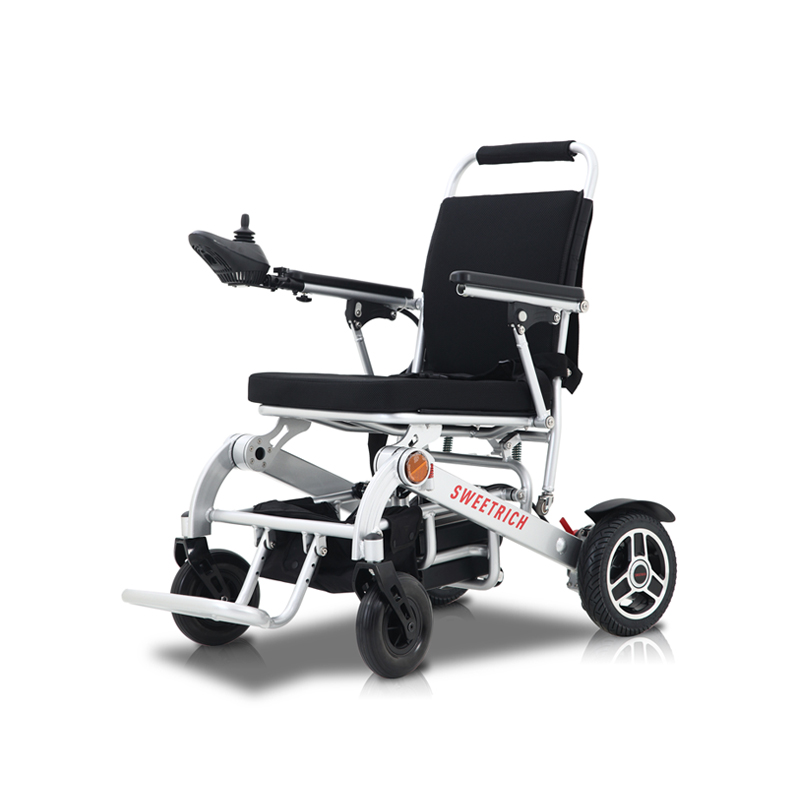
Mobility technology has developed rapidly as users look for more than basic indoor transportation. A modern power wheelchair may need to travel across paved paths, compact ground, outdoor walkways, gently uneven surfaces, and neighborhood streets while remaining comfortable, controllable, and dependable. It must also provide enough power for daily use without becoming unnecessarily complicated to operate. The iPower GTS Plus is designed around these practical requirements as a heavy-duty power wheelchair for outdoor-oriented users, including older adults and people who need powered mobility support.
This model combines a compact overall footprint with a robust drive system, large tires, rear suspension, adjustable seating elements, dual-side joystick availability, electromagnetic braking, and a rated weight capacity of 136 kilograms, or 300 pounds. Its configuration is intended to bridge the gap between a conventional indoor wheelchair and a larger recreational or off-road mobility platform. Instead of focusing only on portability or only on maximum power, the design seeks a balance between maneuverability, stability, range, and user comfort.
The product is identified as a non-medical device for the United States market. It should therefore be considered a mobility product rather than a medical treatment device. Users should follow applicable local regulations, manufacturer instructions, safe charging practices, and professional advice when deciding whether the configuration is suitable for their physical requirements and intended environment.
Designed for Real-World Outdoor Mobility
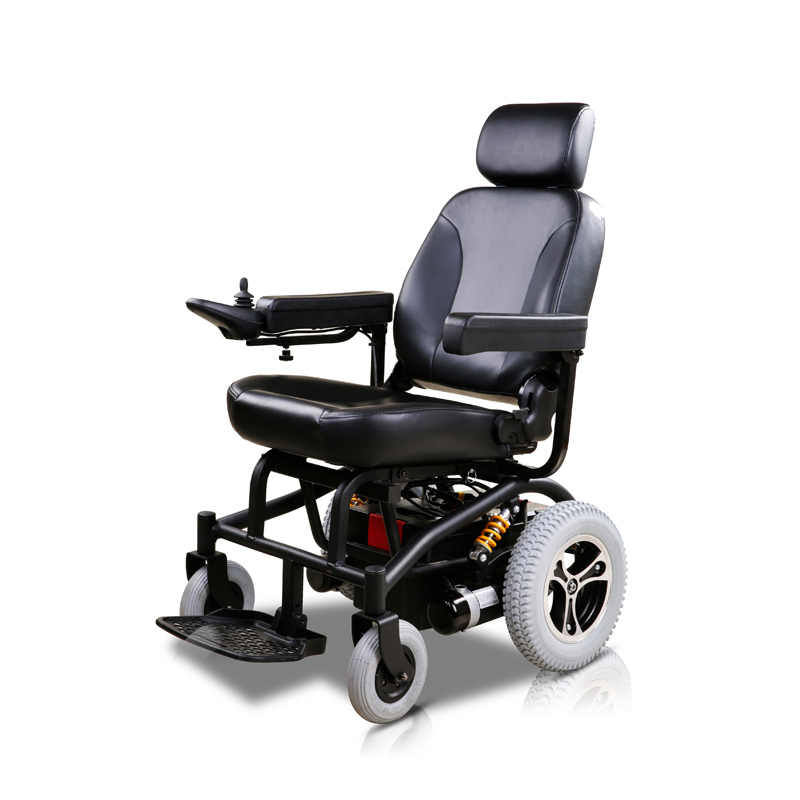
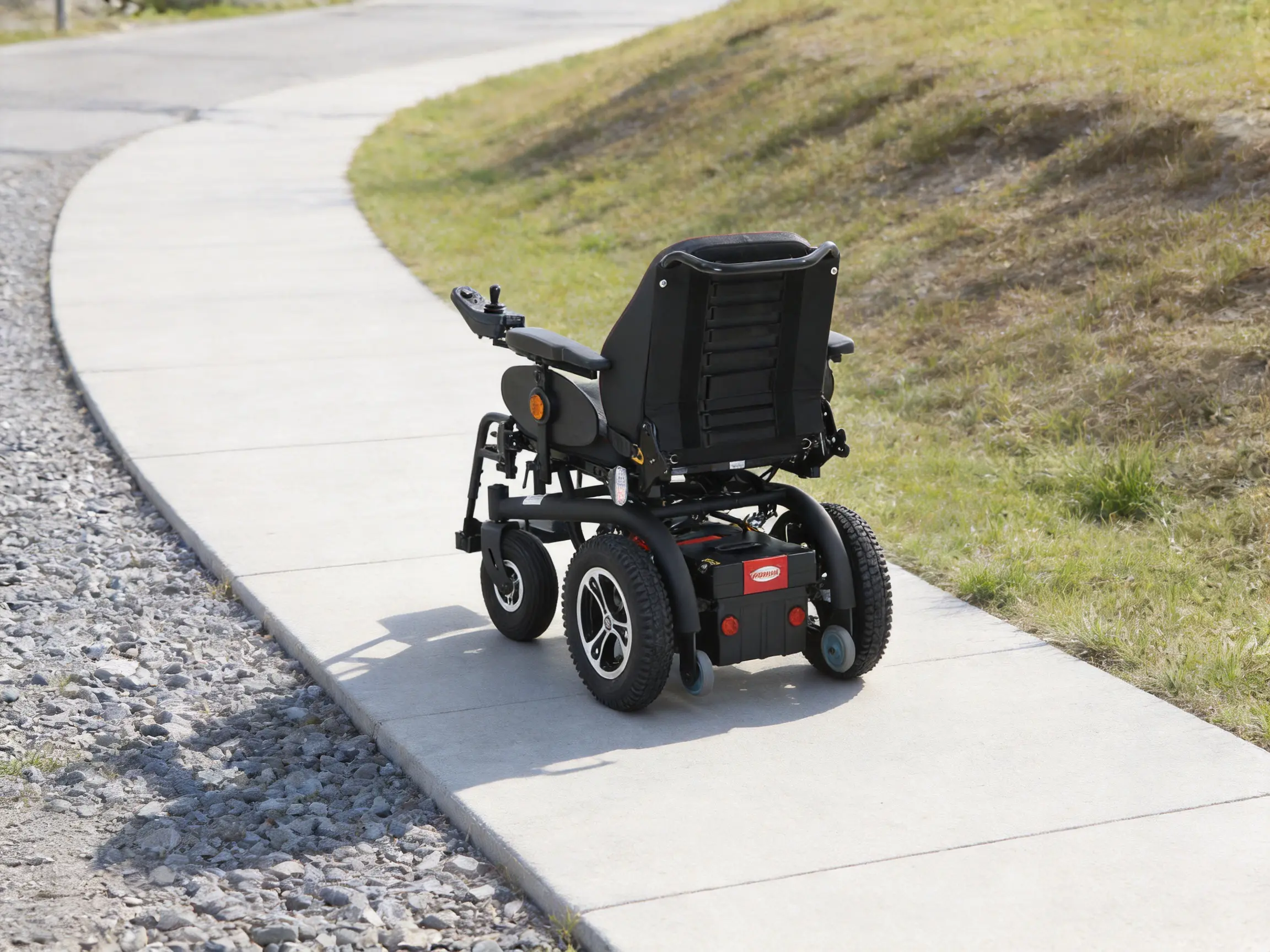
Many standard power wheelchairs are optimized primarily for indoor environments. Their smaller wheels and narrow frames may perform well on smooth floors, but they can be less comfortable or less capable when used on rough paving, grass, outdoor paths, or uneven transitions. The iPower GTS Plus addresses this challenge with a purpose-oriented outdoor configuration that includes a 10-inch front wheel and 14-inch pneumatic rear tires.
Larger wheels can help a mobility device roll over common outdoor obstacles more smoothly than very small caster wheels. They may also reduce the tendency of the chair to become trapped in shallow surface irregularities. The large rear tires provide a substantial contact area and contribute to traction, while the front wheel supports directional movement over outdoor surfaces. Pneumatic tires can also offer a degree of natural cushioning, although tire pressure must be checked regularly and adjusted according to the manufacturer’s recommendations.
The maximum stated forward speed is 8 kilometers per hour, equivalent to approximately 5 miles per hour. This gives the wheelchair useful outdoor pace while remaining appropriate for controlled mobility use. Actual operating speed should be adjusted to the terrain, visibility, pedestrian activity, weather, and the user’s experience. Speed is only one part of outdoor performance; predictable control, effective braking, stable seating, and a suitable driving posture are equally important.
The model is rated for a maximum driving gradient of 10 degrees. This specification indicates the intended climbing capability under suitable conditions, but it should not be interpreted as a guarantee for every surface or situation. Gradient performance can change with user weight, battery condition, tire pressure, ground moisture, surface texture, slope length, and the direction of travel. Safe operation requires avoiding unstable side slopes and approaching inclines only when the user has adequate visibility and control.
Compared with lighter indoor-oriented power wheelchairs, this outdoor-focused configuration offers a more confident platform for users who regularly travel beyond the home. Compared with much larger all-terrain devices, its dimensions remain relatively compact at 1,045 millimeters long, 625 millimeters wide, and 1,080 millimeters high. This balance can be valuable for users who need outdoor capability but still want to navigate familiar residential spaces, doorways, storage areas, and transport arrangements.
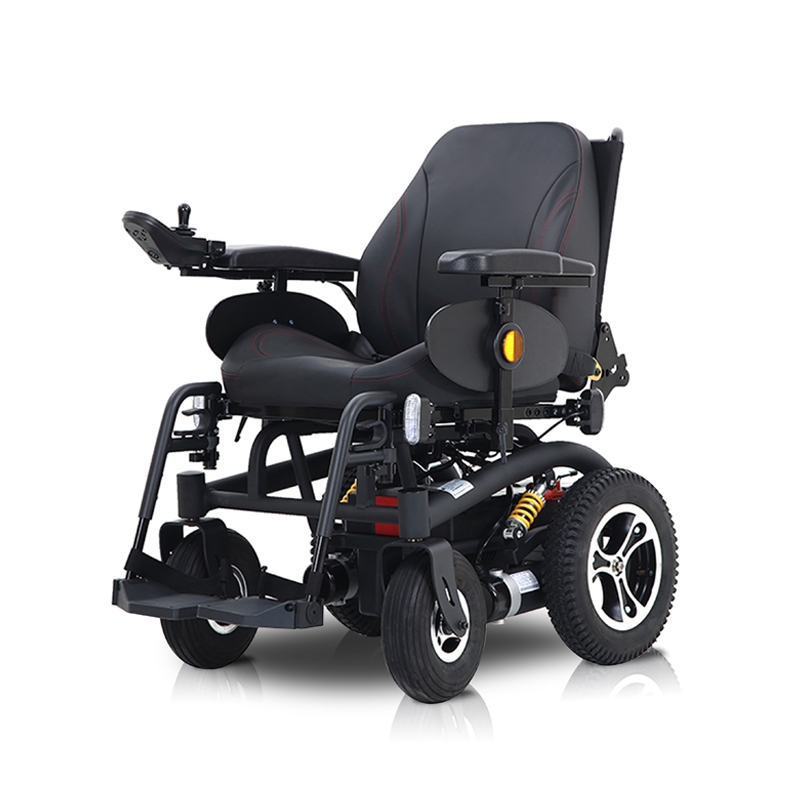
iPower GTS Plus More popular type second hand off road light power electric electronic wheelchair for the elderly
Powertrain Built for Consistent Performance
The iPower GTS Plus uses two 24-volt motors rated at 350 watts each, providing a total motor package of 700 watts. A dual-motor arrangement distributes drive power across the rear wheels and supports controlled movement over a variety of surfaces. Instead of relying on a single drive motor, two motors can help the wheelchair maintain balanced propulsion and deliver responsive steering through the controller system.
The total 700-watt output is one of the model’s important advantages when compared with low-power mobility products intended primarily for flat indoor floors. Outdoor surfaces create more resistance than smooth flooring. Small slopes, grass, rough paving, and uneven transitions can place additional demands on a drive system. The higher combined rating gives the wheelchair a stronger foundation for these everyday conditions, subject to the limits of the terrain and the manufacturer’s operating guidance.
The motors are specified as Taiwan-sourced units, while the motor controller is listed as a 24-volt, 50-amp system compatible with PG and Dynamic control solutions. A properly matched controller is essential because it manages acceleration, deceleration, direction changes, and the communication between the joystick and drive motors. Smooth control is generally more useful than abrupt power. For older users or people with limited hand strength, predictable response can make the chair easier to operate with confidence.
The controller arrangement also supports joystick use on either side. This feature is especially valuable for users whose dominant hand, shoulder movement, or upper-body strength makes one side more convenient than the other. The option to configure the joystick for left- or right-side use can make the product more adaptable to different body types and driving preferences. It may also support a better seating position by reducing the need to reach across the body.
An optional swing-away controller mount provides another practical benefit. When moved aside, such a mount can make transfers easier and reduce interference when the user is sitting down or standing up, provided the transfer is performed safely and with the wheelchair switched off and secured. It may also help users position the control unit more conveniently when approaching a table, desk, counter, or other close object.
The power system uses two 12-volt, 40-amp-hour lead-acid batteries. Together, these batteries create the 24-volt electrical system required by the motors and controller. Lead-acid batteries remain widely used in mobility products because they are established, serviceable, and comparatively familiar to distributors and technicians. Their principal considerations are weight, charging time, and correct maintenance. Users should operate the supplied charger as instructed and keep the battery compartment and electrical connections dry and clean.
Range and Charging for Daily Planning
The stated maximum driving range is 30 to 40 kilometers, or approximately 19 to 25 miles. This range can support substantial daily travel for many users, including neighborhood trips, outdoor recreation, visits to local facilities, and routine errands. A generous claimed range also reduces the need to recharge after every short journey, making the wheelchair more practical for planned outings.
Range figures are measured under particular test conditions and should not be treated as a fixed result for every user. Actual distance depends on the total load, terrain, speed, frequency of stopping and starting, slope, tire pressure, ambient temperature, battery age, and driving style. Cold conditions, soft ground, and repeated hill climbing can reduce available range. Users who plan longer journeys should leave a suitable reserve rather than relying on the maximum published figure.
The supplied charger is specified at DC 24 volts and 5 amps, with an AC input range of 115 to 230 volts. The listed charging time is approximately 6 to 8 hours. Overnight charging may therefore fit conveniently into a normal daily routine, allowing the wheelchair to be ready for use the following day. Charging should take place in a dry, ventilated area using the correct charger and an appropriate power supply.
Good charging habits can help preserve battery performance. Users should avoid storing the batteries in a deeply discharged state for extended periods, should inspect charging connections for damage, and should follow the battery supplier’s instructions for service and replacement. Because lead-acid batteries are heavy, battery handling should be carried out carefully, especially during maintenance or transportation.
The combination of useful range and a standard charging cycle gives the model an advantage over basic power chairs that may be limited to shorter indoor trips. At the same time, the use of established lead-acid technology can simplify replacement and support for buyers who prefer widely recognized battery formats. The most appropriate choice will depend on whether the user values familiar battery service and outdoor endurance over the reduced weight sometimes associated with alternative battery technologies.
Stability Through Wheel and Suspension Design
Outdoor comfort depends not only on motor power but also on how the chassis reacts to surface changes. The iPower GTS Plus is equipped with rear suspension, which can help absorb some vibration transmitted through the drive wheels. Suspension does not eliminate every bump, and it does not make unsuitable terrain safe, but it can contribute to a smoother ride across ordinary outdoor irregularities.
The 14-inch rear pneumatic tires are a central part of the platform’s outdoor design. Their larger diameter helps the drive wheels roll over small changes in elevation, while the air-filled construction can provide additional cushioning. The 10-inch front wheel complements the rear wheels by supporting forward tracking and helping the chair approach surface transitions with a more capable wheel arrangement than many compact indoor products.
A stable seating position is also important. The model offers adjustable seat width and adjustable armrest height. These adjustments can help accommodate different users and clothing layers while supporting a more natural driving posture. A suitable seat width should provide support without restricting movement, and armrests should be positioned so that the user can relax the shoulders while reaching the joystick comfortably.
Adjustability is a meaningful competitive advantage because a one-size-fits-all configuration can create pressure points, poor posture, and unnecessary fatigue. The ability to adjust the seat width and armrest height gives distributors, caregivers, and users more opportunity to configure the chair for individual needs. Adjustments should be completed securely and checked periodically to ensure that all hardware remains tight.
The product’s maximum weight capacity is 136 kilograms, or 300 pounds. This enhanced capacity expands its suitability beyond many lightweight chairs designed for lower loads. A higher capacity can also provide greater flexibility when accounting for clothing, personal equipment, shopping items, or other permitted carried weight. The total load must remain within the stated limit, and any accessories should be considered as part of the overall load.
Weight capacity should never be confused with unlimited stability. Safe operation still requires an appropriate center of gravity, restrained and balanced cargo, careful slope handling, and avoidance of sudden turns on uneven ground. Users should not attach heavy items in positions that could affect steering or cause the chair to tip.
Braking and Control Confidence
The wheelchair uses an electromagnetic brake system. Electromagnetic braking is commonly applied to powered mobility equipment because it can engage when the drive system is released or power is removed. This design supports controlled stopping and helps prevent unintended rolling when the chair is stationary, assuming the system is functioning correctly and the chair is used on an appropriate surface.
Braking performance is influenced by terrain, tire condition, battery state, load, and slope. Users should become familiar with stopping distance in a safe open area before operating near pedestrians, traffic, ramps, or confined spaces. The joystick should be released smoothly, and the chair should not be driven faster than the user can safely control.
The control system is designed to provide intuitive direction and speed management through a joystick. For many users, joystick control is easier than manually pushing a heavy wheelchair, particularly when traveling outdoors or covering longer distances. It can also reduce physical effort for people with limited arm endurance. Nevertheless, the user must have the cognitive, visual, and motor ability necessary to operate the chair safely, or should receive suitable assistance.
A joystick available on either side can make control more accessible. Left-handed users, users with a preferred transfer side, and users with asymmetric mobility needs may benefit from a configuration that matches their stronger or more comfortable hand. This flexibility sets the product apart from mobility devices with a fixed control position.
The optional swing-away controller mount further supports practical access. It may allow the controller to move clear of the user during transfers or when the chair is positioned close to furniture. Optional equipment should be installed correctly, and its effect on reach, wiring, and movement should be inspected before use.
Comfort-Oriented Features for Longer Trips
A power wheelchair intended for outdoor use must support more than movement from one point to another. Users may remain seated for extended periods, so seat configuration, arm support, control placement, and vibration management all affect the overall experience. The iPower GTS Plus addresses these considerations through adjustable seat width, adjustable armrest height, large pneumatic tires, and rear suspension.
Adjustable seat width can help create a more supportive sitting environment. A seat that is too narrow may cause pressure and restrict natural posture, while an excessively wide seat can reduce lateral support and make joystick reach less convenient. Correct adjustment should be based on the user’s body dimensions and should allow comfortable seating without creating unnecessary movement within the chair.
Adjustable armrests can help position the arms at a more relaxed height. This is relevant for both comfort and control because a poorly positioned arm may make joystick operation tiring. The user should be able to hold the joystick with light, controlled movements rather than lifting the shoulder or leaning excessively.
The product information also identifies an optional light package. Lighting can improve visibility during appropriate low-light travel and may help the user be seen by others. It should not be treated as a substitute for reflective clothing, safe route selection, or compliance with local regulations. Availability and specifications of optional lighting should be confirmed with the supplier before ordering.
An optional power tilt and lift system is described as planned or forthcoming in the product information. This feature should be treated as an optional configuration subject to availability, compatibility, and final technical confirmation. It should not be assumed to be included in every standard unit. When available, a tilt or lift function may support positioning and transfer needs, but it should be assessed by qualified professionals for suitability.
Compact Dimensions Without Giving Up Outdoor Capability
The overall dimensions are listed as 1,045 millimeters in length, 625 millimeters in width, and 1,080 millimeters in height. The width is especially relevant for residential use because narrower mobility equipment is generally easier to position in corridors and through suitable doorways. Users should measure their actual access routes, including door frames, thresholds, turning spaces, elevators, ramps, and storage locations.
A relatively compact footprint can provide an advantage over larger off-road power chairs that may be difficult to use around the home. At the same time, the chair’s outdoor wheels and 700-watt powertrain give it more capability than many lightweight indoor designs. This combination makes the product a practical middle-ground option for buyers who want one primary powered mobility device for both indoor and outdoor routines.
The heaviest part is listed as 59 kilograms, although the source information presents an inconsistent pound conversion. The kilogram measurement should be treated as the primary specification until the supplier confirms the exact component weight. At 59 kilograms, the heaviest part is substantial and may require a suitable ramp, lift, transport vehicle, or assistance. Buyers should not assume that the chair can be lifted safely by one person.
Transport planning is therefore important. Before purchase, users should confirm whether the wheelchair can fit inside their vehicle, whether a vehicle lift is required, and whether the folded or disassembled configuration—if available—has been clearly specified by the supplier. The product title refers to a folding or second-hand style in the wider listing information, but the provided technical data does not define a folding mechanism or confirm a particular used-product condition. Buyers should request current configuration details before placing an order.
Advantages Compared with Common Alternatives
The market includes lightweight indoor power chairs, travel-oriented mobility scooters, compact folding devices, and large all-terrain wheelchairs. Each category has its own strengths. The iPower GTS Plus is differentiated by combining several useful features in one platform rather than optimizing only one characteristic.
Compared with a basic indoor power wheelchair, it offers larger tires, rear suspension, a 700-watt dual-motor package, a 10-degree gradient rating, and a higher 300-pound weight capacity. These features can make it more suitable for users who regularly travel outside the home and encounter uneven surfaces or gentle inclines.
Compared with a small travel chair, it provides a more substantial chassis and a longer stated range of 19 to 25 miles. The trade-off is that the heaviest part is significant, so users prioritizing ultra-light transport may prefer a smaller product. The model is best suited to buyers who value outdoor performance and stability over the minimum possible carrying weight.
Compared with a large recreational off-road chair, its 625-millimeter width and moderate overall length may be easier to manage in ordinary residential environments. It does not claim unlimited off-road capability, and it should not be used on extreme terrain. Its strength is practical outdoor mobility for daily life rather than specialized sport or expedition use.
Compared with products that have a fixed joystick position, the dual-side joystick option offers greater configuration flexibility. Compared with chairs that lack seating adjustments, adjustable seat width and armrest height provide more scope for individualized setup. Compared with systems using only mechanical parking solutions, electromagnetic braking supports convenient powered stopping when properly maintained.
These advantages should be evaluated alongside the product’s limitations. Lead-acid batteries add weight, the charging period is several hours, and the heaviest component may require transport assistance. Outdoor capability does not remove the need for maintenance, route planning, and safe driving practices. A well-matched product is one that meets the user’s real requirements rather than simply having the largest number of features.
| Feature | iPower GTS Plus Specification | Practical Benefit |
|---|---|---|
| Overall dimensions | 1,045 × 625 × 1,080 mm | Balances outdoor equipment with a comparatively manageable footprint |
| Maximum speed | 8 km/h or approximately 5 mi/h | Supports efficient outdoor travel when operated safely |
| Gradient rating | Up to 10 degrees | Provides capability for suitable gentle slopes |
| Driving range | 30–40 km or approximately 19–25 miles | Supports longer daily journeys between charges |
| Weight capacity | 136 kg or 300 lb | Accommodates a broad range of users and permitted carried items |
| Drive system | Two 24 V, 350 W motors | Delivers a combined 700 W power package |
| Wheel configuration | 10-inch front and 14-inch pneumatic rear tires | Supports outdoor rolling comfort and surface clearance |
| Suspension | Rear suspension | Helps moderate vibration over ordinary uneven surfaces |
| Brakes | Electromagnetic | Provides controlled powered stopping and stationary security |
| Batteries | Two 12 V, 40 Ah lead-acid batteries | Uses an established battery format for the 24 V system |
| Charging time | Approximately 6–8 hours | Can fit an overnight charging routine |
| Controller position | Joystick available on either side | Allows configuration for different users and transfer preferences |
Manufacturing Strengths and Product Development
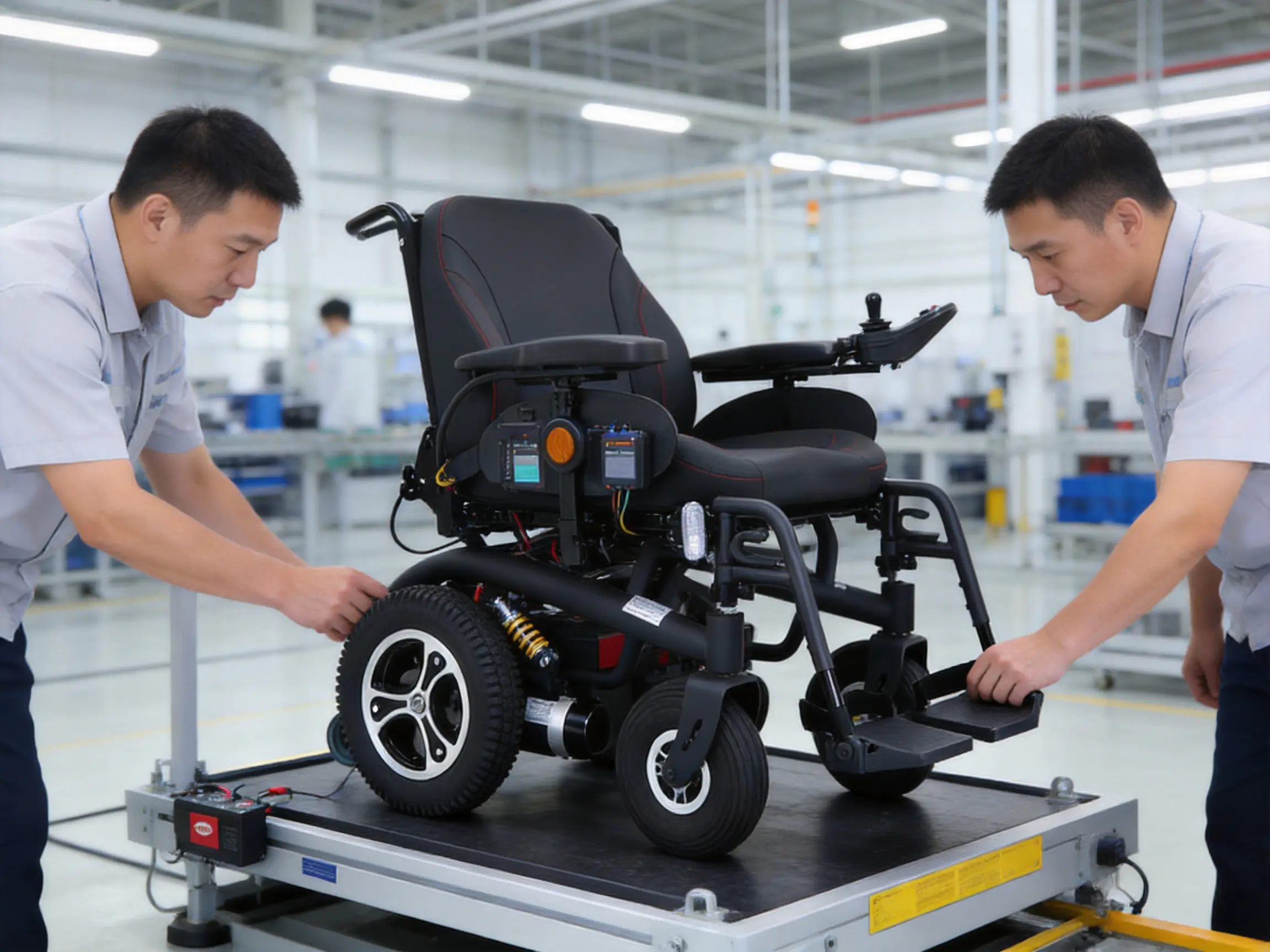
Suzhou Sweetrich Vehicle Industry Technology Co., Ltd. is described as a high-technology mobility manufacturer established in 2011. The company operates from Suzhou Industrial Zone in Jiangsu, China, with a reported site covering approximately 60 acres and a 30,000-square-meter factory. More than ten years of experience in research, development, and production provides a substantial foundation for designing and manufacturing mobility scooters and power wheelchairs.
A dedicated manufacturing site can support closer coordination among product development, engineering, assembly, quality management, and after-sales functions. For mobility equipment, this coordination is important because performance depends on the relationship between many systems: frame geometry, motors, batteries, controller programming, wheels, brakes, seating components, and wiring. A supplier with experience across the complete product system is better positioned to identify compatibility issues than a company that handles only one component category.
The company reports a focus on intellectual property for electric scooters and power wheelchairs. Ownership of product-related intellectual property can indicate an emphasis on internal engineering and original product development rather than relying exclusively on generic designs. It may also support continuous refinement of control systems, driving systems, seating arrangements, and optional equipment.
Manufacturing quality begins with a controlled design process. Product dimensions, load capacity, motor output, wheel size, battery requirements, and braking specifications must be considered together. A heavier-duty wheelchair requires an appropriate frame, suitable fasteners, reliable power transmission, and electrical components capable of handling expected current. The iPower GTS Plus specification reflects an integrated approach by pairing two 350-watt motors with a 50-amp controller, 24-volt batteries, large tires, and electromagnetic brakes.
Scientific product design also includes attention to user interaction. A joystick is not merely an electronic accessory; its position, reach, response, and mounting arrangement affect whether a user can control the chair comfortably. Adjustable armrests and a selectable joystick side show how physical ergonomics can be integrated with the electrical control system. This user-centered perspective is particularly important for older adults and people with reduced strength or limited movement.
Strict production management is identified as one of the company’s operating principles. In practice, effective production management may include incoming component checks, assembly procedures, wiring inspection, functional testing, battery and charger verification, brake testing, wheel and tire inspection, and final quality review. Specific internal test methods should be confirmed with the manufacturer, but these categories represent important checkpoints for a powered mobility product.
Quality, Reliability, and Export Experience
Sweetrich states that its products are exported to America, Europe, Japan, Australia, the Middle East, Russia, and other markets. International distribution can encourage attention to different user expectations, packaging requirements, documentation, electrical standards, and service arrangements. It also exposes the manufacturer to feedback from a broad range of climates, road conditions, purchasing channels, and mobility applications.
Export experience does not automatically guarantee that every product meets every local requirement. Buyers and distributors should verify the certifications, labeling, charger compatibility, warranty terms, import obligations, and road-use rules applicable in their destination. This is especially important for products intended for the United States, where mobility device requirements may differ by application and jurisdiction.
Reliability is influenced by both manufacturing and after-sales support. A well-assembled chair can still experience reduced performance if it is stored improperly, operated with underinflated tires, exposed to water, overloaded, or charged with an unsuitable device. The manufacturer’s responsibility is to provide a sound product, accurate specifications, clear instructions, replacement parts, and responsive technical support. The user’s responsibility is to operate and maintain the chair within the stated limits.
For fleet buyers, dealers, care organizations, and distributors, the company’s factory scale and product focus may support more consistent supply and technical communication. These buyers may also benefit from confirming spare-part availability for tires, chargers, batteries, controllers, armrests, joystick mounts, and braking components. Long-term ownership is easier when common service items can be sourced through an established supply channel.
The company’s stated principle of quality first, credit above, and customer supreme reflects a relationship-oriented approach to manufacturing. Although marketing statements should always be supported by practical verification, the company’s history, factory resources, product range, and international customer base provide useful indicators for buyers evaluating a mobility equipment supplier.
Maintenance Requirements
Regular maintenance is essential for safe and dependable performance. Pneumatic tires should be inspected for cuts, excessive wear, embedded objects, and correct inflation. Incorrect tire pressure can affect comfort, steering, braking, range, and motor load. Because the rear tires are part of the drive system, their condition has a direct effect on traction.
The front wheel and suspension components should be checked for looseness, damage, or unusual movement. Fasteners should be inspected according to the maintenance schedule, and any abnormal noise or vibration should be investigated before continued use. A qualified technician should handle repairs involving the drive motors, controller, electromagnetic brakes, or battery wiring.
Battery terminals and charging connections should remain clean and secure. Lead-acid batteries should be charged with the specified charger and should not be opened or modified by unqualified users. Signs of swelling, leakage, overheating, burning odor, or damaged cables require immediate attention. The chair should be switched off during transfers and whenever it is parked for extended periods.
The joystick and its mount should be protected from impact and moisture. A swing-away mount should move smoothly and should not place strain on the control cable. If the joystick becomes intermittent, unusually sensitive, or unresponsive, the wheelchair should not be used until the cause has been assessed.
Cleaning should be performed with suitable methods that avoid directing water into electrical components, motors, the controller, or battery connections. After outdoor use in wet or dirty conditions, the chair should be dried and inspected. Storage in a clean, dry location can help protect the batteries, upholstery, electronics, and metal components.
Safe Use in Outdoor Environments
The wheelchair should be driven on surfaces appropriate to its design. Suitable routes may include paved paths, smooth hard-packed ground, accessible outdoor walkways, and moderate residential slopes. Deep mud, loose sand, standing water, steep cross slopes, broken terrain, and obstacles beyond the wheel or ground-clearance capability should be avoided.
Users should approach curbs, thresholds, and surface transitions slowly and at a suitable angle. Sudden steering movements near an edge can affect stability. The maximum gradient rating applies to controlled conditions and does not mean that every 10-degree slope is safe. Wet grass, gravel, snow, and loose soil can substantially reduce traction.
Visibility is important when operating near vehicles and pedestrians. The optional light package may improve visibility in some situations, but users should follow local rules, wear visible clothing when appropriate, and avoid roads or crossings that are not suitable for the device. A horn, light, or reflective element cannot replace careful observation and defensive driving.
Before a long trip, users should check the battery level, tire condition, joystick operation, brake response, and route accessibility. It is also sensible to carry contact information and, when practical, a plan for assistance if the wheelchair develops a fault. Range should be planned conservatively, especially when the route includes hills or poor weather.
Who May Benefit from This Model?
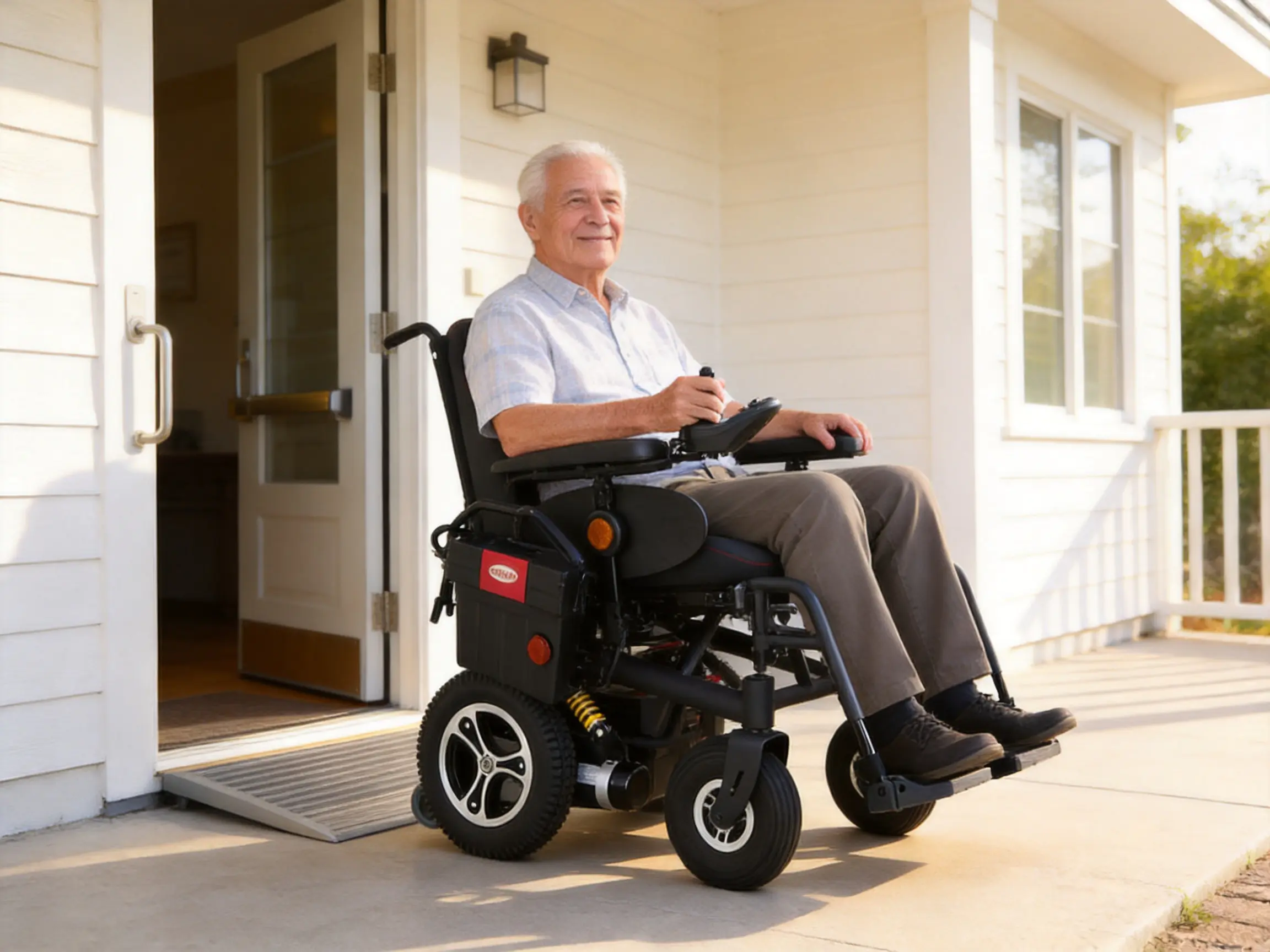
The iPower GTS Plus may be appropriate for an older adult who wants powered independence around the home and neighborhood. It may also suit a user who needs a higher-capacity chair, prefers a right- or left-side joystick configuration, or regularly travels over outdoor surfaces that are less comfortable for a basic indoor chair.
It can be considered by families and caregivers seeking adjustable seating features. Seat width and armrest height adjustments may help create a more personalized setup as the user’s comfort requirements change. Dealers may find the model useful as a versatile option for customers who want one chair capable of handling both indoor routines and moderate outdoor travel.
The model may be less suitable for users who require a very light chair for frequent manual lifting, a highly compact folding device for air travel, or a specialized chair for extreme off-road conditions. Its lead-acid batteries and 59-kilogram listed heaviest part make transport planning necessary. A professional seating or mobility assessment should be considered for users with complex postural, pressure-management, or transfer requirements.
Questions and Answers
Is the iPower GTS Plus a medical device?
The provided product information identifies it as a non-medical device for the United States market. It is intended to provide powered mobility, not medical diagnosis or treatment. Buyers should check local classifications and consult an appropriate professional when clinical seating or mobility needs are involved.
What type of terrain is it designed to handle?
It is designed with outdoor performance in mind and includes large tires, rear suspension, dual 350-watt motors, and a stated 10-degree maximum driving gradient. It is best suited to suitable paved paths, hard outdoor surfaces, and moderate uneven conditions. It is not an unlimited all-terrain vehicle and should not be used on hazardous or extreme terrain.
How fast can it travel?
The maximum stated forward speed is 8 kilometers per hour, or approximately 5 miles per hour. The appropriate operating speed depends on the surface, traffic, visibility, user experience, and local regulations.
What is the maximum user weight?
The rated weight capacity is 136 kilograms, or 300 pounds. This limit includes the user and any permitted carried items or accessories. The chair should not be overloaded.
How far can it travel on one charge?
The stated maximum driving range is 30 to 40 kilometers, equivalent to approximately 19 to 25 miles. Actual range varies with terrain, load, speed, temperature, tire pressure, battery condition, and driving style.
How long do the batteries take to charge?
The listed charging time is approximately 6 to 8 hours. The supplied charger is specified as DC 24 volts and 5 amps with an AC input range of 115 to 230 volts. Users should follow the supplied charging instructions.
Can the joystick be fitted on either side?
Yes. The product information states that the joystick is available for use on both sides. This can benefit users who prefer a particular hand or need the controller positioned according to their transfer and seating requirements.
What is the benefit of the swing-away controller mount?
The optional swing-away mount can move the controller clear of the user during transfers or when approaching furniture. It should be installed and adjusted correctly, and the wiring should be checked for strain or damage.
Does it have suspension?
Yes. The specification lists rear suspension. Suspension can help reduce vibration over ordinary uneven surfaces, but it does not make unsafe terrain suitable.
What type of brakes does it use?
It uses an electromagnetic brake system. Users should test braking in a safe area and have the system inspected if stopping performance changes.
Are the tires pneumatic?
The rear tires are specified as 14-inch pneumatic tires. The front tire is listed as 10 inches. Tire condition and pressure should be checked regularly because they affect comfort, traction, range, and handling.
Is a light package included?
The light package is listed as optional. Availability, specifications, and installation should be confirmed with the supplier before ordering.
Is the power tilt and lift system included?
The product information describes a power tilt and lift system as optional and forthcoming. It should not be assumed to be part of every standard unit. Buyers should confirm current availability and compatibility.
How heavy is the heaviest part?
The listed heaviest part is 59 kilograms. The accompanying pound conversion appears inconsistent, so buyers should use the kilogram specification and request confirmation from the supplier. A suitable vehicle lift or assistance may be needed for transport.
What should buyers confirm before purchase?
Buyers should confirm the current configuration, availability of optional equipment, warranty terms, battery and charger details, replacement parts, dimensions, transport requirements, certification, delivery conditions, and local operating rules. They should also verify whether the product meets their personal seating, transfer, and terrain requirements.
Conclusion
The iPower GTS Plus is positioned as a heavy-duty outdoor power wheelchair that combines useful range, a 700-watt dual-motor drive system, large pneumatic rear tires, rear suspension, electromagnetic braking, adjustable seating elements, and a 300-pound weight capacity. Its compact width and practical control options make it a versatile alternative to both basic indoor chairs and substantially larger off-road platforms.
Its most significant advantages are the balance between outdoor performance and manageable dimensions, the flexibility of left- or right-side joystick placement, and the ability to adjust seat width and armrest height. The 30-to-40-kilometer stated range and 8-kilometer-per-hour maximum speed further support everyday outdoor mobility, while the 24-volt electrical system and established lead-acid battery configuration provide a familiar technical foundation.
Suzhou Sweetrich Vehicle Industry Technology Co., Ltd. adds manufacturing experience, a dedicated factory, product development resources, reported intellectual property, and international export experience. Its focus on mobility scooters and power wheelchairs supports an integrated understanding of the mechanical, electrical, and user-centered requirements involved in powered mobility equipment.
As with any mobility product, the best results depend on correct configuration, responsible operation, regular maintenance, and realistic route planning. The model should be selected after considering the user’s body size, physical abilities, transfer method, transport needs, storage space, and intended terrain. When those requirements align with its design, the iPower GTS Plus can provide a strong and practical foundation for more independent outdoor mobility.
References
Suzhou Sweetrich Vehicle Industry Technology Co., Ltd. Product specification sheet for the iPower GTS Plus power wheelchair.
Suzhou Sweetrich Vehicle Industry Technology Co., Ltd. Company information and manufacturing profile.
Manufacturer-provided technical data covering dimensions, speed, gradient, range, capacity, tires, suspension, braking, batteries, charger, motors, controller, and charging time.
General principles of powered mobility equipment maintenance, battery charging, tire inspection, and safe outdoor operation.
General user-safety guidance for power wheelchair route planning, slope handling, transfer procedures, and electrical equipment care.