
 +86-(0)512-82283871
Content
- 1 Designed for the Travel Smart User
- 2 Key Product Specifications
- 3 Fast Folding as a Competitive Advantage
- 4 Lightweight Aluminum Construction
- 5 Powered Performance for Everyday Movement
- 6 Battery Options and Travel Range
- 7 Comfort Through Suspension and Tire Design
- 8 Safety-Centered Braking and Control
- 9 Advantages Over Conventional Electric Wheelchairs
- 10 Advantages Over Basic Folding Travel Chairs
- 11 Manufacturing Strength Behind the Product
- 12 Advanced Manufacturing Process
- 13 Quality Philosophy and Customer Value
- 14 Practical Use Scenarios
- 15 Ergonomics and User Confidence
- 16 Why Dealers and Distributors Can Benefit
- 17 Responsible Operation and Maintenance
- 18 Q&A Section
- 18.1 What type of user is this foldable power wheelchair designed for?
- 18.2 How quickly can the wheelchair fold and unfold?
- 18.3 What is the weight of the wheelchair?
- 18.4 What is the maximum user weight capacity?
- 18.5 What is the listed driving range?
- 18.6 What battery options are available?
- 18.7 How long does charging take?
- 18.8 Can the joystick be placed on either side?
- 18.9 Does the wheelchair have suspension?
- 18.10 What braking system does it use?
- 18.11 How does it compare with traditional electric wheelchairs?
- 18.12 How does the manufacturer support product quality?
- 19 Conclusion
- 20 References
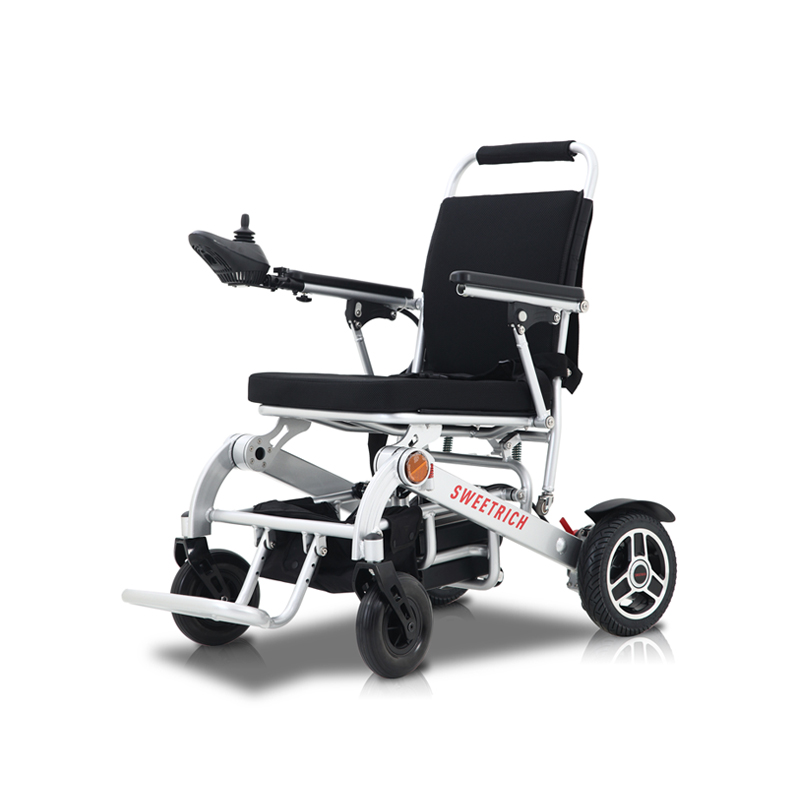
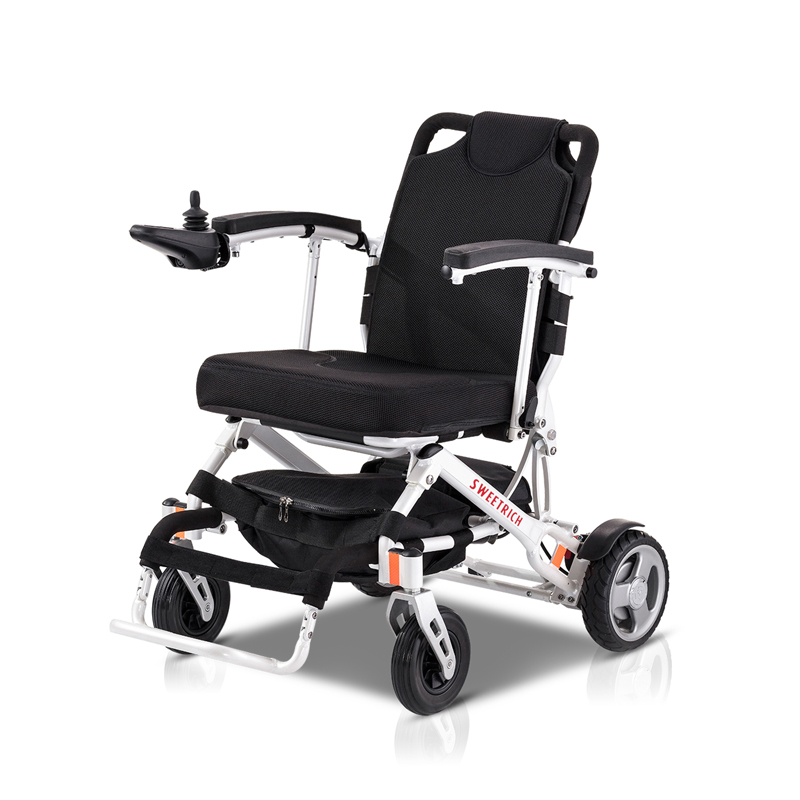
- 21 Product: iFold Medical foldable aluminum rollator wheelchair with footrest light weight Wheelchair
Modern mobility is no longer defined only by distance. For many older adults, people with limited mobility, caregivers, and travel-focused users, true mobility means being able to leave home with confidence, move through daily environments comfortably, and store or transport a powered chair without complicated steps. A foldable lightweight power wheelchair with an aluminum frame, footrest, joystick control, lithium battery system, and compact travel profile is designed to answer that need. It combines the practical handling of a folding mobility aid with the powered performance expected from an electric wheelchair, making it suitable for users who want convenience, maneuverability, and dependable daily support.
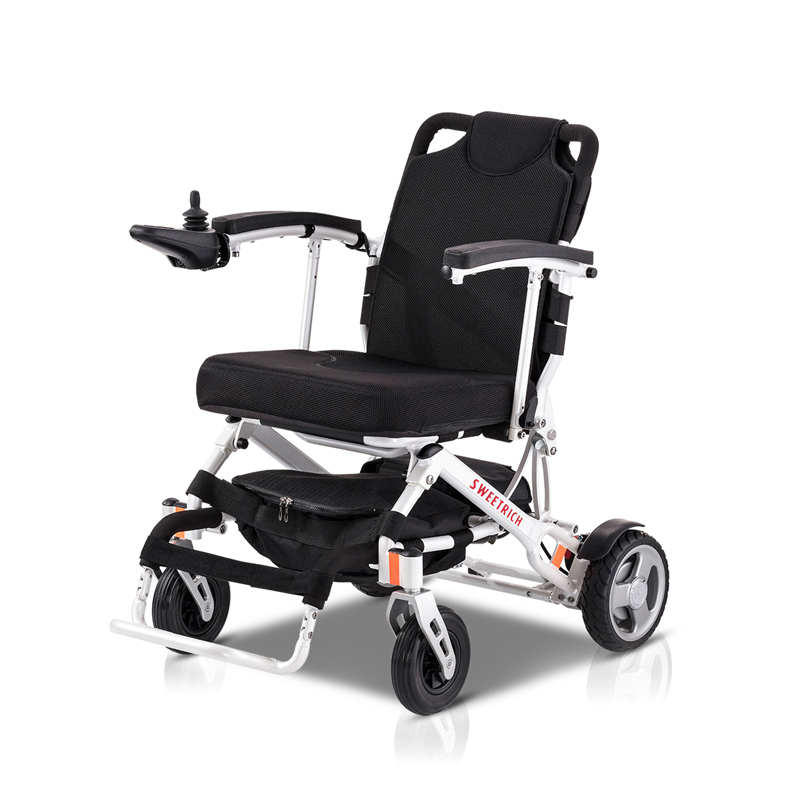
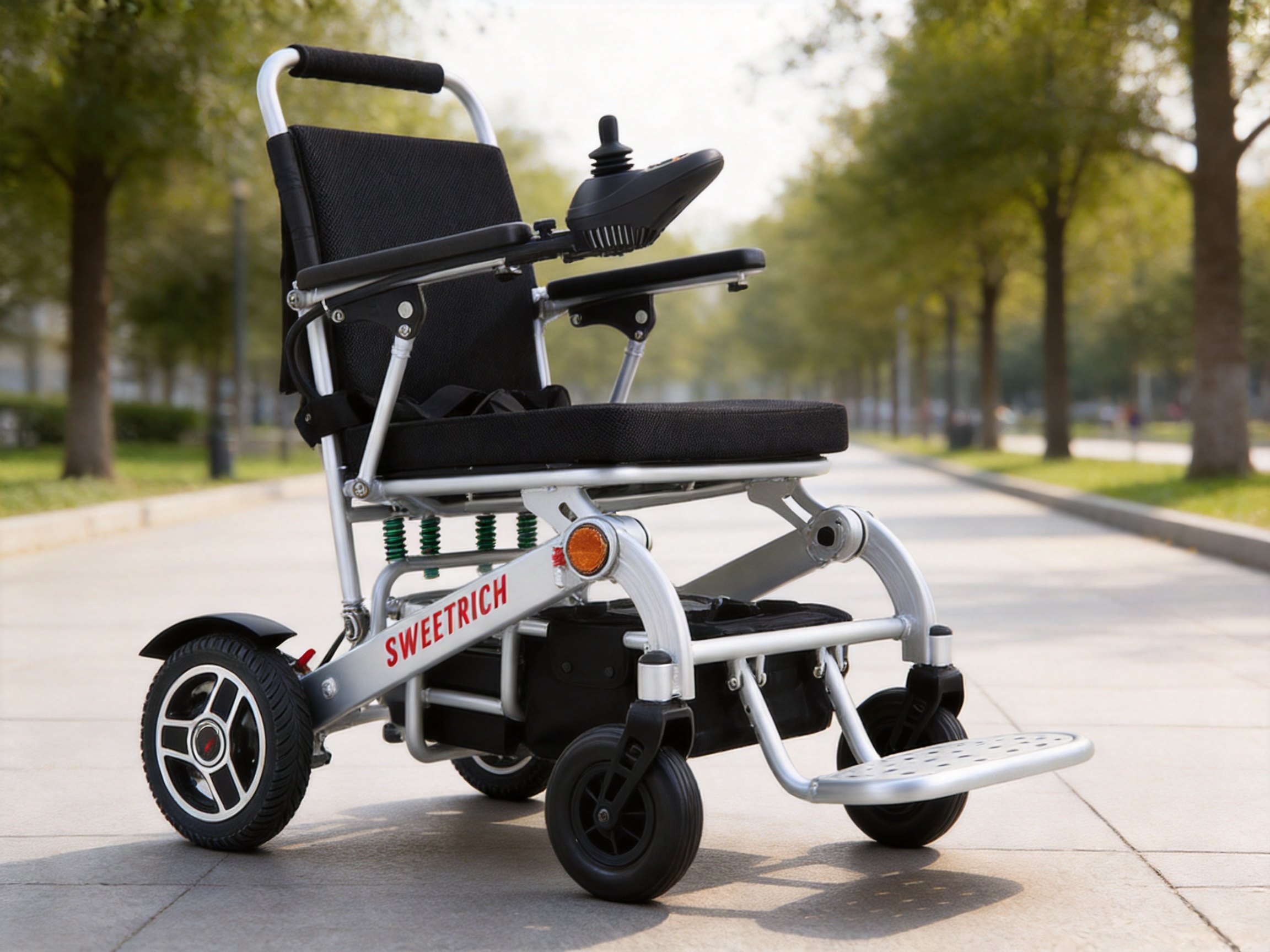
The product discussed here belongs to the Travel Smart Wheelchairs category and is built around a simple promise: fold quickly, drive smoothly, and travel more easily. Its defining features include folding and unfolding in approximately one second, front and rear suspension, electromagnetic braking, a spacious foot platform, joystick control available for either side, lithium battery options, and a compact folded form that is easier to move after storage. With a weight capacity of 120 kg, a listed driving range of 30±5 km, dual 24V/250W motors, and an aluminum structure, it is engineered to serve users who need reliable powered mobility without the bulk of traditional power chairs.
Beyond the product itself, the value of this wheelchair is strengthened by the manufacturing background behind it. Sweetrich Mobility, officially Suzhou Sweetrich Vehicle Industry Technology Co., Ltd., is a high-tech mobility product manufacturer established in 2011 in Suzhou Industrial Park, China. The company operates a large production base covering 60 acres with a 30,000-square-meter factory and has accumulated more than ten years of experience in the research, development, and production of mobility scooters and power wheelchairs. Its long-term focus on user comfort, driving safety, intelligent control, and production consistency gives this foldable wheelchair a competitive foundation that extends beyond appearance or basic specifications.
iFold Medical foldable aluminum rollator wheelchair with footrest light weight Wheelchair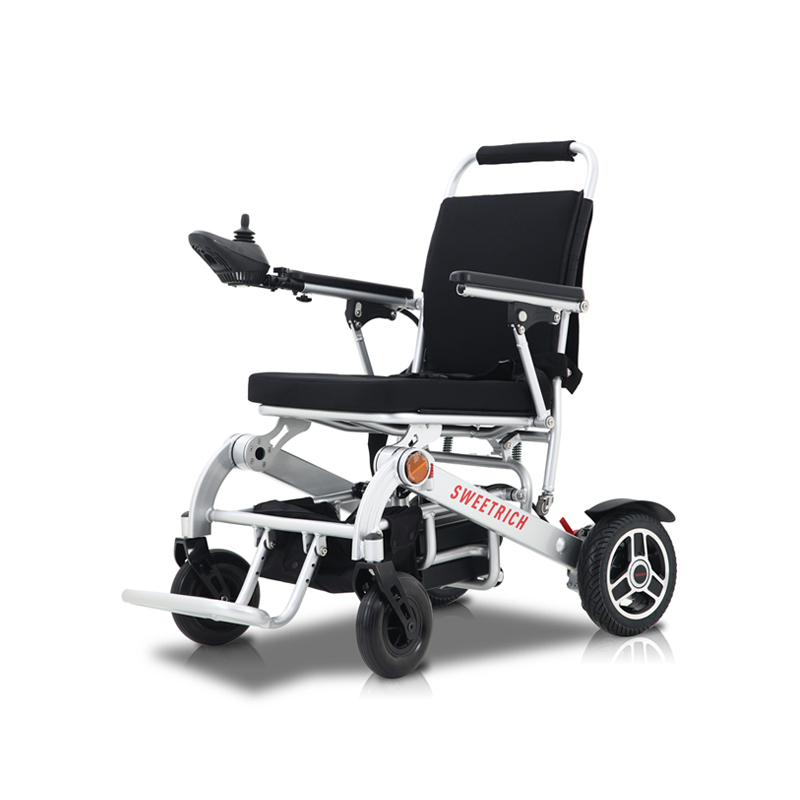
Designed for the Travel Smart User
The term “Travel Smart” captures a clear product philosophy. A travel-friendly wheelchair should not merely be smaller than a standard chair; it should reduce the number of physical and mental obstacles between the user and the journey. The chair should be simple to fold, manageable after folding, comfortable during operation, stable on varied surfaces, and dependable enough to support routine outdoor and indoor movement. This foldable aluminum power wheelchair addresses these priorities through a combination of structural efficiency, powered control, and convenient daily handling.
The ability to fold and unfold in approximately one second is one of its most important advantages. Many traditional powered wheelchairs require multiple steps, tool-assisted disassembly, or caregiver help before they can be placed in a vehicle or stored in a narrow space. Even some travel models require the user to remove parts, bend awkwardly, release several locks, or manage heavy components separately. A fast-folding design changes the ownership experience. It helps users prepare for transportation quickly, reduces caregiver strain, and makes spontaneous outings more realistic.
Once folded, the chair is designed to be easy to move. This matters because folding alone is not enough. A chair that folds but remains heavy, awkward, or unbalanced can still be difficult to load or store. At 24 kg without the battery, the product is positioned as a lightweight powered mobility solution compared with many conventional electric wheelchairs. The aluminum construction contributes to this lower weight while maintaining the rigidity needed for everyday use. For families who frequently travel by car, visit public places, or need to store the chair in compact homes, the reduced handling burden becomes a practical advantage.
The large foot platform and footrest design provide additional comfort and support. Travel wheelchairs often sacrifice legroom or foot positioning to achieve compact dimensions, but foot comfort is essential for longer rides. A large platform helps users maintain a more relaxed lower-body position, reduces the need for constant adjustment, and supports the feeling of security during movement. In combination with the seating layout and stable chassis, it helps the chair feel less like a temporary transport device and more like a dependable daily mobility partner.
Key Product Specifications
The following table summarizes the core technical information available for this foldable lightweight power wheelchair. Actual performance can vary depending on battery configuration, terrain, user weight, maintenance condition, operating environment, and regional control settings.
Item |
Specification |
Overall Dimensions |
1090 mm L × 605 mm W × 998 mm H |
Max Forward Speed |
6 km/h listed specification; some configurations may support higher performance settings up to approximately 8.5 km/h depending on market requirements |
Max Driving Gradient |
10° |
Max Driving Range |
30±5 km |
Weight Capacity |
120 kg / 265 lb |
Suspension |
Front and rear suspension |
Tire Sizes |
8-inch front tires and 10-inch rear tires |
Brake System |
Electromagnetic brake |
Battery Options |
Lithium 24V/10.2Ah and 24V/20Ah; optional higher-capacity battery configurations may be available for extended distance |
Charger |
DC 24V 2A, AC 115–230V input |
Charging Time |
Approximately 5 hours |
Motor |
24V/250W × 2 pcs |
Motor Controller |
24V/50A |
Weight Without Battery |
24 kg |
Fast Folding as a Competitive Advantage
The fold-and-unfold mechanism is not only a convenience feature; it is a central differentiator in the competitive travel wheelchair market. Many powered wheelchairs are strong and comfortable, but they can be difficult to transport. Some lightweight transport chairs are compact, but they lack electric drive. This model occupies the practical middle ground: it delivers motorized movement while retaining a folding form that is easy to handle.
A one-second folding action reduces the frustration often associated with travel mobility products. Users do not want to spend several minutes preparing a chair while standing in a parking lot, at an airport drop-off point, outside a clinic, or near a taxi. Caregivers also benefit because fast folding limits repeated lifting, bending, and adjustment. The faster a wheelchair transitions between driving mode and storage mode, the more naturally it fits into ordinary life.
Compared with competitors that use complex folding joints or require seat removal, this streamlined design can improve user independence. It allows more people to manage the chair with minimal assistance. In practical terms, this can mean the difference between needing another person for every trip and being able to participate more freely in daily errands, family visits, shopping, community events, or travel.
Folding speed also influences storage flexibility. In small apartments, retirement communities, hotel rooms, restaurant corners, or vehicle trunks, space matters. A power wheelchair that stores quickly and occupies less space is easier to integrate into a user’s environment. The product’s compact folding behavior supports the broader Travel Smart concept by making mobility less disruptive and more adaptable.
Lightweight Aluminum Construction
Aluminum is widely valued in mobility product design because it provides a favorable balance of strength, corrosion resistance, and weight reduction. For powered wheelchairs, every kilogram matters. A lighter structure can make the chair easier to lift, easier to load, and easier to maneuver when folded, while still supporting daily performance demands. At 24 kg without the battery, this wheelchair is designed to remain manageable in situations where a heavier traditional electric wheelchair would be inconvenient.
The aluminum frame is especially important because travel users often encounter repeated handling. A chair may be folded, unfolded, placed into vehicles, moved through doorways, stored upright, and transported over thresholds many times each week. Frame materials must therefore resist fatigue, vibration, and repeated stress. A well-designed aluminum chassis helps deliver this durability without excessive mass.
In competitor comparisons, some low-cost models rely on heavier steel frames or less refined structural layouts. Steel can be strong, but it often increases total product weight, making the chair harder to transport. Other ultra-light products may compromise frame stiffness or load capacity. This model’s 120 kg weight capacity, combined with its aluminum structure, places it in a practical category for users who need both strength and portability.
Manufacturing precision is essential for aluminum mobility frames. Tube cutting, bending, welding, surface finishing, joint alignment, and final assembly must be tightly controlled to ensure stability and smooth folding. A poor-quality frame may fold unevenly, develop noise, or feel unstable over time. The manufacturing experience of Sweetrich Mobility supports this product by combining mobility-specific engineering knowledge with a dedicated production environment for powered scooters and wheelchairs.

Powered Performance for Everyday Movement
A travel wheelchair should not be judged only by how it folds. Once unfolded, it must drive confidently. This model uses dual 24V/250W motors, which provide balanced power delivery to the drive system. Dual motor architecture supports controlled turning, stable movement, and practical climbing ability. With a listed maximum driving gradient of 10°, the wheelchair is prepared for common slopes such as ramps, mild outdoor inclines, and access paths, while users should always operate within safe limits and avoid extreme terrain.
The listed maximum forward speed is 6 km/h, a sensible pace for many daily mobility environments. Product feature materials also indicate speeds up to 8.5 km/h, or 5.2 mph, which may reflect particular configuration options or different regional settings. This distinction is important because powered mobility products are often adjusted according to destination market rules, safety expectations, and controller programming. For most users, smooth acceleration, predictable braking, and stability are more important than maximum speed alone.
The 24V/50A motor controller is a key component in the driving experience. The controller manages power output, acceleration response, turning behavior, and braking coordination. A refined controller can make the chair feel calm and predictable, especially for users who may be new to powered mobility. Jerky acceleration or delayed response can reduce confidence, while a well-tuned control system helps users move through doorways, corridors, elevators, shopping aisles, and sidewalks with better control.
The joystick can be configured for use on either side, which is a meaningful accessibility advantage. Users may have stronger control in one hand due to personal habit, injury, stroke history, muscle strength differences, or comfort preference. A joystick that can be positioned on either side makes the chair more adaptable to individual needs and reduces the limitations found in models with fixed control placement. This flexibility can also help distributors and care providers fit the same product to a broader range of users.
Battery Options and Travel Range
The lithium battery system supports the product’s travel-oriented design. Available battery specifications include 24V/10.2Ah and 24V/20Ah options, with optional higher-capacity configurations mentioned for extended distance. The listed maximum driving range is 30±5 km, which gives users a useful radius for daily activities such as shopping, community visits, appointments, parks, and travel itineraries. Range will depend on terrain, speed, user weight, temperature, battery age, tire condition, and frequency of slopes or stops.
Lithium batteries are especially suitable for foldable travel mobility products because they provide higher energy density than many older battery technologies. This means useful range can be achieved without excessively increasing weight. For users who need to lift or move the chair after folding, battery weight is a major consideration. A removable or optional battery configuration can allow users to choose the balance between range and handling convenience that best fits their lifestyle.
The charger supports AC 115–230V input, making it suitable for a broad range of electrical environments with the correct local plug and approved charging practices. The listed charging time is approximately five hours. This fits naturally into daily routines: a user can charge overnight, during rest periods, or between outings. For active users, predictable charging time is important because uncertainty about battery readiness can reduce confidence in travel plans.
Compared with some competing products that use lower-capacity batteries or require very long charging times, this wheelchair offers a practical combination of range and charging convenience. It is not designed to be a high-speed recreational vehicle; it is intended as a dependable mobility solution for users who need manageable distance, steady power, and easy transportation.
Comfort Through Suspension and Tire Design
Comfort is one of the most visible differences between a basic powered chair and a thoughtfully engineered travel wheelchair. This model includes both front and rear suspension, which helps reduce vibration and improve ride quality over uneven surfaces. Travel users often encounter varied ground conditions: pavement seams, tile transitions, door thresholds, curb cuts, parking areas, garden paths, and ramps. Suspension helps absorb shocks that would otherwise transfer directly to the user.
The tire configuration includes 8-inch front tires and 10-inch rear tires. Larger rear tires contribute to stability and help manage outdoor surfaces more effectively than very small wheels. The front tires support maneuverability, while the rear drive arrangement provides traction and controlled movement. Together, the tire and suspension system make the chair better suited for mixed indoor and outdoor use than ultra-compact models with minimal wheel size and no meaningful shock absorption.
Competitor products sometimes prioritize the smallest possible folded size at the expense of ride comfort. While compactness matters, a chair that feels harsh, unstable, or tiring may not serve the user well over longer periods. The inclusion of suspension demonstrates that this model is designed not only to fit into vehicles but also to support real daily use after arrival.
The large foot platform further supports comfort. Secure foot placement helps users maintain posture, reduces fatigue, and improves the feeling of control. For elderly users or those with reduced leg strength, stable foot support is essential. It also helps reduce accidental foot movement during turns, stops, or slope transitions.
Safety-Centered Braking and Control
Safety is fundamental in powered mobility. The electromagnetic brake system provides an important layer of control by helping the chair stop reliably and remain secure when power is not actively driving movement. Electromagnetic braking is commonly valued in power wheelchairs because it integrates with the motor system and can help prevent unintended rolling when the joystick is released.
For users and caregivers, braking confidence affects daily independence. A chair that stops predictably allows users to move more comfortably in busy environments, near slopes, inside elevators, or around household furniture. The brake system, motor controller, and joystick response must work together as an integrated driving platform. This integration is one of the areas where experienced mobility manufacturers can create noticeable product quality advantages.
In comparison, lower-quality mobility products may use less refined braking systems, inconsistent controller tuning, or components that do not perform smoothly after repeated use. Such issues can make the product feel uncertain. A dependable electromagnetic brake system supports the chair’s overall promise of safe, convenient mobility.
Users should always follow operating instructions, observe weight limits, avoid unsafe slopes, maintain proper tire and battery condition, and operate the chair according to local regulations. For the U.S. market, the provided product information notes non-medical device positioning. This means users and distributors should understand the product’s intended use, applicable compliance context, and labeling requirements for their market.
Advantages Over Conventional Electric Wheelchairs
Traditional electric wheelchairs are often built for maximum seating support, long-term indoor use, or complex rehabilitation needs. They can be strong and comfortable, but they are frequently heavy, difficult to fold, and challenging to transport. Many require specialized vehicle lifts or large storage spaces. For users who need travel convenience rather than complex clinical customization, such chairs can be excessive.
This foldable lightweight model offers a different value proposition. It is easier to fold, easier to store, and easier to move after folding. Its 24 kg weight without battery is significantly more travel-friendly than many full-size powered wheelchairs. The fast folding mechanism supports users who want to transition quickly between driving and transport. For families without adapted vehicles, this advantage can be decisive.
The dual motor system, suspension, electromagnetic brakes, and lithium battery options allow it to deliver more capability than a simple manual transport wheelchair. Users are not dependent entirely on caregiver pushing. This improves dignity and reduces physical strain for both the user and the caregiver. In many everyday scenarios, the chair provides a better balance between autonomy and practicality.
Compared with conventional models, the chair’s joystick adaptability also matters. The ability to place the joystick on either side gives users more personalized control. Many traditional models may offer adjustments, but not all travel-oriented chairs do so conveniently. This feature supports a wider user base and improves the product’s fit for individual conditions.
Advantages Over Basic Folding Travel Chairs
Some travel wheelchairs are extremely compact but limited in power, comfort, or durability. They may be suitable for occasional short-distance movement, but less satisfying for regular daily use. Basic folding models sometimes lack suspension, offer limited battery capacity, have small wheels, or provide less stable foot support. They may fold, but they may not deliver the ride quality users expect.
This wheelchair improves on that category by combining portability with a more complete mobility system. Front and rear suspension, 8-inch and 10-inch tires, dual motors, lithium battery options, and electromagnetic braking create a more confident driving experience. The large foot platform adds comfort, while the aluminum structure helps keep the product manageable.
The listed range of 30±5 km is another competitive strength. Some compact chairs offer shorter range, requiring users to plan cautiously or carry charging equipment more frequently. A longer range provides more freedom for full-day outings, especially when the user is moving through shopping centers, parks, exhibitions, or travel destinations.
The result is a chair that does not force users to choose between foldability and useful performance. It aims to provide a practical middle path: compact enough for travel, capable enough for routine mobility, and comfortable enough for longer use.
Manufacturing Strength Behind the Product
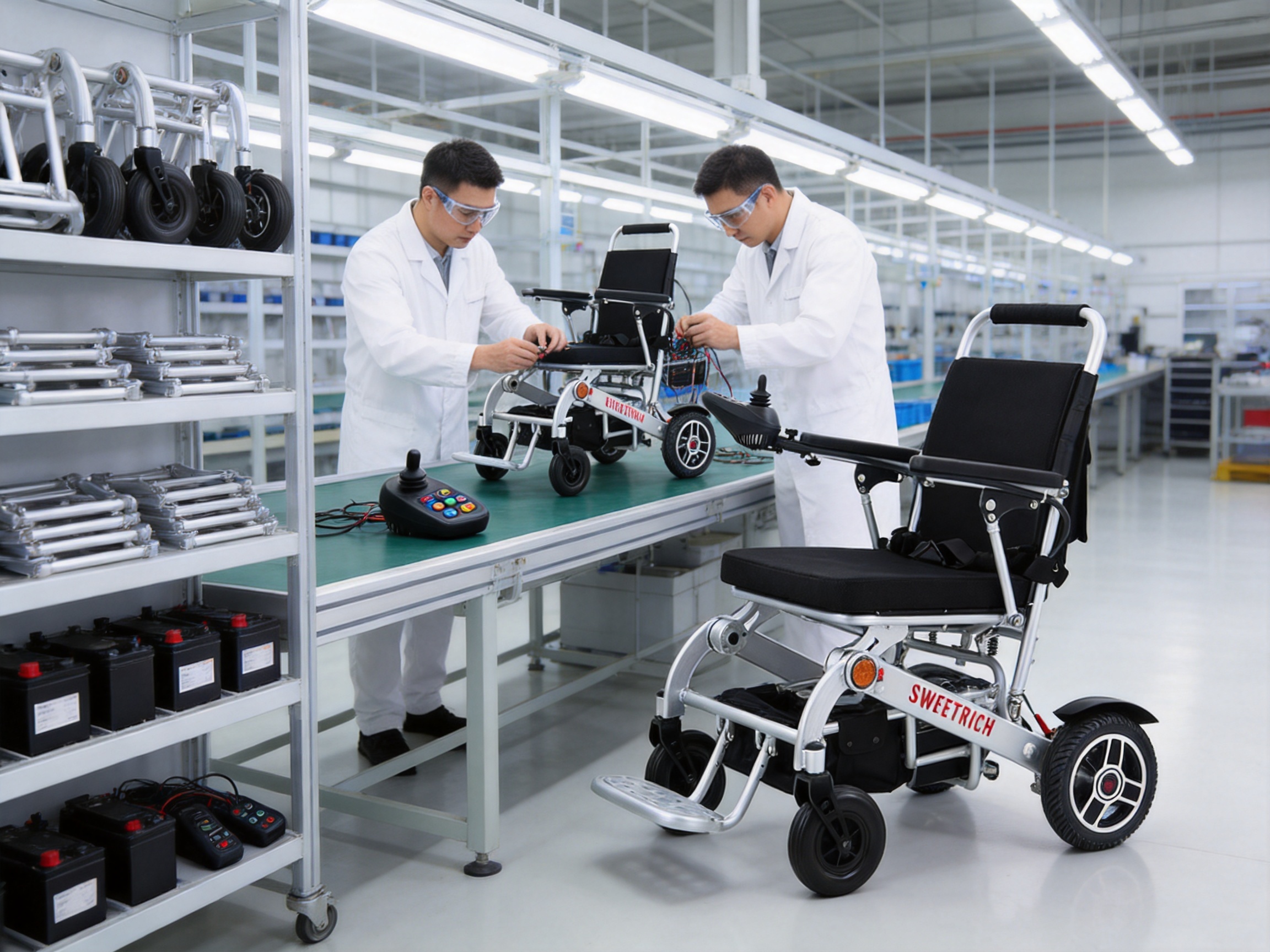
Product performance depends not only on design but also on manufacturing execution. Sweetrich Mobility has built its expertise through more than a decade of work in mobility scooters and power wheelchairs. Established in 2011, the company operates in Suzhou Industrial Park and maintains a production base with a 30,000-square-meter factory. This scale supports organized production flow, dedicated assembly lines, quality inspection areas, component storage, testing procedures, and continuous product improvement.
The company focuses on improving the well-being and convenience of elderly and disabled people, helping them live more independently and with greater dignity. This mission is reflected in the product’s balance of user comfort, smooth operation, and travel convenience. Instead of treating mobility products as simple mechanical devices, the company emphasizes control technology, driving systems, safety, and practical use conditions.
Owning intellectual property rights for electric scooters and power wheelchairs strengthens the company’s competitiveness. Intellectual property indicates that the manufacturer is not merely assembling generic products; it is involved in product development and technical refinement. This can help improve folding mechanisms, frame layout, controller integration, and overall user experience.
Strict production management and scientific product design are also key strengths. Mobility products must meet high expectations because users depend on them for daily independence. Frame welding consistency, electrical connection reliability, battery integration, braking performance, controller programming, and final inspection all affect safety and satisfaction. A manufacturer with established systems is better positioned to deliver consistent quality across production batches.
Advanced Manufacturing Process
A foldable aluminum power wheelchair requires coordination across mechanical, electrical, and ergonomic manufacturing processes. The process typically begins with design engineering, where dimensions, load distribution, folding geometry, battery position, motor placement, and user interface requirements are evaluated. Engineers must consider how the chair behaves when open, folded, loaded, driven on slopes, turned in tight spaces, and transported by caregivers.
Frame production is a critical stage. Aluminum tubes and structural parts must be cut accurately, shaped consistently, and joined with precision. The folding mechanism requires tight tolerance control because small alignment errors can make folding difficult or create long-term wear. Welding quality is especially important for frame durability. Skilled welding and controlled inspection reduce the risk of weak joints, distortion, or inconsistent structure.
After structural fabrication, surface treatment improves appearance and durability. A well-finished frame resists corrosion, looks professional, and withstands repeated handling. Surface finishing also supports brand reputation because users often judge product quality by tactile and visual details, such as smooth edges, clean joints, and consistent coating.
The assembly stage brings together the frame, motors, suspension components, wheels, brakes, controller, joystick, battery system, wiring harness, seat components, and foot platform. Electrical assembly must be neat and secure to reduce the chance of loose connections, interference, or service issues. Wiring routes should be protected from folding movement, vibration, and contact with sharp edges.
Quality testing follows assembly. A responsible manufacturer checks folding action, braking response, joystick function, motor performance, charging compatibility, suspension installation, fastener security, battery operation, and general appearance. Load-related evaluation is also important because the chair is rated for users up to 120 kg. Performance under load must remain stable, and the frame should maintain integrity during normal use.
Final inspection and packaging complete the process. A travel wheelchair must arrive in good condition, with proper protection for the frame, joystick, battery components, and accessories. Clear documentation, product identification, and service support help distributors and end users operate the chair correctly. The company’s global export experience to markets including America, Europe, Japan, Australia, the Middle East, Russia, and other regions supports its understanding of shipping, packaging, and market-specific requirements.
Quality Philosophy and Customer Value
Sweetrich Mobility follows the principle of quality first, credit above, and customer supreme. In the mobility industry, this philosophy is not simply a slogan. Users depend on powered wheelchairs for routine life, and dealers depend on stable product quality to maintain trust. A product that folds smoothly, drives predictably, and performs consistently helps build confidence among users, families, and business partners.
The company’s long-term partnerships with global customers suggest a focus on reliability and service. Mobility distributors need manufacturers that can provide consistent supply, reasonable pricing, technical communication, and product support. End users need products that are intuitive, comfortable, and dependable. This foldable power wheelchair serves both groups by combining marketable travel features with practical engineering.
Reasonable pricing is also part of customer value. A product with advanced features must remain accessible enough for distributors and users to consider. By operating a large manufacturing base and specializing in mobility products, the company can support cost efficiency while maintaining a strong feature set. This is one reason the chair can compete effectively against both premium imported models and low-cost basic alternatives.
Practical Use Scenarios
This wheelchair is suitable for many everyday scenarios. At home, its moderate width of 605 mm supports movement through many interior spaces, though users should always check their own doorways and furniture arrangements. The joystick control supports precise movement, while the electromagnetic brake adds confidence during stops.
For shopping and errands, the chair provides powered independence over distances that might be tiring in a manual chair. The range specification allows users to plan longer outings without constant concern about battery depletion. The foot platform and suspension contribute to comfort when moving across shopping center floors, sidewalks, ramps, and parking areas.
For vehicle travel, the fast folding mechanism is especially helpful. Families can prepare the chair quickly before loading, and the lightweight aluminum construction reduces the effort compared with many full-size power wheelchairs. The ability to move the chair after folding helps when positioning it in trunks, storage areas, or hotel rooms.
For leisure and social activities, the chair supports participation. Mobility limitations can often lead to isolation when transportation and movement become too difficult. A travel-smart powered chair helps users join family gatherings, outdoor walks, community visits, exhibitions, and vacations with fewer logistical barriers.
For caregivers, the chair can reduce physical strain. Instead of pushing a manual wheelchair for long distances or managing a heavy non-folding powered chair, caregivers can benefit from the powered drive and compact folding design. This can make trips more enjoyable for everyone involved.
Ergonomics and User Confidence
Good mobility design is about confidence. Users should feel that the chair responds predictably, supports their body, and remains stable during ordinary maneuvers. The joystick position, foot platform, seat layout, wheelbase, suspension, and braking system all contribute to this confidence.
The chair’s joystick availability for both sides is particularly valuable from an ergonomic perspective. It allows the control interface to match the user rather than forcing the user to adapt to a fixed design. Right-handed and left-handed users can be accommodated, and individuals with limited strength on one side can choose the more comfortable control position.
The large foot platform supports a stable seated posture. Foot placement affects balance, comfort, and perceived safety. If the feet feel unsupported, the user may become tense or fatigued. A generous platform helps maintain a more relaxed and secure posture during movement.
Suspension also influences confidence. A harsh ride can make users anxious, especially when crossing uneven ground. Front and rear suspension reduce jolts and help the chair feel more composed. This makes the product more suitable for users who want a travel chair that can handle varied real-world surfaces.
Why Dealers and Distributors Can Benefit
For mobility product dealers, this foldable power wheelchair offers several selling points in one package. It is easy to demonstrate because the fast folding mechanism creates an immediate impression. It is easy to explain because the benefits are practical: lightweight handling, compact storage, powered movement, suspension comfort, lithium battery range, and joystick flexibility. It also fits a growing market segment of users seeking travel-friendly mobility solutions.
The product’s specifications allow dealers to position it between basic transport chairs and heavy full-size power wheelchairs. This middle category is important because many customers do not need highly specialized clinical seating but still want powered independence. A foldable aluminum model with a 120 kg capacity and useful range can meet this demand effectively.
The manufacturer’s background adds confidence for business partners. A company with a large factory, more than a decade of experience, intellectual property in mobility products, and global export activity is better positioned to support long-term cooperation. Dealers often need stable communication, repeatable quality, spare parts planning, and product documentation. Manufacturing strength becomes a business advantage, not just a technical detail.
The product also allows dealers to address different customer needs through battery options. Some users prioritize lower weight and shorter daily trips, while others want extended range. Offering configurations helps dealers match the chair to the buyer’s lifestyle, improving customer satisfaction and reducing mismatch after purchase.
Responsible Operation and Maintenance
Like all powered mobility products, this wheelchair performs best when used and maintained responsibly. Users should charge the battery according to instructions, avoid deep discharge when possible, store the chair in a dry environment, and inspect visible parts regularly. The folding mechanism should be kept clean and free from debris so it can operate smoothly.
Tires should be checked for wear or damage. Braking performance should be observed during routine use, and any unusual sounds, delayed response, or irregular movement should be addressed promptly by qualified service personnel. Users should also check that the joystick is secure, cables are protected, and the battery is properly installed before operation.
Driving behavior affects both safety and range. Smooth acceleration, moderate speed, and careful slope management help preserve battery energy and reduce mechanical strain. Users should avoid exceeding the 120 kg weight capacity, avoid unsafe inclines beyond the rated gradient, and operate with extra caution on wet, loose, or uneven surfaces.
For travel, users should check transport rules in advance, especially when carrying lithium batteries on aircraft or public transportation. Battery approval, capacity limits, documentation, and handling rules can vary by carrier and region. Planning ahead helps prevent travel disruptions.
Q&A Section
What type of user is this foldable power wheelchair designed for?
It is designed for users who need powered mobility combined with travel convenience. This includes older adults, people with limited walking ability, users who want a compact wheelchair for outings, and caregivers seeking a product that is easier to fold, move, and transport than many conventional electric wheelchairs.
How quickly can the wheelchair fold and unfold?
The product features a fold-and-unfold action of approximately one second. This fast folding design is one of its main advantages, helping users and caregivers prepare the chair quickly for storage or transportation.
What is the weight of the wheelchair?
The listed weight without the battery is 24 kg. This lightweight aluminum construction makes the chair more manageable than many full-size powered wheelchairs, especially when loading into vehicles or moving it after folding.
What is the maximum user weight capacity?
The wheelchair is rated for a weight capacity of 120 kg, or approximately 265 lb. Users should not exceed this limit, as doing so may affect safety, performance, and product durability.
What is the listed driving range?
The listed maximum driving range is 30±5 km. Actual range may vary based on user weight, terrain, speed, temperature, battery condition, tire condition, and driving habits.
What battery options are available?
The product information lists lithium battery options of 24V/10.2Ah and 24V/20Ah. Optional higher-capacity configurations may be available for users who require extended distance, depending on market and supplier availability.
How long does charging take?
The listed charging time is approximately five hours using the DC 24V 2A charger with AC 115–230V input. Users should follow the charging instructions supplied with the product.
Can the joystick be placed on either side?
Yes. The joystick is available for both-side use, allowing it to be positioned according to the user’s preferred or stronger hand. This improves adaptability and comfort.
Does the wheelchair have suspension?
Yes. The wheelchair includes front and rear suspension, which helps improve ride comfort over common uneven surfaces such as pavement joints, ramps, thresholds, and outdoor paths.
What braking system does it use?
It uses an electromagnetic brake system. This helps provide reliable stopping behavior and supports safe control when the joystick is released or when the chair is stopped.
How does it compare with traditional electric wheelchairs?
Compared with many traditional electric wheelchairs, this model is lighter, easier to fold, and more convenient for travel and storage. It may not replace specialized clinical power chairs for users with complex seating needs, but it is highly practical for users who prioritize portability and daily convenience.
How does the manufacturer support product quality?
The manufacturer has more than ten years of experience in mobility scooters and power wheelchairs, a 30,000-square-meter factory, a focus on control technology and driving systems, and established production management practices. These strengths support consistent product manufacturing and quality control.
Conclusion
This foldable lightweight aluminum power wheelchair demonstrates how modern travel mobility products can combine convenience, comfort, safety, and manufacturing quality. Its fast folding design directly addresses one of the biggest challenges in powered mobility: transportation. Its 24 kg weight without battery, aluminum frame, lithium battery options, dual motors, front and rear suspension, electromagnetic braking, spacious foot platform, and adaptable joystick create a balanced solution for users who want more independence without the burden of a heavy non-folding chair.
The product’s advantages over competitors are clear. Compared with conventional power wheelchairs, it is more portable and easier to store. Compared with basic folding travel chairs, it provides stronger powered performance, better comfort features, and a more complete driving system. Compared with low-cost alternatives, it benefits from the manufacturing background of a specialized mobility company with a large production base, technical experience, intellectual property, and global market experience.
For users, the chair offers practical independence. For caregivers, it reduces handling difficulty. For dealers, it provides a compelling product in the growing travel mobility category. For the manufacturer, it reflects a broader commitment to quality, user dignity, and reliable mobility solutions. In a market where mobility products must do more than simply move, this foldable power wheelchair stands out as a travel-smart answer to everyday freedom.
References
Cooper, R. A. Wheelchair Selection and Configuration. Demos Medical Publishing.
International Organization for Standardization. ISO 7176 Series: Wheelchairs.
Brubaker, C. E. Wheelchair Prescription: An Analysis of Factors That Affect Mobility and Performance. Journal of Rehabilitation Research and Development.
National Academies of Sciences, Engineering, and Medicine. The Future of Mobility Assistive Technologies.
U.S. Department of Transportation. Guidance on Wheelchairs and Other Mobility Aids in Transportation Environments.
Battery University. Lithium-Based Battery Performance and Charging Principles.