
 +86-(0)512-82283871
Content
- 1 Product Overview: A Heavy-Duty Outdoor Power Wheelchair Built for Confidence
- 2 Key Technical Specifications
- 3 Front-Wheel Drive Advantage
- 4 Comfort-Oriented Seating for Longer Use
- 5 Suspension and Tire Design for Outdoor Conditions
- 6 Power System: Dual Motors and Practical Battery Capacity
- 7 Electromagnetic Braking for Safety and Control
- 8 Designed for Outdoor Use Without Ignoring Everyday Practicality
- 9 Advantages Over Many Competing Products
- 10 Manufacturing Strength Behind the Product
- 11 Advanced Production Management and Quality Control
- 12 Engineering Design That Supports Real Users
- 13 Non-Medical Mobility Positioning for the U.S. Market
- 14 Applications and Suitable User Scenarios
- 15 Care, Maintenance, and Long-Term Ownership
- 16 Why Manufacturing Experience Matters to Buyers
- 17 How the Product Supports Dignity and Independence
- 18 Procurement Value for Dealers and Distributors
- 19 Product: iPower Sport FWD Certificated power suppier used battery electric wheelchair foldable for out door use
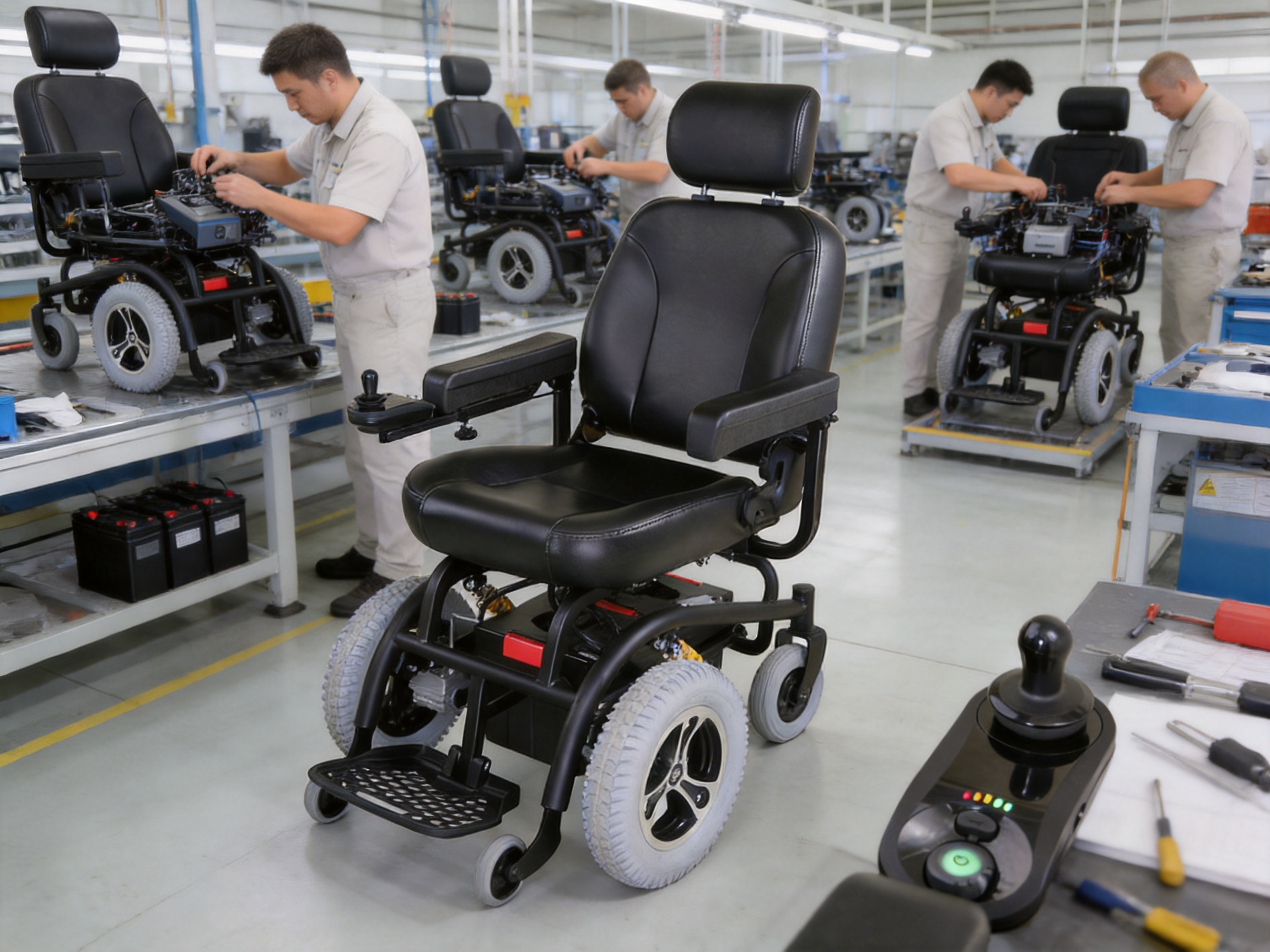
Modern personal mobility is no longer defined only by moving from one room to another. For many elderly users, people with limited mobility, caregivers, distributors, and rehabilitation equipment buyers, a power wheelchair must provide safe control, stable outdoor performance, practical comfort, dependable endurance, and manufacturing quality that supports long-term use. The iPower Sport FWD electric wheelchair is designed around those expectations, combining front-wheel drive handling, large pneumatic tires, suspension support, electromagnetic braking, dual motors, and a long-range lead-acid battery system in a heavy-duty mobility platform for outdoor use.
This article examines the product from a practical and industrial perspective. It explains how the wheelchair’s structure, power system, comfort details, safety features, and production background help it stand apart from many common mobility products in the market. It also introduces the manufacturing strengths behind the product, including engineering experience, quality-oriented production management, advanced control technology, and international market awareness.
Product Overview: A Heavy-Duty Outdoor Power Wheelchair Built for Confidence
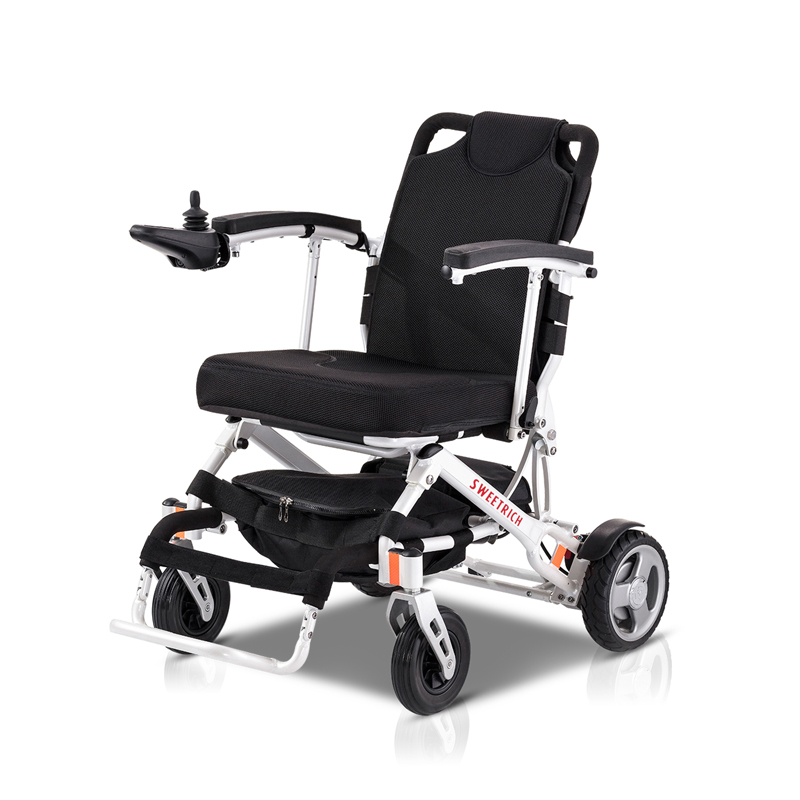
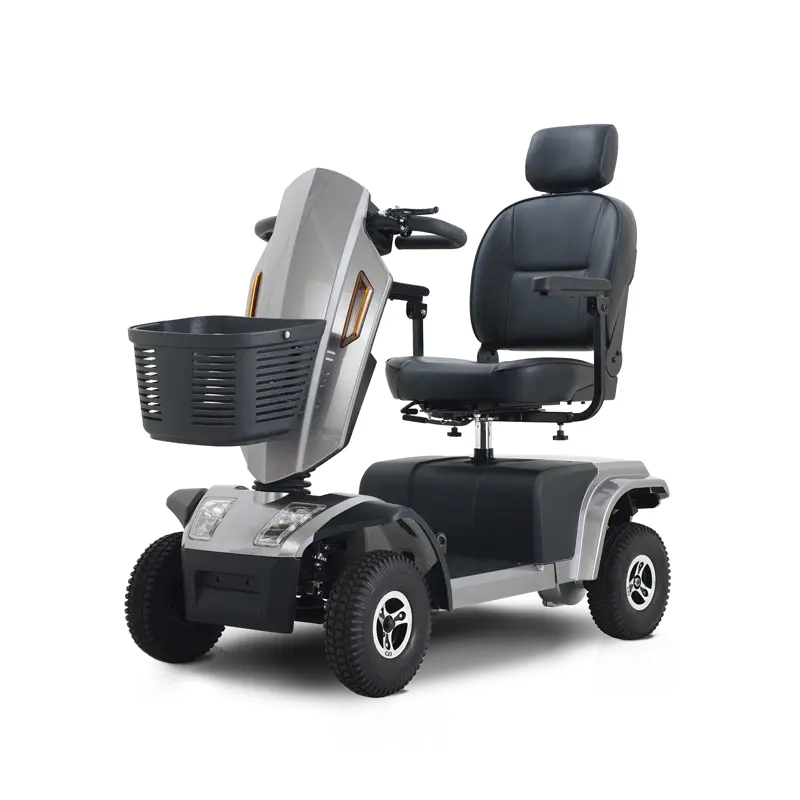
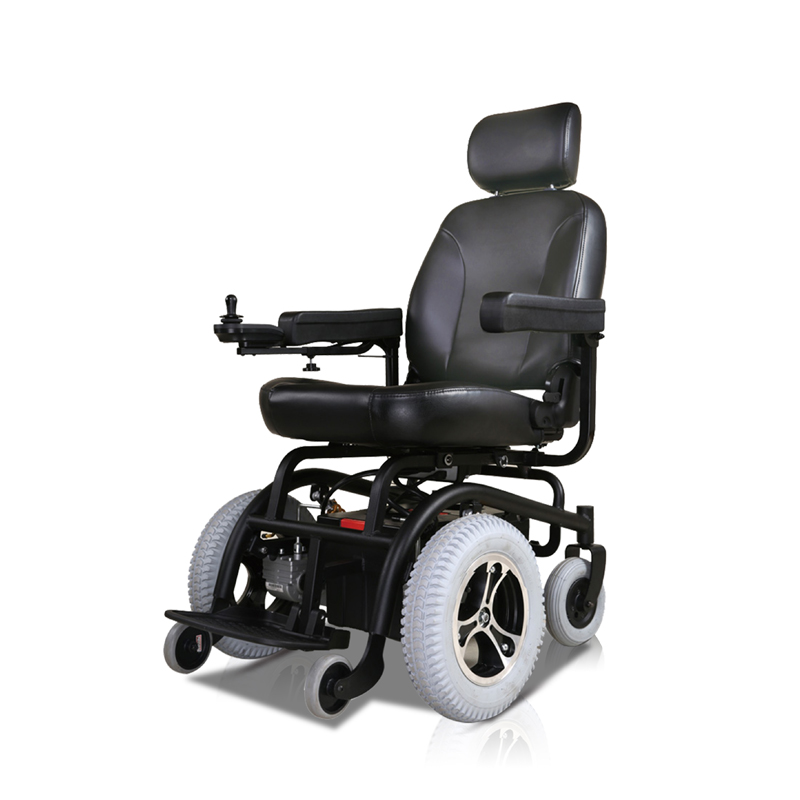
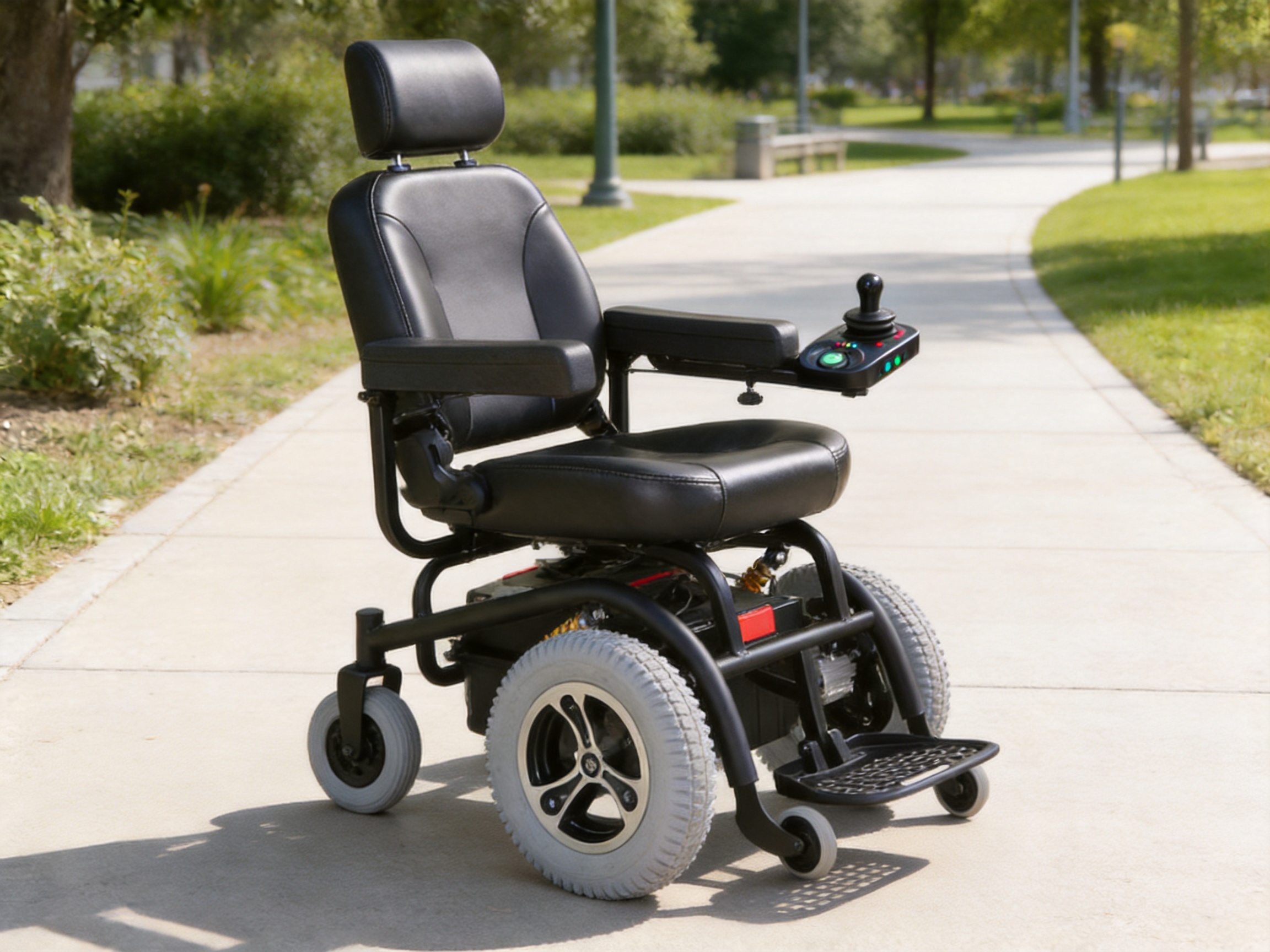
The iPower Sport FWD is positioned as a heavy-duty electric wheelchair suitable for users who require more than a lightweight indoor chair. Its design focuses on outdoor usability, traction, ride comfort, and reliable daily transportation. With a front-wheel drive configuration, large front pneumatic tires, anti-tip wheels, suspension support, and a weight capacity of 120 kg, it is intended for users who need a stronger mobility solution for varied surfaces and longer travel distances.
The wheelchair measures 980 mm in length, 600 mm in width, and 1180 mm in height. This size gives it a substantial road presence while still remaining manageable for many residential, community, and travel-related environments. The 600 mm width is especially meaningful because it helps balance stability with accessibility. A wheelchair that is too narrow may feel unstable outdoors, while one that is too wide may become inconvenient in tighter spaces. This model aims for a practical middle ground.
Its maximum forward speed is 8 km/h, equal to approximately 5 miles per hour. This speed is suitable for everyday movement in parks, communities, campuses, sidewalks, shopping areas, and accessible public environments. It is fast enough to reduce travel fatigue but controlled enough to support safe operation. The maximum driving gradient is 10 degrees, giving the chair the capability to handle moderate slopes when used under appropriate conditions.
The driving range is one of the strongest highlights of the product. With two 12V 40Ah lead-acid batteries, the wheelchair offers an estimated range of 30 to 40 km, or about 19 to 25 miles. For many users, this range can support a full day of local mobility without frequent charging. Whether the user is visiting a community center, traveling through a residential district, going outdoors with family, or managing daily errands, the extended range reduces anxiety about battery depletion.
The power system is supported by two 24V 320W motors and a 24V 50A motor controller. The dual-motor setup helps the wheelchair deliver responsive movement and stable turning performance. The controller, sourced from a recognized UK control technology supplier, reflects a design choice focused on precision, safety, and dependable operation. This matters because the controller is the “brain” of an electric wheelchair. It translates user input into motion, manages speed, and contributes to the smoothness of starts, stops, and turns.
Key Technical Specifications
Item |
Specification |
User Benefit |
Dimensions |
980 mm × 600 mm × 1180 mm |
Balanced size for stability and practical maneuverability |
Maximum Forward Speed |
8 km/h, approximately 5 mph |
Efficient daily travel with controlled movement |
Maximum Driving Gradient |
10 degrees |
Supports movement on moderate slopes and ramps |
Maximum Driving Range |
30 to 40 km, approximately 19 to 25 miles |
Longer outdoor use with reduced charging concerns |
Weight Capacity |
120 kg, approximately 265 lb |
Heavy-duty support for a wider range of users |
Suspension |
Front suspension, with comfort-focused suspension design |
Improved ride comfort on uneven surfaces |
Tire Sizes |
14 inch × 3 inch front, 8 inch × 2.5 inch rear |
Large front tire contact for traction and outdoor performance |
Brake System |
Electromagnetic brake |
Reliable stopping and secure parking support |
Batteries |
Lead-acid 12V 40Ah × 2 pieces |
Durable and familiar energy storage solution |
Charger |
DC 24V 5A, AC 115V to 230V |
Compatible with common voltage ranges in many markets |
Charging Time |
6 to 8 hours |
Convenient overnight charging routine |
Motors |
24V 320W × 2 pieces |
Dual power support for strong mobility performance |
Motor Controller |
24V 50A controller |
Smooth power delivery and precise driving response |
Front-Wheel Drive Advantage
Front-wheel drive is a major part of the chair’s identity. In a front-wheel drive power wheelchair, the larger drive wheels are positioned toward the front of the chair. This configuration can provide strong pulling traction, especially when the wheelchair moves over uneven pavement, transitions, compacted outdoor surfaces, or gentle slopes. Instead of being pushed from behind, the chair is pulled forward by the front drive wheels, which can improve the feeling of control for many users.
Compared with some rear-wheel drive wheelchairs, a front-wheel drive model can offer a different turning feel and better performance when approaching small surface changes. Rear-wheel drive models are often stable at higher straight-line speeds, but they can require more space in certain turns. Mid-wheel drive models are often praised for tight indoor turning, but they may feel less natural on some uneven outdoor terrain depending on wheel placement and suspension design. The iPower Sport FWD is designed for users who place a high value on outdoor capability and stable traction.
The 14 inch front pneumatic tires are especially important. Larger tires generally roll more comfortably over small surface irregularities than smaller solid wheels. Pneumatic tires absorb part of the vibration from the ground, creating a softer ride. When combined with suspension and anti-tip protection, the tire design helps create a wheelchair that feels more confident outdoors than many compact indoor chairs.
This is an important advantage over many entry-level power wheelchairs. Some competitors use smaller wheels and simpler frames to reduce cost and weight. Those products may work well on smooth indoor floors but may become uncomfortable or less capable outdoors. The iPower Sport FWD takes a different approach: it emphasizes robust outdoor usability, traction, and user confidence.
Comfort-Oriented Seating for Longer Use
Comfort is not a luxury feature in a power wheelchair. It is a core requirement. Many users spend extended periods seated, and poor seating can lead to fatigue, discomfort, reduced posture control, and reluctance to use the chair for longer outings. The product includes a leather-like cushion seat and an adjustable seat back, both of which support a more user-friendly experience.
The leather-like cushion surface provides a clean, refined appearance and is easier to maintain than many absorbent fabric surfaces. For daily users and caregivers, cleanability can be a major practical advantage. Outdoor mobility can expose the chair to dust, moisture, and everyday wear, so a seat material that can be wiped and maintained helps preserve the product’s appearance and hygiene.
The adjustable seat back allows the chair to accommodate different posture preferences. Users vary in height, torso shape, strength, and comfort needs. A fixed backrest may be suitable for short trips, but adjustability improves long-term usability. It allows the chair to better support the user during travel, especially when the wheelchair is used outdoors for longer periods.
Compared with basic mobility chairs that emphasize only movement, this wheelchair recognizes that mobility and comfort are linked. If the chair is uncomfortable, the user may avoid going out. If the chair supports stable seating and a smoother ride, the user may feel more willing to participate in social, family, and community activities.
Suspension and Tire Design for Outdoor Conditions
Outdoor environments are rarely perfect. Sidewalks can include cracks, ramps, textured pavement, thresholds, and uneven transitions. A wheelchair designed for real outdoor mobility must address these conditions. The iPower Sport FWD uses large pneumatic tires and suspension support to reduce vibration and improve riding comfort.
The front tires are 14 inches by 3 inches, significantly larger than the small caster wheels found on many compact power chairs. This larger tire size helps the chair approach uneven surfaces with greater confidence. The rear tires are 8 inches by 2.5 inches, supporting balance and stable movement. The tire pairing reflects a design focused on front-wheel traction and rear support.
The suspension system is another important comfort element. Suspension helps manage shock when the wheelchair crosses small bumps or uneven surfaces. Without suspension, vibration can travel directly through the frame into the seat and the user’s body. Over time, that can increase fatigue. With suspension support, the ride can feel smoother and less harsh.
The inclusion of anti-tip wheels also contributes to safety. Anti-tip wheels help reduce the risk of backward instability in certain situations, particularly when navigating slopes or transitions. While users must always follow safe driving practices, the presence of anti-tip support reflects a design priority around stability.
Compared with competitors that rely on rigid frames and small solid tires, this model’s pneumatic tire and suspension combination gives it a more outdoor-oriented character. It is better suited for users who expect to travel beyond indoor corridors and polished floors.
Power System: Dual Motors and Practical Battery Capacity
The chair uses two 24V 320W motors. Dual motors are standard in many quality power wheelchairs because they allow independent wheel control, helping with steering, turning, and traction. In this model, the motor specification is suitable for a heavy-duty chair designed to carry up to 120 kg and handle outdoor travel.
The chair’s controller is rated at 24V 50A. A quality controller affects much more than speed. It influences acceleration smoothness, turning behavior, braking response, and how naturally the chair reacts to joystick input. When a chair responds too sharply, it can feel difficult to control. When it responds too slowly, it can feel underpowered or frustrating. A well-matched controller helps create an intuitive driving experience.
The battery system uses two 12V 40Ah lead-acid batteries. Lead-acid technology is well established, widely understood, and commonly used in mobility products. While lithium batteries are lighter, lead-acid batteries remain valued for their durability, cost efficiency, and service familiarity. For many distributors and after-sales teams, lead-acid systems are easier to support because replacement batteries and charging practices are widely known.
The estimated driving range of 30 to 40 km is one of the product’s strongest advantages over many compact electric wheelchairs. Entry-level chairs may have much shorter travel ranges, forcing users to plan carefully around charging. A longer range gives users greater freedom. It can support outdoor activities, shopping trips, community visits, and daily routines without constant concern about returning home quickly.
The charging time of 6 to 8 hours is practical for overnight charging. Users can charge the wheelchair in the evening and begin the next day with a full battery. The charger supports AC 115V to 230V input, which is useful for international markets and different electrical environments. This helps distributors, care facilities, and global customers work with a product that can be adapted to different regions.
Electromagnetic Braking for Safety and Control
The electromagnetic brake system is a key safety feature. In electric wheelchairs, braking must be reliable, predictable, and easy for the user to manage. Electromagnetic brakes are commonly used because they can automatically engage when the joystick is released or when power is cut, helping the chair stop and remain stationary.
This is especially important for users who may have reduced hand strength, slower reaction time, or limited ability to manually operate a mechanical brake. The system supports safer operation in daily use by reducing dependence on manual braking actions. It also helps when the wheelchair is parked on a slight incline or when the user is transferring in and out of the chair.
Compared with simpler mobility products that use less sophisticated braking methods, electromagnetic braking provides a higher level of integrated safety. For an outdoor heavy-duty power wheelchair, this is not optional; it is essential. Strong motors and long range must be matched with dependable braking technology. The iPower Sport FWD addresses this by pairing its dual-motor drive system with automatic electromagnetic braking support.
Designed for Outdoor Use Without Ignoring Everyday Practicality
A wheelchair that performs outdoors must still be practical indoors and in everyday environments. The iPower Sport FWD’s 600 mm width helps it remain suitable for many doorways and indoor passages while retaining the stable stance expected from an outdoor chair. Its overall design reflects a balance between strength and usability.
The maximum speed of 8 km/h is also well chosen. For outdoor use, a very slow chair can make trips tiring and inefficient. However, excessive speed can increase risk and reduce user confidence. A 5 mph top speed is common for practical outdoor mobility and can support a comfortable pace in many public spaces.
The 10 degree climbing capability gives the chair practical usefulness on ramps and slopes. Users should always consider surface conditions, body weight, battery level, and local safety guidelines, but the specification indicates that the chair is built with more strength than a minimal indoor model. This makes it suitable for communities and facilities where ramps and inclines are part of daily movement.
The folding characteristic mentioned in the product positioning adds further convenience for storage and transport planning. Foldable or space-saving mobility products are increasingly important as users and families look for equipment that can fit into homes, vehicles, or care environments without requiring excessive space. A heavy-duty chair with outdoor capability and practical storage thinking offers a broader value proposition than a single-purpose indoor product.
Advantages Over Many Competing Products
The mobility market includes many types of electric wheelchairs, from ultra-light travel chairs to large rehabilitation power chairs. The iPower Sport FWD occupies a valuable middle position: it provides robust outdoor-oriented performance while remaining practical for daily personal mobility. Its competitive advantages can be understood in several areas.
Stronger Outdoor Confidence
Many lightweight chairs are built around portability first. They may use small wheels, limited battery capacity, and minimal suspension. This can be acceptable for airports, shopping malls, or smooth indoor areas, but it may be less suitable for outdoor travel. The iPower Sport FWD prioritizes outdoor confidence through front-wheel drive, large pneumatic tires, suspension support, and anti-tip wheels.
Longer Range for Daily Freedom
A 30 to 40 km driving range is a strong selling point. Users who depend on a power wheelchair often value range because it directly affects independence. A short-range chair can create psychological limits even before the battery is low. A longer-range chair allows users to say yes to more activities, more outings, and more spontaneous movement.
Heavy-Duty User Support
The 120 kg weight capacity makes the wheelchair suitable for a wider group of users. Some compact travel chairs have lower load ratings and may not provide the same sense of durability. A higher weight capacity indicates stronger structural planning and offers buyers more confidence when selecting products for varied user needs.
Comfort Features That Matter
The leather-like cushion, adjustable seat back, suspension, and pneumatic tires work together to improve comfort. Competitors sometimes emphasize only motor power or folding convenience while neglecting seating comfort. This model treats comfort as part of the mobility experience.
Quality Components and Control
The use of a capable motor controller and dual motors supports smoother control. In real use, this may be more important than a single headline specification. A wheelchair is not just a machine; it is an extension of the user’s body. Smooth control improves trust, safety, and satisfaction.
Practical Battery and Charger System
The lead-acid battery system is familiar, serviceable, and cost-effective. While some buyers prefer lithium options, lead-acid remains a practical choice for many heavy-duty mobility products because of its established reliability and maintenance ecosystem. The 6 to 8 hour charging time fits an overnight schedule, and the broad charger input range supports global usability.
Manufacturing Strength Behind the Product
The product is supported by the manufacturing capabilities of Sweetrich Mobility, a company based in Suzhou Industrial Park, China. Established in 2011, the company has more than ten years of experience in research, development, and production of mobility scooters and power wheelchairs. This experience matters because mobility products require more than assembly. They require mechanical engineering, electrical integration, safety awareness, supply chain management, process control, and after-sales understanding.
The company operates from a large industrial base covering 60 acres, with a 30,000 square meter factory. This scale allows it to support organized production, component storage, inspection processes, engineering work, and export operations. For distributors and purchasing teams, factory scale can indicate a supplier’s ability to support stable production and repeat orders.
The company’s focus is improving the convenience and dignity of elderly and disabled users. That mission is reflected in the design of products such as the iPower Sport FWD, which does not treat mobility as a purely mechanical function. Instead, it addresses independence, comfort, safety, and usability. Products are designed to help users participate more actively in daily life.
Another strength is the company’s ownership of intellectual property rights for its electric scooters and power wheelchairs. Intellectual property ownership suggests internal development capability rather than simple imitation. In a competitive market, this matters because genuine product development can lead to better structural design, more refined ergonomics, improved safety, and more consistent quality.
The company exports products to America, Europe, Japan, Australia, the Middle East, Russia, and other markets. International experience helps a manufacturer understand different customer expectations, compliance environments, packaging requirements, climate conditions, and service needs. A product designed only for one local market may struggle elsewhere, but a manufacturer with global exposure can better prepare products for diverse requirements.
Advanced Production Management and Quality Control
Reliable power wheelchairs are built through controlled processes. A strong design is only the beginning. The manufacturing process must ensure that each frame, wheel assembly, controller, battery connection, motor system, brake, and seat component is produced and assembled consistently. Sweetrich’s approach emphasizes strict production management and scientific product design, which are essential in mobility manufacturing.
Frame production is one of the foundations of product reliability. A heavy-duty power wheelchair must support user weight, absorb dynamic forces, and maintain alignment during movement. The frame must be strong enough for outdoor operation while still being practical in size and handling. Manufacturing consistency in cutting, forming, welding, finishing, and assembly affects the final chair’s strength and stability.
Electrical integration is equally important. Motors, controllers, batteries, chargers, wiring harnesses, joystick controls, and brakes must operate as one system. Poor wiring layout or inconsistent connections can cause performance problems. A quality-oriented manufacturer pays attention to cable routing, connector security, insulation, and electrical testing. These details may not be visible to the user, but they strongly influence reliability.
Battery installation and charging compatibility require careful management. Lead-acid batteries are robust, but they must be installed securely and matched with the correct charging system. The chair’s 24V system, 5A charger, and 6 to 8 hour charging profile require appropriate engineering and production checks to support safe use.
Final inspection is another critical stage. A power wheelchair should be checked for movement, braking, turning, speed response, noise, wheel alignment, seat stability, controller function, and charging operation. For export products, packaging inspection is also important because long-distance shipping can expose equipment to vibration and handling stress.
Compared with suppliers that rely on simple assembly and limited quality checks, a manufacturer with structured production management can offer better product consistency. This is especially important for dealers and distributors, because inconsistent quality increases service costs and damages customer trust.

Engineering Design That Supports Real Users
Scientific product design means understanding how users interact with the wheelchair. Every major component affects the user experience. The position of the seat influences posture and balance. The tire size affects comfort and traction. The controller affects confidence. The battery capacity affects independence. The braking system affects safety. The frame geometry affects stability and turning behavior.
In the iPower Sport FWD, several design choices show attention to real-world needs. The large front tires suggest a focus on outdoor surfaces. The suspension system addresses comfort. The anti-tip wheels support stability. The adjustable seat back recognizes differences among users. The electromagnetic brake supports safer stopping. The long-range batteries reduce mobility anxiety.
This combination is more meaningful than any single feature. A powerful motor without good braking would not be enough. Large tires without seating comfort would not fully satisfy users. Long range without reliable control would not inspire confidence. The value of the product comes from integration: the way the whole system works together to support daily independence.
For elderly users, smoothness and predictability are especially important. Sudden starts, harsh braking, or uncomfortable vibration can make users nervous. A chair that feels stable and controlled can encourage more frequent use. This can improve quality of life because mobility supports social participation, outdoor activity, and personal autonomy.
Non-Medical Mobility Positioning for the U.S. Market
The product information notes that it is positioned as a non-medical device for the U.S. market. This distinction is important. Mobility products can be sold for different purposes and under different regulatory categories depending on the market, claims, and intended use. A non-medical mobility product is generally presented as personal mobility assistance rather than as a medical treatment device.
For buyers, this means the product should be evaluated according to its intended application, local regulations, distributor responsibilities, and user needs. It remains important to provide clear user guidance, safety instructions, charging instructions, maintenance recommendations, and operating limitations. Responsible marketing should avoid unsupported medical claims and focus on mobility, convenience, comfort, and independent travel.
This positioning can be useful for distributors serving retail mobility markets, senior living communities, personal transportation customers, and users seeking practical outdoor mobility support. It allows the product to be presented as a robust personal mobility solution while still requiring appropriate safety education and responsible use.
Applications and Suitable User Scenarios
The iPower Sport FWD is suitable for a broad set of daily mobility scenarios. It is particularly appropriate for users who require outdoor mobility support and who value range, stability, and comfort.
Community Mobility
In residential communities, users may need to travel between homes, gardens, mail areas, clubhouses, parking areas, and nearby shops. The wheelchair’s long range and outdoor-oriented tires support this kind of daily movement. Its moderate speed helps users move efficiently without feeling rushed.
Senior Living and Assisted Living Environments
Senior living communities often include indoor corridors, outdoor paths, dining areas, activity rooms, and landscaped spaces. A stable power wheelchair can help residents participate more actively. The comfort seat and adjustable backrest are valuable for users who spend extended time in the chair.
Family Outings
Families often want mobility equipment that allows elderly or disabled members to join outdoor activities. The chair’s range, suspension, and front-wheel drive system make it more suitable for outings than small indoor-only chairs. It can help users enjoy parks, community events, and accessible public spaces.
Daily Errands
For users who visit local shops, clinics, offices, or social centers, range and reliability are essential. The 30 to 40 km range offers practical support for errands, while the electromagnetic brake and stable structure improve confidence during stops and transfers.
Distributor and Retail Sales
For mobility equipment dealers, the product offers a clear selling story: heavy-duty capacity, outdoor-ready tires, long range, front-wheel drive traction, comfort seating, and manufacturing support from an experienced producer. These features make it easier to explain value to customers who need more than a basic chair.
Care, Maintenance, and Long-Term Ownership
Long-term satisfaction with any power wheelchair depends on proper use and maintenance. The iPower Sport FWD is built with durable features, but users and caregivers should still follow routine care practices to preserve performance.
Battery care is especially important. Lead-acid batteries should be charged according to the manufacturer’s instructions. Regular charging, avoiding deep discharge where possible, and using the correct charger can help extend battery life. Since the charging time is 6 to 8 hours, overnight charging is a convenient routine for many users.
Tire care is also important because the front pneumatic tires contribute significantly to comfort and traction. Users should check tire pressure according to recommended guidelines and inspect tires for wear, damage, or embedded objects. Properly maintained pneumatic tires improve range, ride quality, and control.
The brake system should be checked regularly. Electromagnetic brakes are designed for dependable operation, but users should pay attention to any unusual behavior, delayed stopping, strange sounds, or warning signals. Any concern should be addressed by qualified service personnel.
The seat, backrest, and frame should also be inspected. Loose fasteners, damaged upholstery, or unusual movement should be corrected. Keeping the chair clean helps preserve its appearance and can make inspections easier. Because the cushion has a leather-like surface, routine wiping can help maintain hygiene.
Users should also understand safe driving behavior. Even a strong outdoor wheelchair has limits. It should not be used on unsafe slopes, deep water, loose sand, steep curbs, or unstable surfaces. The 10 degree climbing specification is a performance reference, not permission to attempt unsafe routes. Good judgment remains essential.
Why Manufacturing Experience Matters to Buyers
When selecting a power wheelchair supplier, buyers often compare price, appearance, and specifications. However, manufacturing experience should be considered just as carefully. A product that looks attractive on paper must still perform reliably after months or years of use. Experienced manufacturers are better positioned to understand design tolerances, component compatibility, production efficiency, and after-sales support.
Sweetrich Mobility’s more than ten years of industry experience gives it a foundation for continuous product improvement. The company has developed mobility scooters and power wheelchairs for international customers, gaining practical knowledge about user preferences and market requirements. This knowledge helps shape products that are not only functional but also commercially suitable.
Factory scale also matters. A 30,000 square meter facility enables systematic production planning and quality management. Larger production environments can support specialized areas for assembly, inspection, warehousing, testing, and packaging. This can help reduce delays and improve consistency.
The company’s principle of quality first, credit above, and customer supreme reflects a business approach that prioritizes long-term cooperation. In the mobility industry, long-term relationships are valuable because customers need spare parts, technical support, product updates, and reliable supply. A supplier that focuses only on one-time sales may not provide the same value as a manufacturer committed to ongoing cooperation.
How the Product Supports Dignity and Independence
The technical features of a power wheelchair have a human purpose. Range, tires, motors, brakes, and seating all contribute to a larger goal: helping users live with greater independence and dignity. For elderly and disabled users, mobility limitations can affect emotional well-being, social participation, and daily confidence. A dependable wheelchair can reduce dependence on others and expand the user’s world.
The iPower Sport FWD supports independence by helping users travel farther, handle outdoor surfaces more comfortably, and feel more secure during operation. The long driving range gives users more freedom to plan their day. The front-wheel drive system and large tires support outdoor exploration. The seat and suspension make longer outings more comfortable. The brake system supports safety and confidence.
Dignity also comes from design appearance. A mobility product should not feel like a compromise. The leather-like seat, substantial frame, and sport-oriented front-wheel drive concept give the chair a capable and modern character. Users deserve equipment that feels empowering, not limiting.
Procurement Value for Dealers and Distributors
For dealers and distributors, a successful power wheelchair must satisfy both end users and business requirements. It should be easy to explain, supported by strong specifications, manufacturable in stable quantity, and suitable for after-sales service. The iPower Sport FWD offers several procurement advantages