
 +86-(0)512-82283871
Content
- 1 Product Positioning: A Practical Travel Scooter for Independent Living
- 2 Core Specifications and What They Mean for Users
- 3 Design Advantages Over Competing Mobility Scooters
- 4 Comfort, Stability, and Confidence in Daily Use
- 5 Folding and Travel-Smart Convenience
- 6 Safety-Oriented Engineering for Practical Operation
- 7 Manufacturing Strengths Behind the Product
- 8 Research, Development, and Intellectual Property
- 9 Quality Management and Reliability
- 10 Why This Scooter Is Well Suited for Older Adults
- 11 Applications in Daily Life
- 12 Comparison with Typical Competitor Designs
- 13 Energy System and Charging Convenience
- 14 Serviceability and Dealer Value
- 15 User Guidance and Responsible Operation
- 16 Q&A Section
- 16.1 Q1: Who is the S1 Sport foldable mobility scooter designed for?
- 16.2 Q2: Is this scooter considered a medical device?
- 16.3 Q3: What is the maximum speed?
- 16.4 Q4: How far can it travel on one charge?
- 16.5 Q5: What battery options are available?
- 16.6 Q6: How long does charging take?
- 16.7 Q7: What is the weight capacity?
- 16.8 Q8: Why is the four-wheel design important?
- 16.9 Q9: Does the scooter have suspension?
- 16.10 Q10: What makes this model competitive?
- 17 Buying Considerations for Users and Distributors
- 18 Company Strength and Global Cooperation
- 19 Conclusion: A Balanced Scooter for Everyday Freedom
- 20 References
- 21 Product: S1 Sport Easy Travel 4 Wheel Ultra Light Foldable Electric Mobility Scooter for Old People
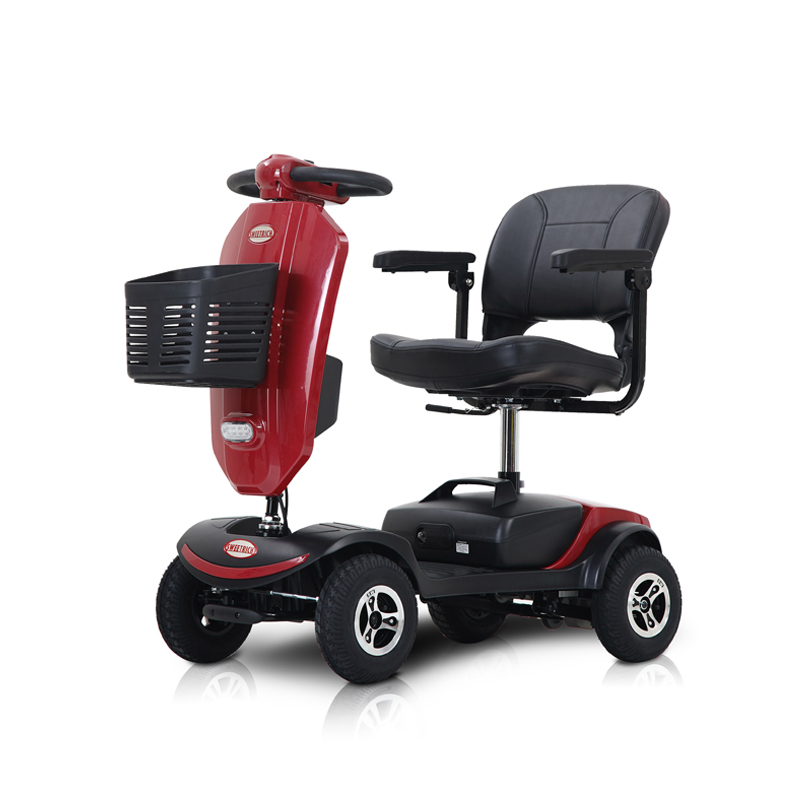
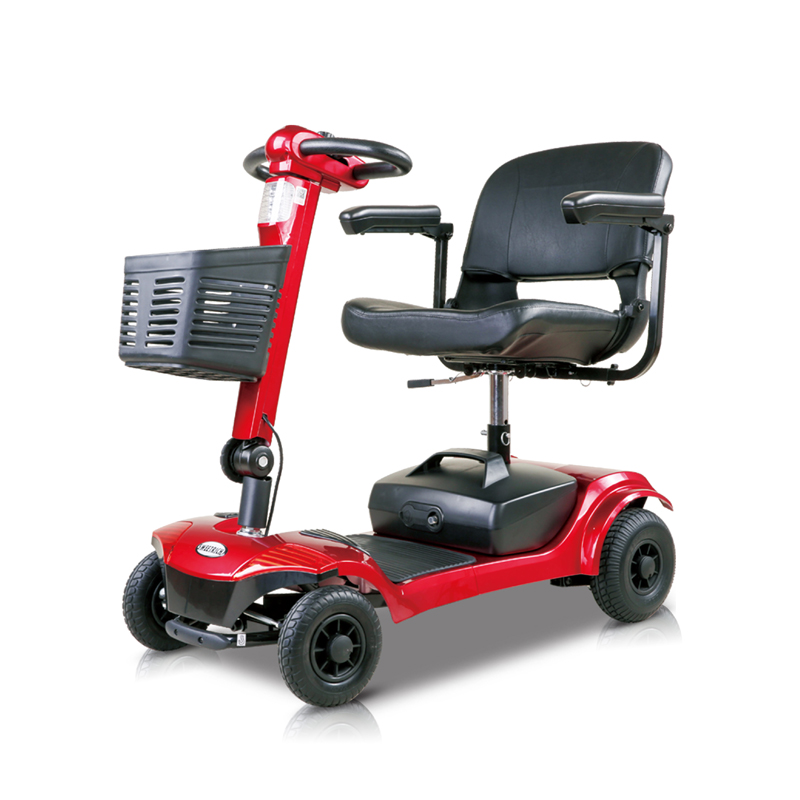
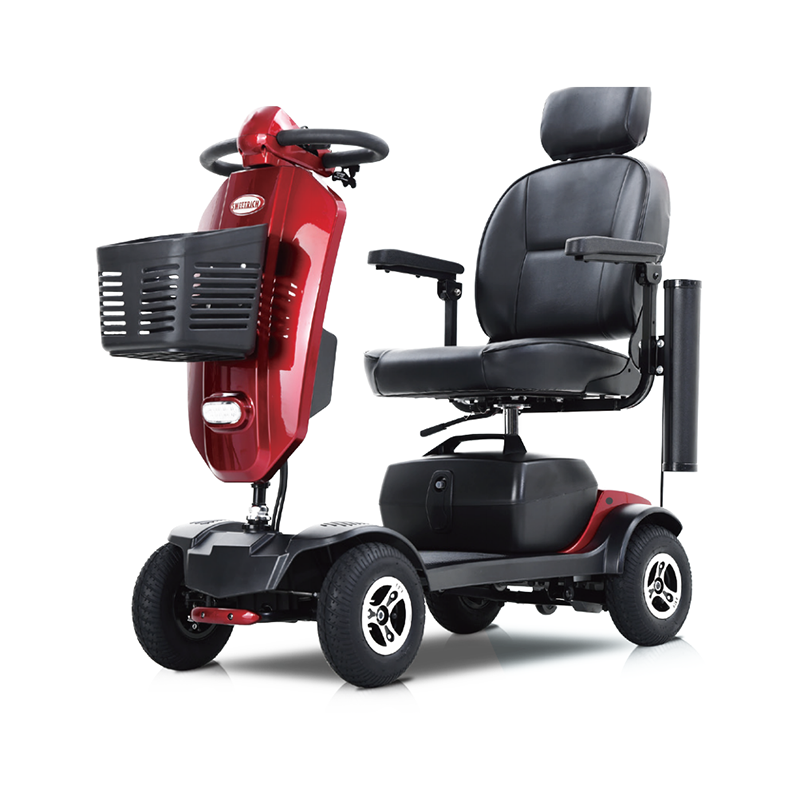
Modern mobility is no longer defined only by distance; it is defined by confidence, simplicity, comfort, and the freedom to go where life happens. The S1 Sport easy travel four-wheel foldable electric mobility scooter is designed around that practical idea. It is a compact personal mobility solution for older adults, people with limited walking endurance, and users who want a convenient electric scooter that can support everyday travel without feeling complicated or oversized. With a travel-friendly folding concept, four-wheel stability, electromagnetic braking, rear suspension, a 24V/300W motor, and a 120 kg weight capacity, this scooter is positioned as a smart balance between portability and dependable daily performance.
The product belongs to the Travel Smart Scooters category, which means its purpose is not only to move a rider from one point to another, but also to make storage, transport, charging, handling, and regular use easier. Many users hesitate to choose a mobility scooter because they worry about weight, space, operation, safety, maintenance, or whether the scooter will be suitable for indoor and outdoor environments. This model addresses those concerns with a relatively narrow 525 mm width, an overall length of 1110 mm, a practical maximum speed of 8 km/h, a driving range of approximately 15 to 25 km depending on configuration and conditions, and a heaviest-part weight of about 27 kg when separated for handling.
Suzhou Sweetrich Vehicle Industry Technology Co., Ltd., known in the market as Sweetrich Mobility, brings more than ten years of experience in mobility scooter and electric wheelchair development to this product. Established in 2011 and operating from a 30,000-square-meter factory in Suzhou Industrial Park, the company combines product design, engineering, production management, quality control, and export experience to serve customers in America, Europe, Japan, Australia, the Middle East, Russia, and other regions. The result is a scooter that reflects both user-focused design and disciplined manufacturing.
S1 Sport Easy Travel 4 Wheel Ultra Light Foldable Electric Mobility Scooter for Old People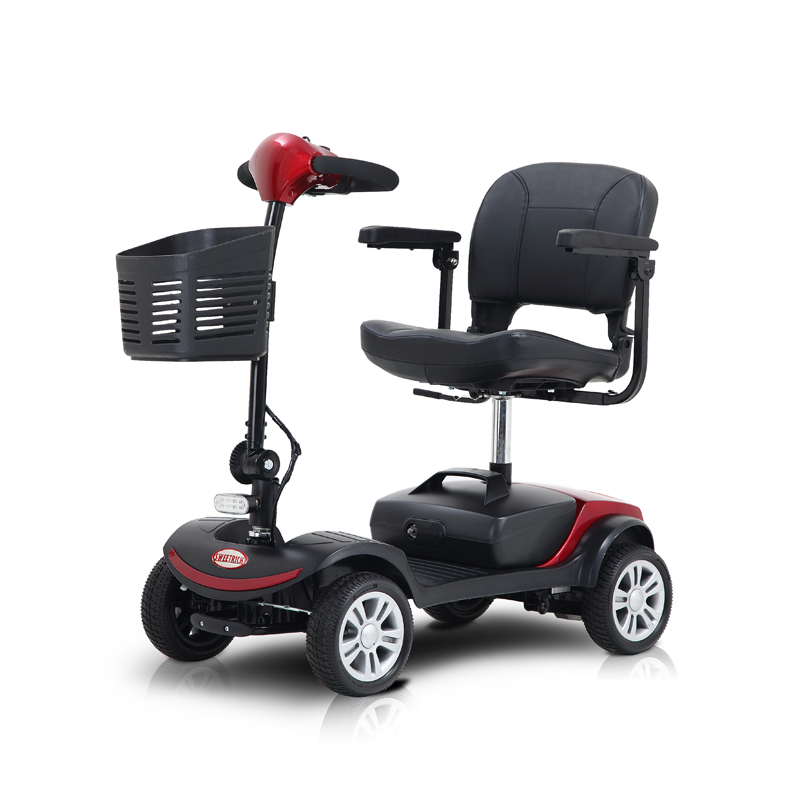
Product Positioning: A Practical Travel Scooter for Independent Living
The S1 Sport is best understood as a foldable four-wheel electric mobility scooter created for users who want easier movement in daily life without adopting a large, heavy, or overly complex vehicle. It is a non-medical device for the U.S. market, meaning it is intended as a mobility and convenience product rather than a medical treatment device. This distinction is important because users often want a product that feels approachable, lifestyle-oriented, and practical for shopping, neighborhood travel, parks, community centers, travel planning, and everyday errands.
Compared with larger mobility scooters, this travel scooter focuses on compactness and handling. Its listed dimensions of 1110 mm in length, 525 mm in width, and 920 mm in height give it a footprint that is suitable for many common environments. The 525 mm width is especially relevant because users often need to pass through doorways, navigate store aisles, move around residential spaces, or park the scooter in limited storage areas. A scooter that is too wide may feel stable in theory, but it can become inconvenient in real-world use. This model aims to provide four-wheel support while maintaining a manageable overall profile.
The scooter’s four-wheel layout is also important. Three-wheel scooters may offer a tight turning feel, but many users prefer the planted sensation of four wheels. A four-wheel configuration helps communicate steadiness, especially for users who may be new to mobility scooters or who want a more secure feeling when moving across flat outdoor surfaces, paved paths, or indoor public areas. The S1 Sport combines that four-wheel confidence with a folding travel orientation, creating a product that is more versatile than many fixed-frame scooters and more confidence-inspiring than some ultra-small travel models.
The maximum forward speed of 8 km/h, or approximately 5 miles per hour, is well matched to the scooter’s purpose. It is faster than a typical walking pace but not excessive for general mobility use. For older adults, a controllable speed range is often more valuable than a high maximum speed. The scooter is meant to support safe, smooth movement rather than deliver aggressive acceleration. Its electromagnetic brake system also contributes to this practical personality by helping the scooter stop in a controlled way when the user releases the control.
Core Specifications and What They Mean for Users
Technical specifications matter most when they are translated into user benefits. The following table presents the key data for the S1 Sport and explains the practical meaning of each specification for buyers, distributors, caregivers, and mobility product professionals.
Specification |
Product Data |
Practical User Value |
Dimensions |
1110 mm L x 525 mm W x 920 mm H |
Compact enough for many everyday environments while still offering a stable scooter structure. |
Maximum Forward Speed |
8 km/h, approximately 5 mph |
Suitable for walking-speed environments, errands, parks, and neighborhood movement. |
Maximum Driving Gradient |
10 degrees |
Supports use on moderate inclines when operated properly and within safety limits. |
Maximum Driving Range |
15 to 25 km, approximately 9.5 to 15.5 miles |
Provides enough range for many daily outings, with variation depending on battery option, load, terrain, and driving habits. |
Weight Capacity |
120 kg, approximately 265 lb |
Accommodates a broad range of adult users within the stated operating limits. |
Suspension |
Rear suspension |
Improves ride comfort over small surface changes and helps reduce vibration at the rear of the scooter. |
Tire Size |
9 inch x 3 inch front and rear |
Offers a practical tire size for stability, ground contact, and daily-use comfort. |
Brake System |
Electromagnetic brake |
Supports controlled stopping and simplified operation. |
Battery |
Lead-acid 12V12AH or 20AH x 2 pieces, with 20AH optional |
Allows standard or extended-capacity configuration depending on user range needs. |
Charger |
DC24V2A, AC100-240V |
Wide input compatibility supports international distribution and convenient charging. |
Charging Time |
Approximately 6 hours |
Suitable for overnight or between-trip charging routines. |
Motor |
24V/300W |
Provides practical power for daily mobility tasks and moderate inclines. |
Motor Controller |
24V/50A Dynamic |
Supports responsive control and dependable electrical performance. |
Heaviest Part |
27 kg, approximately 60 lb |
Makes separated handling more manageable than many non-folding full-size scooters. |
The specifications show that the scooter is built around moderation and practicality. It does not chase extreme top speed, oversized battery capacity, or heavy-duty off-road styling. Instead, it offers a realistic combination of size, power, range, comfort, and storage convenience. This is an advantage because many users need a scooter that can fit into real life, not just look impressive on a specification sheet.
Design Advantages Over Competing Mobility Scooters
One of the clearest advantages of this model is the combination of foldability and four-wheel stability. Some travel scooters emphasize folding but compromise on the steady feeling users want. Others provide four-wheel stability but are bulky, difficult to transport, or inconvenient to store. The S1 Sport attempts to bridge these two categories by delivering a travel-focused frame with a stable four-wheel base. For older users, this balance can reduce hesitation and help make scooter ownership more comfortable from the beginning.
Its ultra-light travel identity is also important in the competitive landscape. While no mobility scooter is weightless, the ability to separate or manage the scooter with a heaviest part of 27 kg provides a practical advantage over heavier models that require ramps, lifts, or multiple helpers. For families, caregivers, retailers, and transport providers, manageable component weight affects daily usability. A scooter that is technically portable but too heavy to handle often creates frustration. This model’s travel-smart structure is designed to make loading, unloading, and storage more realistic.
The 1110 mm length gives the scooter enough body structure for adult use while remaining more compact than many large mobility scooters. In retail stores, apartments, elevators, senior living facilities, and community centers, a shorter and narrower scooter can be easier to maneuver and park. Competitors that focus mainly on outdoor strength may become too large for these environments. The S1 Sport is better suited to users who need a scooter that can support multiple daily contexts rather than only one type of route.
Another advantage is the electromagnetic brake system. In mobility scooters, braking should be simple and intuitive. Users should not need complicated hand strength or advanced riding technique to stop safely in ordinary conditions. An electromagnetic braking system supports ease of operation by engaging when the user releases the throttle control. This feature is especially valuable for older adults who prioritize predictable stopping behavior and reduced mental workload while driving.
The 24V/300W motor is also well matched to the scooter’s overall design. Some competing products advertise higher power, but higher power is not always better for a compact travel scooter. Excessive power can increase weight, energy consumption, cost, and control difficulty. A properly selected 300W motor gives practical performance for a scooter with a maximum speed of 8 km/h and a 10-degree gradient capability. The focus is on smooth, reliable movement rather than aggressive output.
The optional 20AH battery configuration is another competitive strength. Users have different travel patterns. Some may use the scooter for short daily movement and prefer standard batteries, while others need greater range for longer outings. Offering a 12AH or 20AH lead-acid battery choice allows distributors and buyers to align the scooter with actual usage needs. This flexibility is beneficial in international markets where terrain, user habits, and customer expectations vary.
Comfort, Stability, and Confidence in Daily Use
For mobility products, comfort is not a luxury; it is central to usability. A scooter may have good range and speed, but if the ride feels unstable or tiring, users will avoid using it. The S1 Sport addresses comfort with a rear suspension system, 9 inch x 3 inch tires at both the front and rear, and a scooter layout designed for seated travel. Rear suspension helps reduce the harshness of small bumps and surface transitions. While this scooter is not intended for rough off-road conditions, the suspension contributes to a smoother experience on typical paved surfaces, sidewalks, community paths, and indoor-to-outdoor transitions.
The tire size contributes to ride confidence. Very small wheels can transmit more vibration and may feel less stable when crossing small gaps or surface changes. Large wheels, by contrast, can add weight and increase the overall scooter size. The 9 inch x 3 inch tire size represents a practical middle ground. It supports a stable contact patch while maintaining the product’s compact travel profile. This specification is particularly relevant for users who want a scooter that feels reassuring without becoming bulky.
The four-wheel configuration is perhaps the strongest comfort feature from a psychological perspective. Many users judge a scooter not only by how it performs, but also by how it feels when they first sit on it. A four-wheel base can immediately communicate steadiness. For older adults who may be concerned about balance, this matters. Confidence encourages regular use, and regular use supports independence, social participation, and a more active lifestyle.
The maximum speed of 8 km/h also supports comfort. In crowded areas or shared pedestrian spaces, excessive speed can create anxiety. This scooter’s speed is suitable for controlled travel and can help users feel connected to their surroundings. It is fast enough to reduce fatigue compared with walking, but restrained enough to support calm operation. This makes the scooter suitable for users who value predictability more than speed.
The driving range of 15 to 25 km is suitable for many routine activities. Range depends on several factors, including battery capacity, user weight, terrain, tire condition, temperature, and driving style. However, the stated range gives users enough flexibility for shopping trips, community visits, short commutes within residential areas, and leisure outings. When paired with a six-hour charging time, the scooter supports an easy routine: use during the day, charge after returning home, and be ready for the next outing.
Folding and Travel-Smart Convenience
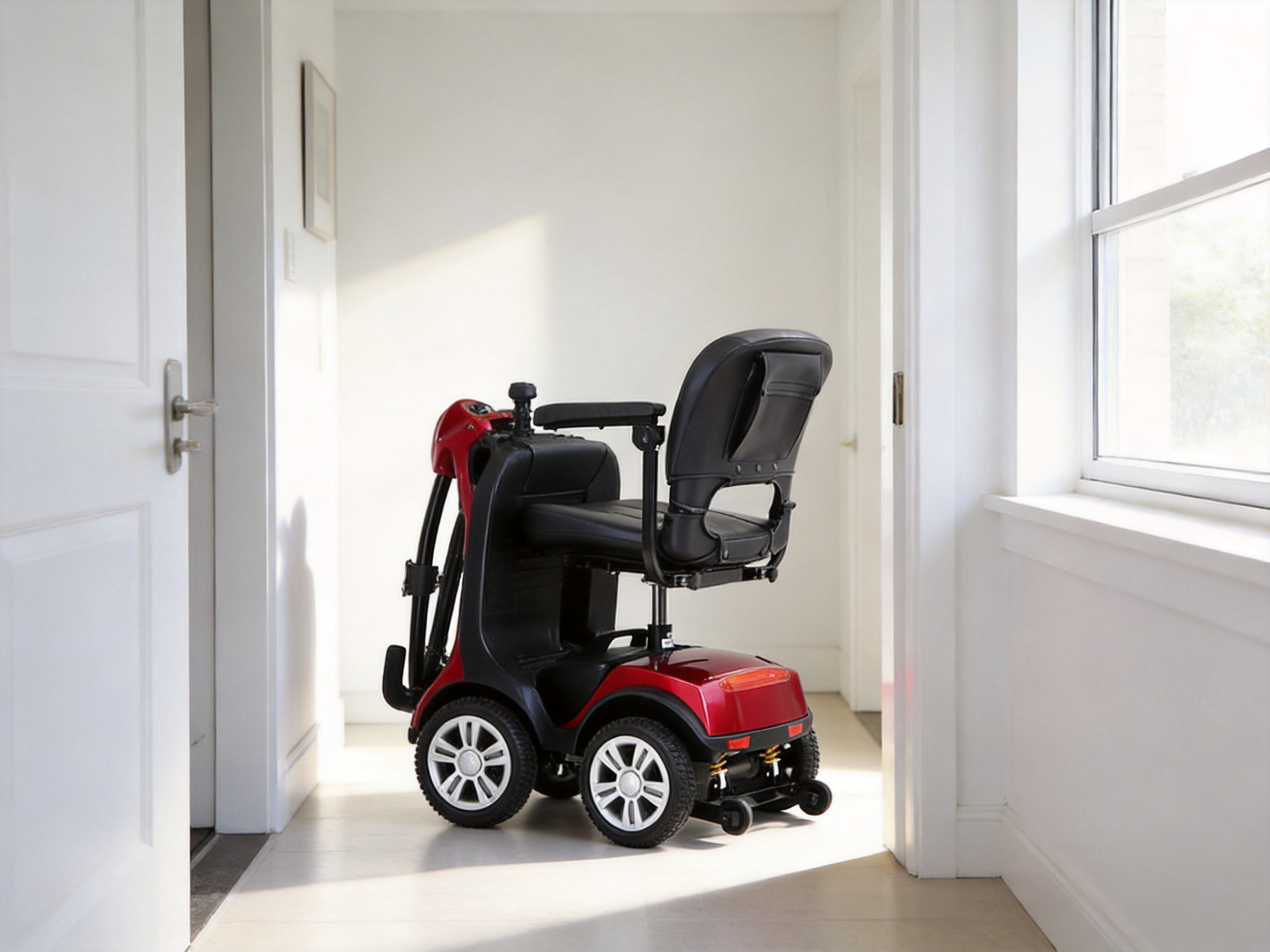
A folding scooter must solve more than one problem. It must reduce storage space, simplify transport, and maintain enough structural integrity for dependable use. The S1 Sport’s travel-smart identity is valuable because many older adults and families do not want a scooter that permanently occupies a large area in a home or garage. A foldable scooter can be stored more conveniently when not in use, making it a better fit for apartments, smaller homes, assisted living spaces, and shared family vehicles.
Travel convenience also affects spontaneity. If a scooter is difficult to load or prepare, users may leave it behind. If it is easier to handle, it becomes part of more activities. Families can plan shopping trips, visits, vacations, and community outings with less concern about walking distance. This is one of the practical differences between a travel scooter and a large full-size scooter. The best travel scooter is not merely compact on paper; it encourages use because it reduces the effort involved in taking it along.
The heaviest part weight of 27 kg is worth noting in this context. While users should always follow safe lifting practices and may require assistance, this component weight can be more manageable than many larger scooters. Retailers and caregivers understand that every kilogram matters when placing a scooter into a vehicle or moving it between storage and use areas. A scooter that separates into manageable parts or folds efficiently can reduce strain and increase adoption.
Compared with some competing products that require complicated tools or awkward procedures, a travel-smart scooter should be intuitive. Although every user should read the product manual and receive proper instruction, the design concept emphasizes straightforward preparation. This matters especially for older adults who may not want a technical assembly process before every trip. A mobility scooter should simplify life, not add another barrier.
Safety-Oriented Engineering for Practical Operation
Safety in a mobility scooter depends on several systems working together: frame stability, braking, motor control, speed management, tire contact, electrical protection, and manufacturing consistency. The S1 Sport’s electromagnetic brake system is central to its safety-oriented operation. When the user releases the drive control, the brake helps bring the scooter to a controlled stop. This is easier for many users than manual braking systems that require greater hand strength or coordination.
The 24V/50A Dynamic motor controller supports the relationship between user input and scooter response. A well-matched controller can improve smooth acceleration, reduce jerky movement, and help the scooter behave predictably. Predictability is one of the most important qualities in mobility equipment. Users must feel that the scooter responds consistently when starting, turning, slowing, and stopping. The controller, motor, brake, and battery system must therefore be integrated as a complete platform rather than treated as separate components.
The 10-degree maximum driving gradient provides useful climbing capability within appropriate conditions. This does not mean the scooter should be used carelessly on steep ramps, slippery slopes, or uneven surfaces. Instead, it indicates that the scooter has been designed for moderate incline performance when operated within specifications. Users should always consider weight, battery level, surface condition, and local safety guidance before driving on slopes. Compared with lower-capability travel scooters, a 10-degree gradient rating gives additional flexibility for real-world environments.
The weight capacity of 120 kg is another safety-related specification. A scooter should always be used within its rated load. Staying within the manufacturer’s stated capacity helps protect motor performance, braking behavior, frame integrity, battery life, and overall ride stability. For distributors and dealers, clear weight capacity information supports proper product matching and reduces the risk of unsuitable recommendations.
Manufacturing Strengths Behind the Product
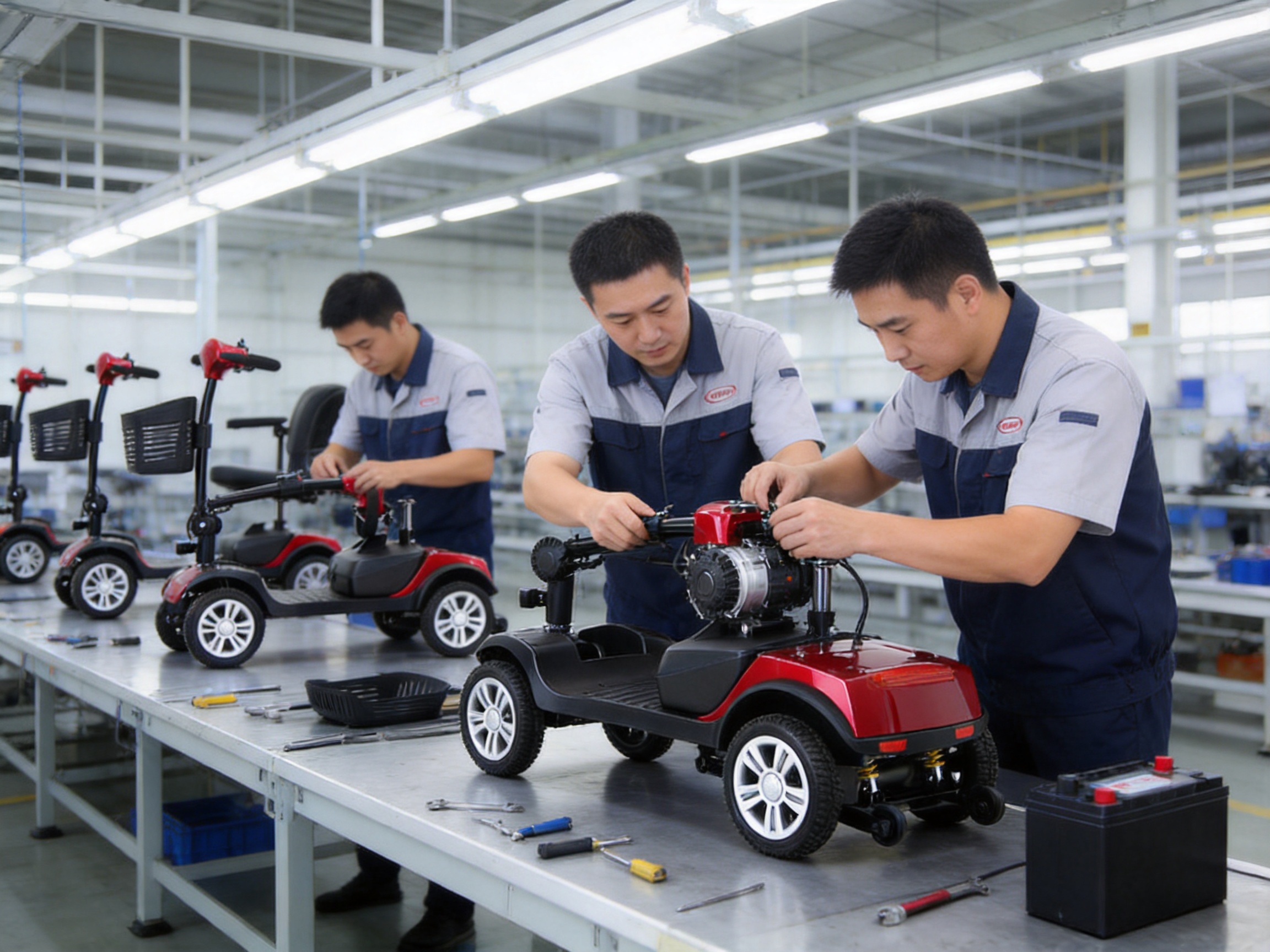
The strength of a mobility scooter is not visible only in its finished appearance. It also comes from the company’s engineering discipline, production environment, supplier management, assembly methods, inspection standards, and long-term experience with user needs. Sweetrich Mobility operates from a factory covering 30,000 square meters within a broader 60-acre company area in Suzhou Industrial Park. This manufacturing foundation allows the company to manage research, development, production, quality control, and export support in a structured way.
Founded in 2011, the company has accumulated more than a decade of experience in electric scooters and power wheelchairs. This experience matters because mobility products require a balance of mechanical engineering, electrical systems, ergonomics, usability, and compliance awareness. A company that works continuously in this field gains practical knowledge from production feedback, customer feedback, international distribution, and product iteration. That knowledge is reflected in decisions such as motor selection, battery configuration, frame dimensions, braking method, and folding design.
The company emphasizes strict production management and scientific product design. In practice, this means that product quality is not left to final inspection alone. A reliable scooter must be built through controlled processes from material selection to final assembly. Frame components must be produced to consistent tolerances. Electrical parts must be matched correctly. Wiring must be routed and protected properly. Fasteners must be tightened consistently. Battery systems, chargers, controllers, and motors must be tested for functional compatibility. These details influence long-term reliability more than any single marketing claim.
Advanced manufacturing also includes repeatability. For distributors, retailers, and customers, it is not enough for one sample scooter to perform well. The product must be produced consistently across batches. A disciplined factory environment supports that requirement through process documentation, trained workers, inspection checkpoints, and continuous improvement. This is especially important for export markets, where customers expect stable quality, predictable spare parts support, and clear communication.
Sweetrich Mobility’s global market experience is another manufacturing advantage. Products exported to America, Europe, Japan, Australia, the Middle East, Russia, and other markets must satisfy different user expectations, climates, road conditions, packaging needs, and service models. A manufacturer with broad export experience is better prepared to design products that are practical for international distribution. Wide-voltage charging compatibility, with AC100-240V input, reflects this global perspective by supporting use across different electrical environments when paired with appropriate regional plug and regulatory arrangements.
Research, Development, and Intellectual Property
Mobility scooters may appear simple from the outside, but a successful design requires extensive product development. The company owns intellectual property rights for its electric scooters and power wheelchairs, showing that it invests in original development rather than merely assembling generic parts. Intellectual property ownership can support product differentiation, design continuity, and long-term engineering improvement.
Research and development in this product category includes structural design, human-machine interaction, powertrain integration, safety behavior, component layout, and user comfort. For a foldable travel scooter, engineers must solve the challenge of making the scooter compact without weakening the structure or making the folding process inconvenient. They must also maintain rider comfort while controlling total weight. These goals often conflict, which is why experience and engineering judgment are essential.
The S1 Sport reflects this balance. Its 1110 mm length and 525 mm width provide a compact footprint, but the four-wheel layout and 9 inch x 3 inch tires preserve a stable feeling. The 24V/300W motor supports daily travel without excessive weight or unnecessary power consumption. The rear suspension adds comfort without overcomplicating the chassis. The electromagnetic brake system simplifies control while supporting safe stopping behavior. Each specification is a design choice within a complete mobility platform.
Quality Management and Reliability
Reliability is one of the most important buying factors for mobility scooters. Users depend on the scooter for daily movement, and unexpected failure can disrupt plans, reduce confidence, and create inconvenience. A reliable scooter begins with a stable design, but it also depends on manufacturing control. The company’s principle of “quality first, credit above, and customer supreme” reflects a business philosophy centered on dependable products and long-term relationships.
Quality management for a scooter like the S1 Sport should include incoming component checks, assembly inspection, electrical testing, brake testing, motor response testing, charger verification, visual inspection, packaging checks, and final functional testing. These steps help ensure that each scooter leaving the factory meets expected standards. While the user sees only the finished scooter, the manufacturing process behind it determines whether the product performs consistently over time.
Battery and charger reliability are especially important. The scooter uses a DC24V2A charger with AC100-240V input and a charging time of about six hours. A stable charging system supports user convenience and helps protect battery life when used correctly. Users should follow the manual, avoid improper chargers, charge in suitable environments, and maintain batteries according to guidance. A manufacturer that clearly specifies charger parameters supports safer ownership and easier after-sales service.
Mechanical reliability is also affected by frame alignment, wheel assembly, suspension mounting, and brake integration. The compact frame of a travel scooter must resist daily stress while remaining manageable. Production consistency therefore matters. The company’s factory scale and long-term specialization in mobility products provide a strong foundation for repeatable production quality.
Why This Scooter Is Well Suited for Older Adults
Older adults often evaluate mobility products differently from younger recreational scooter users. They may prioritize easy control, stable seating, moderate speed, comfortable ride quality, simple charging, and reliable braking. The S1 Sport is aligned with these needs. Its top speed is practical rather than intimidating. Its four-wheel layout offers confidence. Its electromagnetic brake system simplifies stopping. Its compact dimensions make it easier to use in daily destinations. Its range supports common errands and outings.
Independence is another important factor. A well-designed mobility scooter can help users participate more fully in family life and community activities. It can reduce dependence on others for short trips, support outdoor enjoyment, and make large spaces such as shopping centers or parks more accessible. While the scooter is not a medical device for the U.S. market, it can be a valuable personal mobility aid for users seeking convenience and independence.
Caregivers and family members also benefit from a travel-smart design. A scooter that is easier to transport can make outings less stressful. Instead of planning around limited walking ability, families can plan around participation. This changes the emotional value of the product. It becomes not only a machine, but a tool that supports dignity, connection, and choice.
Applications in Daily Life
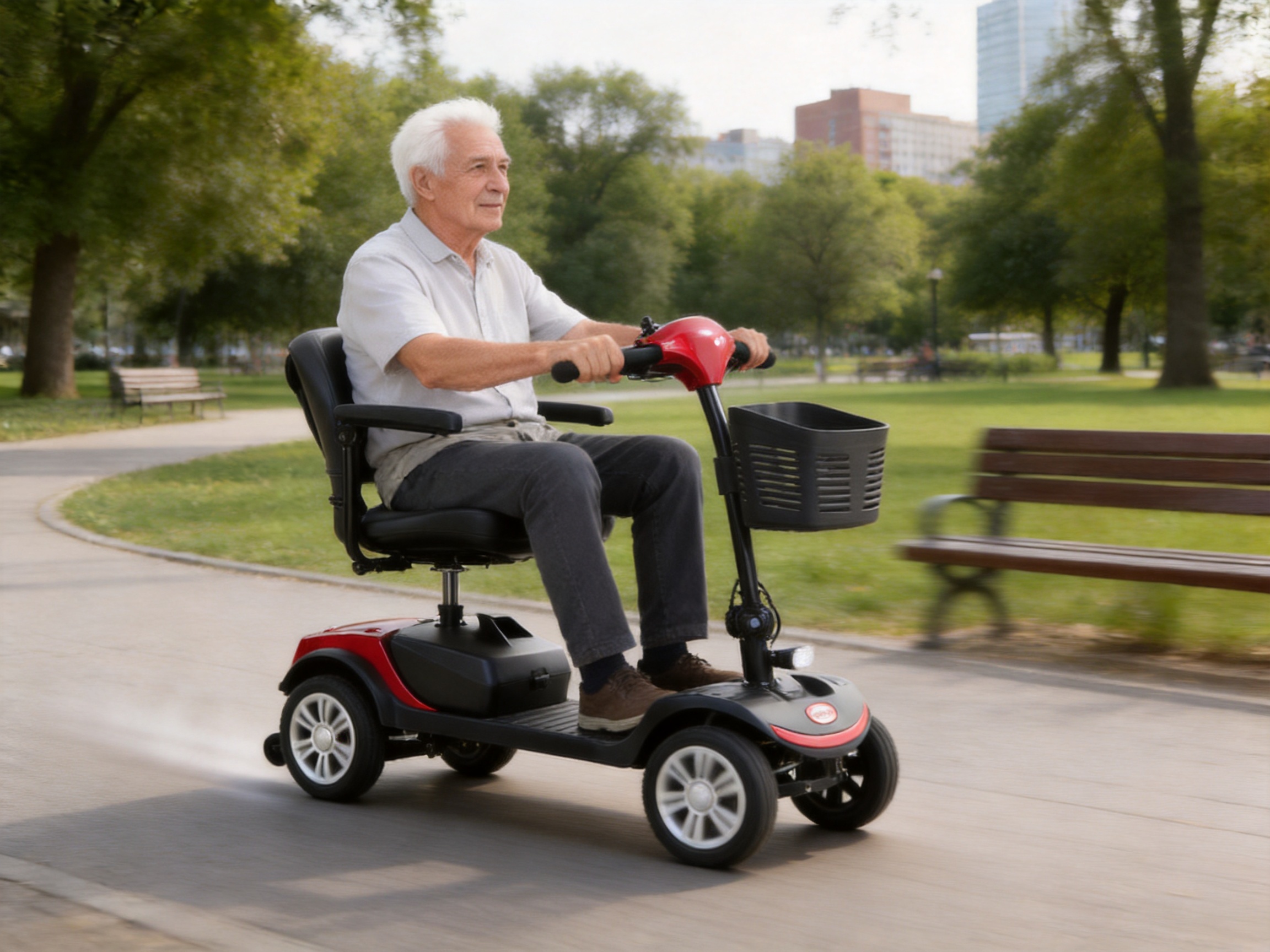
The scooter is suitable for a wide range of daily scenarios. In residential communities, it can help users visit neighbors, access shared facilities, or move between buildings. In shopping environments, its compact width can help users navigate aisles and entrance areas more easily than with larger scooters. In parks and recreational spaces with paved paths, its range and four-wheel stability support comfortable leisure movement. For travel planning, the folding and manageable handling concept can make the scooter easier to bring along than full-size models.
It is also useful for senior living communities, retirement villages, resorts, community centers, and rental programs where ease of operation and compact storage are important. Dealers may find the model attractive because it addresses a broad customer group: users who want more stability than a very small scooter, but less bulk than a heavy outdoor model. This middle position can be commercially valuable.
For international distributors, the scooter’s practical specifications make it adaptable to different markets. The speed, range, capacity, and charger input are suitable for many regions. The optional battery capacity allows product versions to be matched with pricing strategies and customer expectations. The company’s export experience further supports cooperation with overseas partners.
Comparison with Typical Competitor Designs
When compared with non-folding full-size scooters, the S1 Sport offers clear advantages in storage and transport. Full-size scooters may provide larger seats, higher ground clearance, or longer range, but they often require more space and more effort to move. For users who live in apartments or who need a scooter that can accompany family trips, a large model may be impractical. The S1 Sport’s travel-smart design addresses that problem.
Compared with ultra-compact three-wheel travel scooters, this model offers the reassuring feel of four-wheel support. Three-wheel scooters can be maneuverable, but some users perceive them as less stable. For older adults who value confidence, four wheels can be a deciding factor. The S1 Sport’s four-wheel platform gives it an advantage among users who want portability without sacrificing a stable riding impression.
Compared with low-cost basic scooters, this product benefits from a more complete combination of features: rear suspension, electromagnetic braking, 9 inch tires, optional 20AH batteries, a 300W motor, and established manufacturing support. Low-cost competitors may reduce price by simplifying braking systems, reducing structural quality, using smaller batteries, or offering limited after-sales support. The S1 Sport is positioned as a value-focused product rather than merely a low-price product.
Compared with high-power premium scooters, the advantage is practicality. Not every user needs heavy motors, high speeds, or large frames. Those features often increase cost and reduce portability. The S1 Sport focuses on the needs that matter most to travel scooter users: dependable movement, controlled speed, compact size, foldability, and comfort. This makes it suitable for buyers who want a rational product rather than an oversized one.
Energy System and Charging Convenience
The scooter uses two lead-acid batteries, with 12V12AH as a standard option and 20AH available as an optional capacity. Lead-acid batteries are widely understood, serviceable in many markets, and cost-effective. For mobility scooter buyers, battery replacement availability and service familiarity can be important. While lithium batteries are popular in many modern devices, lead-acid systems continue to offer practical advantages in cost-sensitive mobility applications.
The 20AH option extends potential driving range and may be attractive for users who take longer trips or prefer additional reserve capacity. The stated range of 15 to 25 km should be understood as a range under varying conditions rather than a fixed guarantee. Users carrying heavier loads, climbing inclines, driving on uneven surfaces, or operating in colder temperatures may experience reduced range. Good battery care and regular charging habits help maintain performance.
The six-hour charging time is convenient for daily use. Many users can charge overnight or during periods when the scooter is not needed. The charger’s AC100-240V input supports international adaptability, which is especially useful for an export-oriented manufacturer. For retailers, clear charger specifications simplify customer education and after-sales service.
Serviceability and Dealer Value
For dealers and distributors, a mobility scooter must be more than attractive to end users. It must also be practical to sell, support, and service. The S1 Sport’s use of widely understood components such as lead-acid batteries, electromagnetic braking, and a 24V electrical system can support service operations. Clear specifications make it easier for technical teams to diagnose issues, stock parts, and educate customers.
The company’s long-term partnerships with customers around the world indicate a business model built on cooperation rather than one-time transactions. This matters in the mobility industry because after-sales service affects customer satisfaction and brand trust. A scooter may be purchased once, but support needs can continue for years. Manufacturers with stable production, reasonable pricing, and considerate service are better positioned to support distributors and end users.
Packaging, shipping, documentation, and spare parts planning are also important manufacturing strengths. A compact travel scooter can offer logistics advantages compared with large scooters, but only if the manufacturer designs packaging carefully and maintains consistent production standards. Sweetrich Mobility’s export experience gives it practical knowledge in these areas.
User Guidance and Responsible Operation
Every mobility scooter should be used responsibly and according to the product manual. Users should become familiar with the controls before entering busy areas. They should practice starting, stopping, turning, and reversing in a safe open space. They should also understand the scooter’s speed settings, brake behavior, charging routine, and weight limit.
Users should avoid operating on unsafe terrain, steep slopes beyond the stated capability, slippery surfaces, deep water, loose gravel, or damaged pavement. The scooter is designed for practical mobility, not off-road sport use. Proper tire condition, battery maintenance, and regular inspection help preserve performance. If unusual noise, reduced braking behavior, electrical issues, or visible damage occurs, the scooter should be checked by qualified service personnel before continued use.
Because the scooter is a non-medical device for the U.S. market, buyers should understand its intended role as a personal mobility convenience product. It should not be represented as a treatment device. Clear communication helps protect users, dealers, and distributors while ensuring realistic expectations.
Q&A Section
Q1: Who is the S1 Sport foldable mobility scooter designed for?
It is designed for older adults, people with reduced walking endurance, and users who want a compact electric mobility scooter for daily errands, community movement, shopping, leisure travel, and convenient transport. It is especially suitable for users who want four-wheel stability in a travel-smart format.
Q2: Is this scooter considered a medical device?
For the U.S. market, it is presented as a non-medical device. It is intended to support personal mobility and convenience, not to diagnose, treat, cure, or prevent any medical condition.
Q3: What is the maximum speed?
The maximum forward speed is 8 km/h, approximately 5 mph. This speed is practical for pedestrian environments and daily mobility use, offering movement faster than walking while remaining controlled and manageable.
Q4: How far can it travel on one charge?
The stated maximum driving range is approximately 15 to 25 km, or 9.5 to 15.5 miles. Actual range depends on battery capacity, rider weight, terrain, temperature, incline, tire condition, and driving habits.
Q5: What battery options are available?
The scooter uses two lead-acid batteries, with 12V12AH as a standard configuration and 20AH available as an optional configuration. The 20AH option may be preferred by users who need longer range.
Q6: How long does charging take?
Charging time is approximately six hours under normal conditions. Users should follow the manual and use the correct DC24V2A charger.
Q7: What is the weight capacity?
The rated weight capacity is 120 kg, or approximately 265 lb. Users should remain within the stated limit to support safe and reliable operation.
Q8: Why is the four-wheel design important?
A four-wheel design provides a stable riding impression and can improve confidence for users who are concerned about balance. It is a strong advantage compared with some ultra-compact three-wheel travel scooters.
Q9: Does the scooter have suspension?
Yes. It includes rear suspension, which helps improve comfort over small bumps and surface transitions in everyday environments.
Q10: What makes this model competitive?
Its main competitive strengths are the combination of foldability, four-wheel stability, compact dimensions, electromagnetic braking, practical speed, optional longer-range battery capacity, rear suspension, and support from an experienced manufacturer with global export experience.
Buying Considerations for Users and Distributors
Before choosing a mobility scooter, users should consider where it will be used most often. If the main need is indoor navigation, shopping, short outdoor trips, and easy storage, the S1 Sport is a strong candidate. If the user needs heavy off-road capability, very high speed, or exceptionally long range, a larger model may be more appropriate. Good product matching leads to better satisfaction.
Users should also consider transportation. If the scooter must be moved by car, stored in a limited space, or handled by family members, foldability and component weight become important. The S1 Sport’s heaviest part of 27 kg makes it more manageable than many larger scooters, although safe lifting assistance may still be necessary.
Distributors should evaluate the product as a balanced travel scooter with broad appeal. Its specifications are easy to explain, its user benefits are clear, and its manufacturer has relevant production strength. The product can fit into retail categories such as senior mobility scooters, elderly motorized scooters, travel scooters, and foldable electric mobility products.
Company Strength and Global Cooperation
Sweetrich Mobility’s company background supports the product’s credibility. Located at No.7 Chaoqian Road, Suzhou Industrial Park, Suzhou, China, the company combines an established manufacturing base with specialized knowledge of mobility products. Its focus on improving convenience and dignity for elderly and disabled people gives its product development a clear purpose.
The company’s export history demonstrates an understanding of international customers and market requirements. Long-term partnerships around the world are built through quality, reasonable prices, considerate service, and consistent communication. In the mobility industry, these qualities are essential because products must remain dependable after shipment and must be supported by professional cooperation.
Manufacturing strength is not only about factory size. It is about the ability to transform user needs into reliable products. The S1 Sport shows this through its compact structure, practical motor and controller system, electromagnetic braking, travel-friendly dimensions, and comfort-focused rear suspension. These features are not random additions; they reflect a product strategy centered on real-world usability.
Conclusion: A Balanced Scooter for Everyday Freedom
The S1 Sport easy travel four-wheel foldable electric mobility scooter stands out because it balances the qualities users most often need: stability, portability, comfort, easy operation, controlled speed, practical range, and dependable manufacturing support. It does not attempt to be the largest or fastest scooter in the market. Instead, it focuses on being useful, manageable, and confidence-inspiring in daily life.
For older adults, it can support independence and participation. For families, it can make outings easier. For dealers and distributors, it offers a clear value proposition in the travel scooter category. For international buyers, it is backed by a manufacturer with more than ten years of experience, a large production facility, intellectual property development, quality-oriented management, and global export practice.
In a competitive market filled with oversized scooters, minimal low-cost models, and narrowly specialized designs, this foldable four-wheel travel scooter offers a practical middle path. It is compact but stable, travel-friendly but capable, simple but thoughtfully engineered. That combination is what makes it a strong mobility solution for users who want daily freedom without unnecessary complexity.
References
1. Sweetrich Mobility Product Specification Materials for S1 Sport Easy Travel Four-Wheel Foldable Electric Mobility Scooter.
2. Suzhou Sweetrich Vehicle Industry Technology Co., Ltd. Company Profile and Manufacturing Overview.
3. General Industry Guidance on Powered Mobility Scooter Design, Battery Care, and User Safety Practices.
4. Mobility Product Engineering Principles Covering Electromagnetic Braking, Motor Control, Stability, and Travel Scooter Ergonomics.
5. International Personal Mobility Equipment Market Practices Relating to Export Distribution, Product Support, and User-Centered Design.