
 +86-(0)512-82283871

Content
- 1 Designed for Practical Travel and Everyday Independence
- 2 Key Product Features
- 3 Battery Options and Travel Range
- 4 Dimensions and Maneuverability
- 5 How the iFold Compares with Common Mobility Alternatives
- 6 Technical Specifications
- 7 Manufacturing Strengths of the Supplier
- 8 User Benefits in Daily Life
- 9 Safety and Responsible Operation
- 10 Maintenance Recommendations
- 11 Purchasing Considerations
- 12 Why the Product Stands Out
- 13 Questions and Answers
- 13.1 What type of mobility product is the iFold?
- 13.2 How quickly can the chair be folded?
- 13.3 How much does the wheelchair weigh?
- 13.4 What is the maximum user weight?
- 13.5 What is the maximum speed?
- 13.6 How far can it travel on one charge?
- 13.7 Can the joystick be used on either side?
- 13.8 What battery options are available?
- 13.9 How long does charging take?
- 13.10 Is the product suitable for air travel?
- 13.11 Can it be used outdoors?
- 13.12 Is it a medical wheelchair?
- 13.13 What should buyers confirm before ordering?
- 14 Conclusion
- 15 References
- 16 Product: iFold Medical foldable aluminum rollator wheelchair with footrest light weight Wheelchair
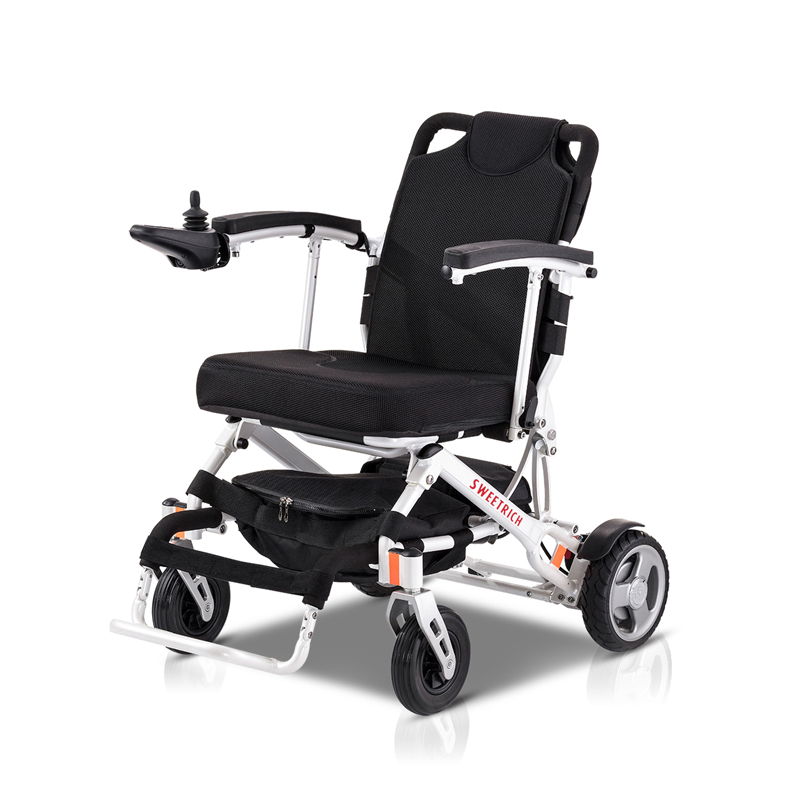
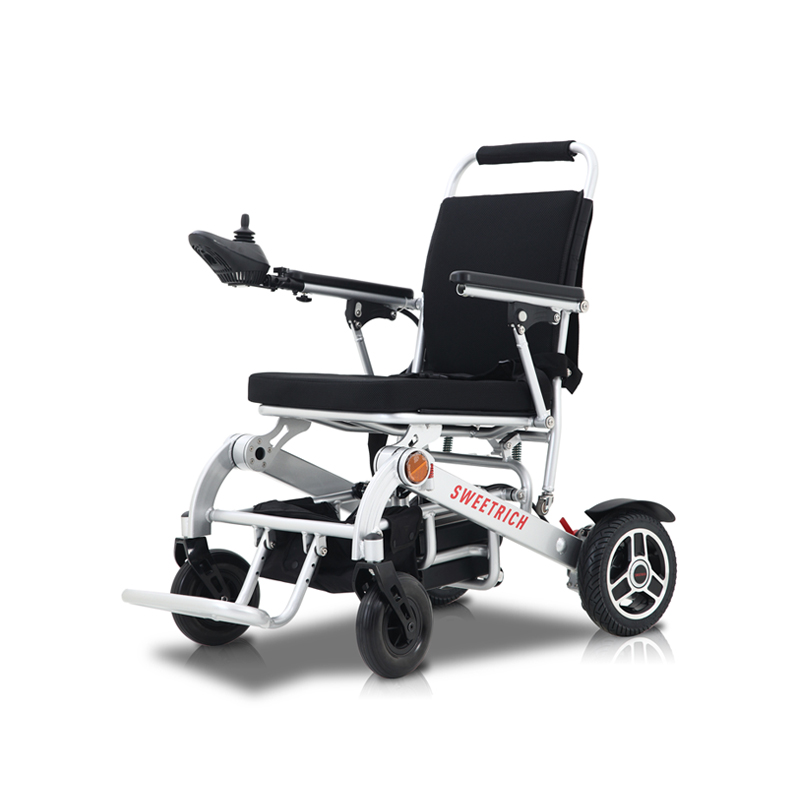
Choosing a mobility device is an important decision for people who want to travel more independently, move around their homes with greater confidence, or maintain an active daily routine without relying entirely on others. Traditional wheelchairs can be difficult to transport, while many powered mobility products are too heavy, too large, or too complicated for convenient travel. The iFold Medical foldable aluminum rollator wheelchair with footrest is designed to address these practical challenges through a compact folding structure, powered operation, user-friendly controls, and a lightweight aluminum frame.
Positioned within the Travel Smart Wheelchairs category, this model combines the convenience of a folding wheelchair with the driving capability of a compact electric power chair. It is designed for users who value portability, maneuverability, and straightforward operation. Its folding mechanism allows the chair to be folded and unfolded in approximately one second, helping users prepare for transportation, storage, or daily use with minimal effort.
The iFold is also designed for use in a variety of environments, including indoor spaces, paved paths, shopping areas, transportation terminals, hotels, and other travel-related settings. With front and rear suspension, an electromagnetic braking system, two rear motor units, and a joystick that can be positioned for use on either side, the product offers a thoughtful combination of comfort, control, and accessibility.
This article examines the product’s principal features, technical specifications, user benefits, manufacturing background, quality-oriented production approach, and advantages compared with heavier or less portable mobility alternatives. Because the product information identifies the device as a non-medical device for the United States market, users should also review applicable local regulations, transport policies, and professional mobility guidance before purchase or operation.
Designed for Practical Travel and Everyday Independence
The central idea behind the iFold is simple: a powered wheelchair should be useful not only when a person is seated in it, but also when the chair must be moved, stored, transported, or prepared for use. Many conventional power wheelchairs provide strong driving performance but are difficult to lift or place in a vehicle. Some lightweight manual chairs are easier to carry but do not provide powered assistance. The iFold seeks to bridge this gap.
Its aluminum construction helps reduce the overall weight of the chair. The stated weight without the battery is 24 kilograms, or approximately 52.9 pounds. Actual transport weight depends on the selected battery configuration and accessories, but the battery-free specification demonstrates the product’s emphasis on portability. Compared with many full-size powered wheelchairs, this compact design may be easier to handle during trips and storage.
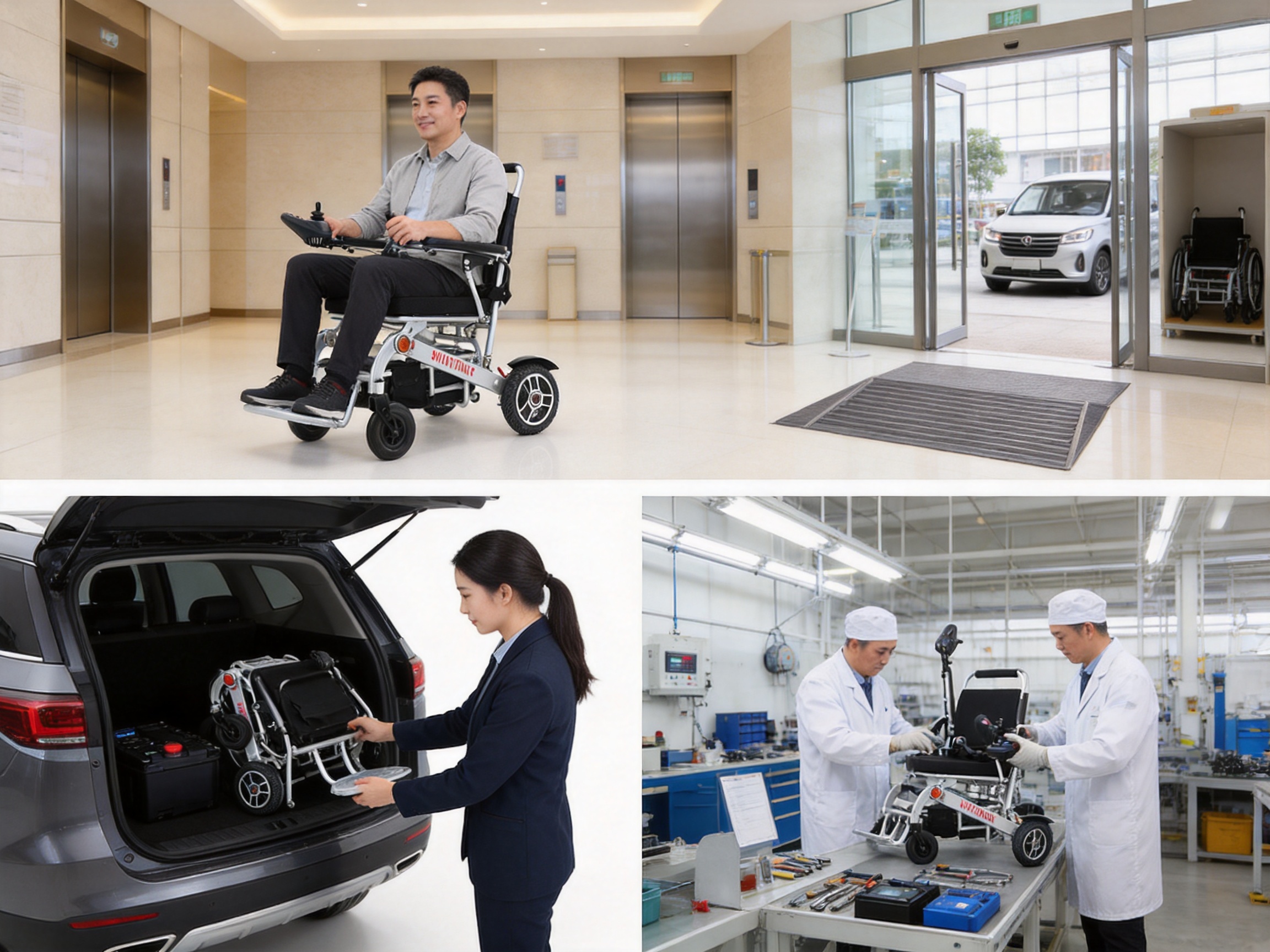
The folding frame is particularly valuable for users who frequently travel by car. A chair that folds quickly can reduce the time required to load and unload equipment. It may also occupy less storage space in a vehicle, home, office, or hotel room. The ability to fold and unfold in approximately one second is a major convenience advantage because it minimizes preparation time and helps simplify daily routines.
For families and caregivers, quick folding can make a meaningful difference. A caregiver may need to place the wheelchair in a vehicle, clear a hallway, or store the chair after a short outing. A rapid folding design reduces the number of steps involved and may help prevent frustration. The design is also well suited to users who want to remain active without making every journey dependent on specialized transportation.
Although portability is a key benefit, the iFold is not limited to being a transport chair. It includes twin 24-volt, 250-watt motors, an electromagnetic brake, a joystick controller, suspension, and a stated maximum driving range of approximately 30 ± 5 kilometers depending on configuration and conditions. These features allow it to function as a powered mobility device rather than merely a foldable seating product.
Key Product Features
Rapid Folding and Unfolding
The product’s most visible advantage is its rapid folding system. The chair is designed to fold and unfold in approximately one second, making it suitable for situations in which time, space, and convenience are important. A fast folding mechanism can be helpful when entering a car, moving through a building, preparing for public transportation, or storing the chair at home.
Folding also improves the product’s flexibility. Users may keep the wheelchair in a vehicle for unexpected mobility needs, store it in a closet between outings, or carry it into a building without requiring a dedicated storage area. In comparison, rigid-frame powered wheelchairs often require substantial parking or storage space and may remain assembled even when not in use.
As with any folding mobility product, users should make sure the frame is fully locked in the operating position before driving. They should also follow the operating instructions for folding, unfolding, battery removal, and transportation. The quick-folding feature improves convenience, but safe handling still depends on correct use.
Lightweight Aluminum Construction
Aluminum is widely used in portable mobility equipment because it can provide a useful balance between structural strength and reduced weight. The iFold’s aluminum frame supports the product’s travel-oriented design. A lighter frame can make it easier for a caregiver or transport partner to move the wheelchair when the battery is removed.
The 24-kilogram weight without the battery is one of the product’s most important specifications. Buyers should compare this figure carefully with the total weight of other powered chairs, especially when evaluating whether the device can be loaded into a vehicle. Battery selection influences the final weight, so customers should confirm the complete shipping and operating weight with the supplier before purchase.
The use of aluminum also complements the folding structure. A portable frame must be strong enough for regular use while remaining manageable when folded. The product is rated for a maximum user weight of 120 kilograms, or 265 pounds. Users should remain within this limit and consider the additional weight of personal belongings when evaluating suitability.
Powered Driving with Dual Motors
The iFold uses two 24-volt, 250-watt motors. A dual-motor configuration can provide balanced propulsion and support controlled movement through indoor and outdoor environments. The motors work with the joystick controller to allow the user to start, stop, turn, and adjust direction from a seated position.
Powered driving can reduce the physical effort required from users who have limited upper-body strength or difficulty propelling a manual wheelchair. It can also reduce the need for a companion to push the chair over longer distances. This feature is particularly valuable in airports, shopping centers, parks with paved paths, large buildings, and other locations where walking or manual propulsion would be tiring.
The listed maximum forward speed in the technical table is 6 kilometers per hour. The product feature description also refers to speeds of up to 8.5 kilometers per hour, or approximately 5.2 miles per hour. Because these figures differ, buyers should confirm the applicable speed for the specific configuration, market, controller setting, and operating conditions before ordering. The 6-kilometer-per-hour figure should be treated as the primary technical specification provided for this model unless the supplier confirms otherwise.
Actual speed may vary according to user weight, battery condition, surface type, incline, tire pressure, temperature, and other operating factors. Safe operation requires users to reduce speed in crowded spaces, near doorways, on uneven surfaces, and when turning.
Joystick Control for Both Sides
The joystick is available for use on either side of the wheelchair. This is a valuable accessibility feature because users do not have identical strength, dexterity, or range of motion in both arms. Some people may prefer right-side control, while others may find left-side operation more comfortable or practical.
A side-adjustable control arrangement can also help accommodate transfers and personal preferences. Users may need to approach the chair from a particular side, or they may have a condition that affects movement on one side of the body. Offering flexible joystick placement can improve usability without requiring a completely different chair configuration.
Joystick operation generally requires gentle, deliberate movements. Users should practice in an open, low-traffic area before operating the chair in busy public spaces. They should become familiar with forward, reverse, turning, stopping, and emergency procedures. If the chair is intended for a person with limited hand control, an appropriate professional assessment may be useful.
Large Foot Platform and Footrest Support
The large foot platform provides a stable area for positioning the feet during operation. Proper foot support contributes to seated comfort and can help users maintain a balanced posture. It may also make transfers and longer periods of seated use more comfortable, provided that the chair is used in accordance with the manufacturer’s instructions.
The product title identifies the chair as including a footrest. Foot support is especially important for users who cannot comfortably keep their feet elevated or aligned without assistance. A well-positioned platform can help protect the feet from contact with the ground, obstacles, or the wheels during movement.
Users should check that their feet are correctly placed before driving. Loose clothing, bags, and other objects should be kept away from the wheels and moving components. Caregivers should also verify that the foot platform is properly positioned before the chair starts moving.
Front and Rear Suspension
The iFold includes suspension at both the front and rear. Suspension helps moderate the effect of small surface irregularities, which may improve ride comfort when traveling over paved outdoor paths, thresholds, and other moderately uneven surfaces. It can also help maintain a more controlled ride when the chair encounters minor changes in ground texture.
Suspension does not make the chair suitable for every type of terrain. The product should not be treated as an all-terrain vehicle, and users should avoid steep, unstable, wet, or highly uneven surfaces unless the manufacturer specifically approves them. The listed maximum driving gradient is 10 degrees, but incline performance may depend on the user’s weight, battery charge, surface condition, and direction of travel.
When approaching a ramp or incline, users should proceed slowly and maintain a straight path whenever possible. They should avoid sudden turns on slopes and should follow local accessibility guidance. A mobility device’s rated gradient is a maximum engineering specification, not a recommendation to operate continuously at that limit.
Electromagnetic Braking System
The electromagnetic braking system is designed to help bring the chair to a controlled stop when the joystick is released or the drive system is disengaged. This type of braking system is commonly used in powered mobility equipment because it can help prevent unwanted rolling when the motor drive is active.
Users should still apply safe operating practices. The chair should not be parked on a steep slope, and users should not rely solely on the brake system when loading, unloading, or securing the chair in a vehicle. Before transferring into or out of the chair, the device should be turned off and positioned on a stable, level surface whenever possible.
Regular inspection is important. Unusual noises, delayed stopping, reduced braking performance, or controller errors should be reported to a qualified service provider. The electromagnetic brake is an important safety component and should not be modified without proper authorization.
iFold Medical foldable aluminum rollator wheelchair with footrest light weight Wheelchair
Battery Options and Travel Range
The technical information lists lithium battery options of 24 volts with capacities of 10.2 ampere-hours and 20 ampere-hours. The feature description also mentions an optional battery of up to 30 ampere-hours to reach a greater distance. These options allow the configuration to be adapted to different travel needs, but the exact available battery capacity may depend on the market, product version, and ordering arrangement.
The stated maximum driving range is 30 ± 5 kilometers. This means the real-world range can vary and should not be understood as a guaranteed distance under every condition. Battery range is influenced by user weight, speed, terrain, gradients, temperature, tire condition, stopping frequency, battery age, and the use of accessories.
Customers should clarify which battery is included in the quoted product configuration. They should also confirm whether the battery is removable, how it must be transported, and whether it meets the requirements of an airline, rail operator, vehicle carrier, or other transportation provider. Lithium batteries are subject to transportation rules that can vary by carrier and jurisdiction.
The supplied charger is specified as DC 24 volts and 2 amperes, with an AC input range of 115 to 230 volts. The listed charging time is approximately five hours. Users should charge the battery in a dry, ventilated location using the approved charger. Charging should not be performed near sources of excessive heat or moisture, and users should follow all battery safety instructions.
For everyday planning, it is wise to recharge the battery before a long outing rather than waiting until the battery is nearly empty. Users who regularly travel near the upper range of the chair should consider carrying an approved backup plan, such as access to charging facilities or assistance. A larger optional battery may provide more flexibility, but it may also affect overall weight and transport requirements.
Dimensions and Maneuverability
The stated unfolded dimensions are 1,090 millimeters in length, 605 millimeters in width, and 998 millimeters in height. These dimensions create a relatively narrow profile compared with many larger powered wheelchairs. A width of approximately 605 millimeters may be useful in homes, corridors, shops, elevators, and other spaces where maneuverability matters.
Users should measure doorways, ramps, elevator entrances, vehicle openings, and storage areas before purchase. The chair’s unfolded dimensions are only one part of the evaluation; turning space and the dimensions of the folded chair are also important. Customers should request the exact folded dimensions if these are not included in the sales documentation.
The 8-inch front tires and 10-inch rear tires provide a practical wheel arrangement for a compact powered chair. Larger rear wheels can support stability and traction, while the smaller front wheels may assist with steering and maneuverability. Tire performance will vary according to surface type and maintenance condition.
The chair is intended for controlled use on suitable surfaces. Users should avoid deep gravel, mud, standing water, loose sand, curbs beyond the approved height, and obstacles that could interfere with the wheels or foot platform. When crossing small thresholds, approach slowly and as directly as possible.
How the iFold Compares with Common Mobility Alternatives
Compared with Traditional Manual Wheelchairs
A conventional manual wheelchair may be lighter in some configurations and can be suitable for users who have adequate upper-body strength or a companion available to push. However, manual propulsion over long distances can be tiring, and the chair may not provide enough independence for every user.
The iFold adds motorized propulsion, allowing the user to control movement through a joystick. This can reduce physical effort and make longer trips more manageable. The trade-off is that a powered chair requires battery charging and may weigh more than an ultra-light manual wheelchair. For users who need powered assistance but still require a travel-friendly design, the iFold offers a practical middle ground.
Compared with Full-Size Powered Wheelchairs
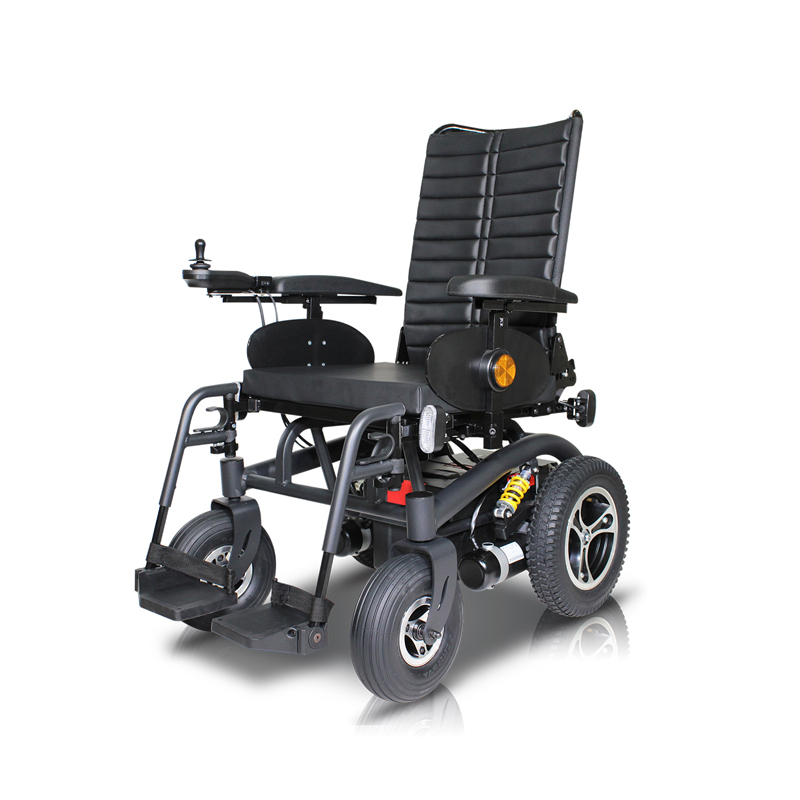
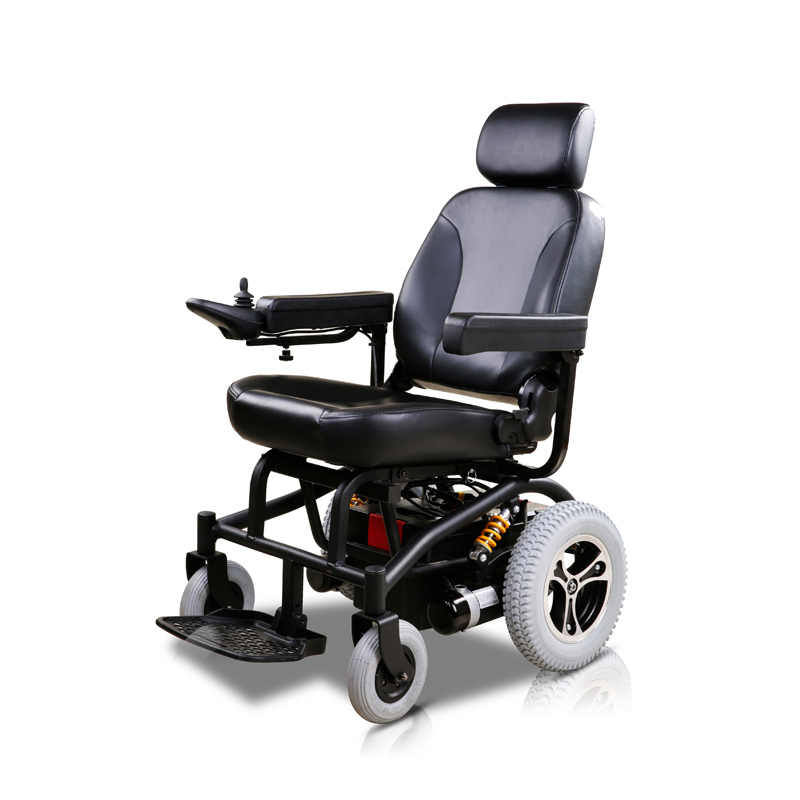
Full-size powered wheelchairs often include extensive seating adjustments, large batteries, robust frames, and advanced positioning systems. These features can be appropriate for users with complex seating or clinical requirements, but they may result in greater weight, size, and transport difficulty.
The iFold is designed with a different priority: everyday portability. Its folding aluminum frame, compact dimensions, and removable or optional battery configurations make it more suitable for travel-oriented use. It may be especially attractive to users who need a powered chair for outings but do not require the size or advanced seating systems of a complex rehabilitation wheelchair.
Because the iFold is identified as a non-medical device for the United States market, it should not be assumed to provide specialized postural support, pressure management, or clinical positioning. Users with significant medical or postural needs should consult a qualified healthcare or rehabilitation professional before selecting a mobility device.
Compared with Mobility Scooters
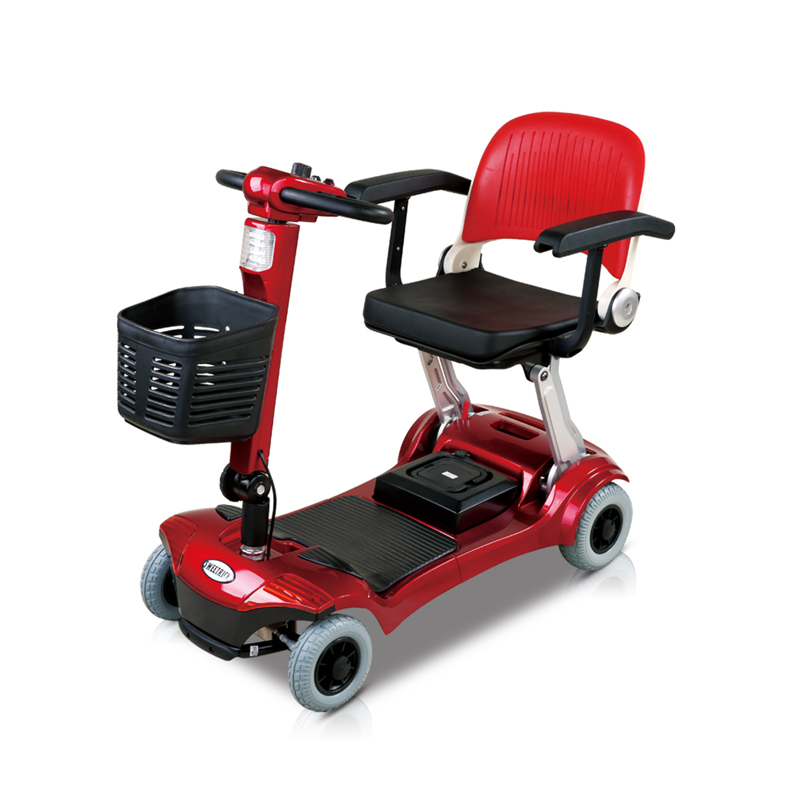
Mobility scooters are often selected for outdoor travel and may provide a comfortable seat, tiller steering, and a stable platform. However, many scooters are difficult to fold or require ramps and vehicle lifts. Their turning radius and overall width may also make them less convenient in narrow indoor spaces.
The iFold offers joystick control, a wheelchair-style seating arrangement, and a rapid folding system. These characteristics may make it more suitable for indoor travel, vehicle storage, and users who prefer hand control instead of a tiller. A scooter may be preferable for users who want a more traditional recreational driving experience or greater outdoor range, while the iFold is focused on compact powered mobility and travel convenience.
Compared with Basic Transport Wheelchairs
A basic transport wheelchair is commonly designed to be pushed by a caregiver. It may be useful for short transfers but does not provide independent powered movement. The iFold can reduce dependence on a companion by providing a motorized drive system and joystick operation.
This advantage is particularly relevant when a user wishes to move around a hotel, shopping center, public building, or private residence without constant assistance. Nevertheless, caregivers may still be needed in certain environments, especially on steep ramps, in crowded areas, or when loading the chair into a vehicle.
Technical Specifications
| Specification | Stated Information |
|---|---|
| Product type | Foldable powered rollator wheelchair with footrest |
| Product category | Travel Smart Wheelchairs |
| Frame material | Aluminum |
| Dimensions when unfolded | 1,090 mm L × 605 mm W × 998 mm H |
| Maximum forward speed | 6 km/h in the technical specification |
| Feature-description speed | Up to 8.5 km/h, subject to configuration confirmation |
| Maximum driving gradient | 10 degrees |
| Maximum driving range | 30 ± 5 km, depending on conditions and battery configuration |
| Maximum user weight | 120 kg or 265 lb |
| Suspension | Front and rear |
| Tire size | 8 inches front; 10 inches rear |
| Brake system | Electromagnetic brake |
| Battery options | Lithium 24 V/10.2 Ah and 20 Ah; optional higher-capacity configuration may be available |
| Charger | DC 24 V, 2 A; AC input 115–230 V |
| Charging time | Approximately 5 hours |
| Motor | 24 V/250 W × 2 |
| Motor controller | 24 V/50 A |
| Weight without battery | 24 kg |
Specifications should be confirmed against the final quotation, user manual, and product configuration before purchase. In particular, customers should clarify the maximum speed, battery capacity, folded dimensions, total operating weight, and transportation requirements. Different markets or production batches may use different component combinations.
Manufacturing Strengths of the Supplier
The product is supplied by Suzhou Sweetrich Vehicle Industry Technology Co., Ltd., a high-tech company located in Suzhou Industrial Zone, Jiangsu, China. According to the supplied company information, the business was established in 2011 and has more than ten years of experience in the research, development, and production of mobility scooters and power wheelchairs.
The company operates a factory covering approximately 30,000 square meters on a site of about 60 acres. This production scale provides a foundation for organized manufacturing, product assembly, inspection, and development. A dedicated factory environment can help coordinate engineering, sourcing, production planning, quality management, and after-sales support.
Manufacturing mobility equipment requires more than simply assembling a frame and installing a motor. A powered wheelchair must integrate structural components, folding mechanisms, drive motors, batteries, controllers, brakes, tires, suspension, wiring, chargers, and user controls. These systems must work together reliably and consistently. Experience in the mobility sector can help a manufacturer identify design interactions that may not be obvious when components are considered separately.
The company states that it owns intellectual property rights for its electric scooters and power wheelchairs. Intellectual property development can support product differentiation and continuous improvement. In the case of a folding powered wheelchair, design ownership may be especially relevant to the folding structure, control arrangement, frame geometry, battery integration, and overall portability strategy.
Research and Development Orientation
The supplier describes a focus on research, development, and production rather than simple distribution. This orientation is important because mobility needs continue to evolve. Users increasingly seek equipment that is compact, easy to transport, simple to control, and suitable for both home and travel environments.
Research and development can support improvements in several areas, including frame strength, folding reliability, battery efficiency, controller response, suspension performance, braking behavior, seating comfort, and serviceability. A company that combines product development with factory manufacturing may be able to move design improvements into production more efficiently than a business that depends entirely on external assembly.
Continuous development is also valuable for adapting products to different export markets. Electrical standards, transportation requirements, user preferences, labeling expectations, and regulatory environments vary by country. The stated export experience of the supplier includes America, Europe, Japan, Australia, the Middle East, Russia, and other markets. International experience can support better awareness of diverse customer expectations, although buyers should still confirm that the specific product complies with all applicable local requirements.
Quality-Oriented Production Management
The company information emphasizes strict production management and scientific product design. In mobility manufacturing, quality management should cover incoming components, frame fabrication, welding or joining, surface treatment, electrical assembly, software or controller setup, battery handling, final inspection, packaging, and shipment preparation.
For the iFold, quality control is particularly important because the folding function must operate smoothly while maintaining structural stability during use. The frame should open and close consistently, locking points should engage correctly, and the completed structure should support the rated load. Electrical systems should be checked for correct wiring, controller response, braking function, charger compatibility, and battery performance.
Reliable manufacturing also involves repeatability. A product should not perform well only when assembled by one experienced technician. Production procedures, work instructions, inspection records, and staff training can help ensure that units are assembled consistently. Standardized testing can identify problems before products reach customers.
Although individual inspection procedures and certifications are not provided in the source materials, prospective buyers should request relevant documentation where necessary. This may include quality certificates, battery transport documents, electrical test records, user manuals, warranty conditions, and market-specific compliance information.
Integrated Product Design
The iFold demonstrates an integrated approach to product design. The aluminum frame supports reduced weight, the folding structure supports transportation, the twin motors provide powered movement, the joystick supports independent operation, the suspension improves ride comfort, and the electromagnetic brake supports controlled stopping. These features are most valuable when they function as a coordinated system.
For example, adding a larger battery may extend range but also increase weight. Increasing motor power may influence battery consumption and operating temperature. Making a frame highly compact may affect seating space or wheel placement. Good product engineering requires balancing these considerations rather than optimizing only one specification.
The company’s experience with both mobility scooters and power wheelchairs may support this kind of cross-product engineering. Knowledge from scooter design can contribute to drive systems, controllers, tires, and battery integration, while wheelchair development can contribute to seating position, joystick access, compact maneuverability, and caregiver convenience.
User Benefits in Daily Life
Home Use
In a home environment, a compact powered wheelchair can help users move between rooms, access kitchens and living areas, and participate in household activities. The relatively narrow unfolded width may be suitable for many indoor routes, although every home should be measured individually.
The folding function is useful when the chair is not needed continuously. It can be stored in a closet, utility area, or vehicle rather than occupying a large section of the living space. Users should store it in a dry location and avoid placing heavy objects on the folded frame or joystick.
Shopping and Community Activities
Shopping centers, supermarkets, libraries, community facilities, and public buildings often require users to cover considerable distances. Powered operation can reduce fatigue and allow a person to participate more independently. The joystick’s flexible side placement may also help accommodate different users and transfer preferences.
Users should remain alert to pedestrians, display fixtures, automatic doors, ramps, and changes in floor surface. The chair should be operated at an appropriate speed for the environment. In crowded spaces, lower speed provides more time to react and helps protect both the user and others.
Vehicle Travel
The combination of rapid folding and a relatively low weight without the battery makes the iFold a practical candidate for vehicle-based travel. The chair can be prepared for transport more quickly than many rigid powered wheelchairs, and its folded form may require less cargo space.
It is essential to secure the chair properly during transportation. Users should follow the vehicle manufacturer’s instructions and use appropriate restraints. The wheelchair should not be left loose in a moving vehicle because sudden braking can cause serious injury or equipment damage. Batteries should be removed, protected, or transported according to the applicable instructions.
Travel and Hospitality
Travelers may find the iFold useful in hotels, resorts, terminals, conference venues, and other large facilities. The ability to fold the product quickly can simplify transfers between vehicles and indoor spaces. The dual-voltage charger input of 115–230 volts may provide flexibility in regions with different mains voltage, although the correct plug adapter and local electrical requirements must still be verified.
Airline and public transportation policies can differ substantially. A battery-powered wheelchair may require advance notification, battery documentation, and specific preparation before boarding. Users should contact the carrier well before departure and confirm the treatment of lithium batteries, removable battery packs, and mobility equipment dimensions.
Safety and Responsible Operation
Safe mobility begins with a suitable assessment of the user, environment, and equipment. The product’s maximum user weight, gradient rating, speed, range, and terrain limitations should be understood before use. The chair should be inspected regularly for loose fasteners, tire damage, damaged cables, battery problems, and abnormal controller behavior.
Users should practice in a clear area before traveling in public. Training should include starting, stopping, reversing, turning, approaching thresholds, using ramps, and responding to low-battery warnings. New users should begin at a low speed and increase speed only after they are comfortable with the controls.
The chair should not be used in heavy rain, deep water, or conditions that could expose electrical components to excessive moisture unless the manufacturer specifically approves such use. Water can damage batteries, controllers, motors, and wiring. Extreme temperatures may also affect battery performance and range.
Users should keep hands, feet, clothing, bags, and other objects away from the wheels and folding joints. The chair should be turned off before transferring into or out of the seat. Children and untrained individuals should not operate the product without appropriate supervision.
The 10-degree maximum gradient should be treated as a technical limit rather than a routine operating target. Slopes should be approached cautiously, and users should avoid cross-slope travel where the chair could become unstable. Surfaces should be checked for loose material, ice, oil, wet leaves, and other hazards.
Maintenance Recommendations
Regular maintenance helps preserve performance and prolong the working life of the chair. Tires should be inspected for wear, cuts, embedded objects, and correct inflation if applicable. The front and rear wheels should rotate freely, and suspension components should be checked for damage or unusual movement.
The folding mechanism should be kept clean and should not be forced. If the frame does not fold or unfold smoothly, users should stop and inspect it rather than applying excessive pressure. Locking points must engage fully before the chair is operated.
Battery care is also important. Users should follow the recommended charging procedure and avoid using an unapproved charger. The battery should be protected from extreme heat, impact, and water. If the chair will not be used for an extended period, the battery should be stored according to the supplier’s instructions.
Electrical connections should be inspected for visible damage, corrosion, or loose fittings. Repairs to the controller, motor wiring, brake system, or battery should be performed by qualified personnel. Unauthorized modifications can affect safety, warranty coverage, and regulatory compliance.
Purchasing Considerations
Before purchasing, customers should evaluate how the chair will be used. Important questions include whether the primary environment is indoors or outdoors, how often the chair will be transported, what distance is expected per outing, whether a caregiver will assist with loading, and whether the user can operate a joystick safely.
Buyers should confirm the final configuration in writing. The supplied information includes more than one battery capacity and provides two different speed references. The final quotation should identify the exact battery, total weight, charger, speed setting, folded dimensions, warranty, spare parts availability, and included accessories.
It is also useful to check service support. A portable powered wheelchair is a long-term mobility investment, and access to replacement batteries, chargers, tires, controllers, joystick assemblies, and brake components can be important. Customers should ask about technical support, repair procedures, warranty response, and the availability of user documentation in the intended market.
Because the product is identified as a non-medical device for the United States market, customers should not assume that it replaces a clinically prescribed wheelchair. People with complex medical needs, significant balance concerns, pressure-injury risks, or specialized seating requirements should seek professional advice before purchase.
Why the Product Stands Out
The iFold stands out by combining several features that are not always found together. Its folding mechanism emphasizes speed, the aluminum frame supports portability, the powered drive system supports independent movement, and the dual-side joystick arrangement addresses different user preferences. Front and rear suspension add comfort, while the electromagnetic brake provides controlled stopping.
Its strongest competitive advantage is the balance between powered performance and travel practicality. Some lightweight chairs sacrifice motorized capability, while some powered wheelchairs sacrifice portability. The iFold is designed for users who want both. The 24-kilogram weight without the battery, compact 605-millimeter width, rapid folding, and optional battery choices make it a flexible solution for personal mobility and transportation.
The manufacturing background of Suzhou Sweetrich Vehicle Industry Technology Co., Ltd. further supports the product proposition. The company’s experience since 2011, dedicated factory, stated research and development capabilities, intellectual property portfolio, international export activity, and focus on production management provide a foundation for continued product development and supply capability.
As with any mobility device, the best choice depends on the individual user and intended environment. The iFold is not designed to replace every type of wheelchair or mobility scooter. Its value is greatest for users who prioritize folding convenience, manageable transport weight, powered driving, and flexible everyday use.
Questions and Answers
What type of mobility product is the iFold?
The iFold is a foldable powered rollator wheelchair with a footrest, aluminum frame, joystick control, twin electric motors, suspension, and an electromagnetic braking system. It belongs to the Travel Smart Wheelchairs category and is designed for portable everyday mobility.
How quickly can the chair be folded?
The product information states that it can be folded and unfolded in approximately one second. Users should still make sure the chair is fully locked in the operating position before driving and should follow the supplied instructions.
How much does the wheelchair weigh?
The stated weight without the battery is 24 kilograms. The complete operating weight will be higher depending on the selected battery and accessories. Customers should confirm the total configuration weight before arranging transportation.
What is the maximum user weight?
The listed weight capacity is 120 kilograms, or 265 pounds. This limit includes the user and should not be exceeded. Personal belongings should also be considered when assessing total load.
What is the maximum speed?
The technical specification lists a maximum forward speed of 6 kilometers per hour. The feature description mentions speeds up to 8.5 kilometers per hour. Because these figures differ, customers should confirm the applicable maximum speed for the exact model and market configuration.
How far can it travel on one charge?
The listed maximum driving range is 30 ± 5 kilometers. Actual range depends on the battery, user weight, terrain, speed, incline, temperature, tire condition, and battery age. The range should therefore be treated as an estimate rather than a guarantee.
Can the joystick be used on either side?
Yes. The product information states that the joystick is available for use on both sides. This can help accommodate different hand preferences, transfer arrangements, and levels of strength or dexterity.
What battery options are available?
The technical data lists 24-volt lithium batteries with capacities of 10.2 ampere-hours and 20 ampere-hours. The feature information also refers to an optional battery of up to 30 ampere-hours. Availability should be confirmed for the desired market and product configuration.
How long does charging take?
The listed charging time is approximately five hours. Charging time can vary with battery capacity, battery condition, charger output, temperature, and other factors. Users should use only the approved charger.
Is the product suitable for air travel?
It may be considered for travel, but airline and transportation policies vary. Lithium batteries and powered mobility devices are subject to carrier-specific requirements. Customers should contact the carrier in advance and obtain instructions about battery removal, documentation, packaging, and cargo handling.
Can it be used outdoors?
The chair can be used on suitable paved paths and other appropriate surfaces. It includes front and rear suspension and has a listed maximum gradient of 10 degrees. It should not be treated as an all-terrain product, and users should avoid deep water, loose surfaces, steep slopes, and hazardous conditions.
Is it a medical wheelchair?
The supplied product information identifies it as a non-medical device for the United States market. It is intended as a mobility product, not necessarily as a clinically prescribed seating or rehabilitation system. Users with specialized medical needs should consult a qualified professional.
What should buyers confirm before ordering?
Buyers should confirm the exact battery capacity, total weight, folded dimensions, maximum speed, range expectations, charger type, warranty, replacement parts, service support, and market-specific compliance information. They should also measure doorways, storage areas, vehicle openings, and intended travel routes.
Conclusion
The iFold foldable aluminum rollator wheelchair presents a practical solution for users who need powered mobility without giving up portability. Its rapid folding system, lightweight aluminum construction, dual 250-watt motors, joystick control for either side, large foot platform, front and rear suspension, electromagnetic brake, and configurable lithium battery options make it well suited to travel-oriented daily use.
Its compact dimensions and 24-kilogram battery-free weight may simplify vehicle transport and storage, while the stated range of approximately 30 ± 5 kilometers can support many everyday outings. The product is particularly attractive when compared with rigid powered wheelchairs that are difficult to transport or manual chairs that require continuous physical propulsion.
The supplier’s experience in mobility product development, dedicated manufacturing facility, research and development focus, intellectual property, international market experience, and stated quality-oriented production management provide additional support for the product’s value. Customers should nevertheless verify the exact configuration and confirm all technical, transportation, safety, and regulatory details before purchase.
For users seeking a compact powered wheelchair that can be folded quickly, transported more conveniently, and operated with flexible joystick placement, the iFold offers a balanced combination of independence, convenience, and travel-ready design.
References
1. Product specification sheet for the iFold foldable aluminum rollator wheelchair with footrest.
2. Supplier-provided product feature information for the iFold Travel Smart Wheelchair.
3. Supplier-provided company profile for Suzhou Sweetrich Vehicle Industry Technology Co., Ltd.
4. General principles of powered wheelchair operation, battery care, and mobility equipment maintenance.
5. General transportation and safety guidance for lithium-battery-powered mobility devices.