
 +86-(0)512-82283871

Content
- 1 Why Folding Design Matters in Modern Mobility
- 2 Automatic Folding for Easier Preparation
- 3 Compact Travel Functionality
- 4 Joystick Control on Either Side
- 5 Motor and Drive System
- 6 Electromagnetic Braking
- 7 Suspension and Wheel Configuration
- 8 Battery Options and Driving Range
- 9 Lighting and Visibility
- 10 Comfort and Practical Usability
- 11 Advantages Compared with Basic Travel Wheelchairs
- 12 Manufacturing Strengths and Product Development
- 13 Quality Management and International Supply
- 14 Safety Considerations for Daily Use
- 15 Maintenance Recommendations
- 16 Who Can Benefit from This Wheelchair?
- 17 Specification Table
- 18 How to Evaluate the Product Before Purchase
- 19 Q&A
- 19.1 What is the main advantage of this electric wheelchair?
- 19.2 Is the wheelchair intended for medical treatment?
- 19.3 Can the joystick be installed on either side?
- 19.4 How far can the wheelchair travel on one charge?
- 19.5 What battery options are available?
- 19.6 How long does charging take?
- 19.7 What is the maximum user weight?
- 19.8 Can the wheelchair climb a 10-degree slope?
- 19.9 Does the wheelchair have suspension?
- 19.10 What are the tire sizes?
- 19.11 How much does the wheelchair weigh?
- 19.12 Does it include a front light?
- 19.13 Can the wheelchair be used outdoors?
- 19.14 What makes the manufacturer suitable for international buyers?
- 20 Conclusion
- 21 References
- 22 Product: iFold PLUS Automatic folding electric wheelchair with joystick controller hot sale
Choosing a portable electric wheelchair involves more than comparing motor power or battery capacity. Users and caregivers also need to consider folding convenience, transportability, operating comfort, stability, range, control flexibility, and the quality of the manufacturing process behind the product. An automatic folding electric wheelchair is designed to address these practical needs in one compact mobility solution.
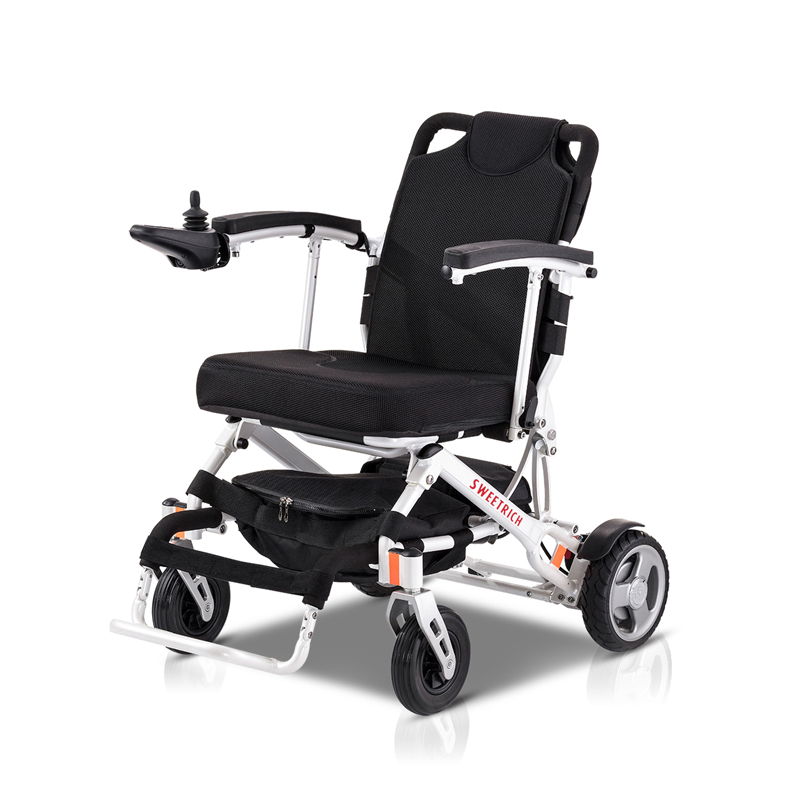
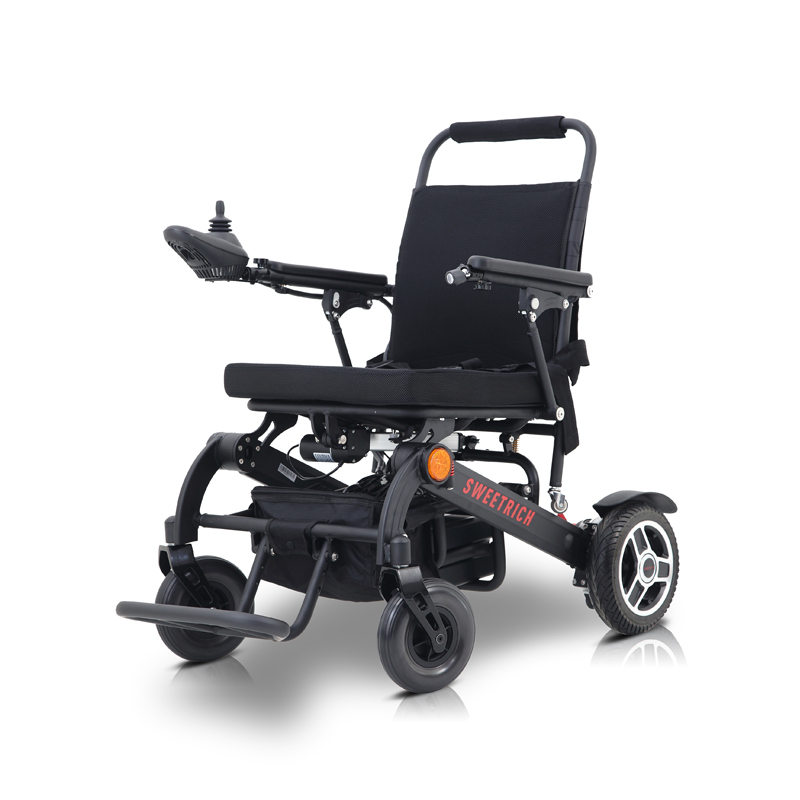
The iFold PLUS automatic folding electric wheelchair is developed for users who want powered mobility without the bulk and complexity often associated with larger power wheelchairs. Its automatic folding function, joystick control, suspension system, lithium battery options, under-seat storage, and compact transport profile make it suitable for travel-oriented applications. It is categorized as a Travel Smart wheelchair and is intended for non-medical use in the United States market.
With a maximum listed operating speed of 6 km/h and a feature description indicating speeds of up to 8.5 km/h, the wheelchair is designed to provide practical movement for indoor areas, paved outdoor paths, shopping environments, residential communities, transportation terminals, and other suitable locations. Actual operating speed should always be set according to local regulations, terrain, user ability, and safe operating conditions.
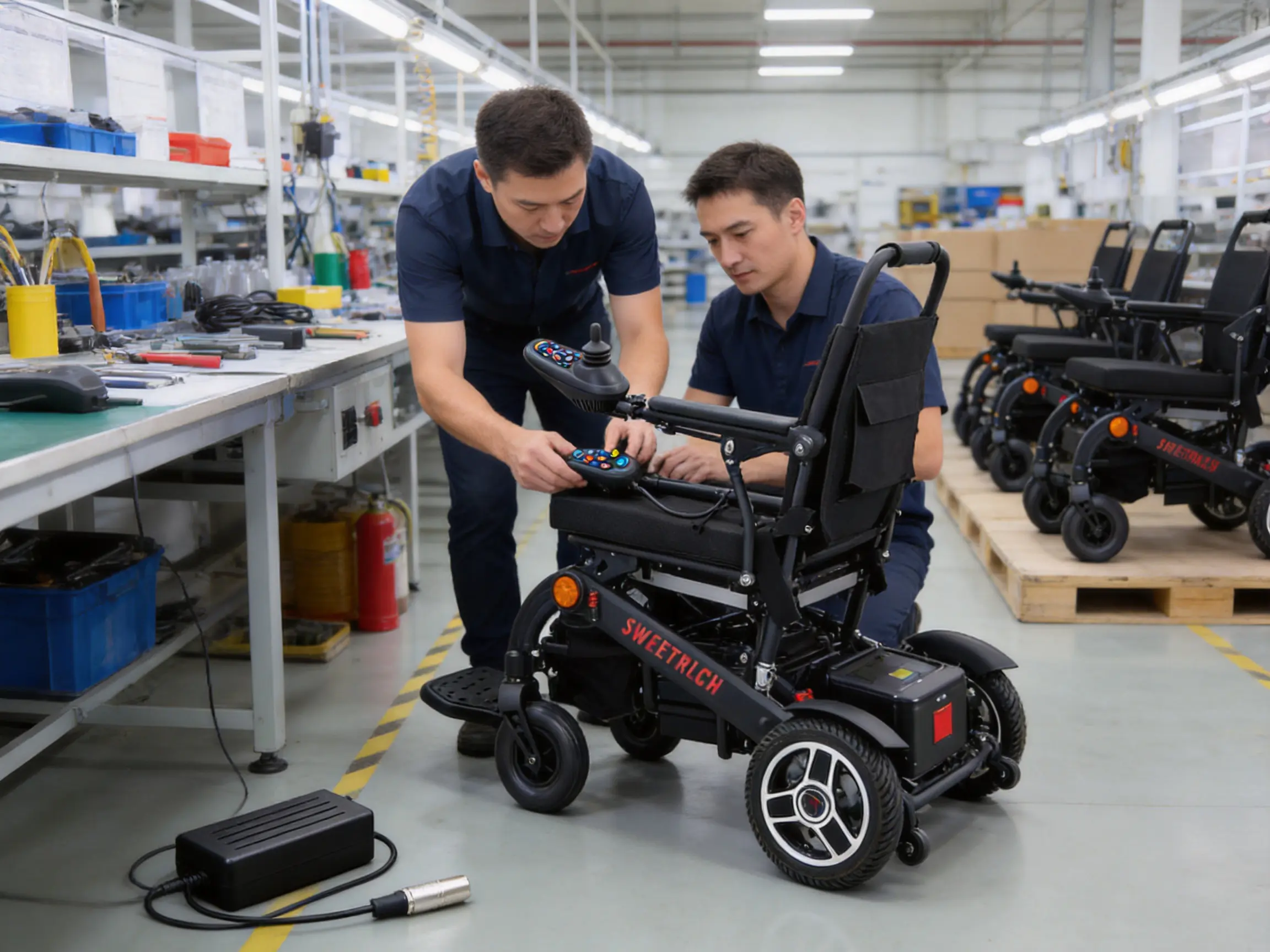
The product is manufactured by Suzhou Sweetrich Vehicle Industry Technology Co., Ltd., a mobility equipment producer based in Suzhou, Jiangsu, China. The company operates a large production facility and has experience in the research, development, and manufacturing of mobility scooters and power wheelchairs. Its products are exported to markets including America, Europe, Japan, Australia, the Middle East, and Russia.
Why Folding Design Matters in Modern Mobility
Traditional power wheelchairs can provide excellent stability and functionality, but their size and weight may make them difficult to transport in a private vehicle. A user may need a separate vehicle lift, ramp, or spacious accessible van. These requirements can increase ownership costs and limit spontaneous travel.
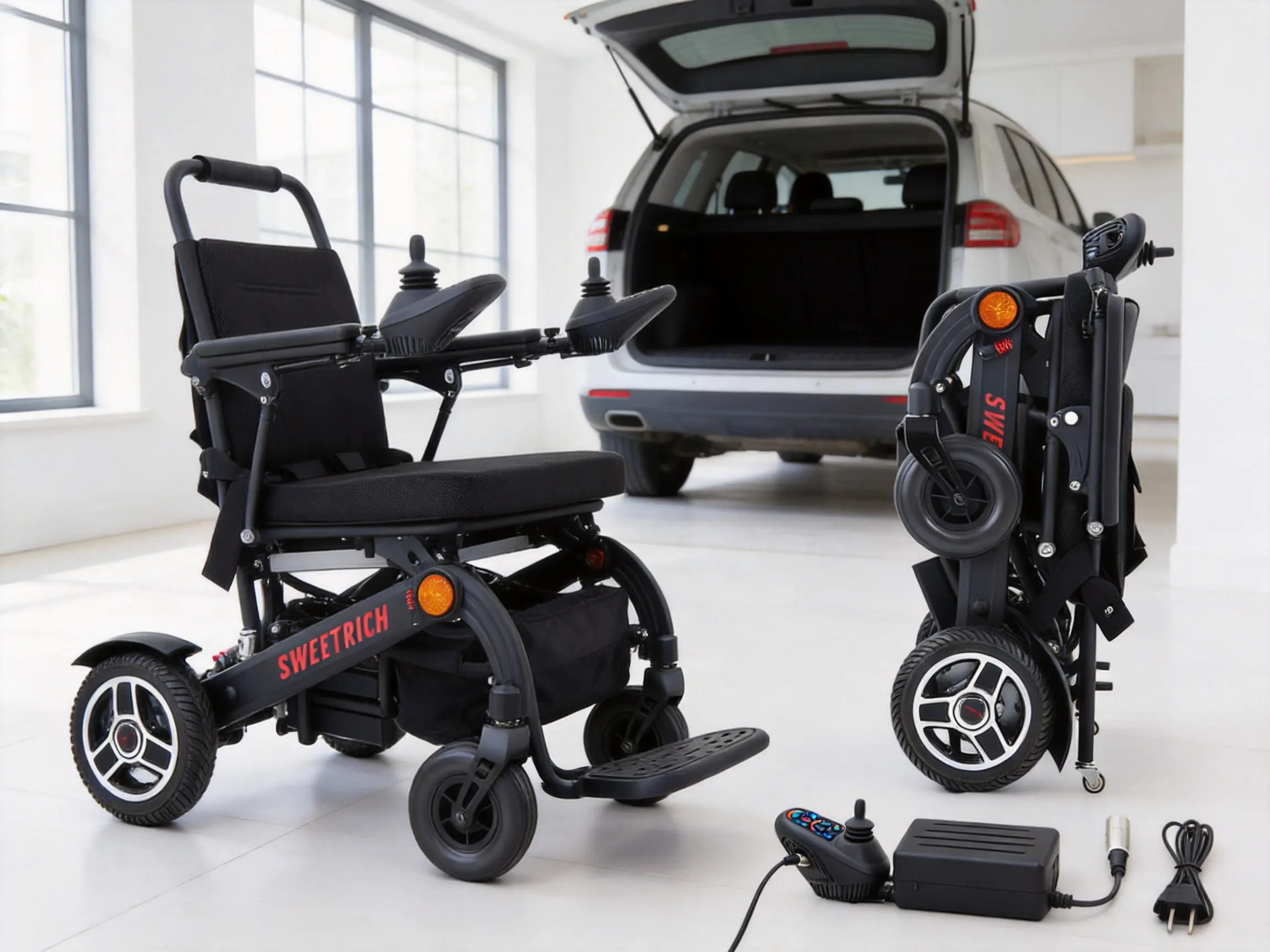
A folding electric wheelchair offers a different approach. When folded, the chair can be moved more easily than a full-size power wheelchair, particularly when the user or caregiver needs to place it in a vehicle, store it at home, or move it through a building. The iFold PLUS is designed around this travel-oriented requirement, combining powered operation with an automatic folding system.
Automatic folding reduces the physical effort required to prepare the chair for storage or transport. Instead of manually collapsing multiple sections, the user can use the designed folding mechanism to reduce the chair’s operating footprint. This can be especially valuable for caregivers, family members, and users who have limited upper-body strength.
The folding function also contributes to better space management. In a home, the wheelchair can be stored in a designated area without occupying the same amount of floor space as a conventional full-size powered chair. During transportation, the folded unit can be placed in an appropriate vehicle storage area, provided that the vehicle and the user can safely accommodate its weight and dimensions.
Portability should not be confused with lightweight handling in every situation. The product weighs 24 kg without the battery, so users should assess whether they can lift it safely or whether assistance is needed. Nevertheless, its folding structure can make rolling, positioning, and storage more manageable than with many non-folding powered wheelchairs.
Automatic Folding for Easier Preparation
The main product feature is automatic folding. This function is intended to simplify the transition between driving mode and transport or storage mode. For frequent travelers, the ability to fold the wheelchair with less manual adjustment can save time during hotel check-ins, vehicle transfers, shopping trips, and family outings.
A well-designed automatic folding system should provide a controlled movement sequence and a clear transition between the open and folded positions. Users should follow the operating instructions and ensure that clothing, bags, fingers, and other objects remain clear of moving components. The folding area should also be free from obstacles.
Compared with a manually folding chair, an automatic folding model can offer greater convenience when the user has limited dexterity. Manual folding systems may require the operator to release locks, pull handles, or apply force to the frame. The automatic approach is intended to reduce these tasks and support a more independent travel routine.
The folding capability is also useful for caregivers. A caregiver may need to prepare the wheelchair quickly while assisting the user with luggage, transfers, or other personal items. Reducing the number of manual steps can make the overall journey more efficient.
Because folding mechanisms contain moving parts, periodic inspection is important. The user should check that the folding system operates smoothly, that there are no unusual sounds, and that the frame is fully locked in its driving position before use. Any damage, looseness, or malfunction should be addressed by qualified service personnel.
iFold PLUS Automatic folding electric wheelchair with joystick controller hot sale
Compact Travel Functionality
The iFold PLUS is designed as a Travel Smart wheelchair rather than as a large, heavy-duty institutional power chair. Its dimensions in the unfolded configuration are approximately 1,090 mm in length, 605 mm in width, and 998 mm in height. These dimensions provide a practical balance between seating space, maneuverability, and transport-oriented design.
A width of approximately 605 mm can be useful when navigating many indoor spaces, although users should always compare the chair’s dimensions with the width of household doorways, elevators, corridors, ramps, and vehicle access points. Outdoor paths and public facilities may have different clearance requirements.
The product’s folded configuration is intended to make movement and storage easier, although the supplied technical information does not specify a complete folded dimension. Buyers should request the exact folded length, width, and height before purchasing if the chair must fit into a particular trunk, aircraft storage area, closet, or transport case.
The travel value of a folding wheelchair depends on more than its folded size. Battery type, total weight, lifting points, wheel design, frame strength, and folding simplicity all affect everyday usability. The iFold PLUS combines these factors with a lithium battery system and an under-seat storage bag, giving users a place to carry personal items without requiring a separate backpack or basket.
The under-seat storage bag is useful for small belongings such as a wallet, phone, charger accessories, keys, or light shopping items. Users should avoid overloading the bag because excessive weight can affect handling and may interfere with the folding mechanism or ground clearance.
Joystick Control on Either Side
Control placement is an important consideration for powered mobility. The iFold PLUS has a joystick controller that can be used on either side. This feature enables the control position to be adjusted according to the user’s dominant hand, physical comfort, seating arrangement, or individual operating preference.
A left- or right-side joystick can make the chair more adaptable for different users. Some people have better control with their left hand, while others prefer their right. Certain users may also need to change joystick position because of limited movement, temporary discomfort, or transfer requirements.
The joystick is designed to control forward, reverse, turning, and stopping functions through the wheelchair’s electronic control system. New users should practice in a clear, level area at low speed before operating in crowded environments. Smooth, gradual joystick movements are generally easier to control than sudden inputs.
The controller should remain protected from moisture, impact, and unauthorized adjustment. Users should not place heavy objects on the joystick or use it as a support handle when standing or transferring. The chair should be switched off before a user transfers into or out of the seat unless the operating instructions specifically state otherwise.
Side-to-side joystick compatibility is an advantage over products with a fixed control position. A fixed controller may force a user to adapt to an uncomfortable posture or require modification by a technician. The iFold PLUS provides this adjustment as part of its intended design.
Motor and Drive System
The wheelchair uses two 24-volt, 250-watt motors. A dual-motor configuration provides independent drive power to the left and right sides of the chair. This arrangement supports controlled steering and allows the wheelchair to turn within a relatively compact space.
Independent motor control is particularly useful for indoor maneuvering, where the user may need to turn around furniture, approach a doorway, or position the chair next to a table. It also helps create a responsive driving experience when navigating paved outdoor surfaces.
The motor system is paired with a 24-volt, 50-amp motor controller. The controller regulates electrical power delivered to the motors and coordinates the user’s joystick commands with the drive system. A properly matched motor and controller combination can contribute to smooth acceleration, controlled turning, and efficient energy use.
The product description identifies the motors as high-performance and high-efficiency units. Efficiency is valuable in a travel wheelchair because reduced energy loss can help the available battery capacity support a practical driving range. Actual range will vary according to the battery option, rider weight, terrain, temperature, tire pressure, driving style, and frequency of stopping and starting.
The listed maximum driving gradient is 10 degrees. This figure should not be interpreted as a recommendation to climb every slope of that angle. Surface condition, slope length, wetness, loose gravel, side slopes, and the user’s weight can significantly affect safety. Users should avoid slopes that exceed the instructions, local safety guidance, or their personal control ability.
On ramps and inclines, the user should maintain a moderate speed and avoid abrupt turning. Descending should be performed carefully, with attention to the electromagnetic braking system and the surface ahead. If a slope appears unsafe, the best decision is to use an alternative route.
Electromagnetic Braking
The iFold PLUS uses an electromagnetic brake system. This type of braking is commonly integrated with powered mobility equipment so that the drive system can slow or hold the chair when the joystick is released or the power is switched off, subject to the product’s operating design.
Electromagnetic braking can support controlled stopping during everyday driving. It is especially important when the user releases the joystick unexpectedly or needs to stop before an obstacle. However, braking performance depends on the surface, slope, battery condition, motor condition, tire condition, and total load.
Users should test the brakes in a safe area before regular operation. The chair should not be used if it rolls unexpectedly, stops unevenly, or behaves differently from normal. Maintenance should be carried out by qualified personnel, especially when the electrical system or brake wiring requires inspection.
The brake system does not remove the need for safe driving practices. Users should maintain a clear path, reduce speed near people and obstacles, and avoid carrying loads that exceed the rated capacity. The stated maximum weight capacity is 120 kg, or 265 pounds, including the user and any carried items that contribute to the total load.
Suspension and Wheel Configuration
The product includes front and rear suspension. Suspension can help reduce the effect of small surface irregularities and contribute to a more comfortable ride on appropriate paved or moderately uneven surfaces. It may also help keep the wheels in contact with the ground during normal travel.
Suspension does not make the wheelchair suitable for every type of terrain. Deep mud, loose sand, large stones, severe potholes, steep cross-slopes, and waterlogged areas can create serious risks. Users should operate on surfaces that are compatible with the wheelchair’s design and avoid obstacles that could damage the frame or wheels.
The front tires are 8 inches, while the rear tires are 10 inches. Larger rear wheels can help the chair roll over minor surface changes more effectively than very small wheels. The wheel arrangement also supports the stability and drive characteristics expected from a compact powered wheelchair.
Tire condition should be checked regularly. Worn, damaged, or incorrectly inflated tires can reduce traction and affect steering and braking. If the tires are solid or air-filled according to the specific production configuration, the maintenance requirements may differ, so users should consult the supplied product documentation.
The combination of suspension and wheel sizing gives the product a practical advantage over basic travel chairs that may use a simpler frame and smaller wheels without front and rear suspension. It is intended to improve the quality of everyday travel while retaining a foldable structure.
Battery Options and Driving Range
The wheelchair uses a 24-volt lithium battery system. Listed battery options include 10.2 Ah and 20 Ah capacities, while the product description also mentions an optional battery of up to 30 Ah for reaching a greater distance. Buyers should confirm the exact battery configuration, availability, airline requirements, and regional shipping restrictions before ordering.
Lithium batteries are often selected for portable mobility products because they can provide useful energy capacity with a comparatively manageable weight. Lower battery weight can support easier transport and may contribute to the overall practicality of a folding wheelchair.
The stated maximum driving range is 30 plus or minus 5 km. This should be considered an estimated range under defined test conditions rather than a guaranteed distance for every user. A heavier load, frequent acceleration, steep terrain, cold weather, soft surfaces, underinflated tires, and repeated use of lighting or accessories can reduce the actual range.
Users should plan journeys with a reserve of battery power. A route that appears to be within the published range may require additional energy because of hills, detours, waiting, and repeated maneuvering. Charging should be completed before a long trip, and the user should know where safe charging is available when traveling away from home.
The listed charger is a DC 24V 2A unit with AC 115–230V input compatibility. This broad input range may support use in different regions, but users must verify the correct plug, local electrical requirements, and charger supplied with their specific order. Only the approved charger should be used unless a qualified professional confirms compatibility.
The listed charging time is approximately five hours. Charging time may vary according to the battery’s remaining capacity, battery age, temperature, charger output, and battery management system. The battery should be charged in a dry, ventilated area and should not be covered during charging.
Battery care is essential for performance and service life. Users should avoid exposing the battery to extreme heat, impact, water, or unauthorized modification. If the battery becomes unusually hot, swollen, damaged, or emits an unusual odor, charging should stop and professional service should be requested.
Lighting and Visibility
A front light is available as an option. Lighting can improve visibility in dim conditions and help other people notice the wheelchair. This is useful around residential streets, building entrances, parking areas, and indoor facilities with limited illumination.
A front light should be regarded as a visibility aid rather than a guarantee of safe nighttime travel. Users should follow local regulations, wear suitable reflective materials when appropriate, and avoid roads or areas where the wheelchair is not permitted. The light should be checked regularly to ensure that it functions properly.
Visibility also depends on driving behavior. Users should reduce speed in low light, keep a safe distance from vehicles and pedestrians, and avoid sudden direction changes. A travel wheelchair is best used in environments that provide suitable pedestrian access and adequate surface quality.
Comfort and Practical Usability
Comfort affects how effectively a user can rely on a mobility device throughout the day. The large foot platform provides space for the user’s feet and can support a more relaxed seated posture. A stable foot platform may also make it easier to maintain consistent positioning during travel.
Users should position their feet correctly before moving and ensure that loose clothing, bags, and other objects do not contact the wheels. The foot platform should not be overloaded or used as a step. Transfers should be performed carefully, with the wheelchair switched off and secured as instructed.
The product’s suspension, padded seating configuration, joystick flexibility, storage bag, and folding design work together to improve practical usability. Each feature addresses a different part of the travel experience: riding comfort, control access, carrying personal items, and preparing the wheelchair for transportation.
Comfort is personal, so buyers should evaluate seat width, seat depth, back support, armrest position, foot support, and controller placement. The published technical information does not provide every seating measurement. Customers who require a precise fit should request detailed seat specifications before purchase.
Advantages Compared with Basic Travel Wheelchairs
The iFold PLUS offers several features that can distinguish it from simpler travel wheelchairs. A basic model may fold manually, use a fixed joystick position, provide limited suspension, or offer fewer battery choices. By combining automatic folding, dual-side joystick compatibility, front and rear suspension, two drive motors, and optional battery capacities, the iFold PLUS is designed to provide a more complete travel package.
Its automatic folding system can reduce preparation effort. Its side-changeable joystick can accommodate more users. Its dual-motor drive system supports powered maneuvering, while the electromagnetic brake provides an integrated stopping function. The under-seat bag adds everyday convenience without requiring an extra storage accessory.
The 120 kg weight capacity is also important for product selection. Users should compare the rated capacity with their own body weight and expected carried items. A wheelchair should not be selected solely by folded size if it cannot safely accommodate the intended load.
The combination of 8-inch front wheels and 10-inch rear wheels, together with suspension, may offer a more stable travel experience than ultra-compact chairs designed only for smooth indoor surfaces. Nevertheless, the chair remains a portable product and should not be compared directly with heavy-duty outdoor power bases intended for extreme terrain.
Compared with a full-size power wheelchair, the iFold PLUS may be easier to store and transport. In exchange, users should understand that a compact folding wheelchair may have different seating dimensions, ground clearance, accessories, and terrain limits. The best choice depends on the user’s daily environment and travel priorities.
Manufacturing Strengths and Product Development
The manufacturer, Suzhou Sweetrich Vehicle Industry Technology Co., Ltd., was established in 2011 and is located in Suzhou Industrial Zone, Jiangsu, China. The company’s stated operations cover research, development, and production of mobility scooters and power wheelchairs.
The company occupies an area of approximately 60 acres and operates a factory covering about 30,000 square meters. A dedicated industrial facility of this scale can support structured production planning, component management, assembly operations, quality inspection, engineering work, packaging, and after-sales coordination.
Mobility products require more than basic frame assembly. A powered wheelchair integrates mechanical structures, motors, controllers, batteries, brakes, wheels, folding components, seating elements, and user controls. These systems must work together reliably. A manufacturer with experience across scooters and power wheelchairs can apply knowledge from different product categories to drive systems, ergonomics, electrical integration, and travel design.
The company identifies itself as a high-tech enterprise and states that it owns intellectual property rights relating to electric scooters and power wheelchairs. Intellectual property development can support product differentiation, particularly in areas such as folding mechanisms, control systems, drive layouts, and user-focused design.
Product design is described as incorporating advanced control technology and driving systems. In the iFold PLUS, these principles are reflected in the joystick controller, dual 250-watt motors, 50-amp controller, electromagnetic braking, and configurable control-side arrangement.
Manufacturing quality also depends on process discipline. The company states that it follows strict production management and scientific product design. In practice, an effective production process should include incoming component checks, controlled assembly procedures, electrical testing, brake verification, folding-mechanism inspection, battery-system checks, and final product review.
Although detailed internal inspection records are not included in the supplied materials, these are important areas for any mobility equipment manufacturer. Buyers and distributors should request applicable quality documentation, test reports, warranty terms, user manuals, and market-specific compliance information before placing an order.
Quality Management and International Supply
The company states that it has built long-term partnerships with customers around the world and exports products to multiple international markets. International distribution requires attention to packaging, documentation, electrical compatibility, spare parts, service communication, and local regulations.
For distributors, consistent production is especially important. Retailers need products that match approved specifications from one shipment to the next. They also need access to replacement batteries, chargers, controllers, wheels, and other service components when required.
For end users, manufacturing strength is reflected in the complete ownership experience. A well-made mobility product should be supported by clear operating instructions, correct charging guidance, maintenance recommendations, service contacts, and appropriate warranty information.
Manufacturing location alone does not determine quality. Quality depends on design control, component selection, process control, testing, traceability, worker training, packaging, and after-sales service. The company’s stated focus on research, development, production management, and international cooperation provides a foundation for evaluating the product as part of a professional mobility equipment portfolio.
Customers in the United States should confirm that the exact configuration they purchase is intended for the US market. They should also ask about applicable product labeling, battery transportation requirements, electrical standards, warranty support, and any relevant local or federal requirements. The product is described as a non-medical device for the US market, so it should not be presented as a medical treatment or as a substitute for professional clinical advice.
Safety Considerations for Daily Use
Safe operation begins with reading the user manual and understanding the controls. New users should practice starting, stopping, reversing, and turning in an open area. The first practice session should take place away from traffic, stairs, steep slopes, water, loose surfaces, and crowded pedestrian routes.
The user should inspect the chair before each trip. Important checks include battery charge, tire condition, joystick response, brake behavior, folding locks, foot platform position, seat stability, and visible damage. If any critical component does not operate normally, the chair should not be used until it has been inspected.
The wheelchair should not carry more than the specified 120 kg total weight capacity. The total includes the user, bags, shopping, accessories, and any other load. Excess weight can affect braking distance, range, stability, motor temperature, and the life of structural components.
Users should avoid water deeper than the manufacturer permits and should protect the controller and electrical connections from rain and splashing. Electrical mobility equipment should not be operated through flooded areas or stored in conditions that promote corrosion.
When using a vehicle, the wheelchair should be folded, positioned, and secured according to the vehicle’s requirements. A folded wheelchair should not be left loose where it could become a projectile during sudden braking. The battery may have special transport rules, especially for air travel, so passengers should confirm requirements with the carrier in advance.
Users should not modify the motor, controller, battery, brake, frame, or folding mechanism without authorization. Modifications can change the performance and safety characteristics of the product and may invalidate warranty coverage.
Maintenance Recommendations
Regular maintenance helps preserve performance. The frame and folding joints should be kept clean and checked for looseness or damage. Dirt and debris should not be allowed to accumulate around wheels, moving joints, or the folding mechanism.
The battery should be charged with the correct charger and stored according to the manufacturer’s instructions. Long periods of storage may require periodic charging to prevent excessive discharge. The exact storage procedure depends on the battery chemistry and battery management system.
The tires should be inspected for wear, cracks, embedded objects, and changes in shape. The brakes should be tested in a safe area. The joystick should be checked for smooth response, and the controller housing should be protected from impact and moisture.
If the wheelchair develops reduced range, unusual motor noise, sudden stopping, inconsistent steering, charging failure, or folding difficulty, the user should discontinue operation when appropriate and contact the supplier or an authorized service provider.
Who Can Benefit from This Wheelchair?
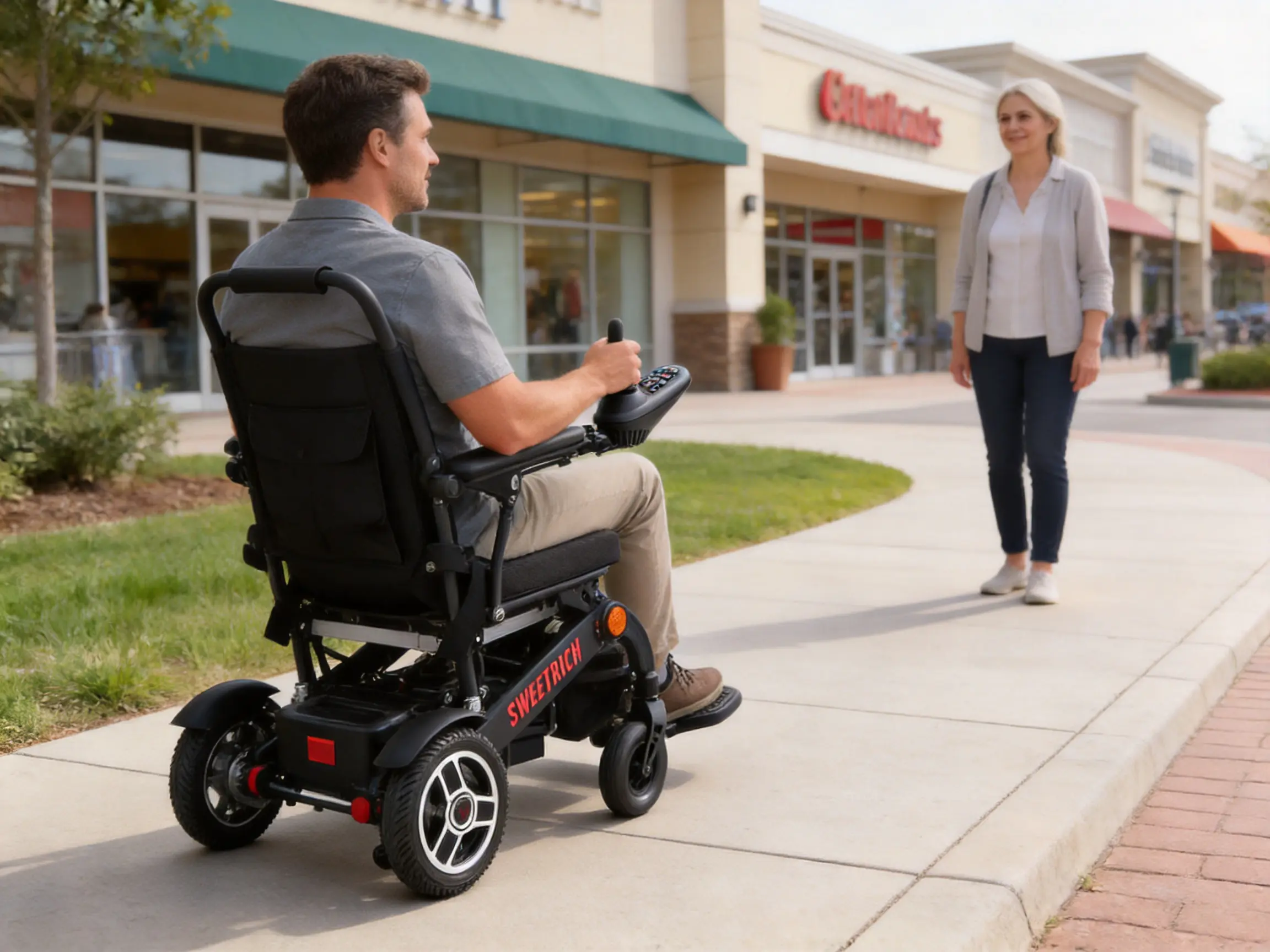
The iFold PLUS may be suitable for adults who need powered assistance for travel but want a wheelchair that can be folded for storage and transportation. It may be particularly useful for people who frequently visit shopping centers, hotels, family homes, community facilities, paved parks, or transportation terminals.
It may also appeal to caregivers who need to transport a powered wheelchair in a vehicle without using a large external lift. The automatic folding system and under-seat storage bag can reduce the number of separate tasks involved in an outing.
Travelers should evaluate the wheelchair against their specific circumstances. A person who regularly drives on rough terrain, requires a very high weight capacity, or needs specialized seating may need a different type of power wheelchair. A person whose primary need is compact powered mobility on suitable surfaces may find the iFold PLUS more appropriate.
Users with particular postural, neurological, orthopedic, or medical requirements should seek professional advice before selecting a mobility device. The product is presented as a non-medical mobility device, and its specifications should not be interpreted as a clinical recommendation.
Specification Table
| Specification | Listed Information |
|---|---|
| Product type | Automatic folding electric wheelchair |
| Application category | Travel Smart wheelchair |
| Unfolded dimensions | 1,090 mm length × 605 mm width × 998 mm height |
| Maximum listed forward speed | 6 km/h in the technical table |
| Feature description speed | Up to 8.5 km/h or 5.2 mph |
| Maximum driving gradient | 10 degrees |
| Maximum driving range | 30 ± 5 km |
| Weight capacity | 120 kg or 265 lb |
| Suspension | Front and rear |
| Front tire size | 8 inches |
| Rear tire size | 10 inches |
| Brake system | Electromagnetic brake |
| Battery options | 24V lithium, 10.2 Ah and 20 Ah listed; optional higher-capacity configuration may be available |
| Charger | DC 24V 2A; AC 115–230V input |
| Charging time | Approximately 5 hours |
| Motor system | Two 24V, 250W motors |
| Motor controller | 24V, 50A |
| Weight without battery | 24 kg |
| Joystick | Available for left- or right-side use |
| Optional equipment | Front light and additional battery configurations |
How to Evaluate the Product Before Purchase
Buyers should begin by measuring the spaces where the wheelchair will be used. Doorways, elevators, bathroom entrances, vehicle openings, and storage areas should be checked against the unfolded and folded dimensions. Because the supplied information does not include the complete folded measurements, these should be requested before ordering.
The next step is to evaluate the user’s weight, seating needs, hand control, and expected travel distance. The 120 kg capacity should include all carried items. The selected battery should match the intended journey length, while the charger should match the local electrical system.
Customers should also confirm the actual speed setting for the specific model. The product materials list both 6 km/h and up to 8.5 km/h. This may reflect different configurations, markets, or operating settings. The applicable specification should be confirmed with the manufacturer or authorized distributor.
For frequent vehicle transportation, buyers should consider how the 24 kg chair without battery will be handled. If the user cannot safely lift this weight, assistance or a suitable loading solution may be necessary. Folding improves portability, but it does not eliminate the need for safe lifting practices.
It is also helpful to ask about warranty duration, spare parts, battery replacement, technical support, user manuals, delivery packaging, and service availability in the destination country. These details can have a major effect on long-term ownership value.
Q&A
What is the main advantage of this electric wheelchair?
The main advantage is the combination of powered driving and automatic folding. Users can operate the chair electrically and prepare it for storage or transport with fewer manual folding steps than a conventional manual-folding design.
Is the wheelchair intended for medical treatment?
No. The supplied product information describes it as a non-medical device for the United States market. It is intended to provide mobility assistance and should not be described as a medical treatment or clinical device without appropriate authorization.
Can the joystick be installed on either side?
Yes. The product description states that the joystick is available for both left- and right-side use. Buyers should confirm the installation procedure and included configuration with the supplier.
How far can the wheelchair travel on one charge?
The listed maximum driving range is approximately 30 ± 5 km. Actual range varies according to battery capacity, user weight, terrain, temperature, tire condition, driving behavior, and other operating factors.
What battery options are available?
The technical information lists 24V lithium batteries with 10.2 Ah and 20 Ah capacities. The feature description also mentions an optional battery of up to 30 Ah. Availability should be confirmed for the exact market and product configuration.
How long does charging take?
The listed charging time is approximately five hours. The actual time may vary according to the battery’s remaining charge, battery condition, temperature, and charger performance.
What is the maximum user weight?
The stated weight capacity is 120 kg, or 265 pounds. This limit includes the user and items carried on the wheelchair, such as personal belongings or shopping.
Can the wheelchair climb a 10-degree slope?
The listed maximum driving gradient is 10 degrees. This is a specification limit, not a guarantee that every 10-degree slope is safe. Surface condition, wetness, slope length, load, battery level, and user skill must be considered. Users should follow the manual and avoid slopes that feel unsafe.
Does the wheelchair have suspension?
Yes. The product is listed with front and rear suspension. Suspension can improve comfort and help manage minor surface irregularities, but it does not make the wheelchair suitable for severe off-road conditions.
What are the tire sizes?
The listed front tire size is 8 inches, and the listed rear tire size is 10 inches.
How much does the wheelchair weigh?
The listed weight without the battery is 24 kg. The complete transport weight will be higher when the battery and any accessories are included.
Does it include a front light?
A front light is available as an optional feature. Buyers should confirm whether it is included in the selected package or must be ordered separately.
Can the wheelchair be used outdoors?
It can be used on appropriate outdoor surfaces, such as suitable paved paths and controlled pedestrian areas. Users should avoid deep water, loose terrain, severe potholes, steep unsafe slopes, and other conditions outside the product’s operating limitations.
What makes the manufacturer suitable for international buyers?
The manufacturer has experience in research, development, and production of mobility scooters and power wheelchairs. It operates a factory in Suzhou, China, and states that its products are exported to several international markets. Buyers should still confirm local service, documentation, warranty, and compliance requirements.
Conclusion
The iFold PLUS automatic folding electric wheelchair is designed to combine travel convenience with powered mobility. Its automatic folding function addresses one of the most common challenges associated with transporting a power wheelchair. The dual-side joystick arrangement supports different user preferences, while the two 250-watt motors, electromagnetic brakes, front and rear suspension, and 8-inch and 10-inch wheel configuration provide a practical foundation for everyday operation.
Its lithium battery choices and estimated range of approximately 30 ± 5 km support local trips and planned outings, while the under-seat storage bag and optional front light add useful convenience. The 120 kg weight capacity and 24 kg weight without the battery should be carefully considered during product selection and transport planning.
Compared with basic travel wheelchairs, the product offers a broader set of integrated features, including automatic folding, adjustable joystick positioning, dual-motor drive, suspension, and optional battery configurations. Compared with larger non-folding power wheelchairs, it emphasizes portability and storage efficiency.
The manufacturer’s experience, dedicated production facility, international market presence, research and development capabilities, and stated focus on production management provide important support for the product’s positioning. Nevertheless, buyers should verify the exact configuration, folded dimensions, speed specification, battery option, warranty, documentation, and market-specific requirements before purchase.
For users seeking a compact powered mobility solution for suitable indoor and outdoor travel, the iFold PLUS offers a balanced combination of convenience, control, transportability, and practical performance. Its greatest value lies in making powered mobility easier to integrate into everyday journeys without giving up the essential features expected from a modern electric wheelchair.
References
1. Product specification sheet for the iFold PLUS automatic folding electric wheelchair, including dimensions, motor, battery, brake, suspension, and capacity data.
2. Product feature summary for the iFold PLUS Travel Smart wheelchair, including automatic folding, joystick configuration, storage, lighting, and optional battery information.
3. Manufacturer company profile describing research, development, production facilities, international distribution, and mobility product experience.
4. General principles of powered wheelchair operation, battery care, charging safety, slope management, and routine maintenance.
5. General guidance for selecting portable mobility equipment according to user capacity, travel environment, vehicle storage, control access, and service requirements.