
 +86-(0)512-82283871

Content
- 1 Core Product Specifications
- 2 Folding Design and Transport Advantages
- 3 Comfort and Ride Quality
- 4 Motor, Controller, and Braking System
- 5 Battery Options and Charging Considerations
- 6 Weight Capacity and Intended Applications
- 7 Advantages Compared with Conventional Competitor Choices
- 8 Manufacturing Strengths and Quality-Oriented Production
- 9 Global Distribution and Wholesale Potential
- 10 Serviceability and Long-Term Ownership
- 11 Safety and Responsible Use
- 12 How the S1 PLUS Supports Different Customer Needs
- 13 Wholesale Evaluation Checklist
- 14 Q&A: Common Questions About the S1 PLUS
- 14.1 What type of mobility scooter is the S1 PLUS?
- 14.2 What is the maximum speed?
- 14.3 How far can it travel on one charge?
- 14.4 What is the maximum user weight?
- 14.5 Does it have suspension?
- 14.6 What braking system does it use?
- 14.7 What type of batteries are used?
- 14.8 How long does charging take?
- 14.9 Can the scooter be used in rain?
- 14.10 Is the product a medical device?
- 14.11 What makes it different from a larger scooter?
- 14.12 What should wholesalers confirm before ordering?
- 15 Conclusion
- 16 References
- 17 Product: S1 PLUS All Weather Wholesale Four Wheels Electric Folding Mobility Scooter in Walmart
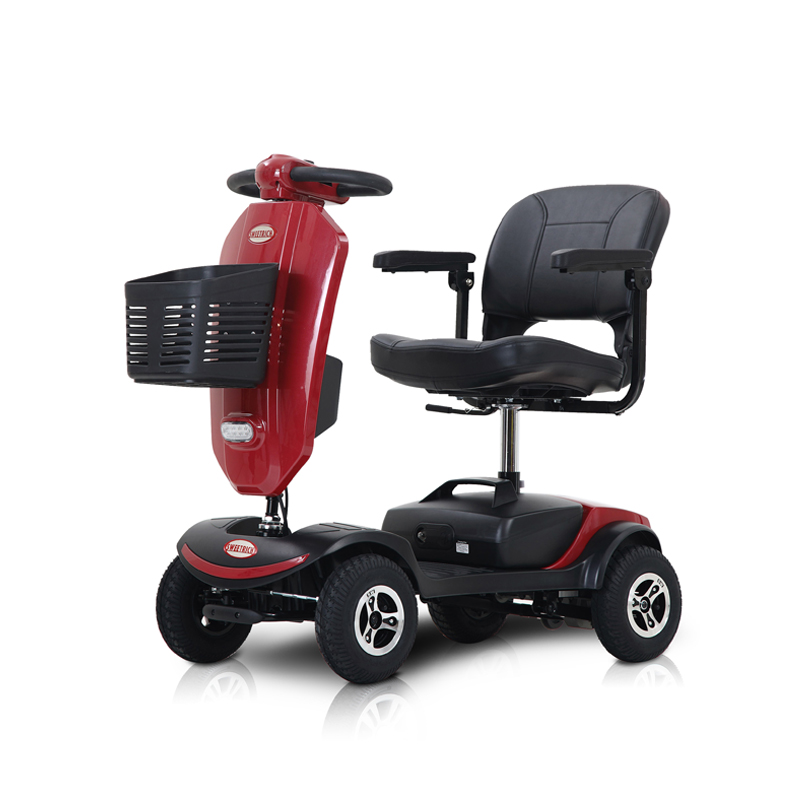
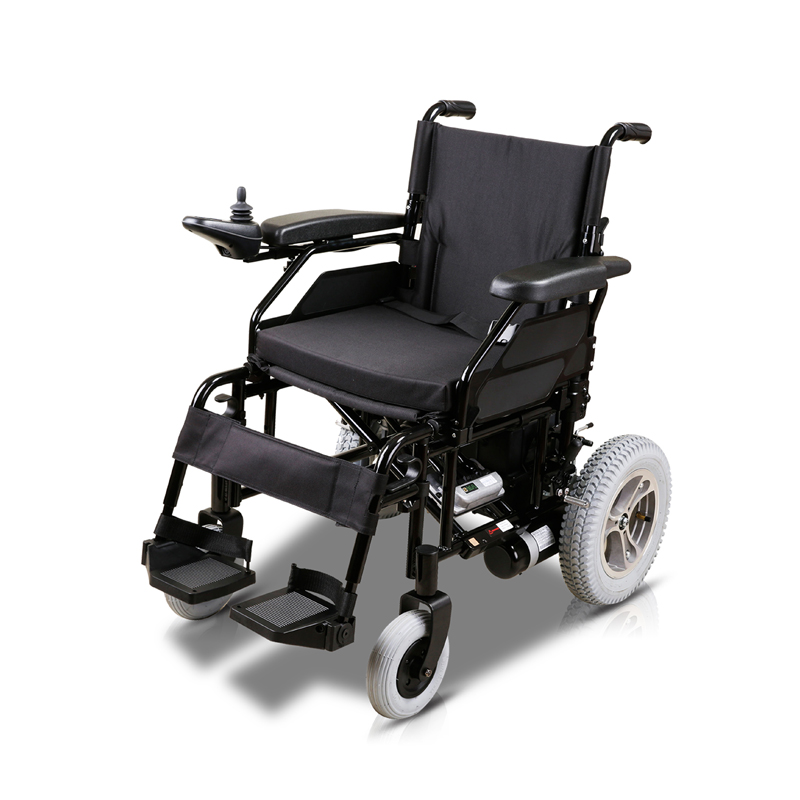
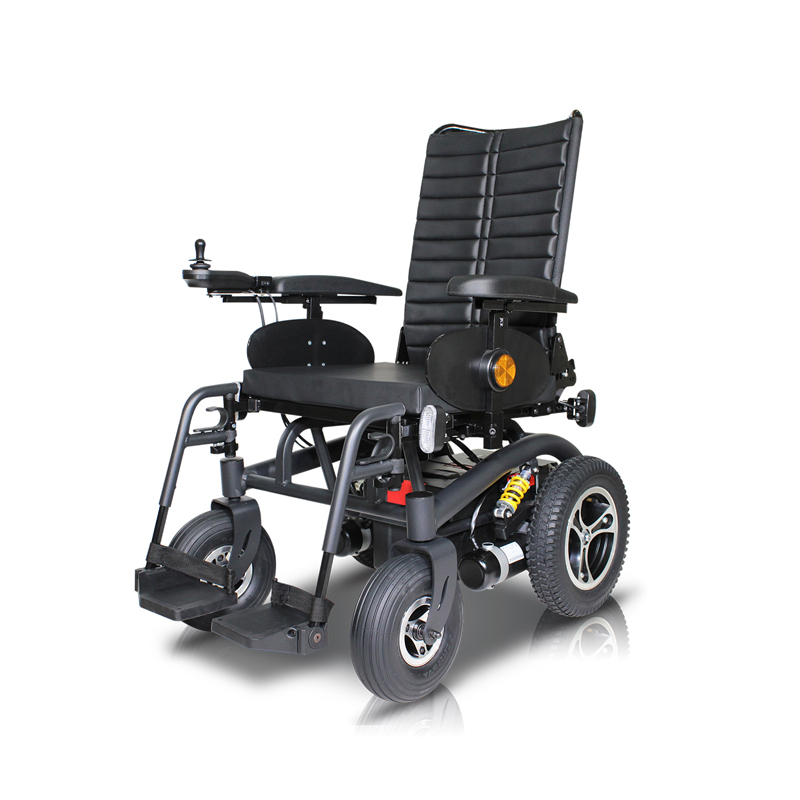
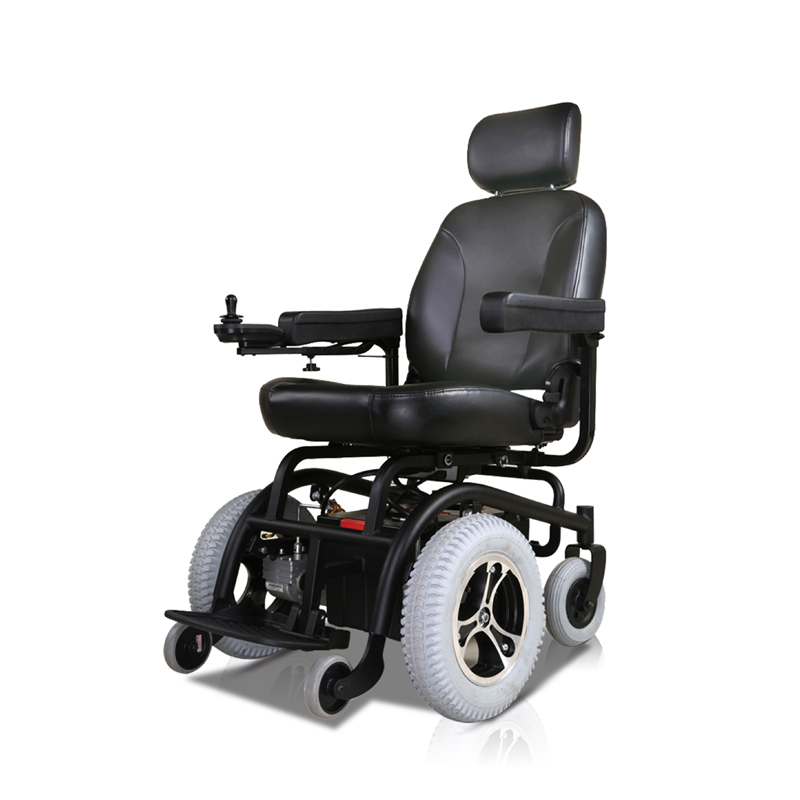
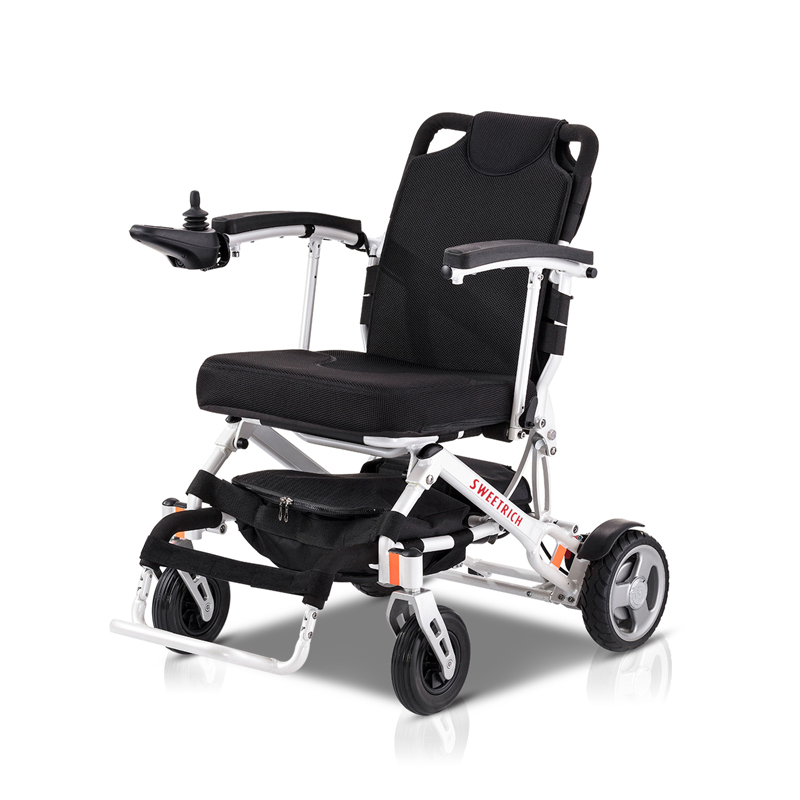
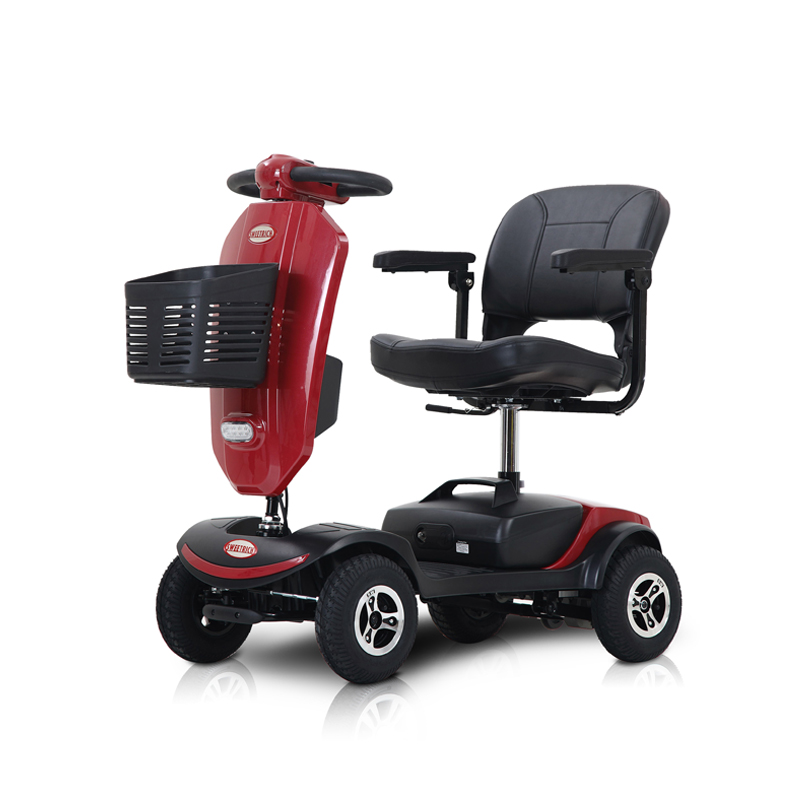
The S1 PLUS is a four-wheel electric folding mobility scooter designed for users who value dependable everyday transportation, convenient storage, and straightforward operation. Combining a compact folding concept with a stable four-wheel platform, the scooter is intended for travel-oriented mobility applications, retail distribution, and users who need an adaptable personal transportation solution.
With a maximum forward speed of 8 km/h, a stated driving range of approximately 15–25 km, rear suspension, electromagnetic braking, and a maximum weight capacity of 136 kg, the S1 PLUS offers a balanced specification for neighborhood travel, shopping trips, indoor facilities, and other suitable paved environments. Its design also supports practical handling during transport because the heaviest individual component weighs approximately 28.5 kg.
This article examines the product’s construction, specifications, user benefits, wholesale potential, manufacturing background, and competitive advantages. It also explains how distributors can evaluate the scooter for different markets while recognizing important considerations such as battery selection, terrain, loading capacity, and local regulatory requirements.
Overview of the S1 PLUS Folding Mobility Scooter
The S1 PLUS belongs to the travel smart scooter category. Unlike large, full-size mobility scooters designed primarily for long-distance outdoor use, a travel-oriented model emphasizes a combination of portability, maneuverability, moderate range, and ease of storage. This makes the product relevant to customers who may need a scooter that can be moved between a home, vehicle, retail store, hotel, or recreational destination.
The four-wheel configuration is one of the model’s central characteristics. Four wheels generally provide a broader support footprint than a three-wheel design, which can improve perceived stability during ordinary low-speed travel. For users who prioritize confidence when turning, entering a store, or moving across a smooth pedestrian area, the four-wheel layout can be an important purchasing factor.
The scooter uses a 24-volt, 300-watt motor controlled by a 24-volt, 50-amp dynamic motor controller. This power system is appropriate for a compact mobility scooter intended for controlled travel rather than high-speed transportation. The maximum speed is listed as 8 km/h, or approximately 5 miles per hour, which is consistent with the operating expectations of many mobility scooter users and retail environments.
The S1 PLUS is also specified with a maximum driving gradient of 12 degrees. Actual hill performance depends on the rider’s weight, battery condition, surface quality, tire pressure, temperature, and the length of the slope. Nevertheless, the specification indicates that the scooter is designed to manage more than completely flat indoor flooring when operated within appropriate conditions.
Because the product is identified as a non-medical device for the United States market, it should be presented accurately by distributors. It is a personal mobility product and should not be described as a medical treatment, rehabilitation device, or substitute for professional clinical advice. Buyers should also review local regulations, accessibility requirements, and safe-use instructions before operation.
S1 PLUS All Weather Wholesale Four Wheels Electric Folding Mobility Scooter in Walmart
Core Product Specifications
The following table summarizes the principal technical data supplied for the S1 PLUS. Distributors should confirm the final configuration, battery option, labeling, packaging, and market-specific documentation before publishing a sales listing or placing a production order.
| Specification | Details |
|---|---|
| Product type | Four-wheel electric folding mobility scooter |
| Category | Travel smart scooter |
| Overall dimensions | 1110 × 525 × 920 mm, listed as length × width × height |
| Maximum forward speed | 8 km/h, approximately 5 mi/h |
| Maximum driving gradient | 12 degrees |
| Maximum driving range | Approximately 15–25 km, or 9.5–15.5 miles |
| Weight capacity | 136 kg, or 300 lb |
| Suspension | Rear suspension |
| Tire size | 9 × 3 inches, front and rear |
| Brake system | Electromagnetic brake |
| Battery configuration | Lead-acid 12 V 12 Ah / 20 Ah × 2 pieces; 20 Ah option noted |
| Charger | DC 24 V 2 A, AC 100–240 V input |
| Charging time | Approximately 6 hours |
| Motor | 24 V / 300 W |
| Motor controller | 24 V / 50 A dynamic controller |
| Heaviest individual part | 28.5 kg, approximately 63 lb |
The range is presented as a range rather than a single guaranteed distance because real-world performance changes according to many operating conditions. A lighter rider traveling on level ground at moderate speed may achieve a different result from a heavier rider traveling over slopes, rough pavement, or repeated stop-and-start routes. Ambient temperature, battery age, tire inflation, and charging habits also influence usable range.
Folding Design and Transport Advantages
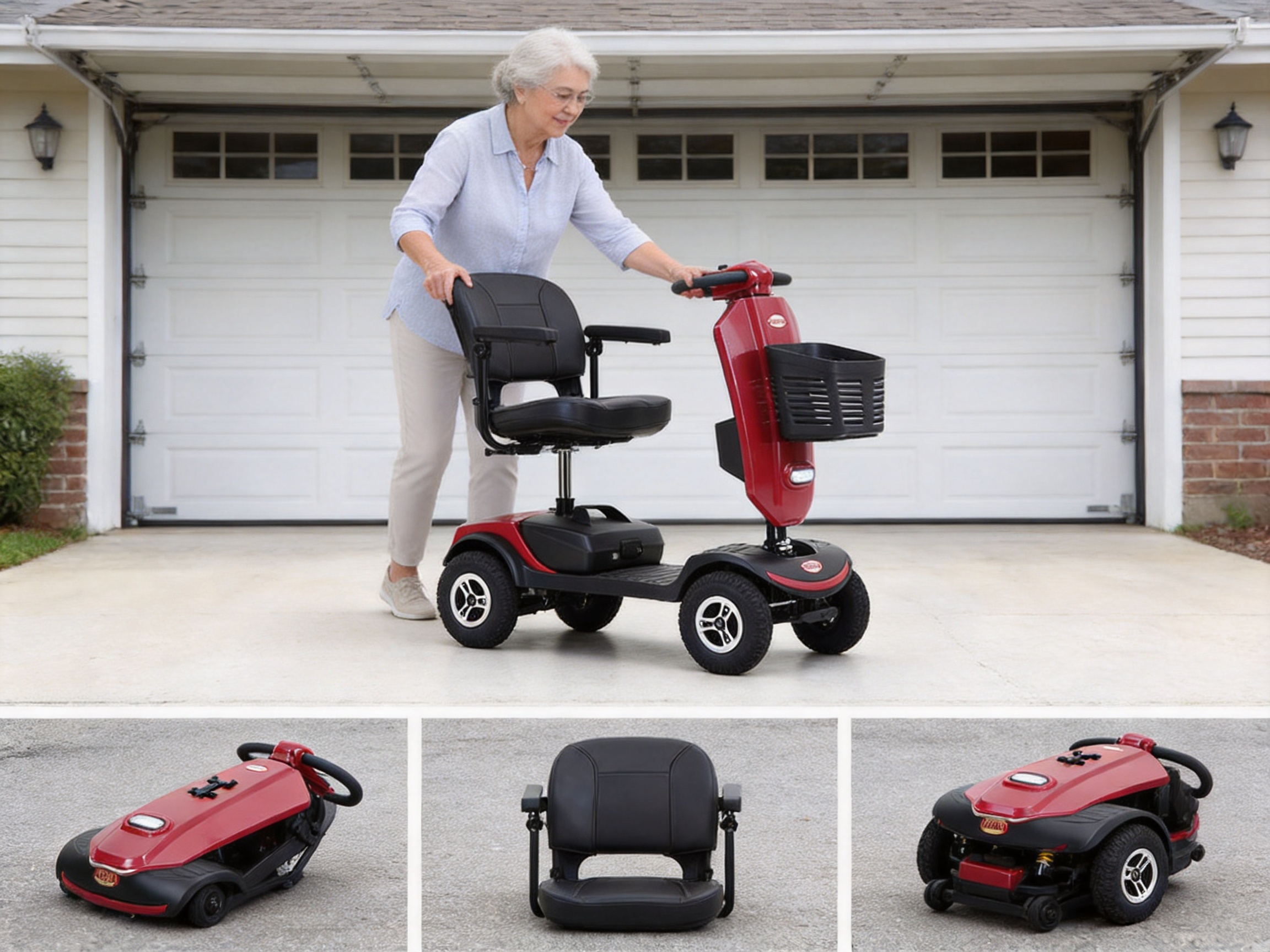
Portability is a major reason customers select travel scooters. A product that can be folded, separated, or otherwise prepared for transport may be easier to store in a home, apartment, car, service area, or retail display. The S1 PLUS is designed around this travel-focused requirement, giving distributors an opportunity to serve customers who do not want a permanently positioned, full-size mobility vehicle.
The listed overall dimensions of 1110 × 525 × 920 mm provide a relatively compact footprint for a four-wheel scooter. A width of approximately 525 mm can be helpful when navigating through suitable doorways, aisles, corridors, and other controlled spaces. Users must still measure their specific access points, since doorway width, turning space, floor transitions, and furniture placement can differ considerably.
The heaviest individual part is listed at 28.5 kg. This does not mean every user will be able to lift the part safely. However, it gives distributors a useful point of comparison when discussing loading, storage, and service procedures. A family member, caregiver, transport assistant, or vehicle-loading device may still be required, especially for older users or anyone with limited lifting ability.
For retail customers, a foldable travel scooter can offer an alternative to models that occupy a large amount of storage space. For wholesalers, the same characteristic may improve warehouse organization, showroom presentation, and shipping efficiency. The commercial benefit depends on the final folded dimensions, carton design, pallet configuration, and logistics arrangements, all of which should be verified with the manufacturer for each order.
Portability should not be evaluated only by the word “folding.” A professional product assessment should consider folding steps, locking mechanisms, lifting points, component weight, battery removal, packaging protection, and user instructions. A scooter that is simple to prepare can reduce customer frustration and help retailers provide clearer demonstrations.
Four-Wheel Stability for Everyday Use
The four-wheel chassis is a practical advantage for users who prefer a stable-feeling platform. The front and rear tires are both specified as 9 × 3 inches, creating a consistent tire format across the vehicle. Tire size affects ride contact, steering response, and the ability to move over small surface imperfections. Operators should still avoid potholes, loose gravel, steep side slopes, and surfaces outside the intended operating environment.
A four-wheel platform may be especially attractive to customers who are concerned about balance during low-speed turns. It can also be easier for sales staff to explain because the product has a familiar, conventional stance. Compared with many compact three-wheel alternatives, the four-wheel layout presents a different balance between stability and turning performance. Three-wheel designs may offer a tighter turning circle in some cases, while four-wheel designs may provide a more reassuring support arrangement.
The S1 PLUS should therefore be positioned according to customer priorities rather than through exaggerated claims. It is suitable for buyers who value four-wheel support, compact travel dimensions, and moderate performance. It is not a replacement for a heavy-duty outdoor scooter intended for extreme terrain, very long journeys, or unusually high loads.
Comfort and Ride Quality
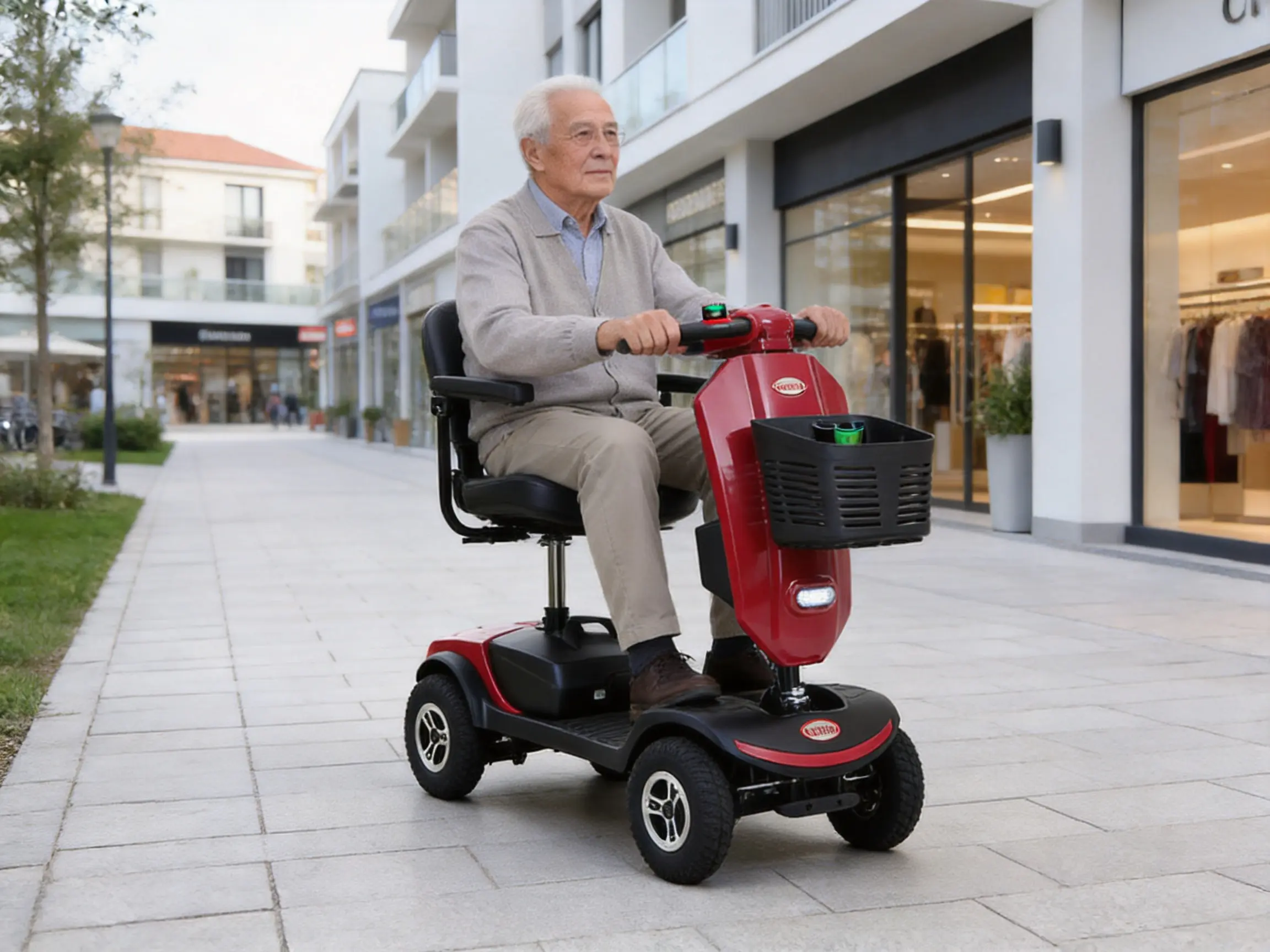
Comfort is influenced by seat design, steering position, tire construction, frame geometry, suspension, speed, and road conditions. The S1 PLUS includes rear suspension, which can help reduce the transmission of some impacts from the surface to the vehicle and rider. Rear suspension is particularly relevant on ordinary paved paths where users may encounter expansion joints, shallow cracks, or uneven transitions.
Suspension does not eliminate the need for careful driving. A mobility scooter should be operated at an appropriate speed when crossing thresholds, ramps, uneven pavement, or sloped surfaces. Sudden steering movements and high-speed turns can reduce stability. Retailers should demonstrate smooth acceleration, controlled braking, and safe turning behavior during product handovers.
The maximum speed of 8 km/h offers a practical balance between travel efficiency and controllability for a compact scooter. A moderate speed can help users maintain control in shopping areas, pedestrian zones, residential pathways, and other environments where awareness of nearby people is essential. Local speed restrictions may apply, and the scooter should always be operated according to local rules and the manufacturer’s instructions.
Motor, Controller, and Braking System
The 24 V / 300 W motor is matched to a 24-volt electrical system. In a travel scooter, motor output should be evaluated alongside vehicle weight, wheel size, controller behavior, battery capacity, and intended terrain. Motor wattage alone does not determine the complete driving experience. A properly matched controller and drivetrain can provide smooth starts, predictable acceleration, and efficient operation.
The S1 PLUS uses a 24 V / 50 A dynamic motor controller. The controller manages the relationship between the throttle input, battery power, and motor response. From a user perspective, effective control programming can make the scooter easier to operate because acceleration can be delivered progressively rather than abruptly.
An electromagnetic braking system is specified for the scooter. Electromagnetic brakes are widely used in powered mobility products because they can automatically engage when the drive control is released, helping the vehicle slow and stop under normal conditions. Operators should not rely on any braking system as a substitute for attentive driving. Routine inspections, correct tire pressure, battery maintenance, and professional service remain important.
Distributors should explain that braking distance is affected by speed, rider weight, slope, weather, tire condition, and surface grip. Demonstrations should be completed on level, unobstructed ground. Users should become familiar with the controls before entering busy environments.
Battery Options and Charging Considerations
The supplied specification identifies lead-acid batteries in a 12 V 12 Ah / 20 Ah × 2-piece configuration, with a 20 Ah option noted. Two 12-volt batteries are used to create the 24-volt system required by the scooter. Battery selection can affect range, charging behavior, overall weight, replacement cost, and the product’s suitability for different distribution channels.
Lead-acid technology remains familiar to many service networks and users. It is widely understood, generally available through mobility-product channels, and supported by established charging practices. At the same time, lead-acid batteries can be heavier than some alternative battery chemistries. This is important when portability is a primary purchasing consideration.
The supplied charger specification is DC 24 V 2 A with AC 100–240 V input. The broad AC input range can support distribution across regions using compatible local power connections and approved plugs. The exact plug, certification, labeling, and charging instructions should be confirmed for the destination market.
A charging time of approximately six hours is stated. Charging time can vary depending on battery condition, remaining charge, temperature, charger output, and battery capacity. Users should place the scooter in a dry, ventilated location while charging and follow the supplied instructions. Chargers should not be modified, covered, or used with an incompatible battery arrangement.
For wholesalers, battery management is a key part of product planning. Batteries may have storage limits, transportation restrictions, labeling obligations, and special packaging requirements. A distributor should establish procedures for incoming inspection, storage rotation, pre-delivery charging, warranty assessment, and end-of-life recycling or disposal.
Range Expectations in Real-World Conditions
The stated range of 15–25 km, or 9.5–15.5 miles, gives customers a useful planning reference, but it should not be presented as a universal guarantee. Laboratory or standardized test conditions may differ from everyday use. A route with hills, frequent starts, soft surfaces, cold temperatures, or a heavier load can reduce the distance available from one charge.
A responsible sales explanation should encourage customers to plan a safety margin. If a user regularly travels a fixed route, the route should be tested under realistic conditions before relying on the scooter for essential transportation. Battery capacity can also decline over time, making regular maintenance and replacement planning important.
Weight Capacity and Intended Applications
The S1 PLUS has a listed weight capacity of 136 kg, or 300 lb. This figure should include the rider and any carried items unless the manufacturer specifies otherwise. Users should not exceed the rated capacity because overloading can affect braking, steering, motor performance, range, frame stress, and overall stability.
The scooter is well suited to a variety of moderate-duty applications. These may include shopping centers, indoor commercial spaces, residential neighborhoods, retirement communities, hotel properties, paved parks, and travel between a vehicle and a destination. The compact dimensions and four-wheel design also make it relevant to customers who need personal mobility support during daily errands.
The model is not intended to be described as an all-terrain vehicle merely because it includes rear suspension and a stated gradient capability. Grass, sand, mud, deep gravel, standing water, steep cross-slopes, and heavily broken pavement may create hazards. Users should choose routes that match the scooter’s capabilities and their own driving experience.
Wholesale buyers can position the product for several customer groups without narrowing the message to one age category. Potential audiences may include older adults, people with mobility limitations, caregivers purchasing on behalf of a family member, hospitality operators, senior-living communities, travel-oriented retailers, and dealers seeking a compact four-wheel model.
Advantages Compared with Conventional Competitor Choices
Every mobility scooter category contains products with different strengths. The competitive value of the S1 PLUS is best understood as a combination of features rather than a single headline specification.
Compared with Larger Full-Size Scooters
Large full-size scooters may provide larger seats, greater battery capacity, stronger outdoor performance, and higher carrying capability. However, they can be difficult to store, transport, or maneuver in compact spaces. The S1 PLUS addresses a different need by emphasizing a more compact footprint, folding convenience, moderate speed, and travel-oriented operation.
For customers who spend most of their time on paved routes and need a scooter that can be moved between locations, the S1 PLUS may be more practical than a large outdoor model. Its compact format can also reduce the visual and physical impact of storing the product in a home or showroom.
Compared with Three-Wheel Travel Scooters
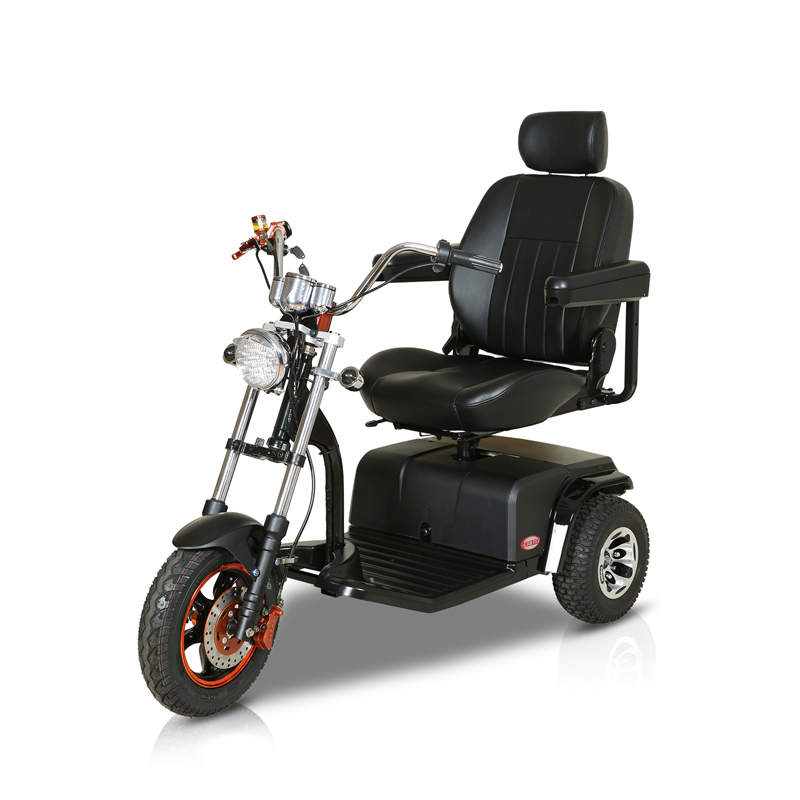
Three-wheel scooters can provide excellent maneuverability and a tight turning circle. The S1 PLUS offers a four-wheel alternative for customers who place greater emphasis on a broad support arrangement and stable-feeling handling. This distinction can help dealers serve different preferences within the same travel category.
The appropriate choice depends on the user’s route, turning requirements, confidence, and available space. A professional retailer should allow customers to compare steering behavior and seating position rather than claiming that one chassis format is universally superior.
Compared with Basic Low-Cost Folding Models
Some entry-level folding scooters focus almost exclusively on minimum weight and low purchase price. In comparison, the S1 PLUS combines folding portability with a 300 lb weight capacity, four-wheel construction, rear suspension, electromagnetic braking, and a 300-watt motor. This feature combination can give wholesalers a stronger value proposition than a product marketed only on price.
Distributors should evaluate build quality, control consistency, parts support, battery availability, packaging, and after-sales service in addition to the initial purchase cost. A product that is easy to service and explain may reduce long-term operational costs for a dealer, even if it is not the least expensive model at the time of purchase.
Compared with Products Using Narrower Market Specifications
The S1 PLUS is supplied with measurements in both metric and imperial units, which can simplify communication across international markets. The charger’s 100–240 V AC input specification is also potentially useful for global distribution, subject to market-specific plug, testing, and certification requirements.
International distributors should not assume that a broad charger input range alone makes a product compliant in every country. Electrical safety, electromagnetic compatibility, battery transport, labeling, accessibility, and consumer-product rules must be verified for each destination.
Manufacturing Strengths and Quality-Oriented Production
Suzhou Sweetrich Vehicle Industry Technology Co., Ltd. is identified as a high-tech company based in Suzhou Industrial Zone, Jiangsu, China. The company was established in 2011 and is described as operating a 60-acre site with a 30,000-square-meter factory. It has more than ten years of experience in the research, development, and production of mobility scooters and power wheelchairs.
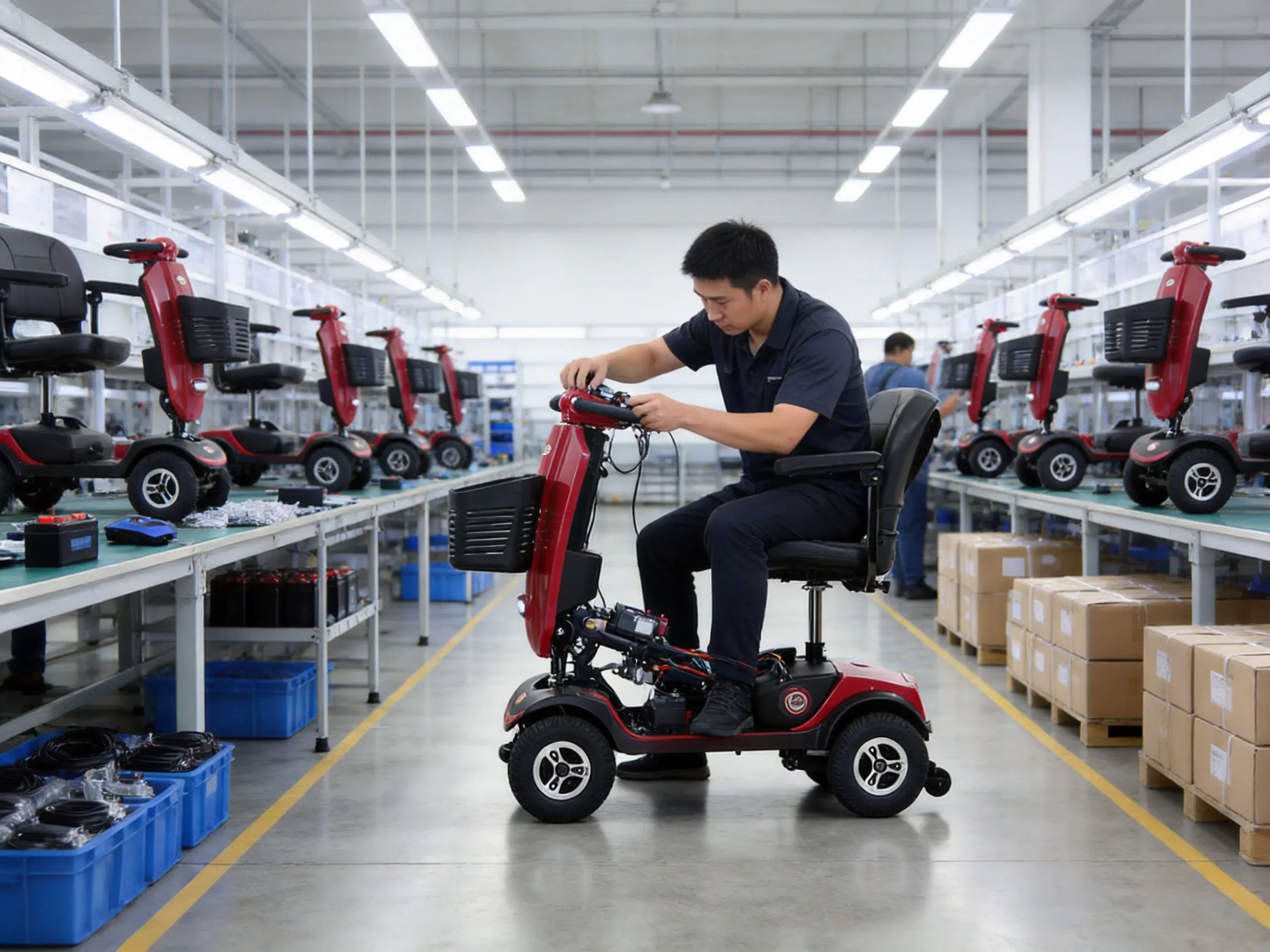
This manufacturing background is significant for wholesale customers because product consistency depends on more than the appearance of a finished scooter. A capable manufacturer must coordinate product design, mechanical fabrication, electrical integration, battery compatibility, assembly procedures, inspection, packaging, and technical support.
The company states that it owns intellectual property rights for its electric scooters and power wheelchairs. In practical terms, in-house product knowledge can support faster communication between engineering, production, quality control, and customer-service teams. It may also help the manufacturer adapt product details for different distributors, provided that any customization is properly validated.
Research and Development Capabilities
Mobility products require careful coordination between ergonomics, control technology, chassis geometry, drive systems, electrical safety, and user expectations. The manufacturer describes a focus on improving comfort and convenience for elderly and disabled people while incorporating advanced control technology and driving systems.
For the S1 PLUS, development priorities can be seen in the relationship between the folding format, four-wheel chassis, rear suspension, electromagnetic braking, and moderate-power drivetrain. These systems must work together. A folding frame must maintain structural integrity; the steering system must remain predictable; the motor controller must respond smoothly; and the battery and charger must be appropriately matched.
Ongoing engineering work can also help manufacturers respond to market feedback. Examples may include revisions to wiring protection, improved component accessibility, updated user documentation, packaging changes, or adjustments to seating and control interfaces. Wholesale buyers should ask for the current revision level and confirm whether samples represent the intended production version.
Factory Scale and Production Coordination
A factory covering approximately 30,000 square meters can provide space for organized production, component storage, assembly areas, testing stations, packaging, and finished-goods handling. The value of factory scale is not simply the size of the site. Effective manufacturing depends on how well each stage is managed and documented.
For a folding mobility scooter, production coordination may include frame preparation, wheel and suspension installation, drive-motor assembly, brake integration, controller connection, battery placement, charger verification, folding-mechanism inspection, cosmetic finishing, and final functional testing.
Consistent assembly is particularly important for safety-related systems. Braking response, steering alignment, fastener torque, cable routing, battery connections, and wheel installation should be controlled through documented procedures. A strong production system reduces variation between units and helps service personnel diagnose problems more efficiently.
Quality Management Principles
The company describes its operating philosophy as placing quality first, maintaining credibility, and prioritizing customers. These principles are most valuable when converted into measurable processes. Examples include incoming component checks, process inspections, electrical testing, road or roller testing where appropriate, final appearance inspection, packaging verification, and traceability records.
Wholesale customers should request information about quality-control checkpoints, warranty procedures, spare-parts supply, inspection records, and corrective-action processes. These questions help distinguish a stable manufacturing partnership from a transaction based only on product photographs and a quoted price.
Quality also includes documentation. Clear assembly instructions, operating manuals, battery guidance, charging warnings, maintenance schedules, troubleshooting information, and replacement-part identification can improve customer satisfaction. For international markets, documents may need translation and adaptation to local requirements.
Global Distribution and Wholesale Potential
The manufacturer reports that its products are exported to America, Europe, Japan, Australia, the Middle East, Russia, and other markets. This international experience can be useful to distributors seeking a supplier familiar with different sales environments and customer expectations.
For wholesalers, the S1 PLUS offers several commercial advantages. Its travel-oriented positioning is easy to communicate, the four-wheel format is familiar to consumers, the specifications are suitable for product listings, and the folding concept supports both showroom and consumer-storage benefits. The scooter can be presented as a practical option for daily mobility rather than as an oversized specialty vehicle.
A distributor’s total product strategy should include more than the scooter itself. Important areas include sample approval, minimum order quantity, private labeling options, carton dimensions, spare batteries, replacement chargers, wheels, controllers, brake components, warranty terms, service training, and marketing materials.
Retailers may also benefit from a demonstration-focused sales process. Customers often need to see how the scooter starts, stops, turns, folds, charges, and fits into a storage area. A product with clear demonstrations can be easier for store staff to sell than a model whose advantages are difficult to show.
Retail Positioning
The S1 PLUS can be positioned under themes such as compact travel, everyday convenience, four-wheel confidence, practical range, and manageable transport. Marketing should use accurate language and avoid implying medical benefits or guaranteed performance on every terrain.
Potential retail messages include the availability of rear suspension, a 300 lb rated capacity, a five-mile-per-hour maximum speed, electromagnetic braking, and an AC 100–240 V charger input. Each statement should be supported by the final product configuration and required market documentation.
The phrase “all weather” should also be used carefully. A scooter may be suitable for ordinary outdoor use, but that does not mean it is waterproof or safe in heavy rain, flooding, snow, ice, or severe weather. Electrical components, batteries, controls, and connectors should be protected from excessive moisture according to the manufacturer’s instructions.
Serviceability and Long-Term Ownership
A mobility scooter is a long-term product, and the ownership experience depends heavily on service support. Dealers should understand routine checks for tires, brakes, steering, battery connections, charger condition, seat hardware, folding components, and electrical cables.
Lead-acid batteries require appropriate charging and storage practices. Leaving batteries deeply discharged for extended periods can reduce useful life. Users should follow the specified charging routine and contact qualified service personnel if the charger, battery, wiring, or controller shows signs of damage.
Tires should be inspected for wear, cuts, embedded objects, and correct inflation where applicable. Uneven tire pressure can affect steering, braking, range, and stability. The scooter should not be used if a tire, wheel, brake, or steering component appears unsafe.
The folding mechanism should be kept clean and checked for secure engagement. Users should never operate the scooter unless the frame is fully locked in the operating position. Dealers can add value by demonstrating the folding procedure and explaining which points require inspection before each trip.
Serviceability is also a manufacturing strength. A manufacturer that maintains reliable parts identification and technical support can help distributors reduce downtime. Before ordering, wholesale customers should clarify how replacement controllers, chargers, batteries, wheels, body panels, and structural components are supplied.
Safety and Responsible Use
Safe operation begins with reading the owner’s manual and learning the controls in an open, level area. New users should practice starting, stopping, turning, reversing, and using ramps before traveling in crowded environments.
The scooter should be driven at a speed appropriate for the surface and surroundings. Operators should slow down before turning, maintain a safe distance from pedestrians and obstacles, and use additional caution near road crossings, slopes, curbs, door thresholds, and wet surfaces.
The stated 12-degree maximum driving gradient should not be interpreted as permission to approach every slope at that angle. A slope’s length, surface, direction, moisture, edge condition, and cross-slope can change the risk. Users should avoid slopes that exceed their confidence or the manufacturer’s instructions.
The weight capacity includes the rider and carried items. Excess load may reduce range and affect the braking and steering systems. Bags should be secured so they do not interfere with the controls, wheels, folding mechanism, or the rider’s visibility.
Because the product is identified as a non-medical device for the United States market, individual users should consult healthcare or mobility professionals if they need advice about posture, transfer ability, balance, or safe operation. Retailers should not make clinical claims unless they have the required evidence and authorization.
How the S1 PLUS Supports Different Customer Needs
For an older adult who wants a scooter for shopping and short neighborhood trips, the S1 PLUS can offer a practical combination of range, speed, four-wheel support, and storage convenience. The user may appreciate a model that is less imposing than a large outdoor scooter while still offering a 300 lb capacity.
For a caregiver, the manageable individual-part weight and folding design may simplify transport planning. However, caregivers should evaluate their own lifting ability and consider ramps, loading aids, or assistance where necessary.
For a hospitality business, senior-living community, or accessible facility, the scooter can serve as a compact mobility option for paved internal routes. The business should establish charging, cleaning, inspection, reservation, and maintenance procedures before making the product available to guests or residents.
For a mobility dealer, the model can complement larger scooters and power wheelchairs. It provides a travel-focused option for customers whose main concern is convenience rather than maximum outdoor performance. A balanced product range allows sales staff to recommend the most appropriate platform instead of forcing every customer toward the same type of vehicle.
Wholesale Evaluation Checklist
Before placing a wholesale order, buyers should confirm the exact model configuration. The battery arrangement, charger plug, seat details, color options, folded dimensions, shipping carton, warranty terms, and included accessories should be written into the purchase documentation.
Buyers should request a production sample or pre-production unit when possible. The sample should be tested for folding operation, steering response, brake engagement, charging behavior, speed control, noise, vibration, seat comfort, and packaging protection.
Documentation should be reviewed for technical accuracy. Product listings should use the correct dimensions, capacity, speed, range, charging time, and battery information. If the supplier updates a component, the distributor should update product pages and manuals accordingly.
Compliance planning is essential for international sales. The importer or distributor may be responsible for electrical safety documentation, electromagnetic compatibility, battery transport rules, consumer labeling, language requirements, recycling marks, and local mobility regulations. A supplier’s general export experience is helpful, but it does not remove the buyer’s responsibility to verify destination-market obligations.
Finally, buyers should evaluate after-sales support. A reliable supply of spare parts, responsive technical communication, clear warranty procedures, and repair training can have a direct effect on customer retention and brand reputation.
Q&A: Common Questions About the S1 PLUS
What type of mobility scooter is the S1 PLUS?
The S1 PLUS is a four-wheel electric folding mobility scooter in the travel smart scooter category. It is intended for moderate-distance personal mobility on suitable indoor and outdoor paved routes.
What is the maximum speed?
The listed maximum forward speed is 8 km/h, or approximately 5 miles per hour. Actual operation should follow local rules, site restrictions, and safe driving practices.
How far can it travel on one charge?
The stated driving range is approximately 15–25 km, or 9.5–15.5 miles. Real-world range varies with rider weight, terrain, slope, temperature, battery condition, speed, tire pressure, and the number of stops and starts.
What is the maximum user weight?
The listed weight capacity is 136 kg, or 300 lb. The rider and carried items should remain within this limit unless the manufacturer provides a different approved rating for a specific configuration.
Does it have suspension?
Yes. The specification identifies rear suspension. Suspension can help improve comfort over some minor surface irregularities, but it does not make the scooter suitable for every type of terrain.
What braking system does it use?
The scooter uses an electromagnetic brake system. Users should still drive cautiously, maintain the scooter properly, and allow extra stopping distance on slopes or slippery surfaces.
What type of batteries are used?
The supplied information identifies lead-acid batteries in a 12-volt configuration, using two batteries for the 24-volt system. The listed capacity includes 12 Ah and 20 Ah configurations, with a 20 Ah option noted. The final battery specification should be confirmed when ordering.
How long does charging take?
The stated charging time is approximately six hours. Charging duration can vary according to battery condition, remaining charge, temperature, and the selected battery capacity.
Can the scooter be used in rain?
The product should be protected from heavy rain, standing water, flooding, and excessive moisture. The term “all weather” should not be interpreted as waterproof certification. Users should follow the manufacturer’s environmental and storage instructions.
Is the product a medical device?
The supplied product information identifies it as a non-medical device for the United States market. It is a personal mobility product and should not be promoted as a medical treatment or clinical device.
What makes it different from a larger scooter?
The S1 PLUS emphasizes folding convenience, a compact travel-oriented format, four-wheel support, moderate range, and a manageable individual-part weight. Larger scooters may offer different advantages, such as more powerful outdoor performance or greater battery capacity.
What should wholesalers confirm before ordering?
Wholesalers should confirm the battery and charger configuration, final dimensions, packaging, warranty, spare-parts support, certifications, labeling, delivery terms, and any customization requirements. Destination-market compliance should also be reviewed before commercial sale.
Conclusion
The S1 PLUS presents a balanced solution for the travel mobility scooter market. Its main strengths include a four-wheel chassis, folding-oriented design, 300 lb weight capacity, 8 km/h maximum speed, 15–25 km stated range, rear suspension, electromagnetic braking, and a 24 V / 300 W drive system.
Compared with larger scooters, it offers a more compact and travel-focused approach. Compared with basic lightweight models, it combines portability with a broader feature set and a higher stated carrying capacity. Its value is therefore based on practical integration rather than one isolated specification.
The manufacturer’s Suzhou production base, factory resources, development experience, intellectual property, and international export background provide a foundation for wholesale cooperation. For distributors, the most important next step is to verify the final configuration, documentation, regulatory requirements, packaging, and after-sales support for the intended market.
When accurately represented and responsibly used, the S1 PLUS can serve customers who need convenient mobility for everyday paved-route travel, shopping, facilities, and vehicle-supported journeys. Its strongest commercial position is as a compact, stable-feeling, serviceable travel scooter supplied by an experienced mobility-product manufacturer.
References
1. Product technical specification sheet for the S1 PLUS four-wheel electric folding mobility scooter, supplied in the product information.
2. Manufacturer profile and company information for Suzhou Sweetrich Vehicle Industry Technology Co., Ltd., supplied in the company materials.
3. General principles of powered mobility scooter operation, battery care, charging safety, and routine maintenance.
4. General guidance for international product distribution, electrical documentation, battery transport, labeling, and consumer safety review.
5. General mobility-scooter retail practices concerning product demonstrations, user training, service planning, and responsible performance claims.