
 +86-(0)512-82283871

Content
- 1 Product Overview and Core Design Concept
- 2 Fast Folding and Travel-Friendly Portability
- 3 Powered Mobility and Dual-Side Joystick Control
- 4 Battery Options, Charging, and Driving Range
- 5 Comfort, Foot Support, and Everyday Usability
- 6 Comparison with Conventional Mobility Products
- 7 Manufacturing Strengths and Product Development Capabilities
- 8 Quality Control from Assembly to Final Inspection
- 9 Responsible Use in Indoor and Outdoor Environments
- 10 Maintenance and Long-Term Ownership
- 11 Who May Benefit from This Foldable Wheelchair?
- 12 Purchasing and Configuration Considerations
- 13 Why the Product Offers a Competitive Travel Proposition
- 14 Frequently Asked Questions
- 14.1 What type of product is this?
- 14.2 How quickly does it fold?
- 14.3 How much does the wheelchair weigh?
- 14.4 What is the maximum user weight?
- 14.5 What is the driving range?
- 14.6 Which battery options are available?
- 14.7 What is the maximum speed?
- 14.8 Can the joystick be placed on either side?
- 14.9 Can it climb a 10-degree slope?
- 14.10 Is the wheelchair suitable for air travel?
- 14.11 Is it a medical device?
- 14.12 What maintenance does it require?
- 14.13 Who manufactures the product?
- 15 Conclusion
- 16 References
- 17 Product: iFold Medical foldable aluminum rollator wheelchair with footrest light weight Wheelchair
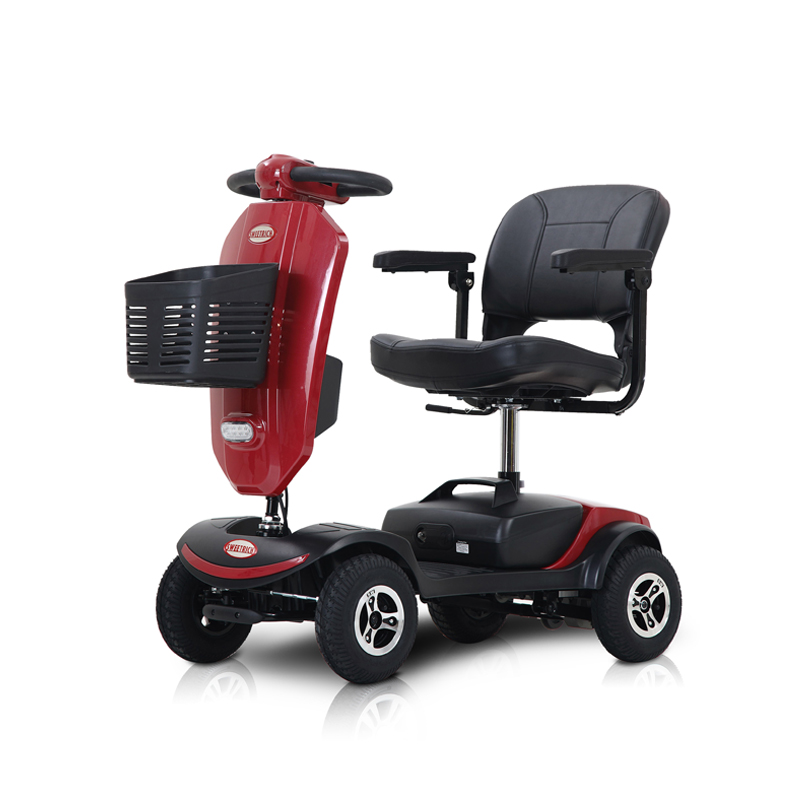
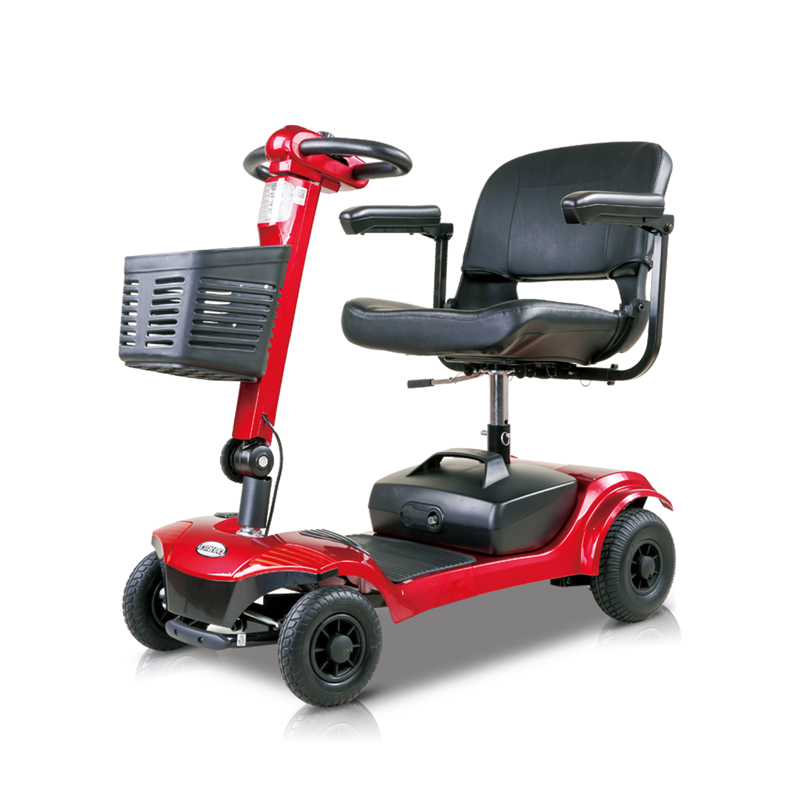
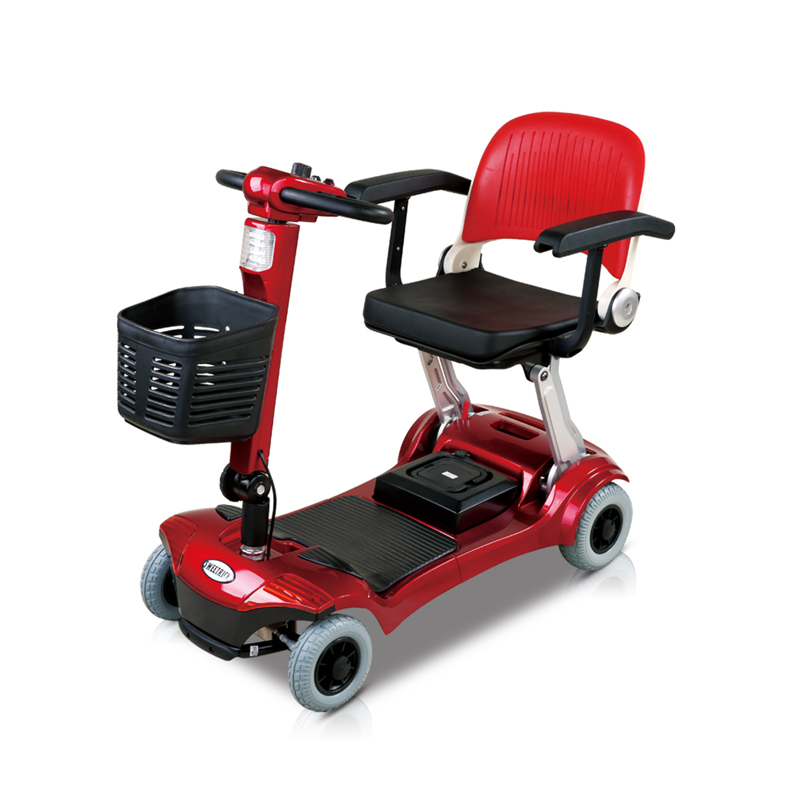
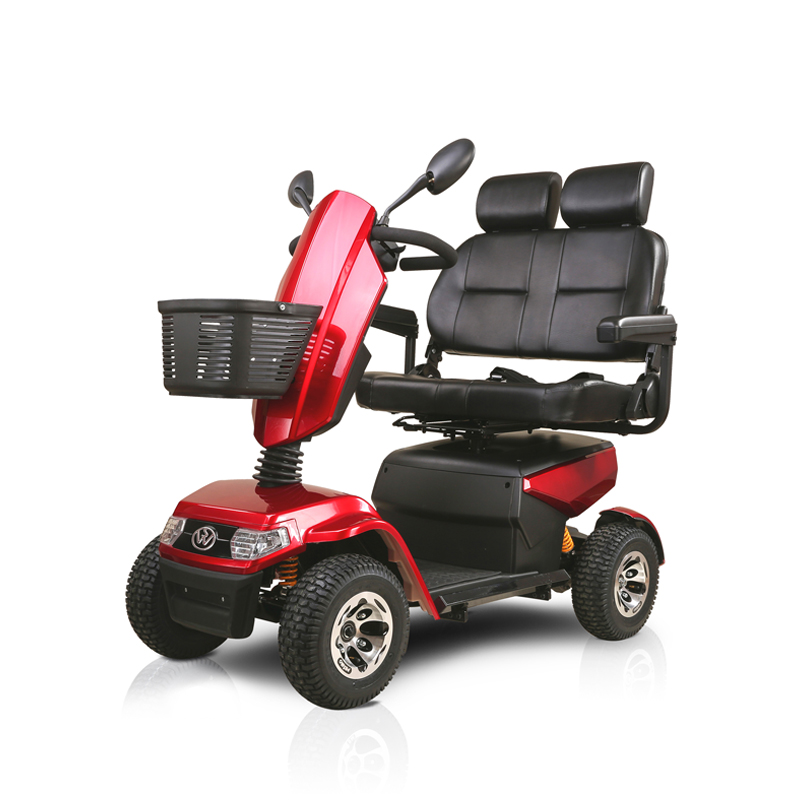
Modern mobility equipment must do more than provide transportation. It should help people remain independent, move comfortably through different environments, and manage daily activities with less physical effort. A practical mobility device should also be easy to store, simple to transport, dependable in operation, and adaptable to the needs of different users. The iFold Medical foldable aluminum rollator wheelchair with footrest is designed around these priorities. It combines a lightweight aluminum structure, powered driving, a compact folding system, a wide foot platform, suspension, and a dual-side joystick option in one travel-oriented wheelchair platform.
Developed for the Travel Smart Wheelchairs category, this model is intended to support users who need powered mobility in homes, shopping areas, transport terminals, hotels, parks, and other suitable environments. Its folding design allows the chair to be prepared for storage or transportation in approximately one second, while its aluminum construction helps keep the product manageable when the battery is removed. With a stated weight of 24 kilograms without the battery, the wheelchair offers a useful balance between structural strength and portability.
The wheelchair is also designed for users who value flexibility. The joystick can be configured for use on either side, making the control system more accommodating for different users and seating preferences. Front and rear suspension help improve comfort over ordinary surface irregularities, and electromagnetic braking supports controlled stopping when the drive system is released. Optional lithium battery capacities allow buyers to select a configuration that better matches their expected travel requirements.
This article examines the product’s design, operating characteristics, travel advantages, manufacturing considerations, and practical position compared with conventional manual wheelchairs, basic transport chairs, and heavier powered wheelchair designs. It also explains the importance of responsible use, battery selection, maintenance, and professional advice. The product is described as a non-medical device for the United States market, so it should be evaluated as mobility equipment rather than as a substitute for clinical assessment or prescribed medical treatment.
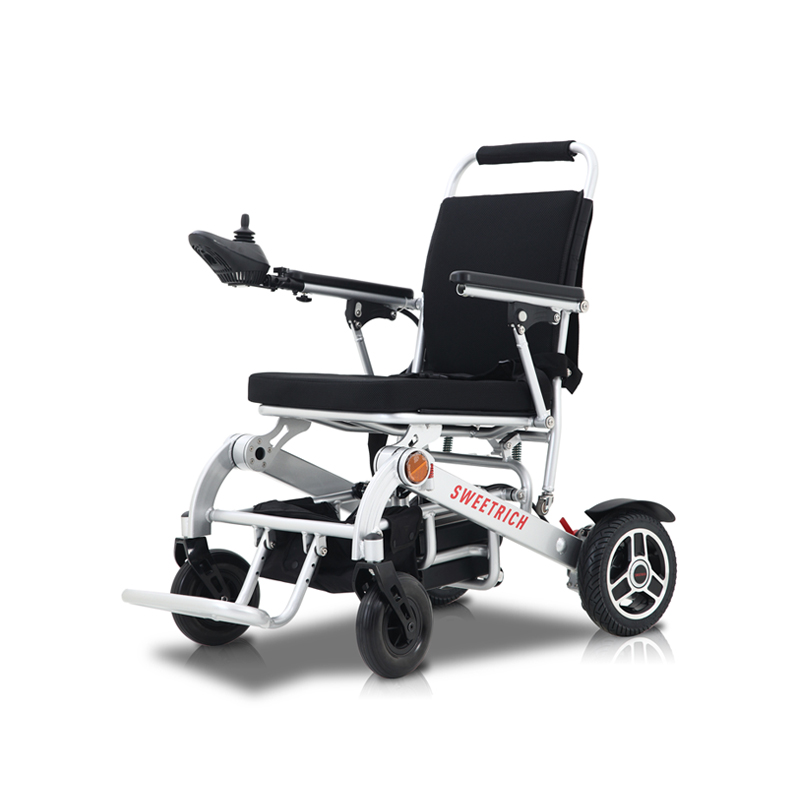
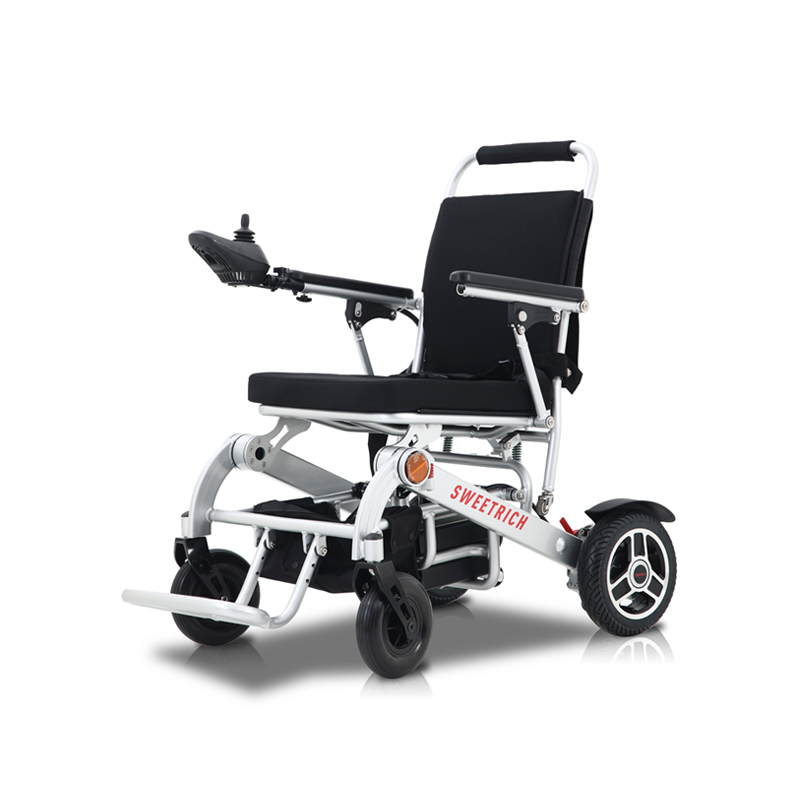
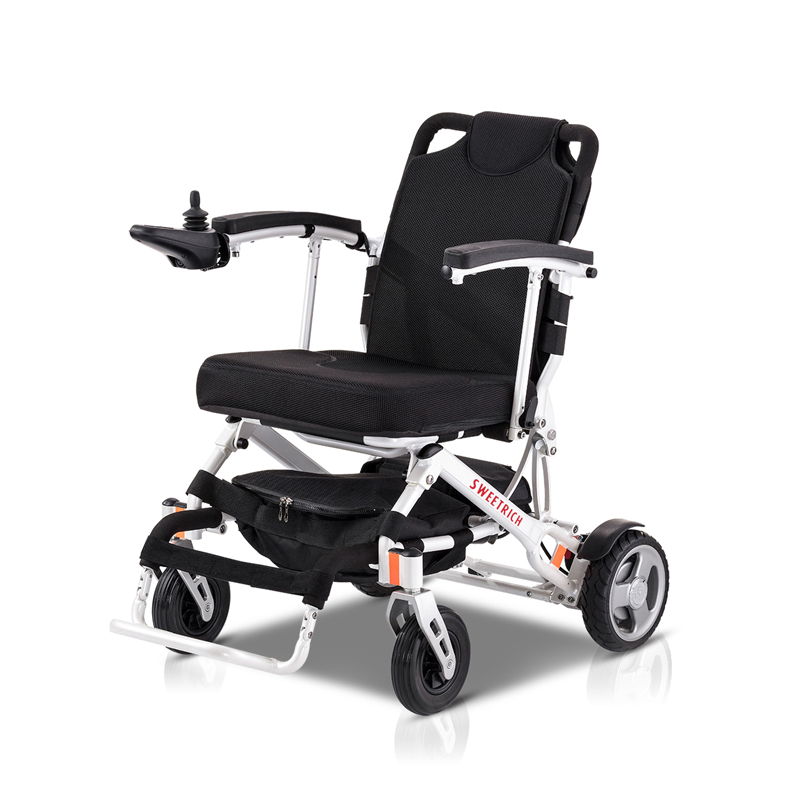
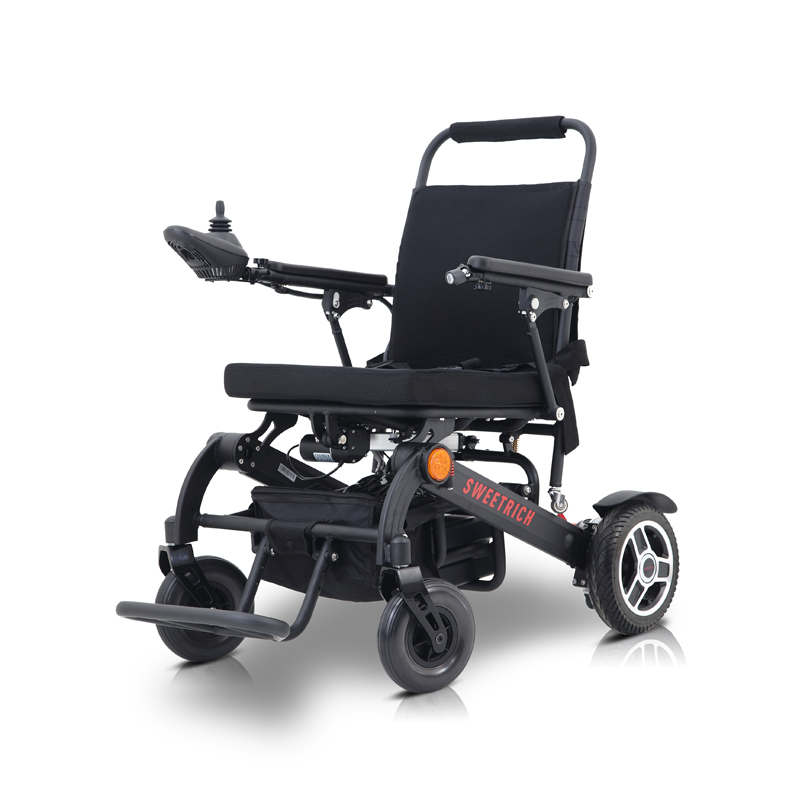
iFold Medical foldable aluminum rollator wheelchair with footrest light weight Wheelchair
Product Overview and Core Design Concept
The iFold Medical wheelchair is built around a simple idea: powered mobility should not automatically require a large, permanently assembled vehicle. Many traditional power wheelchairs deliver useful performance but are difficult to lift, place in a vehicle, or store in a small home. In contrast, this foldable design brings together a powered chassis and a fast folding mechanism intended to reduce the inconvenience associated with transportation.
The main structure uses aluminum, a material commonly selected for mobility equipment because it can provide a favorable strength-to-weight relationship. The frame must support the user, motors, batteries, wheels, control components, and foot platform while remaining manageable during handling. Aluminum construction helps reduce unnecessary mass compared with some all-steel alternatives. This is particularly valuable when the battery is removed and the wheelchair must be loaded into a vehicle or moved through a building.
The wheelchair includes two 24-volt, 250-watt motors. A dual-motor layout provides drive power to the rear wheels and allows the chair to move under its own electric power without requiring the user or an attendant to push it continuously. The motor controller is specified as 24 volts and 50 amps, giving the drive system a dedicated control platform for acceleration, direction, and speed management.
Its listed dimensions are approximately 1,090 millimeters long, 605 millimeters wide, and 998 millimeters high. A width of 605 millimeters can be useful in many indoor and public environments, although users should always compare the actual chair dimensions with doorways, elevators, ramps, vehicle openings, and storage locations before purchase. The overall dimensions also indicate that this is a full mobility device rather than a simple lightweight attendant-propelled transport chair.
The product has a specified maximum forward speed of 6 kilometers per hour. Promotional feature material also refers to speeds of up to approximately 8.5 kilometers per hour, or 5.2 miles per hour. Because these figures differ, buyers should confirm the applicable speed for the exact configuration, market, controller setting, and local regulations. The technical specification should normally be treated as the primary reference for the supplied model, while any higher figure should be verified before ordering.
The maximum stated driving gradient is 10 degrees. This figure is not a guarantee that every surface with that angle will be safe. Surface texture, moisture, user weight, battery charge, tire condition, direction of travel, and the presence of edges or loose material can all affect climbing performance. A gradual, dry, firm ramp is very different from a short, wet, uneven incline. Safe operation requires users to remain within the manufacturer’s instructions and local accessibility guidance.
Fast Folding and Travel-Friendly Portability
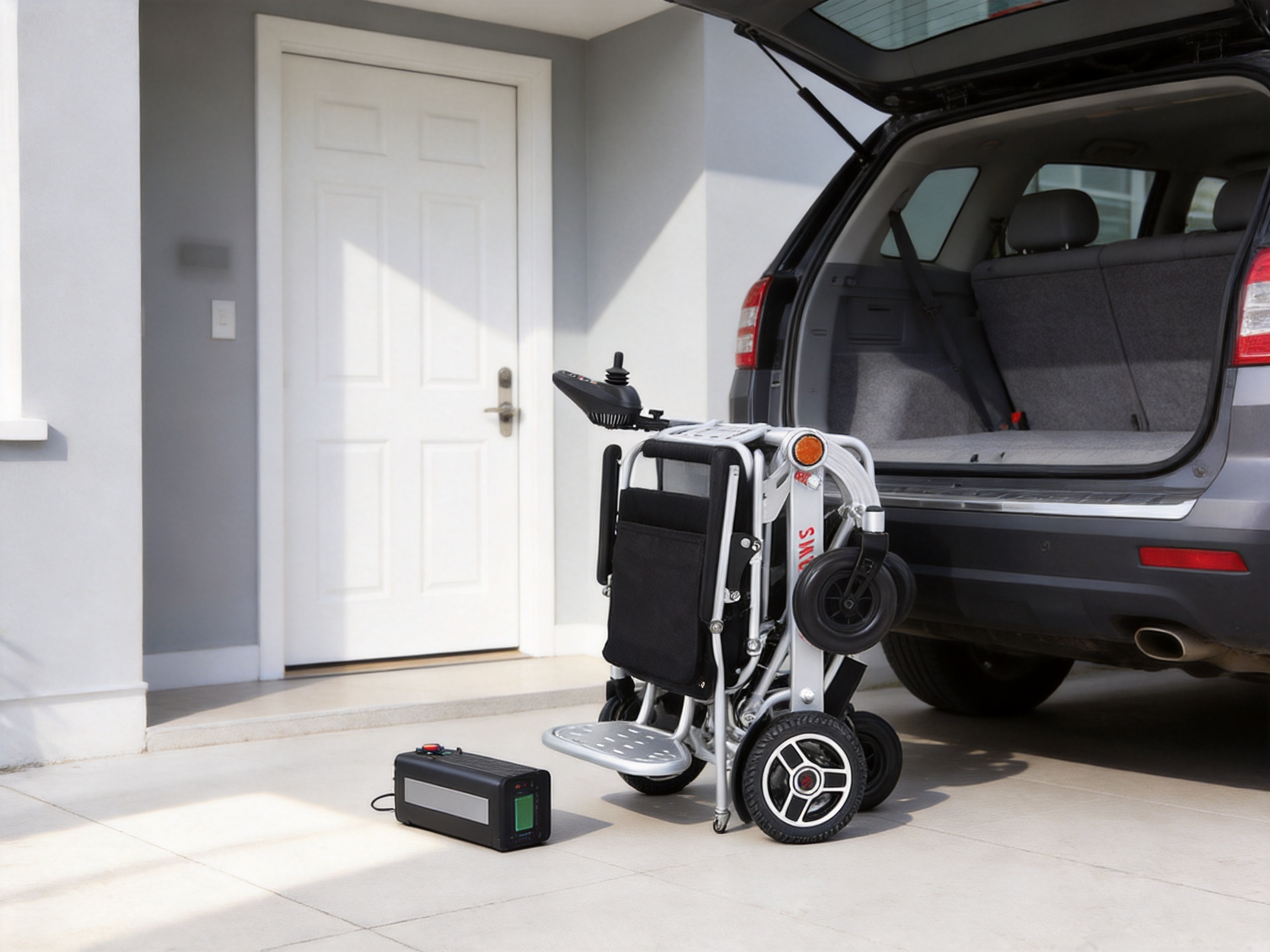
The most visible advantage of the product is its fast folding function. The stated fold-and-unfold time is approximately one second, which is intended to make the wheelchair convenient when entering a car, preparing for storage, or moving through a busy travel routine. A quick folding system can be particularly useful for users who frequently transition between a wheelchair, a vehicle, a hotel room, a restaurant, or a public transport setting.
Fast folding is valuable because portability involves more than the total weight of a product. A wheelchair can be relatively light but still difficult to transport if it requires tools, complicated disassembly, or several separate parts. A rapid folding mechanism reduces the number of steps required before loading. It may also reduce the time during which the user or caregiver must stand beside a vehicle or work in a crowded area.
When compared with a conventional fixed-frame power wheelchair, the foldable format offers a clear logistical advantage. Fixed power chairs can require vehicle lifts, ramps, large vans, or specialized transport systems. They may also occupy a permanent portion of a room or garage. A foldable wheelchair can be more suitable for users who need powered mobility but do not want to dedicate an entire vehicle to equipment transportation.
The product is also described as easy to move after folding. This characteristic is important because a user may need to move the folded chair from a vehicle to a storage area, or from one part of a building to another. The exact ease of handling will depend on the user’s strength, the folded dimensions, battery configuration, flooring, and whether assistance is available. Nevertheless, the ability to place the wheelchair in a compact folded state is a practical advantage over many larger powered alternatives.
Travel preparation should still be planned carefully. Before folding, the user should remove or secure loose belongings, confirm that the joystick and foot platform are not obstructed, and follow the product instructions. The folded wheelchair should be lifted using safe body mechanics and, when necessary, with help from another person. It should be secured inside a vehicle so that it cannot slide, fall, or interfere with passengers and driving controls.
For airline, rail, or long-distance travel, users should verify the policies of the transportation provider before departure. Lithium battery rules, removable battery requirements, terminal protection, packaging, and advance notification requirements can vary. A wheelchair’s folding ability does not automatically mean that every carrier will accept it under identical conditions.
Powered Mobility and Dual-Side Joystick Control
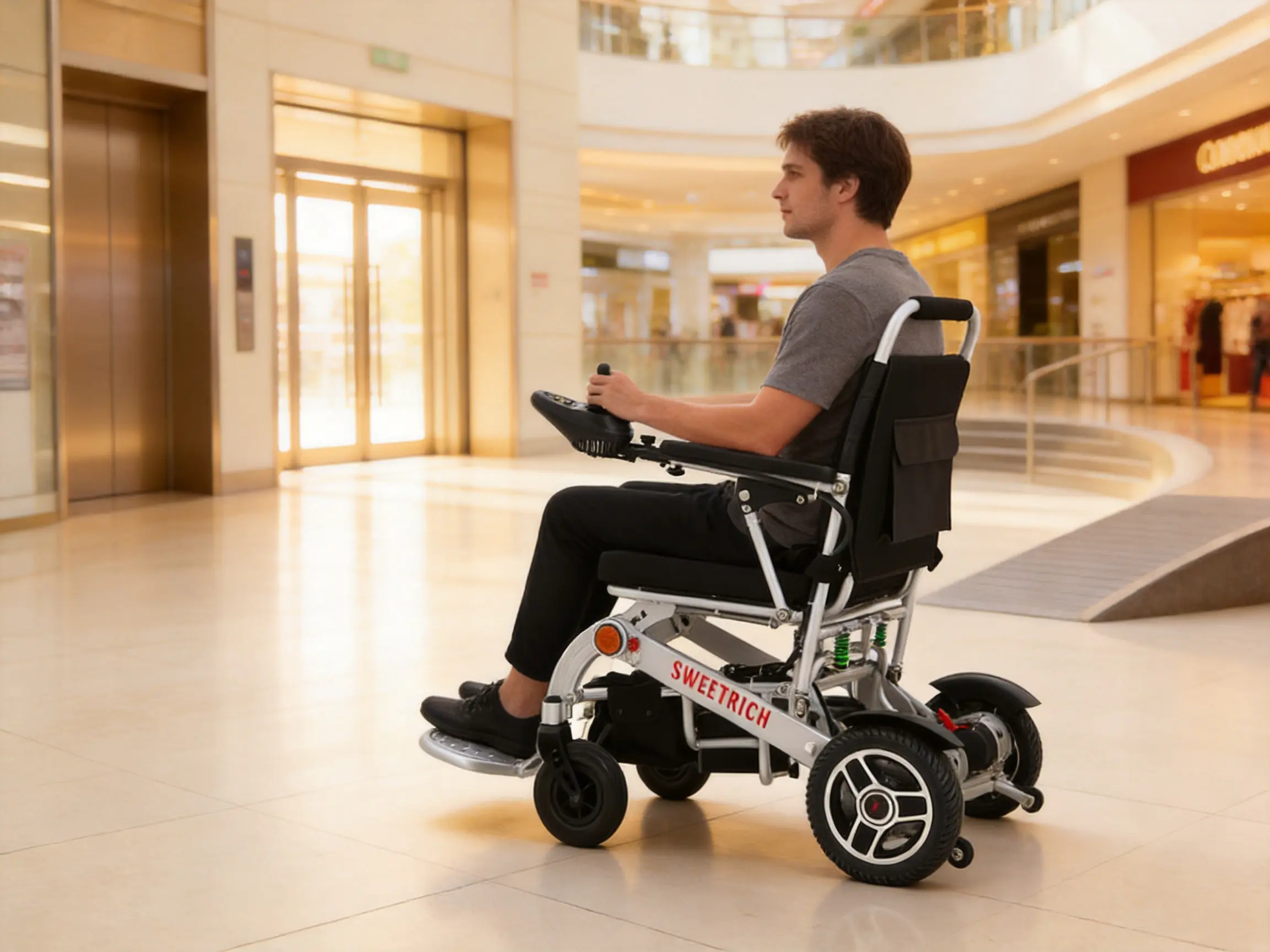
The joystick is one of the most important interfaces on a powered wheelchair. It translates the user’s hand movement into forward, reverse, turning, and stopping commands. The iFold design supports joystick use on either side, which increases flexibility for users who have different hand preferences, arm strength, reach, or seating arrangements.
A dual-side joystick option may be helpful to users who experience reduced function in one arm, fatigue on one side, or discomfort when maintaining a particular posture. It can also make the wheelchair easier to configure for different family members or for changing needs over time. The control arrangement should be installed and adjusted by a qualified technician or according to the manufacturer’s instructions so that the joystick remains secure and does not interfere with transfers or folding.
Users should learn the control response in an open, level area before operating in crowded places. Practice should include starting and stopping smoothly, reversing, making turns, approaching doorways, and controlling speed near people. A joystick makes powered mobility more independent, but it also requires attention and judgment. The operator must keep hands, feet, clothing, and personal belongings clear of moving parts.
The electromagnetic brake system is designed to help the wheelchair stop when the drive control is released. This type of braking is commonly used in powered mobility equipment because it can hold the chair when the motor is not being commanded to move. It is still essential to avoid steep or unsafe positions, and users should not assume that an electromagnetic brake eliminates the need for caution on slopes.
The two 250-watt motors provide the propulsion necessary for everyday movement. Dual motors can contribute to balanced drive performance and help the wheelchair respond consistently when turning or moving across suitable surfaces. Actual performance will vary according to user weight, battery condition, terrain, tire pressure, temperature, incline, and driving style. Smooth acceleration is generally preferable to abrupt joystick movements because it can improve comfort and reduce unnecessary energy consumption.
The product information identifies front and rear suspension. Suspension can help reduce the impact transmitted through the frame when the wheelchair passes over small irregularities such as joints in pavement, thresholds, or lightly uneven walkways. It does not make the wheelchair suitable for every outdoor surface. Large obstacles, deep potholes, loose gravel, wet slopes, and abrupt curbs may still present serious risks.
Battery Options, Charging, and Driving Range
The wheelchair uses a 24-volt lithium battery system. Listed battery options include 10.2 ampere-hours and 20 ampere-hours, while the feature information notes that an optional battery configuration can reach up to 30 ampere-hours for longer travel. These options allow the product to be configured for different priorities. A smaller battery may reduce carried weight and be sufficient for short trips, while a larger battery may be more appropriate for extended outings.
The stated maximum driving range is 30 plus or minus 5 kilometers. This range should be interpreted as an estimated operating figure rather than a guaranteed distance. Battery range is affected by the total user and cargo weight, terrain, gradient, ambient temperature, tire condition, frequency of stopping and starting, average speed, and battery age. Driving continuously on an incline will normally consume more energy than moving on a smooth, level surface.
Battery capacity should be selected according to actual use rather than the maximum number alone. A user who primarily moves around a home, clinic, shopping center, or nearby neighborhood may prefer a lighter configuration. Someone who expects longer trips may benefit from a higher-capacity option, subject to the wheelchair’s approved configuration and transport rules. Buyers should ask the supplier which battery sizes are compatible with the exact model and whether the battery is removable for charging and travel.
The supplied charger is specified as DC 24 volts and 2 amps, with an AC input range of 115 to 230 volts. The listed charging time is approximately five hours. Charging should take place in a dry, ventilated area using the supplied or approved charger. The battery should not be exposed to water, excessive heat, open flame, impact, or unauthorized modification.
Users should establish a regular charging routine. Allowing the battery to become completely depleted on every trip may create avoidable inconvenience and can leave the user without sufficient power for the return journey. It is sensible to check the battery level before departure and to plan a reserve for unexpected detours, delays, or difficult terrain.
Lithium batteries require careful handling. The battery terminals should be protected from contact with metal objects, and the battery should not be transported in damaged condition. If swelling, unusual heat, leakage, a strong odor, or physical damage is observed, charging should stop and qualified service personnel should be contacted. Battery disposal should follow local requirements rather than ordinary household waste procedures.
Comfort, Foot Support, and Everyday Usability
Comfort affects how confidently a person can use a mobility device over time. The product includes a large foot platform, which can help provide a stable place for the user’s feet during powered travel. A broad platform may also be helpful when users prefer to keep both feet supported rather than using narrow separate footrests.
The wheelchair is described as having a footrest and a large foot platform. Before operation, the user should position the feet fully within the supported area and ensure that footwear, clothing, bags, and straps cannot contact the wheels. The foot platform should be inspected periodically for looseness, damage, or obstruction, especially after repeated folding and unfolding.
The suspension system contributes to a more controlled ride over suitable uneven surfaces. Combined with front tires measuring 8 inches and rear tires measuring 10 inches, the chassis is intended to provide practical mobility in a range of everyday environments. Larger rear wheels can support traction and stability, while the front wheels help the chair negotiate ordinary changes in surface level. Wheel size alone does not determine safety, and users should avoid obstacles beyond the product’s stated capabilities.
The wheelchair’s weight capacity is listed as 120 kilograms, or 265 pounds. This limit includes the user and any carried items unless the manufacturer states otherwise. Exceeding the capacity can reduce stability, affect braking and range, accelerate wear, and create safety risks. Personal belongings should be kept within the approved load limit and distributed so they do not shift the center of gravity.
Transfers should be performed with the wheelchair powered off and secured according to the operating instructions. Users should not rely on the joystick, foot platform, or removable components as handholds unless they are specifically designed for that purpose. People who need assistance with transfers should consult a qualified occupational or physical therapist for safe techniques.
Comparison with Conventional Mobility Products
The product occupies a middle position between a manual wheelchair and a large medical-style power wheelchair. A manual wheelchair may be lighter and less expensive, but it requires the user or an attendant to provide propulsion. That can be difficult over longer distances, on inclines, or for people with limited upper-body strength. The powered iFold design reduces the need for continuous pushing and gives the operator control through a joystick.
Compared with a basic transport chair, the product offers substantially more independence. Transport chairs are generally intended to be pushed by a caregiver and may have small wheels that are not designed for self-propulsion. The powered wheelchair includes motors, a controller, a battery, electromagnetic braking, suspension, and a joystick. These features make it more suitable for users who want to drive themselves in appropriate locations.
Compared with a full-size non-folding power wheelchair, the main advantage is portability. A fixed power chair can offer extensive seating adjustments, larger batteries, or specialized clinical configurations, but it may require a ramp, lift, or adapted vehicle. The foldable aluminum model is more appropriate for users whose priorities include storage, occasional transport, and everyday travel convenience.
Compared with some lightweight travel scooters, the wheelchair format may be more suitable for people who need a seated platform with foot support and joystick steering rather than a tiller. A scooter usually requires the user to sit in a particular forward-facing position and operate a handlebar-style control. A power wheelchair can offer a different posture and may be more practical for users who cannot comfortably use a tiller.
Competitor products may offer similar folding functions, but meaningful differences often appear in the complete system rather than in one feature. Buyers should compare frame weight, battery removability, charging time, motor output, turning behavior, controller arrangement, braking system, tire dimensions, suspension, weight capacity, warranty, replacement parts, and service support. A low purchase price does not necessarily represent better value if batteries, tires, controllers, or folding components are difficult to replace.
The ability to use the joystick on either side is a particularly useful differentiator. Some competing travel wheelchairs are supplied with a fixed control position, which may not suit every user. A configurable control arrangement can broaden the potential user base and support changes in physical ability. The benefit depends on proper installation, secure mounting, and sufficient clearance when the chair is folded.
Manufacturing Strengths and Product Development Capabilities
Behind a reliable mobility product is a manufacturing process that must coordinate mechanical engineering, electrical integration, materials control, assembly, testing, and after-sales support. The manufacturer of this product is a high-technology mobility company based in Suzhou, Jiangsu, China. Established in 2011, the company operates a facility covering approximately 60 acres, with a reported factory area of about 30,000 square meters.
More than a decade of experience in mobility scooters and power wheelchairs gives the manufacturer a foundation for refining product details across multiple product generations. Experience in this sector is valuable because mobility equipment must balance comfort, strength, electrical safety, portability, serviceability, and user confidence. A design that performs well in a laboratory may still require adjustments after observing real-world folding, loading, charging, and daily use patterns.
The company’s product scope includes electric scooters and power wheelchairs. This specialization supports cross-disciplinary knowledge in battery systems, motor controllers, drive assemblies, seating, frames, wheels, braking, and user controls. Manufacturing several mobility product categories can also help the engineering team identify common component requirements and improve purchasing, quality control, and service procedures.
Research and development is another stated strength. The company owns intellectual property rights connected with its electric scooters and power wheelchairs and focuses on control technology and driving systems. For a product such as the iFold wheelchair, development work may involve optimizing the relationship between frame geometry, folding movement, motor placement, battery position, joystick response, braking behavior, and weight distribution.
Folding products require particular attention to moving joints and locking points. These areas must be designed to support repeated cycles without excessive looseness or difficult operation. Manufacturing quality depends on accurate alignment, consistent fastener installation, suitable material selection, and inspection of the folded and unfolded positions. A chair that folds quickly but does not lock securely would not meet the practical expectations of users, so folding convenience must be matched by structural reliability.
Aluminum frame production also requires controlled processes. Tubes, brackets, joints, and attachment points must be formed and assembled with consistent dimensions. Welding or other joining methods must be appropriate to the material and load requirements. Surface finishing should help protect the frame from ordinary environmental exposure while maintaining a clean appearance. Every finished frame should be checked for deformation, sharp edges, loose hardware, and interference with wheels or moving parts.
Electrical integration is equally important. Motors, batteries, controllers, electromagnetic brakes, charger connections, and joystick wiring must work together as a coordinated system. Cable routing should reduce the possibility of abrasion, pinching, or interference during folding. Connectors should be secure and accessible for service where appropriate. Functional testing should confirm forward and reverse movement, turning response, braking, battery charging, and controller behavior.
The manufacturer states that it uses strict production management and scientific product design to support reliability and quality. In practical terms, strong production management should include incoming inspection of materials and components, process controls during assembly, documented testing, traceability where possible, and final inspection before shipment. Customers and distributors should ask about the specific quality standards, test procedures, certifications, and warranty terms applicable to the destination market.
International experience is also an important manufacturing strength. The company reports exporting products to America, Europe, Japan, Australia, the Middle East, Russia, and other markets. Serving different regions requires attention to electrical requirements, packaging, documentation, user expectations, transportation conditions, and local regulatory frameworks. International distribution experience can help a supplier understand that a product must be supported not only at the factory but also through spare parts, technical communication, and customer service.
Quality Control from Assembly to Final Inspection
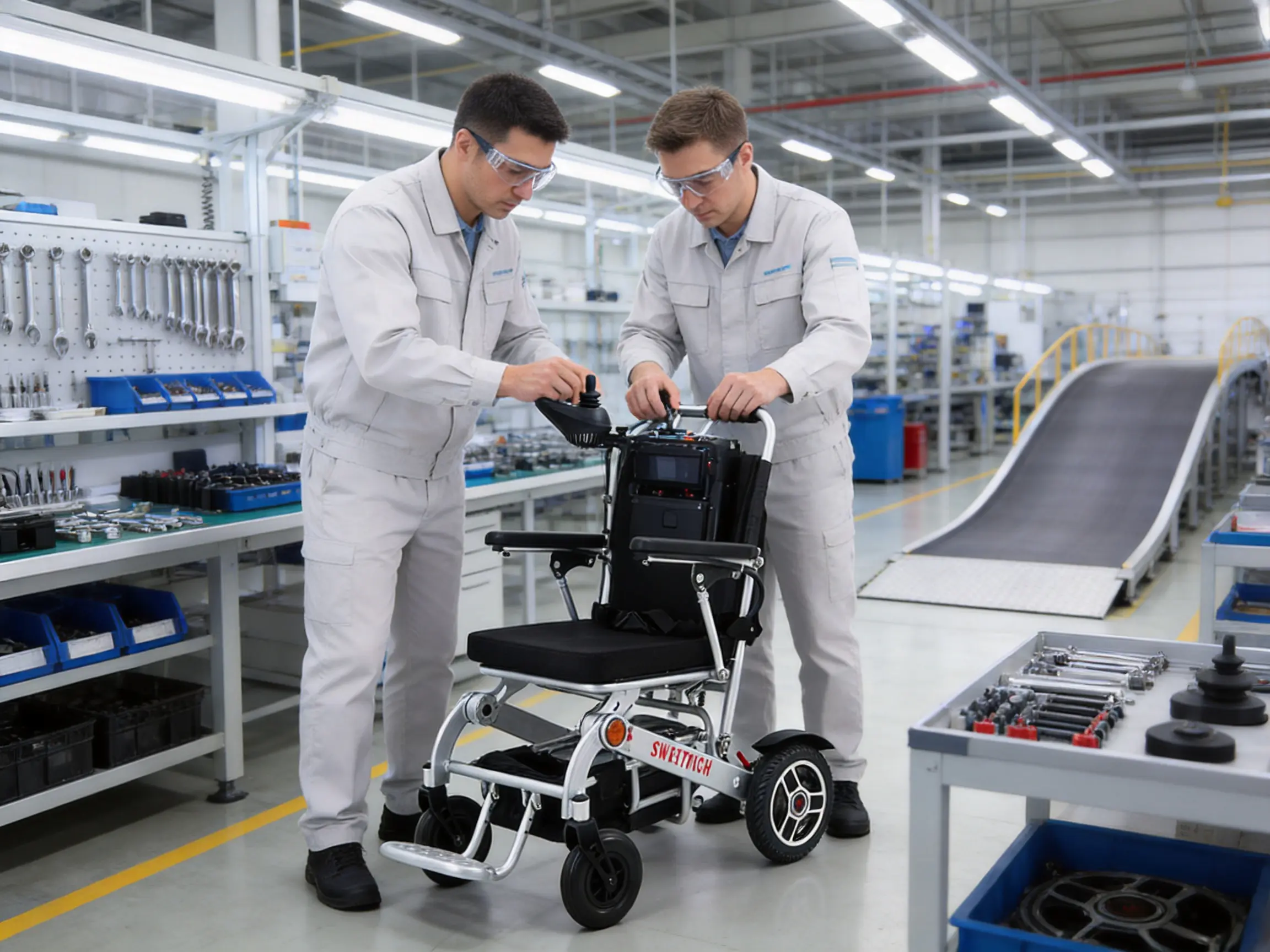
A high-quality mobility wheelchair should be inspected at multiple stages rather than only at the end of production. Materials such as aluminum components, tires, motors, batteries, chargers, controllers, and fasteners should meet defined specifications before entering assembly. Consistent incoming materials reduce variation and help ensure that the finished products behave similarly.
During frame assembly, technicians should check dimensional accuracy and joint alignment. The chair should fold and unfold without excessive force, binding, or unexpected movement. Locking mechanisms should engage correctly in the operating position. The foot platform, wheels, suspension components, and joystick mount should be installed so that they remain secure under normal use.
Electrical testing should cover the full operating circuit. The charger should deliver the correct output, the battery connection should be secure, and the controller should respond appropriately to joystick commands. The electromagnetic brake should engage as intended when the drive control is released. Motor operation should be observed for unusual noise, hesitation, vibration, or overheating.
Final inspection should include a visual review, a functional drive test, a braking check, a folding-cycle check, and confirmation that product labels and user documents are present. Packaging should protect the wheelchair from impact and moisture during shipping. Since international transportation can involve repeated handling, packaging design is part of product quality rather than a separate concern.
Distributors should maintain access to replacement parts and technical assistance. Components such as tires, batteries, chargers, joystick assemblies, controllers, and folding hardware may eventually require service. A product can have a strong initial design, but long-term value depends on whether users can obtain appropriate parts and qualified support.
Responsible Use in Indoor and Outdoor Environments
The wheelchair is intended for suitable travel environments, but users must assess each route before proceeding. Indoor spaces should have adequate width, stable floors, and sufficient turning room. Door thresholds and ramps should be approached slowly and directly. In public areas, users should maintain awareness of pedestrians, displays, furniture, curbs, and changes in floor texture.
Outdoor use should be limited to firm, reasonably even surfaces that are appropriate for the product. Wet leaves, mud, sand, deep grass, loose gravel, and icy surfaces can reduce traction and steering control. Water should not be allowed to enter the electrical system. The wheelchair should not be driven through standing water or exposed to heavy rain unless the manufacturer specifically permits it.
Inclines require additional caution. The stated maximum gradient of 10 degrees should not be treated as a routine target. Users should approach slopes only when the surface is dry, stable, and wide enough for safe control. Turning across a slope can increase the risk of sideways instability. If a ramp appears too steep, narrow, damaged, or crowded, an alternative route should be selected.
Curbs and steps are significant hazards. The product should not be used to climb or descend stairs, escalators, or obstacles beyond the stated design limits. A small threshold may be manageable when approached correctly, but a high curb can cause the front wheels to stop abruptly or the chair to tip. When route conditions are uncertain, the user should stop and seek assistance.
Visibility is important during travel. In low-light conditions, users should follow local requirements regarding reflectors, lights, and visibility equipment. The chair should not be operated on roads unless permitted by applicable law and equipped as required. Users should also consider weather forecasts, battery reserves, mobile communication, and emergency contact arrangements on longer trips.
Maintenance and Long-Term Ownership
Routine maintenance helps preserve performance and safety. Tires should be inspected for wear, cuts, embedded objects, and proper inflation if the tire design requires inflation. Underinflated or damaged tires can affect range, steering, comfort, and braking. Wheels should be checked for unusual looseness or wobble.
The folding mechanism should be kept clean and inspected for damage or excessive play. Users should not apply unapproved lubricants or attempt to alter locking components without technical guidance. Repeated folding can place stress on cables, brackets, and joints, so these areas deserve regular attention.
The frame, foot platform, joystick mount, and seat-related components should be checked for loose fasteners. Fasteners should be tightened according to the manufacturer’s instructions and not overtightened in a way that damages aluminum parts. Any crack, distortion, sharp edge, or unusual movement should be reported before continued use.
The battery and charger should be kept dry and clean. Charging contacts should remain free of dirt and corrosion. The charger should be unplugged according to the recommended sequence, and users should avoid using damaged cords or unauthorized replacement chargers. During extended storage, the battery should be maintained according to the supplier’s storage instructions and checked periodically.
Cleaning should use a soft cloth and suitable mild cleaning products. High-pressure water should not be directed toward motors, controllers, battery connections, joystick assemblies, or other electrical components. After outdoor use in damp conditions, the chair should be dried before folding and storage.
Professional servicing is recommended for electrical faults, battery problems, braking concerns, motor noise, controller errors, or structural damage. Attempting to modify the motor controller, increase speed, change battery wiring, or bypass safety systems can create serious risks and may void the warranty.
Who May Benefit from This Foldable Wheelchair?
This product may suit users who need powered assistance for daily mobility but also value a foldable format. It can be relevant to people who travel by car, live in smaller homes, visit shopping centers, attend events, or need a wheelchair that can be stored without a dedicated vehicle lift. Its dual-side joystick option may also benefit users with different hand-control preferences.
It may be particularly useful for individuals who can sit upright safely and operate a joystick but cannot comfortably propel a manual wheelchair over practical distances. It may also help caregivers who need a powered chair that is easier to transport than a heavier fixed-frame model. The 120-kilogram capacity, battery options, and suspension provide a broad set of practical features, subject to individual assessment.
However, the product may not be suitable for every user. People who require specialized postural support, advanced seating adjustments, highly customized controls, or extensive clinical positioning should seek professional evaluation. Users with significant balance limitations, cognitive difficulties, or changing physical conditions should receive appropriate guidance before independent operation.
Because the product is identified as a non-medical device for the United States market, buyers should distinguish convenience features from medical claims. The wheelchair can support mobility, but it does not diagnose, treat, or prevent a medical condition. A healthcare professional, occupational therapist, or mobility specialist can help determine whether the seating, control arrangement, weight capacity, and operating environment match the user’s needs.
Purchasing and Configuration Considerations
Before placing an order, buyers should confirm the exact configuration. Important questions include which battery capacity is included, whether the battery is removable, what the actual delivered weight is with and without the battery, which joystick side is supported, and whether the charger is appropriate for the destination country.
Buyers should also confirm the applicable maximum speed. The product information includes both a 6-kilometer-per-hour specification and a feature reference to approximately 8.5 kilometers per hour. The correct value may depend on the market, controller configuration, or product version. Written confirmation from the supplier is preferable when speed is an important purchasing criterion.
Other useful questions concern warranty length, replacement battery availability, spare tires, controller support, service locations, folding instructions, packaging dimensions, and delivery time. For commercial buyers, hospitals, senior living communities, rental companies, and distributors may also need product documentation, user manuals, test reports, and shipment specifications.
Vehicle compatibility should be checked before purchase. The folded chair must fit through the vehicle opening and remain within the vehicle’s safe cargo weight. A larger battery may improve range but also increase handling weight. The buyer should consider who will load the chair and whether a ramp, hoist, or second person is needed.
Product characteristic |
Stated specification or feature |
Practical significance |
Product type |
Foldable powered wheelchair with aluminum frame |
Combines powered travel with storage and transport convenience |
Dimensions |
1,090 × 605 × 998 millimeters |
Useful for checking doorways, elevators, vehicle access, and storage |
Maximum forward speed |
6 kilometers per hour in the technical specification |
Suitable speed should be confirmed for the exact market and configuration |
Feature speed reference |
Up to approximately 8.5 kilometers per hour |
Requires confirmation because it differs from the listed technical speed |
Maximum gradient |
10 degrees |
Applies only under suitable conditions and should not replace route assessment |
Driving range |
30 ± 5 kilometers |
Actual range varies with load, terrain, temperature, and battery condition |
Weight capacity |
120 kilograms or 265 pounds |
Includes the user and carried items unless otherwise specified |
Motor system |
24 volts, 250 watts × 2 |
Provides dual-motor powered propulsion |
Battery options |
24-volt lithium, 10.2 Ah and 20 Ah; optional higher capacity noted |
Allows buyers to balance portability and travel range |
Braking |
Electromagnetic brake |
Supports controlled stopping when the drive control is released |
Wheel sizes |
8-inch front and 10-inch rear |
Supports practical movement over suitable everyday surfaces |
Suspension |
Front and rear |
Helps reduce vibration from minor surface irregularities |
Weight without battery |
24 kilograms |
Provides a reference for loading and handling decisions |
Charging time |
Approximately 5 hours |
Supports overnight or planned charging routines |
Why the Product Offers a Competitive Travel Proposition
The strongest competitive advantage of this wheelchair is the combination of features rather than any single specification. Fast folding, aluminum construction, powered movement, dual-side joystick flexibility, suspension, a large foot platform, and optional battery capacity address several common barriers at the same time.
A lightweight frame alone does not provide independence if the user must push the chair manually. A powered system alone may not be convenient if the chair cannot fit into a vehicle. A folding system alone may not be comfortable if it lacks suspension or adequate foot support. By integrating these elements, the product is positioned as a practical travel solution for users who want more independence without moving to a large, permanently assembled power wheelchair.
The product also has advantages for caregivers and family members. A fast folding mechanism can reduce loading time, and the 24-kilogram frame weight without the battery gives a clearer basis for deciding whether one person can handle it safely. The ability to remove or select a battery configuration may further improve transport flexibility.
Manufacturing experience strengthens this proposition. A supplier that has worked with scooters and powered wheelchairs for more than ten years can draw on knowledge of drive systems, control technology, international customer requirements, and product service. Its reported factory scale and export experience also suggest an established production infrastructure rather than a one-off product development effort.
Nevertheless, competitive value should always be measured against verified specifications and after-sales support. Buyers should compare complete ownership costs, including the initial product, battery, charger, maintenance, replacement parts, shipping, and technical service. The best product is the one whose capabilities match the user’s actual environment and whose support remains available throughout its service life.
Frequently Asked Questions
What type of product is this?
It is a foldable powered wheelchair with an aluminum frame, foot support, joystick control, dual motors, lithium battery options, suspension, and electromagnetic braking. It is categorized as a Travel Smart Wheelchair and is intended for suitable indoor and outdoor mobility environments.
How quickly does it fold?
The product information states that it can fold and unfold in approximately one second. Actual operation depends on following the correct procedure and keeping the folding mechanism clear. Users should confirm that the frame is fully locked in the operating position before driving.
How much does the wheelchair weigh?
The stated weight without the battery is 24 kilograms. The complete operating weight will be higher when the battery and other removable components are installed. Buyers should request the exact shipping and loaded weights for their selected configuration.
What is the maximum user weight?
The listed weight capacity is 120 kilograms, or 265 pounds. This should include the user and carried belongings unless the manufacturer specifically defines the limit differently. Exceeding the limit can affect stability, braking, range, and component life.
What is the driving range?
The stated maximum driving range is 30 plus or minus 5 kilometers. Actual range depends on battery capacity, user and cargo weight, surface conditions, gradient, temperature, speed, tire condition, and driving habits. A reserve should always be maintained for the return journey and unexpected delays.
Which battery options are available?
The technical information lists 24-volt lithium batteries in 10.2 ampere-hour and 20 ampere-hour versions. The feature information also refers to an optional battery of up to 30 ampere-hours for greater distance. Buyers should confirm availability and compatibility for the exact product configuration.
What is the maximum speed?
The technical table specifies a maximum forward speed of 6 kilometers per hour, while the feature information mentions up to approximately 8.5 kilometers per hour. Because these figures differ, the applicable speed should be confirmed with the supplier for the destination market, controller setting, and selected model.
Can the joystick be placed on either side?
The product information states that the joystick is available for use on both sides. This can support different hand preferences and physical needs. Installation should be completed securely, with sufficient clearance for transfers, folding, and safe operation.
Can it climb a 10-degree slope?
The stated maximum driving gradient is 10 degrees, but this should not be interpreted as a guarantee for every slope. Surface condition, battery charge, load, weather, direction of travel, and tire traction all affect performance. Users should avoid slopes that are wet, loose, narrow, damaged, or otherwise unsafe.
Is the wheelchair suitable for air travel?
Its folding design may make travel easier, but airline and transport policies vary. Lithium battery requirements, battery removal, packaging, terminal protection, and advance notification should be confirmed with the carrier before departure. Folding capability alone does not guarantee acceptance.
Is it a medical device?
The supplied product information describes it as a non-medical device for the United States market. It should therefore be treated as mobility equipment, not as a device that diagnoses or treats a medical condition. Users who need specialized seating or clinical support should seek professional assessment.
What maintenance does it require?
Routine care includes checking tires, wheels, folding joints, fasteners, joystick mounting, foot support, battery connections, charger condition, and electromagnetic braking. The wheelchair should be kept clean and dry, and electrical or structural repairs should be handled by qualified service personnel.
Who manufactures the product?
The product is manufactured by Suzhou Sweetrich Vehicle Industry Technology Co., Ltd., a mobility equipment company established in 2011 in Suzhou, Jiangsu, China. The company reports experience in developing and producing mobility scooters and power wheelchairs, along with international export activity and intellectual property related to its products.
Conclusion
The iFold Medical foldable aluminum wheelchair presents a practical answer to a common mobility challenge: how to obtain powered independence without accepting the storage and transport burden of a large fixed-frame wheelchair. Its fast folding system, 24-kilogram frame weight without the battery, dual-side joystick option, front and rear suspension, electromagnetic braking, large foot platform, and selectable lithium battery capacities make it well suited to travel-oriented use.
Its competitive value comes from the balance among portability, powered performance, comfort, and configuration flexibility. Compared with manual wheelchairs, it reduces the need for continuous pushing. Compared with transport chairs, it offers self-directed powered movement. Compared with many full-size power wheelchairs, it is designed with storage and vehicle transport in mind.
The manufacturer’s experience in mobility products, research and development capabilities, production infrastructure, international market exposure, and stated quality-management approach provide additional support for the product proposition. Careful assembly, electrical testing, folding-cycle inspection, packaging, and after-sales service remain essential to transforming a promising design into dependable long-term mobility equipment.
Before purchase, users should confirm the exact speed, battery capacity, loaded weight, transport requirements, warranty, replacement parts, and service arrangements. They should also assess their own seating, transfer, control, and route requirements. Used responsibly and maintained correctly, this foldable powered wheelchair can help suitable users travel with greater convenience, confidence, and independence.
References
1. Product specification sheet for the foldable aluminum powered wheelchair, including dimensions, motor, battery, braking, suspension, range, capacity, and charging data.
2. Manufacturer-provided product feature information concerning rapid folding, joystick placement, foot support, travel performance, and optional battery configurations.
3. Manufacturer company information concerning research and development, production facilities, export markets, intellectual property, and mobility product experience.
4. General principles of powered wheelchair operation, battery care, safe transfer, route assessment, and mobility equipment maintenance.
5. General transportation guidance for mobility devices equipped with lithium batteries, including carrier-specific packaging, notification, and battery-handling requirements.