
 +86-(0)512-82283871

Content
- 1 Product Overview
- 2 Key Specifications
- 3 Advantages in the Travel Scooter Category
- 4 Performance for Daily Use
- 5 Portability and Transport Planning
- 6 Manufacturing and Engineering Strengths
- 7 How the Scooter Compares with Common Alternatives
- 8 Recommended Applications
- 9 Ownership, Charging, and Maintenance
- 10 Safety and Responsible Use
- 11 Purchasing Considerations
- 12 Frequently Asked Questions
- 12.1 Is the SW 1000F a medical device?
- 12.2 What is the maximum user weight?
- 12.3 How fast can it travel?
- 12.4 How far can it travel on one charge?
- 12.5 How long does charging take?
- 12.6 Does it have a suspension system?
- 12.7 Can one person lift the scooter into a car?
- 12.8 Is the scooter suitable for steep hills?
- 12.9 What are the main advantages over a larger mobility scooter?
- 12.10 What should buyers confirm before ordering?
- 13 Conclusion
- 14 References
- 15 Product: SW 1000F Ready to ship mobility scooter 9 inch 4 wheels scooters
Choosing a mobility scooter is an important decision for older adults, people with limited mobility, caregivers, and families seeking a practical way to support independent travel. The ideal scooter should be compact enough for everyday environments, powerful enough for ordinary outdoor routes, comfortable to operate, simple to charge, and dependable in its braking and control systems. It should also provide a useful balance between portability and stability rather than focusing on only one feature.
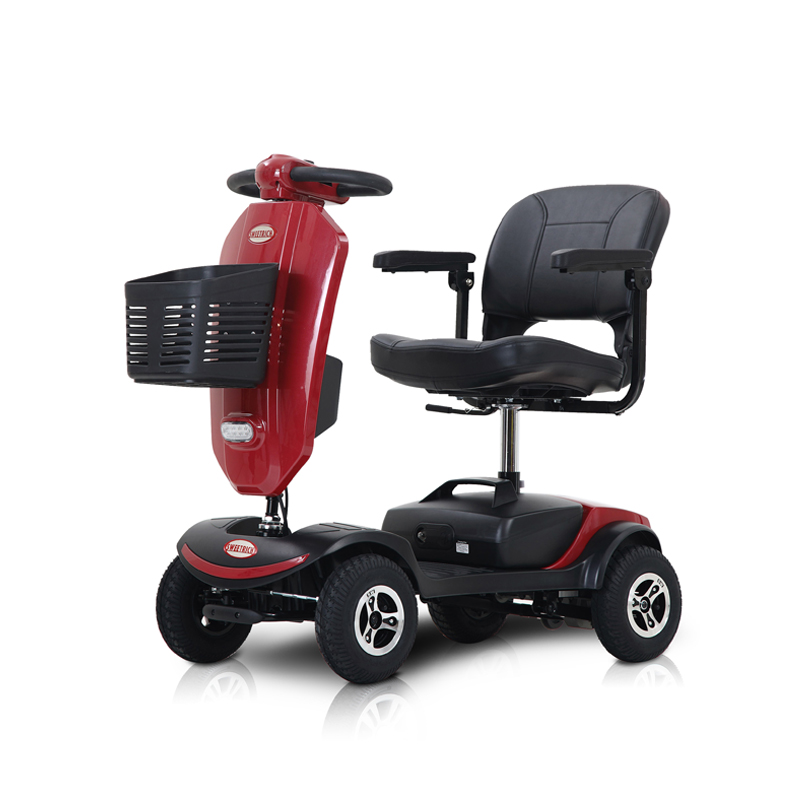
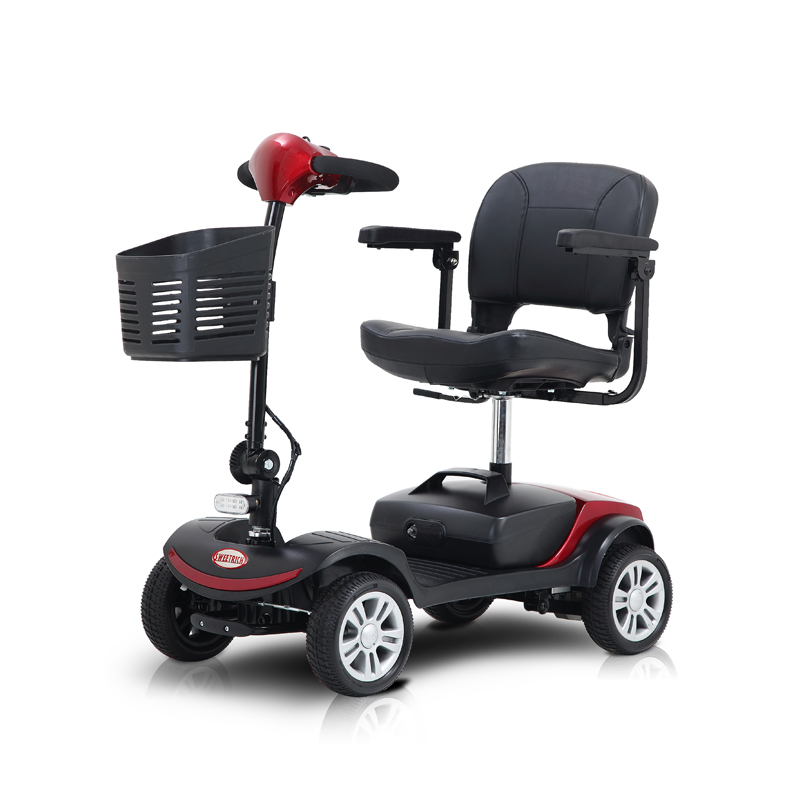
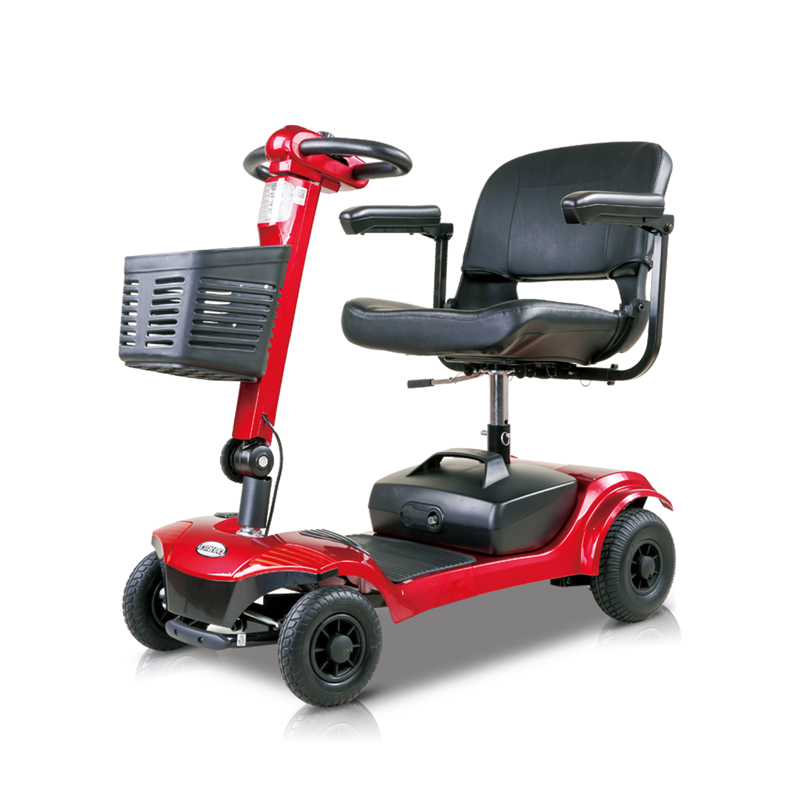
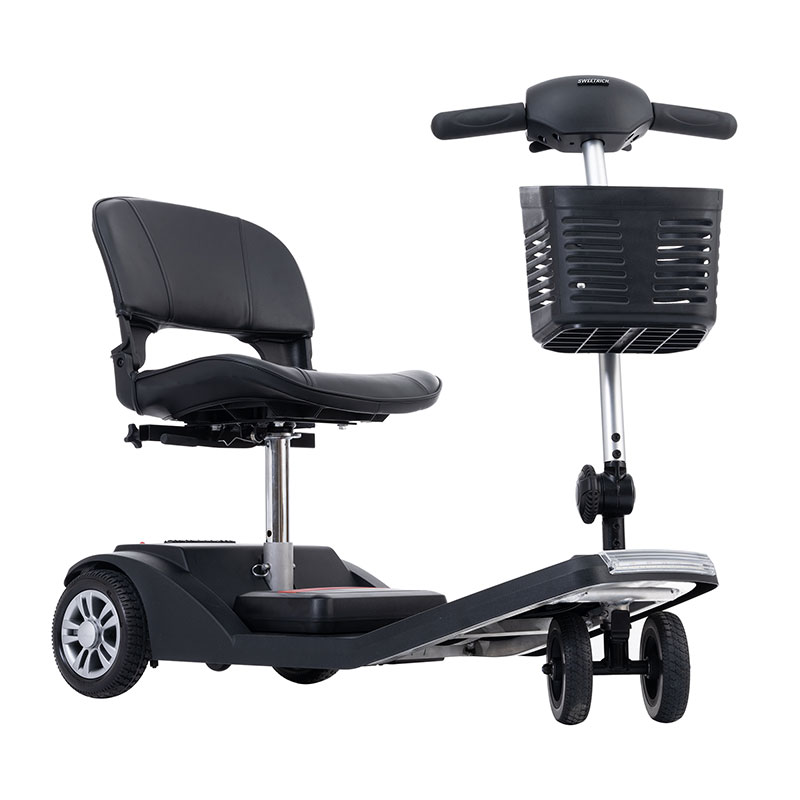
The SW 1000F is a ready-to-ship four-wheel mobility scooter designed for travel-oriented use. It combines a compact body, a 24-volt lithium battery, an electromagnetic braking system, a 270-watt motor, and a rated user capacity of up to 300 pounds. With a maximum forward speed of 5 miles per hour and a stated driving range of approximately 9.5 to 15.5 miles, the scooter is intended for many routine journeys, including local shopping, visits, neighborhood travel, and movement through suitable indoor and outdoor areas.
This article examines the scooter’s specifications, operating advantages, design priorities, manufacturing strengths, and potential applications. It also explains how the product compares with common alternatives in the travel scooter category, while emphasizing that it is a non-medical mobility device for the United States market. It is not a substitute for professional medical advice, mobility assessment, or applicable transportation regulations.
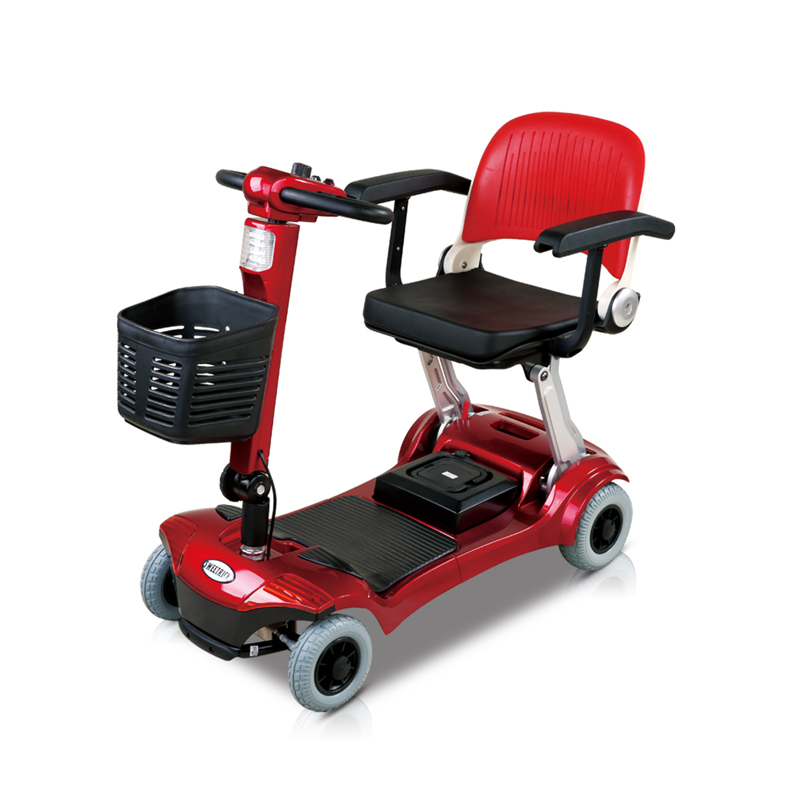
SW 1000F Ready to ship mobility scooter 9 inch 4 wheels scooters
Product Overview
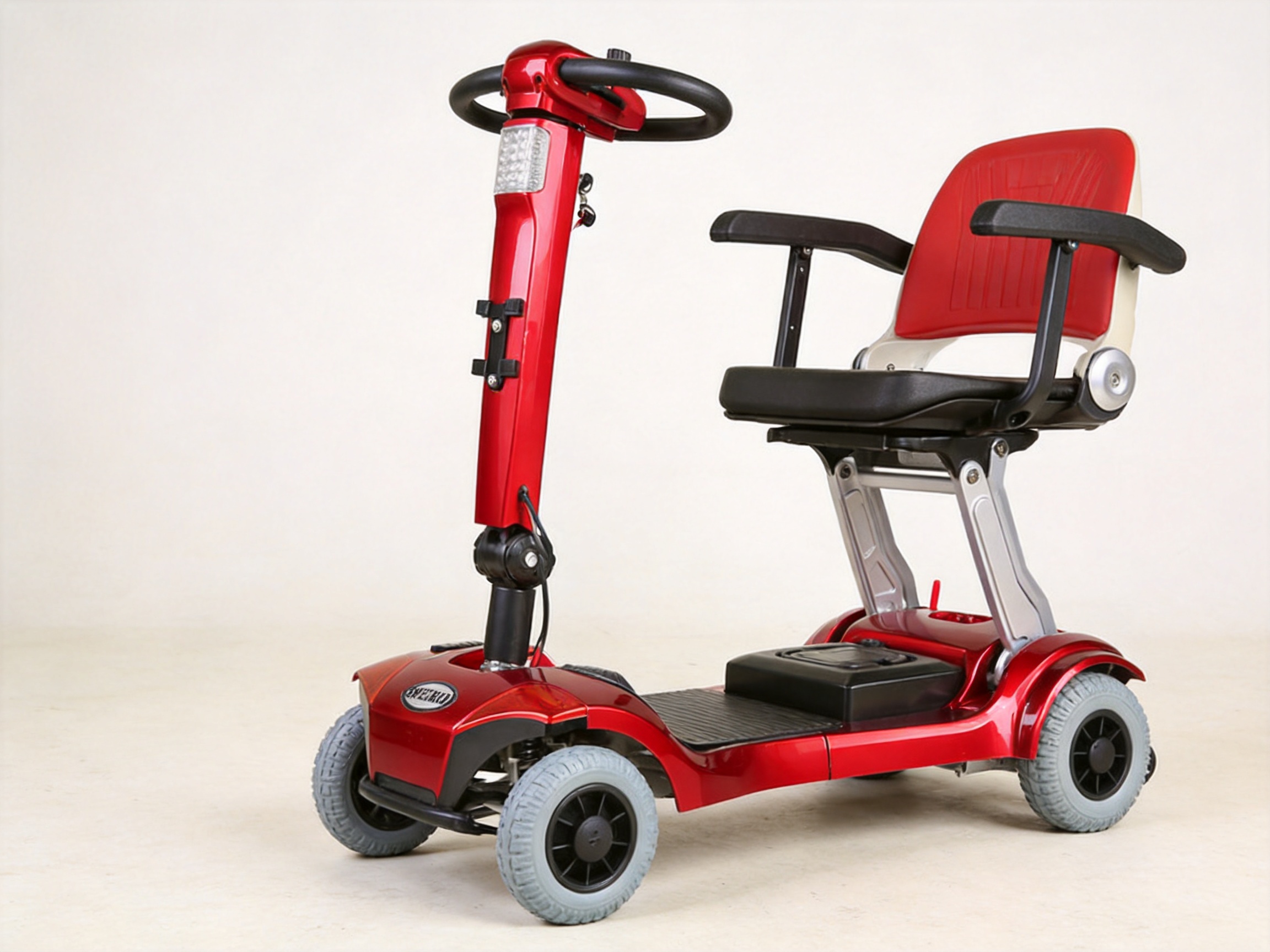
The SW 1000F is categorized as a travel smart scooter and uses a four-wheel layout. Four-wheel mobility scooters are often selected by users who value a broader and more stable footprint than a three-wheel design can provide. The arrangement can be particularly useful for users who prefer a reassuring platform when moving at controlled speeds on smooth, appropriate surfaces.
The scooter has listed dimensions of 1,000 by 525 by 920 millimeters, equivalent to approximately 39.4 by 20.7 by 36.2 inches. These dimensions place it in the compact travel-scooter class. Its relatively narrow width can be useful in homes, apartment corridors, retail aisles, and other spaces where a larger full-size scooter may be difficult to maneuver or store.
The product title identifies the model as a ready-to-ship mobility scooter with a four-wheel configuration and a 9-inch scooter format. The detailed specification table lists front tires measuring 7 by 2.5 inches and rear tires measuring 8 by 3 inches. Because product configurations can change by production batch or market, buyers should confirm the exact wheel and tire specification before purchase, especially when replacement tires, transport equipment, or storage dimensions are important considerations.
The scooter is powered by a 24-volt, 20 ampere-hour lithium battery. Lithium battery technology can provide a useful weight and packaging advantage compared with some traditional battery types. The stated maximum driving range is 15 to 25 kilometers, or approximately 9.5 to 15.5 miles. Actual range depends on user weight, terrain, temperature, tire condition, driving habits, battery age, charging practices, and the frequency of starting and stopping.
At the heart of the propulsion system is a 24-volt, 270-watt motor. The motor is paired with a 24-volt, 50-amp controller identified in the specifications as a PG controller. This combination is intended to deliver controlled movement at the scooter’s maximum forward speed of 8 kilometers per hour, or 5 miles per hour.
The scooter has a stated maximum driving gradient of 10 degrees. This specification should not be interpreted as permission to use the scooter on every steep ramp, hill, driveway, or uneven incline. Slope performance depends on surface condition, traction, battery charge, load distribution, weather, and the direction of travel. Users should always follow the operating manual and use only routes that are appropriate for the scooter and their own ability.
Key Specifications
| Specification | Published detail | Practical significance |
|---|---|---|
| Product type | Four-wheel travel mobility scooter | Designed for compact personal mobility and everyday travel |
| Overall dimensions | 1,000 × 525 × 920 mm | Compact footprint for storage and use in suitable indoor spaces |
| Maximum forward speed | 8 km/h, approximately 5 mph | Suitable for controlled local mobility where permitted |
| Maximum driving gradient | 10 degrees | Provides a published reference for appropriate slope conditions |
| Maximum driving range | 15–25 km, approximately 9.5–15.5 miles | Supports many short and moderate daily journeys |
| Weight capacity | 136 kg, approximately 300 pounds | Accommodates a broad range of adult users within the rated limit |
| Front tires | 7 × 2.5 inches | Compact front-wheel dimensions for a travel-oriented platform |
| Rear tires | 8 × 3 inches | Wider rear contact area for powered movement and stability |
| Braking system | Electromagnetic brake | Supports controlled stopping when the drive system is disengaged |
| Battery | 24V/20Ah lithium | Rechargeable energy source with a compact travel-oriented format |
| Charger | DC 24V, 2A; AC 100–240V input | Designed for charging from a broad household voltage range |
| Charging time | Approximately 8–10 hours | Encourages overnight or scheduled charging between journeys |
| Motor | 24V/270W, Taiwan-sourced specification | Provides propulsion for controlled travel |
| Motor controller | 24V/50A PG controller | Regulates motor operation and driving response |
| Heaviest part | 36.3 kg, approximately 80 pounds | Important consideration for lifting, loading, and transport planning |
Advantages in the Travel Scooter Category
Compact dimensions for everyday environments
One of the most important advantages of a travel scooter is the ability to fit into places that may be unsuitable for a full-size mobility vehicle. The SW 1000F has a listed width of 525 millimeters, or approximately 20.7 inches. A narrower body can make it easier to approach doorways, move through selected aisles, and park inside a home without occupying excessive floor space.
Compact dimensions can also reduce the practical burden placed on caregivers and family members. A scooter that occupies less room may be easier to keep in an apartment, garage, entryway, or storage area. Users should still measure doorways, elevators, vehicle compartments, and turning areas before purchase because published external dimensions do not automatically guarantee access through every location.
Four-wheel balance and predictable handling
Travel scooters are often available in three-wheel and four-wheel configurations. Three-wheel models may offer a tighter turning circle, while four-wheel designs commonly appeal to users who prefer a more evenly distributed base. The four-wheel layout of the SW 1000F is a useful choice for people who want the additional visual and physical reassurance of four contact points.
Four-wheel construction can also support a more predictable feeling when moving in a straight line at moderate speed. This can be valuable for users who prioritize confidence over extremely tight maneuverability. The best choice depends on the user’s environment, driving skill, body position, and preferred handling characteristics.
Useful capacity without a full-size frame
The rated weight capacity is 136 kilograms, or approximately 300 pounds. This provides a meaningful balance between user support and compact scooter design. Some smaller travel scooters prioritize minimal size so heavily that their weight ratings are limited. The SW 1000F seeks to provide a higher capacity while retaining a relatively compact footprint.
Weight capacity includes the user and any carried items. Bags, shopping, accessories, and other loads should be included when calculating the total. Exceeding the published capacity can affect braking, range, handling, motor performance, and component life.
Lithium battery convenience
The 24V/20Ah lithium battery is another major feature for a travel-focused mobility scooter. Lithium batteries are widely valued for their energy storage efficiency and compact format. Their use can help manufacturers design a scooter that supports useful travel without relying on a larger battery enclosure.
The lithium battery also supports a practical charging routine. The included charger is specified for DC 24V and 2A output, with an AC input range of 100 to 240 volts. This broad input range is convenient for users who travel between regions using compatible electrical systems, although the appropriate plug, charging instructions, and local requirements should always be confirmed.
The stated charging time is 8 to 10 hours. This means users should plan to charge the battery after a day of use rather than expecting a rapid top-up during a short break. Regular charging according to the manufacturer’s instructions can help users begin each journey with a predictable energy level.
Electromagnetic braking
The electromagnetic brake is designed to support controlled stopping and secure parking when the drive system is released. Compared with a purely manual braking arrangement, an electromagnetic system can be more convenient for users who may have limited hand strength or coordination. It is integrated with the scooter’s electrical control system and works as part of the overall propulsion and stopping design.
Users should understand that no braking system removes the need for responsible operation. Wet, loose, uneven, or steep surfaces can increase stopping distance. The scooter should be driven at a suitable speed, and the user should avoid abrupt direction changes or routes beyond the product’s intended operating conditions.
Moderate speed for controlled mobility
The maximum forward speed is 8 kilometers per hour, or approximately 5 miles per hour. This speed is appropriate for a travel scooter intended to support deliberate movement rather than high-speed transport. A controlled maximum can make it easier for users to navigate around pedestrians, furniture, entrances, and other obstacles.
Speed should be reduced when turning, approaching a ramp, moving across crowded areas, traveling near a curb, or encountering unfamiliar surfaces. Users should obey local rules governing mobility scooters and should not assume that the maximum scooter speed is appropriate for every route.
Performance for Daily Use
The SW 1000F is designed around the practical needs of short-distance and moderate-distance mobility. A stated range of 9.5 to 15.5 miles can cover many routine activities, such as traveling around a residential area, visiting nearby stores, attending appointments, or moving through a large indoor venue where scooters are permitted.
Range figures are normally measured under specific testing conditions and should be treated as a guide rather than a guarantee. Heavier loads may consume more energy, as can steep slopes, repeated acceleration, frequent stops, low temperatures, underinflated tires, and rough surfaces. A user who plans a longer outing should leave a reasonable reserve rather than planning a route that exactly matches the upper published range.
The 270-watt motor is intended for controlled propulsion on suitable surfaces. It is not a high-performance off-road motor, and the scooter should not be used as an all-terrain vehicle. Smooth pavement, indoor flooring, properly maintained paths, and other approved surfaces are more appropriate than deep gravel, mud, sand, snow, or heavily broken ground.
The maximum driving gradient of 10 degrees offers a useful reference when evaluating routes. However, a slope’s steepness is only one factor. A ramp may be within the stated angle but still be unsuitable if it is wet, narrow, poorly surfaced, or followed by a sharp turn. The scooter should approach inclines directly where possible, and users should follow all safety instructions provided with the product.
The absence of a listed suspension system indicates that the scooter is configured primarily for compact travel and controlled surfaces. This can help keep the design simple and reduce unnecessary complexity, but it also means users should select smoother routes and reduce speed over thresholds or uneven transitions. A travel scooter without suspension may feel less forgiving on rough ground than a larger scooter designed for outdoor comfort.
Portability and Transport Planning
Portability is a central consideration for any travel scooter. The SW 1000F has a listed heaviest-part weight of 36.3 kilograms, or approximately 80 pounds. This figure is important because a component weighing 80 pounds may still require two-person handling, a suitable loading ramp, or a vehicle lift, depending on the user and caregiver’s strength.
Buyers should not assume that the scooter can be lifted safely into a car by one person. Before purchase, it is advisable to evaluate the vehicle’s trunk opening, loading height, available internal length, and permitted payload. A transport solution should protect both the scooter and the people handling it. Improvised lifting can lead to injury or damage.
The compact dimensions may simplify storage, but storage conditions also matter. The scooter should be kept in a dry location protected from extreme heat, freezing temperatures, and prolonged moisture. The battery should be stored and charged according to the manufacturer’s instructions. If the scooter will remain unused for an extended period, the owner should follow the recommended battery maintenance procedure.
The term “ready to ship” can be valuable for buyers who need a scooter without an extended manufacturing lead time. Availability, shipping region, final configuration, packaging, delivery method, and inventory status should be confirmed before an order is placed. Ready-to-ship status can change as inventory moves, particularly for popular travel models.
Manufacturing and Engineering Strengths
The product is manufactured by Suzhou Sweetrich Vehicle Industry Technology Co., Ltd., a high-tech mobility manufacturer established in 2011. The company operates in Suzhou Industrial Zone, Jiangsu, China, and reports a 60-acre site with a 30,000-square-meter factory. This scale provides an industrial foundation for product development, component integration, assembly, inspection, and export preparation.
A dedicated production site can offer several advantages over small-scale or informal assembly operations. It can support repeatable work instructions, organized material flow, specialized production areas, controlled assembly sequences, and structured quality checks. For mobility products, consistency is particularly important because the motor, controller, battery, brake, frame, wheels, and steering components must work together as a complete system.
The company states that it has more than ten years of experience in the research, development, and production of mobility scooters and power wheelchairs. Long-term specialization can contribute to a deeper understanding of common user requirements, including stability, comfortable controls, battery management, compact packaging, and dependable operation.
Integrated product development
The SW 1000F demonstrates an integrated approach to design. Its dimensions, motor power, battery capacity, controller, braking system, and tire arrangement are not isolated features. They form a coordinated platform intended to balance portability, driving range, user capacity, and manageable speed.
For example, a compact frame must be matched with an energy system that can provide useful range without making the scooter unnecessarily difficult to transport. The motor must provide adequate propulsion while remaining compatible with the battery and controller. The brake must respond appropriately to the drive system. A properly engineered product considers these relationships during development rather than treating each component as an independent selling point.
Control technology and driving systems
The company describes its products as incorporating advanced control technology and driving systems designed to support smooth and safe operation. The specified 24V/50A PG controller is an important part of that system. A controller regulates how electrical power is delivered to the motor, influencing acceleration, response, and overall driving behavior.
In a mobility scooter, smooth control is more useful than abrupt power. Predictable acceleration can help users begin moving with greater confidence, while responsive control supports adjustment in tight or crowded spaces. The actual driving experience depends on calibration, user input, battery condition, load, and surface conditions, but the controller remains a central element of the scooter’s engineering architecture.
Quality-oriented production management
The manufacturer reports a focus on strict production management and scientific product design. In practical terms, a quality-oriented manufacturing process should include attention to incoming components, assembly accuracy, electrical connections, fastener security, brake operation, steering alignment, charger function, and final appearance.
For a powered mobility product, final inspection should also consider whether the scooter responds correctly to the controls, whether the braking system engages as intended, and whether the battery and charger operate within their specified parameters. Export packaging is another important production stage because the product must be protected during handling and transport before it reaches the customer.
Buyers and distributors should request the applicable inspection records, user manual, warranty terms, spare-parts policy, and market-specific documentation. These documents help translate the manufacturer’s production capabilities into practical ownership support.
Research and intellectual property
The company states that it owns intellectual property rights related to its electric scooters and power wheelchairs. Research and intellectual property can support the development of product-specific solutions rather than relying entirely on generic platforms. This may help a manufacturer refine frame geometry, control layouts, folding or storage approaches, electrical integration, and user-oriented features over time.
Product innovation in the mobility sector should always be connected to reliability and serviceability. New features are valuable when they are easy to understand, appropriately tested, supported with replacement parts, and accompanied by clear operating instructions. A mature manufacturer must balance innovation with long-term ownership needs.
How the Scooter Compares with Common Alternatives
Compared with larger full-size mobility scooters, the SW 1000F offers a more compact format and a lower maximum speed. This makes it potentially easier to store and transport, although it may provide fewer outdoor comfort features than a larger model with extensive suspension, larger tires, or a higher-capacity battery. Users who regularly travel long distances or over rough terrain may need to consider a larger class of scooter.
Compared with very small three-wheel travel scooters, the four-wheel configuration may appeal to users who prioritize a broader base and straight-line confidence. The trade-off can be a somewhat different turning behavior. Buyers should consider whether their main environment consists of narrow indoor spaces, open sidewalks, shopping areas, or mixed routes.
Compared with scooters using traditional lead-acid batteries, the lithium battery may offer a more compact energy solution and can be attractive to users who place a high value on travel practicality. However, battery technology must be evaluated together with charger compatibility, replacement availability, storage requirements, shipping rules, and total ownership cost.
Compared with higher-powered outdoor scooters, the 270-watt motor and 5-mile-per-hour top speed identify the SW 1000F as a moderate-use travel model rather than an off-road or heavy-duty vehicle. Its strengths are compact mobility, controlled operation, useful rated capacity, and everyday convenience. Buyers should select the product category that matches their routes instead of expecting one scooter to perform equally well in every environment.
Recommended Applications
Local errands
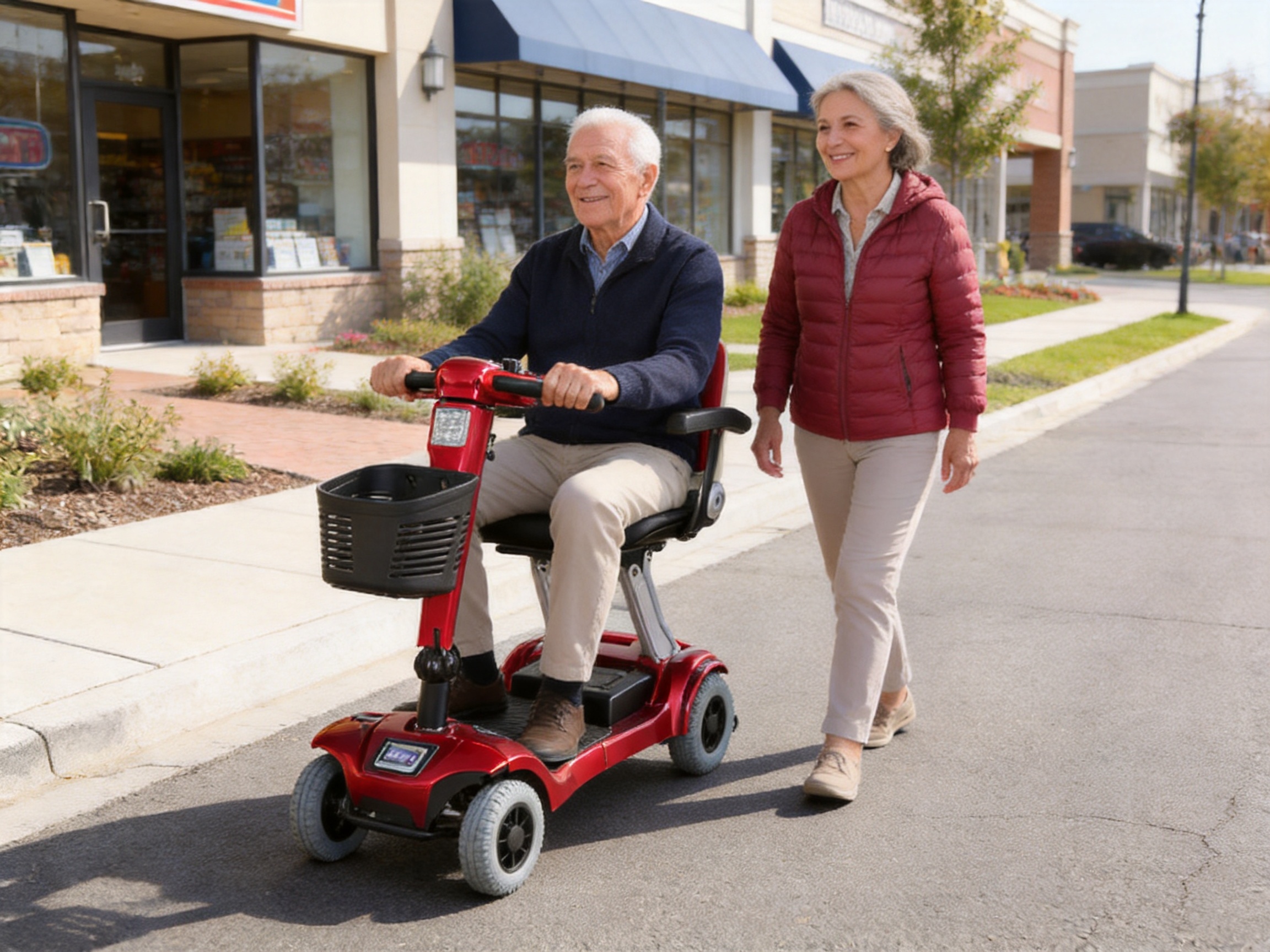
The scooter can be suitable for short local errands when routes use appropriate pavement and the user remains within the practical battery range. Its compact width may help when entering suitable stores or approaching service counters. Users should confirm that the destination permits mobility scooters and provides adequate turning space.
Residential and community travel
For residents of retirement communities, apartment complexes, and suburban neighborhoods, a travel scooter can support independent movement between buildings, parking areas, common rooms, and nearby destinations. The moderate speed allows users to travel at a deliberate pace while remaining aware of pedestrians and environmental conditions.
Indoor venues and shopping areas
The scooter’s compact dimensions may be beneficial in selected indoor environments. Before entering an indoor venue, the user should confirm access policies, doorway width, lift capacity, floor transitions, and available parking or charging arrangements. Indoor travel requires additional attention to pedestrians, displays, furniture, ramps, and polished or slippery flooring.
Caregiver-supported mobility
Caregivers may appreciate the product’s manageable travel-oriented format, but the listed 80-pound heaviest part still requires careful transport planning. A caregiver should receive instruction on charging, control operation, braking, storage, and safe loading. The user should also be able to operate the controls or have an appropriate assistance plan.
Ownership, Charging, and Maintenance
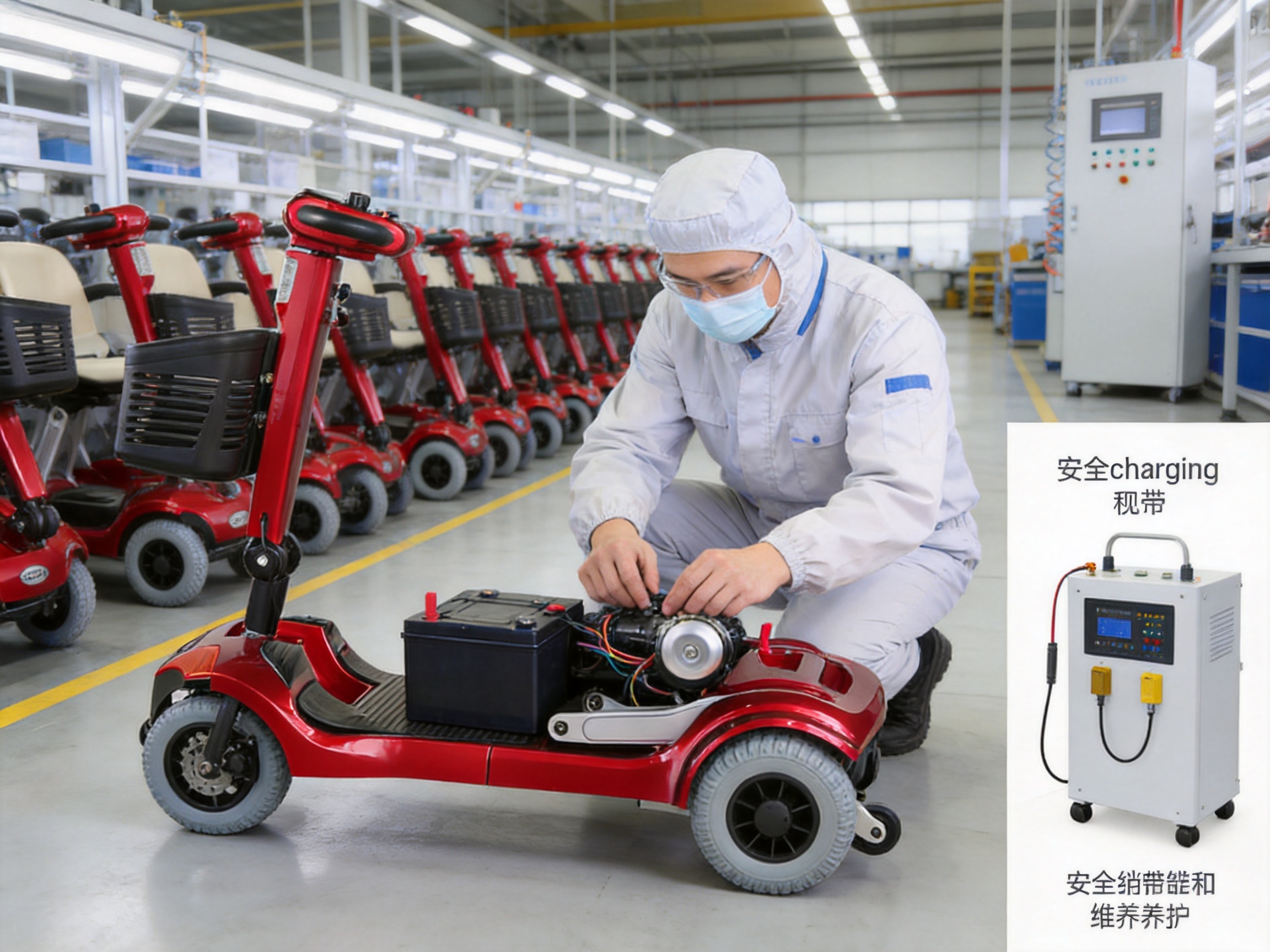
Good ownership begins with a pre-use inspection. The user should check the battery charge, tire condition, steering response, seat and frame security, control operation, and brake response before each journey. Any unusual noise, vibration, electrical smell, loss of power, or change in braking behavior should be investigated before continued use.
The lithium battery should be charged with the supplied or approved charger. Users should not substitute an incompatible charger, modify the battery system, or bypass protective components. Charging should take place in a suitable, dry, ventilated area away from combustible materials. The user should follow all battery safety instructions supplied with the scooter.
The stated charging time of 8 to 10 hours makes scheduled charging practical. Many owners may choose to charge after daily use so the scooter is ready for the next outing. The battery should not be intentionally run completely empty on a regular basis unless the manufacturer specifically directs that practice.
Tires should be inspected for damage, excessive wear, and proper inflation where applicable. Correct tire condition affects rolling resistance, handling, braking, and range. The motor, controller, electromagnetic brake, wiring, and battery should be serviced only by appropriately trained personnel or an authorized service provider.
Cleaning should be performed with a suitable damp cloth or the method recommended by the manufacturer. The scooter should not be sprayed with high-pressure water or immersed. Moisture entering electrical components can create safety and reliability risks.
Maintenance records can be useful for owners, caregivers, distributors, and service technicians. Recording battery replacement, tire service, inspections, and repairs helps identify recurring issues and supports more predictable long-term operation.
Safety and Responsible Use
The SW 1000F is described as a non-medical device for the United States market. It should not be represented as a medical treatment, diagnostic device, or guarantee of independence. A healthcare professional, occupational therapist, or mobility specialist can help determine whether a scooter is appropriate for a particular user and whether the user can safely operate the controls.
Users should read the complete manual before operating the scooter. They should practice starting, stopping, turning, reversing, and parking in a clear area before traveling in public. Speed should be reduced around pedestrians, corners, slopes, doors, curbs, and obstacles.
The scooter should remain within its rated weight capacity. Passengers should not be carried unless the product is specifically designed and approved for that purpose. Hanging heavy objects from the steering column can affect balance and control. Loads should be secured and distributed in a way that does not interfere with steering or braking.
Users should avoid routes with deep potholes, loose gravel, standing water, sand, mud, snow, or other conditions that may compromise traction. The published 10-degree gradient is a reference value, not a guarantee that every incline of that angle is safe. A slope should be evaluated together with its surface, width, visibility, turning requirements, and exit conditions.
Visibility is especially important near roads, driveways, crossings, and parking areas. Users should follow local traffic rules, wear suitable high-visibility clothing when appropriate, and use lights or reflectors if provided or required. A mobility scooter should not be operated under the influence of alcohol, medication that impairs alertness, or any condition that reduces safe control.
Extreme weather can affect battery performance, traction, visibility, and electrical safety. Users should avoid operating in conditions that exceed the product’s instructions. If the scooter becomes wet, it should be inspected and dried appropriately before charging or further use.
Purchasing Considerations
Before ordering, buyers should confirm the exact model configuration, current inventory, delivery schedule, included accessories, warranty coverage, and after-sales support. They should also verify the final wheel dimensions because the product title and detailed tire information should be reconciled for the intended purchase.
Measurements should be compared with the user’s home and vehicle. Important checks include doorway width, elevator dimensions, turning space, storage area, trunk opening, vehicle payload, and loading height. The heaviest-part specification should be discussed with anyone who will regularly transport the scooter.
Battery shipping and replacement procedures should also be clarified. Lithium batteries may be subject to transport requirements that vary by carrier and destination. A reliable supplier should provide clear information about approved replacement batteries, charger compatibility, service procedures, and disposal or recycling guidance.
Distributors may benefit from the manufacturer’s export experience. The company reports that its products are exported to America, Europe, Japan, Australia, the Middle East, Russia, and other markets. International distribution requires attention to local labeling, electrical requirements, packaging, documentation, warranty handling, and customer service. These matters should be confirmed for each target market rather than assumed from general export experience.
Frequently Asked Questions
Is the SW 1000F a medical device?
No. The supplied product information identifies it as a non-medical device for the United States market. It is a mobility product intended to assist personal transportation. Users who have health, balance, strength, or cognitive concerns should consult an appropriate professional before use.
What is the maximum user weight?
The stated weight capacity is 136 kilograms, or approximately 300 pounds. This includes the user and carried belongings. Staying below the rated capacity is important for handling, braking, range, and component durability.
How fast can it travel?
The published maximum forward speed is 8 kilometers per hour, or approximately 5 miles per hour. Actual operating speed should be adjusted to the environment, user ability, surface condition, and applicable local rules.
How far can it travel on one charge?
The stated maximum driving range is 15 to 25 kilometers, or approximately 9.5 to 15.5 miles. Real-world range varies according to load, terrain, temperature, battery condition, tire condition, speed, and driving style. Users should plan a reserve rather than relying on the highest figure.
How long does charging take?
The listed charging time is approximately 8 to 10 hours. The scooter should be charged using the approved charger and according to the instructions supplied with the product.
Does it have a suspension system?
The specification table lists the suspension as “/,” meaning no suspension specification is provided. Buyers who require enhanced impact absorption for rough outdoor routes should confirm the configuration and consider whether a model with dedicated suspension would be more appropriate.
Can one person lift the scooter into a car?
The listed heaviest part weighs 36.3 kilograms, or approximately 80 pounds. Whether one person can safely lift it depends on individual strength, lifting technique, and the vehicle. A second person, ramp, hoist, or vehicle lift may be necessary.
Is the scooter suitable for steep hills?
The published maximum driving gradient is 10 degrees. This is a reference specification, not a guarantee for every hill or ramp. Surface condition, battery charge, load, weather, width, and turning space must also be considered. Users should follow the manual and avoid unsafe slopes.
What are the main advantages over a larger mobility scooter?
The main potential advantages are its compact dimensions, travel-oriented four-wheel design, lithium battery, moderate speed, and relatively manageable storage footprint. A larger scooter may provide more suspension, outdoor capability, or range, so the better option depends on the user’s routes and transport needs.
What should buyers confirm before ordering?
Buyers should confirm inventory, delivery timing, exact tire configuration, dimensions, included accessories, warranty terms, service support, battery replacement options, charger details, and any market-specific requirements. Vehicle and home measurements should also be checked before purchase.
Conclusion
The SW 1000F is a compact four-wheel travel scooter built around practical everyday mobility. Its key strengths include a narrow 525-millimeter width, a rated capacity of approximately 300 pounds, a 24V/20Ah lithium battery, a 270-watt motor, an electromagnetic brake, and a published range of approximately 9.5 to 15.5 miles. These features create a balanced solution for users seeking controlled local transportation without the size of a full-scale outdoor scooter.
Its advantages over many competing travel formats are most relevant to users who value compact storage, four-wheel stability, lithium battery convenience, and a useful weight rating. At the same time, the scooter has clear boundaries. It is not intended to replace a high-powered outdoor model, and its performance depends on suitable surfaces, responsible route planning, correct charging, and regular maintenance.
The manufacturer adds value through more than a single product specification. Its reported factory scale, years of industry experience, research and development activity, intellectual property, export history, and quality-oriented production management provide a foundation for consistent manufacturing and product support. The combination of integrated engineering and practical travel design makes the scooter a relevant option for distributors, caregivers, and mobility users seeking a compact personal transportation solution.
Before purchase and operation, users should verify the final configuration, review all safety instructions, confirm transportation requirements, and determine whether the scooter matches their physical abilities and intended environment. When selected and used appropriately, the SW 1000F can support greater convenience and independence in many ordinary daily journeys.
References
1. Product specification sheet for the SW 1000F four-wheel travel mobility scooter.
2. Manufacturer-provided company profile and corporate background information.
3. Manufacturer-provided technical information for the battery, charger, motor, controller, dimensions, braking system, range, and weight capacity.
4. General mobility scooter operation, battery charging, maintenance, and safe-use guidance supplied with the product.
5. General principles of mobility equipment selection, route assessment, user capacity evaluation, and responsible personal transportation.