
 +86-(0)512-82283871
Content
- 1 Product Positioning: A Travel Smart Electric Mobility Solution
- 2 Key Product Specifications
- 3 Fast Folding Design: The Core Advantage
- 4 Lightweight Aluminum Frame for Practical Portability
- 5 Driving Performance for Everyday Mobility
- 6 Electromagnetic Braking for Safer Control
- 7 Front and Rear Suspension for Comfort
- 8 Joystick Control with Flexible Side Placement
- 9 Large Foot Platform and Seating Comfort
- 10 Battery Options and Charging Convenience
- 11 Advantages Over Conventional Mobility Scooters
- 12 Advantages Over Standard Manual Wheelchairs
- 13 Advantages Over Heavy Traditional Power Wheelchairs
- 14 Manufacturing Strengths Behind the Product
- 15 Research and Development Capability
- 16 Production Management and Quality Control
- 17 Global Market Suitability
- 18 Design for Dignity and Independent Living
- 19 Use Scenarios
- 20 Competitive Value for Dealers and Buyers
- 21 Responsible Use and Maintenance Considerations
- 22 Q&A Section
- 22.1 Q1: What is the main advantage of this foldable power wheelchair?
- 22.2 Q2: Is the wheelchair suitable for long daily outings?
- 22.3 Q3: How much weight can the wheelchair support?
- 22.4 Q4: What type of brake system does it use?
- 22.5 Q5: Can the joystick be installed on either side?
- 22.6 Q6: Why is an aluminum frame important?
- 22.7 Q7: How long does charging take?
- 22.8 Q8: How does it compare with a mobility scooter?
- 22.9 Q9: Is this product a medical device?
- 22.10 Q10: What manufacturing strengths support the product?
- 23 Conclusion
- 24 References
- 25 Product: iFold Medical foldable aluminum rollator wheelchair with footrest light weight Wheelchair
Modern personal mobility is no longer defined only by basic transportation from one room to another. Today’s users, caregivers, distributors, and service providers expect a mobility solution that is compact, reliable, comfortable, easy to operate, and practical for daily travel. The foldable lightweight aluminum power wheelchair described in this article is designed for exactly that purpose: to provide convenient electric mobility in a compact folding structure that can support everyday independence, family outings, shopping trips, short-distance community travel, and travel-smart storage.
This product belongs to the travel smart wheelchair category and combines a fast-folding frame, electric drive system, electromagnetic braking, joystick control, front and rear suspension, lithium battery options, a large foot platform, and a lightweight body. Its design objective is simple but meaningful: reduce the physical effort required for movement while keeping the chair easy to transport and store. For users who need a compact powered chair for non-medical personal mobility use in applicable markets, it offers a balanced blend of portability, comfort, range, and handling.
Unlike many heavy powered wheelchairs that require large storage space, complicated loading procedures, or specialized transport equipment, this foldable power wheelchair can be folded and unfolded quickly. The stated fold-and-unfold time of approximately one second is one of its most noticeable advantages. This makes it especially valuable for users and families who frequently move between indoor spaces, vehicle trunks, elevators, hotels, shopping areas, and other travel environments.
At the same time, the wheelchair is not merely a compact frame with wheels. It includes two 24V/250W motors, a 24V/50A motor controller, lithium battery options, an electromagnetic brake system, and front and rear suspensions. These specifications reflect a practical engineering approach: maintain maneuverability and portability while still delivering enough driving performance for daily mobility situations. With a weight capacity of 120 kg, or about 265 lb, it supports a broad user group while remaining manageable at approximately 24 kg without the battery.
Behind the product is a manufacturer with long-term experience in mobility scooters and power wheelchairs. The company operates from Suzhou, China, and has built its production capability around research, development, manufacturing, quality management, and international supply. With more than ten years of experience in this sector, a large manufacturing base, and a focus on elderly and disabled users, the company combines product design, advanced control technology, and strict production processes to serve global customers.
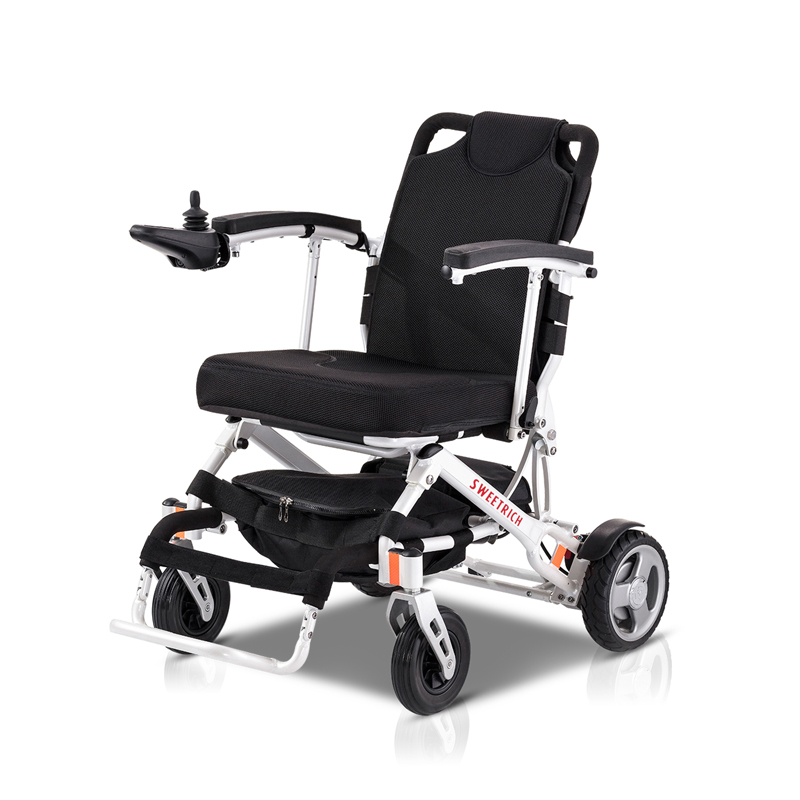
iFold Medical foldable aluminum rollator wheelchair with footrest light weight Wheelchair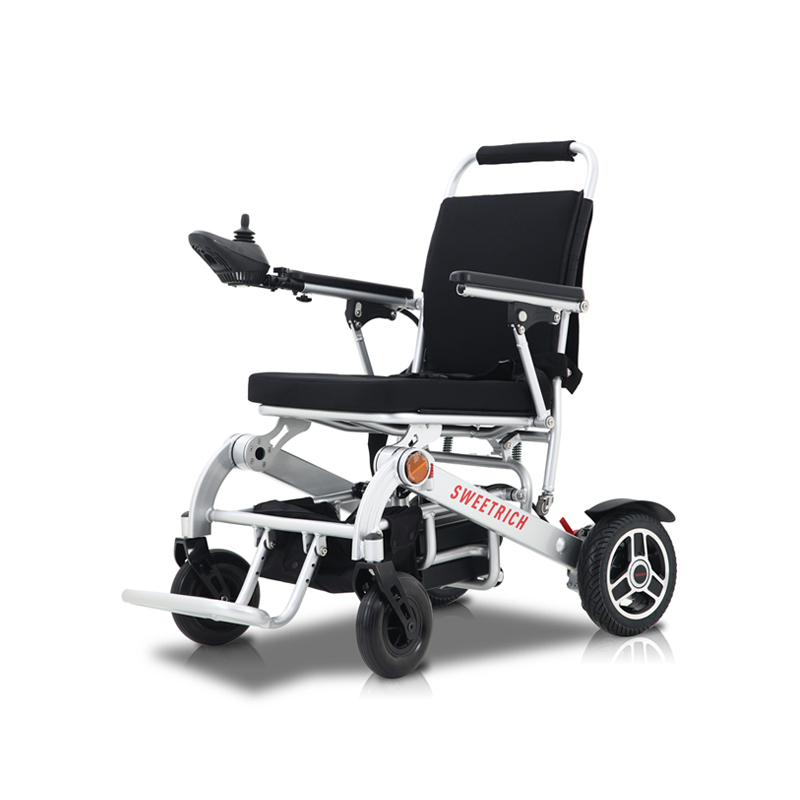
Product Positioning: A Travel Smart Electric Mobility Solution
The travel smart wheelchair category emphasizes portability, practical usability, and convenient storage. This foldable aluminum power wheelchair is positioned for users who value independence but do not want the inconvenience of a bulky mobility product. It is suitable for daily errands, family activities, indoor and outdoor movement on appropriate surfaces, and transport in vehicles where folding size and handling weight matter.
One of the biggest challenges in the mobility product market is the trade-off between strength and portability. Heavy wheelchairs can feel stable, but they are difficult to move, lift, or store. Ultra-light products may be easy to carry, but some sacrifice comfort, driving stability, or range. This foldable wheelchair is designed to sit between these extremes. Its aluminum construction helps control weight, while the powered drive system, suspension, and battery options provide performance for regular personal mobility needs.
The product’s folding structure is particularly important for travel. Users often encounter limited space in apartments, senior living facilities, taxis, private cars, public buildings, and hotels. A chair that folds quickly can make these transitions easier. The easy folding function also benefits caregivers, who may need to prepare the chair quickly without complicated tools or repeated manual adjustments.
Another defining feature is its joystick control. The joystick can be available for both-side use, which means it can be adapted to different user preferences or physical needs. Some users are more comfortable controlling the chair with the right hand, while others prefer the left. This flexibility gives distributors and families a more adaptable product and reduces the inconvenience of fixed-control designs.
The large foot platform also improves comfort and usability. Instead of narrow foot supports that can feel unstable or restrictive, the platform gives the user a broader and more secure area for foot placement. For travel and daily movement, comfort matters because users may remain seated for extended periods. A well-designed foot area can contribute to better posture and a more relaxed riding experience.
Key Product Specifications
The following table summarizes the main technical information provided for the foldable lightweight power wheelchair. Specifications may vary according to configuration, battery selection, market requirements, and production updates, but these values reflect the product’s core design profile.
Item |
Specification |
Overall Dimensions |
1090 mm L × 605 mm W × 998 mm H |
Maximum Forward Speed |
6 km/h |
Maximum Driving Gradient |
10 degrees |
Maximum Driving Range |
30 ± 5 km |
Weight Capacity |
120 kg / 265 lb |
Suspension |
Front and rear |
Tire Sizes |
8 inch front, 10 inch rear |
Brake System |
Electromagnetic brake |
Battery Options |
Lithium 24V/10.2Ah, 20Ah, with optional higher-capacity configuration |
Charger |
DC 24V 2A, AC 115–230V |
Charging Time |
Approximately 5 hours |
Motor |
24V/250W × 2 pieces |
Motor Controller |
24V/50A |
Weight Without Battery |
24 kg |
Fast Folding Design: The Core Advantage
The most immediate advantage of this power wheelchair is its rapid folding system. A wheelchair that can fold or unfold in about one second changes the user experience in several ways. It saves time, reduces frustration, and makes the product easier to manage in real-world situations. For many users, the problem with traditional mobility products is not driving performance alone; it is the process of getting the product ready for use and putting it away afterward.
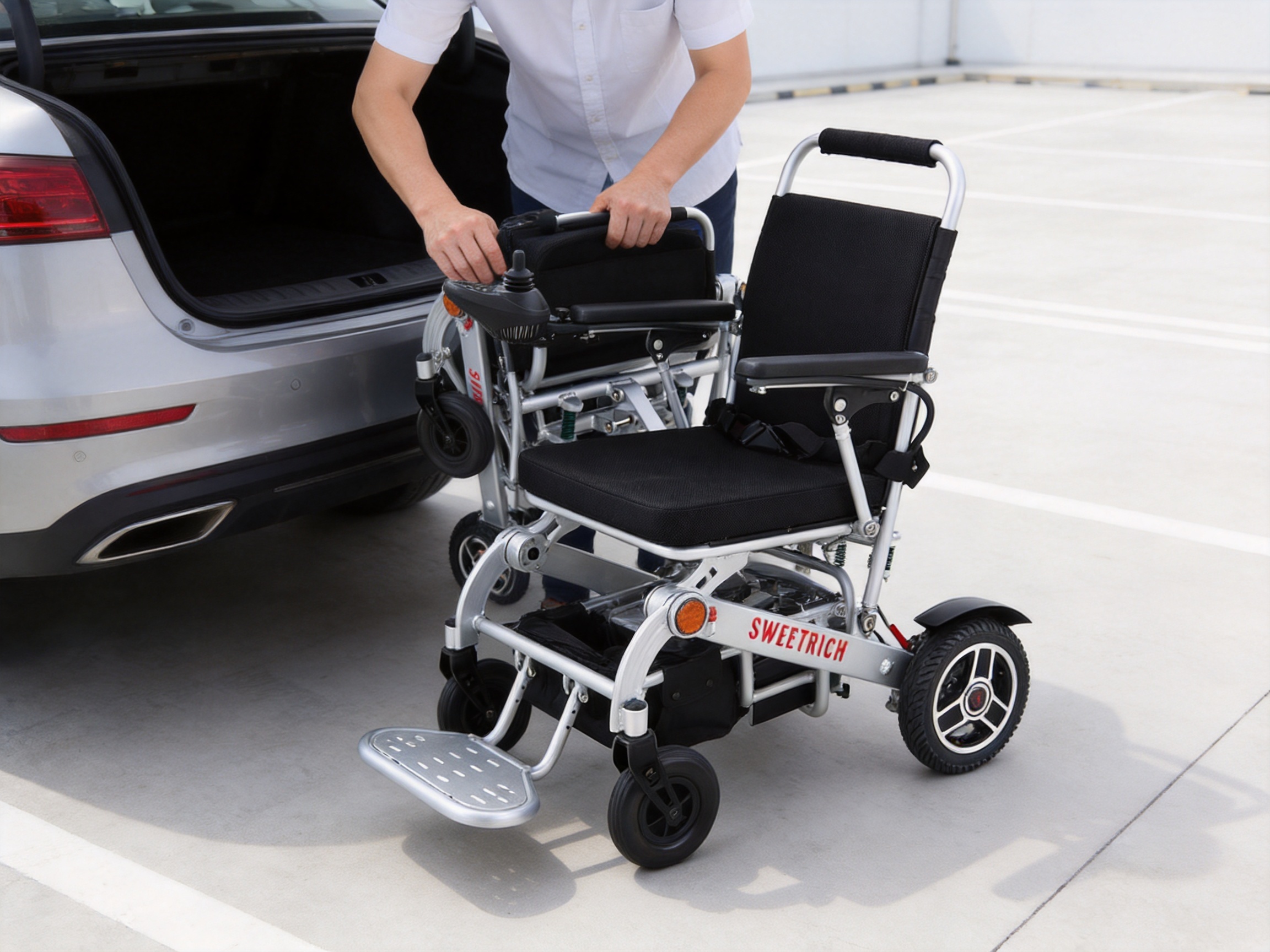
For example, a family may arrive at a shopping center, open the vehicle trunk, and prepare the chair for use. If the chair requires multiple steps, loose parts, tools, or heavy lifting, the process becomes tiring. A quick-folding design reduces this burden. It allows the wheelchair to move from storage mode to travel mode with minimal delay. This is particularly helpful when weather conditions are poor, when parking space is limited, or when a caregiver must assist quickly.
Compared with conventional rigid-frame power wheelchairs, this model offers a clear transport advantage. Rigid-frame chairs may provide strength, but they often require larger vehicles or ramps. By contrast, a folding model can fit more easily into personal vehicles and storage rooms. It also supports users who live in apartments or shared spaces where storage area is limited.
The folding design also improves commercial value for distributors and rental operators. A compact chair takes up less warehouse space, is easier to display, and can be shipped more efficiently than a large non-folding model. In retail environments, customers can immediately understand the benefit when they see how quickly the chair folds. This direct demonstration can be more persuasive than a written specification alone.
Of course, folding convenience must be supported by structural integrity. The aluminum frame is important here because it provides a strong yet lightweight foundation. A good folding wheelchair must resist looseness, instability, and unnecessary vibration after repeated folding cycles. Manufacturing precision, proper hinge design, reliable locking mechanisms, and quality inspection all contribute to long-term folding performance.
Lightweight Aluminum Frame for Practical Portability
Weight is one of the most important factors in a travel smart power wheelchair. The chair weighs approximately 24 kg without the battery, which places it in a manageable category compared with many traditional powered wheelchairs. While any powered mobility product requires careful lifting and safe handling, a lighter frame can make vehicle loading, home storage, and general movement easier for caregivers and users.
Aluminum is widely used in mobility products because it offers a favorable strength-to-weight ratio. It helps reduce total frame weight without abandoning the need for durability. In a foldable power wheelchair, aluminum also supports clean design, corrosion resistance, and long-term usability in varied environments. Users may take the chair through doorways, along sidewalks, into elevators, through shopping aisles, and across parking areas, so the frame needs to resist routine wear.
Compared with steel-frame alternatives, an aluminum frame can be easier to handle during transportation. Steel may offer high strength, but it often increases weight significantly. In the mobility sector, every kilogram matters. A few extra kilograms can decide whether a caregiver can lift the chair into a trunk or whether a user can reposition the folded chair at home.
Compared with very lightweight designs that may compromise stability, this product aims for a balanced construction. It is not only about being light; it is about being light enough while still supporting a 120 kg capacity, dual motors, battery options, suspension, and braking components. This balance makes the chair more practical for daily use than products that prioritize low weight at the expense of user confidence.
Driving Performance for Everyday Mobility
The wheelchair is equipped with two 24V/250W motors. Dual-motor drive gives the chair controlled movement and supports maneuverability, especially when turning or navigating tight spaces. For a compact power wheelchair, the motor system must deliver smooth acceleration, predictable turning, and dependable response to joystick input. Sudden or uneven movement can reduce user confidence, so control quality is just as important as raw motor power.
The listed maximum forward speed is 6 km/h, which is appropriate for many everyday mobility settings. It is fast enough for walking-speed travel with companions but controlled enough for indoor and public environments. Some product materials mention speeds up to 8.5 km/h depending on configuration or market setting, but the specified standard value of 6 km/h reflects a practical and user-friendly mobility speed. In many situations, stability, braking response, and comfort are more important than high speed.
The maximum driving gradient of 10 degrees helps the chair handle moderate slopes, such as ramps and gently inclined pathways, when used according to safety guidance and load conditions. Gradient capability is important because users rarely travel only on perfectly flat surfaces. Entrances, sidewalks, parking lots, and public facilities often include slopes. A chair that can manage these common conditions improves confidence and independence.
The product’s maximum driving range is listed as 30 ± 5 km, depending on battery selection, user weight, terrain, temperature, speed, and maintenance condition. This range is valuable for travel smart use because it allows many daily activities to be completed without frequent charging. A user may visit a store, travel through a park, move around a facility, and return home with less concern about running out of power.
The optional battery capacity, including 10.2Ah, 20Ah, and higher-capacity possibilities up to 30Ah in suitable configurations, gives customers flexibility. Some users need a lighter setup for short trips, while others prioritize longer distance. Battery modularity is an advantage over competing products that offer only one fixed battery choice. It allows dealers to recommend configurations based on user lifestyle rather than forcing every user into the same specification.
Electromagnetic Braking for Safer Control
The electromagnetic brake system is a major safety and usability feature. In a powered wheelchair, braking must be reliable, predictable, and easy for the user to manage. Electromagnetic braking helps stop and hold the chair when joystick input is released, reducing the risk of unintended rolling under normal operating conditions. This is especially important on slight slopes, ramps, or uneven surfaces.
Compared with purely manual braking systems, electromagnetic brakes are better suited to electric mobility because they integrate with the motor control system. The user does not need to operate a separate hand brake during every stop. This reduces physical effort and makes the chair easier to control for users with limited upper-body strength or dexterity.
In crowded public spaces, responsive braking adds confidence. A user may need to stop suddenly when a person steps into the path, when a door opens, or when an obstacle appears. A dependable braking system helps the chair respond quickly and predictably. This is one reason electromagnetic braking has become an important feature in modern power wheelchair design.
Manufacturing quality is crucial for brake reliability. Brake components must be installed correctly, tested under appropriate load conditions, and checked during final inspection. The manufacturer’s experience in electric scooters and power wheelchairs supports the development of braking systems that match the motor controller, frame structure, and user interface.
Front and Rear Suspension for Comfort
Comfort is more than a luxury in mobility products. It affects how long a user can remain seated, how confidently the chair can be driven, and how enjoyable daily travel feels. This wheelchair includes front and rear suspension, helping absorb vibration and reduce harshness from small bumps, uneven pavement, thresholds, and surface changes.
Many compact wheelchairs sacrifice suspension to save space or reduce cost. However, a chair without effective shock absorption can feel uncomfortable, especially during outdoor use. Front and rear suspension gives this model an advantage over basic portable chairs that rely only on tire cushioning. It improves ride quality and helps reduce the jarring sensation that may occur on imperfect surfaces.
The tire configuration also supports comfort and stability. The product uses 8 inch front tires and 10 inch rear tires. Larger rear tires help with traction and smoother movement, while the front tires support steering and maneuverability. This combination is suitable for a compact powered wheelchair intended for both indoor and outdoor personal mobility situations.
Suspension and tire design must work together. If suspension is too soft, the chair may feel unstable. If it is too stiff, comfort decreases. The goal is a balanced ride that keeps the user supported while maintaining control. This balance reflects the manufacturer’s product development experience and its attention to real user needs.
Joystick Control with Flexible Side Placement
The joystick is the user’s main connection to the power wheelchair. A well-designed joystick should feel intuitive, responsive, and comfortable. This product offers joystick availability for both-side use, allowing the control position to match user preference. This is a meaningful advantage because users differ in hand strength, coordination, habit, and comfort.
Some competing wheelchairs are designed with fixed controller placement, which can limit suitability. If a user has stronger function on one side, a fixed joystick on the opposite side can make operation difficult. Flexible joystick placement improves accessibility and expands the product’s potential user base. It also helps dealers and service providers configure the chair more effectively.
Control smoothness is another key factor. The 24V/50A motor controller is designed to manage motor output and translate joystick input into controlled movement. A quality controller helps prevent jerky acceleration and supports precise turning. In indoor environments, where doorways, furniture, and narrow aisles require careful maneuvering, smooth control is essential.
For travel smart users, the joystick should also be durable. It may be exposed to repeated transport, folding, storage, and handling. Good design protects the controller from unnecessary damage while keeping it easy to reach. Manufacturing inspection should verify joystick response, connection reliability, and system compatibility before shipment.
Large Foot Platform and Seating Comfort
The large foot platform is one of the user-focused details that improves daily comfort. Foot positioning influences posture, balance, and relaxation. A broad foot platform gives users a stable place to rest their feet and may feel more secure than smaller independent footrests. It also simplifies getting seated because users can clearly see and access the foot area.
For users who take the wheelchair on errands or longer outings, comfort features become increasingly important. A compact product must still provide enough space for a natural seated position. The overall dimensions of 1090 mm by 605 mm by 998 mm suggest a chair that is compact enough for travel but substantial enough to provide seated support.
Compared with some ultra-compact powered chairs that can feel cramped, this model’s larger foot platform and balanced frame dimensions improve usability. Travel smart design does not mean reducing every component to the smallest possible size. Instead, it means engineering the product so that folding, storage, driving, and sitting comfort all work together.
Comfort also contributes to safety. If the user feels properly supported, they are more likely to maintain a stable posture during movement. A stable posture helps improve joystick control and confidence. This is especially important when traveling across small surface changes or turning in confined spaces.

Battery Options and Charging Convenience
The wheelchair uses lithium battery technology, with listed options including 24V/10.2Ah and 20Ah, and optional higher-capacity configurations for extended distance. Lithium batteries are well suited to travel smart mobility products because they provide good energy density, relatively low weight, and practical charging performance compared with older battery technologies.
The charger specification is DC 24V 2A with AC 115–230V input, making it suitable for a wide voltage range in different regions when paired with the correct plug and local compliance requirements. The stated charging time is approximately five hours, which is practical for overnight charging or charging between daily activities.
Battery selection allows users to choose between lighter handling and longer travel range. A smaller battery may be suitable for indoor use, short trips, or users who value reduced carrying weight. A larger battery may be better for longer outings, travel days, or users who do not want to recharge frequently. This flexibility gives the product an advantage over competitors with limited battery options.
Range is affected by many factors. User weight, terrain, tire condition, slope, speed, temperature, and stop-start frequency all influence real-world distance. Responsible product communication should explain that the listed range of 30 ± 5 km is an expected performance value under suitable conditions, not an absolute guarantee in every environment. This honest approach helps build customer trust.
From a manufacturing perspective, battery system integration requires careful attention. The battery must match the motor, controller, charger, wiring, and frame layout. It should be easy enough to use while remaining secure during operation. Quality inspection should verify charging function, electrical safety, connector reliability, and installation stability.
Advantages Over Conventional Mobility Scooters
Mobility scooters are popular for outdoor and community movement, but they are not always ideal for compact travel or tight indoor spaces. Compared with many mobility scooters, this foldable power wheelchair offers a smaller turning profile, easier indoor maneuverability, and a more compact folding structure. Users who need to move through homes, elevators, hallways, shops, or public buildings may find a power wheelchair more practical than a scooter.
Scooters often have tiller steering, longer wheelbases, and larger overall frames. These features can be comfortable for open spaces but inconvenient in confined areas. A joystick-controlled power wheelchair can turn more precisely and requires less arm movement. This can be helpful for users who have limited strength or who need closer control in narrow spaces.
Transport is another difference. Many scooters can be disassembled, but disassembly can take time and may involve several heavy parts. A quick-folding wheelchair can be more convenient because it reduces the number of separate components. Instead of removing multiple pieces, the user or caregiver can fold the chair and move it as a more compact unit.
For travelers, this can make a major difference. A scooter may require planning around vehicle size and storage conditions. A folding power wheelchair gives families more flexibility, especially when moving between car, hotel, restaurant, and tourist locations. It is not a replacement for every scooter use case, but it is a strong alternative when portability and indoor maneuverability are priorities.
Advantages Over Standard Manual Wheelchairs
Manual wheelchairs remain important mobility tools, but they require physical effort from the user or caregiver. This foldable power wheelchair reduces that effort by using electric motors and joystick control. For users who become tired during longer distances, or caregivers who cannot push for extended periods, powered movement can significantly improve daily convenience.
Manual wheelchairs may be lighter and simpler, but they often depend on upper-body strength. Outdoor surfaces, ramps, carpets, and long corridors can become tiring. With powered assistance, the user can move with less physical strain. This helps preserve energy for social activities, shopping, family interaction, and personal tasks.
The electromagnetic brake system also offers an advantage over many manual chairs. Manual wheelchairs typically rely on user-operated wheel locks, which are effective when properly engaged but may be forgotten or difficult to operate for some users. An integrated electric braking system supports easier stopping during powered operation.
However, the product still keeps a folding travel concept similar to portable manual wheelchairs. This combination is valuable: powered mobility with compact storage. For many users, it offers the best of both categories, delivering electric convenience without the bulk of a large power chair.
Advantages Over Heavy Traditional Power Wheelchairs
Traditional power wheelchairs are often strong and feature-rich, but they can be heavy, expensive to transport, and difficult to store. Some require ramps, lifts, or modified vehicles. This foldable lightweight model provides an alternative for users who do not need a large complex chair but still want powered mobility.
At approximately 24 kg without the battery, the chair is significantly easier to manage than many full-size power wheelchairs. Its quick-folding structure further improves portability. This makes it attractive for families who use standard vehicles and for users who live in homes where a large chair would be impractical.
Another advantage is simplicity. Full-size powered wheelchairs may include advanced seating systems, heavy bases, and specialized controls that are unnecessary for many daily travel users. A travel smart chair focuses on essential mobility: movement, control, comfort, braking, range, and storage. This simpler approach can reduce learning time and make the product easier to maintain.
From a distributor perspective, a compact folding power wheelchair can address a broad market segment. It appeals to elderly users, people with reduced endurance, caregivers, travel users, and families seeking a secondary mobility product for outings. Its balance of features gives it commercial versatility.
Manufacturing Strengths Behind the Product
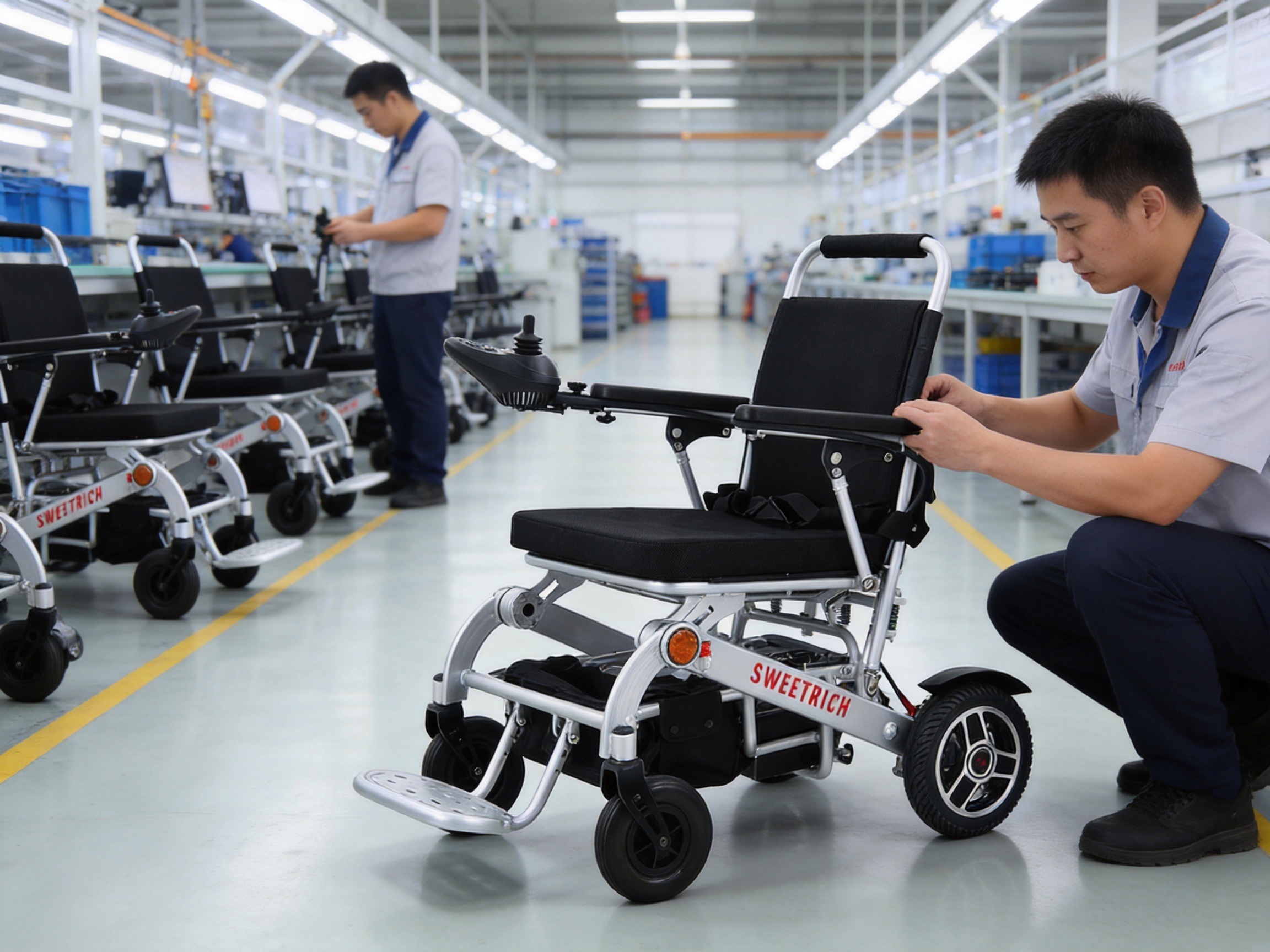
A mobility product is only as reliable as the manufacturing system behind it. The company behind this wheelchair, Sweetrich Mobility, has more than ten years of experience in the research, development, and production of mobility scooters and power wheelchairs. Established in 2011 and located in Suzhou Industrial Zone, Jiangsu, China, the company operates a large production facility covering approximately 30,000 square meters within a 60-acre area.
This manufacturing background matters because power wheelchairs combine mechanical, electrical, ergonomic, and safety-related systems. A reliable product requires more than assembling parts. It requires engineering design, material selection, welding or frame processing, electrical integration, controller matching, battery system testing, braking verification, surface finishing, assembly line management, and final quality inspection.
The company’s long-term focus on elderly and disabled users gives it insight into practical mobility needs. Products must not only look modern; they must be easy to enter, operate, fold, charge, and maintain. A manufacturer with experience in both scooters and wheelchairs can apply lessons from different mobility platforms, such as drive system stability, battery management, frame durability, and user comfort.
Advanced control technology and driving systems are central to the company’s product approach. In a power wheelchair, the controller must coordinate joystick signals, motor response, speed control, braking behavior, and battery output. Smooth operation is achieved through careful matching of these systems. When manufacturing is controlled scientifically, the final product becomes more consistent from unit to unit.
The company also emphasizes strict production management and quality-first principles. In international mobility markets, quality consistency is essential because distributors and end users depend on dependable performance. A product that folds well in the showroom but fails after repeated use can damage trust. For this reason, structural testing, electrical inspection, assembly accuracy, and packaging quality are all important parts of the production process.
Research and Development Capability
Research and development capability is one of the main strengths that separates professional mobility manufacturers from simple assemblers. The development of a foldable electric wheelchair requires an understanding of user behavior, mechanical folding geometry, battery placement, center of gravity, controller responsiveness, motor torque, braking performance, and comfort design.
The company owns intellectual property rights for its electric scooters and power wheelchairs, showing that it invests in original product development rather than relying only on generic designs. Intellectual property ownership can indicate deeper technical involvement in frame structures, control systems, and product appearance. For customers and distributors, this supports product continuity and differentiation.
R&D also helps respond to market differences. Products exported to America, Europe, Japan, Australia, the Middle East, Russia, and other regions may need different configurations, documentation, packaging, and user expectations. A capable engineering team can adjust product features while maintaining core quality. Battery options, joystick placement, charger compatibility, speed settings, and folding mechanisms may all require market-sensitive design.
For the foldable lightweight power wheelchair, R&D is reflected in the combination of one-second folding, dual motors, electromagnetic braking, front and rear suspension, and optional battery capacities. These features must be integrated without making the product too large or heavy. That integration is a sign of practical engineering.
Production Management and Quality Control
Quality control in mobility manufacturing should begin before assembly. Material inspection helps ensure that aluminum frame components, fasteners, wheels, motors, controllers, batteries, and wiring meet required specifications. If incoming materials are inconsistent, final product quality becomes difficult to guarantee. A strict supplier management system is therefore essential.
During frame production, precision is especially important. Folding products depend on accurate alignment. Hinges, locking points, and frame joints must operate smoothly and securely. If tolerances are poor, the chair may be difficult to fold, may feel loose, or may develop noise over time. Advanced manufacturing processes help maintain repeatability and reduce variation.
Electrical assembly must also be controlled carefully. Wiring routes should avoid excessive bending, friction, or exposure to moving parts. Connectors should be secure. The controller, motors, battery, brake system, and joystick must communicate correctly. Final testing should confirm forward movement, reverse movement, turning, braking, charging, and battery connection.
Finished product inspection should simulate real user needs. A chair may be folded and unfolded, driven, braked, and checked for noise, vibration, and controller response. Packaging inspection is also important because international shipping can expose products to vibration and handling stress. Good packaging protects the product and reduces after-sales problems.
The company’s commitment to qualified products, considerate service, and reasonable prices supports long-term cooperation with global customers. In the mobility industry, after-sales support and product consistency are as important as initial design. Distributors need confidence that products will arrive correctly, perform reliably, and be supported when service questions arise.
Global Market Suitability
The product is designed for international customers and is relevant to markets where compact powered mobility is in demand. Aging populations, growing attention to accessibility, and increasing interest in independent living have all expanded the need for practical mobility solutions. A foldable power wheelchair fits these trends because it supports independence without requiring large storage space or complex transportation systems.
For the United States market, the product materials specify non-medical device positioning. This distinction is important. The chair should be presented responsibly according to applicable market regulations, user instructions, and distributor obligations. It is intended to assist personal mobility and convenience, not to make medical treatment claims.
In Europe, Japan, Australia, and other markets, users often value compactness because homes, vehicles, and public spaces may be space-conscious. A folding wheelchair with good range and suspension can meet the needs of users who want both indoor maneuverability and outdoor practicality. In regions with strong demand for elderly mobility solutions, the product can serve as a travel companion for daily activities.
For distributors, the chair’s combination of features creates a strong selling proposition. It can be described as foldable, lightweight, electric, joystick-controlled, comfortable, and range-capable. These are clear benefits that customers understand quickly. The product also fits showroom demonstrations well because folding speed, compact storage, joystick operation, and suspension can be shown directly.
Design for Dignity and Independent Living
Mobility products are not only mechanical devices. They influence how people experience daily life, social participation, and personal dignity. A user who can move independently may feel more confident visiting family, shopping, attending community events, or enjoying outdoor spaces. The goal of a travel smart power wheelchair is to make these experiences easier.
The company’s stated mission focuses on improving the well-being and convenience of elderly and disabled people, helping them live more independently and with greater dignity. This purpose is reflected in practical design choices. Quick folding reduces dependence on complicated assistance. Joystick control reduces physical effort. Battery range supports longer outings. Suspension improves comfort. A large foot platform supports a more relaxed seated position.
Independence also matters for caregivers. A caregiver may be a spouse, adult child, professional assistant, or family friend. When a wheelchair is easier to fold, store, charge, and transport, caregiver stress can be reduced. This can improve the overall mobility experience for everyone involved.
Compared with products that focus only on technical specifications, this wheelchair’s value lies in how those specifications translate into daily convenience. A 30 km range means more freedom to plan a day. A 24 kg frame without battery means easier handling. A one-second folding system means less waiting and less effort. Electromagnetic braking means more controlled stops. These details support real independence.
Use Scenarios
Home and Apartment Living
In home environments, space is often limited. Hallways, doorways, kitchens, bedrooms, and storage areas require compact movement. The 605 mm width helps the chair remain manageable in many indoor spaces, while joystick control supports careful maneuvering. When not in use, the folding function helps reduce storage space.
Shopping and Community Errands
For shopping centers, supermarkets, pharmacies, and community facilities, the chair’s powered drive and controlled speed are practical. Users can move at a comfortable pace, stop easily, and navigate aisles. The range allows multiple errands on one charge under suitable conditions.
Family Travel and Vehicle Transport
The folding frame is especially useful for vehicle transport. Families can place the folded chair into a suitable trunk or storage area more easily than many rigid power wheelchairs. This supports weekend outings, visits, restaurant trips, and holidays.
Senior Living and Care Facilities
In senior living communities, a compact powered wheelchair can help residents move between rooms, dining areas, gardens, and activity spaces. The easy folding function also helps staff manage storage and transport when needed.
Travel and Temporary Mobility Support
Travelers may need a chair that is practical for hotels, transportation hubs, and tourist locations. While users should always check transportation policies and battery rules before travel, a foldable lithium-powered wheelchair can be more convenient than a large non-folding model.
Competitive Value for Dealers and Buyers
For dealers, a product must offer clear customer benefits and dependable supply. This foldable power wheelchair provides a strong combination of marketable features: quick folding, lightweight aluminum construction, electric drive, lithium battery options, suspension, electromagnetic braking, and flexible joystick placement. These advantages are easy to explain and demonstrate.
Its specifications also position it competitively. A 120 kg capacity, 30 ± 5 km range, and dual 250W motors make it suitable for many daily users. The product is compact but not underpowered, portable but not overly minimal, and comfortable without becoming bulky. This balanced profile is attractive in a market where customers often compare products across multiple categories.
For buyers, the value is practical independence. They are not simply purchasing a machine; they are investing in easier movement, reduced physical effort, and greater flexibility. The product’s ability to fold quickly may become one of the most appreciated features after purchase because it affects daily routines repeatedly.
The manufacturer’s global export experience supports dealer confidence. Serving markets across America, Europe, Japan, Australia, the Middle East, Russia, and other regions requires experience in production planning, documentation, packaging, and customer communication. This international background helps the company understand diverse customer expectations.
Responsible Use and Maintenance Considerations
Like all powered mobility products, this wheelchair should be used according to the user manual, local regulations, and safety recommendations. Users should avoid unsafe slopes, deep water, loose surfaces, overloaded operation, and improper charging. The listed maximum gradient and weight capacity should be respected.
Battery maintenance is important. Users should charge with the correct charger, avoid unauthorized modifications, and follow storage recommendations. Lithium batteries should be handled carefully and inspected if damage is suspected. For travel, users should check airline, railway, cruise, or transport operator requirements in advance.
Regular inspection can extend product life. Users or service providers should check tires, brakes, folding locks, joystick response, battery connections, frame fasteners, and charging function. If unusual noise, reduced braking performance, or electrical issues occur, the chair should be inspected before continued use.
Cleaning should be done carefully. The chair should not be washed with high-pressure water. Surfaces can usually be wiped with suitable cleaning materials, while electrical parts should be protected from excessive moisture. Proper care helps maintain appearance and function.
Q&A Section
Q1: What is the main advantage of this foldable power wheelchair?
The main advantage is its travel smart design. It can fold and unfold very quickly, making it easier to store, transport, and use in daily situations. It also combines powered driving, lightweight aluminum construction, suspension, electromagnetic braking, and lithium battery options.
Q2: Is the wheelchair suitable for long daily outings?
Yes, it is designed to support practical daily outings. The listed maximum driving range is 30 ± 5 km under suitable conditions, depending on battery configuration, user weight, terrain, speed, temperature, and maintenance condition.
Q3: How much weight can the wheelchair support?
The stated weight capacity is 120 kg, or approximately 265 lb. Users should not exceed the specified capacity, as overloading can affect safety, performance, braking, and product life.
Q4: What type of brake system does it use?
It uses an electromagnetic brake system. This supports controlled stopping during powered operation and helps hold the chair when joystick input is released under normal conditions.
Q5: Can the joystick be installed on either side?
The joystick is available for both-side use, allowing configuration according to user preference or functional need. This is helpful for users who prefer right-hand or left-hand operation.
Q6: Why is an aluminum frame important?
An aluminum frame helps reduce weight while maintaining useful structural strength. This improves portability and makes the chair easier to handle compared with many heavier steel-frame products.
Q7: How long does charging take?
The stated charging time is approximately five hours, using the specified DC 24V 2A charger with AC 115–230V input. Actual charging time can vary according to battery capacity and condition.
Q8: How does it compare with a mobility scooter?
Compared with many scooters, this power wheelchair is generally more compact, easier to maneuver indoors, and quicker to fold for transport. Scooters may be better for some open outdoor uses, but this wheelchair is stronger when portability and tight-space control are priorities.
Q9: Is this product a medical device?
For the United States market, the provided product material states that it is positioned as a non-medical device. It should be used as a personal mobility product according to applicable regulations, instructions, and safety guidance.
Q10: What manufacturing strengths support the product?
The manufacturer has more than ten years of experience in mobility scooters and power wheelchairs, a large production facility, research and development capability, intellectual property rights, advanced control technology, strict production management, and international export experience.
Conclusion
This foldable lightweight aluminum power wheelchair is a strong example of travel smart mobility design. It addresses the daily challenges that users and caregivers face: transportation, storage, physical effort, comfort, control, braking, and range. Its one-second folding concept makes it especially convenient, while its dual motors, electromagnetic brakes, suspension, lithium battery options, and large foot platform create a balanced mobility experience.
Compared with manual wheelchairs, it reduces physical effort. Compared with many mobility scooters, it improves compactness and indoor maneuverability. Compared with heavy traditional power wheelchairs, it offers easier transport and storage. These advantages make it a practical choice for users who want powered independence without unnecessary bulk.
The product’s value is also strengthened by the manufacturing capability behind it. Sweetrich Mobility combines long-term industry experience, research and development, quality management, advanced control systems, and global supply experience. Its focus on elderly and disabled users supports a design philosophy centered on convenience, dignity, comfort, and dependable movement.
For distributors, care organizations, and individual buyers seeking a compact powered mobility solution, this foldable travel smart wheelchair offers a compelling combination of portability, performance, and manufacturing reliability. It is not simply a chair that moves; it is a carefully engineered mobility companion designed to make everyday life more accessible and independent.
References
Product specification materials for foldable lightweight aluminum power wheelchair, including dimensions, battery options, motor data, braking system, and performance parameters.
Company profile materials of Suzhou Sweetrich Vehicle Industry Technology Co., Ltd., including manufacturing history, production capacity, product focus, and export market information.
General engineering references on powered mobility devices, lithium battery systems, electromagnetic braking, joystick control, and lightweight aluminum frame design.
International mobility product market observations relating to aging populations, accessibility needs, travel mobility, and compact powered wheelchair demand.