
 +86-(0)512-82283871
Content
- 1 Product Overview: A Compact Four-Wheel Scooter Built for Practical Mobility
- 2 Key Technical Specifications
- 3 Advantages Over Competing Travel Mobility Scooters
- 4 Design Philosophy: Mobility, Dignity, and Everyday Convenience
- 5 Comfort and Usability in Real-Life Scenarios
- 6 Manufacturing Strength Behind the Scooter
- 7 Advanced Manufacturing Processes and Quality Management
- 8 Why the Scooter Fits the Needs of the U.S. Non-Medical Mobility Market
- 9 Comparison With Common Competitor Weaknesses
- 10 Performance Details That Matter to Users
- 11 Company Strengths Supporting Long-Term Cooperation
- 12 Distributor and Retailer Benefits
- 13 Safety and Responsible Use
- 14 Maintenance Considerations
- 15 Q&A Section
- 15.1 Q1: What type of user is this four-wheel travel mobility scooter designed for?
- 15.2 Q2: Is this scooter a medical device?
- 15.3 Q3: What is the maximum user weight?
- 15.4 Q4: How fast can the scooter travel?
- 15.5 Q5: How far can it travel on one charge?
- 15.6 Q6: What type of battery does it use?
- 15.7 Q7: How long does charging take?
- 15.8 Q8: Does it have an automatic braking system?
- 15.9 Q9: Can it climb ramps?
- 15.10 Q10: Is the scooter suitable for rough outdoor terrain?
- 15.11 Q11: Why is the four-wheel design important?
- 15.12 Q12: What makes this scooter attractive for distributors?
- 16 Conclusion: A Strong Balance of Stability, Range, Safety, and Supply Reliability
- 17 References
- 18 Product: SW 1000F Ready to ship mobility scooter 9 inch 4 wheels scooters
Modern personal mobility is no longer defined only by transportation from one point to another. For many older adults, people with limited walking endurance, caregivers, distributors, and mobility retailers, the right scooter must combine comfort, safety, reliable engineering, practical range, and easy availability. A four-wheel travel mobility scooter with a compact frame, lithium battery system, electromagnetic braking, and a stable driving platform answers these needs by giving users a dependable way to move through homes, neighborhoods, shopping areas, parks, retirement communities, and travel destinations with greater confidence.
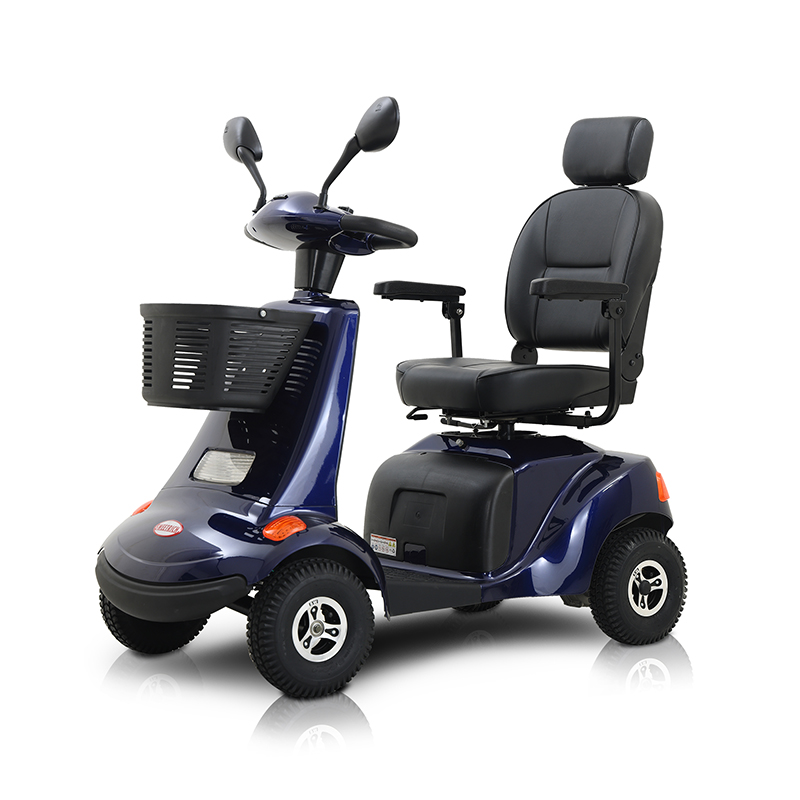
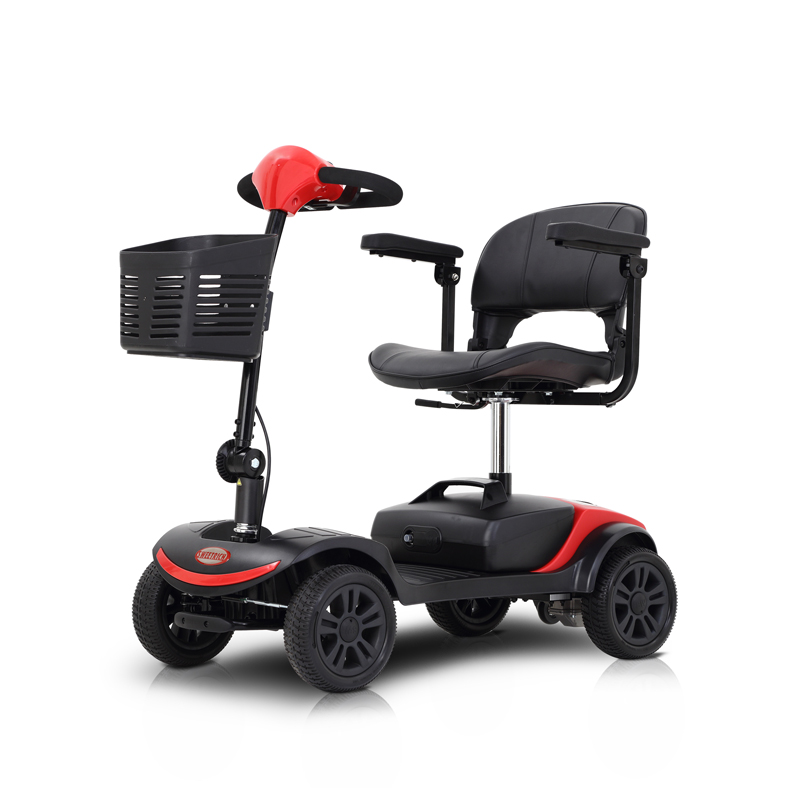
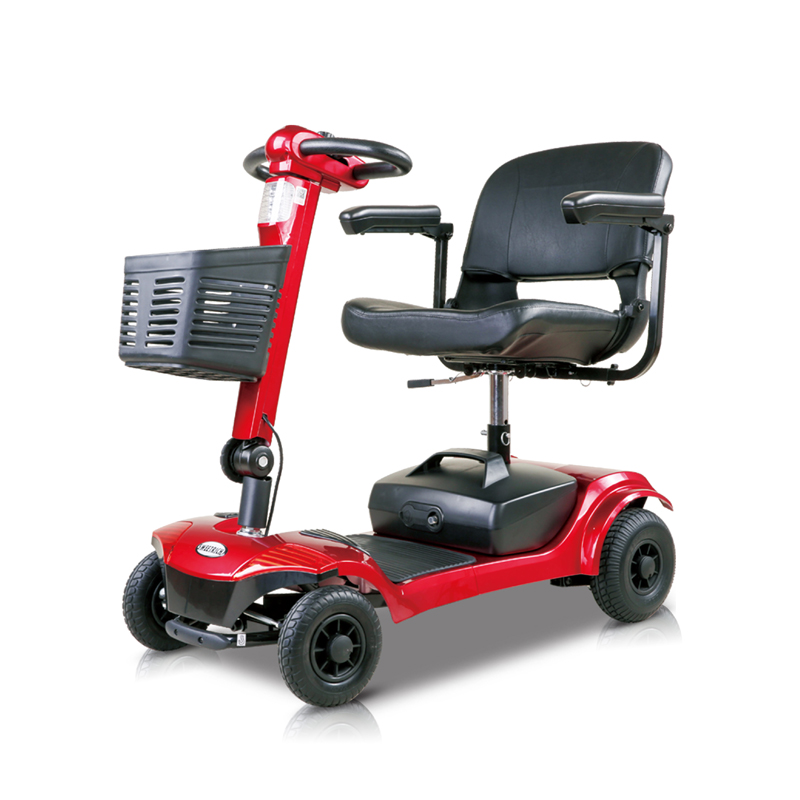
This article focuses on the SW 1000F ready-to-ship four-wheel mobility scooter, a travel smart scooter designed for non-medical use in the U.S. market and for customers who need a balanced combination of portability, stability, and daily performance. With a 24V/20AH lithium battery, 24V/270W motor, 24V/50A controller, 136kg weight capacity, 8km/h maximum forward speed, electromagnetic brake system, and a 15–25km driving range, the scooter is built to deliver dependable support for everyday personal mobility.
Beyond individual specifications, the product reflects the manufacturing strength of an experienced mobility equipment producer with more than a decade of research, development, and production experience. The company behind the scooter operates from Suzhou Industrial Park in China, with a large-scale factory, technical development capability, mature assembly procedures, and a quality-focused production philosophy. These advantages help the scooter stand out in a competitive market where users increasingly expect safer control systems, longer-lasting components, attractive value, and ready-to-ship convenience.
SW 1000F Ready to ship mobility scooter 9 inch 4 wheels scooters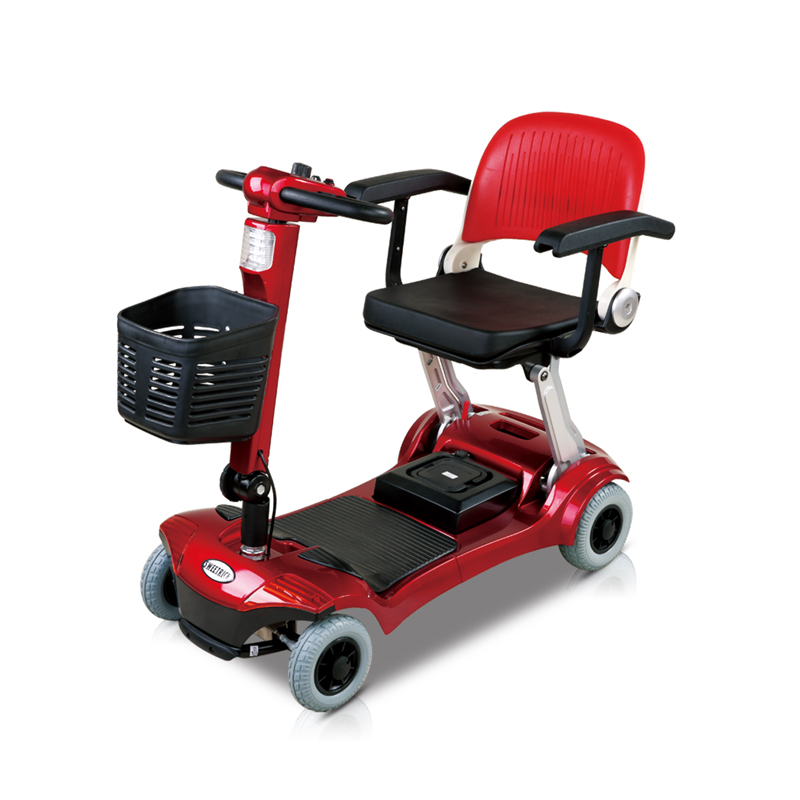
Product Overview: A Compact Four-Wheel Scooter Built for Practical Mobility
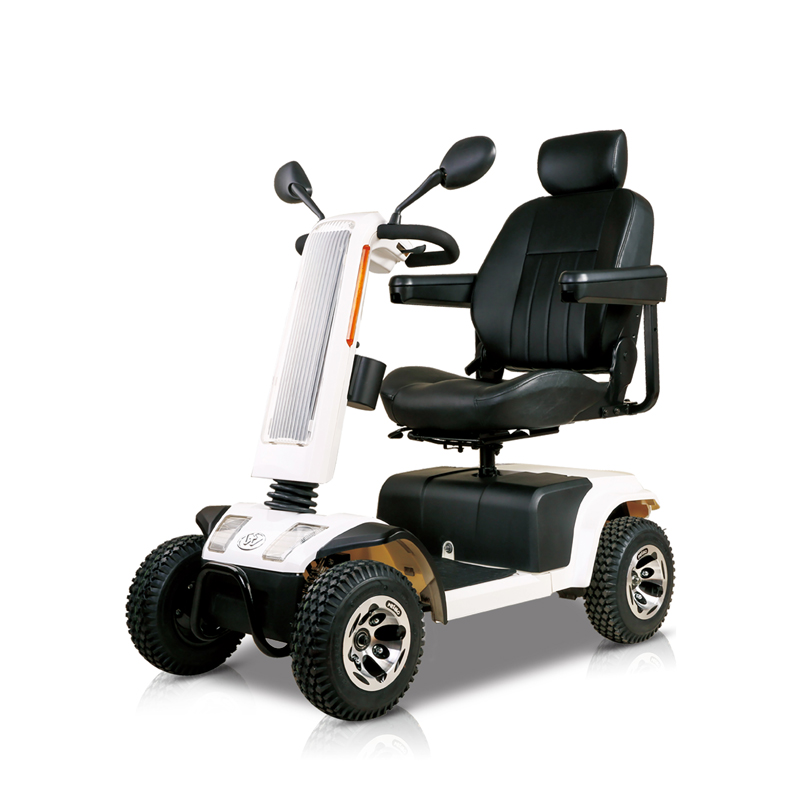
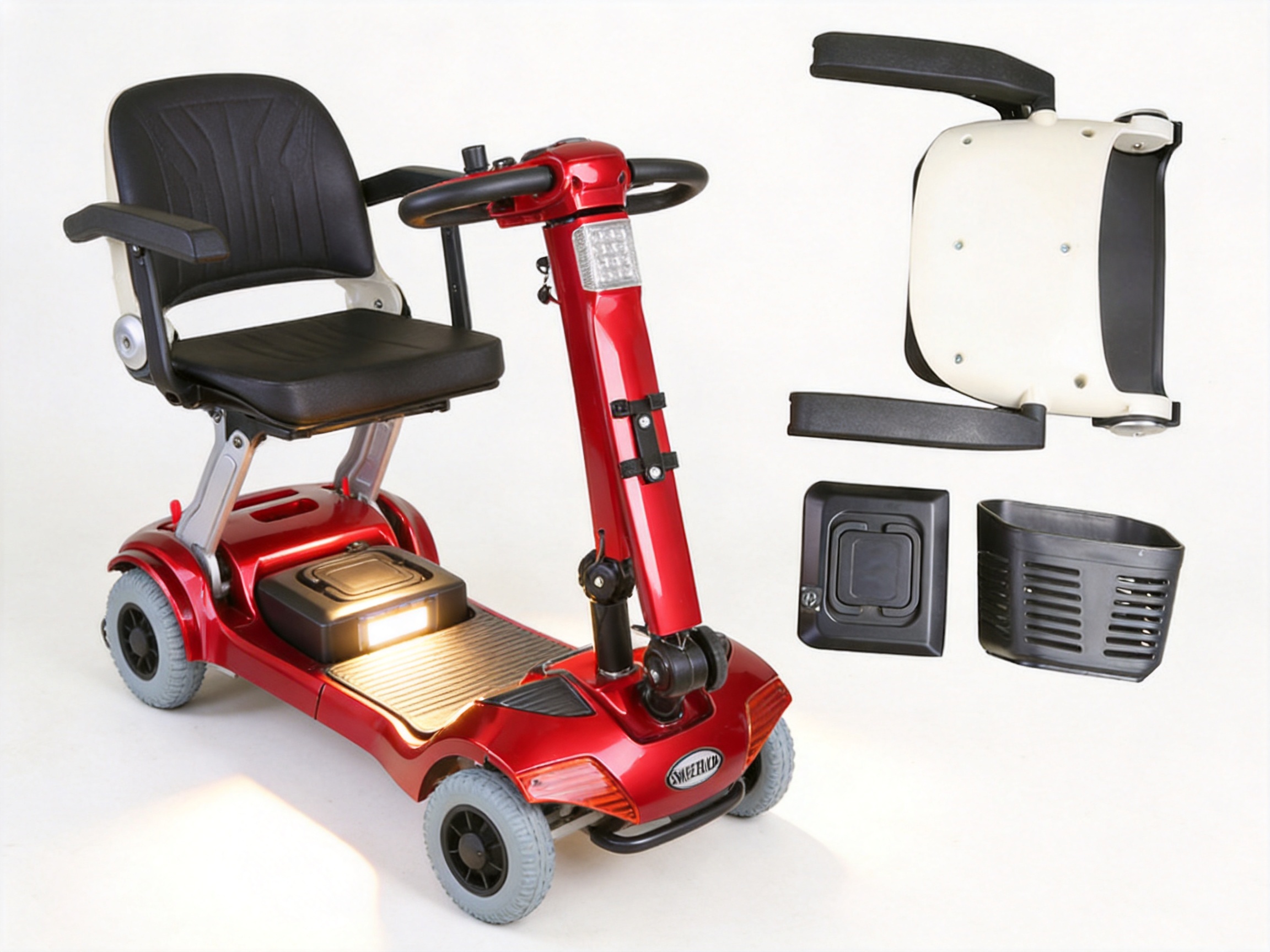
The SW 1000F is a compact four-wheel mobility scooter in the travel smart scooter category. It is intended as a non-medical personal mobility device for the U.S. market, meaning it is positioned for daily transportation assistance rather than as a clinical medical treatment device. This distinction is important for distributors, retailers, and end users because it clarifies how the scooter is designed, promoted, and used: it supports mobility, convenience, and independent living in ordinary daily environments.
The scooter’s dimensions are 1000 x 525 x 920 mm, giving it a compact footprint suitable for users who need a mobility solution that can move through common residential and commercial spaces. The width of 525 mm helps the scooter remain manageable in many indoor and semi-indoor settings, while the four-wheel layout gives a more stable driving feel than many three-wheel travel scooters. For seniors or individuals who value a secure platform, this four-wheel configuration is a major practical benefit.
With a maximum forward speed of 8km/h, equal to approximately 5mph, the scooter provides a controlled speed appropriate for neighborhood travel, shopping centers, community pathways, and other low-speed environments. It is fast enough to reduce fatigue and travel efficiently, yet modest enough to maintain a sense of security. This balance is essential because the best travel scooters are not merely the fastest; they are the ones that allow users to feel in control.
The listed maximum driving range of 15–25km, or approximately 9.5–15.5 miles, supports a full day of typical short-distance mobility tasks. Range can vary depending on rider weight, surface conditions, gradient, temperature, battery condition, and driving habits, but the 24V/20AH lithium battery system gives the scooter a practical energy platform for everyday use. The scooter’s 10-degree maximum driving gradient also supports movement across moderate slopes, ramps, and inclines when used responsibly and within operating guidelines.
The product is equipped with an electromagnetic brake system, a key safety-oriented feature for a powered mobility scooter. Electromagnetic braking helps the scooter stop predictably and hold position when the drive is not engaged. This is especially valuable for users who may not have the reaction speed or hand strength required for purely mechanical braking systems. In the travel scooter category, braking reliability is one of the most important differences between a low-cost model and a professionally engineered mobility product.
Key Technical Specifications
The following table summarizes the major product specifications and explains their practical meaning for users, retailers, and distributors.
Specification |
Product Data |
Practical Value |
Dimensions |
1000 x 525 x 920 mm |
Compact enough for convenient storage and everyday maneuvering. |
Maximum Forward Speed |
8km/h, approximately 5mph |
Balanced speed for safe and efficient daily travel. |
Maximum Driving Gradient |
10 degrees |
Suitable for moderate ramps and gentle outdoor inclines. |
Maximum Driving Range |
15–25km, approximately 9.5–15.5 miles |
Supports typical daily errands, community movement, and short trips. |
Weight Capacity |
136kg, approximately 300lbs |
Accommodates a broad range of users while maintaining travel scooter practicality. |
Tire Sizes |
7 x 2.5 inches front, 8 x 3 inches rear |
Compact tires support maneuverability and stable four-wheel travel. |
Brake System |
Electromagnetic brake |
Improves stopping confidence and parking stability. |
Battery |
Lithium 24V/20AH |
Provides lighter, efficient energy storage compared with many traditional lead-acid systems. |
Charger |
DC24V2A, AC100–240V |
Compatible with wide-voltage charging environments through the supplied charging system. |
Charging Time |
8–10 hours |
Convenient overnight charging for next-day use. |
Motor |
24V/270W |
Provides practical output for compact travel mobility applications. |
Motor Controller |
24V/50A |
Supports smooth drive control and stable power delivery. |
Heaviest Part |
36.3kg, approximately 80lbs |
Important for handling, transport planning, and caregiver assistance. |
Advantages Over Competing Travel Mobility Scooters
In the travel mobility scooter market, many competing models appear similar at first glance. They may share a small frame, four wheels, a low-speed motor, and a basic seat. However, the long-term user experience depends on details: battery chemistry, controller quality, braking system, structural balance, production consistency, and the manufacturer’s ability to provide reliable supply. The SW 1000F demonstrates several advantages that help it compete strongly in this category.
Balanced Four-Wheel Stability
Three-wheel travel scooters are often promoted for tight turning, but they can feel less stable to certain users, especially when moving across uneven surfaces, turning at low speed, or entering ramps. A four-wheel scooter provides a more planted platform. The SW 1000F’s four-wheel configuration is a strong advantage for seniors and users who prioritize confidence over the smallest possible turning radius. For a product intended to serve daily mobility needs, the sensation of steadiness is not a minor detail; it is central to user trust.
Compared with many lightweight travel scooters that reduce frame size aggressively to appear more portable, this model preserves a practical base and a 136kg weight capacity. That capacity, equal to around 300lbs, means the scooter is suitable for a wider user group than some compact scooters with lower limits. The combination of compact dimensions and higher capacity gives distributors a broader selling proposition because the scooter can serve many different customers without becoming oversized.
Lithium Battery System for Better Practical Use
A major advantage is the 24V/20AH lithium battery. Many entry-level scooters still use lead-acid batteries because they are inexpensive, but lead-acid batteries are heavier, may require more careful charging habits, and can reduce the practicality of transport-oriented products. Lithium technology generally offers a better balance of energy density and usability. For a travel smart scooter, reduced battery burden and efficient power delivery are important competitive strengths.
The listed 15–25km range gives users enough distance for common daily activities such as visiting a nearby store, moving around a community center, attending events, or navigating large indoor venues. Competing scooters with smaller battery packs may look similar but can limit users to shorter trips or create range anxiety. A mobility scooter is most useful when the user can focus on the destination rather than constantly worrying about remaining battery power.
Electromagnetic Brake for User Confidence
The electromagnetic brake system is another key differentiator. Low-cost scooters sometimes rely on simpler braking arrangements that do not deliver the same level of stopping confidence or parking stability. Electromagnetic braking supports safer operation by helping the scooter stop when the throttle is released and helping it remain stationary when not actively driven. This is particularly important on gentle slopes or during frequent stop-and-go use in crowded areas.
For many older adults, the perception of safety is as important as technical safety. If the scooter stops smoothly and predictably, the user is more likely to use it regularly. If braking feels uncertain, even a technically functional scooter may be abandoned. This model’s braking system therefore contributes directly to the product’s everyday value.
Recognized Control and Drive Component Strategy
The scooter uses a 24V/270W motor and a 24V/50A controller, giving it a drive platform designed for controlled mobility use rather than aggressive speed. In personal mobility products, the controller is especially important because it determines how the scooter starts, accelerates, responds to input, and manages power. A smooth control experience reduces sudden movements and makes the scooter easier for seniors to learn.
Some competing scooters focus mainly on appearance while overlooking the refinement of the drive system. The SW 1000F takes a more practical engineering approach by focusing on the relationship between motor, controller, braking, and battery. This integrated design philosophy creates a better user experience than simply installing high-power components without careful control logic.
Ready-to-Ship Availability
Ready-to-ship status is an important advantage in modern supply chains. Retailers, wholesalers, and buyers often face long lead times when sourcing mobility products. Delays can create inventory gaps and lost sales, especially when end users need mobility assistance quickly. A ready-to-ship scooter helps reduce waiting time and supports faster market response.
For distributors, ready-to-ship inventory can also reduce planning risk. Instead of committing only to long production cycles, buyers can respond to immediate demand. This is particularly valuable for seasonal demand, promotional campaigns, and urgent restocking. In a market where availability often determines the final purchasing decision, ready-to-ship capability is a meaningful commercial advantage.

Design Philosophy: Mobility, Dignity, and Everyday Convenience
A mobility scooter is not simply a vehicle. It is an instrument of independence. The best scooter designs begin with the user’s daily life: getting from the bedroom to the living room, traveling from the car to a store entrance, joining family outings, visiting neighbors, attending community activities, and enjoying outdoor paths without excessive fatigue. The SW 1000F is designed around this everyday reality.
The compact dimensions support daily maneuvering. At 1000 mm in length, the scooter is long enough to give the user a stable seated platform but short enough to remain manageable. At 525 mm in width, it avoids the bulky feel of larger outdoor scooters. At 920 mm in height, it provides a practical posture for seated control and visibility. These proportions make the scooter suitable for users who want a travel-oriented device without moving to an extremely small or unstable design.
The 8km/h maximum forward speed also reflects a sensible design philosophy. In the mobility scooter category, faster is not always better. A scooter for seniors and daily personal transport must prioritize predictable movement, controlled acceleration, and safe low-speed handling. The speed level of this model is appropriate for mixed-use spaces where pedestrians, obstacles, turns, and ramps may be present.
Another important design element is charging convenience. With an 8–10 hour charging time, users can typically charge the scooter overnight and prepare it for the following day. The charger specification of DC24V2A with AC100–240V input supports a broad range of standard power environments through the appropriate supplied charging equipment. For most users, a simple daily charging routine is easier to maintain than frequent partial charging throughout the day.
Comfort and Usability in Real-Life Scenarios
Mobility scooters are judged not only by laboratory specifications but by how they feel in real use. A user may ask: Can I operate it without stress? Can I travel far enough for my errands? Can I trust it on a ramp? Can it support my weight? Can it stop safely? Can a family member help move or store it? The SW 1000F addresses these practical concerns through its combination of capacity, compactness, braking, and range.
Neighborhood Errands
For neighborhood errands, the scooter’s 15–25km range can provide the freedom to travel to local shops, community mail areas, or nearby parks. Its maximum speed of approximately 5mph is well suited to pedestrian-friendly environments. The electromagnetic brake helps with frequent stopping, such as waiting at crossings, navigating entrances, or moving through crowded areas.
Retail and Indoor Venues
In shopping centers and large stores, mobility scooters must be compact and predictable. The SW 1000F’s narrow width helps users move through aisles and entrances more comfortably than larger outdoor scooters. Four-wheel stability is also useful when turning at low speed or stopping near shelves, counters, or seating areas. For many users, this type of confidence determines whether they are willing to go shopping independently.
Retirement Communities and Residential Areas
Retirement communities often include corridors, outdoor paths, dining areas, recreation rooms, and mild ramps. A compact four-wheel scooter can be an excellent fit for these environments. The 10-degree maximum driving gradient gives the scooter capability for moderate slopes, while the electromagnetic brake supports controlled stopping and parking. The user can move between activities with less dependence on caregivers or facility transportation.
Caregiver and Family Support
The heaviest part is listed at 36.3kg, or approximately 80lbs. This information is important because families and caregivers must understand the handling requirements before transport or storage. While the scooter belongs to the travel smart category, users should still plan carefully when lifting or moving components. Compared with large full-size scooters, however, the compact structure can make storage and transport planning more manageable.
Manufacturing Strength Behind the Scooter
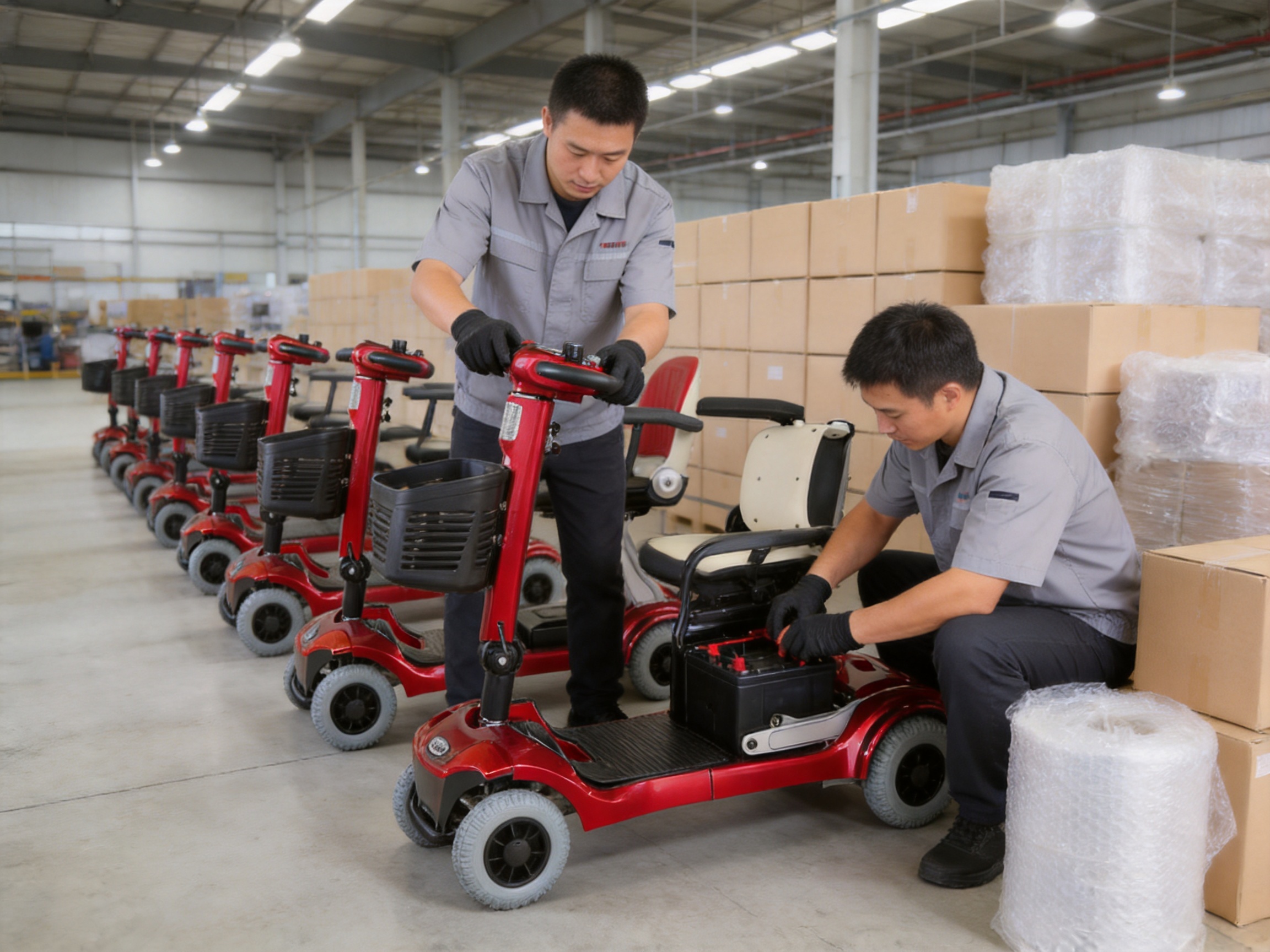
The product is supported by the manufacturing experience of Suzhou Sweetrich Vehicle Industry Technology Co., Ltd., a high-tech company located in Suzhou Industrial Zone, Jiangsu, China. Established in 2011, the company has accumulated more than ten years of experience in the research, development, and production of mobility scooters and power wheelchairs. This background matters because mobility products require consistent production quality, not only attractive design.
The company operates on a site covering approximately 60 acres with a 30,000-square-meter factory. A production base of this scale allows for organized manufacturing flow, component storage, assembly planning, quality inspection, packaging, and export preparation. For international buyers, factory scale is an important indicator of supply stability. It suggests that the manufacturer can support ongoing cooperation rather than only small, irregular production batches.
The company’s focus is improving the well-being and convenience of elderly and disabled people, helping users live with greater independence and dignity. This mission aligns directly with the SW 1000F’s product purpose. The scooter is not designed merely as a commodity; it is part of a broader mobility product portfolio centered on user comfort, reliable control technology, and safe operation.
The company owns intellectual property rights for its electric scooters and power wheelchairs. Intellectual property ownership indicates ongoing investment in product development and technical improvement. In a market where many products are assembled from generic designs, a manufacturer with development capability can refine structures, improve control systems, and adapt products to market needs more effectively.
Advanced Manufacturing Processes and Quality Management
Producing a dependable mobility scooter requires more than assembling parts. Each step must support safety, consistency, and user comfort. A professional manufacturing process typically includes design validation, material selection, frame fabrication, component sourcing, electrical system assembly, braking verification, controller testing, battery integration, final inspection, and packaging. The company’s long-term experience in mobility scooters and power wheelchairs supports a disciplined approach to these tasks.
Product Research and Development
Research and development begins with understanding user requirements. Seniors and people with limited mobility often need a scooter that is stable, easy to control, comfortable, and practical for daily charging. Engineers must translate these needs into frame geometry, motor selection, controller programming, battery capacity, and braking design. The SW 1000F’s specifications show an emphasis on balance rather than extremes: compact but not fragile, stable but not oversized, efficient but not underpowered.
During development, engineers must also consider manufacturability. A scooter that is difficult to assemble consistently may create quality variation. A mature manufacturer designs products with production repeatability in mind. This helps each unit match expected performance and reduces the risk of inconsistent user experience across batches.
Frame and Structural Preparation
The frame of a four-wheel scooter must support the user’s weight, battery system, motor assembly, steering structure, and repeated dynamic loads from daily use. Proper structural preparation involves material control, accurate fabrication, and stable assembly fixtures. A 136kg capacity requires careful attention to load-bearing areas and connection points.
In competitive comparison, some low-cost scooters may reduce material strength to lower weight or cost. While lightweight construction is valuable, it must not compromise stability or durability. The SW 1000F’s design approach aims to preserve a dependable structure while remaining within a compact travel scooter format.
Electrical System Integration
The electrical system is central to a mobility scooter’s performance. The lithium battery, controller, motor, charger interface, throttle input, and braking system must operate together smoothly. If these components are poorly matched, users may experience jerky starts, weak climbing performance, reduced range, or inconsistent braking behavior.
The SW 1000F uses a 24V platform with a 20AH lithium battery, 270W motor, and 50A controller. This combination is appropriate for controlled travel scooter performance. A professional manufacturing process verifies wiring, connectors, controller function, charging behavior, and operational response before shipment. This reduces after-sales problems and improves customer satisfaction.
Brake System Verification
Electromagnetic brakes must be checked carefully because they directly affect safety and confidence. The scooter must stop properly when commanded and remain stable when parked. Brake verification may include functional testing, release testing, response checks, and inspection of related electrical control. For users who may operate the scooter in crowded or sloped areas, brake reliability is essential.
Battery and Charging Quality Control
Lithium batteries provide strong practical advantages, but they must be managed responsibly. Quality control for the battery system includes checking capacity, connection integrity, charging compatibility, and secure installation. The listed 8–10 hour charging time supports overnight charging, and the charger specification indicates a standardized charging setup.
Compared with many lower-cost scooters that use heavier battery technologies, lithium power gives this model a more modern energy solution. However, the benefit is fully realized only when battery integration is handled with care. The manufacturer’s experience in electric scooters and power wheelchairs supports this technical discipline.
Final Inspection and Packaging
Before shipping, a mobility scooter should undergo final inspection covering appearance, drive function, braking, charging, accessories, labeling, and packaging. For export markets, packaging is especially important because products may travel long distances through multiple logistics stages. A ready-to-ship scooter must arrive in marketable condition and be ready for efficient distribution.
The company’s export experience to America, Europe, Japan, Australia, the Middle East, Russia, and other markets suggests familiarity with international shipping expectations. For dealers and distributors, this experience reduces uncertainty when placing orders and planning inventory.
Why the Scooter Fits the Needs of the U.S. Non-Medical Mobility Market
The U.S. mobility market includes a wide variety of users who want practical transportation assistance without necessarily seeking a medical device. The SW 1000F is described as a non-medical device for the U.S. market, making it suitable for positioning as a personal mobility product for convenience, independence, and daily travel support. This positioning should be communicated clearly by sellers to avoid confusion with clinical equipment or medical claims.
In the non-medical category, buyers often value availability, ease of use, price-performance balance, and clear specifications. The scooter’s ready-to-ship status supports these priorities. A user who needs mobility help may not want to wait weeks or months. Retailers who serve this market benefit from products that can be supplied quickly and consistently.
The 300lb weight capacity is also relevant for the U.S. market, where users may require stronger compact scooters. Some travel scooters are too limited in capacity, forcing buyers into larger and more expensive models. The SW 1000F offers a middle path: compact dimensions with a capacity that can satisfy many users.
Another advantage is the controlled 5mph maximum speed. In many public and private environments, mobility scooters must coexist with pedestrians. A moderate maximum speed helps support responsible use while still giving users a meaningful improvement over walking endurance. This makes the scooter suitable for customers who want independence without handling a large, high-speed outdoor vehicle.
Comparison With Common Competitor Weaknesses
Many mobility scooters on the market compete primarily on low price or appearance. While affordability matters, the lowest-cost product may sacrifice braking quality, battery performance, structural reliability, or after-sales consistency. The SW 1000F is positioned to avoid these common weaknesses through a more balanced specification set and experienced manufacturing support.
Weakness: Heavy Lead-Acid Battery Systems
Some competing scooters use lead-acid batteries to reduce initial purchase cost. These batteries can make the product heavier and less convenient for travel use. They may also provide a less favorable energy-to-weight ratio. The SW 1000F’s lithium 24V/20AH battery gives it a more modern and practical power foundation.
Weakness: Inconsistent Braking Feel
Budget mobility scooters may not provide the same stopping confidence as models equipped with reliable electromagnetic braking. For seniors, braking uncertainty can reduce willingness to use the scooter. The electromagnetic brake system on this model is therefore a meaningful user-centered advantage.
Weakness: Low Weight Capacity in Compact Models
Some travel scooters achieve compact dimensions by limiting weight capacity. This restricts the customer base and can make the scooter feel less substantial. With a 136kg capacity, the SW 1000F provides stronger usability for many buyers while remaining within a compact size category.
Weakness: Poor Supply Stability
Retailers and distributors often struggle with suppliers that cannot maintain stable delivery schedules. The ready-to-ship nature of this scooter, combined with the manufacturer’s factory scale and export experience, helps reduce this issue. In a competitive marketplace, reliable supply is part of product quality.
Performance Details That Matter to Users
The best way to evaluate a scooter is to connect specifications to real-world performance. A 24V/270W motor, for example, is not just a number. It indicates a drive system designed for practical travel scooter use, moderate inclines, and controlled speeds. A 24V/50A controller is not just an electrical component; it affects the smoothness of acceleration and responsiveness of the scooter. A 20AH lithium battery is not merely a capacity rating; it influences how far a user can travel before recharging.
The 10-degree maximum driving gradient is especially useful when users encounter ramps or mild slopes. However, users should always operate within recommended conditions and avoid unsafe inclines, wet surfaces, loose gravel, or steep terrain. Like all compact scooters, this model performs best when used in appropriate environments. Responsible operation protects both the user and the product.
The tire sizes of 7 x 2.5 inches at the front and 8 x 3 inches at the rear support compact mobility and stable contact with the ground. The rear tire size contributes to drive stability, while the front tires support steering control. Since the product does not list suspension, users should understand that it is best suited for smooth indoor and outdoor surfaces rather than rough terrain. This honest positioning is important because matching the scooter to the right environment leads to higher satisfaction.
The heaviest part of 36.3kg should also be considered by buyers. While the scooter belongs to a travel smart category, lifting any 80lb component requires caution. Retailers should communicate this clearly so that users and caregivers can plan transport safely. Transparent specification communication builds trust and reduces unrealistic expectations.
Company Strengths Supporting Long-Term Cooperation
Suzhou Sweetrich Vehicle Industry Technology Co., Ltd. has built its business around mobility scooters and power wheelchairs, serving customers in multiple international markets. Its company philosophy emphasizes quality first, credit above, and customer supreme. For buyers, this matters because mobility products are not one-time novelty items; they require dependable supply, consistent specifications, and responsive service.
The company’s location in Suzhou Industrial Park provides access to a strong manufacturing environment, skilled labor, component supply networks, and export logistics. The 30,000-square-meter factory supports organized production at a meaningful scale. More than ten years of mobility product experience means the company has had time to refine designs, understand market requirements, and improve manufacturing processes.
The company’s export markets include America, Europe, Japan, Australia, the Middle East, Russia, and other regions. Serving varied markets requires adaptability, documentation awareness, packaging discipline, and quality consistency. This global experience is valuable for distributors seeking a manufacturer capable of long-term cooperation rather than short-term opportunistic supply.
The company also focuses on considerate service and reasonable prices. In the mobility industry, price must be balanced with safety, reliability, and user comfort. A scooter that is inexpensive but unreliable can damage a distributor’s reputation. A product like the SW 1000F aims to provide strong value by combining practical specifications with experienced manufacturing support.
Distributor and Retailer Benefits
For distributors and retailers, the SW 1000F offers several business advantages. First, it belongs to a high-demand category: compact four-wheel mobility scooters for seniors and users with limited walking endurance. Second, it has clear specifications that are easy to explain to customers. Third, ready-to-ship availability supports faster inventory turnover. Fourth, the manufacturer has broad export experience and a production background in mobility equipment.
The scooter’s specifications support straightforward sales messaging. Retail staff can highlight the 300lb capacity, lithium battery, electromagnetic brake, 5mph maximum speed, and 9.5–15.5 mile range. These points are understandable to consumers and directly tied to daily use. A product that can be explained clearly is easier to sell and easier for buyers to trust.
The non-medical positioning is also useful for consumer mobility retailers that serve lifestyle, convenience, and independent living markets. Sellers can present the scooter as a practical personal mobility solution while avoiding inappropriate medical claims. This clarity helps align customer expectations and marketing language.
After-sales satisfaction can also benefit from product simplicity. A scooter with a balanced 24V drive system, compact frame, and defined use environment is easier for retailers to support than overly complex models with extreme specifications. When users understand where and how to use the scooter, they are more likely to experience reliable performance.
Safety and Responsible Use
Although the SW 1000F includes safety-oriented features such as electromagnetic braking and a stable four-wheel layout, every mobility scooter must be used responsibly. Users should read the product instructions, understand the controls before traveling in public areas, charge the battery according to guidance, and avoid operating on surfaces or inclines beyond the scooter’s intended capability.
Users should also check the scooter before use. Basic checks may include confirming sufficient battery charge, ensuring the tires are in good condition, verifying that the brake responds properly, and making sure the seat and controls are secure. These simple habits can improve safety and extend product life.
Because the scooter is a non-medical device for the U.S. market, it should not be represented as a treatment for a medical condition. Instead, it should be understood as a mobility assistance product that can support independent movement. Users with health concerns should consult qualified professionals regarding their personal ability to operate powered mobility equipment safely.
Environmental awareness is also important. The scooter is most appropriate for controlled paths, smooth surfaces, indoor venues, paved outdoor areas, and moderate inclines. Users should avoid steep slopes, slippery roads, deep water, sand, loose gravel, and rough terrain. The absence of listed suspension means smooth-surface operation is the best match for comfort and durability.
Maintenance Considerations
Proper maintenance helps protect performance and user safety. The lithium battery should be charged with the supplied or approved charger, and users should avoid using incompatible charging equipment. The 8–10 hour charging time makes overnight charging convenient, but users should still follow the manufacturer’s instructions for battery care.
The scooter should be kept clean and dry. Electrical components should not be exposed to unnecessary water or harsh environments. Tires should be inspected periodically for wear or damage. Braking response should be monitored, and any unusual noise, reduced power, or irregular control behavior should be addressed before continued use.
Retailers and distributors can improve customer satisfaction by providing a simple orientation at the time of sale. This orientation may include charging instructions, safe driving guidance, recommended surfaces, weight capacity explanation, and storage tips. When customers understand the scooter’s proper use, they are more likely to appreciate its strengths.
Q&A Section
Q1: What type of user is this four-wheel travel mobility scooter designed for?
It is designed for users who need convenient personal mobility support for daily environments such as homes, neighborhoods, shopping areas, retirement communities, and paved paths. It is especially suitable for seniors and people who want a compact, stable, non-medical mobility scooter for everyday independence.
Q2: Is this scooter a medical device?
The product is described as a non-medical device for the U.S. market. It should be marketed and used as a personal mobility assistance product rather than as a medical treatment device.
Q3: What is the maximum user weight?
The scooter has a listed weight capacity of 136kg, approximately 300lbs. Users should not exceed the specified capacity because overloading can affect safety, performance, and product life.
Q4: How fast can the scooter travel?
The maximum forward speed is 8km/h, approximately 5mph. This speed is appropriate for controlled personal mobility in pedestrian-oriented environments.
Q5: How far can it travel on one charge?
The maximum driving range is listed as 15–25km, approximately 9.5–15.5 miles. Actual range may vary depending on rider weight, terrain, temperature, battery condition, and driving habits.
Q6: What type of battery does it use?
It uses a lithium 24V/20AH battery. Lithium battery technology offers practical advantages for travel mobility scooters because it provides efficient energy storage in a more modern format than many traditional lead-acid systems.
Q7: How long does charging take?
Charging time is approximately 8–10 hours. This makes the scooter suitable for overnight charging so it can be ready for use the next day.
Q8: Does it have an automatic braking system?
The scooter is equipped with an electromagnetic brake system. This supports predictable stopping and helps the scooter remain stable when not actively driven.
Q9: Can it climb ramps?
The listed maximum driving gradient is 10 degrees. It can handle moderate ramps and gentle inclines when used properly, but users should avoid steep, slippery, or unsafe slopes.
Q10: Is the scooter suitable for rough outdoor terrain?
It is best suited for smooth surfaces, paved paths, indoor areas, and controlled outdoor environments. Since suspension is not listed, rough terrain is not the ideal use case.
Q11: Why is the four-wheel design important?
A four-wheel design generally provides a more stable platform than many three-wheel travel scooters. This is valuable for seniors and users who prioritize balance and confidence during daily movement.
Q12: What makes this scooter attractive for distributors?
Distributors benefit from ready-to-ship availability, clear specifications, lithium battery technology, electromagnetic braking, a 300lb capacity, compact dimensions, and the support of an experienced manufacturer with international export experience.
Conclusion: A Strong Balance of Stability, Range, Safety, and Supply Reliability
The SW 1000F ready-to-ship four-wheel mobility scooter offers a practical combination of compact design, stable four-wheel construction, lithium battery power, electromagnetic braking, moderate speed, useful range, and 300lb weight capacity. These features make it a strong option in the travel smart scooter category for non-medical personal mobility use in the U.S. market.
Its advantages over many competitors are not based on one single specification but on balance. It is compact without being overly limited, stable without being bulky, efficient without being complicated, and ready to ship in a market where availability matters. The lithium 24V/20AH battery supports daily travel needs, while the 24V/270W motor and 24V/50A controller provide controlled performance. The electromagnetic brake system adds confidence, and the four-wheel layout improves user stability.
The manufacturing background further strengthens the product’s value. With more than ten years of experience, a large factory, intellectual property in mobility products, and exports to multiple global markets, Suzhou Sweetrich Vehicle Industry Technology Co., Ltd. provides the production capability and quality focus needed for long-term cooperation. For retailers, distributors, and users seeking a dependable compact scooter, this product represents a well-rounded solution built around everyday independence, user dignity, and practical mobility.
References
1. Product specification sheet for SW 1000F four-wheel travel mobility scooter.
2. Company profile of Suzhou Sweetrich Vehicle Industry Technology Co., Ltd.
3. General engineering principles for powered mobility scooters and low-speed personal mobility devices.
4. Battery technology overview for lithium-powered personal mobility equipment.
5. Safety and usability considerations for senior mobility scooters in residential and community environments.