
 +86-(0)512-82283871
Content
- 1 Product Positioning: A Heavy Duty Power Wheelchair Built for Real-World Use
- 2 Key Advantages at a Glance
- 3 Outdoor Performance: Why Power and Wheel Design Matter
- 4 Comfort and Adjustability for Different Users
- 5 Safety-Oriented Control and Braking
- 6 Battery System and Daily Range
- 7 Competitive Advantages Over Basic Electric Wheelchairs
- 8 Manufacturing Strength: Experience, Scale, and Specialized Focus
- 9 Advanced Product Development and Engineering Control
- 10 Frame Fabrication and Surface Treatment
- 11 Motor, Controller, and Brake Integration
- 12 Quality Management and Product Testing
- 13 Global Market Experience and Customer Support
- 14 Daily User Experience: Independence, Confidence, and Practical Convenience
- 15 Optional Features for Enhanced Usability
- 16 Comparison with Mobility Scooters
- 17 Why Manufacturing Quality Matters More Than Price Alone
- 18 Design Philosophy: Practical Strength Without Unnecessary Complexity
- 19 Recommended Use Scenarios
- 20 Specification Summary
- 21 Q&A Section
- 21.1 What type of user is this heavy duty electric wheelchair designed for?
- 21.2 Is this product intended for outdoor use?
- 21.3 What is the maximum driving range?
- 21.4 How fast can the wheelchair travel?
- 21.5 What is the weight capacity?
- 21.6 Why are pneumatic tires important?
- 21.7 Can the joystick be used on either side?
- 21.8 What optional features are available?
- 21.9 How long does charging take?
- 21.10 What makes this model different from a basic electric wheelchair?
- 21.11 Who manufactures the product?
- 22 Conclusion
- 23 References
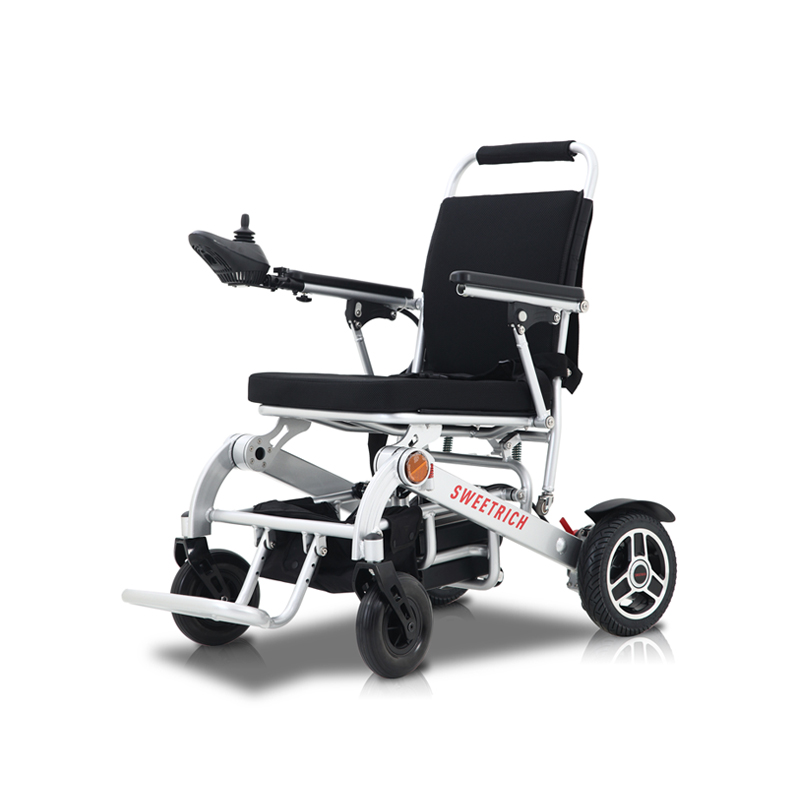
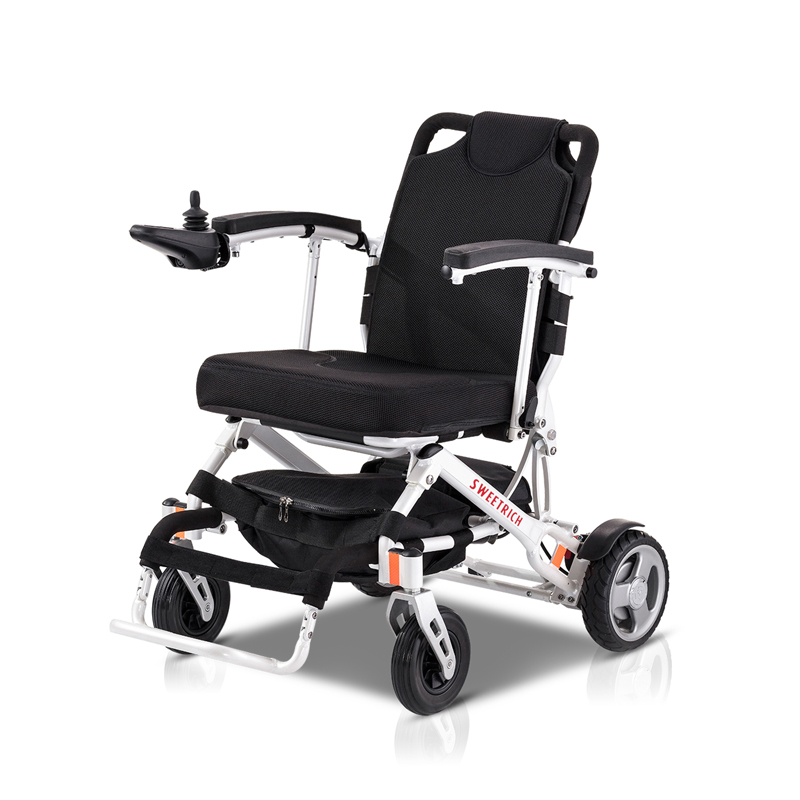
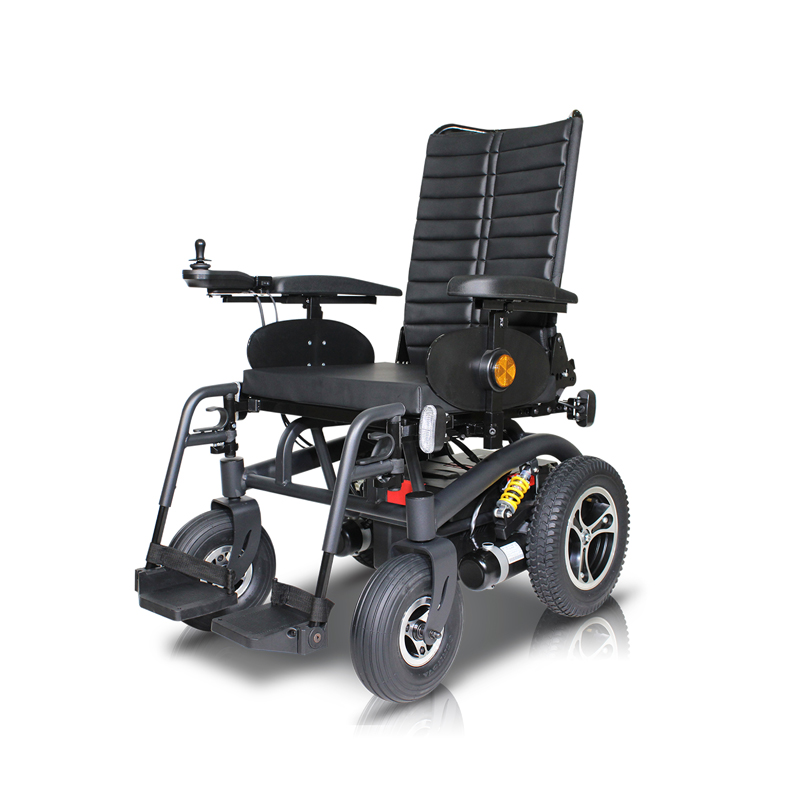
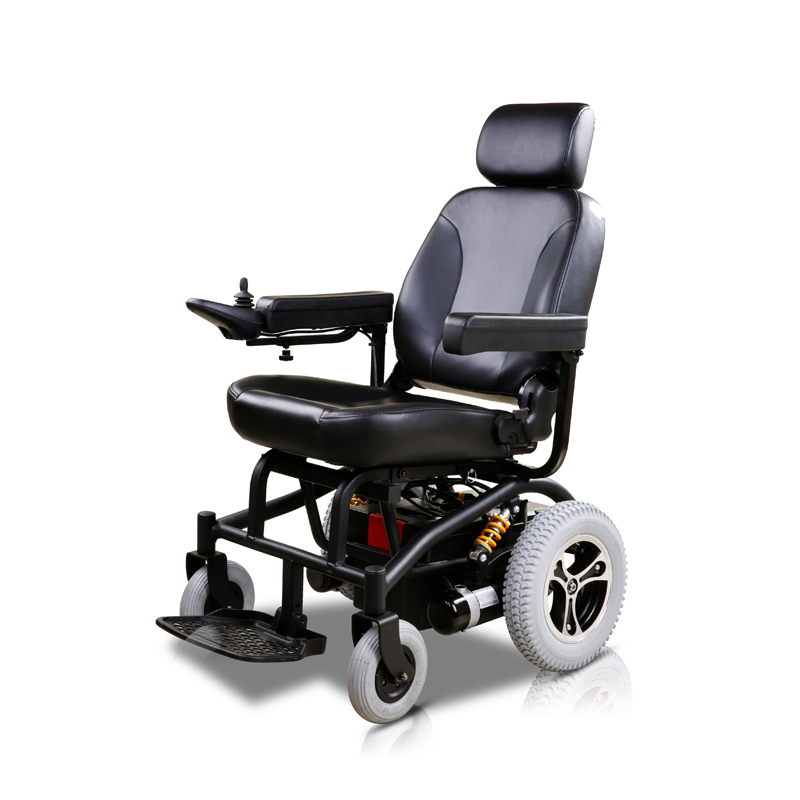
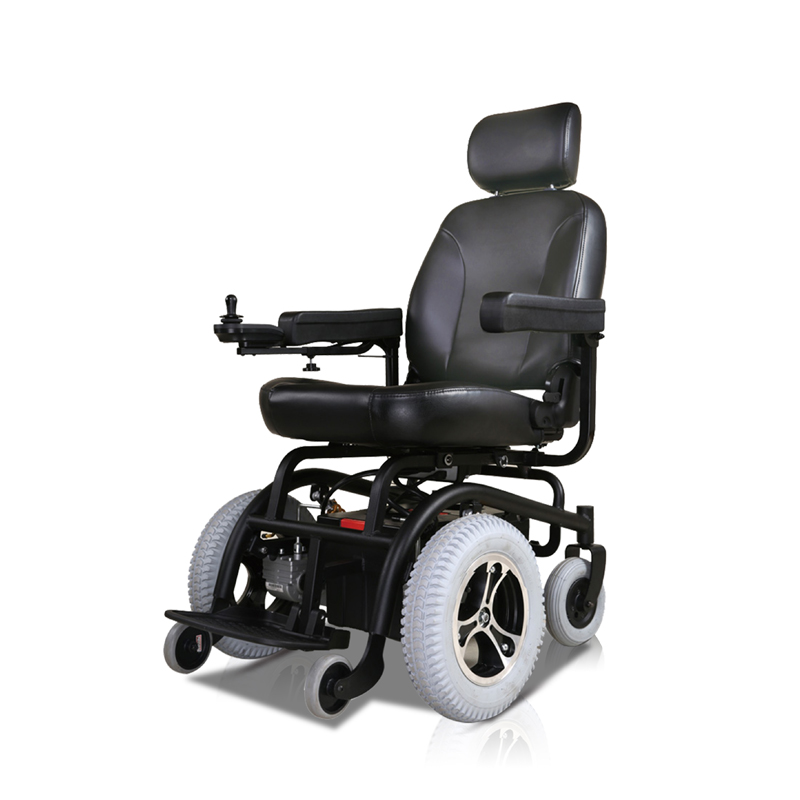
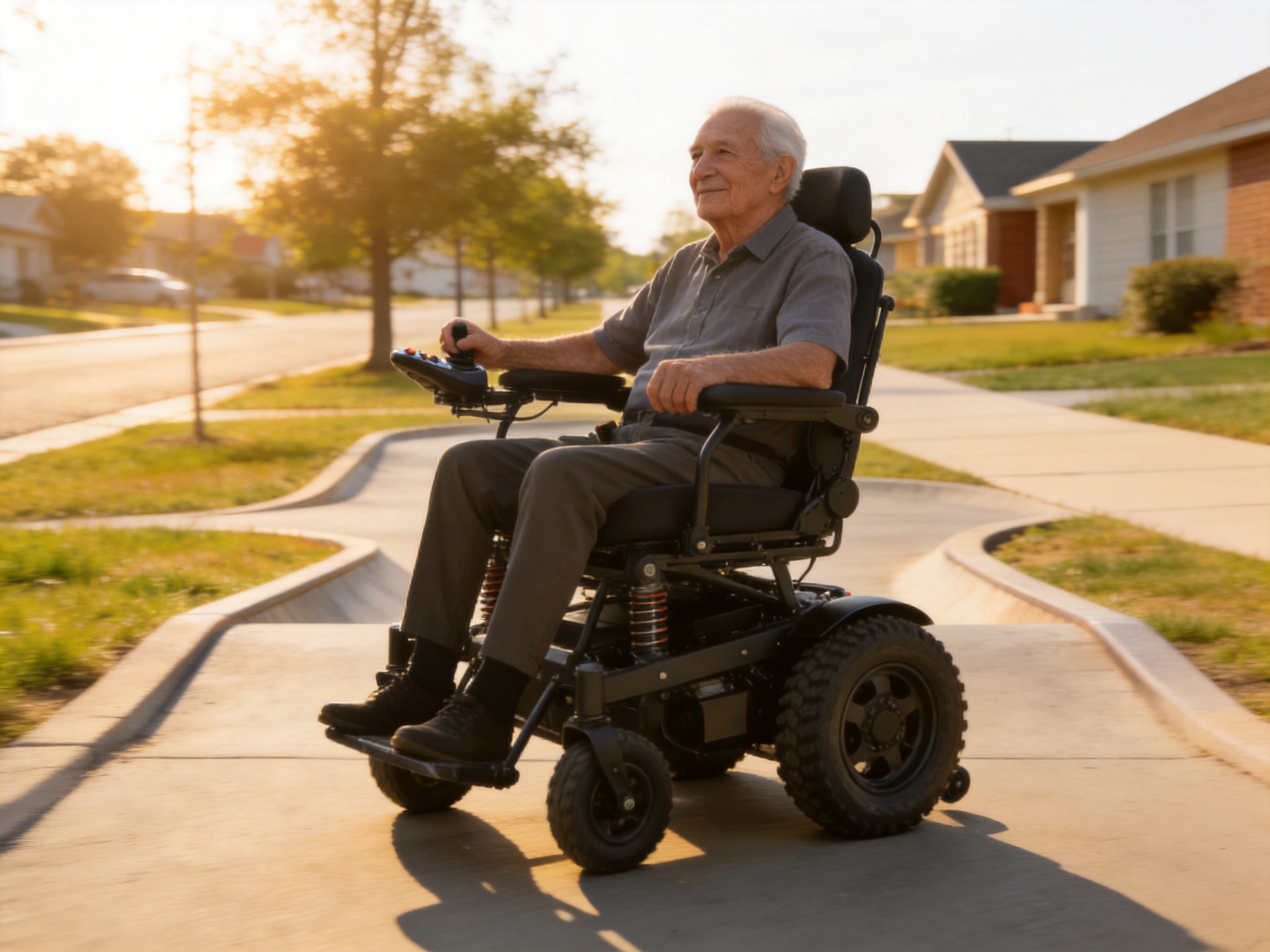
Modern mobility is no longer defined only by indoor movement, short errands, or basic assistance. For many elderly users and people with limited mobility, the ideal powered wheelchair must provide confidence across mixed environments: home entrances, sidewalks, community roads, gardens, ramps, parks, and daily travel routes that are not always perfectly smooth. The iPower GTS Plus heavy duty electric wheelchair is designed for this practical reality. It combines a strong dual-motor driving system, large pneumatic tires, rear suspension, adjustable seating features, and a stable frame structure to support dependable outdoor performance while still remaining comfortable and convenient for everyday use.
This article explores the product’s features, technical specifications, competitive advantages, and the manufacturing strengths behind its development. It also explains why a well-built heavy duty power wheelchair can make a meaningful difference for users who want more independence, easier travel, and greater confidence in daily mobility.
Product Positioning: A Heavy Duty Power Wheelchair Built for Real-World Use
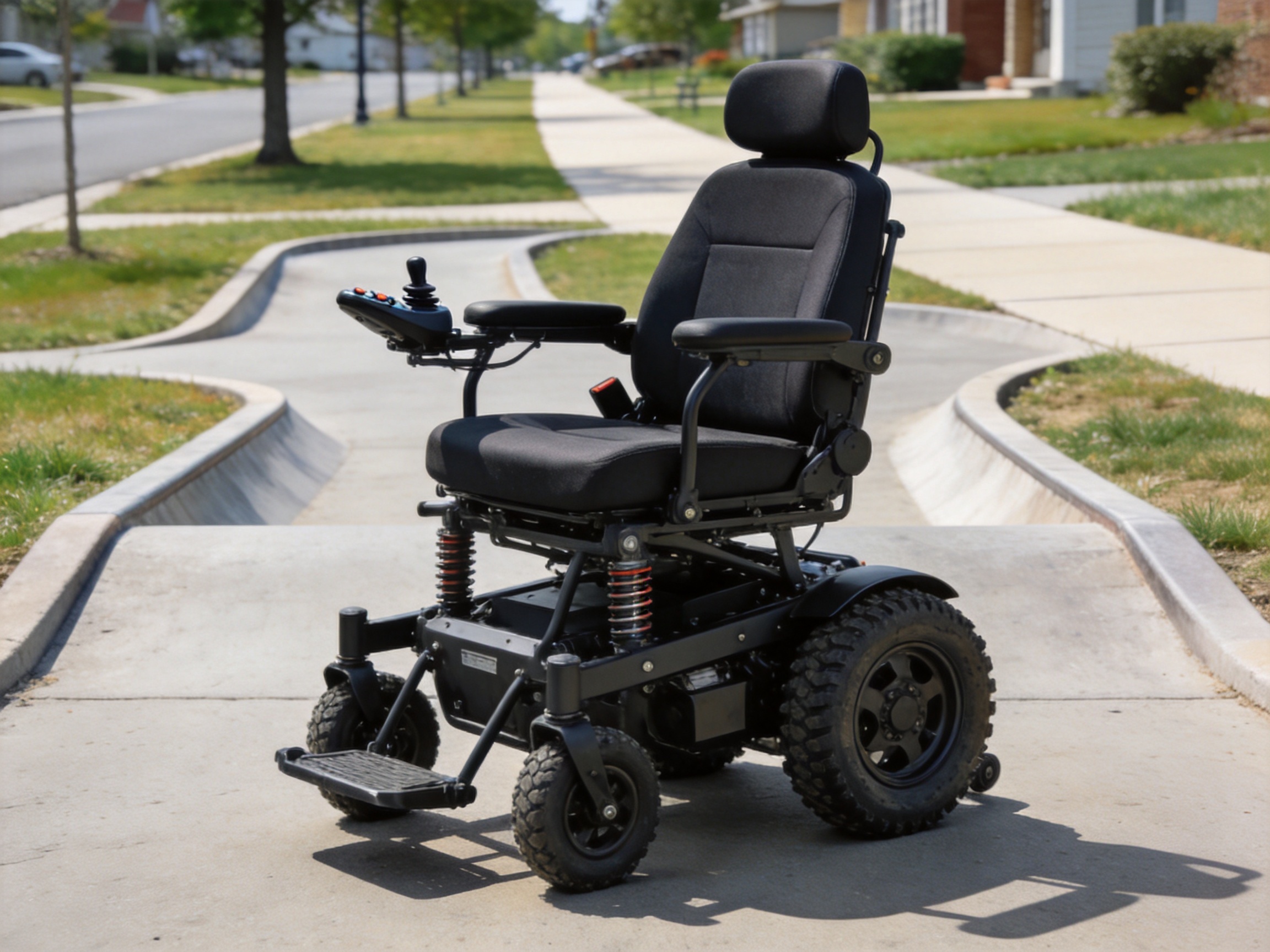
The iPower GTS Plus belongs to the heavy duty wheelchair category and is designed as a non-medical mobility device for the U.S. market. Its core value is simple: it gives users stronger outdoor mobility than many lightweight or basic indoor power wheelchairs. While compact indoor chairs can be useful in narrow home spaces, they often have smaller wheels, lower motor output, limited suspension, and reduced stability on uneven surfaces. The iPower GTS Plus is built to address those limitations.
Its dimensions are 1045 mm in length, 625 mm in width, and 1080 mm in height, giving it a balanced footprint for stability and control. The chair supports a weight capacity of 136 kg, or 300 lbs, making it suitable for a broad range of users. With a maximum forward speed of 8 km/h, equal to approximately 5 mph, it provides a practical speed for outdoor travel while maintaining a controlled and safe riding experience.
The model is equipped with two 24V 350W motors, providing a total motor output of 700 watts. This dual-motor system is an important advantage for outdoor performance because it helps deliver better torque, smoother turns, and more reliable movement on gradients or slightly rough surfaces. Its maximum driving gradient is 10 degrees, allowing users to manage common slopes, ramps, and inclined paths more confidently than with many lower-powered mobility products.
The driving range of 30 to 40 km, or approximately 19 to 25 miles, is another important benefit. Many users need a wheelchair that can support a full day of errands, community activities, or travel without constant charging anxiety. With two 12V 40Ah lead-acid batteries and a DC24V5A charger, the chair offers a practical balance between range, reliability, and serviceability. Charging time is typically 6 to 8 hours, which is suitable for overnight charging routines.
Key Advantages at a Glance
The strengths of this electric wheelchair are best understood through its practical design features. It is not only about having a powerful motor or large wheels; the overall design integrates frame stability, seating adjustability, tire performance, braking technology, and user-friendly control.
Feature |
Specification or Design |
User Benefit |
Motor System |
24V/350W x 2 motors, total 700 watts |
Strong torque, improved climbing ability, better outdoor performance |
Weight Capacity |
136 kg / 300 lbs |
Supports a wide range of users with a stable heavy duty structure |
Driving Range |
30-40 km / 19-25 miles |
Suitable for daily travel, errands, and community movement |
Maximum Speed |
8 km/h / 5 mph |
Efficient travel speed with controlled handling |
Gradient Ability |
10 degrees |
Useful for ramps, sloped paths, and outdoor environments |
Front and Rear Tires |
10 inch front wheels and 14 inch rear pneumatic tires |
Better shock absorption and traction on uneven ground |
Suspension |
Rear suspension |
Improved comfort and reduced vibration outdoors |
Brake System |
Electromagnetic brake |
Reliable stopping performance and enhanced control |
Controller |
24V/50A controller, PG or Dynamic option |
Smooth response, efficient control, and dependable operation |
Seat and Armrests |
Adjustable seat width and adjustable armrest height |
Better fit, comfort, and personalized support |
Outdoor Performance: Why Power and Wheel Design Matter
Outdoor mobility requires a different design philosophy from indoor mobility. Indoors, the priority is often compact size and tight turning capability. Outdoors, however, the wheelchair must deal with small stones, pavement cracks, driveway transitions, grass edges, curb cuts, and ramps. For this reason, motor output, wheel size, tire type, suspension, and frame rigidity become much more important.
The iPower GTS Plus uses a high-performance, high-efficiency motor package with two 350W motors. The total 700W power output provides the foundation for strong propulsion. Instead of relying on a single motor, the dual-motor system allows each drive wheel to receive controlled power. This supports smoother turns and better traction distribution, especially when the chair is moving over uneven surfaces or making directional changes outdoors.
The large wheel combination is another significant advantage. The chair includes 10 inch front wheels and 14 inch rear pneumatic tires. Larger wheels are generally better at crossing irregular ground because they reduce the effect of small obstacles. Pneumatic tires also provide cushioning compared with solid tires, helping reduce vibration and shock transfer to the user. This can make a noticeable difference during longer rides or when moving across rougher pavement.
Rear suspension further supports ride comfort. When the rear tires travel over small bumps, the suspension helps reduce harsh impact and supports more stable contact with the ground. Combined with pneumatic tires, this improves the overall riding experience and gives the chair a more capable outdoor character than entry-level electric wheelchairs with small solid wheels and no suspension support.
Comfort and Adjustability for Different Users
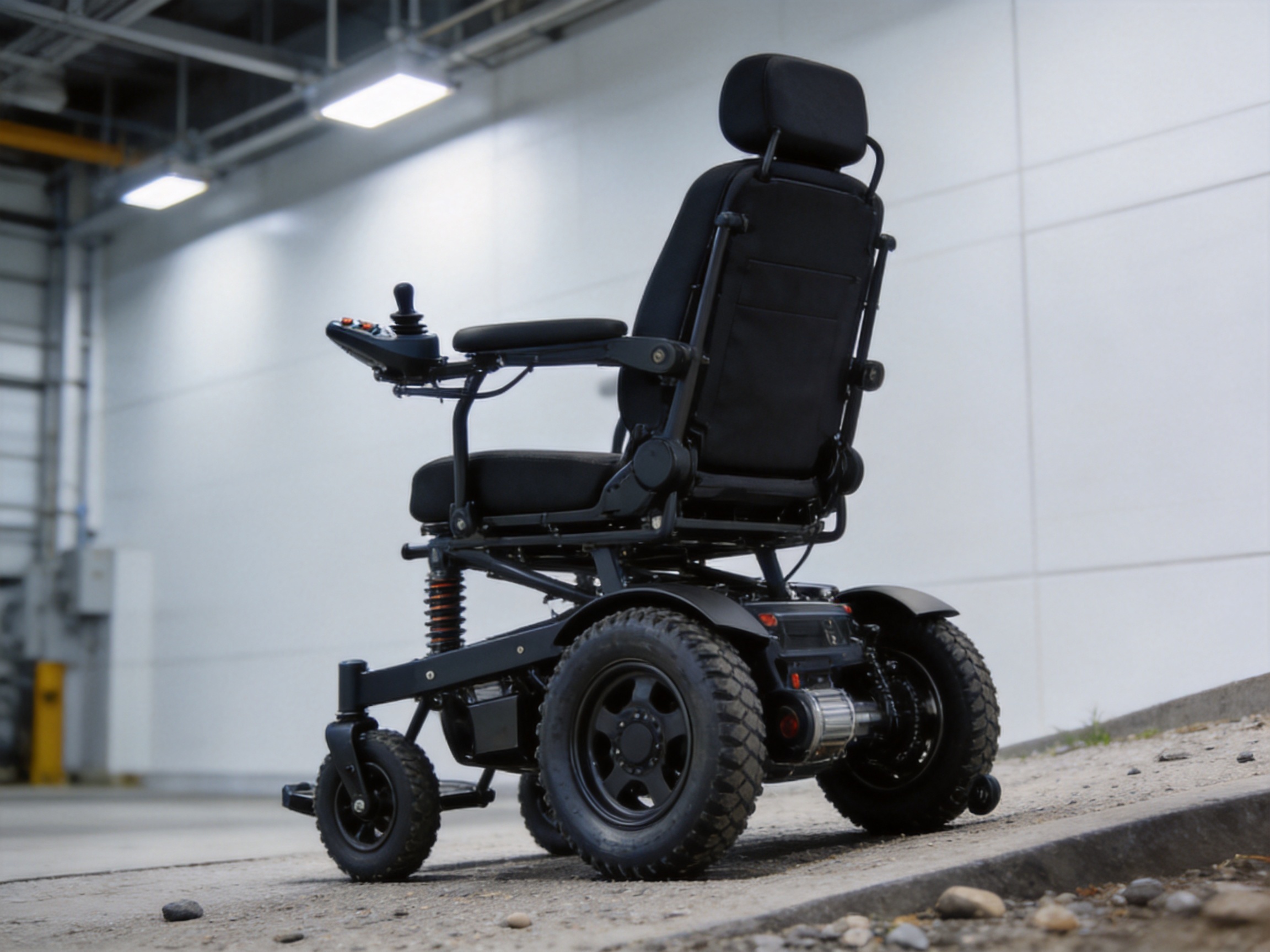
A power wheelchair should not only move well; it should fit the user well. Comfort and adjustability are especially important for elderly users who may spend long periods seated while shopping, visiting friends, attending appointments, or enjoying outdoor activities. The iPower GTS Plus includes adjustable seat width and adjustable armrest height, allowing the chair to better match individual body dimensions and preferences.
Adjustable seat width is valuable because users have different posture needs. A seat that is too narrow can create pressure and discomfort, while a seat that is too wide may reduce lateral support. By allowing width adjustment, the chair can provide a more personalized seating experience and help improve stability during movement.
Adjustable armrest height also improves usability. Proper armrest height supports more natural shoulder and arm positioning. This can reduce fatigue and help users maintain a comfortable posture during longer rides. It also supports easier joystick operation because the user’s arm can rest at a suitable height while controlling the chair.
The joystick is available for both side use, meaning the control can be configured for right-hand or left-hand operation. This is a crucial user-centered feature. Some users have stronger control on one side due to personal preference, age-related weakness, injury history, or comfort habits. A wheelchair that allows both-side joystick placement is more adaptable and can serve a wider range of users.
An optional swing-away controller mount is another practical feature. A swing-away mount allows the joystick controller to move aside when the user approaches a table, desk, or transfer position. This can make dining, reading, working, or transferring more convenient. It also reduces the chance of bumping the controller into furniture or obstacles during close positioning.
Safety-Oriented Control and Braking
Safety is central to any powered mobility product. The iPower GTS Plus uses an electromagnetic brake system, a common and trusted braking approach in quality electric mobility products. Electromagnetic brakes help ensure controlled stopping and secure parking when the chair is not moving. When properly integrated, this type of braking system gives users more confidence on ramps, slopes, and uneven paths.
The chair’s controller is specified as 24V/50A, with PG or Dynamic controller options. Controller quality matters because it determines how smoothly the chair accelerates, turns, slows, and responds to joystick input. A refined controller helps prevent jerky movement, supports predictable handling, and can improve energy efficiency. For elderly users, smooth response is especially important because sudden acceleration or abrupt turns can feel uncomfortable or unsafe.
The maximum speed of 8 km/h is practical for outdoor travel. It is fast enough for efficient movement in community settings but not excessive for typical wheelchair use. The balance between speed and control is essential. A heavy duty power wheelchair should feel capable without feeling difficult to manage.
The 10-degree gradient capability also contributes to user confidence. Many real-world travel routes include ramps, sloped sidewalks, driveway entrances, and access paths. A chair that struggles on modest slopes can limit independence. With its motor package, braking system, and stable chassis, the iPower GTS Plus is designed to handle common gradients more effectively than lower-powered models.
Battery System and Daily Range
Range anxiety is not limited to electric cars; it also affects power wheelchair users. If a wheelchair has insufficient range, users may avoid longer trips or feel uncertain about leaving home for extended periods. The iPower GTS Plus offers a maximum driving range of 30 to 40 km, or about 19 to 25 miles, depending on conditions such as user weight, terrain, tire pressure, battery condition, slope, speed, and stop-start frequency.
This range makes the wheelchair suitable for a variety of daily activities. Users can move around the neighborhood, visit community facilities, go shopping, attend appointments, and enjoy outdoor recreation without immediately worrying about recharging. The charging time of 6 to 8 hours supports a simple routine: charge overnight and use during the day.
The battery system uses two lead-acid 12V40Ah batteries. Lead-acid batteries are widely understood, serviceable, and cost-effective. While lithium batteries are lighter and increasingly common, lead-acid batteries remain popular in heavy duty mobility equipment because of their reliability, mature supply chain, and stable performance profile. For many users and distributors, serviceability and replacement availability are important practical considerations.
The charger specification is DC24V5A with AC115-230V input, allowing compatibility with a wide input voltage range. This is useful for international markets and customers operating in different electrical environments. A consistent charging system helps maintain dependable daily use and simplifies after-sales support.
Competitive Advantages Over Basic Electric Wheelchairs
The iPower GTS Plus has several advantages compared with basic electric wheelchairs designed primarily for indoor or light-duty use. First, its dual 350W motor system provides stronger output than many compact models. This matters when climbing ramps, moving across uneven surfaces, or carrying users near the upper end of the weight capacity.
Second, the larger pneumatic tires improve outdoor comfort and capability. Small solid wheels may be adequate on smooth floors, but they can feel harsh on outdoor pavement and may struggle with uneven surfaces. The 10 inch front and 14 inch rear tire combination gives the iPower GTS Plus a more robust outdoor profile.
Third, rear suspension is a meaningful comfort feature. Many low-cost power wheelchairs omit suspension to reduce price and complexity. However, the absence of suspension can result in a rougher ride. By integrating rear suspension, this model supports improved comfort and control during outdoor travel.
Fourth, the adjustability of the seating system and armrests improves user fit. A chair that can adapt to different users is more practical for dealers, care facilities, families, and individual customers. It can also extend usability as user preferences change over time.
Fifth, the chair offers optional features such as a light package and swing-away controller mount. The optional light package can improve visibility in dim environments, while the swing-away controller can enhance convenience for daily activities. These options allow customers to choose the configuration that best matches their needs.
Finally, the chair benefits from the manufacturing and engineering background of Sweetrich Mobility, a company with over ten years of experience in mobility scooters and power wheelchairs. Product quality is not determined only by the visible specifications; it is also shaped by design discipline, production control, supplier management, testing, and continuous improvement.
Manufacturing Strength: Experience, Scale, and Specialized Focus
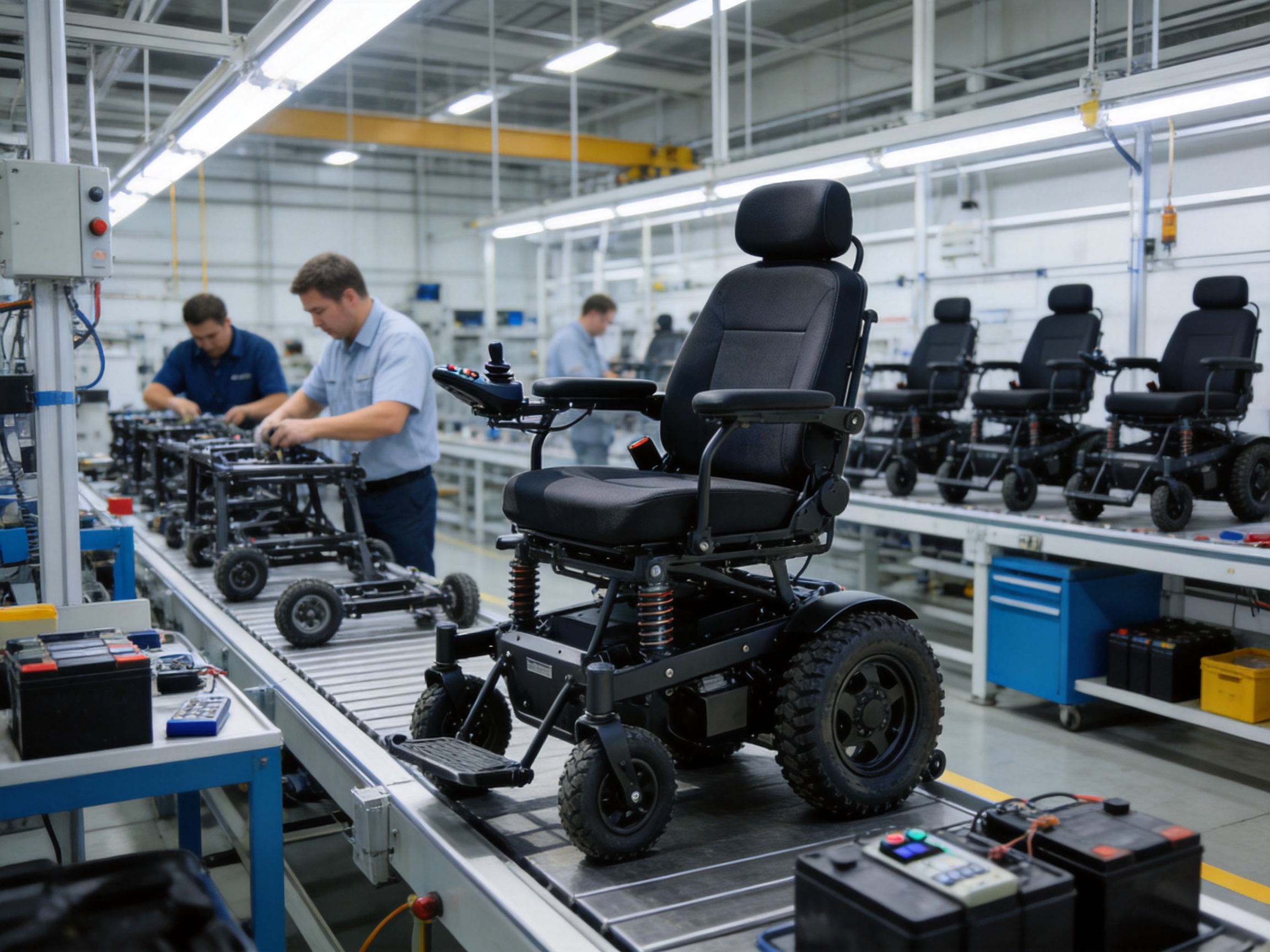
Behind every reliable mobility product is a manufacturing system capable of turning design concepts into consistent, safe, and durable products. Sweetrich Mobility, officially Suzhou Sweetrich Vehicle Industry Technology Co., Ltd., is located in Suzhou Industrial Zone, Jiangsu, China. Established in 2011, the company has accumulated more than ten years of experience in the research, development, and production of mobility scooters and power wheelchairs.
The company covers an area of 60 acres and operates a 30,000-square-meter factory. This scale supports organized production lines, specialized assembly areas, quality inspection stations, warehousing, and product testing functions. For mobility products, factory organization is essential because the final product integrates mechanical structures, electrical systems, control modules, batteries, seating components, brakes, wheels, and safety-related hardware.
Sweetrich focuses on improving the well-being and convenience of elderly and disabled people. This focus is important because mobility products are not general consumer goods. They directly affect independence, comfort, and daily confidence. A manufacturer that specializes in this field is better positioned to understand user pain points such as ride stability, control smoothness, seat comfort, range requirements, transport needs, and long-term durability.
The company owns intellectual property rights for its electric scooters and power wheelchairs. This indicates an emphasis on independent product development rather than simple imitation. In a competitive market, intellectual property and in-house design capability help manufacturers create differentiated products, refine structural solutions, and respond more quickly to customer feedback.
Advanced Product Development and Engineering Control
Developing a heavy duty electric wheelchair requires a systematic engineering process. The frame must be strong enough to support the rated load while remaining practical for production and service. The motor system must provide sufficient torque without excessive energy loss. The controller must match the motors, battery voltage, braking system, and user interface. Seating geometry must balance comfort, posture support, and safety. Tire and suspension selection must fit the expected terrain.
A mature manufacturer typically begins with market requirements and user scenarios. For the iPower GTS Plus, the target scenario is outdoor-capable powered mobility for elderly users and people requiring a stronger mobility solution. This leads to design decisions such as enhanced 300 lb capacity, large pneumatic tires, rear suspension, dual motors, adjustable seating, and optional accessories.
During engineering, the frame structure may be evaluated for stress concentration, welding layout, component mounting strength, and long-term fatigue resistance. The placement of batteries and motors influences the center of gravity, traction, stability, and service access. The controller location and wiring harness design affect heat dissipation, signal reliability, and maintenance convenience.
Electrical integration is especially important in power wheelchairs. A high-quality wiring harness must be routed safely, protected from abrasion, and secured against vibration. Connectors must be reliable and properly matched to current requirements. Battery terminals, controller connections, motor leads, brake wiring, and joystick cables must all work together without interference. Poor electrical integration can cause intermittent faults, reduced performance, or service difficulties. A specialized manufacturer reduces these risks through standardized assembly methods and quality checks.
Frame Fabrication and Surface Treatment
The durability of a heavy duty power wheelchair begins with the frame. A stable frame supports the user, batteries, motors, seating system, and wheels while withstanding repeated vibration and load changes. Good frame fabrication requires accurate cutting, bending, welding, and alignment. If the frame is not properly aligned, the chair may not track correctly, may experience uneven tire wear, or may place extra stress on the drive system.
In a modern manufacturing process, frame components are produced according to controlled dimensions. Welding fixtures help maintain consistency from one unit to another. Skilled welding and inspection reduce the risk of weak joints or dimensional deviation. After welding, surface preparation and coating protect the metal structure from corrosion and wear.
Powder coating or similar surface treatment processes are commonly used in mobility equipment because they provide a durable finish, improve appearance, and help resist scratching and corrosion. A well-finished frame not only looks professional but also supports long-term reliability. For outdoor-capable wheelchairs, surface protection is particularly important because the product may encounter moisture, dust, road debris, and changing weather conditions.
Motor, Controller, and Brake Integration
The motor package is one of the defining features of the iPower GTS Plus. Two 24V/350W motors provide the driving force, and the 24V/50A controller manages power delivery. Proper matching between motors and controller is essential. If the controller is underpowered, the chair may feel weak or may overheat under load. If the controller response is poorly tuned, movement may feel abrupt. A balanced system provides smooth acceleration, predictable turning, and dependable climbing ability.
The use of PG or Dynamic controller options gives the product access to controller technologies recognized in the mobility industry. These controller systems are known for refined drive behavior and dependable performance when correctly applied. For users, the benefit is not just technical; it is felt through smoother joystick control, better confidence in tight spaces, and more stable operation outdoors.
The electromagnetic brake system must also be integrated with the drive electronics. When the user releases the joystick, the chair should slow and stop in a controlled manner. On inclines, braking reliability is particularly important. Quality testing of brake response, holding ability, and fail-safe behavior helps ensure that the chair performs consistently in practical use.
Quality Management and Product Testing
Quality in mobility products must be built into every stage of production. Incoming materials need inspection. Frame components need dimensional checks. Motors, controllers, batteries, chargers, joysticks, brakes, tires, and connectors must meet specified performance requirements. Assembly workers need clear procedures. Finished products need functional testing before shipment.
For a wheelchair like the iPower GTS Plus, important tests may include driving performance checks, braking tests, joystick response tests, charger function checks, battery voltage checks, tire and wheel inspection, fastener torque verification, noise and vibration assessment, and visual inspection. Products intended for outdoor performance may also be evaluated for gradient climbing, turning behavior, and range-related performance under defined conditions.
Strict production management helps reduce variability. Inconsistent assembly can lead to differences in performance between units, even when the design is good. By using standardized procedures, trained staff, and inspection points, Sweetrich Mobility can improve product consistency and reduce after-sales issues.
The company’s principle of “quality first, credit above, and customer supreme” reflects a long-term business approach. In the mobility market, customer trust is critical because users and distributors expect products that are safe, reliable, serviceable, and supported over time. A manufacturer that prioritizes quality and customer relationships can build stronger global partnerships.
Global Market Experience and Customer Support
Sweetrich Mobility exports products to America, Europe, Japan, Australia, the Middle East, Russia, and other markets. This global market experience is a valuable advantage because different regions have different user preferences, regulatory expectations, road conditions, and distribution requirements. A manufacturer serving diverse markets must be able to adapt product configurations, documentation, packaging, service support, and communication.
For international buyers, global export experience reduces risk. It suggests that the company understands shipping requirements, product consistency, spare parts support, and communication with distributors. Mobility products often require ongoing after-sales service, including replacement parts, technical advice, and maintenance guidance. A manufacturer with established export experience is better equipped to support long-term cooperation.
The company’s contact information, including its professional sales email and phone support, supports communication with customers and distributors. Its location in Suzhou Industrial Park also provides access to a strong manufacturing ecosystem, supply chain resources, skilled labor, and logistics infrastructure.
Daily User Experience: Independence, Confidence, and Practical Convenience
Specifications are important, but the true value of a heavy duty electric wheelchair is experienced in daily life. A user may need to leave home, cross a driveway, travel along sidewalks, enter a store, wait in a clinic, visit a park, or spend time with family outdoors. A capable power wheelchair can turn these activities from difficult tasks into manageable routines.
The iPower GTS Plus supports this experience through its combination of range, power, comfort, and control. The 30-40 km range allows users to plan longer trips. The dual motors and 10-degree climbing ability make ramps and slopes less intimidating. The pneumatic tires and rear suspension help reduce ride harshness. The adjustable seat and armrests support better comfort. The joystick placement flexibility improves accessibility for different users.
For families and caregivers, a dependable electric wheelchair can also reduce physical strain. Instead of pushing a manual wheelchair over long distances or up slopes, caregivers can rely on the powered system to handle movement. This can make outings more enjoyable for both the user and those assisting them.
For distributors and dealers, the product offers a strong value proposition. It has clear heavy duty specifications, practical outdoor features, user adjustability, and manufacturing support from an experienced producer. These attributes make it easier to present the chair to customers who need more than a lightweight indoor model.
Optional Features for Enhanced Usability
The iPower GTS Plus supports optional features that can improve usability in specific environments. One optional feature is a swing-away controller mount. This is useful for users who frequently approach tables, desks, counters, or transfer positions. By moving the controller aside, users gain better access and reduce the chance of contact with furniture.
An optional light package is also available. Lighting can improve visibility in darker environments such as evening sidewalks, parking areas, building corridors, or shaded outdoor spaces. While users should always follow safe travel practices, visibility features can contribute to confidence and awareness.
An optional power tilt and lift system is noted as a future feature. Power seating functions can enhance comfort, posture management, and access to different height levels. When available, such systems may further expand the product’s appeal to users seeking advanced positioning options.
The ability to offer optional configurations is important in the mobility market because user needs vary widely. Some customers prioritize affordability and core function, while others need enhanced convenience features. A modular or option-friendly product strategy helps serve both groups.
Comparison with Mobility Scooters
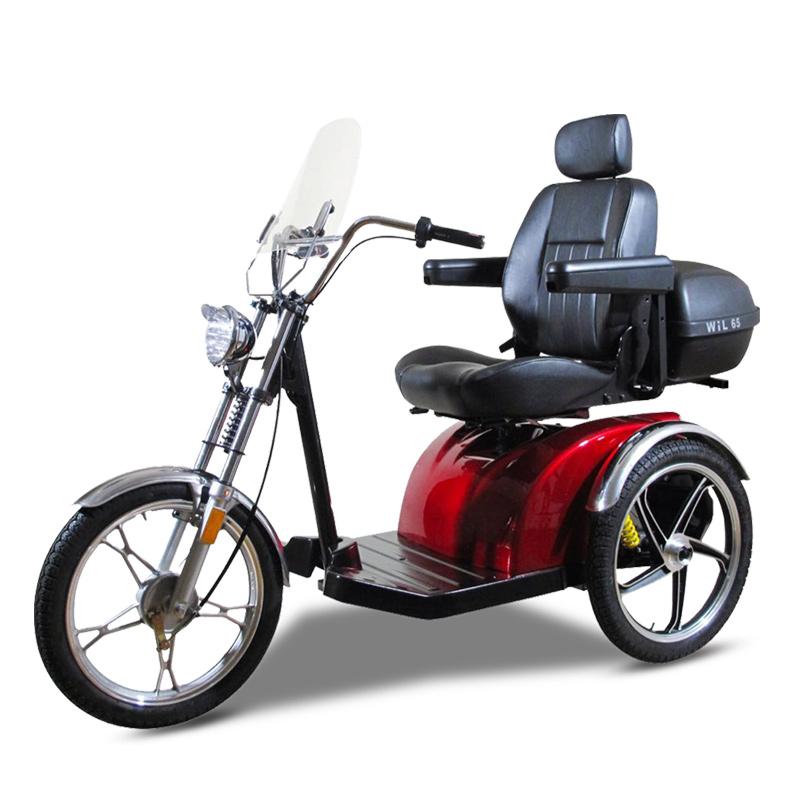
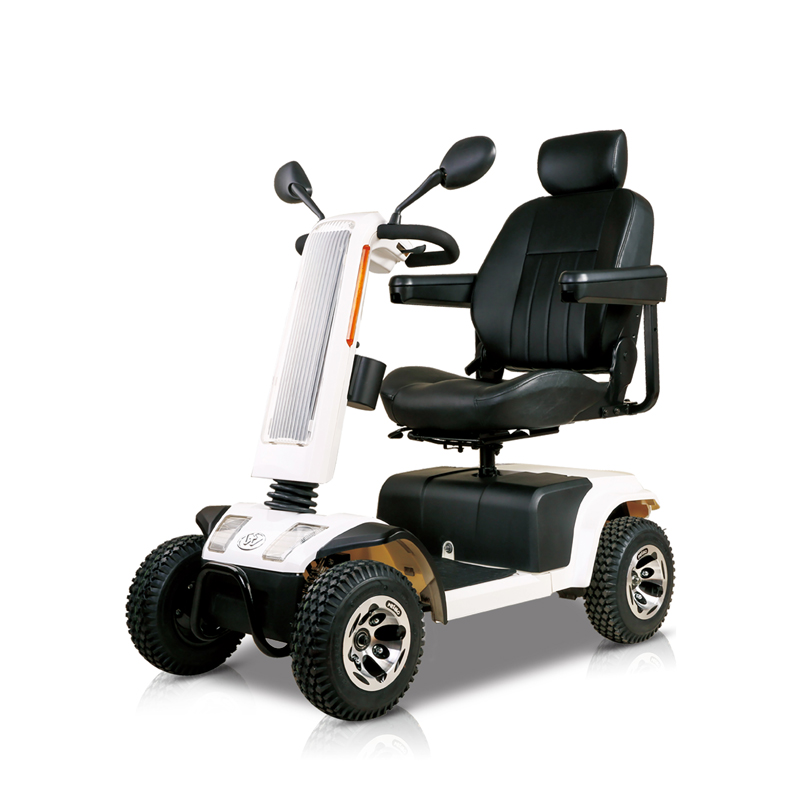
Because the broader product category includes mobility scooters, electric wheelchairs, and travel smart solutions, customers may wonder whether a heavy duty power wheelchair or a mobility scooter is the better choice. The answer depends on the user’s needs, environment, and control preferences.
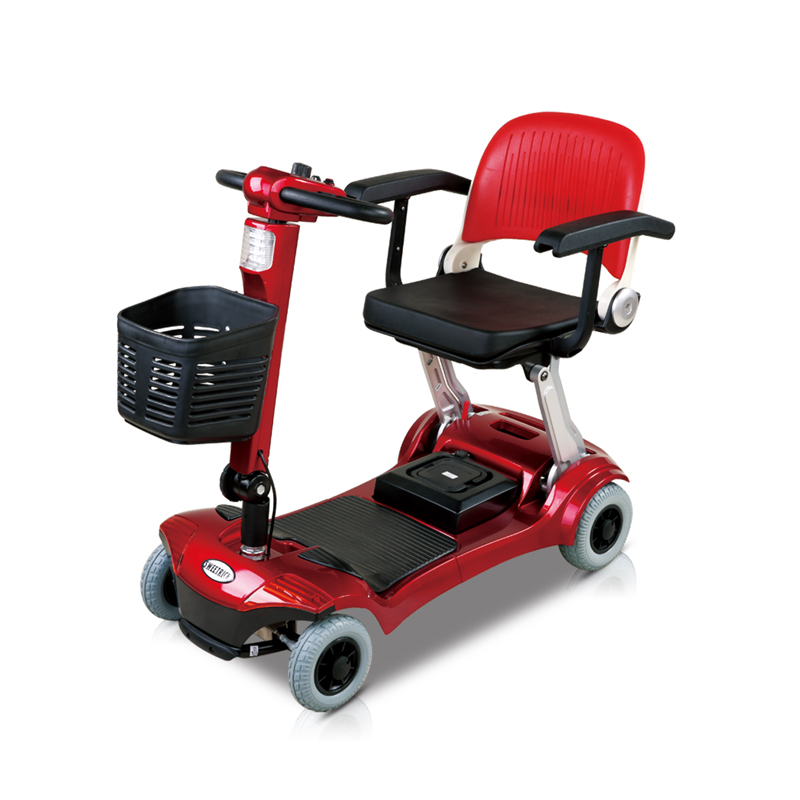
Mobility scooters are often preferred by users who can sit upright independently, steer with handlebars, and transfer on and off the scooter with relative ease. Scooters are useful for outdoor travel, shopping centers, and longer-distance movement. However, they often require more space to turn and may not offer the same seated control position as a joystick-driven wheelchair.
A power wheelchair like the iPower GTS Plus is controlled by joystick and can be easier to operate for users who prefer one-hand control. It may also be better suited for users who need a more supportive seating position or who want tighter maneuverability compared with many scooters. The ability to place the joystick on either side provides additional flexibility.
The iPower GTS Plus combines some outdoor-capable characteristics associated with mobility scooters, such as strong motors and large tires, with the control style and seating support of an electric wheelchair. This hybrid strength makes it attractive for users who need more rugged outdoor performance but still prefer wheelchair-style operation.
Why Manufacturing Quality Matters More Than Price Alone
In the mobility market, buyers sometimes compare products mainly by price and basic specifications. However, a low price does not always mean good value. A power wheelchair must perform reliably over time, especially when used outdoors. If a product has weak wiring, poor braking, low-quality motors, uncomfortable seating, or inconsistent assembly, the user may face inconvenience, repair costs, or safety concerns.
The iPower GTS Plus is supported by an experienced manufacturer with specialized production capabilities. This matters because the product is a complex system. The frame must hold up under load. The motors must perform consistently. The controller must respond smoothly. The brakes must stop reliably. The batteries must be properly installed. The seat and armrests must remain stable. The tires and suspension must support outdoor use.
Advanced manufacturing processes reduce the likelihood of defects and improve the consistency of each unit. Quality control also supports distributors because fewer problems mean fewer returns, fewer complaints, and stronger customer satisfaction. For individual users, reliable manufacturing can translate into peace of mind.
Design Philosophy: Practical Strength Without Unnecessary Complexity
A good heavy duty power wheelchair should be strong, comfortable, and practical. It should not be overloaded with features that make operation confusing or maintenance difficult. The iPower GTS Plus follows a practical design philosophy. Its core performance comes from robust motors, a stable frame, large pneumatic tires, rear suspension, electromagnetic braking, adjustable seating, and dependable battery capacity.
This design approach is beneficial because many elderly users prefer straightforward operation. The joystick control is familiar and intuitive. The charging routine is simple. The speed range is practical. The seating adjustments are useful without being overly complicated. Optional accessories allow customization without forcing every user to pay for features they may not need.
Practical design also supports maintenance. Components such as lead-acid batteries, pneumatic tires, controllers, chargers, motors, and brakes are familiar to many mobility service providers. This can make service and replacement more manageable for dealers and users.
Recommended Use Scenarios
The iPower GTS Plus is especially suitable for users who need a power wheelchair with stronger outdoor capability than compact indoor models. It is appropriate for neighborhood travel, community mobility, shopping trips, garden paths, parks, paved outdoor areas, ramps, and daily errands. Its range and motor output support longer travel than many basic chairs.
The chair may also be useful for users who value comfort features such as pneumatic tires, rear suspension, adjustable armrests, and adjustable seat width. It is a strong option for users who want a joystick-controlled chair but do not want to be limited to smooth indoor floors.
As with any mobility product, users should consider their environment, body size, transfer ability, storage space, transportation needs, and local regulations. Outdoor terrain should be appropriate for the product’s capabilities. Users should avoid unsafe slopes, deep mud, standing water, large obstacles, and unstable ground. Regular maintenance, tire pressure checks, battery care, and charging discipline will help maintain best performance.
Specification Summary
The iPower GTS Plus measures 1045 mm long, 625 mm wide, and 1080 mm high. It has a maximum forward speed of 8 km/h, a maximum driving gradient of 10 degrees, and a maximum driving range of 30 to 40 km. The rated weight capacity is 136 kg, or 300 lbs. It includes rear suspension, 10 inch by 3 inch front tires, 14 inch by 3 inch rear tires, and an electromagnetic braking system.
The battery system consists of two 12V40Ah lead-acid batteries. The charger is DC24V5A with AC115-230V input, and the charging time is generally 6 to 8 hours. The motor system includes two 24V/350W motors, and the controller is 24V/50A with PG or Dynamic options. The model is designed for strong outdoor performance, user comfort, and reliable daily operation.
Q&A Section
What type of user is this heavy duty electric wheelchair designed for?
It is designed for elderly users and people with limited mobility who need a stronger powered wheelchair for daily travel and outdoor-capable movement. It is especially suitable for users who want more performance than a basic indoor power wheelchair can provide.
Is this product intended for outdoor use?
Yes. The model emphasizes outdoor performance through dual 350W motors, 10 inch front wheels, 14 inch rear pneumatic tires, rear suspension, electromagnetic brakes, and a 10-degree maximum driving gradient. It is suitable for many paved outdoor routes, ramps, sidewalks, and community environments.
What is the maximum driving range?
The maximum driving range is approximately 30 to 40 km, or 19 to 25 miles. Actual range depends on user weight, terrain, speed, slope, tire condition, battery condition, and usage habits.
How fast can the wheelchair travel?
The maximum forward speed is 8 km/h, which is approximately 5 mph. This speed is practical for outdoor mobility while maintaining controlled operation.
What is the weight capacity?
The wheelchair supports up to 136 kg, or 300 lbs. This enhanced capacity makes it suitable for a broad range of users and supports its heavy duty positioning.
Why are pneumatic tires important?
Pneumatic tires provide better cushioning and traction than many solid tires. They help reduce vibration and improve comfort when moving across uneven pavement, small bumps, and outdoor surfaces.
Can the joystick be used on either side?
Yes. The joystick is available for both-side use, which allows the chair to be configured for right-hand or left-hand operation according to user preference or ability.
What optional features are available?
Optional features include a swing-away controller mount and a light package. A power tilt and lift system is also noted as a future optional feature.
How long does charging take?
Charging generally takes 6 to 8 hours. Many users charge the wheelchair overnight so it is ready for daily use.
What makes this model different from a basic electric wheelchair?
Compared with many basic electric wheelchairs, this model offers stronger motors, larger pneumatic tires, rear suspension, higher outdoor capability, adjustable seating features, and a heavy duty structure with a 300 lb capacity.
Who manufactures the product?
The product is manufactured by Sweetrich Mobility, a company based in Suzhou Industrial Park, China. The company has more than ten years of experience in mobility scooters and power wheelchairs and operates a large production facility with specialized manufacturing and quality control capabilities.
Conclusion
The iPower GTS Plus heavy duty electric wheelchair represents a practical solution for users who need dependable powered mobility beyond smooth indoor spaces. Its dual 350W motor system, 300 lb weight capacity, 30-40 km driving range, 10-degree gradient capability, large pneumatic tires, rear suspension, electromagnetic brake, adjustable seat width, adjustable armrest height, and flexible joystick placement combine to create a strong and user-friendly mobility product.
Its advantages over basic competitors are clear: stronger outdoor performance, improved ride comfort, better adjustability, more capable tires, and a robust power system. Just as important, the product is supported by the manufacturing experience of Sweetrich Mobility, a specialized company with a large factory, a decade-plus development history, global market experience, and a focus on reliable mobility solutions for elderly and disabled users.
For buyers seeking a heavy duty powered wheelchair that balances strength, comfort, range, and practical usability, this model offers a compelling option. It is built not merely to move, but to help users participate more fully in everyday life with confidence, dignity, and independence.
References
1. Product specification data for iPower GTS Plus heavy duty electric wheelchair.
2. Manufacturer profile of Suzhou Sweetrich Vehicle Industry Technology Co., Ltd.
3. Industry guidance on powered mobility device design, safety, and user-centered control systems.
4. General technical literature on electric wheelchair drive systems, electromagnetic braking, and mobility battery performance.
5. Mobility equipment best practices for outdoor power wheelchair selection, comfort, maintenance, and user safety.