
 +86-(0)512-82283871

Content
- 1 Designed Around Practical Travel
- 2 Lightweight Construction for Easier Handling
- 3 Power System and Driving Performance
- 4 Lithium Battery Options and Charging
- 5 Control, Braking, and Everyday Safety
- 6 Solid Tires for Reduced Maintenance
- 7 Storage and User Convenience
- 8 Advantages Compared With Conventional Alternatives
- 9 Manufacturing Capability and Product Development
- 10 Quality-Oriented Production Processes
- 11 Engineering for Independence
- 12 Using the Wheelchair in Different Environments
- 13 Transport, Folding, and Storage Recommendations
- 14 Who May Benefit Most From This Product?
- 15 Frequently Asked Questions
- 15.1 What type of product is the iFold Light?
- 15.2 How much does the wheelchair weigh?
- 15.3 How quickly can it be folded?
- 15.4 What is the maximum speed?
- 15.5 What is the expected driving range?
- 15.6 Can the wheelchair be used on slopes?
- 15.7 What is the weight capacity?
- 15.8 Does it use pneumatic tires?
- 15.9 Does the wheelchair have suspension?
- 15.10 How long does charging take?
- 15.11 Can it be transported in a car?
- 15.12 Is it suitable for air travel?
- 15.13 What makes it different from a heavier powered wheelchair?
- 15.14 Where is the product manufactured?
- 15.15 What should customers request before ordering?
- 16 Conclusion
- 17 References
- 18 Product: iFold Light 2021 New Lightweight Portable Folding Electroplating Electric Bariatric Wheelchair Attachment
Modern mobility equipment is increasingly expected to do more than provide basic transportation. Users want independence, convenient storage, practical travel performance, comfortable controls, and a design that can fit into everyday routines. Families and caregivers also look for products that are easy to lift, transport, charge, and maintain. The iFold Light is designed around these needs as a compact folding electric wheelchair for travel-oriented mobility.
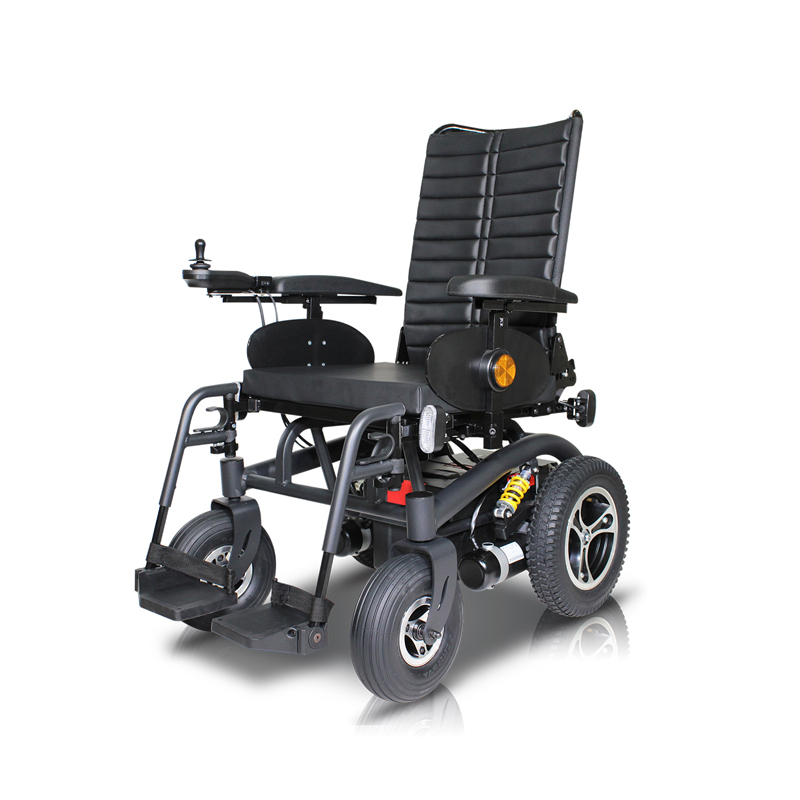
This product combines a lightweight frame, rapid folding, dual electric motors, lithium-battery power, electromagnetic braking, solid tires, and under-seat storage in a compact package. With a stated weight of 19 kilograms without the battery, it is positioned as a portable alternative to many heavier powered wheelchairs. Its folding structure is intended to make transportation and storage easier, whether the destination is a family visit, a shopping center, a hotel, an outdoor pathway, or another location where independent movement is important.
The iFold Light is supplied as a non-medical mobility device for the United States market. It should therefore be considered a travel and personal mobility product rather than a medical treatment device. Before use, customers should review local transportation rules, airline policies, accessibility requirements, and the operating instructions supplied with the unit.
Designed Around Practical Travel
A traditional powered wheelchair may offer substantial driving capability, but its size and weight can make transportation difficult. A user may need a large vehicle, a ramp, a specialized lift, or assistance from another person. Even when the chair is not being used, storing it inside a home can require considerable space. The central design idea behind the iFold Light is to reduce these everyday barriers through a folding, compact structure.
The wheelchair has listed overall dimensions of approximately 970 millimeters in length, 560 millimeters in width, and 870 millimeters in height. These dimensions create a relatively narrow profile for indoor movement and storage. The 560-millimeter width can be helpful in environments where space is limited, although users should always measure doorways, corridors, elevators, vehicle openings, and turning areas before purchase.
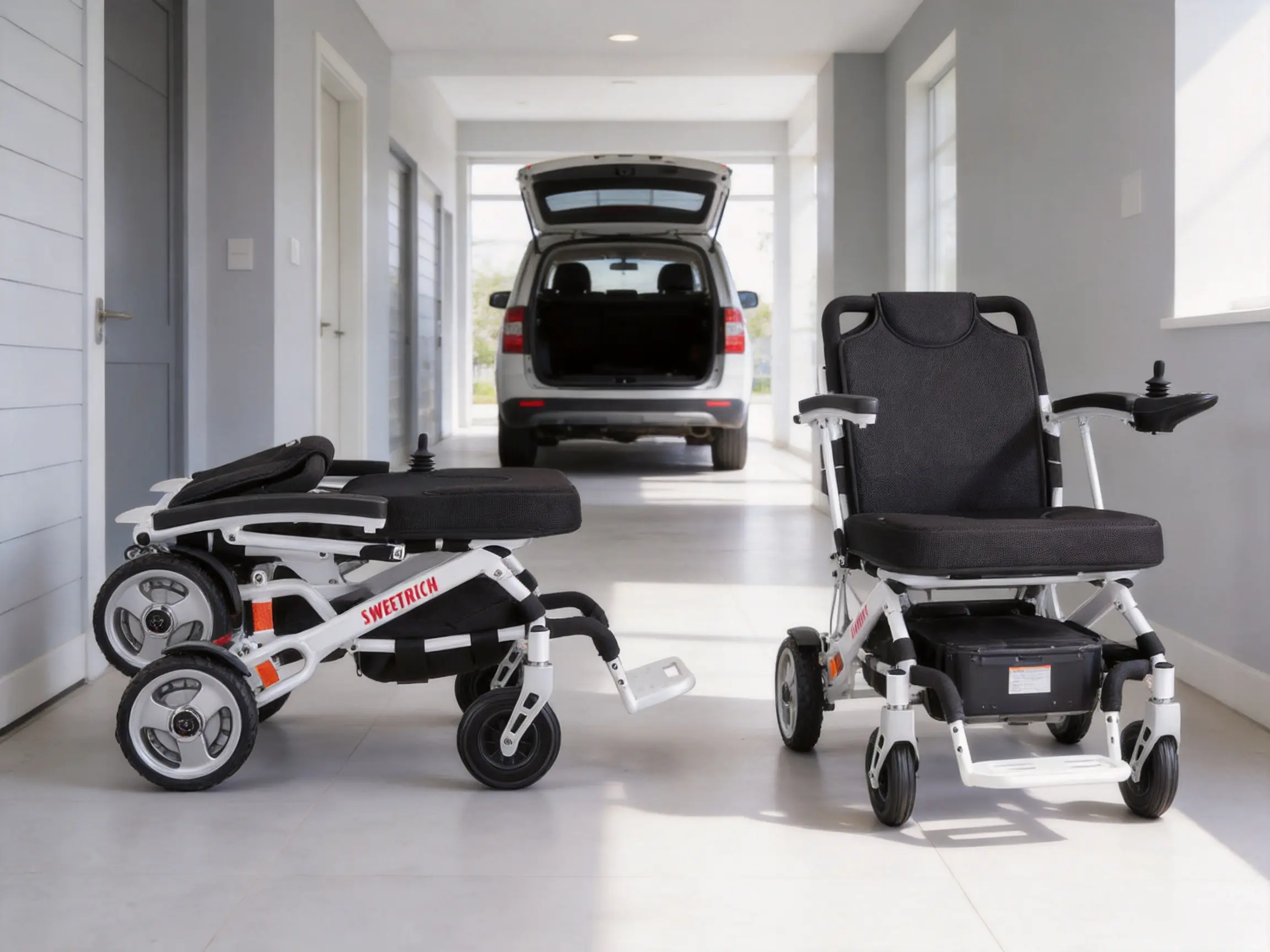
Its rapid folding mechanism is one of its most important advantages. The supplied product information states that it folds in just a second. In practical terms, quick folding can reduce the time and effort required to transition from driving to transport. A caregiver or family member does not need to spend several minutes dismantling the chair before placing it in a vehicle. The user can also benefit from greater flexibility when an itinerary changes unexpectedly.
Compact folding is particularly valuable for travel. A powered wheelchair that can be folded and stored more easily may be suitable for car trips, hotel stays, family events, shopping excursions, and other journeys. It can also reduce the amount of dedicated storage space required at home. The result is a mobility product that can be integrated into ordinary life instead of being reserved only for planned outings.
Lightweight Construction for Easier Handling
Weight is a major consideration when a powered mobility product must be lifted or loaded. The iFold Light is listed at 19 kilograms without the battery. This is a meaningful portability feature because many powered wheelchairs and mobility scooters become difficult to handle when their frames, motors, batteries, and accessories are combined into one heavy unit.
A lighter frame can make several activities more manageable. Loading the wheelchair into a vehicle may require less physical effort. Taking it out of storage can be quicker. Caregivers may find it easier to move the chair through a building, while users who have sufficient strength may be able to participate more actively in the transport process. The practical advantage is not merely a lower number on a specification sheet; it is the possibility of reducing dependence on lifting equipment or additional assistance.
However, customers should distinguish between the listed weight without the battery and the complete operating weight. The final weight will vary according to whether the wheelchair uses the 6 Ah or 12 Ah lithium battery, as well as any additional equipment. Users should confirm the complete ready-to-use weight before planning vehicle loading or air travel.
The lightweight format also supports storage in smaller spaces. When folded, the product can be placed in a vehicle compartment, a home storage area, or another secure location without requiring the same amount of floor space as a full-size powered wheelchair. The exact folded dimensions are not included in the supplied specifications, so buyers should request those measurements when evaluating a particular vehicle or storage location.
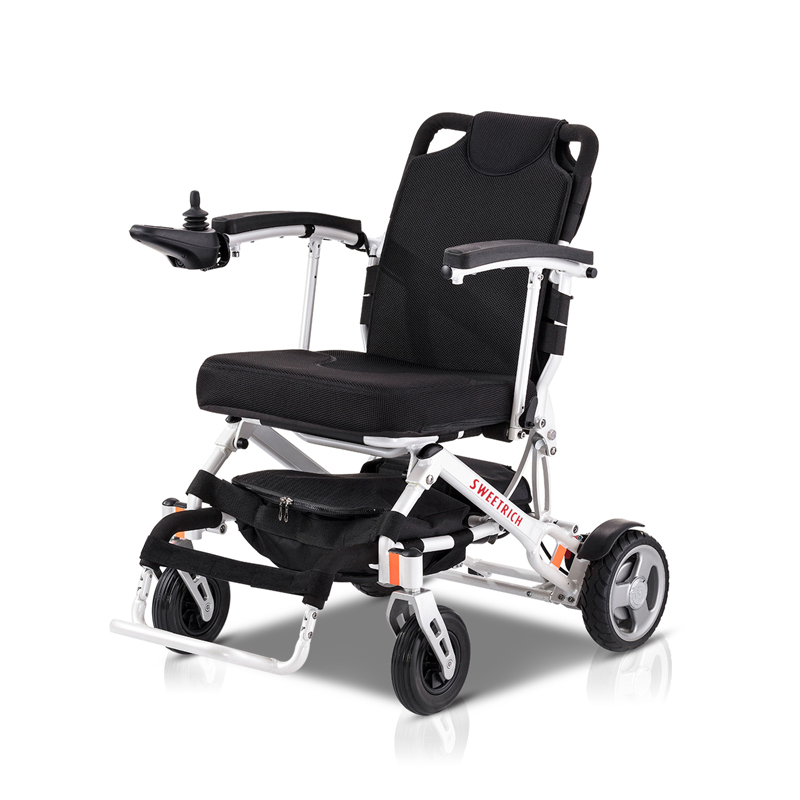
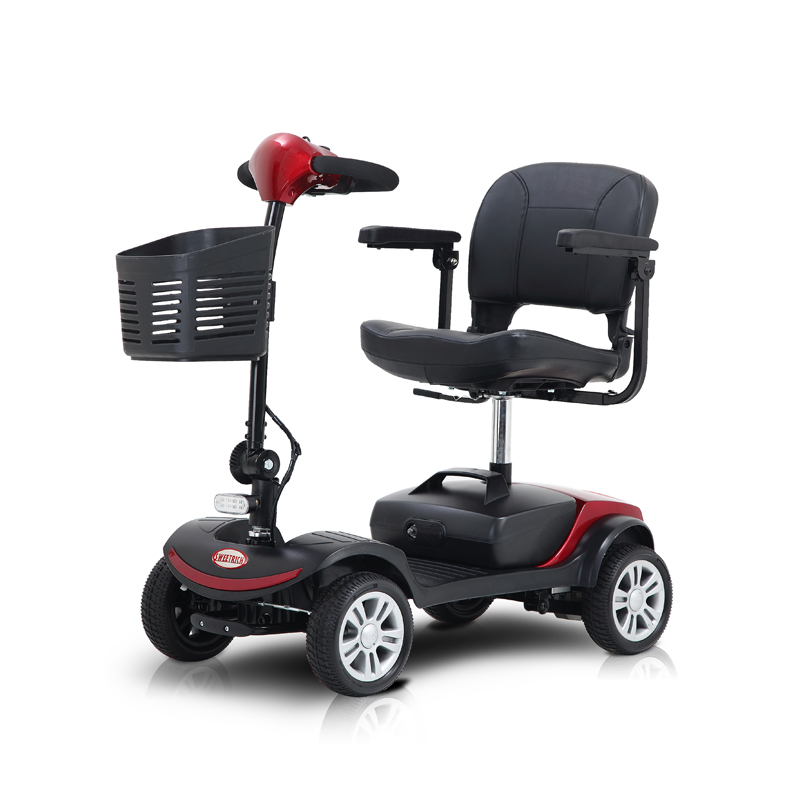
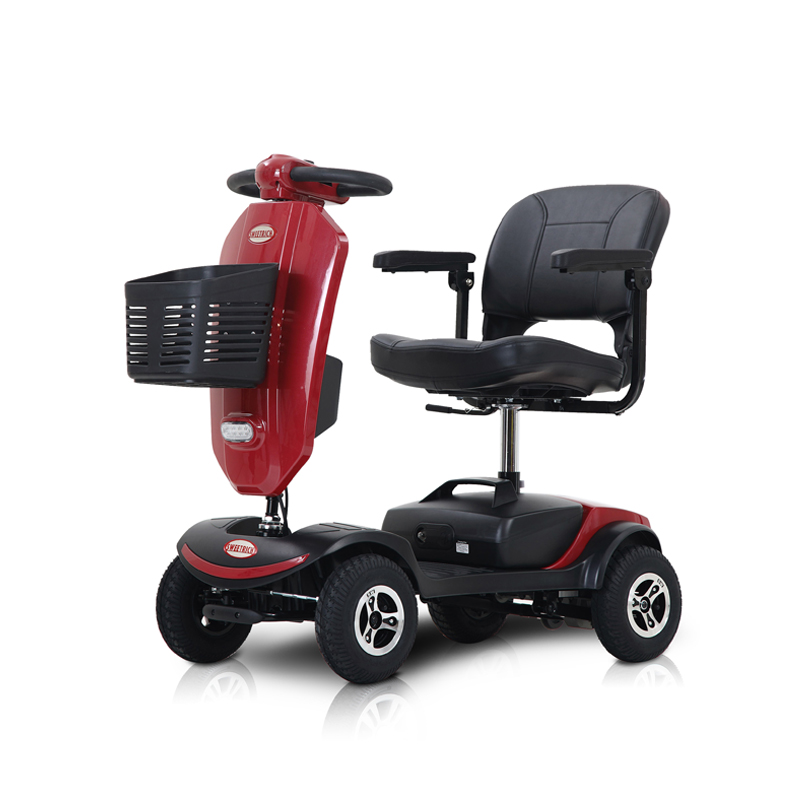
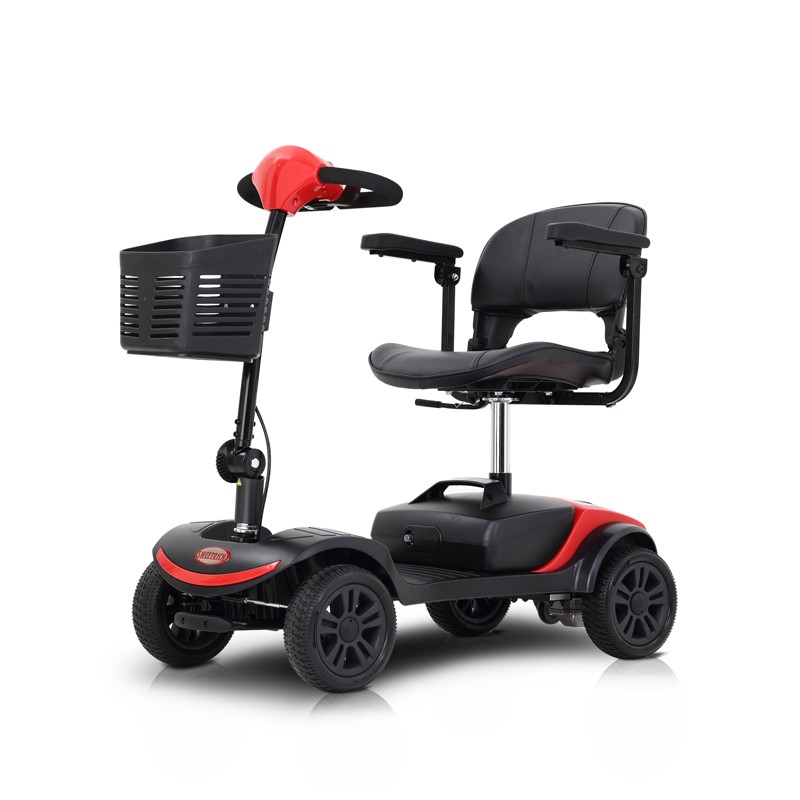
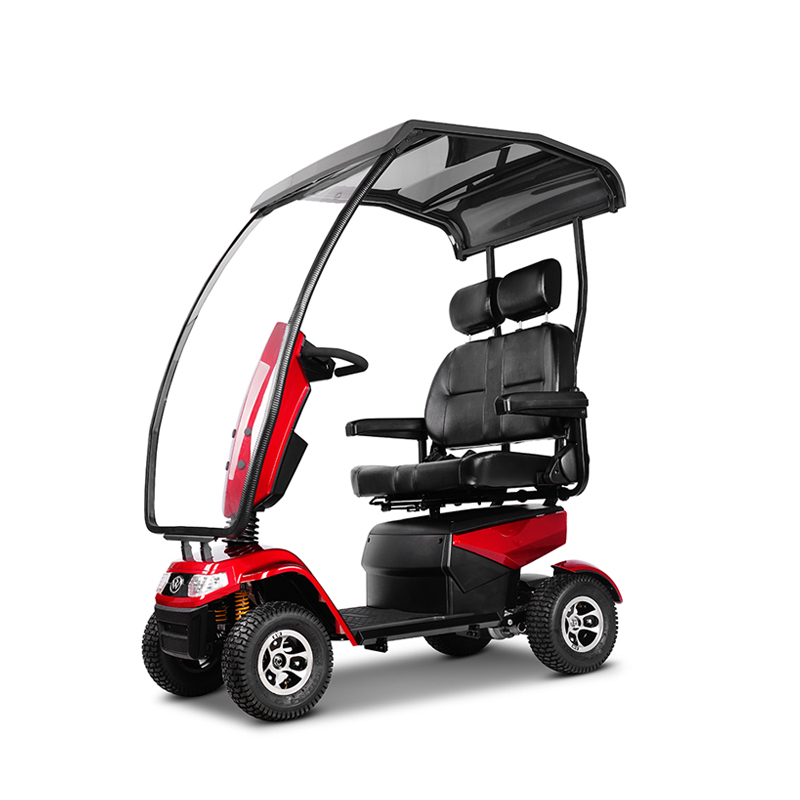
iFold Light 2021 New Lightweight Portable Folding Electroplating Electric Bariatric Wheelchair Attachment
Power System and Driving Performance
The iFold Light uses two 24-volt, 250-watt electric motors. A dual-motor arrangement can provide balanced propulsion through the rear wheels and supports controlled movement on suitable firm surfaces. Separate motors also allow the driving system to distribute power across both sides of the chair, helping create predictable movement during normal travel.
The formal technical information lists a maximum forward speed of 6 kilometers per hour. This speed is suitable for controlled personal mobility in many pedestrian environments, subject to local rules and site conditions. The product content also references speeds of up to 10 kilometers per hour, but the detailed specification table states 6 kilometers per hour. Customers should treat 6 kilometers per hour as the primary confirmed specification unless the supplier provides written clarification for a different configuration.
The maximum driving gradient is listed as 6 degrees. This figure should not be interpreted as permission to use the wheelchair on every slope of that angle. Actual performance can be influenced by rider weight, battery charge, surface condition, tire grip, weather, ramp length, direction of travel, and the presence of obstacles. Safe operation requires a smooth, stable, dry surface and careful evaluation of the environment.
The maximum driving range is specified as 12 plus or minus 2 kilometers or 20 plus or minus 4 kilometers. These two figures correspond to different battery configurations, with the available lithium batteries listed as 24 volts and either 6 Ah or 12 Ah. The larger battery is expected to support the longer range, although actual distance will depend on terrain, rider weight, speed, temperature, stopping frequency, tire condition, and driving style.
Range should always be viewed as an estimate rather than a guarantee. A user traveling on level indoor flooring may achieve a different result from someone driving outdoors over uneven pavement or moderate slopes. Planning a safety reserve is important. Users should avoid depending on the maximum stated range to complete a journey without access to charging or an alternative transportation plan.
Lithium Battery Options and Charging
The wheelchair uses a 24-volt lithium battery system. Two capacity options are identified: 6 Ah and 12 Ah. This provides a useful choice between a potentially lighter battery configuration for shorter trips and a higher-capacity configuration for users who need additional range. The appropriate selection depends on the user’s routine, transport requirements, and preferred balance between portability and travel distance.
The supplied charger is rated at 24 volts and 2 amps. Charging time is listed as approximately 3 to 6 hours. Charging duration may vary according to the battery capacity, remaining charge, battery condition, ambient temperature, and charger behavior. Users should use the compatible charger and follow the supplier’s charging instructions rather than substituting an unapproved charger.
Lithium batteries require responsible handling. The battery should be protected from excessive heat, water exposure, impact, and unauthorized modification. Users should inspect the battery and charging equipment for visible damage before use. Charging should take place in a suitable, well-ventilated location according to the instructions. For air travel or other transportation, battery acceptance rules can be strict, so the battery specification and required documentation should be confirmed with the carrier in advance.
The removable or transportable nature of the battery, if provided in the particular configuration, can also influence convenience. Customers should verify how the battery is removed, whether it must be separated during vehicle transport, and whether the battery can be charged independently from the chair. These details are important for users who travel frequently or have limited access to indoor charging locations.
Control, Braking, and Everyday Safety
The product is equipped with an electromagnetic brake system. Electromagnetic braking is commonly used in powered mobility equipment because it can engage when the drive control is released, helping the chair slow and stop in a controlled manner. This feature can be valuable when a user needs to pause on a level surface or stop during ordinary low-speed travel.
Braking performance is still dependent on the operating environment. A wheelchair should not be used on a slope beyond its rated capability, near unprotected edges, on slippery surfaces, or in conditions where traction is uncertain. Users should maintain a safe speed, keep both hands and feet properly positioned, and avoid sudden directional changes. The electromagnetic brake is a supporting safety feature, not a substitute for careful operation.
The motor controller is listed as 24 volts and 45 amps. The controller manages the relationship between the user’s input and the motor response. A well-matched controller can support smoother acceleration, controlled speed adjustment, and consistent operation. It is one of the key electrical components influencing the driving experience, even though it is not always visible to the user.
Before regular use, users should practice starting, stopping, turning, reversing, and navigating narrow spaces in a clear area. Familiarity is especially important for first-time powered wheelchair users. The chair should be operated only by a person who can safely understand and control the device. Customers should also review the product manual for information about maximum user weight, charging, folding, maintenance, and emergency procedures.
Solid Tires for Reduced Maintenance
The iFold Light uses solid tires, with listed tire sizes of 7 inches at the front and 8 inches at the rear. Solid tires eliminate the need to inflate inner tubes or regularly check air pressure. This can simplify maintenance for users who prefer a low-maintenance travel chair.
Because solid tires do not rely on air pressure, they are not vulnerable to ordinary punctures. That can be a practical advantage during shopping trips, family visits, or travel where a flat tire would create inconvenience. Users do not need to carry an air pump or repair a puncture after driving over small sharp objects.
Solid tires can have a different ride feel from pneumatic tires. They may transmit more vibration over rough surfaces and may not provide the same cushioning as air-filled tires. For this reason, the product is best used on appropriate firm surfaces rather than severe terrain. Regular inspection remains necessary. Users should check for excessive wear, cracks, loose components, or damage and should avoid operating the wheelchair when the tires are visibly compromised.
The 7-inch front and 8-inch rear tire sizes support the compact format. The smaller front wheels assist maneuverability, while the rear wheels provide the main driving contact. The chair does not list a suspension system; the specification identifies suspension as “/”. Therefore, users should select smooth pathways where possible and approach thresholds, uneven ground, and surface transitions slowly.
Storage and User Convenience
Under-seat storage is included as a practical convenience feature. A storage area beneath the seat can hold small personal items during short trips, such as a handbag, shopping essentials, or other belongings that are within the compartment’s size and weight limits. Keeping items under the seat can also help users avoid carrying a separate bag while driving.
Storage capacity should be used responsibly. Heavy objects may affect balance, steering, or folding. Items should not interfere with the wheels, motor components, battery, brake mechanism, or folding structure. Users should also ensure that nothing protrudes into the path of moving parts. The storage compartment is intended for everyday personal items, not for overloading the wheelchair.
The compact design may be particularly useful in homes where storage space is limited. When folded, the wheelchair can be kept in a designated area rather than occupying a large open floor space. In a vehicle, a folded design may reduce the need for a specialized wheelchair-accessible conversion, although vehicle compatibility must be checked individually.
Travel convenience also depends on the user’s complete routine. A wheelchair can be easy to fold yet difficult to lift if the battery remains installed. It may fit in one vehicle but not another. It may be suitable for a hotel room but not for a narrow doorway. Customers should evaluate the entire journey, including loading, unloading, charging, indoor use, outdoor surfaces, and return travel.
Advantages Compared With Conventional Alternatives
The iFold Light competes primarily through portability and simplicity. A full-size powered wheelchair may provide more seat width, heavier-duty construction, larger batteries, advanced suspension, or greater outdoor capability. However, those benefits often come with increased weight and size. The iFold Light is aimed at users who value convenient transport and everyday travel over heavy-duty outdoor performance.
Compared with a manual wheelchair, the iFold Light adds powered movement and reduces the physical effort required from the user or caregiver. The user can operate the motors through the control system rather than relying entirely on arm strength or another person’s pushing. This can support greater independence over suitable distances and surfaces.
Compared with many mobility scooters, the folding electric wheelchair format may provide a more wheelchair-oriented seating position and a compact structure suited to users who prefer joystick-controlled movement. A scooter may be advantageous for some outdoor journeys, but a folding power wheelchair can be more convenient where maneuverability, compact storage, and direct control are priorities.
Compared with heavier folding power chairs, the 19-kilogram weight without the battery is a notable differentiator. The combination of rapid folding, solid tires, under-seat storage, and lithium-battery options creates a balanced travel package. It is not designed to replace every type of mobility device, but it can be a strong choice for people seeking a lighter, more transport-friendly solution.
The product’s limitations should also be recognized. Its listed range is intended for short and moderate trips rather than extended touring. Its 6-degree maximum gradient limits use on steep slopes. The absence of suspension means that very rough surfaces may be uncomfortable. The 120-kilogram weight capacity, equal to 265 pounds, should not be exceeded. Honest evaluation of these factors helps ensure that the product is matched with the right user and environment.
Specification |
Listed information |
Practical significance |
Overall dimensions |
970 x 560 x 870 mm |
Compact profile for suitable indoor spaces and storage areas |
Weight without battery |
19 kg |
Supports easier transport and vehicle loading |
Maximum forward speed |
6 km/h |
Controlled travel speed for appropriate pedestrian environments |
Maximum driving gradient |
6 degrees |
Suitable only for assessed, stable slopes within the rated limit |
Driving range |
12 ± 2 km or 20 ± 4 km |
Range varies according to battery configuration and operating conditions |
Weight capacity |
120 kg or 265 lb |
Maximum combined user and applicable load rating |
Front and rear tires |
7 inches front, 8 inches rear |
Compact wheel arrangement for suitable firm surfaces |
Braking system |
Electromagnetic brake |
Supports controlled stopping when used correctly |
Battery options |
24 V lithium, 6 Ah or 12 Ah |
Provides a choice between portability and longer potential range |
Charger |
24 V, 2 A |
Compatible charging system for the listed battery platform |
Charging time |
Approximately 3 to 6 hours |
Allows overnight or scheduled recharging for regular use |
Motors |
24 V, 250 W x 2 |
Dual-motor propulsion for powered travel |
Manufacturing Capability and Product Development
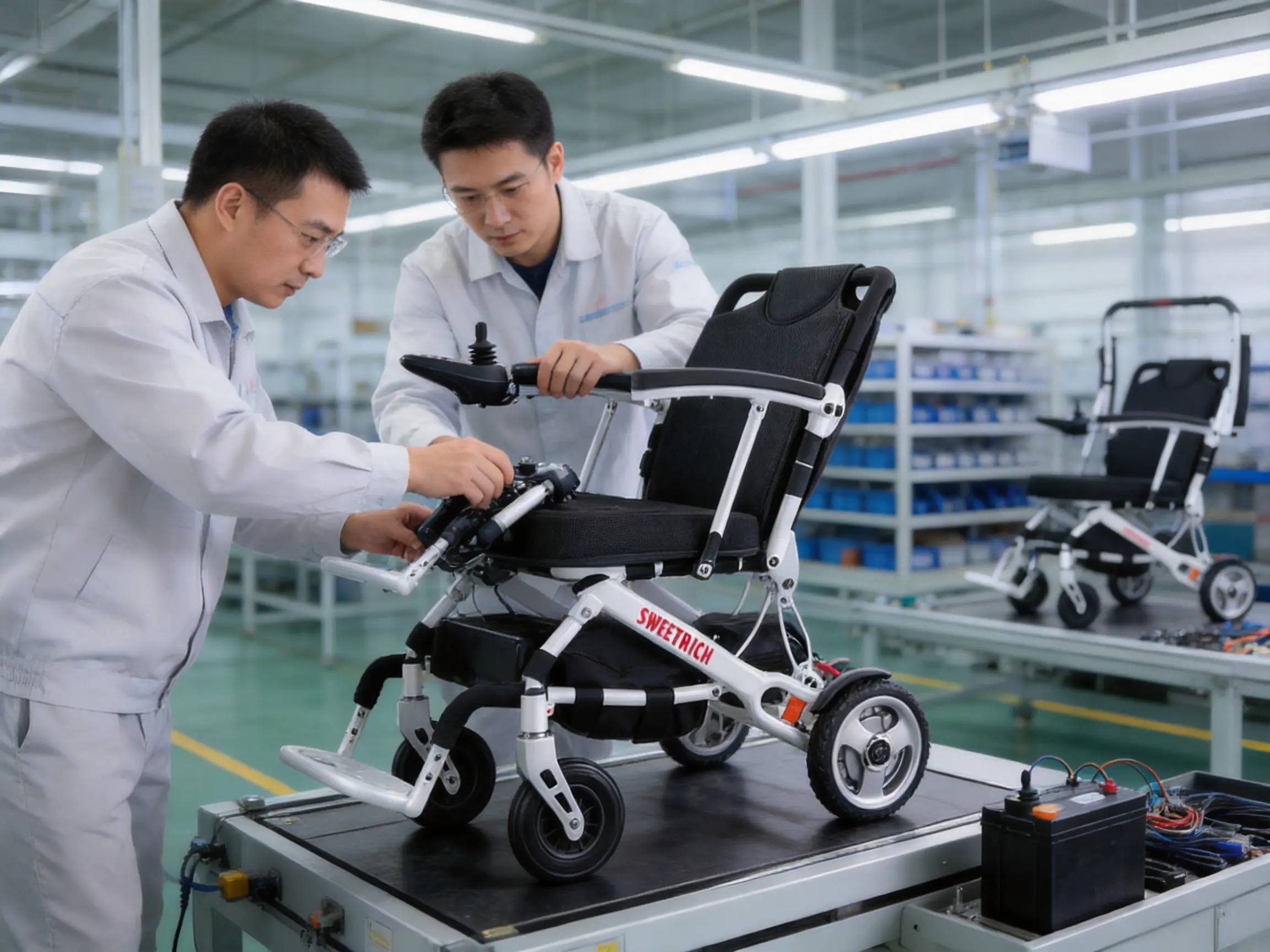
The manufacturer, Suzhou Sweetrich Vehicle Industry Technology Co., Ltd., is described as a high-tech company located in Suzhou Industrial Zone, Jiangsu, China. Established in 2011, the company has developed experience in the research, development, and production of mobility scooters and power wheelchairs. Its reported factory covers approximately 30,000 square meters within a larger 60-acre site.
A dedicated manufacturing base can provide advantages across the product lifecycle. Research and development teams can work directly with production engineers. Manufacturing feedback can be incorporated into design revisions. Assembly procedures can be standardized, and quality checks can be integrated into multiple stages rather than being limited to a final inspection.
For a folding electric wheelchair, manufacturing precision is particularly important. The folding mechanism must align correctly and operate consistently. Motor mounts need to remain secure during repeated use. Battery connections must be assembled carefully. The controller, wiring, brake system, wheels, and frame must function as one coordinated system. A production organization with experience in mobility equipment can better understand the practical demands of these relationships.
The company reports ownership of intellectual property for its electric scooters and power wheelchairs. Product-focused intellectual property can support independent design development rather than relying entirely on generic components or copied structures. It may also allow the manufacturer to refine folding systems, control technology, frame construction, and user-focused features over time.
Manufacturing strength should not be judged only by factory size. It also includes engineering discipline, supplier control, assembly consistency, testing procedures, documentation, and after-sales support. The company states that it uses strict production management and scientific product design to support reliability and quality. These principles are relevant to customers because a mobility device must remain dependable through repeated folding, charging, driving, and storage cycles.
Quality-Oriented Production Processes
Although the supplied product material does not provide a detailed step-by-step factory inspection schedule, the stated manufacturing approach can be understood through the demands of the product. A quality-oriented process begins with material and component control. The frame, wheels, motors, battery system, controller, brakes, seat structure, and folding hardware must meet the intended design requirements before assembly begins.
During assembly, technicians need to ensure that mechanical fasteners are correctly installed and that moving parts operate without excessive resistance. Electrical wiring should be routed to reduce the risk of pinching during folding. Battery connectors should be secure. Motor and brake components should be installed in a way that supports reliable performance under normal operating loads.
Functional testing is essential for powered mobility products. A completed unit should be checked for forward and reverse movement, steering response, braking behavior, folding operation, battery connection, charger compatibility, and basic control performance. Testing can help identify assembly errors before the product reaches the customer.
Quality management also involves consistency from one unit to the next. A travel wheelchair is expected to fold in the same general manner each time, respond predictably to the controls, and maintain stable electrical connections. Standardized work instructions, trained operators, inspection records, and production supervision can all contribute to this consistency.
The company’s stated international market experience is another potential strength. Its products are reported to be exported to America, Europe, Japan, Australia, the Middle East, Russia, and other markets. Serving different regions requires attention to packaging, documentation, customer expectations, transportation conditions, and local market requirements. International experience can help a manufacturer build more structured procedures for export products.
Customers should still request current compliance documents, user manuals, warranty conditions, battery certificates, and market-specific approvals before purchase. Manufacturing experience is valuable, but product suitability and regulatory acceptance must be confirmed for the intended country and use case.
Engineering for Independence
The purpose of a travel power wheelchair is not simply to move a person from one point to another. It is to help the user participate in ordinary activities with fewer logistical barriers. A lightweight folding product can support independence by making it easier to bring powered mobility along instead of leaving it at home because transportation is too difficult.
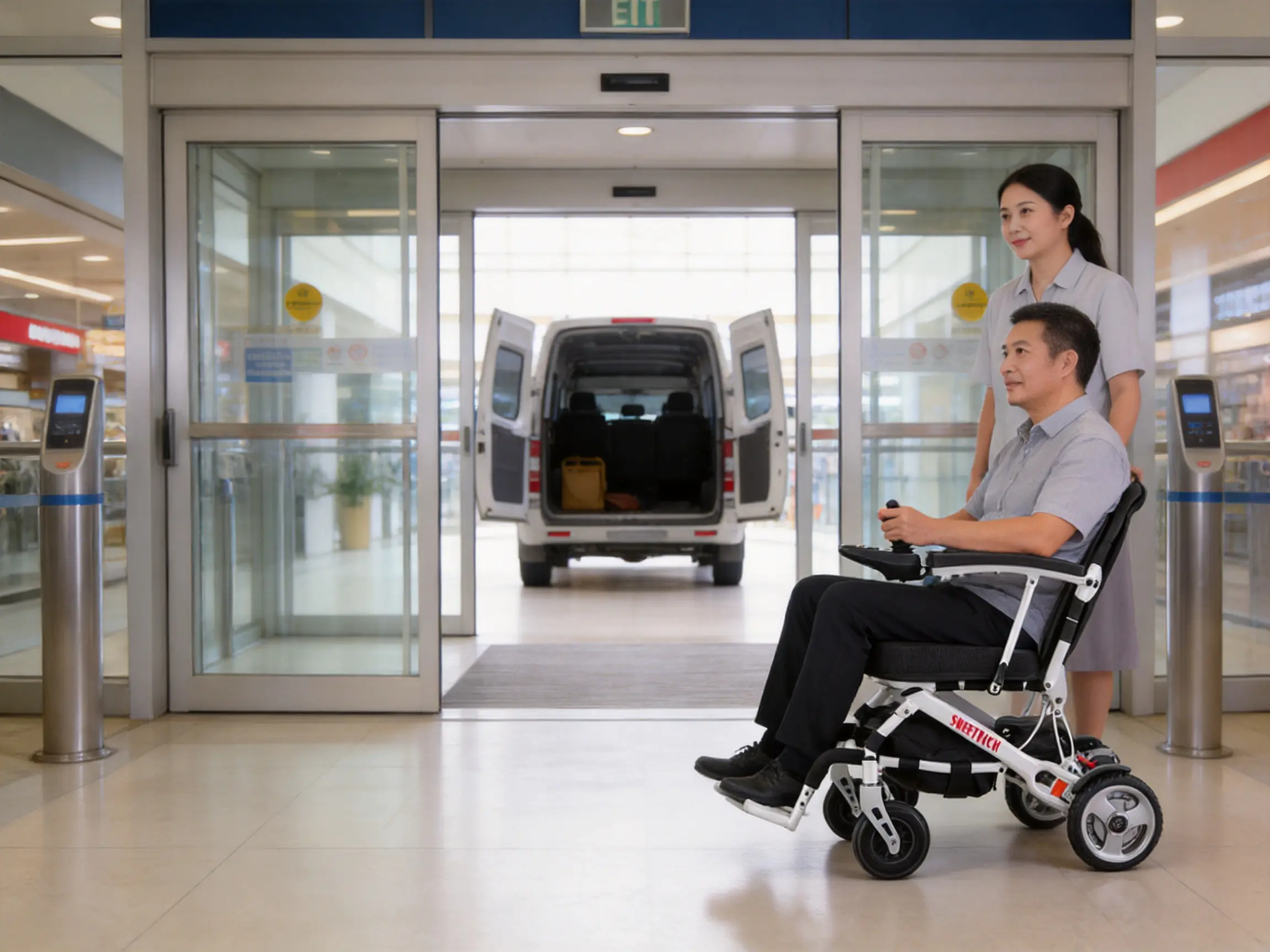
Independence may take different forms. One user may want to visit relatives without depending on a borrowed wheelchair. Another may need assistance navigating a shopping center but prefer to control movement personally. A third may use the wheelchair for short trips between a vehicle, a building entrance, and an indoor destination. The product’s compact format can support these different routines when the environment is suitable.
Family members and caregivers may also experience practical benefits. Folding a chair quickly can reduce preparation time. A lower transport weight can make loading less demanding. Under-seat storage can keep personal items organized. Solid tires can reduce maintenance tasks. These features may not eliminate the need for assistance, but they can simplify the overall mobility routine.
The product is also designed for users who value discretion and ordinary appearance. A compact folding chair can be stored in a home without dominating a room. It can be transported without requiring a large specialized vehicle in every situation. For many people, reducing the visibility and complexity of mobility equipment can make travel feel more natural and less disruptive.
Using the Wheelchair in Different Environments
Indoor use is one of the areas where the compact dimensions may be especially helpful. Users should still confirm that the chair can pass through doorways and maneuver around furniture. Smooth floors, accessible ramps, elevators, and clear pathways are the most appropriate conditions. When entering a narrow space, the user should reduce speed and keep a safe distance from walls, furniture, and other people.
Outdoor use should be limited to stable, suitable surfaces. Paved sidewalks, smooth access paths, indoor-outdoor flooring, and well-maintained hard surfaces are generally more appropriate than loose gravel, deep grass, mud, sand, or heavily uneven ground. Solid tires may prevent punctures, but they do not turn a compact travel wheelchair into an all-terrain vehicle.
Weather conditions require attention. Water can affect electrical equipment, controls, connectors, and battery components. The wheelchair should not be operated through deep water or exposed unnecessarily to heavy rain. If the product becomes wet, it should be dried and inspected according to the instructions before further use.
Users should plan around battery range and charging access. A journey that appears short on a map may require additional energy because of repeated stops, inclines, rough surfaces, or detours. It is wise to begin with a fully charged battery, identify a return route, and avoid relying on the final portion of the stated range.
Accessibility rules and public-space regulations vary by location. The product should be used in accordance with local requirements. Users should also be considerate of pedestrians, maintain a safe speed, use designated access routes where available, and avoid blocking entrances or emergency pathways.
Transport, Folding, and Storage Recommendations
Before folding the wheelchair, the user should stop on a stable surface, switch off the controls, and follow the instructions provided with the product. Personal items should be removed or secured if they could fall out. The folding area should be clear of fingers, clothing, cables, and other objects that could become trapped.
When placing the wheelchair in a vehicle, it should be positioned securely so it cannot slide or tip during acceleration, braking, or turning. The battery may need to be removed or handled separately depending on the vehicle, transportation method, or carrier requirements. Customers should confirm the appropriate procedure before traveling.
Long-term storage should take place in a dry, protected environment. The wheelchair should not be stored where extreme heat, freezing temperatures, moisture, or corrosive substances can damage the frame or electrical system. The battery should be maintained according to the charging and storage guidance provided by the manufacturer.
Regular inspection can help preserve performance. Users should check the folding mechanism, wheels, motor area, control system, brake response, battery connectors, charger, and fasteners. Any unusual noise, reduced braking, intermittent power, damaged cable, or difficulty folding should be investigated before continued use.
Who May Benefit Most From This Product?
The iFold Light may be particularly suitable for adults who need powered assistance for short or moderate travel but place a high priority on portability. It can serve users who frequently travel by car, visit family, attend appointments, shop in accessible facilities, or need a compact powered chair for indoor and suitable outdoor environments.
It may also suit families searching for a wheelchair that can be transported without a large lift system. The 19-kilogram frame weight without the battery is an important consideration for households where storage and vehicle loading are shared responsibilities.
The product may be less suitable for users who require extensive suspension, high ground clearance, very long range, steep-slope performance, or heavy-duty outdoor capability. It may also be unsuitable if the user’s weight exceeds the 120-kilogram capacity or if the user cannot safely operate the controls. A professional assessment may be appropriate for people with complex seating, postural, medical, or neurological requirements.
Because the product is identified as non-medical for the United States market, customers should not assume that it replaces a clinically prescribed wheelchair or provides therapeutic support. Anyone with specific health or seating needs should consult a qualified healthcare or rehabilitation professional before selecting mobility equipment.
Frequently Asked Questions
What type of product is the iFold Light?
It is a compact folding electric wheelchair intended primarily for travel and personal mobility. It is described as a non-medical device for the United States market and is designed to provide powered movement on appropriate surfaces.
How much does the wheelchair weigh?
The listed weight is 19 kilograms without the battery. The complete operating weight will be higher and depends on the selected 24-volt lithium battery, either 6 Ah or 12 Ah, along with any included accessories.
How quickly can it be folded?
The supplied product information states that it folds in just one second. Users should follow the official folding procedure and keep hands, clothing, cables, and personal items clear of moving parts.
What is the maximum speed?
The detailed technical table lists a maximum forward speed of 6 kilometers per hour. The product description also mentions a higher speed figure, so customers should confirm the exact configuration with the supplier. The 6-kilometer-per-hour specification should be treated as the primary confirmed figure.
What is the expected driving range?
The listed range is 12 plus or minus 2 kilometers or 20 plus or minus 4 kilometers. The difference is associated with battery configuration, with the 12 Ah option expected to provide the longer potential range. Actual results vary according to terrain, load, temperature, speed, and driving conditions.
Can the wheelchair be used on slopes?
The maximum driving gradient is listed as 6 degrees. Users should operate only on stable, dry slopes within the rated limit and should consider load, surface condition, battery level, and turning requirements. A rated gradient is not a guarantee of safe operation in every situation.
What is the weight capacity?
The listed weight capacity is 120 kilograms, or 265 pounds. The applicable load should not exceed this rating. Customers should clarify whether luggage or other carried items are included in the stated capacity.
Does it use pneumatic tires?
No. The product uses solid tires, with 7-inch front tires and 8-inch rear tires. Solid tires reduce the risk of punctures and eliminate routine air-pressure checks, but they may transmit more vibration on rough surfaces.
Does the wheelchair have suspension?
The specification lists suspension as “/”, indicating that no suspension system is identified in the supplied data. Users should therefore favor smooth, firm surfaces and approach uneven areas carefully.
How long does charging take?
Charging time is listed as approximately 3 to 6 hours. The actual time depends on battery capacity, remaining charge, battery condition, temperature, and the charging system. Only the compatible charger should be used.
Can it be transported in a car?
The folding design and lightweight frame are intended to make vehicle transport easier. However, customers must check the folded dimensions, complete weight with battery, vehicle opening size, available storage space, and safe securing method before travel.
Is it suitable for air travel?
Airline policies for powered wheelchairs and lithium batteries vary. Customers must contact the airline in advance and confirm battery capacity, packaging, documentation, and handling requirements. The manufacturer or supplier should provide any required battery information.
What makes it different from a heavier powered wheelchair?
Its key differences are the lightweight 19-kilogram frame weight without the battery, rapid folding, compact dimensions, solid tires, under-seat storage, and travel-oriented design. These features prioritize portability and everyday convenience rather than heavy-duty terrain capability.
Where is the product manufactured?
The product is manufactured by Suzhou Sweetrich Vehicle Industry Technology Co., Ltd., a mobility equipment company located in Suzhou, Jiangsu, China. The company reports experience in developing and producing mobility scooters and power wheelchairs since 2011.
What should customers request before ordering?
Customers should request current folded dimensions, complete operating weight, battery documentation, warranty terms, user instructions, replacement-part availability, market-specific certifications, and confirmation of the exact speed and range configuration.
Conclusion
The iFold Light is a travel-focused folding electric wheelchair that emphasizes portability, convenience, and everyday independence. Its lightweight frame, rapid folding structure, compact dimensions, lithium-battery options, dual 250-watt motors, electromagnetic brake, solid tires, and under-seat storage form a practical package for users who need powered mobility without the bulk of a full-size chair.
Its strongest competitive advantage is the way these features work together. A low frame weight is more useful when the chair also folds quickly. Folding is more valuable when the dimensions support vehicle storage. Solid tires reduce maintenance, while lithium batteries provide a practical power source for short and moderate journeys. Under-seat storage adds convenience without requiring a separate carrying bag.
The manufacturing background of Suzhou Sweetrich Vehicle Industry Technology Co., Ltd. adds further value. Its reported factory resources, product development experience, international market presence, intellectual property, and quality-focused production principles provide a foundation for mobility equipment intended for repeated daily use.
At the same time, responsible selection is essential. The chair has a defined 120-kilogram capacity, a listed 6-kilometer-per-hour maximum speed, a 6-degree maximum gradient, and a stated range that varies by battery and conditions. It is not identified as a medical device, does not list suspension, and is not intended to replace every heavy-duty or clinically configured wheelchair.
For users whose priorities are convenient travel, compact storage, powered independence, and reduced transport difficulty, the iFold Light offers a well-balanced solution. Careful attention to operating limits, surface conditions, battery handling, local rules, and vehicle compatibility can help customers obtain the greatest practical benefit from this lightweight folding mobility product.
References
1. Product specification sheet for the iFold Light folding electric wheelchair, including dimensions, motor, battery, brake, tire, speed, gradient, range, and weight information.
2. Manufacturer-provided product description and feature summary for the iFold Light travel power wheelchair.
3. Manufacturer company profile describing research, development, production capacity, export experience, and quality-management principles.
4. General safe-use principles for powered wheelchairs, including slope assessment, battery charging, transportation, storage, and pedestrian-area operation.
5. General lithium-battery transportation and charging guidance for personal mobility equipment.