
 +86-(0)512-82283871

Content
- 1 A Portable Mobility Solution Built Around Convenience
- 2 Lightweight Construction and Easier Transportation
- 3 Folding Design for Travel and Storage
- 4 Electric Drive System and Everyday Performance
- 5 Battery Choices and Travel Range
- 6 Braking, Tires, and Control
- 7 Comfort, Accessibility, and Practical Use
- 8 Advantages Compared with Conventional Mobility Equipment
- 9 Designed for Travel Smart Mobility
- 10 Manufacturing Expertise and Product Development
- 11 Quality Management and Reliability Considerations
- 12 Engineering Balance: Portability Versus Outdoor Capability
- 13 Safety and Responsible Operation
- 14 Maintenance and Long-Term Ownership
- 15 Who May Benefit from This Product?
- 16 Purchasing Questions for Buyers
- 17 Frequently Asked Questions
- 17.1 Is the iFold Light a medical device?
- 17.2 How much does the chair weigh?
- 17.3 How quickly does it fold?
- 17.4 What is the maximum user weight?
- 17.5 What is the maximum speed?
- 17.6 What is the travel range?
- 17.7 How long does charging take?
- 17.8 Does it have pneumatic tires?
- 17.9 Can it climb hills?
- 17.10 Does it have suspension?
- 17.11 Is it suitable for air travel?
- 17.12 Where is the chair manufactured?
- 17.13 What makes it different from a larger power wheelchair?
- 18 Conclusion
- 19 References
- 20 Product: iFold Light 2021 New Lightweight Portable Folding Electroplating Electric Bariatric Wheelchair Attachment
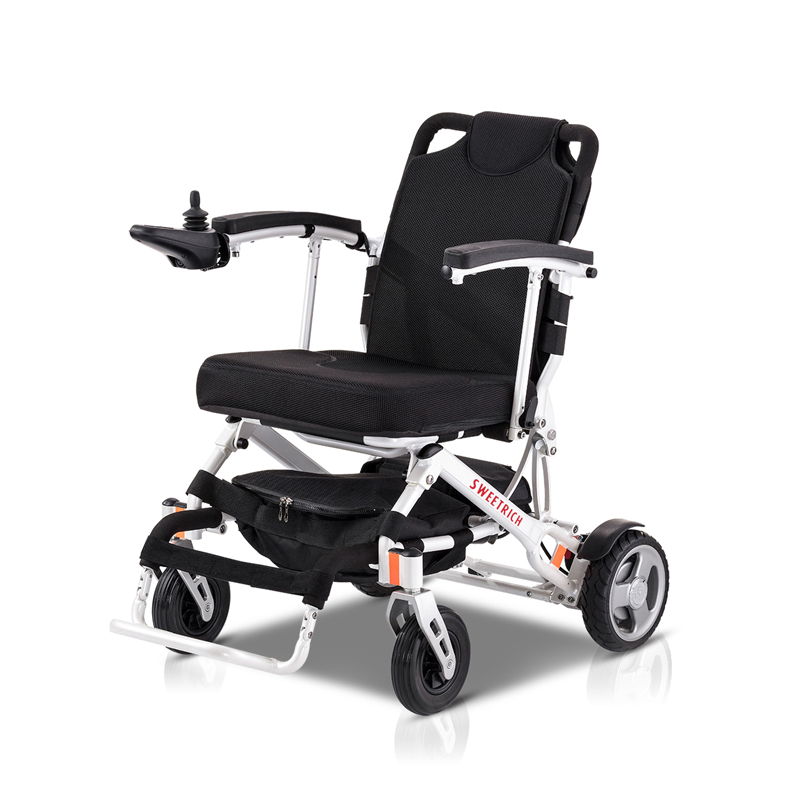
For people who want greater independence without giving up portability, a folding power wheelchair can provide a practical alternative to a large, permanently assembled mobility device. The iFold Light is designed around this idea: a compact electric wheelchair that can be folded quickly, transported more easily, and stored in places where a conventional power chair may be inconvenient. Its combination of a lightweight frame, lithium-battery power system, electromagnetic braking, solid tires, and compact dimensions makes it suitable for travel-oriented users who need powered mobility for daily activities and leisure trips.
This product is presented as a non-medical device for the United States market. It is intended to support personal mobility and convenience rather than diagnose, treat, cure, or prevent a medical condition. Users should assess their own physical abilities, operating environment, transportation requirements, and local regulations before purchasing or using the chair.
The central advantage of the iFold Light is that it approaches powered mobility from a travel-first perspective. Instead of prioritizing a large seat, heavy frame, extensive suspension, or high-capacity outdoor chassis, it emphasizes folding convenience, reduced weight, compact storage, and straightforward electric operation. At approximately 19 kilograms without the battery, it is substantially easier to handle than many full-size power wheelchairs, although users should still use safe lifting techniques and obtain assistance when necessary.
A Portable Mobility Solution Built Around Convenience
Traditional electric wheelchairs often provide excellent stability and comfort, but their size and weight can make transportation difficult. Some models require a vehicle lift, a large van, or permanent storage space. A compact folding chair addresses a different set of priorities. It is intended for individuals who may need powered assistance while traveling through shopping centers, hotels, parks, airports, public buildings, and other relatively accessible environments.
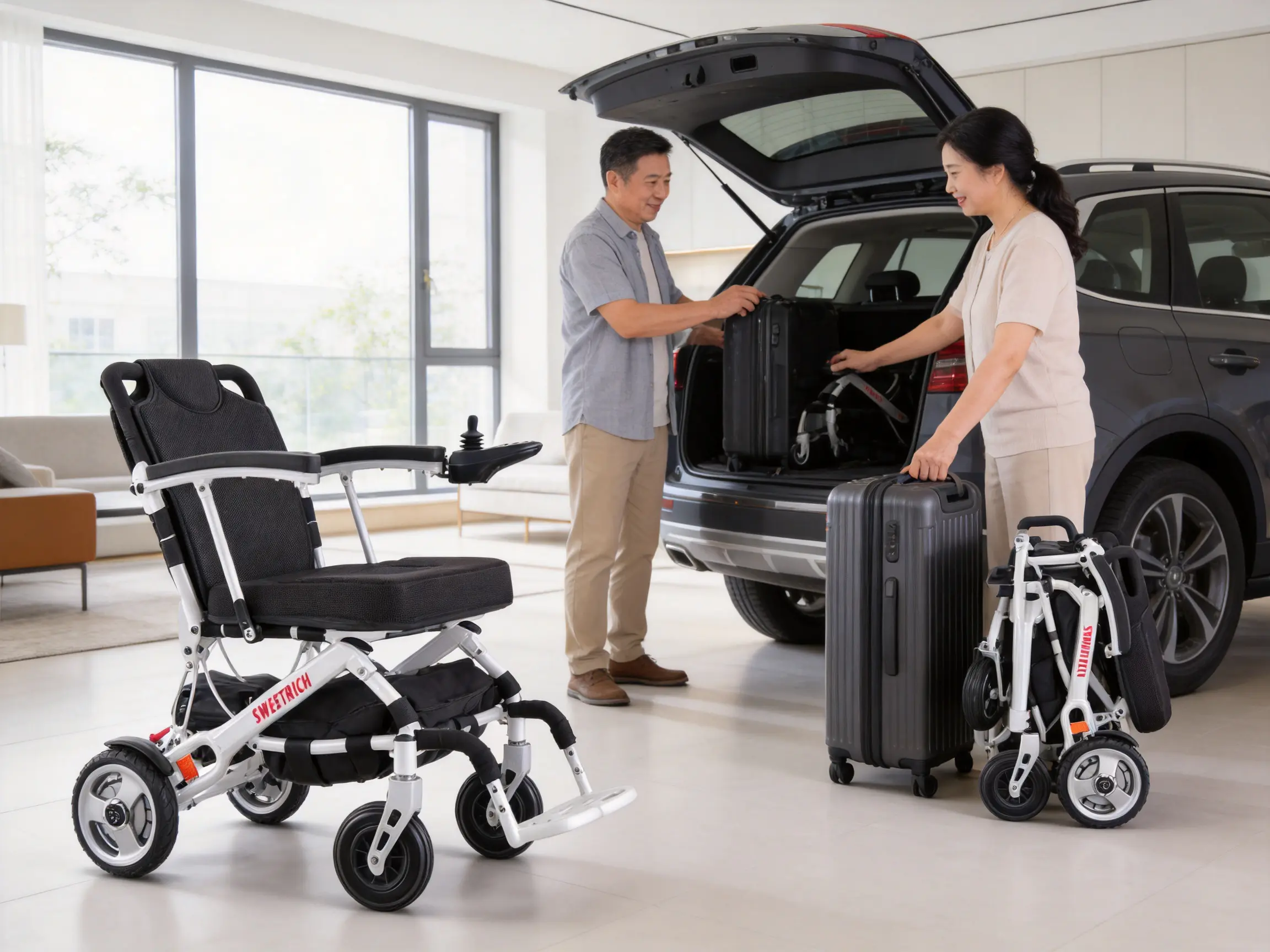
The iFold Light folds in approximately one second according to the supplied product information. Fast folding can reduce the time and effort involved in preparing for a trip. A user or caregiver can potentially fold the chair before loading it into a vehicle, placing it in a storage area, or moving it through a doorway. The exact folding procedure, lifting points, and safe handling method should always be confirmed through the operating instructions.
Compactness can be particularly valuable for families. A travel chair that occupies less space leaves more room for luggage, shopping, personal equipment, or other passengers. It may also be more suitable for homes with limited storage areas. Instead of allocating a garage corner or a dedicated room to a large mobility device, the owner may be able to store a folded chair in a vehicle compartment or another secure, dry location.
The chair has listed overall dimensions of 970 millimeters in length, 560 millimeters in width, and 870 millimeters in height. These dimensions describe the assembled chair and should be considered when evaluating doorways, elevators, corridors, vehicle interiors, and storage areas. Users should measure their own spaces rather than relying only on general product descriptions.
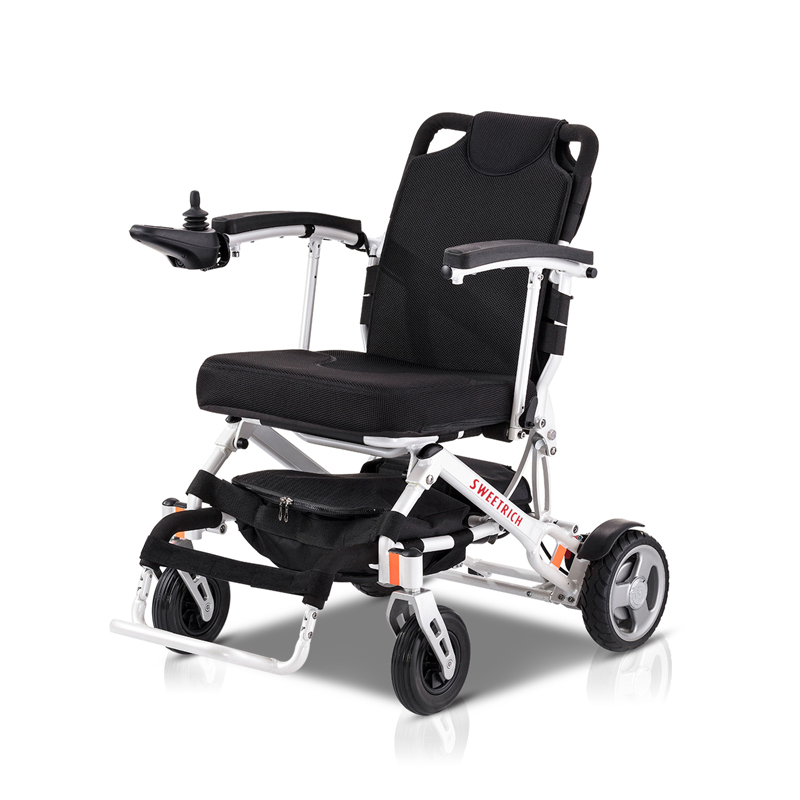
iFold Light 2021 New Lightweight Portable Folding Electroplating Electric Bariatric Wheelchair Attachment
Lightweight Construction and Easier Transportation
Weight is one of the most important factors in a travel power wheelchair. A chair can be technically foldable yet still be difficult to transport if its frame is too heavy. The listed weight of the iFold Light without its battery is 19 kilograms. Actual lifting weight will depend on the selected battery configuration and any accessories attached to the chair.
A lighter chassis can provide several practical advantages. It may be easier for a caregiver to lift into a vehicle, simpler to move from a storage area, and less demanding to position in a hotel room or other temporary location. It can also reduce the need for specialized loading equipment in situations where a heavier chair would require a ramp, hoist, or vehicle lift.
At the same time, lightweight construction does not eliminate the need for careful handling. Nineteen kilograms is still a meaningful load, particularly for one person lifting repeatedly. The safest method may involve two people, a vehicle loading aid, or a suitable ramp. The chair should not be lifted by movable components such as the joystick, armrests, footrests, or control wiring unless the manufacturer specifically identifies them as lifting points.
The compact design also supports more flexible travel planning. A person may take the chair on a family holiday, bring it to a shopping trip, or use it as a secondary mobility device for destinations where walking distances are substantial. The chair’s role is not necessarily to replace every type of wheelchair. Rather, its value lies in offering powered mobility in a package intended to be more convenient to carry and store.
Folding Design for Travel and Storage
The folding mechanism is a defining feature of the product. A fast-folding structure can simplify the transition between driving and transportation. This is especially useful when a user must frequently enter and exit a vehicle, move between indoor and outdoor spaces, or store the chair at the end of the day.
Folding products must balance convenience with structural integrity. A frame must be rigid enough during driving while also allowing controlled movement during folding. The design therefore requires attention to pivot points, locking positions, frame alignment, cable routing, and the relationship between the seat, wheels, battery, and control system. A reliable folding process should be predictable and should not require excessive force.
Users should inspect the chair before each trip. The frame should be fully opened, the folding mechanism should be securely locked, and no cables or personal items should interfere with moving parts. A chair that is not fully unfolded or locked may not provide the stability expected during operation. The same principle applies when folding: the device should be powered off and placed on a stable surface before the process begins.
Compact storage is also beneficial for shared homes and public facilities. The chair can be folded when not in use, helping reduce obstruction in hallways and living spaces. In transport situations, a folded chair may be placed in a suitable luggage area, but it should be secured to prevent movement during acceleration, braking, or turning.
Electric Drive System and Everyday Performance
The iFold Light uses two 24-volt, 250-watt motors. A dual-motor arrangement can provide balanced propulsion to the left and right drive wheels. It may also help the chair maintain controlled movement during ordinary indoor and outdoor travel. The product is intended for practical mobility rather than high-speed recreational driving.
The technical information lists a maximum forward speed of 6 kilometers per hour. The feature description also mentions speeds of up to 10 kilometers per hour, creating a difference between the marketing statement and the detailed specification table. Prospective buyers should treat 6 kilometers per hour as the published specification requiring confirmation and should ask the supplier to clarify whether 10 kilometers per hour applies to a different configuration, operating mode, or earlier product description.
A maximum speed of 6 kilometers per hour is appropriate for many everyday environments when operated responsibly. It allows a user to move at a practical walking pace while retaining control in indoor facilities, pavements, shopping areas, and other spaces where speed must be adjusted. Actual travel speed should always be adapted to surface conditions, pedestrian traffic, visibility, slopes, and local rules.
The listed maximum driving gradient is 6 degrees. This specification should not be interpreted as a recommendation to climb every slope of that angle. A gradient can be affected by surface texture, moisture, loose material, chair load, battery condition, tire condition, and the angle at which the chair approaches the slope. Users should avoid steep, slippery, uneven, or unfamiliar inclines and should follow the operating manual.
Dual 250-watt motors are a useful match for a lightweight travel chair because they provide dedicated drive power without requiring an oversized propulsion system. A smaller motor and battery package can contribute to lower overall weight. The tradeoff is that a compact chair may not offer the same capability as a large outdoor power wheelchair on rough terrain, deep grass, soft ground, or prolonged steep inclines.
Battery Choices and Travel Range
The power system uses a 24-volt lithium battery, with listed capacities of 6 ampere-hours and 12 ampere-hours. Offering two capacity options gives buyers a way to choose between lower battery weight and greater potential travel range. The correct configuration depends on intended use, charging opportunities, transport requirements, and the total load carried by the chair.
The published driving range is shown as 12 ± 2 kilometers or 20 ± 4 kilometers. These figures likely correspond to the two battery capacities, but the supplied information does not explicitly assign each range to a specific battery. Buyers should confirm which range applies to the 6 ampere-hour and 12 ampere-hour versions. The actual distance achieved can vary considerably.
Range is influenced by user weight, battery age, tire pressure where applicable, surface quality, temperature, slope, stop-and-start operation, driving speed, and the number of obstacles encountered. A chair operating on smooth indoor flooring may achieve a different result from one traveling outdoors on slopes. Cold temperatures and repeated acceleration can also reduce available energy.
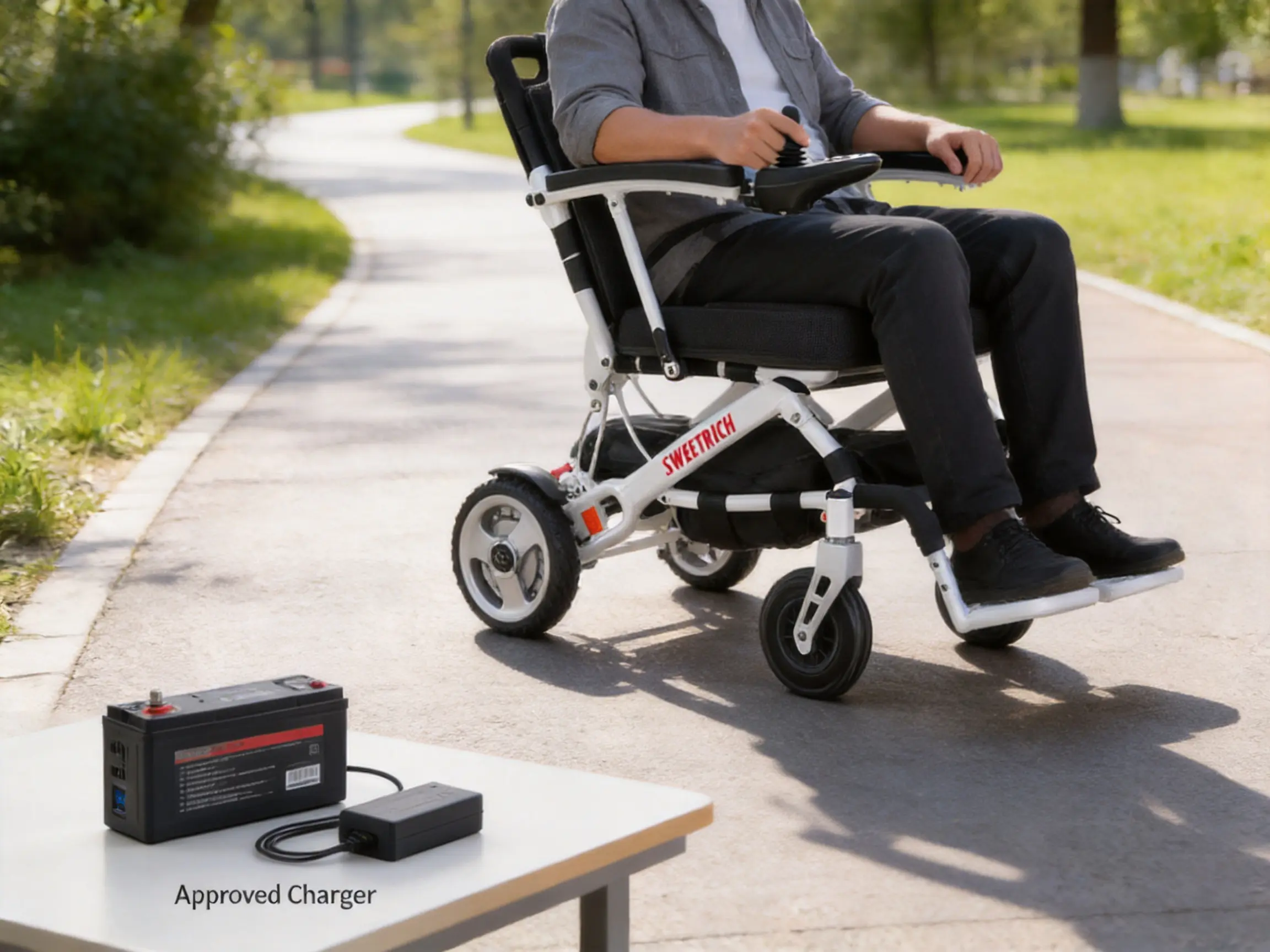
The charger is listed as 24 volts and 2 amperes, with a charging time of approximately 3 to 6 hours. Charging should take place in a dry, well-ventilated area using the supplied or approved charger. The battery and charger should be inspected for damage before use. Users should not attempt to modify the battery system, substitute incompatible charging equipment, or charge a battery that shows swelling, leakage, unusual odor, or other signs of damage.
Lithium batteries are widely valued in portable mobility products because they can provide useful energy storage without the same weight associated with some older battery technologies. Their compact size supports the travel-focused design of the chair. Nevertheless, lithium batteries require responsible storage, transportation, and charging. Airline, rail, bus, and international transport policies may vary, so passengers should confirm requirements with the relevant carrier before departure.
For daily planning, users should avoid relying on the maximum theoretical range. A practical journey should include a reserve for unexpected detours, weather, waiting, slopes, and changes in battery performance. Charging after regular use can help ensure the chair is ready for the next trip, provided the battery is charged according to the instructions.
Braking, Tires, and Control
The chair is equipped with an electromagnetic brake system. Electromagnetic braking is commonly used in powered mobility equipment because it can help slow or hold the chair when the drive controls are released. The system is intended to provide controlled stopping during normal operation, but it should not be treated as a substitute for cautious driving or a parking strategy.
Users should understand how the brake behaves when the power is switched off, when the battery is low, and when the chair is on an incline. The operating manual should explain whether the chair can be pushed manually, how any freewheel function operates, and when that function must be disengaged. A mobility chair should never be left unattended on a slope without appropriate precautions.
The listed tire sizes are 7 inches at the front and 8 inches at the rear. The product uses solid tires. Solid tires offer a practical advantage for travel because they do not require inflation and are not vulnerable to punctures in the same way as pneumatic tires. This can reduce routine maintenance and eliminate concerns about carrying a pump or repairing a flat tire during a trip.
Solid tires also involve tradeoffs. They may transmit more vibration than air-filled tires on rough surfaces and may provide less cushioning over broken pavement. The chair is therefore best suited to reasonably smooth and accessible routes. Users should avoid curbs, deep potholes, loose gravel, mud, standing water, and surfaces that exceed the product’s intended capabilities.
The control system is listed with a 24-volt, 45-ampere motor controller. The controller coordinates power delivery and responds to user commands through the driving interface. Smooth operation depends on correct setup, battery condition, motor performance, and the user’s familiarity with the control system. New users should practice in an open, level area before traveling in crowded or unfamiliar surroundings.
Comfort, Accessibility, and Practical Use
A travel chair must be evaluated not only by its folded weight but also by how easily a user can enter, operate, and exit it. Seat dimensions, armrest position, foot support, joystick location, turning behavior, and the ease of transferring into the chair can all affect usability. The supplied information does not include complete seat measurements, turning radius, ground clearance, or maximum obstacle height. These details should be requested before purchase.
The product includes under-seat storage. This feature gives users a convenient place for small personal items such as a purse, shopping bag, paperwork, or essential accessories. Storage should remain within the stated weight limits and should not interfere with folding, steering, wheels, the battery, or the user’s feet. Heavy objects should not be placed where they could alter balance or obstruct access to the controls.
Although the product title uses the term “bariatric,” the listed weight capacity is 120 kilograms, or 265 pounds. The weight capacity should be treated as the controlling specification unless the manufacturer confirms otherwise. The combined load may include the user, clothing, bags, and any accessories. Exceeding the rated capacity can affect braking, stability, range, frame durability, and motor performance.
Potential buyers should compare the capacity with their personal requirements and should not rely on the product title alone. If a user is close to the maximum capacity, professional advice may be appropriate to ensure that the seat dimensions, transfer height, support features, and operating characteristics are suitable.
Advantages Compared with Conventional Mobility Equipment
The iFold Light is not designed to outperform every competitor in every category. A larger power wheelchair may provide a wider seat, stronger suspension, more substantial outdoor tires, greater ground clearance, or a higher weight capacity. A mobility scooter may provide a different seating position and a larger battery. The competitive strength of this product is its balance of powered operation and portability.
Compared with a full-size electric wheelchair, the iFold Light may be easier to fold, carry, and store. Its 19-kilogram listed frame weight, compact dimensions, and fast-folding concept address the common challenge of transporting heavy mobility equipment. This can make it attractive to users who travel frequently or who do not have access to a wheelchair lift.
Compared with a traditional mobility scooter, the folding wheelchair format may appeal to users who need a more compact profile or who prefer a wheelchair-style seating arrangement. The absence of pneumatic tires can also reduce puncture-related interruptions. The two-motor system and electromagnetic brake provide a dedicated electric drive platform without the need for a large scooter chassis.
Compared with a manual wheelchair, the powered drive can reduce the physical effort required from the user or caregiver. This may be valuable over longer indoor routes or during travel. The chair enables the user to control movement with an electric interface rather than relying entirely on upper-body propulsion or assistance from another person.
Compared with some heavier folding power chairs, the iFold Light may provide a simpler loading experience. A lighter chair can be more compatible with ordinary vehicles and limited storage spaces. The buyer should still check the folded dimensions, total battery weight, vehicle loading capacity, and any carrier restrictions before making a final decision.
Designed for Travel Smart Mobility
The product category identifies the chair as a Travel Smart wheelchair. This positioning reflects a growing need for mobility products that fit into ordinary travel routines. Modern users may want to visit relatives, attend events, explore commercial areas, take holidays, and remain active without planning every trip around a permanent mobility installation.
Travel-friendly design begins with transportation but does not end there. The chair should be easy to prepare, intuitive to operate, sufficiently durable for repeated folding, and practical to charge away from home. Under-seat storage, solid tires, a lithium battery, electromagnetic braking, and compact dimensions all contribute to this overall travel concept.
For air travel, the battery specifications are especially important. Airlines commonly distinguish between mobility equipment and spare batteries, and they may require documentation about watt-hours, battery removal, terminals, and packaging. The 24-volt battery capacities listed for this product should be converted into watt-hours and confirmed with the carrier before travel. A buyer should never assume that a battery is automatically approved simply because the chair is marketed as portable.
For road travel, the folded chair should be secured in the vehicle. It should not be placed where it can become a projectile or obstruct the driver, emergency exits, airbags, or passenger movement. The vehicle’s cargo opening and loading height should be measured in advance. If the chair is lifted by hand, the user should consider whether a ramp or loading board would make the process safer.
Manufacturing Expertise and Product Development
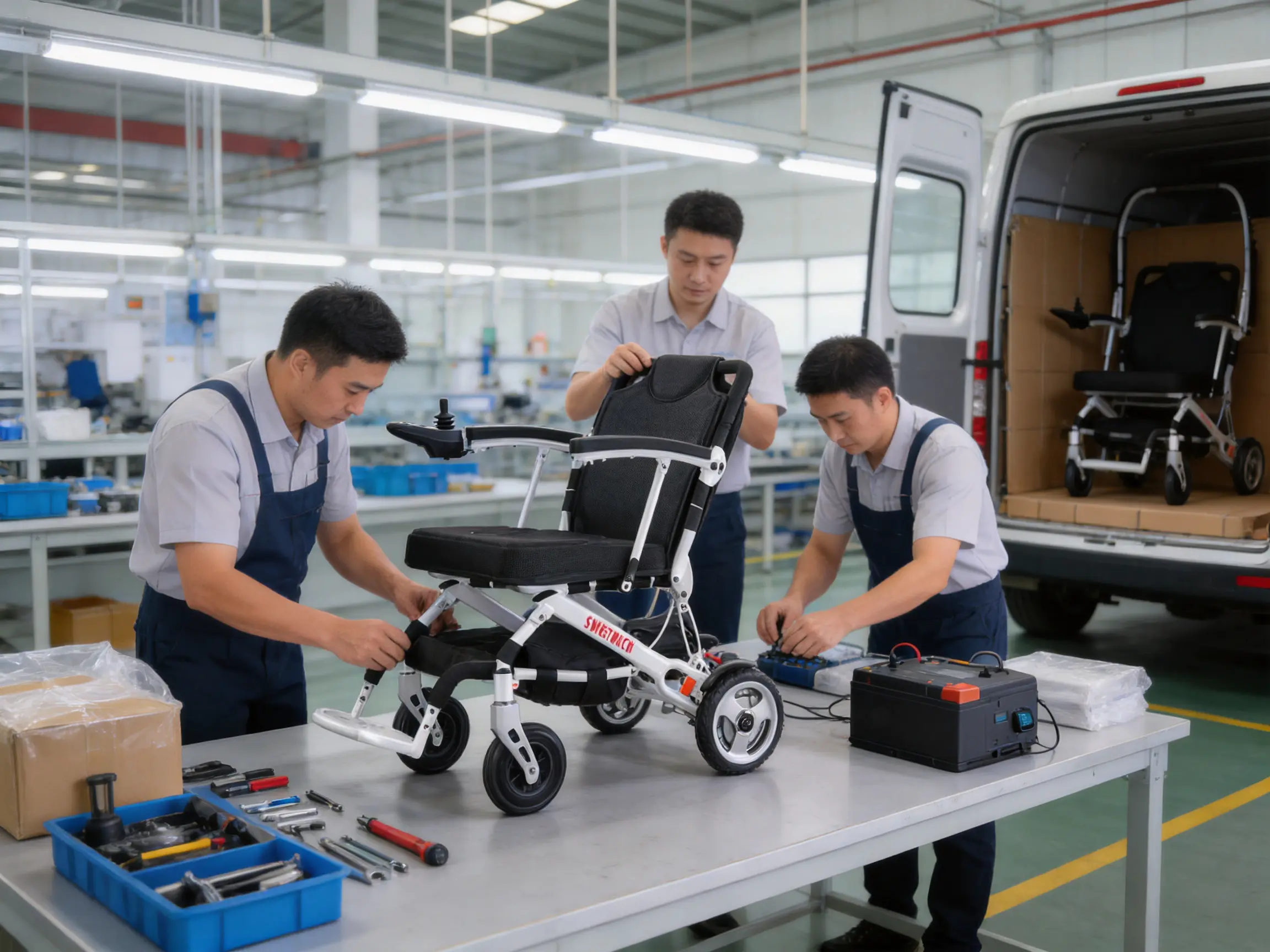
The manufacturer, Suzhou Sweetrich Vehicle Industry Technology Co., Ltd., was established in 2011 and is located in Suzhou Industrial Zone, Jiangsu, China. The supplied company information describes a high-tech enterprise focused on mobility scooters and power wheelchairs. It operates a factory covering approximately 30,000 square meters on a site of about 60 acres.
A dedicated manufacturing site of this scale can support multiple stages of product development and production. These may include engineering design, prototype evaluation, component sourcing, frame fabrication, electrical assembly, battery integration, final inspection, and packaging. The company states that it has more than ten years of experience in research, development, and production, giving it an established background in the mobility sector.
For a folding electric wheelchair, manufacturing quality depends on more than appearance. The frame must maintain alignment after repeated folding cycles. Hinges and locking points must function consistently. Motors must be mounted securely. Electrical connections must be protected from vibration and accidental damage. The controller, brake, battery, charger, and user interface must work together as one system.
The company’s stated focus on scientific product design and strict production management is relevant to these requirements. A disciplined process can help ensure that products are assembled according to defined specifications rather than relying solely on individual workmanship. Quality controls may include incoming component checks, dimensional inspection, electrical testing, brake testing, folding-function checks, visual inspection, and final operational testing.
The supplied company information also states that Sweetrich owns intellectual property rights relating to its electric scooters and power wheelchairs. In-house intellectual property can support product differentiation and allow the manufacturer to refine its own designs over time. For a compact folding chair, design ownership may be particularly valuable because the folding mechanism, frame arrangement, control layout, and electrical packaging must be coordinated carefully.
Quality Management and Reliability Considerations
Reliability in a mobility product is closely related to consistency. A chair may be used repeatedly, folded and unfolded frequently, transported in vehicles, exposed to dust, and operated by people who depend on it for daily independence. Manufacturing processes therefore need to address both initial performance and durability over time.
Frame inspection is an important area. Welds, joints, folding pivots, mounting brackets, and high-load areas should be checked for correct alignment and visible defects. The seat and support structure must correspond to the rated capacity. Fasteners should be tightened to the specified levels, and movable parts should function without excessive play or binding.
Electrical quality is equally important. The motors, controller, charger, battery, electromagnetic brake, wiring harness, and control interface must be compatible. Incorrect voltage, damaged insulation, loose connectors, or poor cable routing can affect performance and safety. Production testing should verify that the chair starts, stops, drives forward and backward, responds to controls, and applies the brake as intended.
Battery integration requires special care because lithium batteries are energy-dense components. The battery housing, connector, charger, and protection system should be matched to the chair. The end user should receive clear guidance about charging, storage, inspection, and transport. A responsible manufacturer or supplier should also provide replacement and service information for the battery and charger.
The company reports exports to America, Europe, Japan, Australia, the Middle East, Russia, and other markets. International distribution requires attention to different customer expectations, transport conditions, documentation, and local requirements. Export experience may help a manufacturer develop packaging and supply procedures suitable for long-distance shipment, although buyers should still confirm the compliance requirements that apply in their own location.
Engineering Balance: Portability Versus Outdoor Capability
Every mobility product represents a set of engineering compromises. Increasing battery size may extend range but also add weight. Larger tires may improve rough-ground performance but make the chair less compact. Stronger suspension may increase comfort but add complexity and mass. A wider frame may improve seating space but make it harder to pass through doorways.
The iFold Light prioritizes portability. Its 19-kilogram weight without the battery, solid tires, compact dimensions, and folding mechanism demonstrate an emphasis on manageable transport. These features may be more valuable to a frequent traveler than a heavy suspension system designed for demanding terrain.
Users should select the chair according to their actual routes. A person whose routine consists of smooth floors, paved paths, shopping centers, hotels, and accessible public spaces may benefit greatly from a compact travel design. Someone who regularly crosses rough fields, steep hills, broken sidewalks, sand, or deep gravel may need a different class of mobility equipment.
Understanding this balance helps prevent unrealistic expectations. The chair is not a replacement for a heavy-duty outdoor power base, nor is it necessarily intended for every weather condition. Its competitive advantage is the ability to provide powered mobility while remaining more manageable during transportation and storage.
Safety and Responsible Operation
Before operating the chair, the user should read the supplied instructions and become familiar with the controls. Practice should begin in a clear, level area at low speed. The user should learn how the chair accelerates, turns, reverses, stops, and behaves when the control is released.
Seat belts or other restraint features should be used if supplied and appropriate. The user should sit centrally and avoid leaning excessively while turning or traveling across an incline. Bags should be stored securely, and loose clothing should be kept away from wheels and folding joints.
Curbs and steps should not be attempted unless the chair is specifically designed and rated for them. A ramp should have an appropriate slope, width, surface, and edge protection. The listed 6-degree maximum driving gradient should be respected, and even lower slopes may be unsuitable if wet, loose, or angled sideways.
Water exposure should be minimized. The chair should not be driven through deep water, flooded areas, or heavy rain beyond the protection specified in the manual. Electrical components should be kept dry, and the chair should be stored indoors or in a protected area when possible.
Regular checks should include tire condition, wheel security, battery charge, charger condition, brake response, folding locks, seat structure, control operation, and unusual sounds. If the chair behaves unpredictably, loses power, fails to stop correctly, or shows visible damage, it should be taken out of service until inspected by a qualified technician.
Maintenance and Long-Term Ownership
Solid tires reduce the need for inflation checks, but they do not eliminate maintenance. Users should inspect the tire surfaces for excessive wear, cuts, embedded objects, or damage. Wheel fasteners should be checked according to the recommended service schedule. Dirt and debris should be removed from moving parts without applying unsuitable chemicals or excessive water.
The folding mechanism should remain clean and should not be forced. If the frame does not fold or unfold smoothly, the user should stop and investigate rather than applying additional pressure. A qualified service provider should inspect unusual looseness, stiffness, noise, or misalignment.
Battery care has a direct effect on range and service life. The battery should be charged with the approved charger and stored according to the manufacturer’s instructions. Long periods of storage may require periodic charging or a specific storage charge. Users should avoid leaving the battery completely discharged for extended periods and should follow any temperature limits provided in the manual.
Service records can be helpful for commercial users, caregivers, rental providers, and families sharing responsibility for the chair. Recording battery replacement, inspections, repairs, and charger changes can make it easier to identify performance trends. It may also help the owner plan for replacement parts before a critical trip.
Who May Benefit from This Product?
The iFold Light may suit adults who require powered assistance for travel but want a chair that is easier to transport than a full-size power wheelchair. It may also be useful for people who experience fatigue over long distances, families planning frequent outings, and caregivers who need to load a chair into a vehicle without specialized lifting equipment.
It may be appropriate for users whose primary environments are relatively smooth and accessible. Shopping centers, airports, hotels, museums, convention venues, paved walkways, and indoor public buildings are examples of environments where compact powered mobility can be particularly useful.
The product may be less suitable for individuals who need a very high weight capacity, extensive suspension, all-terrain tires, major obstacle clearance, or a highly adjustable clinical seating system. Those requirements should be evaluated before purchase. The absence of listed suspension and the use of solid tires indicate that the chair is oriented toward portability and ordinary travel surfaces.
Users with complex postural, pressure-management, transfer, or medical-support needs should seek professional advice. Since the product is identified as a non-medical device, it should not be selected as a substitute for a clinically prescribed wheelchair without appropriate evaluation.
Purchasing Questions for Buyers
Before ordering, buyers should confirm the exact battery option, expected range, total weight with battery, folded dimensions, seat dimensions, maximum capacity, charging requirements, warranty terms, spare-parts availability, and after-sales support. These details can have a major impact on suitability.
The discrepancy between the listed 6-kilometer-per-hour maximum speed and the feature statement referring to 10 kilometers per hour should be resolved in writing. Buyers should also ask which battery corresponds to the 12 ± 2-kilometer and 20 ± 4-kilometer range figures. Clear confirmation helps prevent misunderstandings after delivery.
It is also useful to ask whether the chair can be transported by air, whether the battery is removable, how the battery is rated for transport, and whether the supplier can provide technical documentation. Travel policies differ, and responsibility for checking carrier approval remains with the passenger.
For customers outside China, shipping, customs duties, regional electrical requirements, service arrangements, and replacement-part logistics should be discussed before purchase. A compact product is most valuable when the buyer can maintain it and obtain assistance throughout its service life.
Frequently Asked Questions
Is the iFold Light a medical device?
The supplied product information identifies it as a non-medical device for the United States market. It is designed to support personal mobility and travel convenience, not to diagnose or treat a medical condition. Users with clinical seating or mobility requirements should consult an appropriate professional.
How much does the chair weigh?
The listed weight without the battery is 19 kilograms. The complete transport weight will be higher when the selected lithium battery and any accessories are included. Buyers should request the exact ready-to-lift weight for their configuration.
How quickly does it fold?
The product description states that it folds in approximately one second. The user should follow the operating instructions and ensure that the chair is powered off and positioned safely before folding or unfolding it.
What is the maximum user weight?
The specification lists a weight capacity of 120 kilograms, or 265 pounds. This limit includes the user and any carried items unless the manufacturer specifies otherwise. The word “bariatric” in the product title should not be used to assume a higher capacity than the published specification.
What is the maximum speed?
The detailed information lists a maximum forward speed of 6 kilometers per hour. A separate feature statement mentions up to 10 kilometers per hour. Because these figures conflict, the buyer should confirm the correct speed for the exact model and configuration with the supplier.
What is the travel range?
The published range is 12 ± 2 kilometers or 20 ± 4 kilometers. These figures appear to relate to the two battery options, but the supplied material does not explicitly identify which battery produces each range. Actual results depend on load, terrain, temperature, speed, and battery condition.
How long does charging take?
The listed charging time is approximately 3 to 6 hours using a 24-volt, 2-ampere charger. Charging time can vary according to battery capacity, remaining charge, temperature, and battery condition.
Does it have pneumatic tires?
No. The product is listed with solid tires, measuring 7 inches at the front and 8 inches at the rear. Solid tires reduce puncture concerns but may transmit more vibration on rough surfaces.
Can it climb hills?
The maximum driving gradient is listed as 6 degrees. This is a specification limit, not a guarantee that every 6-degree slope is safe in every condition. Surface material, moisture, load, battery condition, and approach angle all affect performance.
Does it have suspension?
The specification table lists suspensions as “/,” indicating that no suspension system is specified in the supplied information. Buyers who require additional cushioning should ask the supplier for confirmation and consider the likely surfaces on which the chair will be used.
Is it suitable for air travel?
Suitability depends on the airline, battery configuration, packaging rules, and current transportation regulations. The 24-volt lithium battery details should be provided to the carrier in advance. Passengers should obtain approval before arriving at the airport.
Where is the chair manufactured?
The product is associated with Suzhou Sweetrich Vehicle Industry Technology Co., Ltd., located in Suzhou Industrial Park, Jiangsu, China. The company states that it develops and manufactures mobility scooters and power wheelchairs and exports products to multiple international markets.
What makes it different from a larger power wheelchair?
Its main distinction is portability. The compact dimensions, fast-folding concept, lightweight frame, solid tires, and lithium-battery system are intended to make transportation and storage easier. A larger power wheelchair may offer more outdoor capability or seating customization, so the right choice depends on the user’s priorities.
Conclusion
The iFold Light presents a focused approach to powered mobility. Rather than attempting to serve every terrain and every seating requirement, it concentrates on the needs of travelers who want a chair that can fold quickly, fit into limited storage spaces, and provide electric assistance without the bulk of a full-size power wheelchair.
Its key strengths include a listed 19-kilogram weight without the battery, compact 970-by-560-by-870-millimeter dimensions, two 250-watt motors, a lithium battery system, electromagnetic braking, solid tires, under-seat storage, and a stated 6-degree maximum gradient. The product also benefits from the manufacturer’s reported experience in mobility research, development, production, intellectual property, export, and factory-based quality management.
As with any compact mobility product, suitability depends on realistic expectations. The chair should be matched to the user’s weight, seating needs, travel routes, terrain, storage arrangements, and transportation plans. The conflicting speed statements and battery-range configurations should be clarified before purchase, and users should confirm airline and local requirements for lithium-battery mobility equipment.
For people who value independence during family outings, shopping trips, holidays, and everyday travel, a lightweight folding power wheelchair can provide meaningful practical benefits. With responsible operation, regular maintenance, and proper planning, the iFold Light can serve as a convenient travel-oriented mobility solution for users who place portability at the center of their purchasing decision.
References
1. Product specification sheet for the iFold Light folding electric wheelchair, including dimensions, motor, battery, range, braking system, tire sizes, capacity, and charging data.
2. Product feature information for the iFold Light, including folding design, portability, under-seat storage, solid tires, and travel-oriented use.
3. Company profile information for Suzhou Sweetrich Vehicle Industry Technology Co., Ltd., including company history, factory facilities, research and development activities, manufacturing focus, and export markets.
4. General guidance on safe operation, charging, storage, and transportation of lithium-battery-powered mobility equipment.
5. General principles of mobility-device selection, including weight capacity, terrain suitability, braking, battery range, transport planning, and maintenance.