
 +86-(0)512-82283871

Content
- 1 Portable Mobility for a More Independent Lifestyle
- 2 Key Product Specifications
- 3 Folding Design and Transportation Advantages
- 4 Lightweight Construction Without Giving Up Essential Performance
- 5 Dual-Motor Electric Drive System
- 6 Battery Options and Travel Range
- 7 Solid Tires for Low-Maintenance Mobility
- 8 Electromagnetic Braking and Controlled Operation
- 9 Under-Seat Storage for Everyday Convenience
- 10 Travel and Daily Use Scenarios
- 11 Advantages Compared with Conventional Heavy Power Wheelchairs
- 12 Advantages Compared with Manual Wheelchairs
- 13 Manufacturing Experience and Industrial Capability
- 14 Advanced Manufacturing Processes and Quality Focus
- 15 Research, Development, and Product Improvement
- 16 Safety and Responsible Use
- 17 Maintenance and Long-Term Ownership
- 18 How to Choose the Appropriate Battery Configuration
- 19 Who Can Benefit Most from the iFold Light?
- 20 Purchasing Considerations for Distributors and Buyers
- 21 Frequently Asked Questions
- 21.1 Is the iFold Light a medical device?
- 21.2 How quickly does the wheelchair fold?
- 21.3 How much does it weigh?
- 21.4 What is the maximum user weight?
- 21.5 What is the maximum speed?
- 21.6 What travel range can users expect?
- 21.7 Does the wheelchair have suspension?
- 21.8 Are the tires pneumatic?
- 21.9 How long does charging take?
- 21.10 Can it be used outdoors?
- 21.11 Can it be taken on an airplane?
- 21.12 What makes the product competitive?
- 21.13 What should buyers ask the supplier before ordering?
- 22 Conclusion
- 23 References
- 24 Product: iFold Light 2021 New Lightweight Portable Folding Electroplating Electric Bariatric Wheelchair Attachment
Personal mobility has changed significantly in recent years. People who experience limited walking ability are no longer restricted to large, heavy, difficult-to-transport power chairs. Modern mobility equipment is becoming lighter, more compact, easier to operate, and better suited to active lifestyles. The iFold Light 2021 is an example of this development: a portable folding electric wheelchair designed for travel, family outings, shopping trips, and everyday independence.
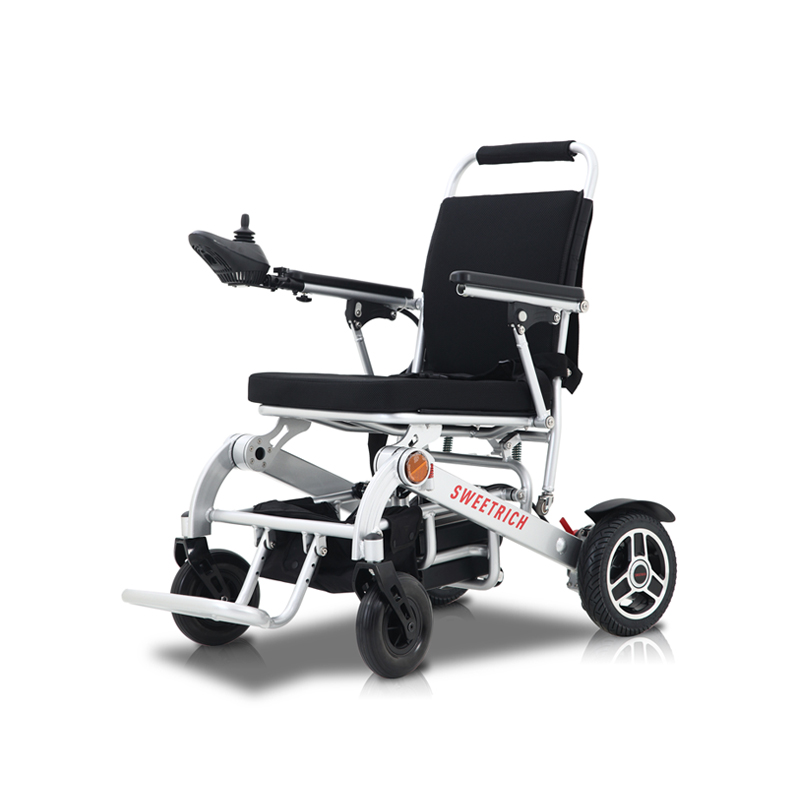
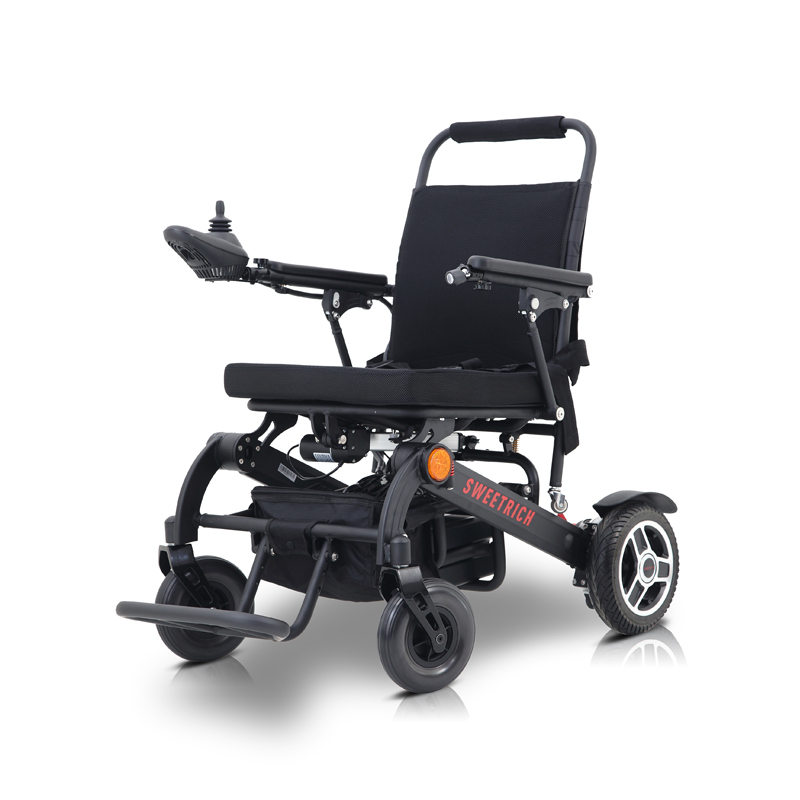
This product combines a folding frame, dual electric motors, lithium-battery power, electromagnetic braking, solid tires, and under-seat storage in a compact design. With a weight of 19 kg without the battery, it is intended to reduce many of the transportation challenges associated with traditional powered wheelchairs. Its dimensions also make it suitable for storage in homes, vehicle compartments, and other areas where a full-size mobility device may be impractical.
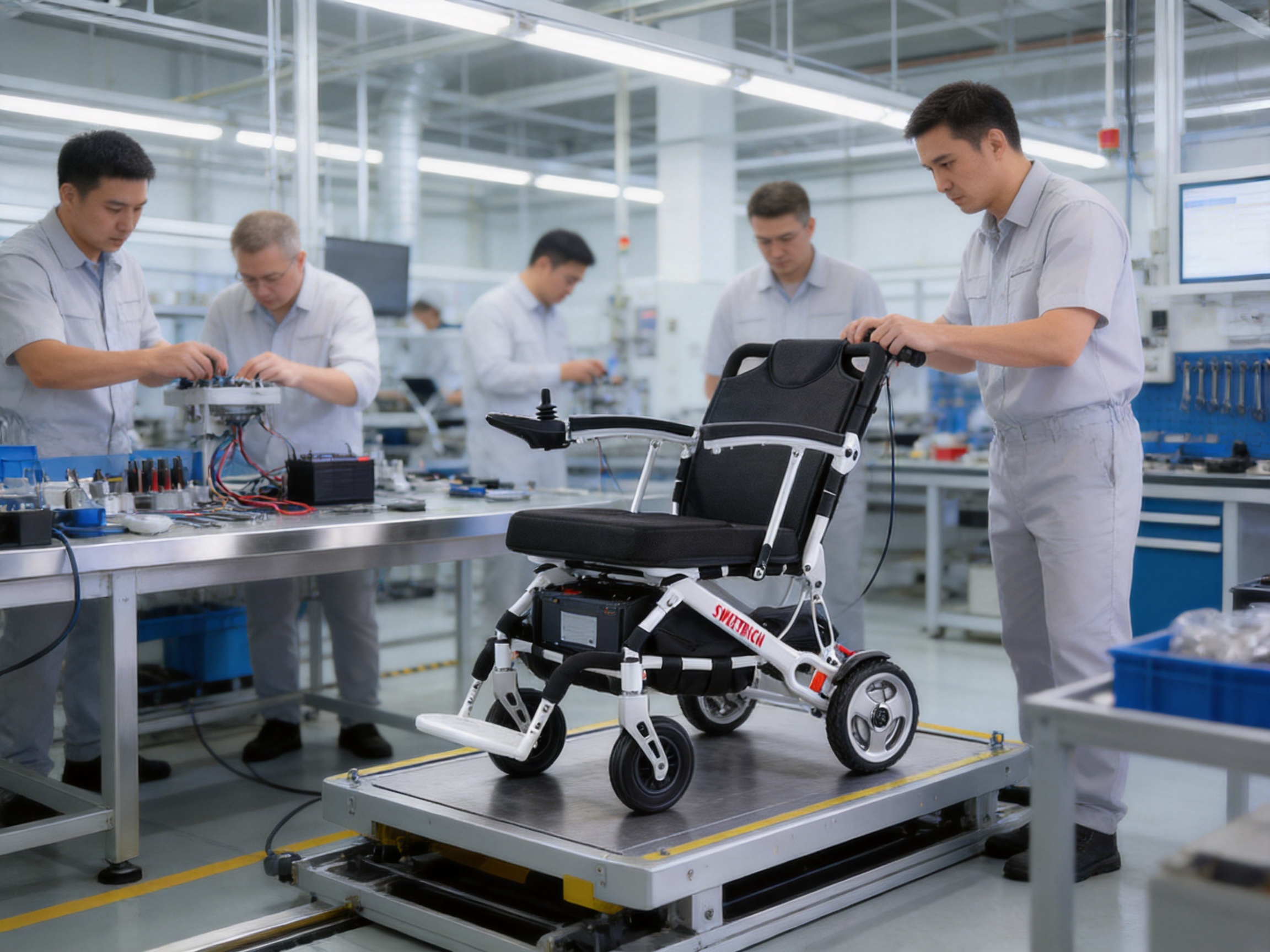
The wheelchair is manufactured by Suzhou Sweetrich Vehicle Industry Technology Co., Ltd., a Chinese mobility equipment manufacturer with experience in the research, development, and production of mobility scooters and power wheelchairs. The company operates a large industrial facility and serves customers in markets across America, Europe, Japan, Australia, the Middle East, Russia, and other regions.
This article examines the iFold Light in detail. It discusses its design, performance, portability, user benefits, manufacturing strengths, safety-related features, maintenance considerations, and competitive advantages. It also explains which users may benefit most from the product and what buyers should understand before choosing a portable folding electric wheelchair.
Portable Mobility for a More Independent Lifestyle
A power wheelchair is more than a vehicle. For many users, it is an important tool for maintaining independence. The ability to move around a home, visit relatives, enter public spaces, and participate in travel can have a direct effect on confidence and quality of life. However, a mobility device must be practical enough to use regularly. If it is too heavy, too large, or too complicated to transport, owners may leave it at home even when they need it.
The iFold Light addresses this problem with a compact folding structure. The product is designed to fold quickly, reportedly in approximately one second, allowing the user or a caregiver to prepare it for transportation without a lengthy assembly process. Rapid folding is especially valuable when boarding a vehicle, moving through a hotel, storing equipment at home, or changing locations during a day trip.
At 19 kg without the battery, the chair is considerably easier to handle than many conventional powered wheelchairs. The exact lifting weight depends on the selected battery configuration and the person carrying it, but the low base weight remains a central advantage. A lighter frame can make it easier for a family member or travel companion to place the wheelchair into a car, van, or storage area.
The product is described as a non-medical device for the United States market. This means it should be understood primarily as a mobility and transportation aid rather than as a medical treatment device. Users should select the chair according to their mobility needs, physical condition, environment, and local regulations. Professional advice may be appropriate for people with complex seating, posture, or clinical requirements.
Key Product Specifications
The iFold Light combines practical dimensions with a relatively simple electrical system. Its published specifications are summarized below.
| Specification | Published Information |
|---|---|
| Product type | Portable folding electric wheelchair |
| Category | Travel Smart Wheelchairs |
| Overall dimensions | 970 × 560 × 870 mm |
| Maximum forward speed | 6 km/h |
| Maximum driving gradient | 6 degrees |
| Driving range | 12 ± 2 km or 20 ± 4 km, depending on battery configuration and conditions |
| Weight capacity | 120 kg or 265 lb |
| Front tires | 7 inches |
| Rear tires | 8 inches |
| Brake system | Electromagnetic brake |
| Battery options | Lithium 24 V/6 Ah or 24 V/12 Ah |
| Charger | 24 V/2 A |
| Charging time | Approximately 3 to 6 hours |
| Motor system | Two 24 V/250 W motors |
| Motor controller | 24 V/45 A |
| Weight without battery | 19 kg |
| Suspension | Not specified |
Published operating figures can vary depending on rider weight, road surface, temperature, tire condition, gradient, battery age, speed, and driving style. The range figures should therefore be treated as practical estimates rather than guaranteed distances in every environment.
Folding Design and Transportation Advantages
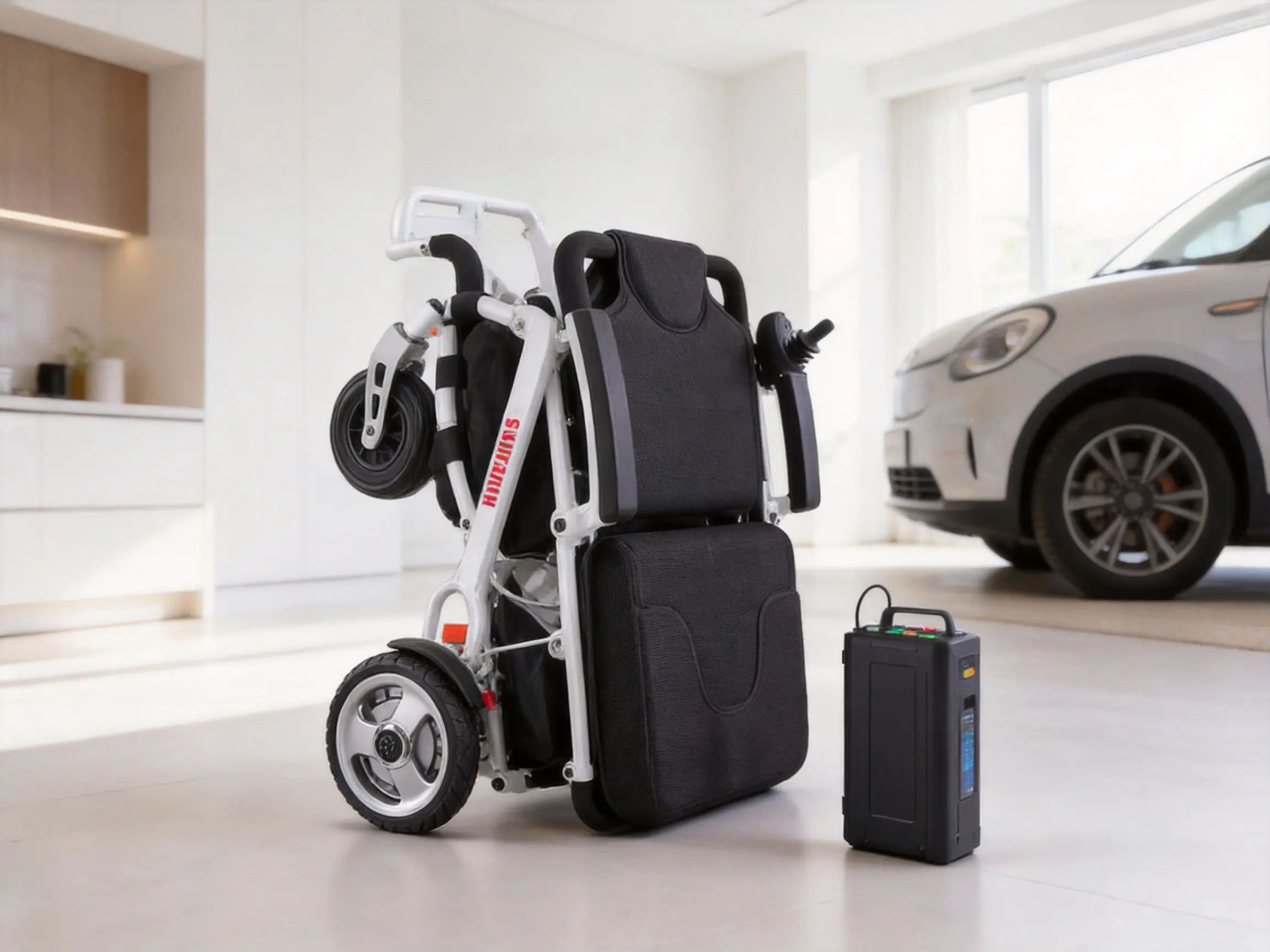
The most visible advantage of the iFold Light is its folding design. Many traditional electric wheelchairs require a vehicle lift, ramp, large van, or dedicated transportation system. These solutions can be effective but may add cost and complexity. A folding wheelchair offers a different approach by allowing the chair itself to become more compact for transportation.
Quick folding can simplify everyday routines. A user may fold the wheelchair before entering a car, then unfold it at a destination. A caregiver can store it in a closet or garage without dedicating a large area to the equipment. Families can also transport the chair during vacations or weekend trips without modifying their vehicle.
Compact storage is useful beyond automobiles. The wheelchair can be placed in a hotel room, apartment, office, or family home with less disruption than a large fixed-frame model. For users who live in smaller properties, this can be a decisive consideration. A smaller stored footprint can make it easier to maintain clear walkways and organized living spaces.
Portability also supports spontaneous activities. A person may be more willing to visit a shopping center, attend a family gathering, explore a tourist attraction, or participate in an outdoor event when the mobility device is convenient to transport. This supports a more active lifestyle and reduces dependence on specialized accessible transportation.
Although the chair is lightweight compared with many powered models, users and caregivers should still use safe lifting techniques. The battery configuration affects the total weight. People who cannot safely lift the folded chair should use assistance or an appropriate loading method. Portability is a major benefit, but safe handling must remain a priority.
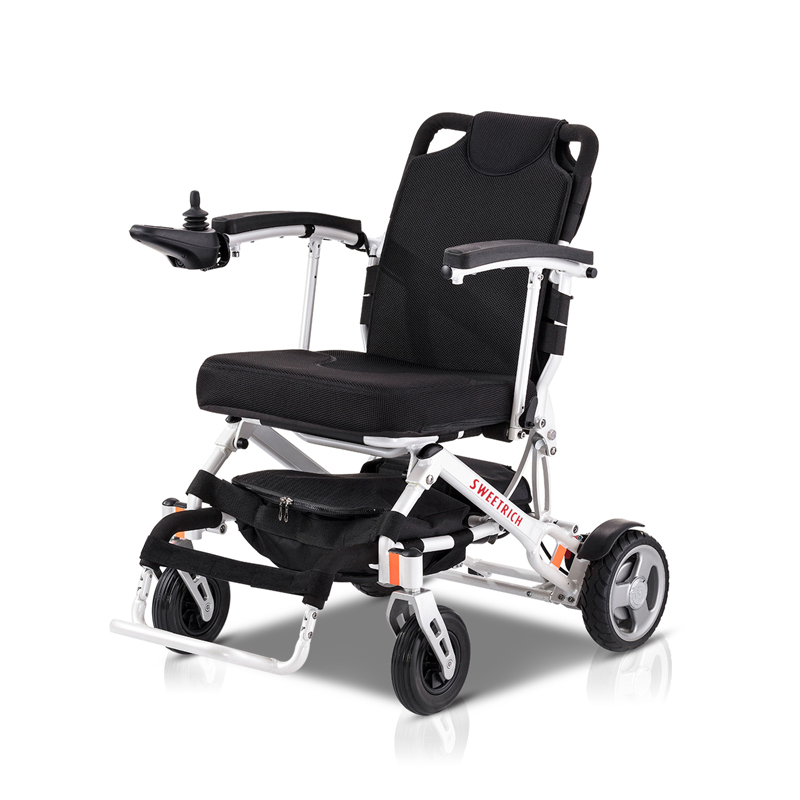
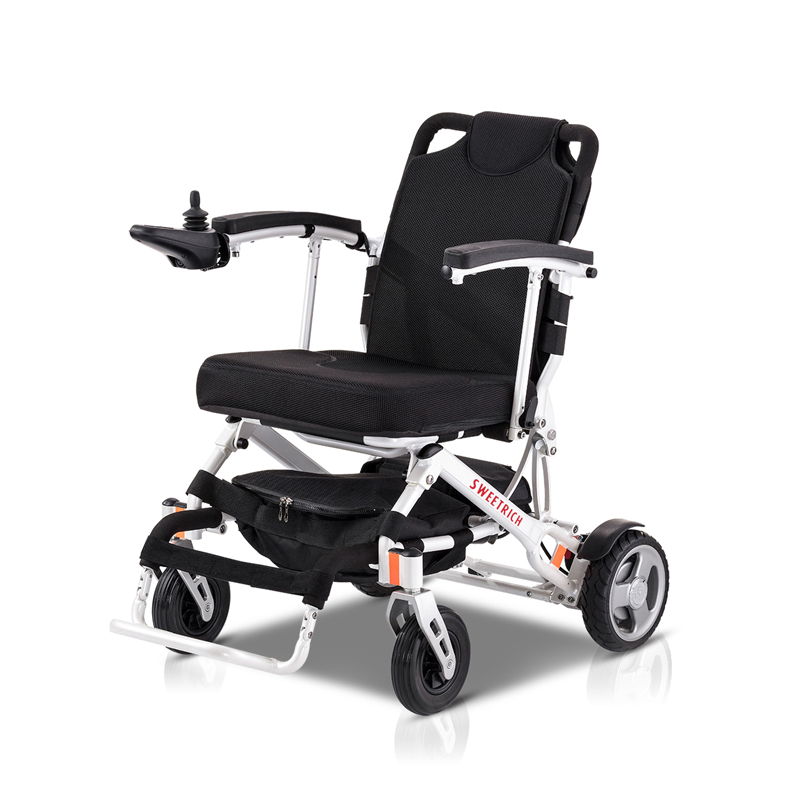
iFold Light 2021 New Lightweight Portable Folding Electroplating Electric Bariatric Wheelchair Attachment
Lightweight Construction Without Giving Up Essential Performance
Reducing weight in a power wheelchair is not simply a matter of making every component smaller. The frame must support the rider, the motors must provide useful propulsion, the battery must deliver sufficient energy, and the braking system must respond reliably. A successful lightweight design balances portability with structural function.
The iFold Light has a listed weight capacity of 120 kg, or 265 lb. This provides a useful load rating for many adult users while keeping the wheelchair substantially lighter than many conventional power chairs. Buyers should consider the combined weight of the user, clothing, personal items, and objects placed in the under-seat storage area. Staying within the published weight capacity is important for stability, braking, range, and component durability.
The product is sometimes described as a bariatric wheelchair attachment in its product title, but its published capacity is 120 kg. Buyers should not assume that the word “bariatric” indicates suitability for every higher-weight user. The technical weight limit should always be the controlling specification. Users requiring a higher capacity should request a product specifically engineered and rated for that requirement.
Lightweight construction can also improve maneuverability. A lighter chair may be easier to turn, position, and push manually when power is not being used. It can reduce the effort required during loading and unloading. In addition, lower mass may contribute to more efficient battery use, although actual range depends on many operating factors.
Dual-Motor Electric Drive System
The iFold Light uses two 24 V/250 W motors. A dual-motor layout provides powered drive to both rear wheels and can support balanced propulsion. It also allows the wheelchair to turn within a compact space, which is valuable in homes, shops, corridors, and other areas where maneuverability matters.
Two motors can help distribute the driving load across the rear wheels. When combined with an appropriate controller, the system can deliver controlled acceleration and responsive steering. The listed 24 V/45 A motor controller coordinates electrical power to the motors and supports the chair’s operating functions.
The maximum forward speed is listed as 6 km/h. This speed is suitable for ordinary travel in many pedestrian environments while remaining more manageable than higher-speed mobility vehicles. Speed should always be adjusted according to surroundings. Crowded spaces, uneven surfaces, ramps, doorways, and mixed pedestrian areas require careful operation.
The product material also refers to speeds of up to 10 km/h in its feature description. Because the detailed specification lists a maximum forward speed of 6 km/h, purchasers should confirm the applicable configuration and official operating specification before ordering. Product performance can differ by version, market, controller setting, or source of published information.
The maximum driving gradient is listed as 6 degrees. This figure indicates the stated climbing capability under defined conditions, but it should not be interpreted as permission to approach every slope at maximum angle. Wet surfaces, loose gravel, uneven transitions, reduced battery charge, and additional load can affect traction and control. Users should approach slopes slowly and avoid surfaces that exceed the manufacturer’s instructions.
Battery Options and Travel Range
The wheelchair is available with lithium batteries rated at either 24 V/6 Ah or 24 V/12 Ah. The battery choice affects expected travel range, charging requirements, and total product weight. A smaller battery may be attractive to users who prioritize minimum weight, while the larger capacity may be preferable for longer outings.
The published driving range is shown as 12 ± 2 km or 20 ± 4 km. These two figures correspond to different battery configurations or operating conditions. The higher range is generally associated with the larger battery, although buyers should confirm the exact relationship with the supplier. Range estimates are normally measured under controlled conditions and may be lower in everyday use.
Factors that can reduce actual range include a heavier rider, frequent stops and starts, hills, rough terrain, low temperatures, underinflated tires where applicable, aggressive acceleration, carrying additional items, and an aging battery. Solid tires do not require air-pressure checks, but rolling resistance and surface conditions still influence energy consumption.
The stated charging time is approximately 3 to 6 hours, using a 24 V/2 A charger. Charging overnight may be convenient for some users, but the battery should be charged according to the supplier’s instructions. The charger should be used in a dry, ventilated area and connected to a compatible power supply.
Lithium battery systems are valued for their relatively high energy density and lower maintenance compared with some older battery chemistries. However, they should be protected from impact, water intrusion, extreme heat, and unauthorized modification. The correct charger and replacement battery should be used to protect the electrical system and preserve safe operation.
For air travel or long-distance transportation, battery rules can be strict. Users should consult the airline, transportation provider, and applicable regulations well in advance. Removable battery details, watt-hour ratings, packaging requirements, and approval documentation may affect whether the product can be carried on a particular service.
Solid Tires for Low-Maintenance Mobility
The iFold Light uses solid tires, with 7-inch front tires and 8-inch rear tires. Solid tires offer a practical advantage for travel because they cannot suffer a conventional puncture. Users do not need to carry an air pump or regularly check air pressure. This can reduce maintenance tasks during outings and provide greater confidence on ordinary paved surfaces.
Solid tires are especially useful for a compact travel wheelchair. A puncture can be inconvenient at any time, but it is particularly disruptive during a holiday, shopping trip, or family event. By eliminating air-filled tire punctures, solid tires help simplify ownership.
There are also trade-offs. Solid tires may transmit more vibration than pneumatic tires on rough surfaces, and they cannot be adjusted to change ride firmness. Since the published specification does not list suspension, users should expect the tires and frame to provide the primary absorption of minor surface irregularities. The chair is therefore most suitable for smooth indoor floors, sidewalks, paved paths, shopping areas, and similar environments.
Users should inspect the tire surfaces periodically for unusual wear, cuts, embedded objects, or deformation. Solid tires do not require inflation, but they still need replacement when worn. Correct tire condition supports traction, steering, and braking performance.
Electromagnetic Braking and Controlled Operation
The wheelchair is equipped with an electromagnetic brake system. This type of brake is commonly integrated with the motor drive and is designed to engage when the control system is released or power is removed. It can help prevent unwanted rolling when the chair is stopped on suitable surfaces.
Electromagnetic braking is valuable on a compact powered wheelchair because it allows the user to control movement through the driving system without relying on a separate manual brake lever. It can contribute to smooth stopping and convenient operation in indoor and outdoor pedestrian settings.
Users should still avoid parking on steep slopes, unstable surfaces, wet grass, loose gravel, or locations where a wheelchair could roll into danger. The brake system is not a substitute for careful positioning. When transferring into or out of the chair, the power should be switched off and the chair should be placed on stable, level ground whenever possible.
Before every journey, the user should check that the control system responds correctly, the chair stops when expected, and there are no unusual sounds or warning indications. Any braking irregularity should be treated seriously and inspected by a qualified service provider.
Under-Seat Storage for Everyday Convenience
The under-seat storage area adds practical value without requiring a separate bag or basket. It can be used for small personal items such as a wallet, medication container, phone, keys, shopping essentials, or light travel accessories. Keeping these objects beneath the seat can leave the user’s hands free for the controls and reduce the need to carry a shoulder bag.
Storage should remain within the product’s intended capacity. Heavy or bulky objects can affect the chair’s balance, reduce available legroom, interfere with folding, or place stress on the frame. Items should be secured so they cannot contact the wheels, motors, cables, or folding joints.
Users should also remember that storage space is not waterproof unless specifically identified as such. Personal belongings should be protected from rain and splashing. Before folding the chair, the storage area should be cleared and checked to ensure that no object obstructs the folding mechanism.
Travel and Daily Use Scenarios
Family Outings
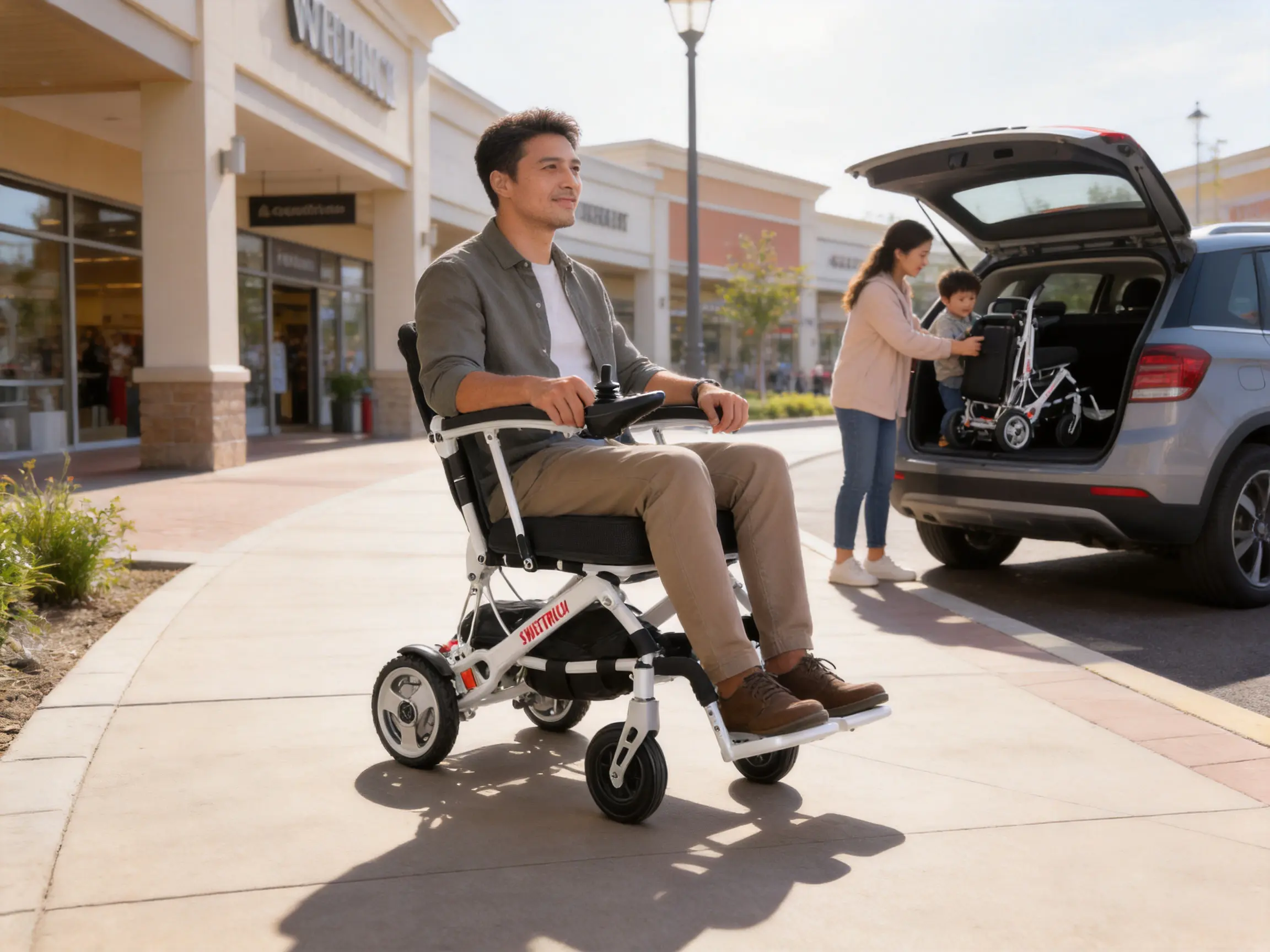
The iFold Light is well suited to family activities where transportation and storage are important. A user can bring the chair to a restaurant, shopping center, park, or family home without requiring a dedicated accessible vehicle in many situations. The folding structure allows relatives to store the equipment during meals or other activities when the user is seated elsewhere.
Shopping and Errands
Compact dimensions and a 6 km/h maximum listed speed support use in shopping environments and pedestrian areas. The under-seat storage can hold a limited number of personal items, while the chair’s maneuverability can help with aisles, entrances, and elevators. Users should follow store rules and give pedestrians adequate space.
Travel and Holidays
Portability is one of the wheelchair’s strongest travel benefits. It can be folded before loading into a vehicle and unfolded at a destination. Its relatively low weight may help families avoid the expense and inconvenience of a vehicle lift. Travel plans should still account for battery transportation rules, terrain, charging access, and the availability of accessible routes.
Indoor Mobility
The chair’s compact width of 560 mm can be advantageous in many indoor settings. It may fit through doorways and navigate corridors that are difficult for wider mobility devices. Nevertheless, users should measure the actual doors, elevators, turning areas, and furniture arrangements in their homes before purchasing.
Outdoor Paved Surfaces
The wheelchair can be appropriate for sidewalks, paved paths, building entrances, and other relatively smooth surfaces. It is not presented as an all-terrain chair. Users should avoid deep mud, soft sand, large stones, steep uneven slopes, and obstacles that could reduce stability or ground clearance.
Advantages Compared with Conventional Heavy Power Wheelchairs
One of the main competitive advantages of the iFold Light is the balance between powered assistance and portability. Traditional power wheelchairs can provide substantial support, but many are heavy and difficult to transport without specialized equipment. The iFold Light is aimed at users who need electric propulsion but also want to move the chair between locations with fewer logistical barriers.
Its quick-folding structure can also be more convenient than a chair requiring multiple detachable sections. Every extra assembly step creates another opportunity for lost components, incorrect installation, or delays. A folding design keeps the product integrated and allows the user or caregiver to prepare it quickly.
The 19 kg weight without the battery is another important differentiator. While the total carrying weight must include the battery, the listed frame weight remains relatively low for a dual-motor electric wheelchair. This makes it more realistic for many families to lift and store the chair without purchasing a powered loading system.
Solid tires offer a further advantage over pneumatic tires for users who prefer low maintenance. There is no need to monitor air pressure or repair ordinary punctures. The lithium battery option helps keep the design compact while providing a choice between lower weight and greater estimated range.
The product also combines two 250 W motors with electromagnetic braking and a controller designed for a 24 V system. This gives it the core functionality expected of a modern powered wheelchair while retaining a relatively simple, travel-oriented format.
Advantages Compared with Manual Wheelchairs
A manual wheelchair can be lighter and less expensive in some situations, but it requires the user or a companion to provide physical propulsion. For people with limited arm strength, fatigue, joint problems, or reduced endurance, self-propelling a manual chair may not be practical. Even when a companion pushes the chair, the user may have less independence.
The iFold Light’s electric drive allows the user to travel without relying entirely on another person. This can improve control over speed, direction, and timing. It may also reduce the physical effort required from a family member or caregiver during outings.
At the same time, powered equipment requires charging, electrical maintenance, and responsible operation. Buyers should compare their priorities carefully. A manual wheelchair may remain the better choice for some users, while a folding power wheelchair may be more appropriate for those who value powered independence.
Manufacturing Experience and Industrial Capability
The product is made by Suzhou Sweetrich Vehicle Industry Technology Co., Ltd., a high-tech company established in 2011. The company is located in Suzhou Industrial Zone, Jiangsu, China, and operates from a facility covering approximately 60 acres, with a reported 30,000-square-meter factory.
This scale provides a foundation for organized product development and manufacturing. A dedicated industrial facility can support separate activities such as engineering, component preparation, assembly, inspection, warehousing, and shipping. While individual process details are not provided in the supplied material, the company’s factory size and product focus indicate an established manufacturing structure rather than a small informal workshop.
The company specializes in mobility scooters and power wheelchairs. Concentration in this sector can support experience with the specific engineering requirements of personal mobility products, including folding structures, drive systems, control components, batteries, braking systems, seating arrangements, and compact vehicle packaging.
Sweetrich states that it owns intellectual property rights related to its electric scooters and power wheelchairs. Intellectual property development can help a manufacturer create distinctive mechanisms, improve product integration, and refine user-focused designs. In the case of a folding wheelchair, engineering attention is particularly important because the folding mechanism must combine convenience with structural support and repeatable operation.
The company also describes a commitment to advanced control technology and driving systems. In a product such as the iFold Light, electronic control quality affects acceleration, steering response, braking behavior, and overall ease of use. Proper integration between the controller, motors, battery, and user controls is essential for a predictable driving experience.
Advanced Manufacturing Processes and Quality Focus
Reliable mobility equipment depends on consistency. A wheelchair may be used every day, transported frequently, folded repeatedly, and exposed to different indoor and outdoor conditions. Manufacturing processes must therefore support accurate component production, secure electrical connections, correct assembly, and functional testing.
The company reports strict production management and scientific product design. These principles are relevant to the iFold Light because its compact structure contains multiple interacting systems. The folding frame, wheel alignment, motors, battery housing, controller, brake system, and storage area must work together without interfering with one another.
A disciplined manufacturing process typically begins with product engineering and specification control. Dimensions, weight limits, motor ratings, battery compatibility, and folding clearances need to be defined before production. Consistent specifications help ensure that replacement parts, accessories, and service procedures match the intended product configuration.
Frame production requires attention to material selection, joint design, alignment, and surface finishing. Folding components should be checked for smooth movement and secure locking. The finished frame should support the stated weight capacity without unnecessary flexing or interference with the wheels and controls.
Electrical assembly requires equal care. Motors, wiring, battery connectors, control units, chargers, and electromagnetic brakes must be installed according to the correct electrical design. Secure routing helps prevent cables from rubbing against moving parts or becoming trapped during folding. Functional testing can identify problems before a product is shipped.
Battery handling is another important part of production quality. Lithium batteries must be matched with compatible chargers and control systems. Correct labeling, protective housing, connection security, and charging verification contribute to safer operation. Suppliers and buyers should confirm the battery configuration before delivery because the 6 Ah and 12 Ah options affect range and total weight.
Final inspection may include checking folding operation, wheel alignment, controller response, brake engagement, charger compatibility, battery charging, tire condition, fastener security, and overall appearance. The supplied company information emphasizes quality first, customer trust, and long-term cooperation. These goals are supported when production and inspection procedures are applied consistently.
It is important not to assume that every manufacturing claim represents a specific third-party certification unless documentation is provided. Buyers who require particular certifications, testing reports, or market approvals should request current documents directly from the supplier.
Research, Development, and Product Improvement
Mobility products benefit from continuous development because user needs are diverse. A travel wheelchair must be easy to fold, but it must also provide useful range, stable driving, manageable controls, and dependable braking. Improving one feature can affect others. For example, adding battery capacity may improve range while increasing weight, while reducing frame weight may require careful structural engineering.
The company’s research and development focus is reflected in its broader product portfolio of mobility scooters and power wheelchairs. Experience across these product categories can support improvements in motors, controllers, batteries, seating, chassis design, and user interfaces.
Product development should also consider feedback from users and distributors in different markets. Road surfaces, climate, transportation practices, accessibility standards, and consumer preferences vary between countries. A product exported to America, Europe, Japan, Australia, the Middle East, Russia, and other regions may require attention to different operating environments and customer expectations.
For the iFold Light, practical design choices such as solid tires, under-seat storage, a folding frame, and lithium battery options reflect an emphasis on travel convenience. These features address everyday obstacles rather than focusing only on maximum power or large dimensions.
Safety and Responsible Use
Before using the wheelchair, the user should read the supplied instructions and become familiar with the control system in an open, low-traffic area. Initial practice should include starting, stopping, turning, reversing, approaching doorways, and managing gentle slopes.
The user should inspect the wheelchair before each trip. Important checks include battery charge, control response, electromagnetic braking, tire condition, folding locks, seat stability, visible cable damage, and the security of any removable components. If the chair has been transported, it should be fully unfolded and locked before use.
The published 6-degree gradient limit should be respected. Slopes should be approached directly rather than diagonally when possible. Turning across a slope can increase the risk of instability. Wet, icy, sandy, or loose surfaces may be unsafe even when their angle is within the published limit.
Users should keep hands, clothing, bags, and personal items away from wheels, motors, folding joints, and moving components. Children should not operate the wheelchair without suitable supervision. The chair should not be modified with unauthorized electrical parts, structural changes, or incompatible batteries.
Because the wheelchair is intended for pedestrian travel, users should follow local rules for powered mobility devices. They should observe traffic signals, use accessible paths where available, yield appropriately, and maintain awareness of pedestrians and vehicles. A compact wheelchair is easier to transport, but it still requires responsible operation.
Maintenance and Long-Term Ownership
Routine maintenance helps preserve performance. The frame should be kept clean and dry, especially around folding joints and electrical connections. Dirt, moisture, or debris should not be allowed to accumulate in areas that could interfere with folding or wheel movement.
Solid tires should be inspected for wear. Wheel fasteners and visible frame hardware should be checked periodically according to the manufacturer’s instructions. Loose components should be serviced before continued use rather than simply tightened without identifying the underlying cause.
The battery should be charged using the supplied or approved charger. Users should avoid exposing the battery to excessive heat, freezing conditions, water, or physical impact. When the wheelchair will not be used for an extended period, the battery should be stored according to the supplier’s recommended charge level and environment.
After folding and unfolding the chair repeatedly, users should monitor the mechanism for unusual resistance, noise, looseness, or incomplete locking. A folding wheelchair depends on reliable movement at its joints. Any sign of structural damage should be assessed by qualified service personnel.
Service support is an important part of the purchasing decision. Buyers should confirm warranty terms, spare-part availability, battery replacement procedures, controller support, and regional service arrangements. The manufacturer’s international customer base may provide distribution advantages, but the exact support available depends on the local dealer or export arrangement.
How to Choose the Appropriate Battery Configuration
The 24 V/6 Ah battery is likely to appeal to users who prioritize lower weight and shorter local trips. It may be suitable for brief shopping visits, indoor use, nearby appointments, or occasional transport where minimizing lifting weight is especially important.
The 24 V/12 Ah battery may be preferable for users who expect longer outings or want greater reserve capacity. The published range figures of approximately 12 ± 2 km and 20 ± 4 km suggest a meaningful difference between configurations. Buyers should confirm which range corresponds to each battery and whether the quoted figures were measured under standard test conditions.
Range planning should include a safety reserve. Users should not plan a journey that uses the entire estimated range, particularly when the route includes slopes, heavy loads, frequent stops, or uncertain charging access. A conservative plan provides greater protection against unexpected conditions.
Who Can Benefit Most from the iFold Light?
The iFold Light may be a strong option for adults who need powered mobility but want a device that can be transported by family members or companions. It is particularly relevant to users who travel frequently, live in a smaller home, or do not want to install a vehicle lift.
It may also suit people who need a secondary mobility device for travel. Some users have a larger power wheelchair for daily use at home and require a lighter folding chair for vacations, appointments, and social activities. The iFold Light’s compact design can fill that role.
People with limited walking endurance may use it for longer outings where walking part of the route is possible but continuous walking is not. The chair can provide a way to conserve energy while preserving the ability to participate in activities.
However, it may not be suitable for every user. People who require advanced seating support, extensive suspension, high ground clearance, very long range, a higher weight capacity, or all-terrain performance should compare other product categories. The absence of listed suspension and the 6-degree gradient specification indicate that this is primarily a compact travel chair for relatively smooth environments.
Purchasing Considerations for Distributors and Buyers
Distributors should verify the precise model year, battery options, packaging dimensions, available colors, documentation, warranty coverage, and market-specific compliance requirements. The title identifies the product as a 2021 model, so buyers should confirm whether the same design remains current or whether an updated version is available.
Commercial purchasers should also establish minimum order quantities, lead times, shipping arrangements, spare-parts support, and after-sales procedures. A portable power wheelchair requires more than a simple product transaction. Reliable access to batteries, chargers, controllers, wheels, and folding hardware helps protect the long-term value of the product.
End users should measure vehicle storage areas, doorways, elevators, ramps, and home turning spaces before ordering. The listed dimensions provide a useful starting point, but folded dimensions should be confirmed directly because they are not included in the supplied specification table.
Users should also ask whether the battery is removable, how much the complete chair weighs with each battery, and whether the battery can be transported by air or other carriers. These practical details can significantly affect travel planning.
Frequently Asked Questions
Is the iFold Light a medical device?
The supplied product information describes it as a non-medical device for the United States market. It is intended as a powered mobility aid. Users with specific clinical, postural, or rehabilitation needs should seek professional guidance before choosing a wheelchair.
How quickly does the wheelchair fold?
The product description states that it folds in approximately one second. Actual folding time depends on the user, the chair’s condition, and whether storage items or accessories have been removed. The chair should always be fully locked in the open position before driving.
How much does it weigh?
The published weight without the battery is 19 kg. The complete transport weight will be higher and depends on whether the 24 V/6 Ah or 24 V/12 Ah lithium battery is installed.
What is the maximum user weight?
The stated weight capacity is 120 kg, or 265 lb. This limit includes the user and any carried items. The technical capacity should be followed even though the product title includes the term “bariatric.”
What is the maximum speed?
The detailed specification lists a maximum forward speed of 6 km/h. Another feature statement mentions speeds up to 10 km/h. Because these figures differ, buyers should confirm the approved speed for the exact model and market before purchase.
What travel range can users expect?
The published range is 12 ± 2 km or 20 ± 4 km, depending on the configuration and operating conditions. Actual range varies with rider weight, terrain, slope, temperature, battery condition, speed, and driving style.
Does the wheelchair have suspension?
The specification table lists suspension as “/,” meaning no suspension information is provided. Buyers should request clarification if suspension performance is important. Solid tires and the frame may absorb minor vibration, but the chair should not be treated as an all-terrain model.
Are the tires pneumatic?
No. The product uses solid tires. The front tire size is 7 inches and the rear tire size is 8 inches. Solid tires reduce puncture-related maintenance but may transmit more vibration on rough surfaces than air-filled tires.
How long does charging take?
The published charging time is approximately 3 to 6 hours using a 24 V/2 A charger. Charging time can vary with battery capacity, battery condition, temperature, and charger performance.
Can it be used outdoors?
It can be used on suitable paved outdoor surfaces, sidewalks, paths, and building access areas. Users should avoid deep sand, mud, large obstacles, steep uneven slopes, and surfaces that exceed the chair’s operating limits.
Can it be taken on an airplane?
Airline and transportation rules vary, especially for lithium batteries. Users should contact the airline or carrier before travel and confirm battery watt-hour information, removal requirements, packaging, and approval procedures.
What makes the product competitive?
Its main competitive strengths are the lightweight 19 kg frame, quick folding design, compact dimensions, dual 250 W motors, lithium-battery options, electromagnetic braking, solid tires, and under-seat storage. These features focus on portability and everyday convenience rather than heavy-duty or all-terrain performance.
What should buyers ask the supplier before ordering?
Buyers should confirm the exact battery configuration, complete weight, folded dimensions, approved speed, real-world range, warranty, spare parts, charger type, local service arrangements, shipping requirements, and any applicable certifications or market approvals.
Conclusion
The iFold Light represents a practical approach to portable powered mobility. Its central value lies in combining electric propulsion with a lightweight, quick-folding structure. At 19 kg without the battery, it is designed to be more manageable than many conventional power wheelchairs. The compact dimensions, solid tires, under-seat storage, lithium battery options, dual motors, and electromagnetic brake system further support travel-oriented use.
The product is best understood as a compact mobility solution for smooth indoor and outdoor environments. It can help users participate in family outings, shopping, travel, appointments, and social activities with less dependence on specialized transport. Its stated 120 kg capacity supports many adult users, although buyers requiring higher capacity or complex clinical seating should consider alternatives.
Behind the product is a manufacturer with a reported 30,000-square-meter factory, more than a decade of industry experience, intellectual property in mobility equipment, and an international customer base. Its focus on research, strict production management, scientific product design, and customer service provides a foundation for developing reliable mobility products.
As with any powered wheelchair, responsible selection and use are essential. Buyers should verify specifications that appear inconsistent, especially the listed maximum speed and battery-related range. They should also confirm folded dimensions, complete weight, local support, and transportation rules before purchasing. When matched to the right user and environment, the iFold Light can provide a valuable combination of independence, convenience, and travel flexibility.
References
1. Product specification sheet for the iFold Light portable folding electric wheelchair, including dimensions, motor ratings, battery options, range, weight capacity, braking system, and charging information.
2. Manufacturer-provided product description for the iFold Light travel wheelchair, including folding design, portability, storage, tire construction, and operating features.
3. Manufacturer company profile for Suzhou Sweetrich Vehicle Industry Technology Co., Ltd., including company history, factory capacity, research and development focus, export markets, and quality principles.
4. General mobility equipment safety guidance concerning powered wheelchair operation, slope management, battery charging, transportation, maintenance, and pedestrian awareness.
5. General lithium-battery transportation guidance for mobility devices, including airline review procedures, battery identification, packaging, and carrier approval requirements.