
 +86-(0)512-82283871
Content
- 1 Understanding the Product Concept
- 2 Key Advantages of the Folding Design
- 3 Powertrain and Driving Performance
- 4 Control, Steering, and Braking
- 5 Wheel and Footrest Configuration
- 6 Battery Options and Charging Management
- 7 Why Aluminum Construction Matters
- 8 Manufacturing Strengths and Product Development
- 9 Advantages Compared with Conventional Alternatives
- 10 Who May Benefit from This Wheelchair?
- 11 Travel, Storage, and Daily Use
- 12 Safety Practices
- 13 Maintenance and Service Considerations
- 14 Quality and Purchasing Checklist
- 15 Q&A
- 15.1 Is this wheelchair suitable for everyday use?
- 15.2 How fast does it travel?
- 15.3 What distance can it travel on one charge?
- 15.4 Can the joystick be used on either side?
- 15.5 How much does the wheelchair weigh?
- 15.6 What is the maximum user weight?
- 15.7 Does it have suspension?
- 15.8 What type of brakes does it use?
- 15.9 How long does charging take?
- 15.10 Is it a medical device?
- 15.11 Can it be used in rain?
- 15.12 Is it better than a mobility scooter?
- 16 Overall Evaluation
- 17 References
- 18 Product: iFold Medical foldable aluminum rollator wheelchair with footrest light weight Wheelchair
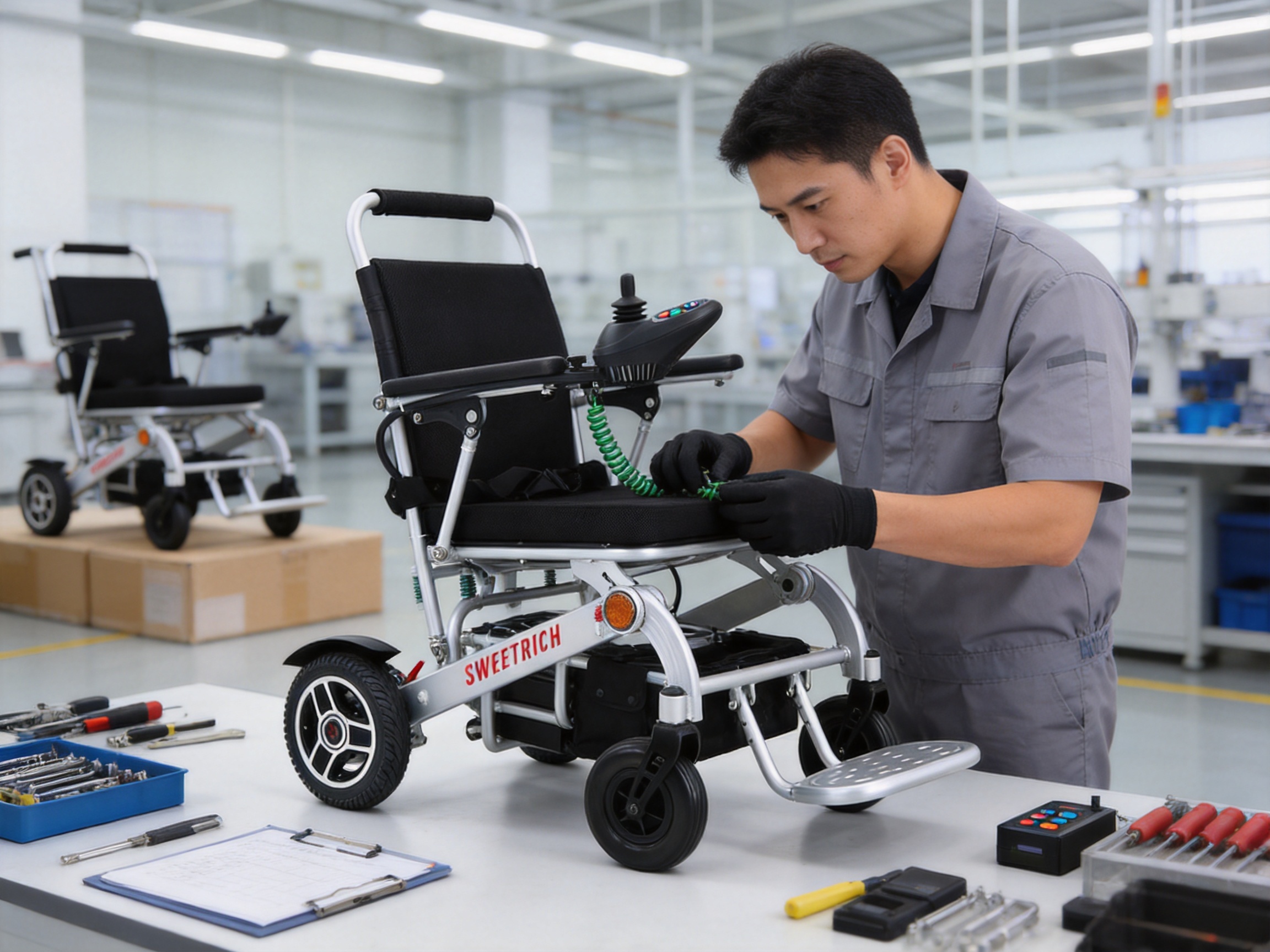
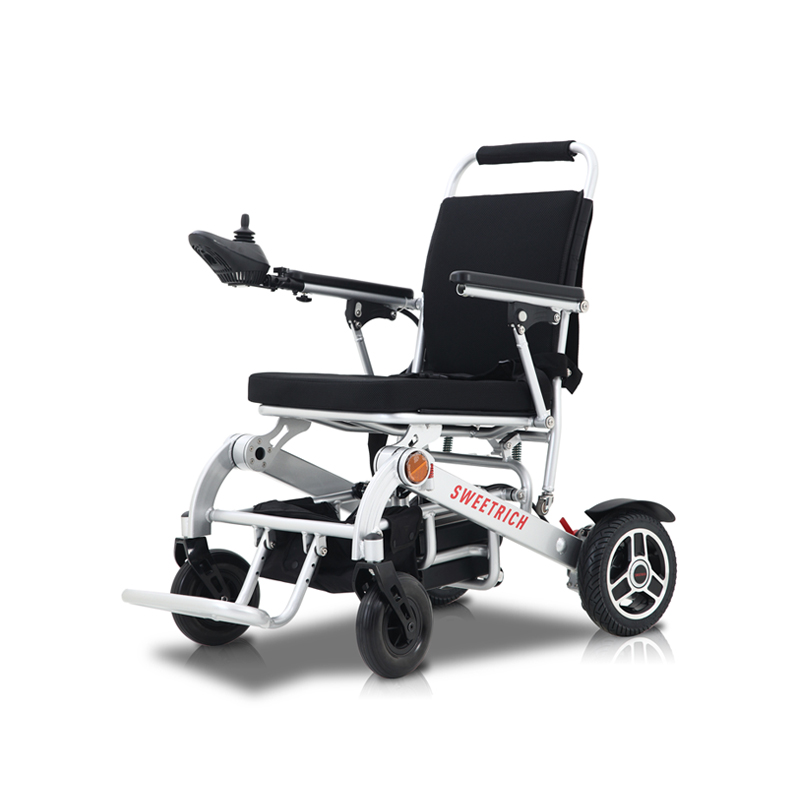
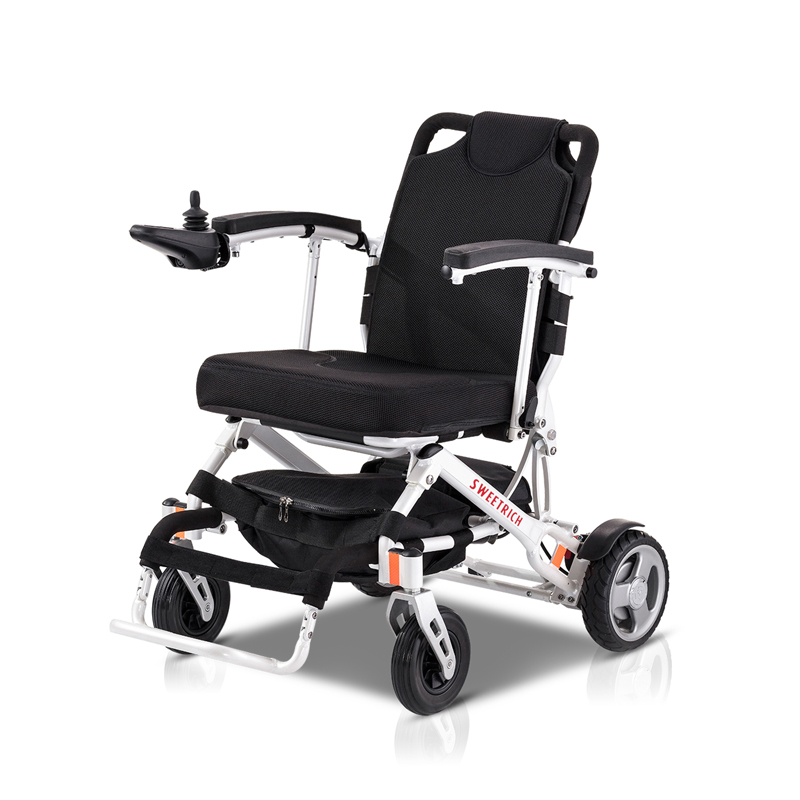
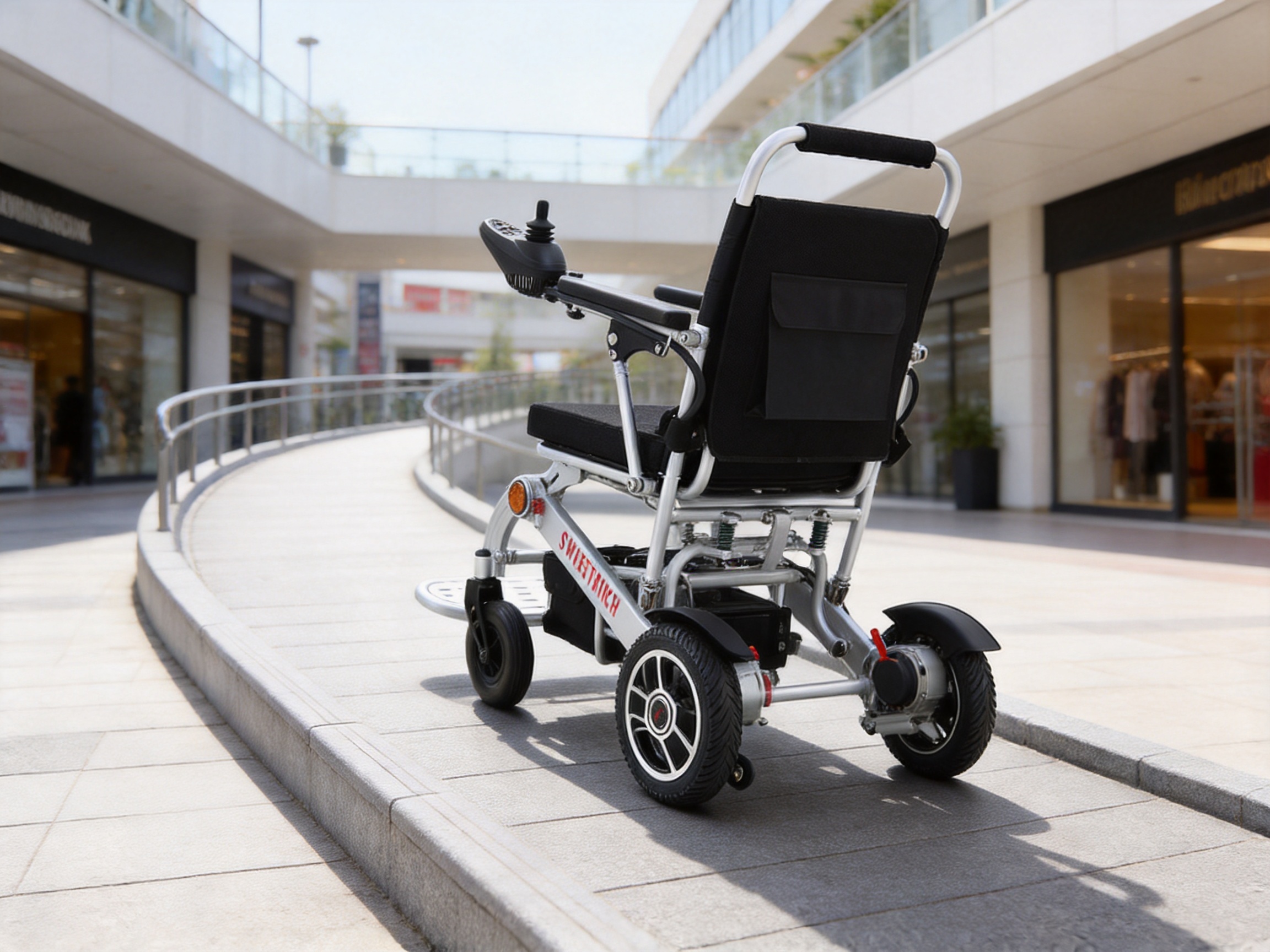
For people who need powered mobility but still value portability, storage convenience, and independent travel, a folding wheelchair can offer a useful balance between a traditional wheelchair and a larger mobility scooter. The iFold medical foldable aluminum rollator wheelchair with footrest is designed for this purpose. It combines a compact folding structure, powered rear-wheel drive, front and rear suspension, electromagnetic braking, and a joystick control system in a relatively lightweight frame.
This type of mobility product is intended for users who may find walking difficult or tiring but who still want to move through homes, shopping areas, hotels, transport terminals, and other suitable environments with less assistance. Its design also addresses a common problem with many powered wheelchairs and mobility scooters: the difficulty of lifting, transporting, and storing a full-size vehicle.
The wheelchair weighs 24 kilograms without the battery and uses a folding aluminum construction. Depending on the selected battery configuration, it can provide a stated driving range of approximately 30 ± 5 kilometers. It supports up to 120 kilograms, or 265 pounds, and is equipped with two 250-watt motors. These specifications make it a practical option for users seeking a travel-oriented powered wheelchair rather than a large, heavily equipped outdoor mobility vehicle.
Understanding the Product Concept
A rollator wheelchair with powered drive is different from a conventional manual wheelchair. A manual wheelchair depends on the user or an attendant for propulsion, while a powered version uses batteries, motors, and a controller to deliver movement through a joystick. The user can therefore travel with reduced upper-body effort and less dependence on another person.
The product is also different from many traditional mobility scooters. Mobility scooters commonly have a separate tiller, a larger turning arrangement, and a more substantial frame. A powered wheelchair with joystick operation can be easier to control in narrow spaces, especially when the joystick is positioned correctly for the user. The seating format also resembles a wheelchair more closely, which can be useful for people who prefer a compact chair-style platform.
The folding structure is central to the product’s identity. The supplied product information states that it can fold and unfold in one second. In practical use, the exact time will depend on the user, the environment, and whether the chair is being folded manually or with a particular operating procedure. Nevertheless, the design goal is clear: reduce the effort required to prepare the wheelchair for transport or storage.
Its aluminum frame contributes to the low weight relative to many powered wheelchairs. Aluminum is widely used in transport-oriented mobility equipment because it can provide a useful combination of structural strength, corrosion resistance, and manageable weight. The result is a wheelchair that is easier to place in a vehicle, carry over a short distance after folding, or store in a home, hotel, or office.
The product is described as a non-medical device for the United States market. It should therefore be viewed as a mobility aid and transportation product, not as a medical treatment device. A user should confirm suitability with a healthcare professional, mobility specialist, or qualified dealer when physical condition, posture, balance, or transfer ability creates special requirements.
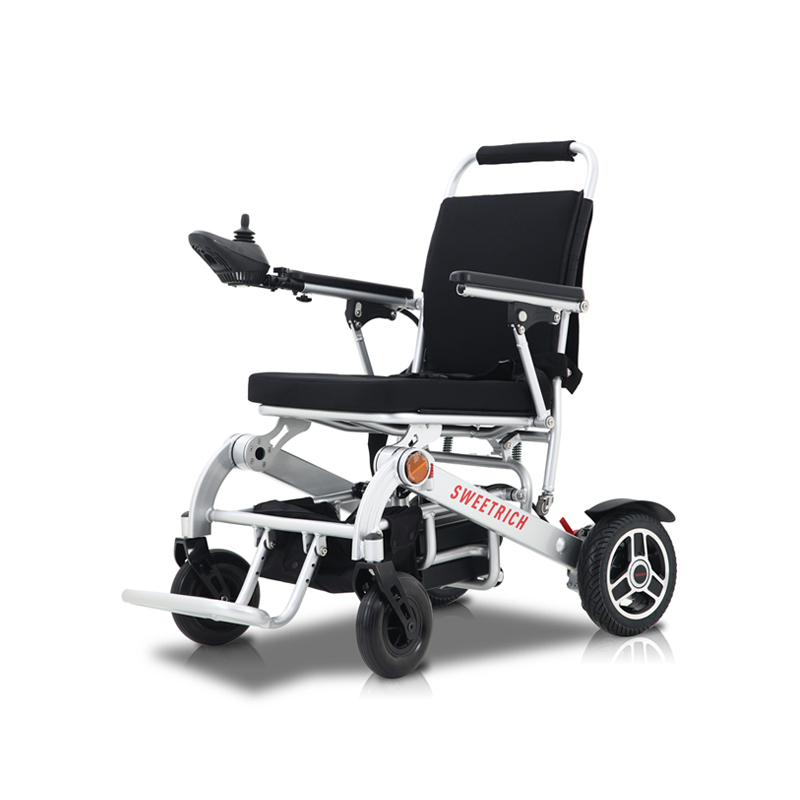
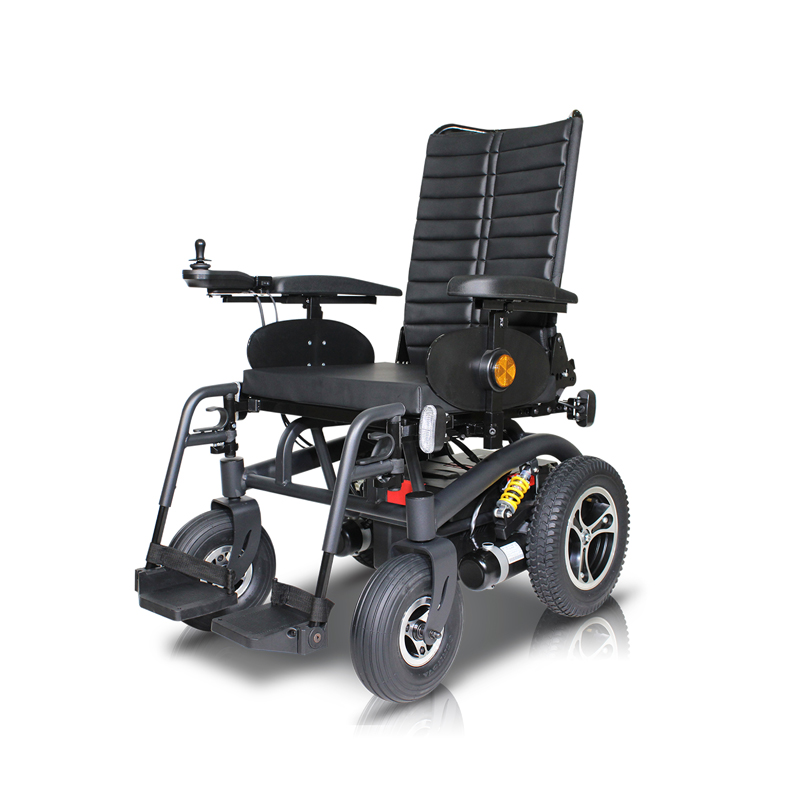
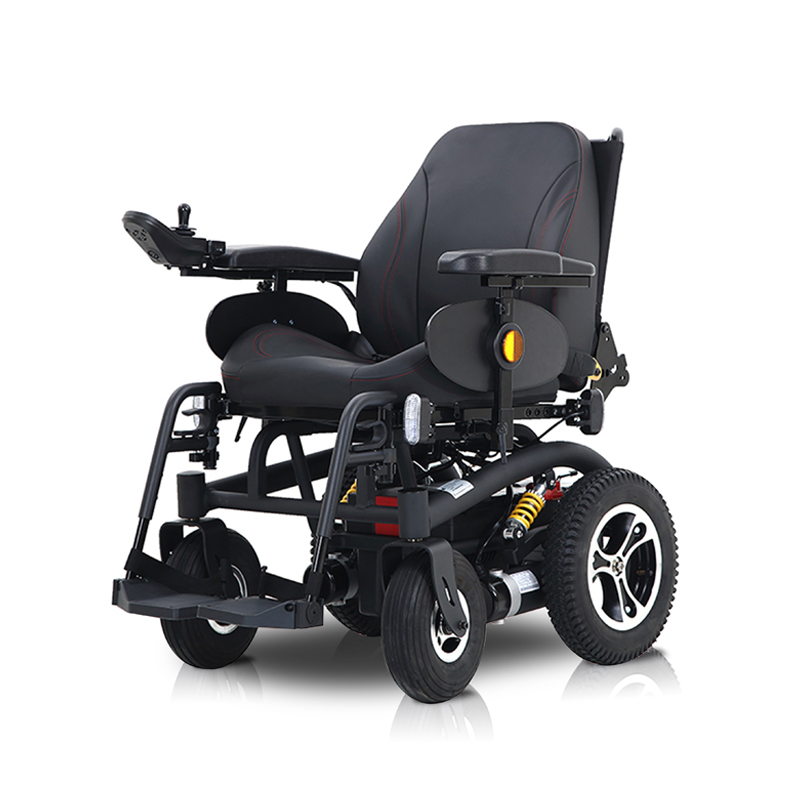
iFold Medical foldable aluminum rollator wheelchair with footrest light weight Wheelchair
Key Advantages of the Folding Design
Fast folding and unfolding
The ability to fold and unfold quickly is one of the most important advantages of a travel wheelchair. Many users do not need a vehicle that remains assembled all day. They need a chair that can be prepared when required, placed in a car, and restored to operating condition without a long assembly process.
A rapid folding design can be useful for airport transfers, hotel stays, shopping trips, family visits, and daily storage. It may also make it easier for an attendant to handle the chair when the user is not driving. In contrast, a bulky powered wheelchair may require a ramp, a lift, or a specially adapted vehicle.
Fast folding can also reduce the psychological barrier to taking a mobility device outside the home. When a product is difficult to prepare, users may avoid short trips. A compact wheelchair that is simpler to fold can encourage more frequent participation in social activities and errands.
Lower transport burden
At 24 kilograms without the battery, the chair is not weightless, but it is designed to be more manageable than many full-size powered wheelchairs. The battery will add to the total transport weight, and users should consider their own lifting ability before placing the chair in a vehicle. Even so, a lighter frame can make a meaningful difference when two people are lifting the chair or when a loading aid is available.
After folding, the chair is easier to move through a home, storage room, vehicle area, or hotel room. This is especially valuable for families that do not have a permanent garage space or a vehicle equipped with a wheelchair lift.
Compact travel orientation
The dimensions of the unfolded wheelchair are listed as 1,090 millimeters in length, 605 millimeters in width, and 998 millimeters in height. A width of 605 millimeters may be suitable for many indoor passages, although users must always measure the narrowest doorways and turning areas in their own homes.
The travel-oriented structure is particularly helpful in locations where a large mobility scooter may feel excessive. The chair can support daily movement while remaining more discreet and less demanding to store. It is suitable for users who need powered mobility but do not want a vehicle designed primarily for long outdoor journeys.
Powertrain and Driving Performance
Dual 250-watt motors
The wheelchair uses two 24-volt, 250-watt motors. A dual-motor arrangement can provide balanced propulsion through the two drive wheels and support controlled movement on suitable surfaces. It also allows the system to distribute power across both sides of the vehicle rather than relying on a single motor.
Two motors may improve traction consistency in ordinary travel conditions, but performance will depend on the user’s weight, battery charge, surface quality, slope, tire condition, and temperature. A powered wheelchair should not be expected to deliver the same performance on loose gravel, wet grass, deep carpet, or steep uneven terrain as it does on a dry, smooth floor.
Maximum speed
The product information includes two speed references. The feature description states speeds of up to 8.5 kilometers per hour, or approximately 5.2 miles per hour. The technical information lists a maximum forward speed of 6 kilometers per hour. Because these figures differ, buyers should confirm the exact speed for the selected configuration before purchase.
The listed technical specification should normally be treated as the principal reference for the particular model configuration, while the higher figure may relate to a different setup, an earlier product description, or a maximum design capability. Actual speed can also be limited by the controller, local regulations, user weight, battery condition, and safety settings.
For most travel-focused users, a moderate speed is more important than maximum speed. Controlled acceleration, predictable braking, and stable steering are usually more valuable than achieving the highest possible velocity in a crowded environment.
Gradient capability
The stated maximum driving gradient is 10 degrees. This figure should not be interpreted as a recommendation to use every available slope at maximum capacity. A safe incline depends on pavement condition, moisture, surface texture, direction of travel, battery charge, load distribution, and the user’s confidence.
Users should approach slopes slowly, avoid sudden turns, and follow the operating instructions supplied with the wheelchair. Cross-slope travel can be more challenging than traveling directly up or down an incline. Ramps should be inspected for adequate width, traction, and clearance before use.
Driving range
The listed maximum driving range is 30 ± 5 kilometers. This indicates an approximate range rather than a guaranteed distance under every condition. The 10.2 amp-hour and 20 amp-hour battery options will not necessarily provide the same range, and the larger capacity configuration may be selected when longer travel distances are important.
Range is affected by rider weight, terrain, frequent stops and starts, temperature, tire pressure, battery age, slope, driving style, and the condition of the motors and controller. A user should plan a reserve rather than intentionally exhausting the battery. For outdoor journeys, the return route and unexpected detours should be included in the range calculation.
| Specification | Stated Information | Practical Consideration |
|---|---|---|
| Overall dimensions | 1,090 × 605 × 998 mm | Measure doorways, storage areas, and vehicle access points before purchase. |
| Maximum forward speed | 6 km/h | Confirm the configuration because a separate feature description mentions up to 8.5 km/h. |
| Maximum driving gradient | 10 degrees | Use only on suitable, dry, stable surfaces and follow safe slope practices. |
| Driving range | 30 ± 5 km | Actual range varies with load, terrain, temperature, and battery condition. |
| Weight capacity | 120 kg or 265 lb | Include clothing, bags, and accessories when calculating total load. |
| Motor system | 24 V, 250 W × 2 | Dual motors support powered movement through the drive wheels. |
| Battery options | Lithium 24 V/10.2 Ah or 20 Ah | Battery selection affects weight, charging needs, and expected range. |
| Charging time | Approximately 5 hours | Charge in a suitable location using the correct charger. |
| Unladen weight | 24 kg without battery | Battery weight must be added when planning lifting or transport. |
Control, Steering, and Braking
Joystick operation
The joystick is designed to make forward, reverse, turning, and speed control available through a compact hand-operated interface. This can be advantageous for users who have adequate hand and arm function but may not have the endurance needed to propel a manual wheelchair.
The product information states that the joystick is available for use on both sides. This flexibility may help accommodate left-handed and right-handed users, or users whose stronger or more comfortable hand changes over time. It can also assist with seating arrangements and transfer preferences.
Joystick control requires practice. New users should begin at low speed in an open, level area. They should learn how quickly the chair responds to small joystick movements and how much space is needed for a turn. The control should be released carefully, and users should avoid making sudden movements until they understand the steering response.
Electromagnetic braking
The wheelchair uses an electromagnetic brake system. Electromagnetic braking is commonly used in powered mobility products because it can help stop the drive system when the control is released or power is interrupted, depending on the design and operating mode.
Braking performance is influenced by slope, surface condition, load, tire grip, and mechanical condition. A user should not rely on the brake system alone when parked on a steep incline. The chair should be placed on a stable surface whenever possible, and the user should follow the manufacturer’s parking and freewheel instructions.
Regular checks are important. If the wheelchair rolls unexpectedly, stops unevenly, produces unusual sounds, or responds differently from normal, use should be discontinued until the system has been inspected by a qualified technician or dealer.
Front and rear suspension
The product includes front and rear suspension. Suspension can reduce the effect of small surface irregularities and make travel more comfortable on suitable outdoor pathways. It may also help keep the tires in contact with the ground when crossing minor transitions.
Suspension does not convert the wheelchair into an all-terrain vehicle. Users should avoid deep potholes, high curbs, loose stones, standing water, and surfaces that could cause a wheel to lose contact. The suspension should be inspected periodically for looseness, damage, or unusual movement.
Wheel and Footrest Configuration
Eight-inch front and ten-inch rear tires
The listed tire sizes are 8 inches at the front and 10 inches at the rear. Larger rear wheels can help the chair roll over ordinary small transitions more smoothly than very small wheels, while the front wheels contribute to steering and maneuverability.
Tire size is only one part of outdoor performance. Clearance, suspension, wheel placement, motor power, weight distribution, and the surface itself all matter. A wheelchair user should approach thresholds and surface changes at a controlled angle and speed, avoiding sudden impacts.
Large foot platform
The large foot platform is intended to provide a stable place for the user’s feet during travel. A properly supported foot position can improve comfort and reduce the risk of the feet contacting the ground or nearby obstacles.
Users should ensure that both feet remain safely positioned while the wheelchair is moving. Loose items should not be placed under the foot platform where they could interfere with wheels, steering components, or folding mechanisms.
Footrest convenience
The footrest contributes to the wheelchair format and may make the product more comfortable for users who prefer a supported lower-leg position. Before folding, the footrest should be positioned according to the operating instructions. No person should sit in the wheelchair while it is being folded, and moving parts should be kept clear of hands, clothing, and other objects.

Battery Options and Charging Management
Lithium battery choices
The wheelchair is listed with lithium battery options rated at 24 volts and either 10.2 amp-hours or 20 amp-hours. The larger battery option may be appropriate for users who place a higher priority on range, while the smaller option may be preferred when lower weight and easier handling are more important.
Battery selection should be made according to the user’s routine rather than the maximum advertised range alone. A person who mainly travels inside a home or shopping center may not need the largest capacity. A person who frequently travels outdoors, uses ramps, or expects longer periods between charging may benefit from the higher-capacity option.
Charging time and routine
The listed charging time is approximately five hours. Charging should be performed with the correct charger, identified as a DC 24-volt, 2-amp charger compatible with AC input from 115 to 230 volts. Users should follow the supplied charging instructions and avoid using an unapproved replacement charger.
The charger should be connected in a dry, ventilated area. The battery and charger should not be covered during charging, exposed to extreme heat, or placed near flammable materials. If the charger, plug, cable, or battery becomes unusually hot, damaged, swollen, or emits an unusual odor, charging should stop and qualified service should be contacted.
Range preservation
Good charging habits can help preserve usable battery performance. Users should avoid repeatedly operating until the battery is completely depleted. The chair should be charged after an appropriate journey and stored according to the battery instructions when it will not be used for an extended period.
Temperature can affect lithium battery behavior. Very cold or very hot conditions may reduce range or affect charging performance. A wheelchair stored in a vehicle should be allowed to return to a suitable temperature before charging if required by the battery instructions.
Why Aluminum Construction Matters
Aluminum is a logical material for a portable powered wheelchair because it can reduce structural weight while maintaining a practical level of rigidity. The frame must support the rider, batteries, motors, seating components, and dynamic loads created by starting, stopping, and passing over ordinary transitions.
The benefit of aluminum is not simply that it is light. A well-designed aluminum frame can also support a folding mechanism without requiring the heavy tubular structures sometimes seen on larger outdoor wheelchairs. Lower frame weight improves the overall transport experience and can reduce the effort required when loading the product.
Aluminum also offers useful resistance to ordinary corrosion. This does not mean the wheelchair should be left in rain, stored while wet, or exposed to saltwater. Cleaning and drying remain important, especially around electrical connectors, fasteners, folding joints, and the lower frame.
The structural design must balance weight with durability. The stated weight capacity is 120 kilograms, and users should not exceed this limit. Bags and other items count toward the total load. Overloading can influence braking distance, stability, range, motor temperature, and the service life of the frame and folding components.
Manufacturing Strengths and Product Development
The manufacturer, Suzhou Sweetrich Vehicle Industry Technology Co., Ltd., is described as a high-tech company established in 2011 in Suzhou Industrial Zone, Jiangsu, China. The company operates a factory covering approximately 30,000 square meters on a site of about 60 acres. This scale provides a substantial foundation for research, development, production, assembly, and quality management related to mobility scooters and power wheelchairs.
More than ten years of experience in mobility equipment manufacturing can support a stronger understanding of user requirements. Folding reliability, motor integration, control response, battery placement, frame balance, and transport convenience all require specialized product knowledge. Experience in these areas can help a manufacturer refine a design across multiple production cycles.
The company states that it owns intellectual property rights for its electric scooters and power wheelchairs. In practical terms, internal intellectual property can support greater control over design features, mechanical arrangements, control systems, and product development. It may also allow the manufacturer to adapt products for different customers and markets rather than relying exclusively on generic, externally designed platforms.
Its stated manufacturing philosophy emphasizes strict production management and scientific product design. These principles are especially relevant to powered mobility products because the finished wheelchair must integrate mechanical, electrical, and user-interface systems. A problem in one area can affect the performance of the entire vehicle.
Integrated mechanical and electrical development
A folding wheelchair requires close coordination between the frame and the electrical system. Battery placement must not interfere with folding. Motor cables must remain protected when the frame moves. The controller must deliver predictable acceleration and braking. The joystick must be positioned so that it is usable without making transfers unnecessarily difficult.
Advanced manufacturing is therefore not limited to the final assembly line. It includes the design of component interfaces, the selection of materials, the organization of wiring, the fit between folding parts, and the repeatability of production. A manufacturer with in-house product experience is better positioned to identify these relationships during development.
Production consistency
For a mobility wheelchair, consistency is as important as individual product performance. Every frame should meet the intended dimensions. Folding joints should operate in the expected manner. Electrical connectors should be correctly installed. Brakes and controls should be checked before shipment.
Strict production management can help reduce variation between units. Quality processes may include incoming component checks, assembly inspections, functional testing, battery and charger verification, and final packaging review. The exact procedures used for a particular model should be confirmed with the manufacturer or authorized supplier, but the company’s stated focus on quality and production management is directly relevant to dependable mobility equipment.
International market experience
The company reports exporting products to America, Europe, Japan, Australia, the Middle East, Russia, and other markets. International distribution can expose a manufacturer to different user expectations, transport conditions, climate considerations, dealer requirements, and regulatory environments.
Experience across multiple markets may also encourage more careful documentation, packaging, configuration control, and customer support. However, international availability does not automatically mean that every configuration meets every local requirement. Buyers should check applicable transportation, battery, accessibility, and product-use rules in their own location.
Advantages Compared with Conventional Alternatives
Compared with a manual wheelchair
The clearest advantage over a manual wheelchair is powered movement. A user does not need to propel the chair by repeatedly pushing the hand rims, and an attendant does not need to push the chair continuously. This can reduce fatigue during longer indoor journeys or when traveling across a large facility.
The joystick can also support more independent movement for users with sufficient hand control. The dual motors provide propulsion without the upper-body effort required by a manual chair. At the same time, the folding aluminum design preserves some of the transport convenience associated with lighter manual wheelchairs.
The trade-off is additional weight, battery charging, and electrical maintenance. A manual wheelchair may be easier to lift and can remain usable without a charged battery. The powered folding wheelchair is more suitable for users who consider independent propulsion a priority.
Compared with a full-size powered wheelchair
Compared with a large powered wheelchair, the product emphasizes portability and storage. Its folding structure, 605-millimeter listed width, and 24-kilogram frame weight without the battery can make it more suitable for travel and occasional use.
A larger powered wheelchair may provide more seating adjustment, heavier-duty suspension, larger batteries, greater ground clearance, and a broader range of accessories. It may be preferable for full-day use, complex postural needs, or demanding outdoor terrain. The folding model is differentiated by its focus on convenience, compactness, and transport.
Compared with a mobility scooter
A mobility scooter may offer a comfortable tiller arrangement and a familiar riding position, but it can be less convenient in narrow indoor spaces or when users need a wheelchair-style seat and foot platform. The joystick-controlled design may provide a more direct control format for certain users.
The folding wheelchair can also be more convenient for users who need to transfer between a chair and another seat or who prefer a compact chair profile. However, personal preference and physical ability are decisive. Some users will find a scooter tiller more comfortable, while others will prefer joystick steering.
Who May Benefit from This Wheelchair?
This product may suit older adults, people with limited walking endurance, individuals recovering from an injury, and users with disabilities who need powered assistance for suitable daily travel. It may also help families looking for a transportable wheelchair for appointments, shopping, vacations, and visits.
The product may be particularly useful for someone who:
Needs powered assistance but does not want a large full-size wheelchair.
Travels regularly by car and needs a folding frame.
Has adequate hand and arm control for joystick operation.
Values a foot platform and wheelchair-style seating.
Needs a chair that can be stored in a relatively small space.
Usually travels on smooth indoor floors, paved paths, and suitable ramps.
It may be less suitable for users who require complex postural support, high ground clearance, continuous heavy outdoor use, or a chair designed for rugged terrain. A professional assessment is recommended when the user has significant balance, posture, transfer, or cognitive challenges.
Travel, Storage, and Daily Use
Vehicle transport
Before buying, users should measure the vehicle’s trunk opening, interior length, interior height, and available lifting space. The folded dimensions are not provided in the supplied specifications, so buyers should request them before making transport plans. The 24-kilogram frame weight also excludes the battery.
The wheelchair should be secured during transport so that it cannot move, fall, or damage other objects. If the battery is removable, it should be handled and transported according to the battery manufacturer’s instructions. Airline and public transport policies may differ, particularly for lithium batteries, so arrangements should be confirmed in advance.
Indoor maneuvering
The compact width and joystick control can be useful indoors. Nevertheless, the user should check turning clearance, furniture placement, floor transitions, and the location of charging equipment. The wheelchair should not be driven into stairs, escalators, or areas where a sudden drop-off is possible.
Carpets, thresholds, ramps, and wet floors can affect control. The first indoor driving sessions should take place in a clear area where the user can practice forward motion, reversing, stopping, and turning without risk to people or property.
Outdoor travel
Outdoor use should be limited to surfaces appropriate for the wheelchair’s design. Smooth sidewalks, paved paths, accessible building entrances, and maintained pathways are generally more appropriate than muddy ground, deep gravel, steep irregular slopes, or areas with standing water.
Visibility is important. Users should remain aware of pedestrians, cyclists, vehicles, driveway edges, and changes in pavement. A moderate speed and careful scanning are more valuable than traveling at maximum speed. The chair should be kept away from traffic lanes unless local accessibility rules and safe infrastructure clearly permit crossing.
Safety Practices
Read the complete operating manual before using the wheelchair. A trained person should demonstrate folding, unfolding, charging, joystick control, braking, and emergency procedures. New users should practice with a responsible attendant nearby until they can operate the chair confidently.
Do not exceed the 120-kilogram weight capacity. The total load includes the user, clothing, bags, accessories, and any objects placed on the wheelchair. Excessive load can reduce stability and increase stopping distance.
Do not use the wheelchair on stairs, escalators, or surfaces where the wheels may become trapped. Do not drive across a slope more steeply than recommended. Avoid sudden turns on inclines, and never attempt a maneuver that causes the user to lean dangerously beyond the seating area.
Keep hands, feet, clothing, and bags away from folding joints, wheels, motors, and moving components. Ensure that the chair is fully unfolded and locked into its operating position before sitting down or driving.
Do not drive through deep water or expose the battery, controller, joystick, or charger to rain unless the equipment is specifically rated for those conditions. Water can damage electrical components and create a safety risk.
Before each journey, check the battery level, tire condition, joystick response, brake response, foot platform, folding locks, and general frame condition. If any component appears loose, cracked, damaged, or unusually noisy, the wheelchair should not be used until it has been inspected.
Maintenance and Service Considerations
Routine maintenance begins with cleaning. Dust, hair, grit, and moisture can accumulate around the wheels and folding mechanism. The frame can generally be wiped with a soft, slightly damp cloth and then dried. Harsh chemicals, high-pressure water, and excessive moisture should be avoided unless specifically approved by the manufacturer.
The tires should be checked for wear, cuts, embedded objects, and correct inflation if the tire design requires inflation. Uneven wear may indicate a mechanical issue or alignment problem. Tires in poor condition can reduce traction and affect braking.
Folding components should move smoothly without excessive looseness. A folding joint that binds, rattles, or fails to lock securely requires attention. Users should not modify the frame or attempt unauthorized repairs because changes may affect structural strength and electrical safety.
The joystick and controller should be kept clean and protected from impact. A joystick that drifts, sticks, responds slowly, or fails to return correctly should be serviced. The electromagnetic brake should be checked according to the maintenance schedule and should never be bypassed without professional authorization.
Battery service should be performed using approved components. Lithium batteries should not be opened, crushed, punctured, or exposed to fire. End-of-life batteries should be disposed of through an appropriate recycling or hazardous-waste program rather than placed in ordinary household waste.
Quality and Purchasing Checklist
When evaluating a folding powered wheelchair, buyers should consider more than the advertised appearance. The following questions can help identify whether the selected configuration matches the user’s needs.
What are the exact folded dimensions?
What is the total weight with the selected battery installed?
Which battery capacity is included in the quoted price?
Which maximum speed applies to the purchased configuration?
Is the joystick installed on the preferred side, and can it be repositioned?
What is the warranty period for the frame, motors, controller, battery, and charger?
Are replacement batteries, tires, chargers, and joystick components available?
What service support is available in the buyer’s country?
Does the product meet the applicable local requirements for its intended use?
Can the dealer provide operating, charging, and maintenance documentation in English?
These questions are important because a travel wheelchair is a long-term mobility investment. A product that appears affordable may become difficult to use if replacement batteries or service parts are unavailable. A supplier with established manufacturing experience and international distribution may offer a stronger foundation for ongoing support, but the details should still be confirmed before purchase.
Q&A
Is this wheelchair suitable for everyday use?
It can be suitable for everyday indoor travel and appropriate outdoor journeys when the user is within the weight limit and the surfaces match the design. Users with complex seating, posture, or medical requirements should obtain a professional assessment before choosing it.
How fast does it travel?
The technical information lists a maximum forward speed of 6 kilometers per hour. A separate feature description mentions speeds up to 8.5 kilometers per hour. Because these figures are inconsistent, the exact speed should be confirmed for the selected model and controller configuration before purchase.
What distance can it travel on one charge?
The stated maximum range is approximately 30 ± 5 kilometers. Actual range depends on battery capacity, rider weight, slope, surface, temperature, driving style, tire condition, and battery age. Users should plan trips with a safety reserve.
Can the joystick be used on either side?
The product information states that the joystick is available for use on both sides. The buyer should confirm whether the selected unit includes the required arrangement and whether repositioning should be performed by a dealer or qualified technician.
How much does the wheelchair weigh?
The stated weight without the battery is 24 kilograms. The final transport weight will be higher after the selected battery and any accessories are installed.
What is the maximum user weight?
The listed weight capacity is 120 kilograms, or 265 pounds. This limit includes the user and carried items. Exceeding it may affect stability, braking, range, and component durability.
Does it have suspension?
Yes. The specification lists front and rear suspension. Suspension can improve comfort over minor irregularities, but it does not make the wheelchair suitable for deep potholes, rough trails, deep gravel, or unsafe terrain.
What type of brakes does it use?
The wheelchair uses electromagnetic brakes. Users should inspect braking performance regularly and have the system checked if stopping behavior changes.
How long does charging take?
The listed charging time is approximately five hours. Charging time can vary with battery condition, battery capacity, temperature, and the charger used. The supplied charger and operating instructions should always be followed.
Is it a medical device?
The supplied description identifies it as a non-medical device for the United States market. It is a mobility aid and should not be presented as a treatment or diagnostic device. Users with specific health or seating needs should consult an appropriate professional.
Can it be used in rain?
Users should avoid rain, deep water, and wet conditions unless the specific equipment documentation confirms suitable protection. Electrical components and lithium batteries must be kept dry and inspected if they are exposed to moisture.
Is it better than a mobility scooter?
That depends on the user. This wheelchair offers joystick control, a wheelchair-style seating arrangement, a foot platform, and a folding frame. A mobility scooter may provide different seating, controls, or outdoor capabilities. The best choice depends on physical needs, storage, transport, and intended terrain.
Overall Evaluation
The iFold medical foldable aluminum rollator wheelchair is designed around a clear mobility priority: powered independence without the transport burden of a full-size wheelchair. Its main strengths include a folding aluminum frame, a stated 24-kilogram weight without the battery, rapid folding and unfolding, a large foot platform, dual motors, front and rear suspension, electromagnetic braking, and joystick availability for either side.
The combination of a 120-kilogram weight capacity and a stated range of approximately 30 ± 5 kilometers gives the product practical potential for daily activities and travel. The lithium battery options allow buyers to balance portability and distance. The 8-inch front and 10-inch rear tires support a compact but functional rolling platform for suitable indoor and outdoor surfaces.
Its strongest competitive advantage is not maximum ruggedness or the largest possible battery. Instead, it is the combination of portability, powered movement, and relatively simple operation. Users who need a chair that can accompany them in a vehicle, remain manageable in storage, and provide powered assistance may find this balance attractive.
The manufacturer’s experience, factory resources, intellectual property, stated production management, and international market presence provide additional reasons to evaluate the product seriously. Reliable mobility equipment depends on coordinated design, repeatable assembly, component quality, and after-sales support. These manufacturing foundations are important considerations alongside the product’s visible features.
Before purchase, buyers should confirm the folded dimensions, total weight with the battery, applicable speed, battery configuration, warranty, replacement parts, service arrangements, and local use requirements. With suitable training and responsible operation, this folding powered wheelchair can be a practical solution for users who want greater freedom of movement while keeping transport and storage demands under control.
References
1. Product specifications and feature information supplied for the foldable aluminum rollator wheelchair.
2. Manufacturer information supplied for Suzhou Sweetrich Vehicle Industry Technology Co., Ltd.
3. General principles of powered wheelchair operation, battery care, braking, and mobility equipment maintenance.
4. General guidance concerning safe use of lithium battery-powered transportation and mobility equipment.
5. General accessibility and travel-planning considerations for wheelchair users.