
 +86-(0)512-82283871

Content
- 1 1. Product Overview and Travel-Oriented Design
- 2 2. Driving Performance and Safety Features
- 3 3. Battery Options, Charging, and Travel Range
- 4 4. Comfort, Control, and Everyday Usability
- 5 5. Advantages Compared with Other Mobility Equipment
- 6 6. Suitable Applications and User Profiles
- 7 7. Manufacturing and Engineering Strengths
- 8 8. Product Selection and Configuration Guidance
- 9 9. Maintenance and Long-Term Care
- 10 10. Safety Practices for Users and Caregivers
- 11 11. Value for Distributors and Business Buyers
- 12 12. Environmental and Lifestyle Benefits
- 13 13. Why the Product Stands Out
- 14 14. Frequently Asked Questions
- 14.1 What type of product is the iFold PLUS?
- 14.2 How fast can it travel?
- 14.3 What is the stated driving range?
- 14.4 What is the maximum user weight?
- 14.5 Can the joystick be used on either side?
- 14.6 Does the wheelchair have suspension?
- 14.7 What type of brakes does it use?
- 14.8 What battery options are available?
- 14.9 How long does charging take?
- 14.10 How heavy is the wheelchair?
- 14.11 Is it suitable for air travel?
- 14.12 Can it be used outdoors?
- 14.13 Is the product a medical device?
- 14.14 Who manufactures the product?
- 14.15 What manufacturing experience does the company have?
- 14.16 How can a buyer request more information?
- 15 15. Final Assessment
- 16 References
- 17 Product: iFold PLUS Automatic folding electric wheelchair with joystick controller hot sale
Mobility needs can change from one day to the next. A user may need a powered wheelchair at home, in a shopping center, while traveling, or when moving across outdoor paths. For this reason, a practical mobility device must provide more than electric drive power. It should also be simple to operate, easy to store, convenient to transport, comfortable during daily use, and dependable across a variety of ordinary environments.
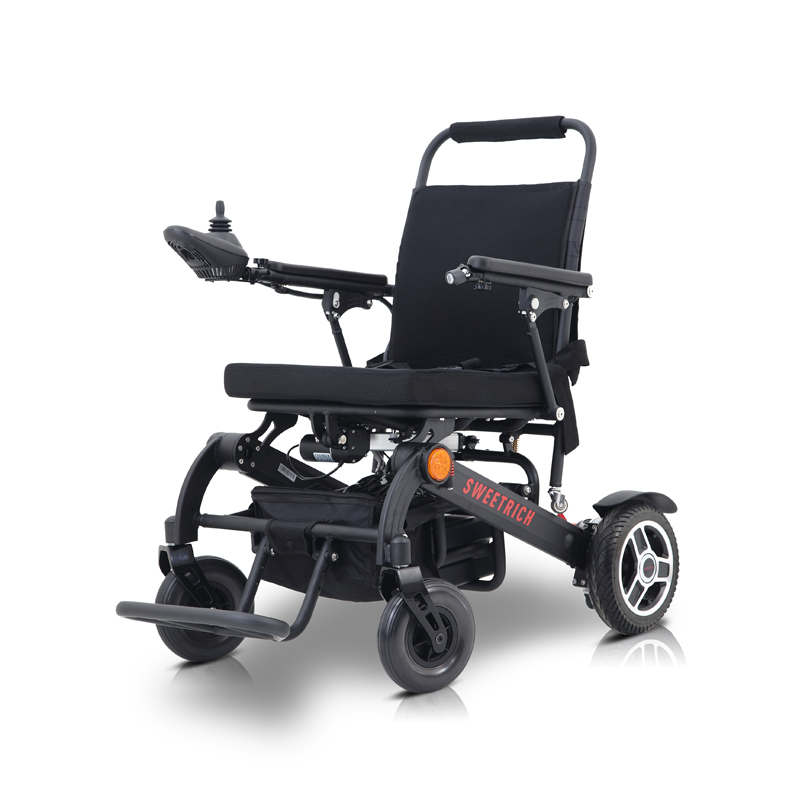
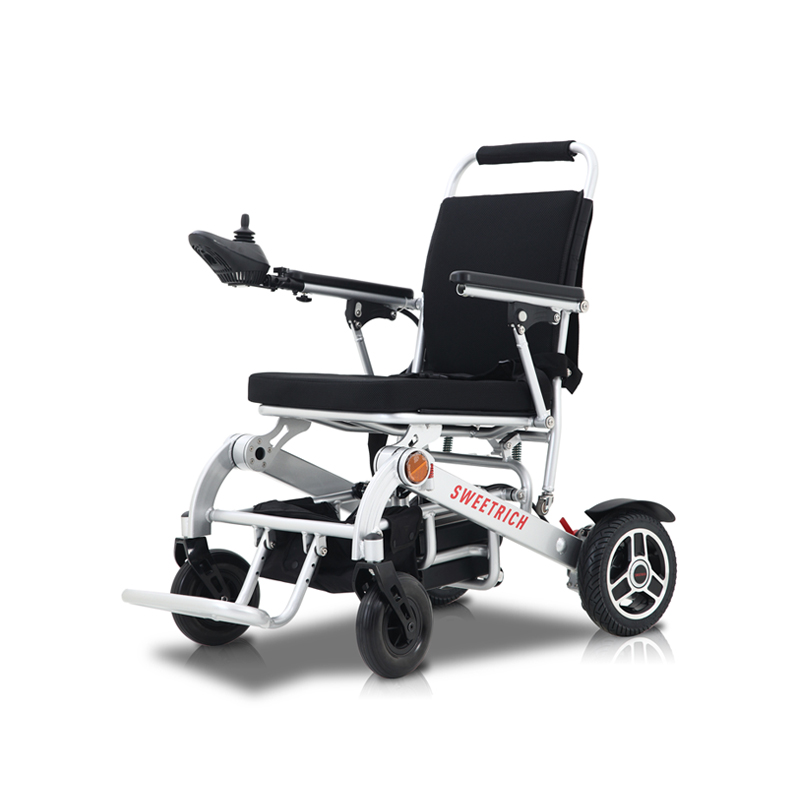
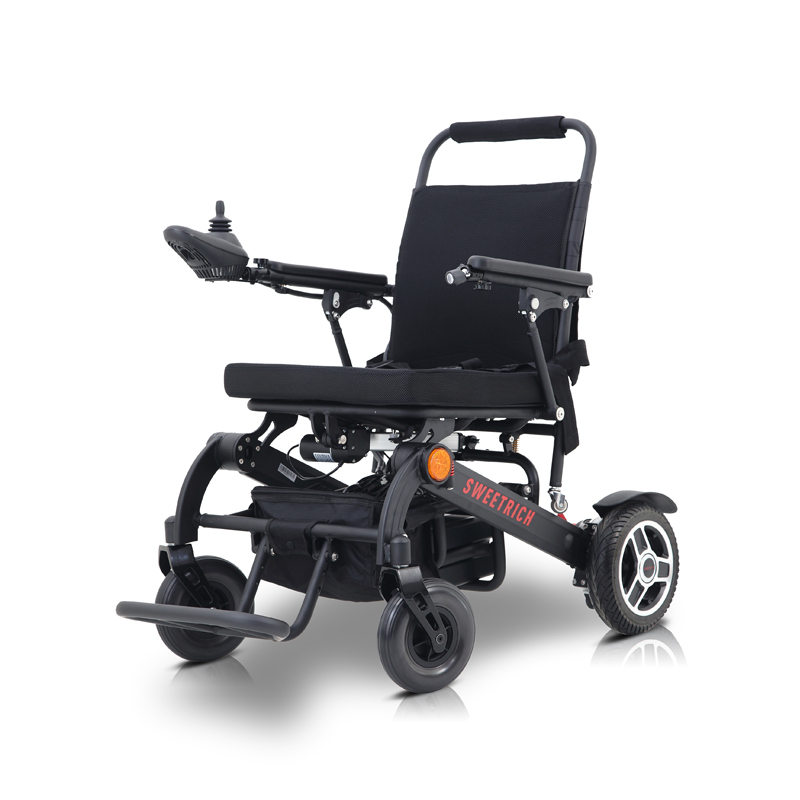
The iFold PLUS automatic folding electric wheelchair is designed around these requirements. It combines powered movement, joystick control, automatic folding, front and rear suspension, a large foot platform, electromagnetic braking, and a compact travel-oriented structure. It is intended for the US market as a non-medical device and is positioned within the Travel Smart Wheelchairs category.
Compared with conventional manual wheelchairs, the iFold PLUS reduces the physical effort required from the user or caregiver. Compared with many larger powered wheelchairs, it emphasizes portability and folding convenience. Its design also offers a practical balance between outdoor capability and indoor maneuverability, making it suitable for users who want powered assistance without choosing a full-size mobility platform.
This article examines the product’s design, operating features, technical specifications, advantages, applications, maintenance considerations, and the manufacturing capabilities behind it. It also explains how the wheelchair may compare with other categories of mobility equipment and answers common questions from buyers, distributors, caregivers, and mobility-product professionals.
iFold PLUS Automatic folding electric wheelchair with joystick controller hot sale
1. Product Overview and Travel-Oriented Design
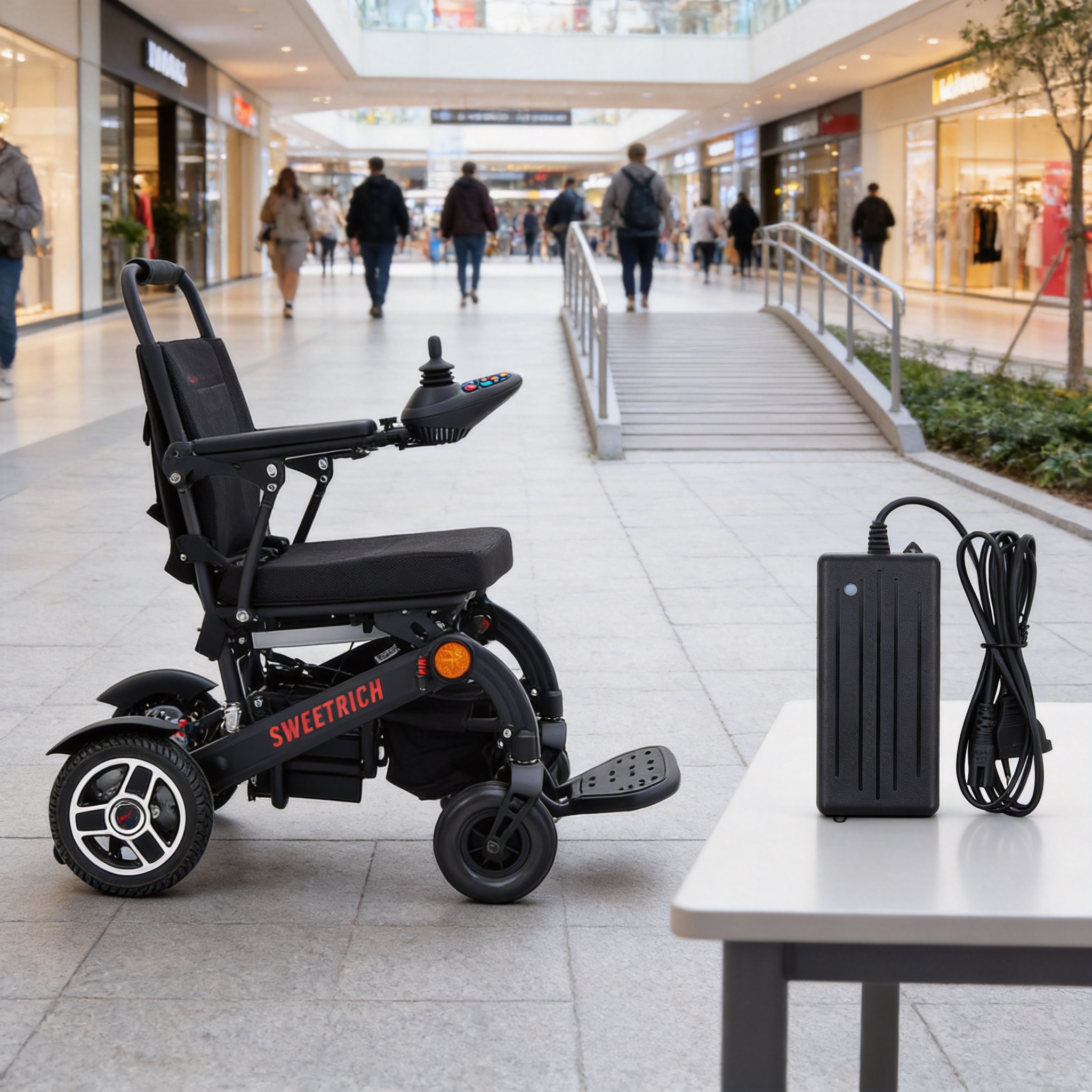
The iFold PLUS is an automatic folding electric wheelchair equipped with a joystick controller. Its core purpose is to give users powered mobility in a format that can be folded for storage and transportation. Automatic folding is particularly valuable for people who may have difficulty lifting, adjusting, or manually collapsing a wheelchair frame.
In its unfolded configuration, the wheelchair measures approximately 1,090 millimeters in length, 605 millimeters in width, and 998 millimeters in height. This size provides a stable seating platform while remaining more compact than many full-size power wheelchairs. The 605-millimeter width can be useful for navigating common indoor spaces, although users should always compare the dimensions with the doorways, elevators, ramps, and storage areas they plan to use.
The wheelchair weighs 24 kilograms without the battery. Weight will increase when the battery is installed, and the final transport weight depends on the selected battery configuration. Even so, the folding structure and removable or manageable battery arrangement can make the product easier to handle than a large, fixed-frame electric wheelchair.
The design is especially relevant to people who regularly move between indoor and outdoor environments. It can be used around the home, in commercial buildings, in shopping areas, at transportation facilities, and on suitable paved paths. Its travel-focused construction is intended to support independence while reducing the logistical difficulties associated with storing and transporting powered mobility equipment.
Automatic folding for simplified handling
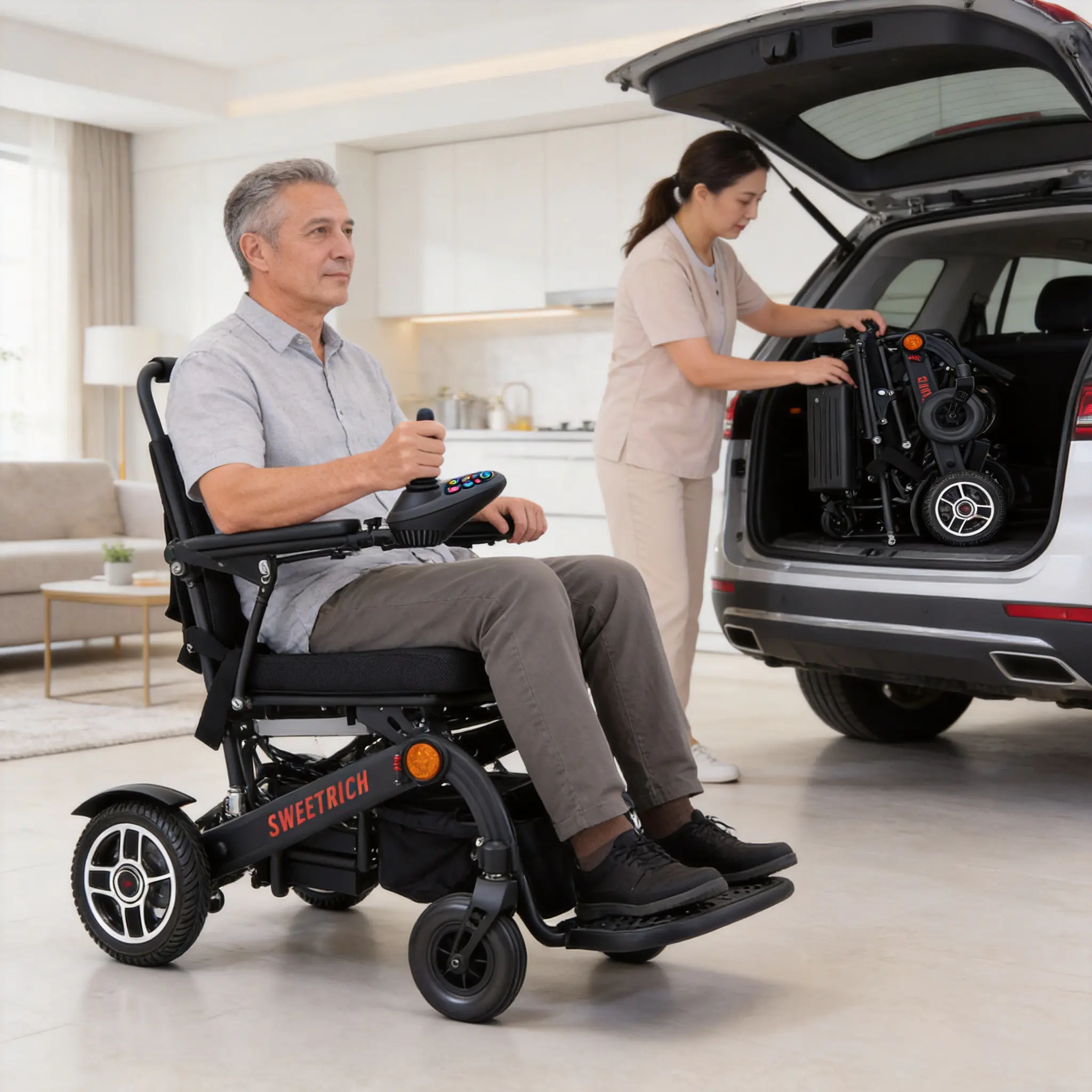
One of the most distinctive features is the automatic folding function. Folding can reduce the space required in a vehicle, closet, apartment, office, or hotel room. It may also simplify preparation before a journey, because the user does not need to disassemble multiple major components before storage.
Automatic folding is not simply a convenience feature. For many users, it can influence whether a powered wheelchair is practical in everyday life. A device that is difficult to fold or transport may remain unused despite having good driving performance. By contrast, a folding mechanism can make it easier to take the wheelchair on family trips, store it in a vehicle, or move it between different areas of a building.
Users should operate the folding system on a stable surface and follow the supplied instructions. The wheelchair should be switched off when appropriate, the joystick should be protected from impact, and the folding path should remain clear of clothing, luggage, fingers, and other objects. Caregivers should also confirm that the frame is fully opened and secured before driving.
Joystick operation on either side
The joystick can be configured for use on either side. This is an important ergonomic advantage because users do not all have the same level of strength, coordination, or comfort in their right or left hand. A reversible joystick arrangement allows the control position to be adapted to individual preference and functional ability.
The joystick is intended to control forward, reverse, turning, and speed modulation. Users should begin at low speed in an open, level area until they understand the response of the controller. Practice is especially important when entering narrow spaces, approaching ramps, turning near furniture, or driving around pedestrians.
A side-adjustable control system can also make the wheelchair more suitable for users who experience limited function on one side of the body. It does not eliminate the need for individualized assessment, but it provides more configuration flexibility than a fixed control position.
2. Driving Performance and Safety Features
The supplied product information lists a maximum forward speed of 6 kilometers per hour. A separate feature description refers to speeds of up to 8.5 kilometers per hour, or approximately 5.2 miles per hour. Because these figures differ, buyers and distributors should confirm the applicable speed for the exact configuration, market, controller setting, and production version before making a purchase or publishing technical specifications.
For everyday mobility, a maximum speed of 6 kilometers per hour is appropriate for many indoor and outdoor applications. It allows the user to travel efficiently while maintaining a manageable pace around shops, public facilities, residential areas, and paved walkways. Actual operating speed should be adjusted according to surface conditions, pedestrian traffic, visibility, slope, and user experience.
Dual-motor drive system
The wheelchair uses two 24-volt, 250-watt motors. A dual-motor configuration can provide balanced drive power to the rear wheels and support controlled movement over suitable surfaces. It may also help the wheelchair maintain traction during ordinary changes in direction and moderate outdoor use.
The motors are supported by a 24-volt, 50-amp motor controller. The controller coordinates power delivery and joystick commands. Smooth control is important because abrupt acceleration or turning can reduce user confidence and make indoor operation more difficult. A properly matched controller and motor system can help create predictable responses during starting, stopping, and maneuvering.
Motor performance depends on factors such as user weight, battery condition, tire pressure, terrain, temperature, gradient, and driving style. Published specifications should therefore be understood as reference values rather than guarantees of identical performance in every situation.
Electromagnetic braking
The iFold PLUS uses an electromagnetic brake system. Electromagnetic braking is commonly used in powered mobility equipment because it can engage when the drive control is released or power is interrupted. This helps the wheelchair slow and remain stationary under normal operating conditions.
Braking behavior may vary according to slope, surface, load, battery condition, and controller settings. Users should not rely on the wheelchair’s brake system as a substitute for safe driving practices. The wheelchair should be stopped before folding, transported only when properly secured, and kept away from steep or unsafe terrain.
Front and rear suspension
Front and rear suspension are included to improve the ride over suitable uneven surfaces. Suspension can reduce the amount of vibration transferred through the wheels and frame when traveling over small changes in pavement, thresholds, or outdoor paths. It may also help the wheelchair maintain more consistent wheel contact during ordinary travel.
Suspension does not mean that the wheelchair is intended for rugged off-road use. Large holes, loose gravel, deep grass, wet slopes, and highly uneven surfaces can still present significant risks. The user should select firm, stable routes and avoid surfaces that may cause wheel slip, frame instability, or loss of control.
Gradient capability
The listed maximum driving gradient is 10 degrees. This figure should be treated as a maximum reference under suitable conditions, not as a recommendation for routine operation on every slope. Slope capability can be affected by battery charge, load, tire condition, surface texture, moisture, direction of travel, and the presence of obstacles.
When approaching a slope, users should travel straight rather than crossing diagonally whenever possible. They should avoid sudden stops, rapid turns, and reversing on steep inclines. Ramps should be checked for adequate width, surface grip, edge protection, and compliance with local accessibility requirements.
3. Battery Options, Charging, and Travel Range
The product information lists lithium battery options rated at 24 volts and either 10.2 amp-hours or 20 amp-hours. The feature description also refers to an optional battery of up to 30 amp-hours for greater distance. These options allow the product to be configured according to the user’s expected travel pattern, weight requirements, transport considerations, and local purchasing conditions.
A smaller battery may be appropriate for users who mainly travel indoors or take short trips. A larger battery can be more suitable for users who regularly travel longer distances and have access to appropriate charging facilities. Buyers should confirm which battery capacities are available for their chosen model and whether the selected battery affects folding, weight, shipping, or transportation requirements.
The stated maximum driving range is 30 plus or minus 5 kilometers. This range is a reference estimate and should not be interpreted as a guaranteed distance in all conditions. Range can decrease because of heavier loads, frequent starts and stops, slopes, rough surfaces, cold temperatures, tire pressure problems, battery age, and continuous use of accessories such as lights.
Charging system
The listed charger is rated at DC 24 volts and 2 amps, with an AC input range of 115 to 230 volts. The stated charging time is approximately five hours. Charging should be performed in a dry, ventilated area using the approved charger and the correct electrical supply. The charger should not be covered during operation, and damaged cables or connectors should be replaced before use.
Users should charge the battery according to the instructions supplied with the exact battery version. Allowing the battery to remain deeply discharged for extended periods may reduce its useful life. At the same time, charging habits should follow the manufacturer’s recommended procedure rather than relying on assumptions about automotive, laptop, or other lithium battery systems.
Before a long journey, the user should confirm the battery level, charger availability, route length, terrain, and access to a safe charging location. A realistic travel plan should always include a reserve rather than depending on the maximum published range.
| Specification | Listed Value | Practical Consideration |
|---|---|---|
| Overall dimensions | 1,090 × 605 × 998 mm | Check vehicle, doorway, elevator, and storage compatibility. |
| Maximum forward speed | 6 km/h | Use lower speeds in crowded or confined environments. |
| Maximum driving gradient | 10 degrees | Surface condition and battery charge affect slope performance. |
| Maximum driving range | 30 ± 5 km | Actual range varies with load, terrain, temperature, and battery condition. |
| Weight capacity | 120 kg or 265 lb | Include clothing, bags, and carried items in the total load. |
| Motor system | 24 V, 250 W × 2 | Dual motors support powered movement and balanced drive. |
| Battery options | 24 V lithium, 10.2 Ah or 20 Ah; larger options may be available | Confirm the exact battery configuration before ordering. |
| Charging time | Approximately 5 hours | Use the approved charger and follow battery-care instructions. |
| Wheel sizes | 8-inch front, 10-inch rear | Suitable route selection remains important on uneven surfaces. |
| Weight without battery | 24 kg | Installed battery increases the transport weight. |
4. Comfort, Control, and Everyday Usability
A powered wheelchair must be usable for more than a short demonstration. Comfort, control layout, foot support, storage, lighting, and ease of movement all influence whether the product becomes a reliable part of the user’s daily routine.
Large foot platform
The large foot platform provides a broad area for positioning the feet during travel. Adequate foot support can reduce unnecessary movement and help the user maintain a more stable seating posture. It can also make transfers and repositioning more comfortable, depending on the user’s individual needs and physical ability.
Users should keep the foot platform clear of loose objects. Bags, straps, or clothing that interfere with the wheels or folding structure may create a safety concern. The foot platform should also be inspected periodically for looseness, damage, or accumulation of dirt.
Under-seat storage bag
An under-seat storage bag is included for convenience. It can provide space for small personal items, shopping accessories, documents, or a charger. Storage located beneath the seat keeps frequently used items accessible without requiring a separate backpack or large external container.
The storage bag should not be overloaded. Excessive weight may affect the wheelchair’s balance, folding operation, or total load. Items should be secured so they cannot fall into the wheel area or obstruct the joystick, brake system, or folding mechanism.
Front light option
A front light is available as an option. Lighting can improve visibility in dim areas and help other people notice the wheelchair. It may be useful in parking areas, building entrances, corridors, and outdoor routes during low-light conditions.
A front light does not automatically make the wheelchair suitable for nighttime road use. Users must follow local traffic, visibility, and mobility-equipment regulations. Reflective accessories, high-visibility clothing, and cautious route selection may also be appropriate.
Compact movement after folding
The product is designed to be easier to move after it has been folded. This can be helpful when placing it in a vehicle, storing it at home, or moving it through a building without driving. The user or caregiver should use safe lifting and handling techniques and should consider the installed battery weight.
Although the folded wheelchair is easier to handle than an unfolded powered chair, it is still a substantial object. People with limited lifting ability should not attempt to carry it without assistance if doing so could cause injury. A vehicle loading ramp, hoist, folding trolley, or two-person handling method may be suitable depending on the circumstances.
5. Advantages Compared with Other Mobility Equipment
The most appropriate mobility device depends on the user’s environment, physical ability, transport needs, and expected range. The iFold PLUS does not replace every type of wheelchair or mobility scooter. Its advantage lies in the combination of powered wheelchair control and automatic folding convenience.
Compared with manual wheelchairs
A manual wheelchair generally depends on the user’s arm strength or a caregiver’s pushing effort. On longer routes, ramps, or inclines, this can become tiring. The iFold PLUS provides powered movement through dual motors, allowing the user to control travel with a joystick rather than relying entirely on physical pushing.
The powered format can support greater independence for users who have sufficient hand and arm function to operate the joystick but cannot propel a manual wheelchair effectively. It may also reduce the physical burden placed on family members and caregivers.
On the other hand, a manual wheelchair may be lighter and easier to lift. It may also be preferable for users who do not need powered travel or who frequently require a chair to be carried. The iFold PLUS is therefore most valuable when powered independence and folding convenience are priorities.
Compared with full-size powered wheelchairs
Full-size powered wheelchairs often offer extensive seating adjustments, large batteries, advanced suspension, and high levels of customization. However, those benefits can come with greater size, weight, and transportation demands.
The iFold PLUS focuses on a more compact, travel-friendly format. Automatic folding, a 24-kilogram weight without the battery, and a relatively narrow body can make it easier to store and transport. It may be more appropriate for users who want a powered chair for ordinary daily movement rather than a highly specialized rehabilitation platform.
The trade-off is that a compact folding chair may offer fewer seating adjustments or less extreme-terrain capability than a large customized power wheelchair. Users with complex postural, pressure-management, or clinical support requirements should obtain an appropriate professional assessment before choosing any mobility device.
Compared with mobility scooters
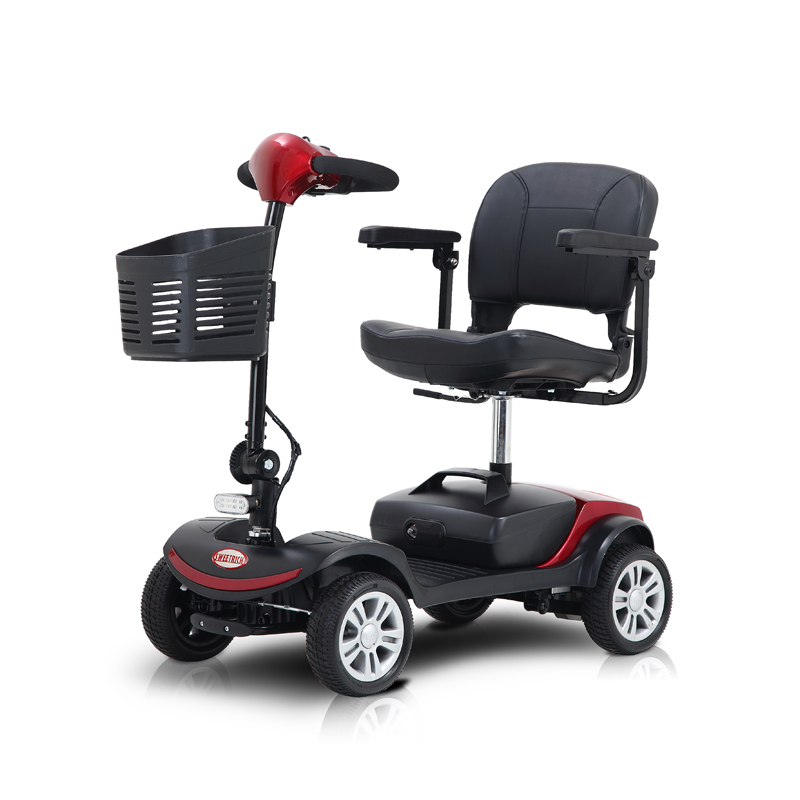
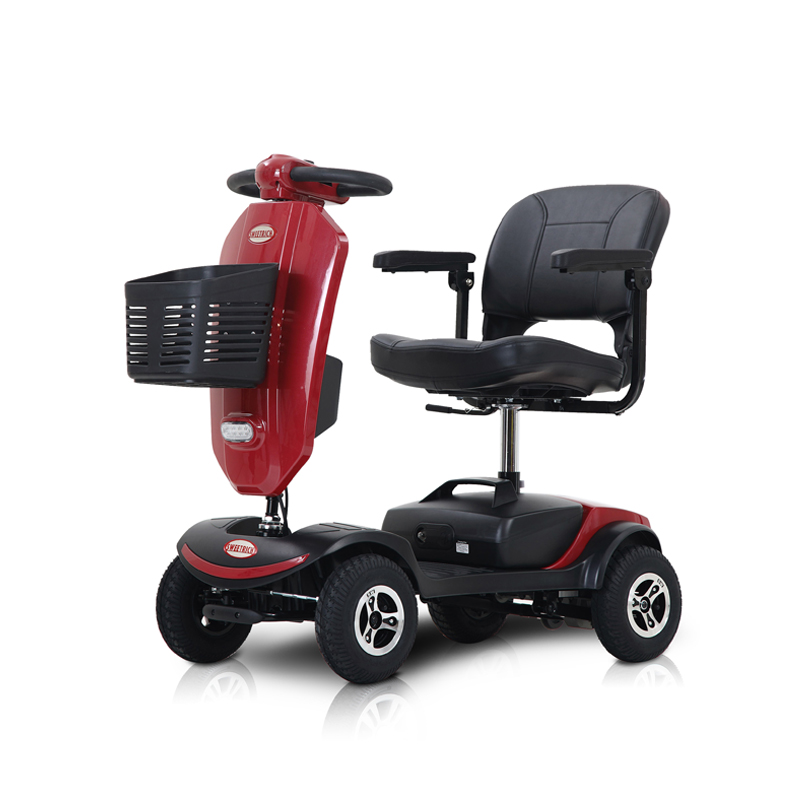
Mobility scooters generally use handlebars or tiller controls and often provide a comfortable option for users who can sit upright and operate a steering control. They may offer strong outdoor performance, but their width, turning geometry, and disassembly requirements vary significantly.
The iFold PLUS uses a joystick and wheelchair-style seating arrangement. This can be advantageous for users who prefer precise hand control or who need a platform associated with wheelchair-style positioning. Its folding structure may also be more convenient than a scooter that must be separated into several sections.
Conversely, some scooters may provide a different seating experience, larger baskets, or greater outdoor range. The choice should be based on the user’s posture, hand function, transfer method, route conditions, and transportation requirements.
Compared with non-folding electric wheelchairs
A non-folding electric wheelchair may provide a rigid frame, larger drive wheels, and a highly stable platform. However, it can require a specialized vehicle lift or accessible van. The iFold PLUS offers a simpler solution for users who need a powered chair that can be folded and moved in more ordinary vehicles or storage spaces.
Its key competitive value is not one single specification. It is the integration of automatic folding, joystick flexibility, suspension, dual motors, electromagnetic braking, under-seat storage, and optional lighting in one travel-oriented product.
6. Suitable Applications and User Profiles
The iFold PLUS can be considered by older adults, people with mobility limitations, caregivers, travel users, and organizations that need a compact powered wheelchair. It may be used for household movement, shopping, visits to public facilities, vacations, hotel stays, and suitable paved outdoor routes.
For older adults, the automatic folding feature can reduce the complexity associated with transporting a powered chair. The reversible joystick can make operation more adaptable, while the electromagnetic brake and suspension support ordinary daily travel.
For caregivers, the folding format and under-seat storage can simplify preparation for appointments or outings. The caregiver should still understand the battery system, folding procedure, emergency handling method, and safe loading technique.
For frequent travelers, the chair’s compact configuration can be useful when storage space is limited. Travel plans should account for airline, rail, cruise, hotel, and local transportation rules. Battery requirements can differ between transport operators, so the exact battery type and documentation should be confirmed in advance.
For distributors and retailers, the product can fill a category between lightweight manual chairs and larger powered wheelchairs. Its combination of portability and electric drive may appeal to customers who want more independence but do not require a highly customized clinical chair.
The product is described as a non-medical device for the US market. It should not be presented as a treatment device or as a substitute for professional medical advice. A user with complex physical, neurological, seating, or pressure-management needs should consult an appropriately qualified professional.
7. Manufacturing and Engineering Strengths
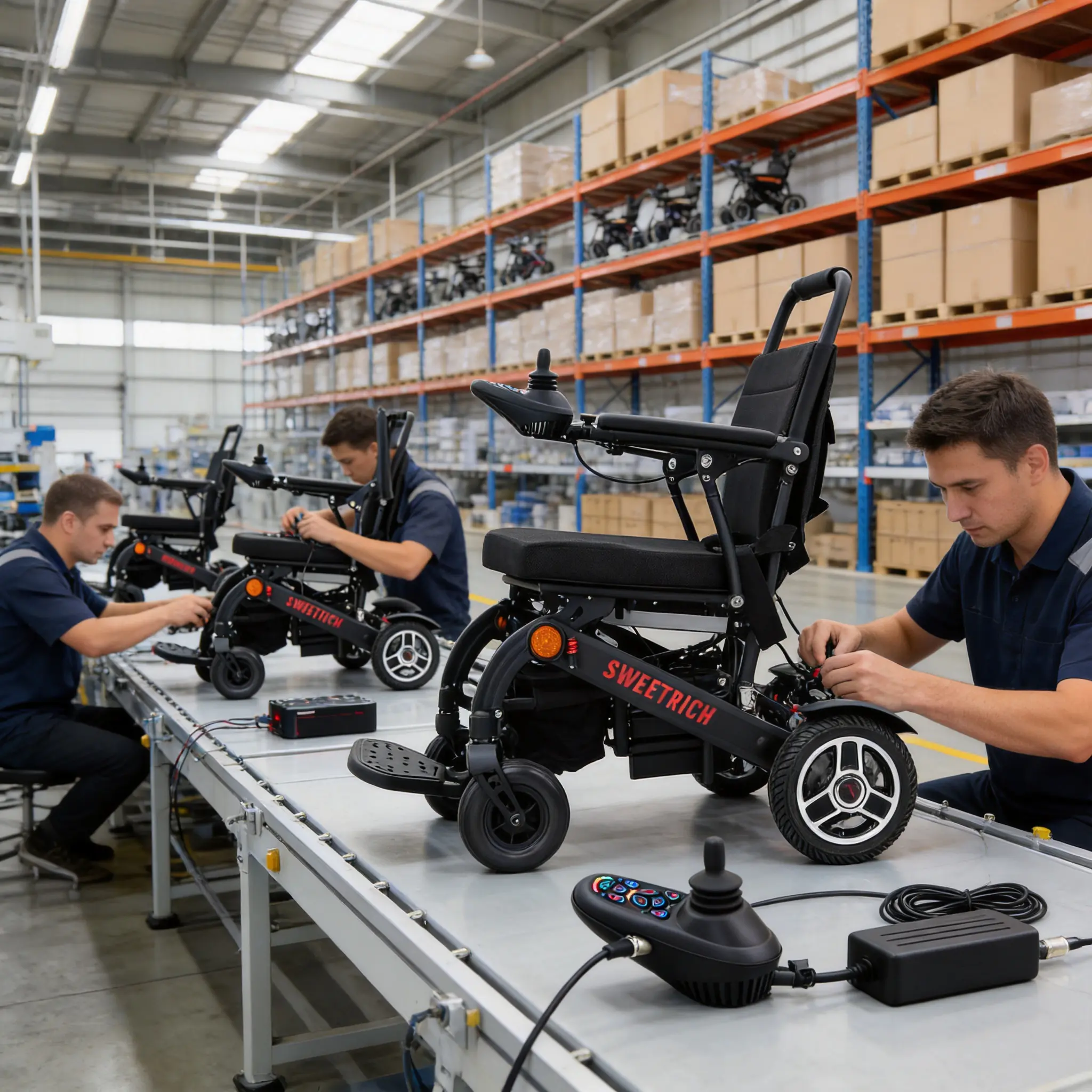
Product performance depends not only on the design shown in a catalog but also on engineering control, production consistency, inspection procedures, and after-sales support. Sweetrich Mobility is a high-tech company located in Suzhou Industrial Zone, Jiangsu, China. Established in 2011, the company has accumulated more than ten years of experience in the research, development, and production of mobility scooters and power wheelchairs.
The company operates on a site covering approximately 60 acres and has a factory area of about 30,000 square meters. This scale provides a foundation for coordinated product development, component management, assembly, testing, warehousing, and customer support. A structured factory environment can be especially important for powered mobility products because safety and reliability depend on the interaction of mechanical, electrical, and electronic systems.
Research and development orientation
Sweetrich focuses on mobility scooters and power wheelchairs, allowing its engineering work to remain concentrated on the needs of elderly and disabled users. The company states that it owns intellectual property rights related to its electric scooters and power wheelchairs. Intellectual property ownership can support continued product development and help distinguish proprietary frame, control, folding, or drive-system solutions.
For a product such as the iFold PLUS, development involves more than selecting a motor and adding a battery. Engineers must consider folding geometry, frame strength, wheel placement, cable routing, joystick accessibility, brake response, battery housing, suspension behavior, and user handling. These systems must work together without creating interference during folding or driving.
Production management
The company describes its production approach as based on strict production management and scientific product design. In practical terms, effective production management should include controlled material purchasing, documented assembly procedures, inspection of key components, electrical testing, mechanical checks, and final functional verification.
Consistency is particularly important for folding mobility products. The frame must open and close in a controlled manner, the locking points must engage correctly, and the wiring must remain protected during repeated movement. Wheel alignment, brake operation, joystick response, motor output, and battery connections should also be checked before a product is released.
Manufacturing strength is valuable to distributors because it can support more stable product quality across production batches. It also helps the supplier respond to configuration requests, replacement-part needs, packaging requirements, and regional market preferences.
Quality and reliability priorities
Sweetrich states that it aims to ensure product reliability and quality through strict management and systematic design. The company’s stated principle is “quality first, credit above, and customer supreme.” While a slogan alone does not establish product performance, it reflects the company’s declared focus on dependable manufacturing and long-term customer relationships.
Reliable mobility equipment requires attention to both visible and hidden details. Visible features include the frame, wheels, seat, joystick, foot platform, and storage bag. Hidden details include connector security, insulation, controller protection, brake wiring, battery contacts, weld quality, fastener torque, and the durability of folding points.
Retailers and professional buyers should request the technical documents, inspection records, warranty conditions, battery information, packaging details, and applicable compliance documentation for the exact product configuration. This is especially important when supplying different countries, because market requirements may vary.
International market experience
The company reports that its products are exported to America, Europe, Japan, Australia, the Middle East, Russia, and other markets. International experience can help a manufacturer understand differences in customer expectations, packaging, labeling, electrical requirements, transportation procedures, and distributor support.
For the iFold PLUS, international distribution may also require careful handling of battery transport rules and local mobility-equipment regulations. A manufacturer with experience across multiple markets may be better positioned to provide the documentation and configuration guidance needed by overseas partners.
8. Product Selection and Configuration Guidance
Before ordering the iFold PLUS, buyers should evaluate the intended user and environment rather than relying only on the product title. The first consideration is weight capacity. The listed capacity is 120 kilograms, or 265 pounds. This total should include the user, clothing, bags, and other items carried on the wheelchair.
The second consideration is the user’s ability to operate a joystick. The user should have adequate hand control, visual awareness, and understanding of forward, reverse, turning, braking, and battery management. If a user cannot operate the joystick safely, a caregiver or alternative mobility solution may be necessary.
The third consideration is seating and posture. The product offers a travel-oriented wheelchair structure, but users with significant postural support needs should verify whether the seat, backrest, armrests, and foot support meet their individual requirements.
The fourth consideration is transport. Buyers should measure the vehicle’s trunk or cargo area and compare the available space with the folded wheelchair dimensions. They should also consider whether the wheelchair can be lifted safely and whether the battery must be removed for transport.
The fifth consideration is route type. The wheelchair is suited to appropriate indoor areas and paved outdoor routes. It should not be selected solely on the basis of its stated gradient or range if the user expects to travel regularly over rough trails, deep grass, loose gravel, heavily damaged pavement, or steep wet slopes.
Choosing a battery capacity
The 10.2-amp-hour battery may suit shorter trips and users who prioritize lower overall weight. The 20-amp-hour option may provide a greater reserve for regular daily travel. An optional battery of up to 30 amp-hours may be available for users who need longer distance, subject to the exact product configuration.
Battery capacity should be balanced against charging access and transport requirements. A larger battery may increase weight and affect airline or other transportation procedures. A smaller battery may be easier to manage but could require more frequent charging. Buyers should request confirmation of the battery’s dimensions, weight, charging method, and transport classification.
9. Maintenance and Long-Term Care
Routine maintenance can help preserve safety, range, and operating comfort. Before each use, the user should inspect the tires, joystick, seat area, foot platform, frame, battery connection, and visible cables. The wheelchair should not be operated if a major component is loose, cracked, damaged, or behaving unexpectedly.
Tire condition affects traction, comfort, braking, and energy consumption. The wheels should be kept clean and checked for visible wear. If the tires are pneumatic or include pressure-sensitive components, the pressure should be maintained according to the product instructions.
The folding mechanism should remain free from dirt, fabric, luggage straps, and other obstructions. Users should never force the frame to fold or unfold. If the mechanism becomes difficult to operate, the wheelchair should be inspected by qualified service personnel rather than repeatedly operated with excessive force.
The joystick should be protected from impact, water, and unauthorized modification. Spilled liquids may damage electronic controls even when no immediate problem is visible. The control system should be cleaned only with methods compatible with the manufacturer’s instructions.
The battery and charger should be stored in a dry location within the recommended temperature range. Charging should stop if the battery becomes unusually hot, swollen, damaged, or emits an unusual smell. In such circumstances, the battery should be isolated safely and assessed by qualified personnel.
When the wheelchair is not used for an extended period, the battery should be maintained according to the supplied storage instructions. Long-term storage with no charging can reduce battery performance. The user should also check the frame and tires before returning the wheelchair to service.
10. Safety Practices for Users and Caregivers
Users should read the operating manual before driving. Initial practice should take place in a clear, level space away from traffic, stairs, water, and obstacles. The user should learn how the joystick responds at low speed before increasing speed.
Seat belts or positioning supports should be used only when supplied or approved for the particular wheelchair and user. Users should sit centrally and avoid leaning far outside the seat while moving. Reaching for objects on a slope or turning sharply near an edge can increase the risk of instability.
The wheelchair should not be used to carry additional passengers. The user should remain within the weight capacity, and heavy objects should be positioned as low and centrally as possible. Loads placed on the back or front may affect steering and stability.
Users should approach curbs, thresholds, ramps, and changes in surface slowly. They should avoid driving parallel to steep slopes when this could increase the risk of sideways instability. If a route contains a barrier that cannot be crossed safely, the user should select another route rather than attempting to overcome it with momentum.
The wheelchair should be switched off before transferring into or out of the seat. The electromagnetic brake is a safety feature, but it should not be treated as permission to transfer while the chair is powered or positioned on an unsafe slope.
When transporting the wheelchair in a vehicle, it should be folded according to the instructions and secured against movement. The user should follow transportation-provider rules for lithium batteries. A folded wheelchair should not be left loose in a vehicle where it could become a hazard during sudden braking.
11. Value for Distributors and Business Buyers
For distributors, the iFold PLUS offers a product story that is easy to communicate: powered independence, automatic folding, adaptable joystick control, and travel-oriented convenience. These features can help retailers address customers who find manual wheelchairs physically demanding but do not want the size of a traditional full-power chair.
The product can also support multiple sales configurations. Battery options provide a way to match the chair with different distance requirements. A front light can be offered for customers who need additional visibility. Joystick positioning can be discussed as part of an individual fitting and usability conversation.
Retailers should provide accurate specifications and avoid presenting the wheelchair as suitable for every terrain or every user. The difference between the stated 6-kilometer-per-hour specification and the separate 8.5-kilometer-per-hour feature reference should be clarified before publishing marketing materials. Clear information strengthens customer confidence and reduces avoidable returns.
After-sales support is another important part of product value. Distributors should understand battery replacement, charger compatibility, joystick servicing, wheel and tire maintenance, folding-system inspection, warranty procedures, and spare-part availability. A compact product can still contain sophisticated mechanical and electronic systems that require knowledgeable support.
Sweetrich’s experience in mobility scooters and power wheelchairs, its factory scale, stated research and development capabilities, and export presence can provide a useful foundation for distributor cooperation. Business buyers should nevertheless complete their own product testing, documentation review, market compliance assessment, and supplier qualification process.
12. Environmental and Lifestyle Benefits
A portable powered wheelchair can help users participate more easily in ordinary activities. The ability to move through a store, visit friends, attend appointments, or travel with family can support independence and reduce reliance on manual assistance.
The folding design may also reduce the need for dedicated storage infrastructure. A user living in a smaller home may be able to keep the wheelchair in a closet, hallway, vehicle, or other compact area when it is not in use. This can be particularly helpful in apartments, assisted-living environments, and shared family homes.
By using electric power instead of fuel, the wheelchair is suitable for quiet indoor and neighborhood travel. Its practical environmental impact depends on battery production, charging electricity, product lifespan, maintenance, and responsible end-of-life recycling. Long service life and proper battery handling are important parts of sustainable use.
Users should not assume that a small folding wheelchair is automatically allowed in every public or private location. Local rules may govern access to roads, sidewalks, public transportation, aircraft, and buildings. Checking requirements in advance helps avoid disruption during travel.
13. Why the Product Stands Out
The strongest competitive advantage of the iFold PLUS is the way multiple practical features are combined. Automatic folding addresses storage and transport. The joystick supports powered independence. Left- or right-side control placement improves adaptability. Dual motors provide drive power, while front and rear suspension support a smoother ride over suitable surfaces.
The large foot platform adds everyday comfort, the under-seat storage bag improves convenience, and the optional front light adds visibility in low-light areas. Lithium battery choices provide configuration flexibility, while electromagnetic braking contributes to controlled stopping under normal operating conditions.
Many products emphasize only one benefit, such as low weight, high speed, or long range. A useful travel wheelchair must balance these qualities. The iFold PLUS is positioned as a practical all-rounder for users who value portability without giving up electric drive capability.
Its advantages should be considered in relation to the alternatives. It may be more convenient than a manual wheelchair for users who need powered travel, more transport-friendly than a full-size power chair, and more adaptable in control style than a tiller-operated scooter. Its limitations, including the need for route awareness, battery management, and proper handling, should also be explained honestly.
14. Frequently Asked Questions
What type of product is the iFold PLUS?
It is an automatic folding electric wheelchair with a joystick controller. It belongs to the Travel Smart Wheelchairs category and is described as a non-medical device for the US market.
How fast can it travel?
The technical information lists a maximum forward speed of 6 kilometers per hour. Another feature reference states speeds of up to 8.5 kilometers per hour, or 5.2 miles per hour. Buyers should confirm the correct figure for the exact model and configuration before purchase.
What is the stated driving range?
The listed maximum driving range is 30 plus or minus 5 kilometers. Actual range depends on battery capacity, user weight, terrain, slope, temperature, tire condition, driving style, and battery age.
What is the maximum user weight?
The stated weight capacity is 120 kilograms, or 265 pounds. The total should include the user, clothing, bags, and any other items carried on the wheelchair.
Can the joystick be used on either side?
Yes. The product information states that the joystick is available for use on both sides. The control position should be configured securely and tested before regular driving.
Does the wheelchair have suspension?
Yes. It is listed with front and rear suspension. Suspension can improve comfort over suitable minor surface irregularities but does not make the wheelchair appropriate for extreme off-road conditions.
What type of brakes does it use?
The wheelchair uses electromagnetic brakes. Users should still stop on stable surfaces and follow safe transfer and slope practices.
What battery options are available?
The listed options include 24-volt lithium batteries rated at 10.2 amp-hours and 20 amp-hours. The feature description also mentions an optional battery of up to 30 amp-hours. Availability and compatibility should be confirmed for the exact order.
How long does charging take?
The listed charging time is approximately five hours. Charging time may vary depending on battery capacity, battery condition, charger output, and charging conditions.
How heavy is the wheelchair?
The listed weight without the battery is 24 kilograms. The installed battery adds to the total weight. Buyers should confirm the complete transport weight before planning vehicle loading or manual lifting.
Is it suitable for air travel?
Suitability depends on the airline, airport, destination, battery type, packaging, and current transportation rules. Users should contact the airline before travel and obtain confirmation for the exact lithium battery configuration.
Can it be used outdoors?
It can be used on appropriate paved outdoor routes and other firm, stable surfaces. Users should avoid deep water, loose gravel, steep wet slopes, major potholes, and terrain beyond the wheelchair’s safe operating limits.
Is the product a medical device?
The supplied information describes it as a non-medical device for the US market. It should not be marketed as a treatment or as a replacement for professional clinical assessment.
Who manufactures the product?
The product is manufactured by Suzhou Sweetrich Vehicle Industry Technology Co., Ltd., also known as Sweetrich Mobility. The company is based in Suzhou, Jiangsu, China, and focuses on mobility scooters and power wheelchairs.
What manufacturing experience does the company have?
The company was established in 2011 and reports more than ten years of experience in research, development, and production. It operates a factory of approximately 30,000 square meters on a site covering about 60 acres.
How can a buyer request more information?
Business and product inquiries can be directed to [email protected] or +86-(0)512-82283871. The company address is No. 7 Chaoqian Road, Suzhou Industrial Park, Suzhou, China, 215123.
15. Final Assessment
The iFold PLUS automatic folding electric wheelchair is designed for users who want powered mobility in a more convenient travel format. Its automatic folding mechanism addresses one of the most common challenges associated with powered wheelchairs: storage and transportation. Its joystick can be positioned for either side, improving adaptability for different users.
The dual 250-watt motors, electromagnetic brakes, front and rear suspension, large foot platform, under-seat storage bag, optional front light, and lithium battery choices create a broad set of practical features. The chair’s dimensions and weight without the battery further support its travel-oriented positioning.
Its most important advantages over competing categories are balance and convenience. It can offer more independence than a manual wheelchair, greater portability than many full-size powered wheelchairs, and a different control and seating experience from many mobility scooters. At the same time, buyers should recognize that the chair is intended for suitable routes and ordinary mobility applications rather than extreme terrain or every specialized clinical requirement.
The manufacturing background of Sweetrich Mobility adds further value for distributors and professional buyers. The company’s experience since 2011, dedicated focus on mobility products, stated intellectual property ownership, factory scale, international export activity, and emphasis on production management provide a foundation for continued product development and supply cooperation.
Before purchase, users should verify the exact speed specification, battery configuration, folded dimensions, transport weight, warranty terms, local compliance requirements, and after-sales support. With those points confirmed, the iFold PLUS can be considered a practical option for everyday powered travel, compact storage, and greater personal mobility.
References
1. Sweetrich Mobility. iFold PLUS Product Information and Technical Specification Sheet.
2. Suzhou Sweetrich Vehicle Industry Technology Co., Ltd. Company Profile and Manufacturing Overview.
3. Product data concerning dimensions, motors, batteries, charger, braking system, suspension, tire sizes, capacity, and driving range, as supplied for this article.
4. General user guidance for powered wheelchairs, lithium battery care, safe charging, accessible travel, and mobility-equipment handling.
5. General principles of product selection for folding electric wheelchairs, mobility scooters, and powered mobility equipment.