
 +86-(0)512-82283871

Content
- 1 Product Overview and Intended Use
- 2 Key Specifications at a Glance
- 3 Outdoor Performance and Terrain Management
- 4 Drive System, Control, and Braking
- 5 Battery System, Range, and Charging
- 6 Seating, Support, and Everyday Comfort
- 7 Foldable Structure and Transport Considerations
- 8 Advantages Compared with Less Capable Mobility Chairs
- 9 Manufacturing Experience and Product Development Strengths
- 10 Quality, Safety, and Responsible Use
- 11 Maintenance and Service Planning
- 12 Who May Benefit from This Model?
- 13 Buying and Distribution Checklist
- 14 Frequently Asked Questions
- 14.1 Is the iPower Sport FWD a medical device?
- 14.2 What is the maximum user weight?
- 14.3 How fast can the wheelchair travel?
- 14.4 How far can it travel on one charge?
- 14.5 What type of batteries does it use?
- 14.6 How long does charging take?
- 14.7 Can it be used outdoors?
- 14.8 Does the wheelchair fold for transport?
- 14.9 What braking system does it use?
- 14.10 What makes the front-wheel-drive layout useful?
- 14.11 Is the seat adjustable?
- 14.12 Where is the product manufactured?
- 14.13 What should buyers verify before ordering?
- 15 Conclusion
- 16 References
- 17 Product: iPower Sport FWD Certificated power suppier used battery electric wheelchair foldable for out door use
Choosing a power wheelchair for outdoor use requires more than comparing motor wattage or battery capacity. A dependable mobility device must combine stability, usable range, comfortable seating, predictable braking, practical dimensions, and enough structural strength for everyday travel. It should also be simple to control and suitable for the changing conditions encountered on sidewalks, residential roads, shopping areas, parks, and other accessible outdoor environments.
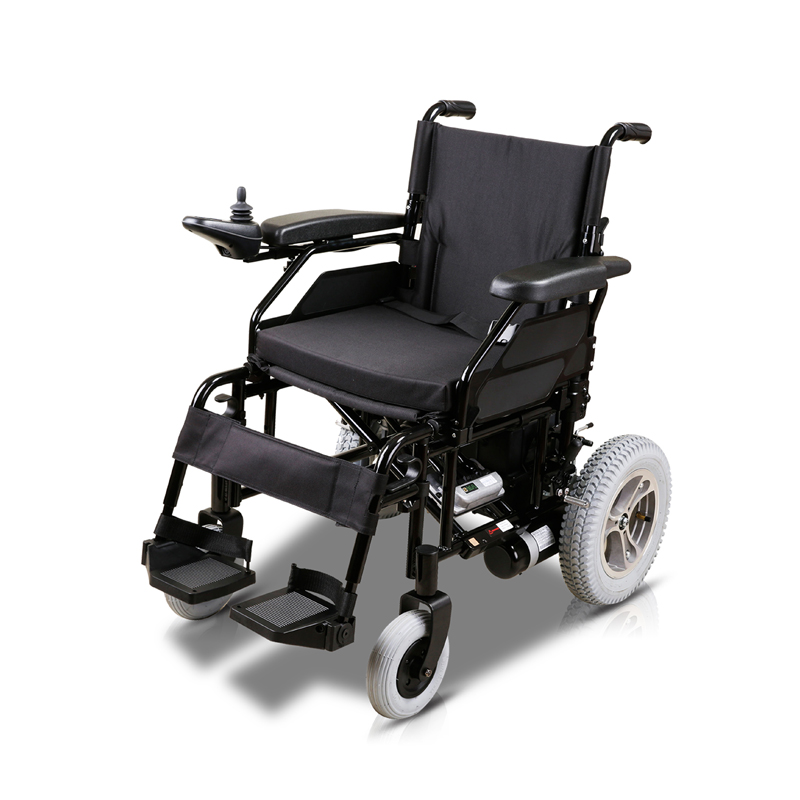
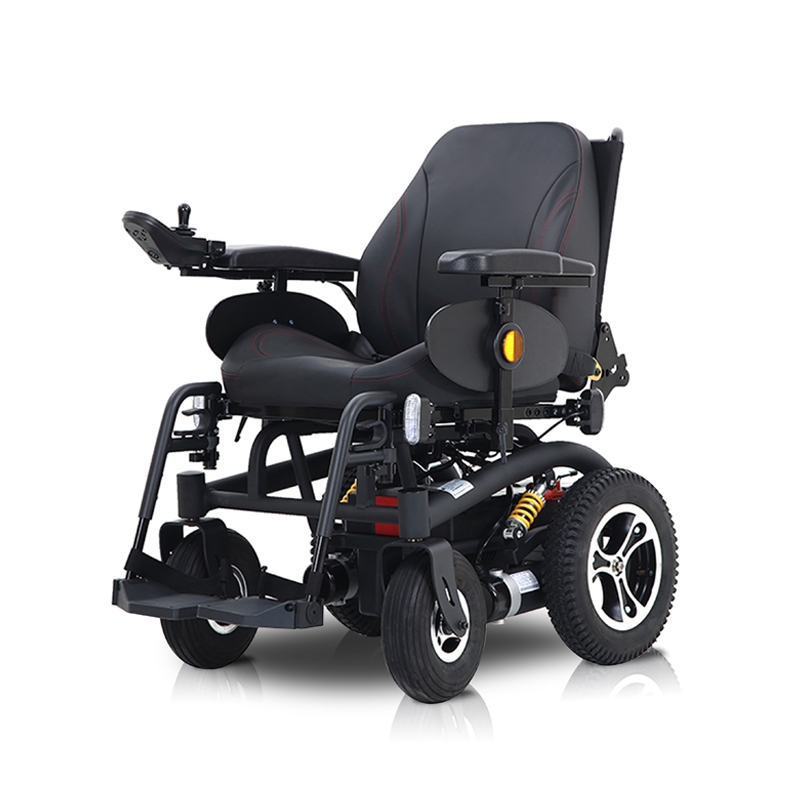
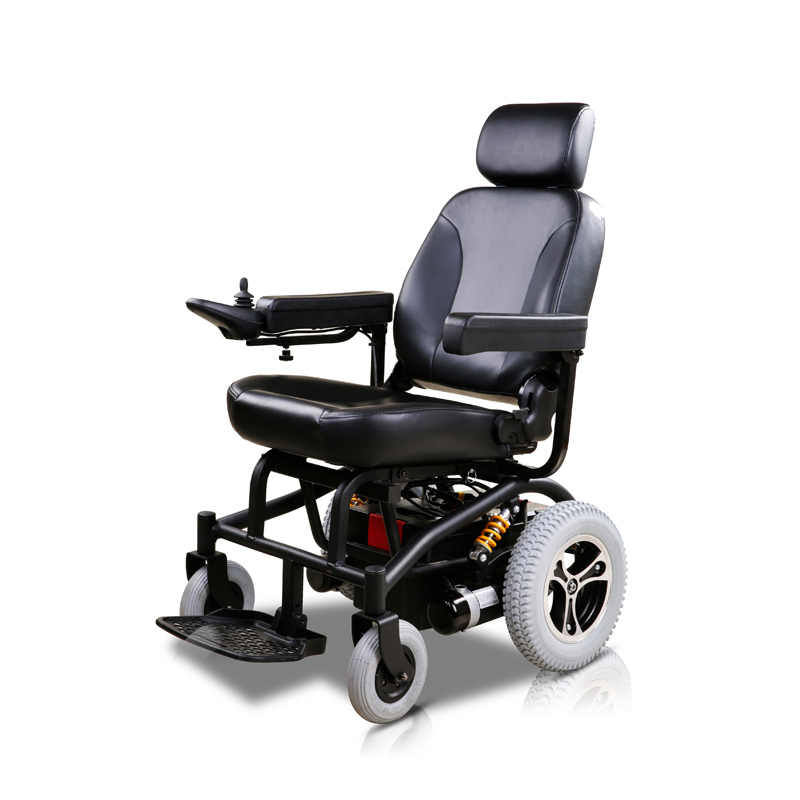
The iPower Sport FWD is a foldable, front-wheel-drive electric wheelchair developed for users who need a robust mobility solution with outdoor capability. Its design combines large pneumatic front tires, front suspension, rear anti-tip wheels, adjustable seating, electromagnetic braking, and two 320-watt motors. The wheelchair is powered by a 24-volt lead-acid battery system and can reach a stated maximum speed of 8 km/h, with a claimed driving range of approximately 30–40 km under suitable conditions.
With a maximum user weight capacity of 120 kg, or 265 lb, the model belongs to the heavy-duty wheelchair category while retaining a relatively compact overall footprint. Its dimensions are 980 mm long, 600 mm wide, and 1,180 mm high. This balance is important for users who need additional strength and outdoor performance without selecting an excessively large mobility platform.
This article examines the product’s design, specifications, comfort features, outdoor performance, manufacturing background, quality-focused development approach, and potential advantages compared with less capable mobility chairs. It also explains the practical factors that buyers, distributors, caregivers, and mobility retailers should evaluate before selecting this type of equipment.
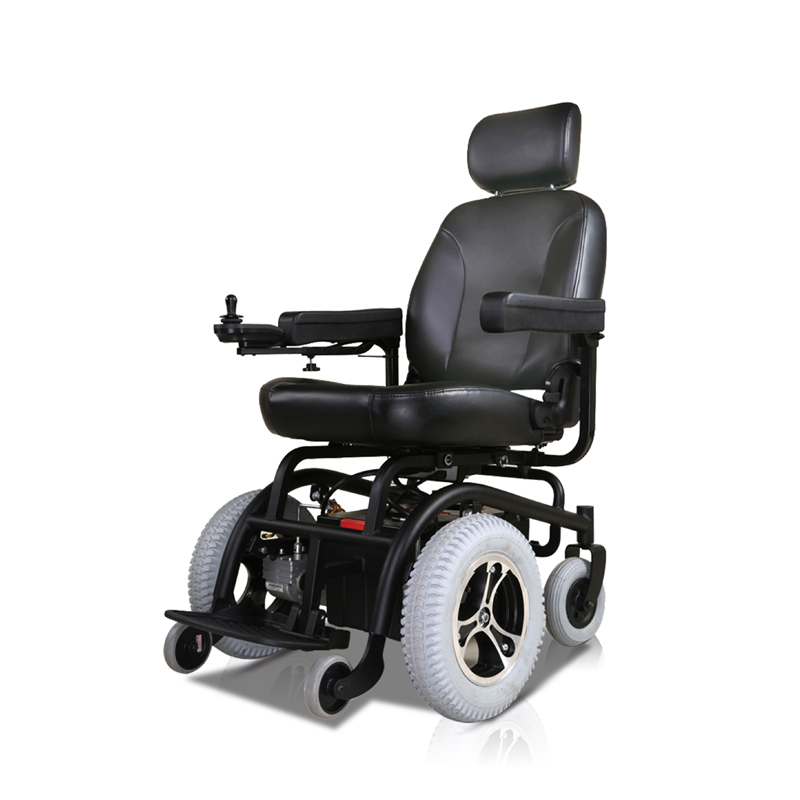
iPower Sport FWD Certificated power suppier used battery electric wheelchair foldable for out door use
Product Overview and Intended Use
The iPower Sport FWD is an electric wheelchair rather than a conventional mobility scooter. Its seating position, control layout, and wheelchair-oriented structure are intended to support users who require powered mobility in a seated configuration. The product is categorized as a heavy-duty wheelchair and is designed for outdoor use, although it may also be appropriate for indoor areas with sufficient clearance.
The wheelchair uses front-wheel drive. In this configuration, the powered wheels are positioned toward the front of the chassis, while smaller rear wheels support the back of the frame. Front-wheel drive can be useful for outdoor maneuvering because the large front tires are located where they can help the wheelchair approach small surface changes and uneven sections. Actual performance depends on terrain, tire pressure, rider weight, battery condition, weather, and correct operation.
The product is described as a non-medical device for the United States market. This distinction is important. It means that the product information should not be interpreted as medical advice, a clinical prescription, or a guarantee that the wheelchair is suitable for every individual health condition. Users should consider posture, transfer ability, trunk support, hand function, visual ability, and environmental needs. When necessary, an occupational therapist, medical professional, or qualified mobility specialist should be consulted.
The model is particularly relevant for users who want a powered wheelchair with outdoor-oriented features. Big pneumatic tires can provide a more compliant ride than small solid wheels on suitable surfaces. Suspension helps reduce the transmission of some bumps through the chassis. An adjustable seat back and leather-like cushion seat address comfort over longer periods of use. Electromagnetic braking offers automatic motor braking when the control system is released, subject to proper system operation and maintenance.
Key Specifications at a Glance
The following table summarizes the principal specifications supplied for the iPower Sport FWD. Specifications may be subject to production updates, regional requirements, or configuration differences, so purchasers should confirm final details with the supplier before placing an order.
| Specification | Stated Information |
|---|---|
| Product type | Foldable heavy-duty electric wheelchair |
| Drive configuration | Front-wheel drive |
| Overall dimensions | 980 × 600 × 1,180 mm, length × width × height |
| Maximum forward speed | 8 km/h, approximately 5 mi/h |
| Maximum driving gradient | 10 degrees |
| Maximum stated driving range | 30–40 km, approximately 19–25 miles |
| Weight capacity | 120 kg, approximately 265 lb |
| Suspension | Front suspension |
| Front tire size | 14 × 3 inches, pneumatic |
| Rear tire size | 8 × 2.5 inches |
| Brake system | Electromagnetic brake |
| Battery system | Two 12 V, 40 Ah lead-acid batteries |
| Charger | DC 24 V, 5 A; AC 115–230 V input |
| Charging time | Approximately 6–8 hours |
| Motors | Two 24 V, 320 W motors |
| Motor controller | 24 V, 50 A PG controller from the United Kingdom |
| Heaviest component | 56 kg, as supplied in the product information |
These specifications show that the wheelchair is designed around a combination of power, stability, and practical travel endurance. The two-motor layout provides dedicated drive power to the front wheels, while the 24-volt electrical architecture is widely used in powered mobility equipment. The dual 12 V batteries are connected to provide the required system voltage and energy storage.
Outdoor Performance and Terrain Management
Outdoor mobility exposes a wheelchair to more demanding conditions than smooth indoor flooring. Pavement joints, driveway transitions, compacted paths, light gravel, sloped walkways, and uneven sidewalks can challenge small wheels and rigid frames. The iPower Sport FWD addresses these conditions with a combination of large front pneumatic tires, front suspension, rear suspension features, and anti-tip wheels.
Large Pneumatic Front Tires
The 14 × 3-inch front pneumatic tires are one of the product’s most important outdoor features. A larger tire diameter can help the wheelchair roll over minor surface irregularities more effectively than a smaller wheel. The pneumatic construction also allows the tire to deform slightly under load, which may improve ride comfort on suitable outdoor surfaces.
Tire pressure must be checked regularly. Underinflation can increase rolling resistance, reduce range, and make steering less predictable. Overinflation can produce a harsher ride and may increase the risk of damage. Users should follow the recommended pressure information supplied with the specific tire and should inspect the tread, valve, and sidewall before outdoor travel.
Large pneumatic tires are not a substitute for careful route selection. The wheelchair should not be operated through deep water, loose sand, unstable mud, or terrain beyond the stated design capability. A product’s maximum gradient rating should also be treated as a controlled engineering reference rather than a target for routine operation.
Suspension and Ride Comfort
The product information identifies front suspension and also lists rear suspension among the comfort and construction features. Suspension helps isolate the frame and seat from some impacts caused by uneven surfaces. This can make outdoor travel more comfortable and can reduce the harshness felt through the seat when crossing ordinary pavement imperfections.
Suspension performance depends on the rider’s weight, tire pressure, surface conditions, and the condition of the suspension components. It should not be assumed that suspension eliminates all vibration. Regular inspection is necessary to identify looseness, unusual noise, worn bushings, or damage caused by impact.
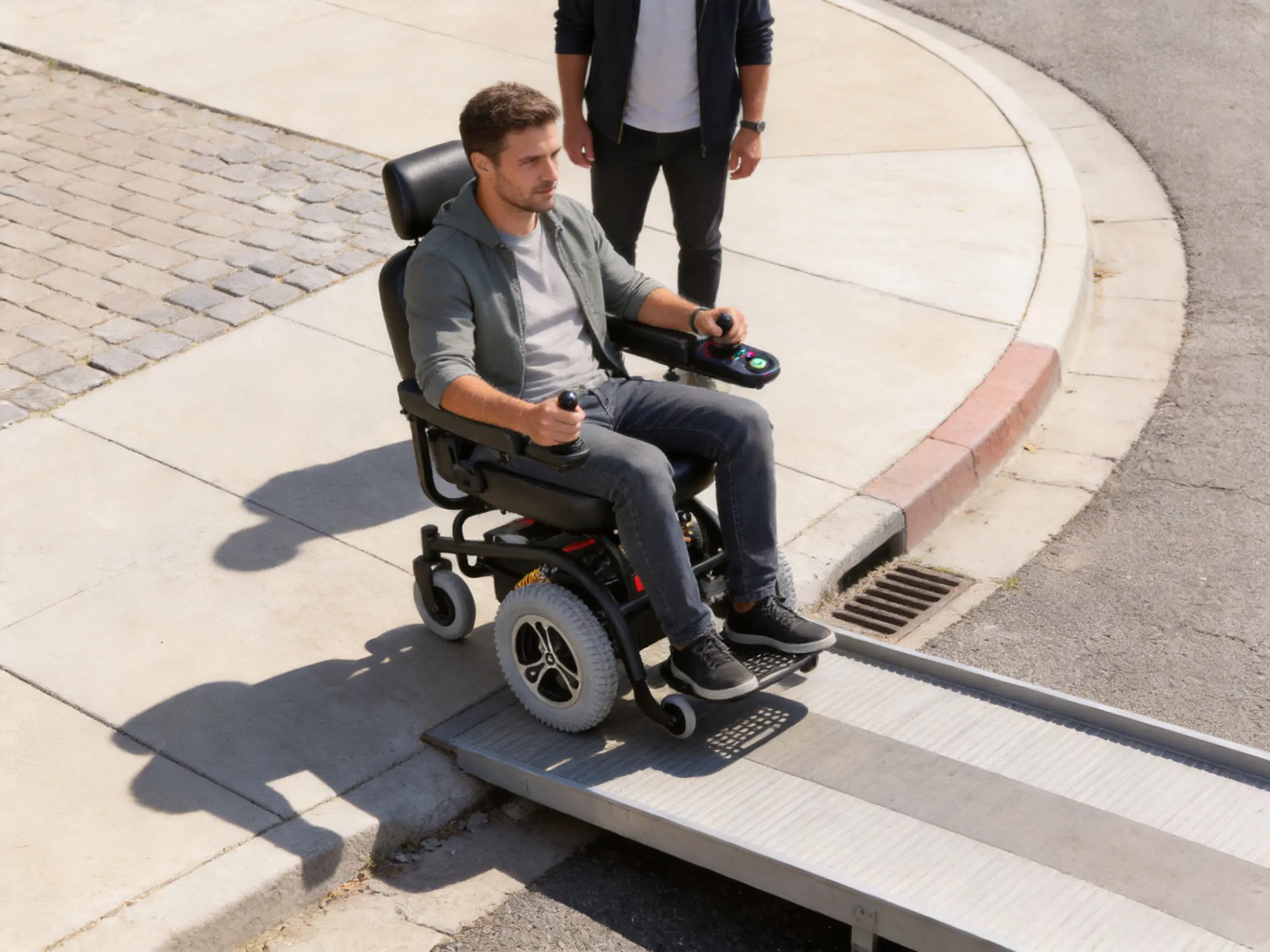
Inclines and Sloped Routes
The stated maximum driving gradient is 10 degrees. This figure indicates the maximum listed slope under specified conditions, but real-world climbing ability can vary. Battery charge, rider weight, tire condition, surface traction, temperature, and slope length all affect performance. A damp or slippery slope may be unsafe even if its angle is below the published maximum.
Users should approach slopes directly whenever possible, avoid sudden turns on inclines, maintain a controlled speed, and keep clear of edges or drop-offs. Descending should be performed slowly, with the control system used smoothly. Caregivers and new users should practice on level ground before attempting ramps or hills.
Anti-Tip Protection
Rear anti-tip wheels provide an additional layer of stability during certain acceleration, incline, or surface-transition conditions. They are not intended to make every situation safe, and they do not replace responsible driving. Their presence is nevertheless valuable because outdoor routes can contain unexpected changes in grade or small obstacles.
Anti-tip components should remain correctly installed and should not be removed without technical justification. A damaged or incorrectly adjusted anti-tip wheel can reduce the intended stability of the wheelchair. Users should inspect these parts along with the main tires and frame before travel.
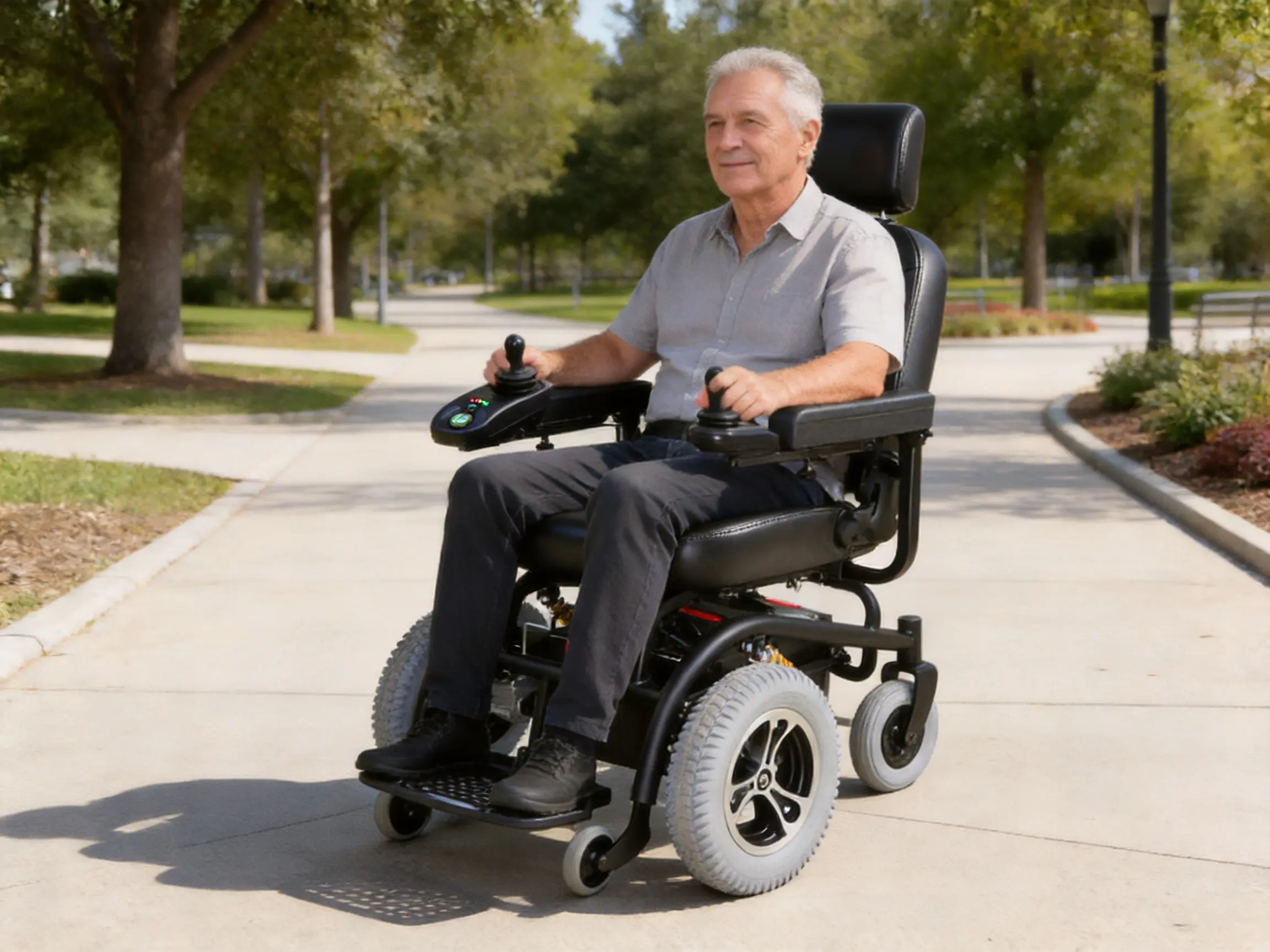
Drive System, Control, and Braking
The iPower Sport FWD uses two 24 V, 320 W motors. A dual-motor arrangement allows the wheelchair to distribute drive power across the front wheels. This is advantageous for a heavy-duty outdoor chair because the system is designed to move the user and chair as a combined load rather than relying on a single motor.
Using two motors can also support controlled turning and traction management within the capabilities of the control system. The exact turning radius, control response, and operating behavior depend on the electrical design and user-control settings. Retailers should provide product demonstrations so that users can become familiar with acceleration, deceleration, steering, and reversing before using the wheelchair in public spaces.
The motor controller is specified as a 24 V, 50 A PG controller from the United Kingdom. A controller is a central part of an electric wheelchair. It interprets the user’s control input and regulates power delivered to the motors. A well-matched controller contributes to smooth starting, consistent response, and controlled stopping. The use of a recognized controller supplier is a notable component-level feature, although system performance still depends on correct integration, wiring, programming, and final inspection.
The electromagnetic brake is designed to engage when the drive control is released, helping the wheelchair stop and remain stationary under normal operating conditions. Electromagnetic braking is commonly valued in powered mobility equipment because it does not require the user to operate a separate mechanical hand brake during ordinary driving.
Braking performance should never be evaluated solely from a product specification. Users should test the chair on a level surface, then on appropriate gentle slopes under supervision. The wheelchair should not be driven if the brake fails to hold, produces unusual noise, or behaves inconsistently. Battery condition and controller function can affect the overall operating system, so service should be performed by qualified personnel.
Battery System, Range, and Charging
The wheelchair uses two 12 V, 40 Ah lead-acid batteries. Together, these batteries provide a 24 V system with a nominal energy capacity of approximately 960 watt-hours before accounting for operating losses and usable-capacity limitations. This configuration is practical for a high-load mobility device and uses a battery technology that is widely understood by mobility distributors and service technicians.
Lead-acid batteries are generally valued for their established supply chain, straightforward charging requirements, and comparatively accessible replacement options. They are also heavier than many modern lithium battery systems. The stated heaviest component weight is 56 kg, so users and caregivers should plan carefully for lifting, transport, storage, and folding operations.
The stated driving range is 30–40 km, or approximately 19–25 miles. This range should be understood as an indicative figure rather than a guaranteed distance for every trip. Range can be reduced by rider weight, frequent stopping and starting, steep slopes, low tire pressure, cold weather, rough ground, battery age, and charging habits. A user traveling in a hilly area should plan a reserve rather than relying on the maximum published distance.
The charger is specified as DC 24 V, 5 A with AC 115–230 V input. The broad input range is useful for distribution across regions that use different household mains voltages, provided the correct plug and local electrical requirements are observed. The stated charging time is 6–8 hours, making overnight charging a practical routine for many users.
Charging should take place in a dry, ventilated location using the supplied or approved charger. The charger should be connected according to the manufacturer’s instructions, and users should not operate the wheelchair while it is charging. Battery terminals, cables, and connectors should be checked for corrosion, looseness, heat damage, or physical deterioration.
Battery life is influenced by storage temperature, depth of discharge, charging frequency, and maintenance. If the wheelchair will not be used for an extended period, the batteries should be stored according to the supplier’s instructions. Because lead-acid batteries are heavy and contain regulated materials, replacement and disposal should be managed through an appropriate battery service or recycling channel.
Seating, Support, and Everyday Comfort
Comfort is not an optional feature for a wheelchair user. A chair may have an excellent motor system, but poor seating can make routine travel tiring or unsuitable. The iPower Sport FWD includes a leather-like cushion seat and an adjustable seat back. These features are intended to improve comfort and allow the seating position to be adapted to individual preferences within the adjustment range.
The cushion can help distribute pressure across the seating area, while the adjustable back may support a more suitable posture for different users. However, the product should be fitted to the individual. Seat width, seat depth, back angle, foot placement, arm support, and control position all influence comfort and safe operation.
Users who sit for extended periods should monitor areas of pressure and discomfort. A cushion supplied with a mobility device may not meet the needs of a person with complex postural or pressure-management requirements. Professional seating assessment may be appropriate for users with limited sensation, significant posture concerns, or a history of skin problems.
The leather-like upholstery is practical for routine cleaning and gives the chair a finished appearance. Cleaning products should be compatible with the upholstery material. Excess moisture should not be allowed to enter electrical components, and the wheelchair should be stored away from prolonged exposure to rain, direct sunlight, or extreme temperatures.
The adjustable seat back can also support more comfortable rest during longer outdoor journeys. Even so, the chair should be operated with the user positioned securely and with the back adjusted to maintain control. Loose bags, coats, or accessories should not interfere with the joystick, wheels, brakes, or folding mechanism.
Foldable Structure and Transport Considerations
Foldability is a major advantage for users who need to transport a power wheelchair in a vehicle or store it in a limited space. A folding structure can make the wheelchair more practical for family travel, service appointments, and seasonal storage. It may also help retailers package and distribute the product more efficiently.
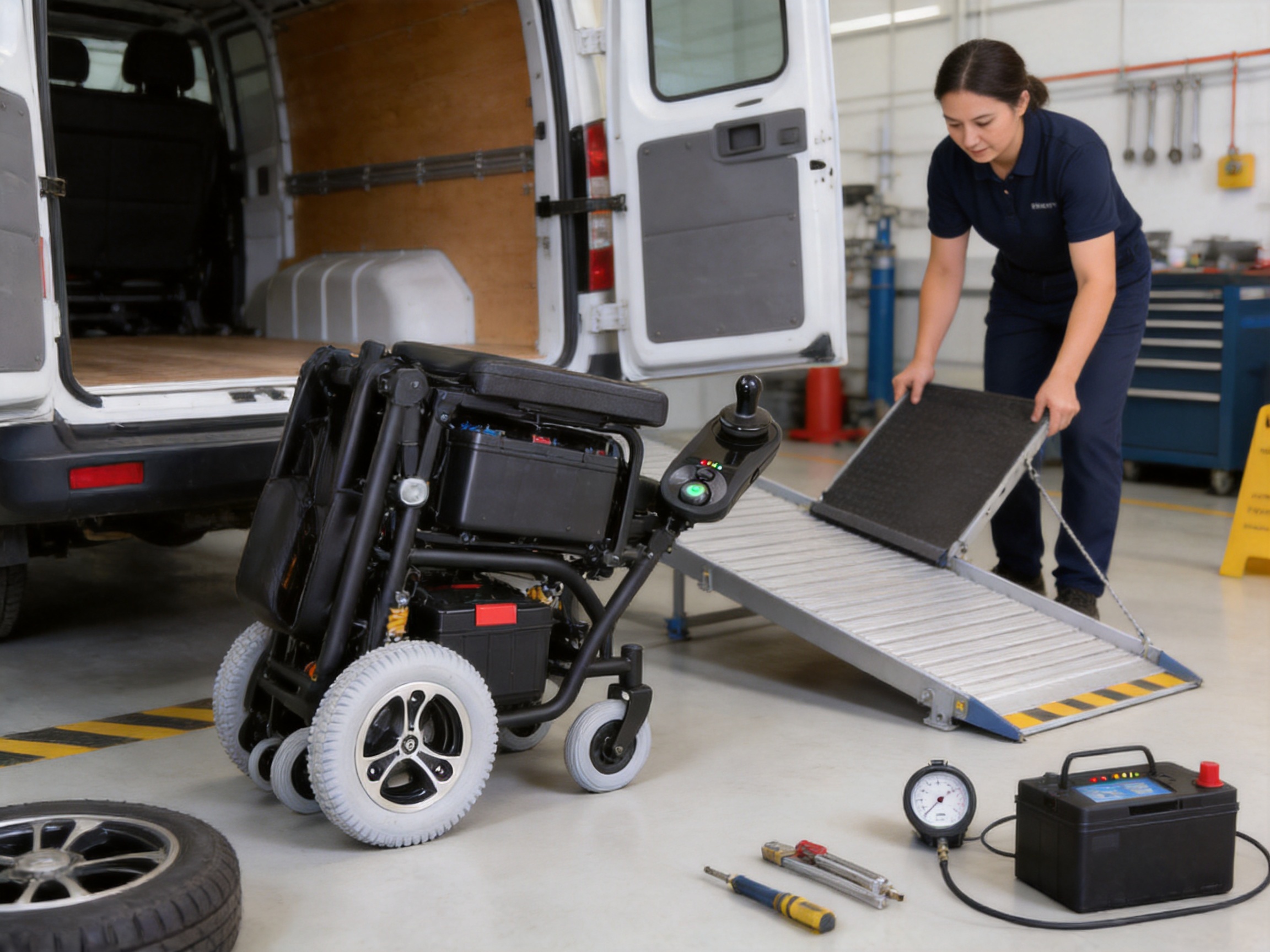
Folding a heavy-duty electric wheelchair requires more care than folding a lightweight manual chair. The combined weight of the frame, motors, batteries, and seating can be substantial. The listed heaviest part is 56 kg, which means that lifting should not be attempted by one person unless the specific handling instructions confirm that it is safe. A ramp, loading aid, vehicle hoist, or two-person lifting procedure may be necessary.
Before folding, users should follow the supplied procedure and confirm that the wheelchair is switched off. Personal items should be removed, the control system should be protected, and the folding points should be kept clear. After unfolding, the frame must be fully locked and checked before anyone sits in the chair.
Transport planning should include the vehicle’s available cargo space, loading height, payload rating, and tie-down requirements. The wheelchair should not be left unsecured in a moving vehicle. Where required, users should follow local transportation guidance for powered mobility devices and battery equipment.
Advantages Compared with Less Capable Mobility Chairs
The iPower Sport FWD has several design characteristics that can distinguish it from basic indoor power chairs, lightweight travel chairs, or entry-level mobility products. The most significant advantage is the combination of heavy-duty capacity and outdoor-oriented running gear.
Outdoor-Oriented Wheel and Suspension Package
Small indoor casters and narrow solid tires can be convenient in confined areas, but they may transmit more vibration on rough pavement and may struggle with small surface changes. The iPower Sport FWD’s large 14-inch pneumatic front tires provide a more substantial contact platform for outdoor travel. Combined with suspension, they are intended to deliver a more controlled and comfortable ride across suitable surfaces.
Higher Weight Capacity
With a stated capacity of 120 kg, the product offers more load support than many compact travel-oriented chairs. A higher capacity can provide additional flexibility for different users and everyday clothing or personal items. Buyers should remember that the weight rating includes the user and any carried load, not only the user’s body weight.
Two-Motor Drive
The two 320-watt motors provide a substantial drive arrangement for a wheelchair of this type. Compared with a low-power single-motor design, a dual-motor configuration can be better suited to carrying a heavier total load and negotiating ordinary outdoor routes. Performance remains dependent on battery condition, traction, slope, and terrain, but the power system is clearly designed for more than smooth indoor flooring.
Electromagnetic Braking
Electromagnetic braking offers a convenient way to control the wheelchair during normal driving. When correctly integrated and maintained, the system can help the chair stop when the control input is released. This is useful for users who may find a separate manual brake difficult to operate, although safe driving habits and routine inspections remain essential.
Adjustable Seating
The adjustable seat back and cushion seat provide a degree of personalization that may not be available on simpler fixed-seat products. Seating adjustability can make a meaningful difference during extended use, particularly when the chair is used for shopping, appointments, neighborhood travel, or outdoor recreation.
Practical Electrical Compatibility
The 24 V electrical system, 24 V charger, and 115–230 V AC input are practical for international distribution. The use of two standard 12 V batteries also makes the basic battery arrangement familiar to many mobility service providers. These characteristics can help distributors organize service support and replacement planning across different markets.
Manufacturing Experience and Product Development Strengths
Suzhou Sweetrich Vehicle Industry Technology Co., Ltd. was established in 2011 and is located in Suzhou, Jiangsu, China. According to the supplied company information, the company operates on a 60-acre site with a 30,000-square-meter factory and has more than ten years of experience in the research, development, and production of mobility scooters and power wheelchairs.
This background is relevant because mobility products require coordinated expertise across mechanical design, electrical systems, battery integration, seating, chassis construction, assembly, testing, packaging, and after-sales support. Experience in both mobility scooters and power wheelchairs can help a manufacturer understand the different priorities of stability, maneuverability, load support, control response, and user comfort.
The company describes itself as a high-tech enterprise focused on improving the independence and convenience of elderly and disabled people. Its stated product development approach includes attention to comfort, control technology, and driving systems. For the iPower Sport FWD, these priorities can be seen in the combination of suspension, adjustable seating, dual motors, electromagnetic braking, and a programmable motor controller.
Integrated Mechanical and Electrical Design
A powered wheelchair is not simply a frame with a motor attached. The frame must support the user and battery mass, the wheels must transmit driving force, the suspension must work with the tire system, and the controller must deliver predictable motor response. An effective manufacturing process therefore requires coordination between design engineering and production assembly.
The iPower Sport FWD illustrates this integrated approach. The two motors, controller, battery pack, braking system, wheels, and structural frame are specified as one operating platform. The resulting product is intended to provide a coherent driving experience rather than a collection of unrelated components.
Production Management and Quality Focus
Sweetrich states that it uses strict production management and scientific product design to support product reliability and quality. In practical manufacturing terms, a quality-focused process should include controlled incoming inspection, documented assembly procedures, electrical connection checks, mechanical fastener verification, functional testing, and final product inspection.
While the supplied material does not provide a detailed step-by-step factory quality manual, these principles are especially important for mobility equipment. A wheelchair must be checked for correct steering response, brake engagement, battery connection, charger compatibility, folding function, tire condition, seat stability, and anti-tip installation before shipment.
Manufacturers serving international customers also need consistent documentation and traceability. Model identification, component specifications, assembly records, packaging checks, and customer-service procedures help distributors manage warranty questions and replacement parts. These systems can be as important to long-term ownership as the initial product design.
Research and Development Orientation
The company reports ownership of intellectual property relating to its electric scooters and power wheelchairs. Intellectual property alone does not establish that a product is suitable for every user, but it does indicate an effort to develop and protect proprietary product solutions rather than relying only on generic market designs.
Research and development in this sector should address practical user needs. These include comfortable control, predictable acceleration, stability on ordinary outdoor surfaces, ease of charging, manageable maintenance, and appropriate seating. The iPower Sport FWD’s feature set reflects an attempt to address these needs within a heavy-duty, foldable format.
International Market Experience
The company information states that its mobility products are exported to America, Europe, Japan, Australia, the Middle East, Russia, and other regions. International distribution requires awareness of different electrical systems, packaging expectations, documentation requirements, customer preferences, and service conditions.
The charger’s 115–230 V AC input is one example of a configuration that supports broader market use. However, customers should always confirm the exact regional version, plug type, labeling, safety documentation, and local compliance requirements before importing or selling the product.
Quality, Safety, and Responsible Use
Product performance and user safety depend on correct use. The iPower Sport FWD should be operated by a person who can understand the controls and maintain adequate attention to the surroundings. New users should practice starting, stopping, turning, reversing, and positioning near obstacles in a controlled area.
The wheelchair should be inspected before each trip. Important checks include battery charge, tire inflation, visible frame damage, seat stability, control operation, brake response, anti-tip wheels, and the condition of wiring and connectors. Any unusual sound, smell, heat, vibration, or loss of performance should be investigated before continued use.
Users should observe local rules for powered mobility devices. Sidewalk access, road use, crossing procedures, lighting, reflective equipment, and speed restrictions may differ by location. The maximum speed of 8 km/h should not be treated as appropriate for every environment. Crowded areas, narrow paths, ramps, and shared pedestrian spaces require slower and more cautious operation.
Water exposure should be minimized. Pneumatic tires and suspension may support outdoor travel, but the electrical system is not intended for immersion. Avoid deep puddles and heavy rain where possible, and allow the wheelchair to dry before charging if it becomes wet. Never charge a battery system that appears damaged or has been exposed to conditions that could compromise electrical safety.
The maximum gradient rating should be treated conservatively. Inclines should be dry, stable, and free of obstacles. Users should avoid traversing steep slopes sideways because this can increase the risk of instability. When a route appears questionable, the safer choice is to stop and select an alternative path.
Maintenance and Service Planning
Routine maintenance helps preserve range, ride quality, and safety. Pneumatic tires require pressure checks, while the tire tread and sidewalls should be inspected for wear or cuts. Wheels should rotate without abnormal resistance. Suspension and anti-tip components should be checked for looseness or damage.
The seat and back upholstery should be cleaned according to the material instructions. The folding mechanism should remain free of debris, and locking points should be checked after every folding and unfolding operation. Fasteners should be inspected periodically, especially when the wheelchair is used regularly on uneven surfaces.
Battery maintenance is particularly important because the wheelchair uses lead-acid batteries. Charging should follow the recommended cycle, and the batteries should not be allowed to remain deeply discharged for extended periods. Connections should be clean and secure. Any swelling, leakage, unusual odor, excessive heating, or physical damage requires immediate attention from a qualified technician.
Electrical maintenance should not be performed by untrained users. The controller, motor wiring, charger, and electromagnetic brake are safety-related systems. Replacement parts should match the specified voltage, current, connector, and performance requirements. Improvised wiring or incompatible chargers can damage the wheelchair and create hazards.
Retailers and fleet operators should establish a service schedule based on usage intensity. A wheelchair used daily on outdoor routes may require more frequent inspection than one used occasionally indoors. Keeping records of battery replacement, tire changes, repairs, and safety checks can improve long-term reliability and customer support.
Who May Benefit from This Model?
The iPower Sport FWD may be suitable for users who need powered mobility with stronger outdoor capability than a basic indoor chair can provide. Its 120 kg capacity, dual motors, large front tires, suspension, and stated range make it relevant to neighborhood travel and other planned outdoor journeys on appropriate surfaces.
It may also appeal to users who value a foldable structure for vehicle transport or storage. However, foldability does not necessarily mean that the entire product is lightweight. The listed heaviest component weight should be considered carefully by anyone who expects to load the chair without assistance.
The model may be a good candidate for mobility retailers serving customers who want a middle ground between a compact travel chair and a full-size powered wheelchair. It offers outdoor-oriented features while retaining dimensions that are narrower than many larger mobility platforms. The 600 mm width may be useful for some entrances and pathways, although every intended route should be measured in advance.
It may be less suitable for users who need a highly customized medical seating system, advanced posture support, extremely low transport weight, or specialized terrain performance. Because the product is identified as non-medical, professional assessment is recommended when the user has complex clinical or seating requirements.
Buying and Distribution Checklist
Before purchasing, buyers should confirm the complete configuration. Important questions include whether the supplied unit is new, which battery specification is installed, what accessories are included, how the chair folds, and whether the listed dimensions refer to the chair in its operating or folded state.
Customers should also confirm the warranty terms, battery warranty, spare-parts availability, charger plug, user manual, service procedures, and regional compliance documents. Importers should verify packaging dimensions, shipping weight, battery transport requirements, and any local rules affecting powered mobility products.
A product demonstration is valuable. The user should test the control response, seat comfort, turning behavior, brake engagement, folding procedure, and loading method. If the chair will be used on ramps or outdoor slopes, those conditions should be evaluated safely and under supervision.
Distributors should train sales and service teams on battery charging, tire maintenance, controller diagnosis, folding safety, and customer fitting. A well-supported product can provide better ownership results than a technically similar product sold without proper instruction or after-sales support.
Frequently Asked Questions
Is the iPower Sport FWD a medical device?
The supplied product information describes it as a non-medical device for the United States market. It is intended to provide powered mobility, but it should not be treated as a medical prescription or as a guarantee of suitability for a specific health condition. Users with complex mobility or seating needs should seek professional advice.
What is the maximum user weight?
The stated weight capacity is 120 kg, or approximately 265 lb. This limit should include the user and any carried belongings. Exceeding the rated capacity may affect braking, stability, range, structural durability, and overall safety.
How fast can the wheelchair travel?
The stated maximum forward speed is 8 km/h, or approximately 5 mi/h. Actual speed may vary according to user control, battery charge, terrain, slope, load, and environmental conditions. The safest speed is always determined by the surroundings.
How far can it travel on one charge?
The stated range is 30–40 km, or approximately 19–25 miles. This is an indicative range. Hills, rough surfaces, low tire pressure, frequent acceleration, cold weather, rider weight, and battery age can reduce the distance available in practical use.
What type of batteries does it use?
The wheelchair uses two 12 V, 40 Ah lead-acid batteries. They form a 24 V battery system. Lead-acid batteries are widely available and familiar to mobility technicians, but they are heavier than many lithium alternatives.
How long does charging take?
The stated charging time is approximately 6–8 hours. Charging should be performed with the approved charger in a dry, ventilated location. The exact time may vary according to battery condition, temperature, and the remaining charge level.
Can it be used outdoors?
Yes, the model is designed with outdoor-oriented features, including large pneumatic front tires, suspension, anti-tip wheels, dual motors, and a stated 10-degree maximum driving gradient. It should still be used only on suitable surfaces and in accordance with local mobility rules. Deep water, unstable terrain, and unsafe slopes should be avoided.
Does the wheelchair fold for transport?
The product is described as foldable. Users should follow the supplied folding and unfolding procedure and confirm that the frame is locked before use. Because the wheelchair and its heaviest component are substantial in weight, loading may require two people or a suitable vehicle aid.
What braking system does it use?
The product uses an electromagnetic brake. This system is intended to help stop and hold the wheelchair when the drive control is released during normal operation. Brake performance should be checked regularly, and the chair should not be used if the brake behaves abnormally.
What makes the front-wheel-drive layout useful?
Front-wheel drive places the powered wheels toward the front of the chassis. Together with large front tires, this arrangement is intended to support outdoor travel across appropriate everyday surfaces. The actual maneuvering experience depends on terrain, settings, rider technique, and the individual wheelchair configuration.
Is the seat adjustable?
The product includes an adjustable seat back and a leather-like cushion seat. These features can improve comfort and allow some personalization. They may not replace a professional seating system for users with complex postural or pressure-management requirements.
Where is the product manufactured?
The product is manufactured by Suzhou Sweetrich Vehicle Industry Technology Co., Ltd., located in Suzhou, Jiangsu, China. The company states that it has operated since 2011 and has a 30,000-square-meter factory within a 60-acre site.
What should buyers verify before ordering?
Buyers should verify the final dimensions, folded dimensions, shipping weight, battery configuration, charger plug, warranty, spare-parts availability, regional documentation, and after-sales support. A demonstration and professional suitability assessment may also be appropriate.
Conclusion
The iPower Sport FWD is designed to address a practical mobility requirement: providing a heavy-duty electric wheelchair with outdoor capability, useful range, suspension, large pneumatic front tires, and a foldable structure. Its 120 kg weight capacity and dual 320-watt motors give it a stronger specification profile than many basic indoor or lightweight travel chairs.
The product’s advantages are supported by a balanced feature set rather than by a single specification. Front-wheel drive works with large tires and suspension; the two-motor system works with a 24 V battery platform; the electromagnetic brake complements the control system; and the adjustable seat back supports everyday comfort. The foldable design adds transport and storage flexibility, although the product’s substantial weight must be planned for carefully.
Suzhou Sweetrich Vehicle Industry Technology Co., Ltd. brings stated experience in mobility scooters and power wheelchairs, a dedicated factory, international market exposure, and a product development focus on comfort, control technology, driving systems, and reliability. These strengths provide a foundation for manufacturing mobility equipment for different markets, provided that each product is correctly configured, tested, documented, and supported.
For users, the best results will come from choosing suitable routes, maintaining tires and batteries, charging correctly, inspecting the brake and frame, and obtaining professional advice when complex seating or medical needs exist. For distributors, the model offers a combination of outdoor-oriented performance and practical transport considerations that can serve a broad mobility market.
References
1. Product specification sheet for the iPower Sport FWD electric wheelchair, including dimensions, drive system, battery, charger, range, weight capacity, tires, suspension, and braking information.
2. Company profile supplied for Suzhou Sweetrich Vehicle Industry Technology Co., Ltd., including company history, factory information, research and development activities, production focus, and international markets.
3. General mobility equipment maintenance principles covering pneumatic tires, lead-acid batteries, electromagnetic braking systems, suspension inspection, and powered wheelchair safety.
4. General user guidance for powered mobility devices, including route planning, slope management, charging practices, transport preparation, and pre-use inspection.