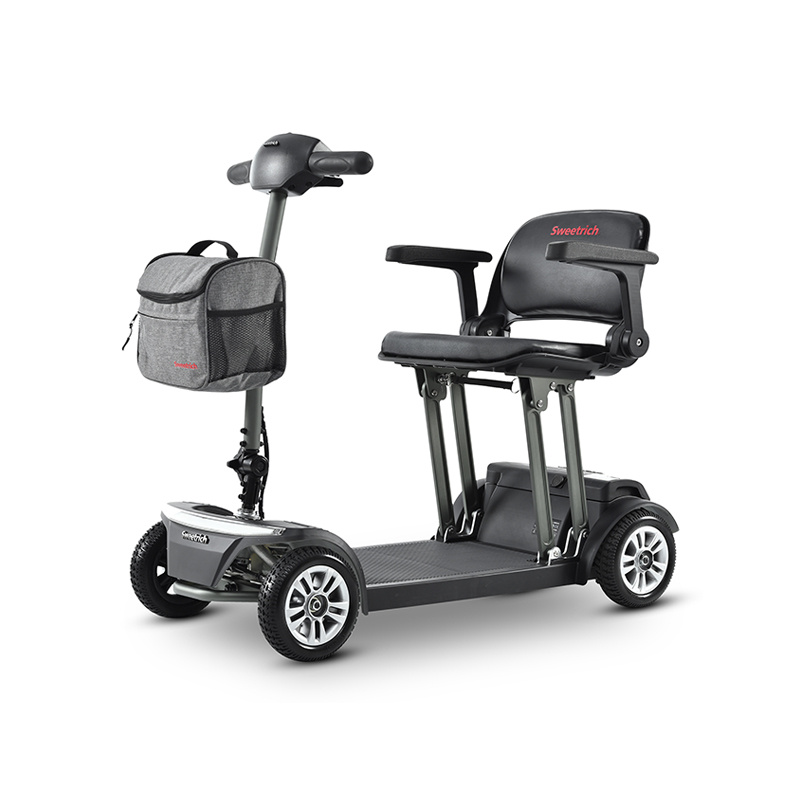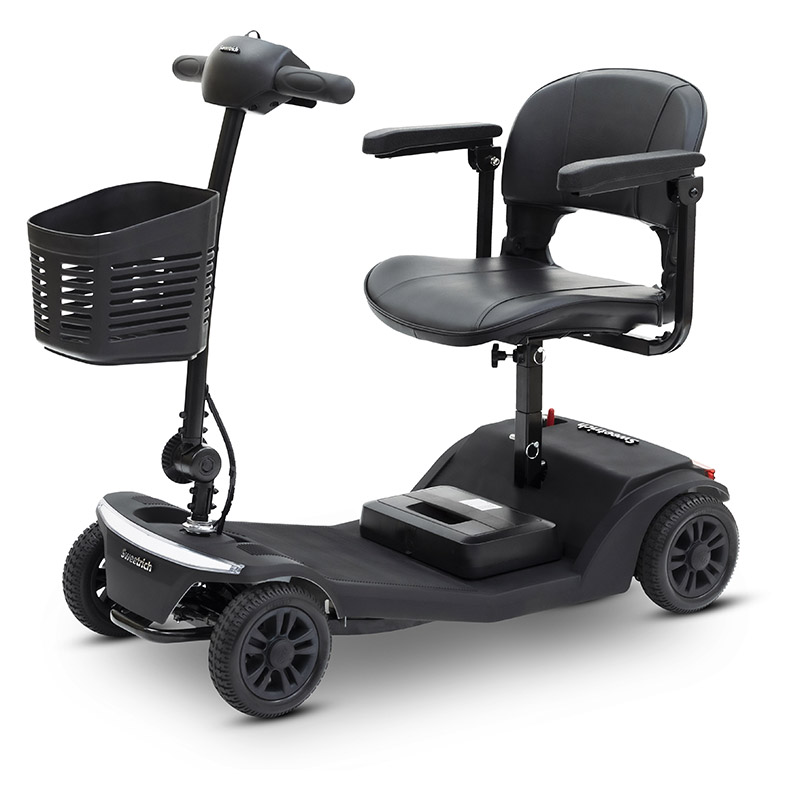

 +86-(0)512-82283871

Content
- 1 Understanding the SW 1000F Travel Scooter
- 2 Key Specifications at a Glance
- 3 Compact Dimensions for Everyday Mobility
- 4 Four-Wheel Stability and Controlled Handling
- 5 Motor and Controller Performance
- 6 Lithium Battery Convenience
- 7 Electromagnetic Braking for Everyday Confidence
- 8 Advantages Over Larger and Less Portable Competitors
- 9 Comfort and Usability Considerations
- 10 Ready-to-Ship Value for Distributors and Retailers
- 11 Manufacturing Experience and Technical Foundation
- 12 Advanced Production and Quality Management Approach
- 13 Research and Development Capabilities
- 14 International Market Experience
- 15 Recommended Applications
- 16 Safety and Operating Guidance
- 17 Maintenance and Ownership Planning
- 18 Why the Product Offers Strong Distributor Potential
- 19 Comparison with Common Competitor Categories
- 20 Frequently Asked Questions
- 20.1 What type of product is the SW 1000F?
- 20.2 What is the maximum speed?
- 20.3 How far can it travel on one charge?
- 20.4 What is the maximum user weight?
- 20.5 Is the scooter suitable for indoor use?
- 20.6 Does it have a suspension system?
- 20.7 What type of battery does it use?
- 20.8 How long does charging take?
- 20.9 What kind of brake system is installed?
- 20.10 Can one person easily lift the scooter?
- 20.11 Is it designed for steep outdoor hills?
- 20.12 Why choose four wheels instead of three?
- 20.13 What should distributors confirm before ordering?
- 20.14 Who manufactures the product?
- 21 Conclusion
- 22 References
- 23 Product: SW 1000F Ready to ship mobility scooter 9 inch 4 wheels scooters
Choosing a compact mobility scooter involves more than comparing speed and battery capacity. Buyers, distributors, caregivers, and mobility retailers must also consider portability, operating stability, charging convenience, product reliability, after-sales support, and suitability for the intended market. The SW 1000F is a four-wheel travel mobility scooter developed for users who want a practical electric mobility solution in a compact format. With a 5 mph maximum speed, a lithium battery system, electromagnetic braking, a 300-pound weight capacity, and a relatively manageable overall size, it is designed to balance everyday usability with convenient transportation.
This model is positioned as a non-medical mobility device for the United States market. It is intended to support personal transportation and independence rather than diagnose, treat, or prevent a medical condition. Its compact design makes it appropriate for many routine activities, including shopping, visiting public spaces, traveling through paved outdoor areas, and moving around larger homes or commercial facilities.
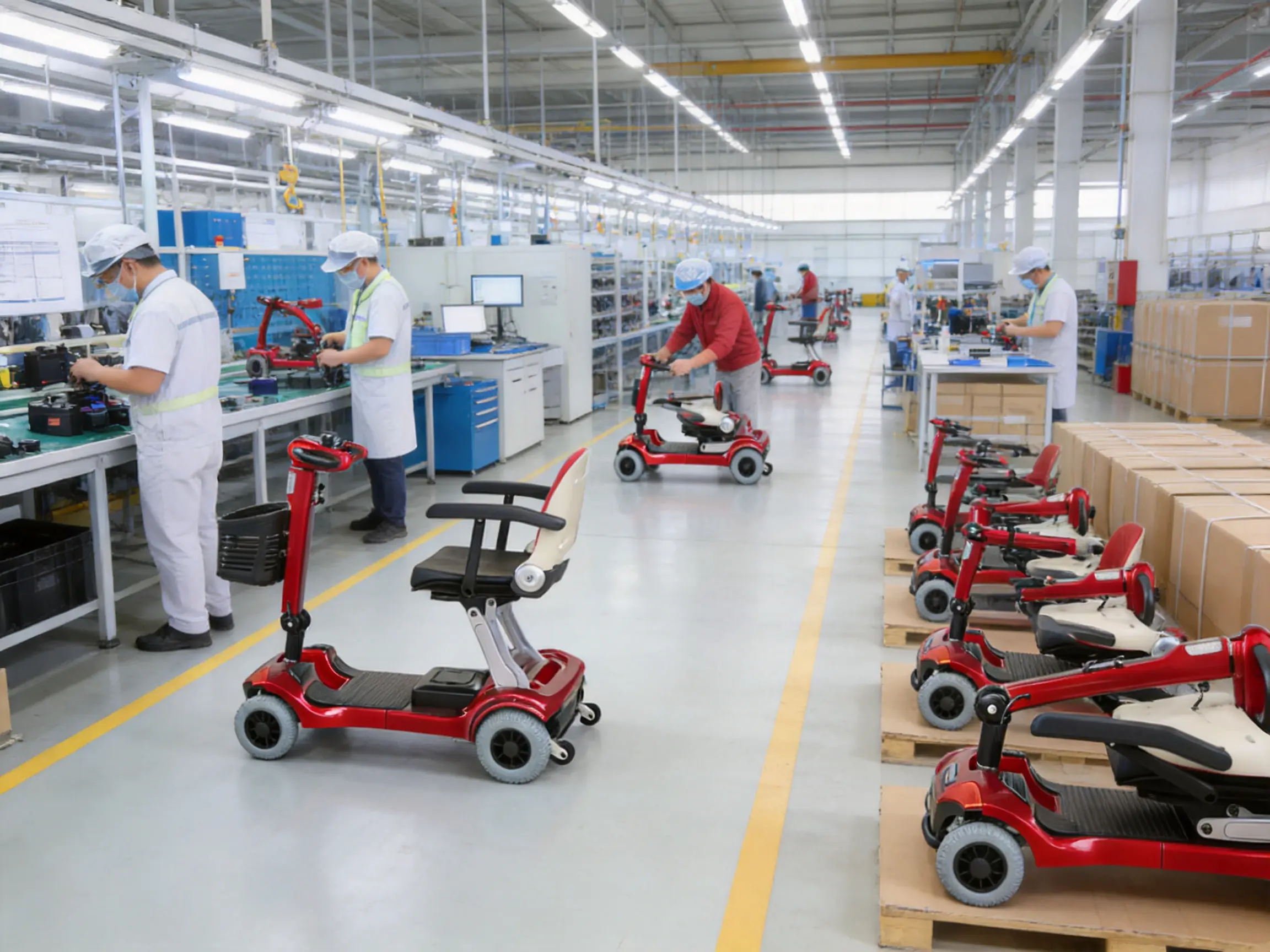
Behind the product is a manufacturer with experience in the research, development, and production of mobility scooters and power wheelchairs. The company operates a substantial factory in Suzhou Industrial Park and serves customers in multiple international markets. Its manufacturing approach combines product development, production management, quality control, and export experience, giving distributors a practical foundation for sourcing mobility equipment.
Understanding the SW 1000F Travel Scooter
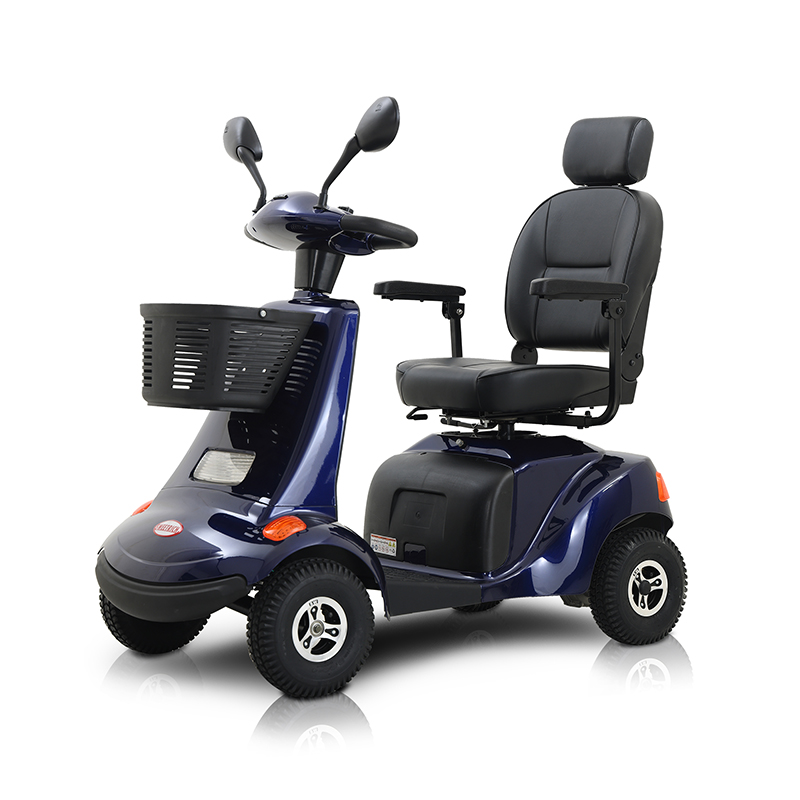
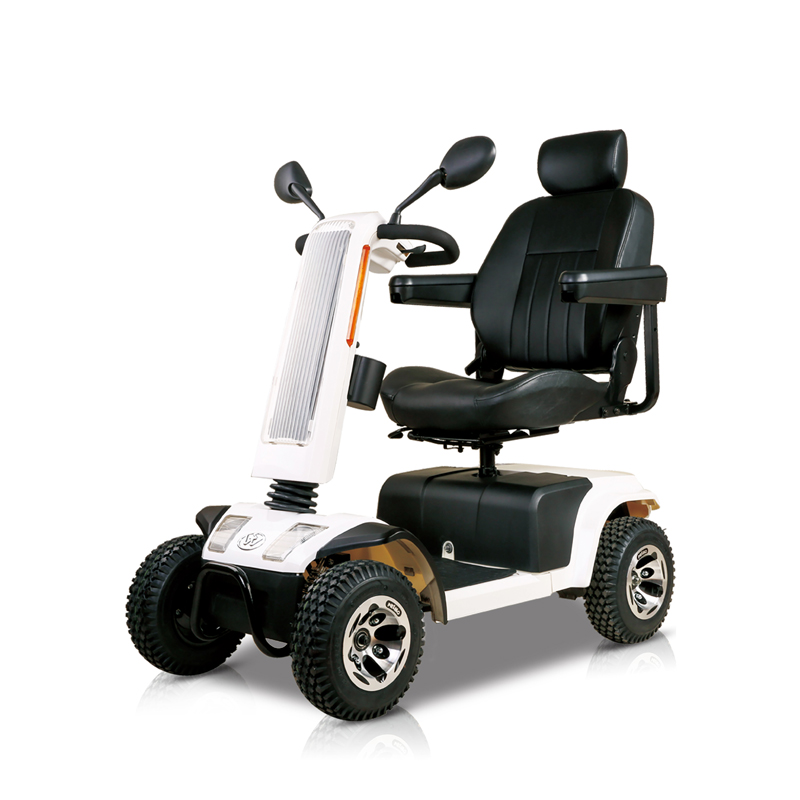
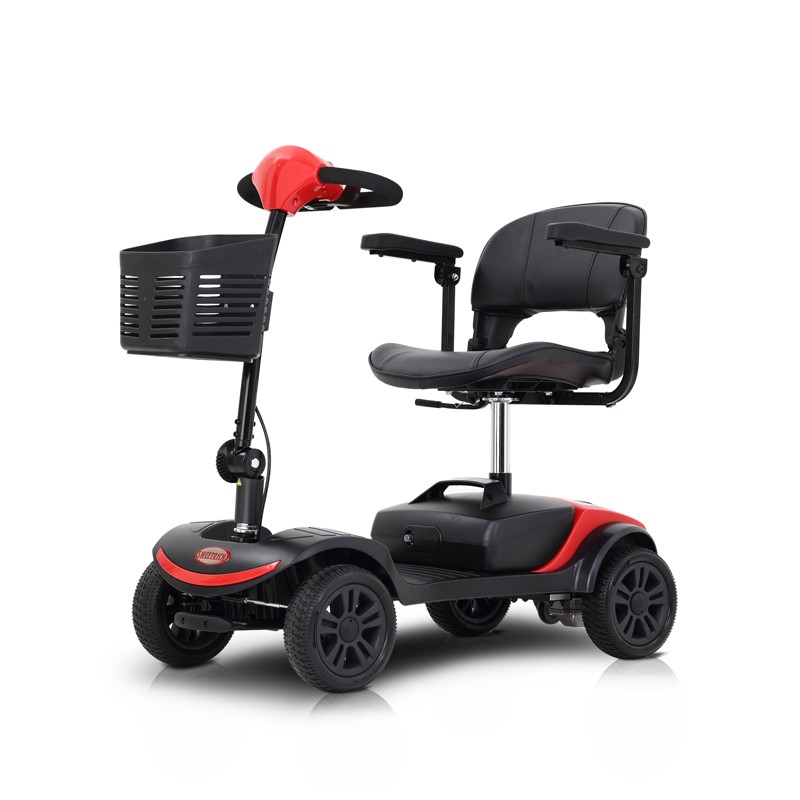
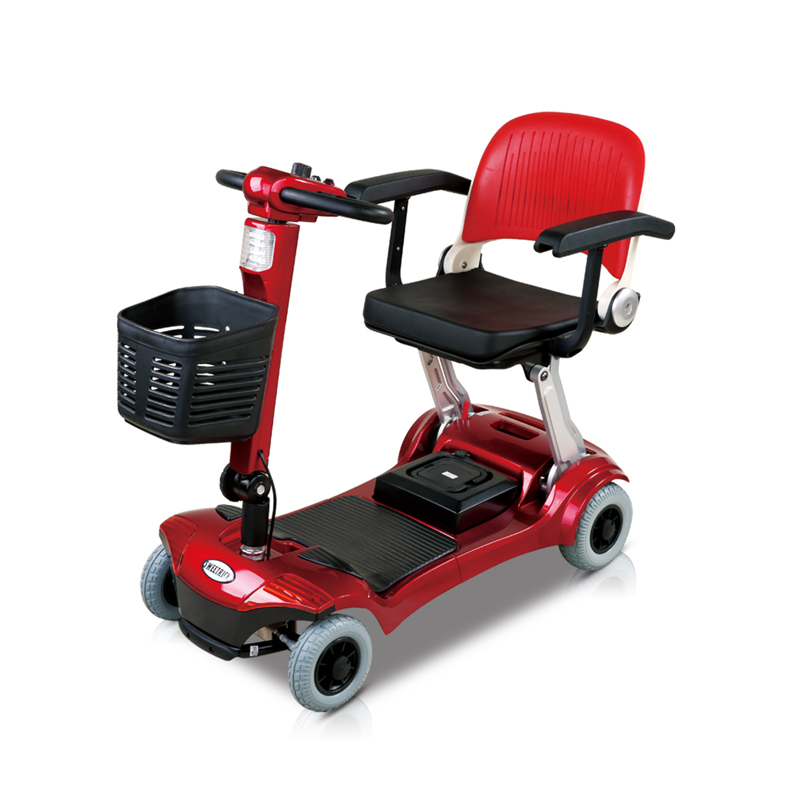
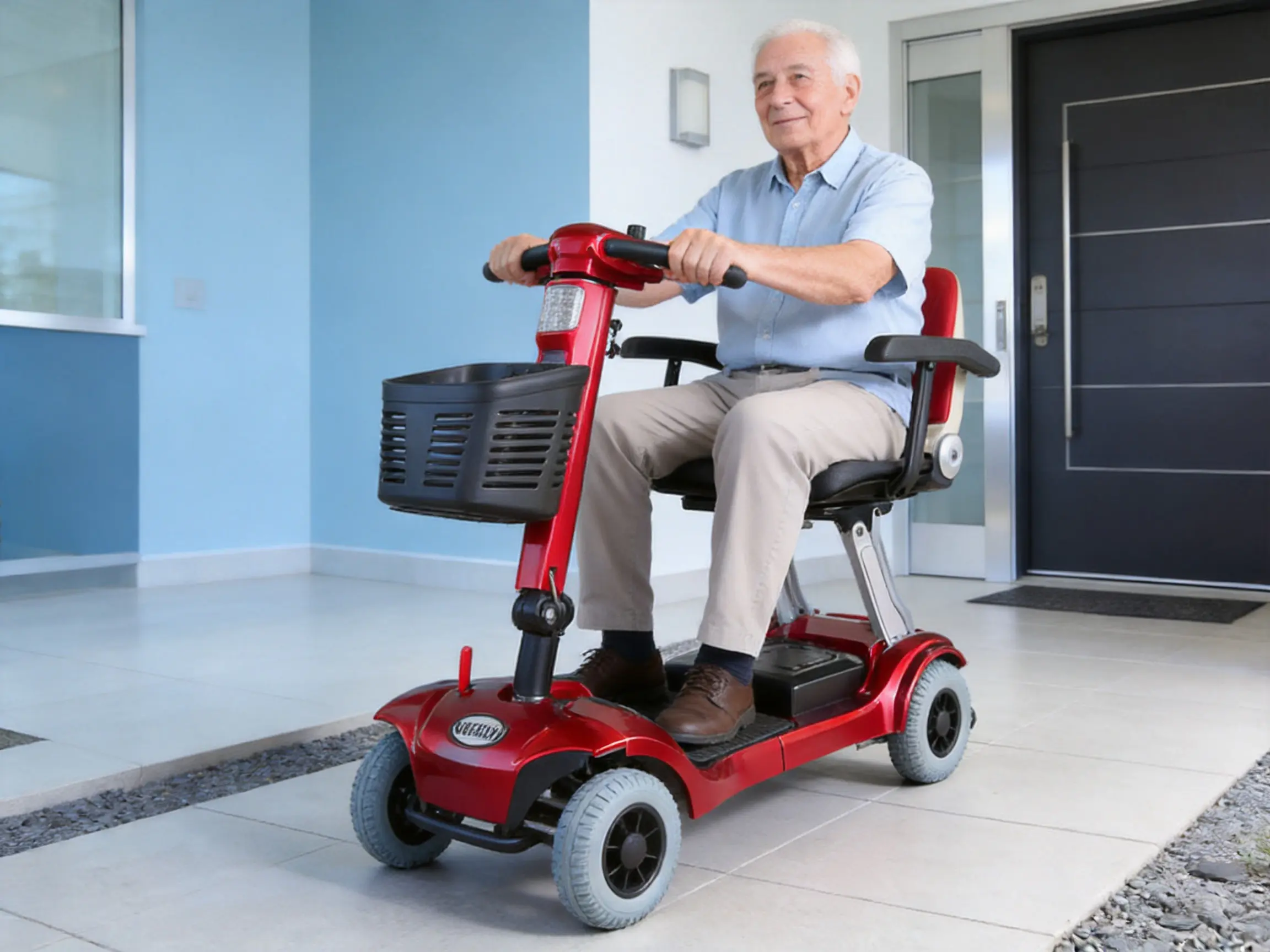
The SW 1000F is a four-wheel electric mobility scooter with a 24-volt, 270-watt motor, lithium battery power, electromagnetic braking, and front and rear tires sized for compact urban mobility. Its dimensions are approximately 1,000 millimeters long, 525 millimeters wide, and 920 millimeters high. In imperial terms, the scooter is about 39.4 inches long, 20.7 inches wide, and 36.2 inches high.
These dimensions place the model within the travel scooter category. It is smaller than many full-size outdoor mobility scooters and is therefore easier to maneuver in confined spaces. At the same time, its four-wheel layout provides a broader and more stable footprint than many three-wheel travel models. This balance is one of the central reasons the scooter can appeal to users who want both portability and predictable handling.
The maximum forward speed is 8 kilometers per hour, or approximately 5 miles per hour. This speed is appropriate for controlled personal mobility in locations such as sidewalks where permitted, shopping centers, residential developments, private premises, and other suitable low-speed environments. Operating conditions and local regulations should always be reviewed before use on public roads or pedestrian routes.
The published driving range is approximately 15 to 25 kilometers, or 9.5 to 15.5 miles, depending on operating conditions. Actual range can vary according to user weight, terrain, temperature, tire pressure, driving habits, battery condition, surface quality, and the number of stops and starts. A distributor or user should treat the range as an operating estimate rather than a guarantee for every journey.
Key Specifications at a Glance
Product model | SW 1000F |
Product type | Four-wheel travel mobility scooter |
Overall dimensions | 1,000 × 525 × 920 mm |
Maximum forward speed | 8 km/h, approximately 5 mph |
Maximum driving gradient | 10 degrees |
Estimated driving range | 15–25 km, approximately 9.5–15.5 miles |
Weight capacity | 136 kg, approximately 300 pounds |
Front tire size | 7 × 2.5 inches |
Rear tire size | 8 × 3 inches |
Brake system | Electromagnetic brake |
Battery | 24V/20Ah lithium battery |
Charger | DC 24V/2A, AC 100–240V input |
Typical charging time | 8–10 hours |
Motor | 24V/270W motor |
Motor controller | 24V/50A controller |
Suspension | Not specified |
Heaviest part | 36.3 kg, approximately 80 pounds |
Compact Dimensions for Everyday Mobility
A major advantage of the SW 1000F is its compact footprint. At approximately 525 millimeters wide, the scooter is designed to fit through many standard access points and navigate spaces where full-size mobility scooters may feel cumbersome. A narrower body can be useful in apartments, corridors, elevators, retail aisles, community buildings, and other environments where turning space is limited.
The 1,000-millimeter length also supports a relatively tight turning profile compared with larger outdoor scooters. While the exact turning radius is not provided, the shorter chassis generally contributes to more manageable maneuvering. Users can benefit from a scooter that feels less imposing during daily errands and is easier to position near tables, counters, entrances, and vehicle loading areas.
Compact dimensions do not eliminate the need for careful planning. Buyers should measure doorways, storage areas, ramps, vehicle compartments, and elevator entrances before purchase. They should also consider whether the complete scooter or its individual parts can be lifted safely. The stated heaviest part weighs approximately 36.3 kilograms, or 80 pounds, which may require assistance during transportation.
Compared with many large, heavy-duty scooters, the SW 1000F is better suited to customers who value convenience and everyday portability over extreme outdoor performance. It is not presented as an all-terrain or high-performance hill-climbing vehicle. Its strength is the practical middle ground between a basic indoor mobility aid and a much larger outdoor scooter.
SW 1000F Ready to ship mobility scooter 9 inch 4 wheels scooters
Four-Wheel Stability and Controlled Handling
The four-wheel configuration is an important distinction in the travel scooter category. Three-wheel scooters can offer a very tight turning circle, but some users prefer the wider support platform and more predictable directional stability of four wheels. The SW 1000F places two wheels at the front and two at the rear, creating a balanced base for routine low-speed travel.
Four-wheel construction can be particularly helpful for users who feel more confident with a stable footprint when starting, stopping, turning, or crossing minor changes in surface level. It may also appeal to caregivers and family members who prioritize a reassuring platform for daily use. Stability is influenced by more than the wheel count, however. Proper seating, weight distribution, speed control, tire condition, terrain, and safe driving behavior remain essential.
The front tires measure 7 by 2.5 inches, while the rear tires measure 8 by 3 inches. The slightly larger rear tires support traction and load distribution while maintaining the compact proportions of the scooter. These tire dimensions are appropriate for paved surfaces and smooth, maintained routes. Users should exercise caution on loose gravel, wet grass, steep cross-slopes, deep cracks, and uneven terrain.
The maximum driving gradient is listed as 10 degrees. This figure should not be interpreted as permission to approach every slope at maximum capacity. A safe climbing angle depends on the rider’s weight, battery charge, surface traction, slope length, weather, and whether the scooter is traveling straight up or across an incline. A cautious operator should avoid sudden turns on slopes and follow the operating instructions supplied with the product.
Motor and Controller Performance
The scooter uses a 24-volt, 270-watt motor. This power configuration is suited to a compact travel scooter designed for controlled personal transportation rather than high-speed recreation. A motor of this type can provide smooth propulsion for normal paved routes while helping the product maintain a manageable electrical system and practical battery size.
The motor is paired with a 24-volt, 50-amp controller. The controller regulates the relationship between the battery, throttle input, and motor. In practical use, a well-matched controller helps the scooter respond progressively to user commands instead of producing abrupt changes in speed. Smooth acceleration is especially valuable for users who may be less comfortable with sudden movement.
The product information identifies the motor as a Taiwan-sourced component. Component sourcing can be an important consideration for manufacturers and distributors because motor consistency, controller compatibility, and replacement-part availability influence the long-term service experience. A properly integrated drive system also reduces the risk of mismatched electrical components during assembly or servicing.
As with any electric mobility product, performance changes when the scooter is operated on an incline, with a heavier load, or with a partially depleted battery. Buyers should evaluate the model according to its intended use. The SW 1000F is best understood as a compact daily-use scooter for moderate routes, not as a substitute for a heavy-duty vehicle built for extended off-road travel.
Lithium Battery Convenience
The SW 1000F uses a 24V/20Ah lithium battery. Lithium battery technology can offer several practical advantages in a travel scooter. Compared with some traditional battery formats, lithium batteries are often valued for their comparatively favorable energy-to-weight ratio, compact packaging, and suitability for products where transportability matters.
For a compact scooter, reducing unnecessary battery weight can make handling, storage, and vehicle transportation more manageable. The lithium system also supports the model’s travel-oriented positioning. It is important to recognize that battery performance depends on charging habits, storage temperature, age, usage frequency, and operating load. A lithium battery should be used, charged, and stored according to the manufacturer’s instructions.
The supplied charger is specified as DC 24V/2A with an AC 100–240V input. The broad input range can support use across different electrical environments when the appropriate plug configuration and local requirements are observed. The stated charging time is approximately 8 to 10 hours, which makes overnight charging a practical routine for many users.
Charging should take place in a dry, ventilated location using the designated charger. Users should inspect the battery, charger, and cable for visible damage before use. The charger should not be covered while operating, and the battery should not be modified or replaced with an incompatible unit. For commercial distributors, clear charging guidance should be included in product documentation and customer training.
The estimated range of 9.5 to 15.5 miles gives the model useful flexibility for short daily trips. A user may complete several local errands without recharging between every journey, although route planning should account for return distance and unexpected delays. Cold weather, hills, frequent acceleration, and heavier loads can reduce the distance available from a single charge.
Electromagnetic Braking for Everyday Confidence
The SW 1000F is equipped with an electromagnetic brake system. Electromagnetic braking is commonly used in powered mobility equipment because it can engage when the drive control is released, helping the scooter slow and stop in a controlled manner. This type of braking can be convenient for users who need a straightforward control experience.
Braking performance is affected by speed, slope, surface condition, tire condition, battery status, and rider behavior. The brake system should be tested in a safe, open area before regular operation. Users should become familiar with the distance required to stop and should reduce speed before turning, entering crowded areas, approaching doorways, or traveling downhill.
Regular inspection is essential. Distributors and service personnel should check for unusual sounds, control problems, damaged wiring, and changes in stopping behavior. A scooter that does not stop normally should not be used until it has been inspected by a qualified technician.
Advantages Over Larger and Less Portable Competitors
The SW 1000F competes in a market that includes basic three-wheel scooters, full-size four-wheel outdoor scooters, folding travel scooters, and entry-level powered mobility products. Its advantages become clearest when it is compared with products that are either too large for indoor use or too limited in stability and carrying capacity.
More Practical Than Many Full-Size Outdoor Scooters
Full-size outdoor scooters may offer larger batteries, higher ground clearance, suspension systems, and greater range. However, those features often increase total weight and physical size. A large scooter may be difficult to store in an apartment, maneuver inside a store, or load into a vehicle. The SW 1000F provides a more manageable alternative for customers who do not require extended outdoor range or rugged terrain capability.
More Stable Than Many Three-Wheel Travel Models
Three-wheel designs can be highly maneuverable, but certain users prefer four wheels for a broader support base. The SW 1000F offers four-wheel stability while maintaining the compact dimensions expected from a travel-oriented model. This can make it attractive to buyers who want a confident platform without moving to a large heavy-duty scooter.
More Convenient Than Heavy Battery Configurations
The 24V/20Ah lithium battery supports the portable character of the scooter. A lithium-powered configuration may be easier to manage than heavier battery arrangements used in some larger models. For families, retailers, and transport providers, reduced handling demands can simplify storage and movement.
Balanced Capacity for a Compact Design
A 300-pound weight capacity is substantial for a compact travel scooter. It allows the product to serve a broad group of adult users while retaining a relatively narrow body. Capacity should always include the rider and any carried items. Users should not exceed the published limit, and weight should be distributed evenly to preserve handling and braking performance.
Internationally Usable Charger Input
The charger’s AC 100–240V input is useful for an internationally distributed product. Retailers serving multiple markets can benefit from a charging system that is compatible with a broad voltage range, subject to the correct local plug, certification, and regulatory requirements. This feature can simplify product planning for export-oriented businesses.
Comfort and Usability Considerations
The available specifications do not identify detailed seat dimensions, seat adjustment ranges, tiller adjustment, turning radius, or accessory compatibility. These details should be confirmed before placing a large order or recommending the scooter to a specific user. Even when two models have similar dimensions and capacity, differences in seat support and control layout can significantly influence satisfaction.
A good travel scooter should allow the user to sit in a balanced position, reach the controls without excessive stretching, and maintain a clear view of the route. The tiller should be positioned so that the user can steer without unnecessary shoulder or wrist strain. Before regular use, the user should practice starting, stopping, reversing, and turning in an open area.
The scooter’s lack of a listed suspension system suggests that it is primarily intended for smooth and reasonably maintained surfaces. This is not necessarily a disadvantage within its target category. Omitting suspension can help keep a product simpler, lighter, and more affordable. It does mean that users should avoid potholes, broken pavement, rough trails, and obstacles that could create uncomfortable or unsafe impacts.
Retailers can improve the ownership experience by offering a pre-delivery inspection and basic operating orientation. Demonstrating charging, folding or transport procedures if applicable, braking, battery removal if supported, and safe slope operation can reduce user errors and unnecessary service calls.
Ready-to-Ship Value for Distributors and Retailers
Availability is an important commercial advantage in the mobility equipment sector. Customers often seek a scooter because they need a practical transportation solution within a relatively short timeframe. A ready-to-ship model can help distributors respond more quickly than a fully customized product that requires a long production schedule.
For retailers, a ready-to-ship product can simplify inventory planning. The SW 1000F has a clear travel-scooter profile, a defined specification set, and a broad range of potential applications. It can be presented to customers seeking a compact four-wheel scooter for local errands, indoor and outdoor paved use, or occasional vehicle transport.
Ready-to-ship inventory also supports replacement and repeat orders. Dealers can maintain a consistent model in their product range rather than frequently changing specifications. Consistency helps sales staff become familiar with the product, enables technicians to develop service routines, and makes customer documentation easier to standardize.
However, commercial buyers should confirm current stock, packaging dimensions, shipping terms, battery transport requirements, certifications, labeling, warranty terms, spare parts, and regional compliance before ordering. Readiness for shipment does not remove the need for due diligence in the destination market.
Manufacturing Experience and Technical Foundation
The manufacturer behind the SW 1000F is a high-tech mobility company established in 2011 in Suzhou Industrial Zone, Jiangsu, China. It operates a factory covering approximately 30,000 square meters on a site of about 60 acres. This scale provides a substantial base for coordinated product development, assembly, inventory management, testing, and export preparation.
The company has accumulated more than ten years of experience in researching, developing, and producing mobility scooters and power wheelchairs. Long-term specialization is valuable in this sector because mobility products require the integration of mechanical structures, electrical systems, batteries, controls, braking, ergonomics, and user safety considerations.
Rather than treating a scooter as a simple collection of purchased parts, an experienced manufacturer can coordinate the entire product system. Frame dimensions must work with wheel placement. The motor and controller must match the battery and drive requirements. Braking must be compatible with the control system. Packaging must protect the product during transport. Production teams must also maintain repeatable assembly standards.
The company states that it owns intellectual property rights related to its electric scooters and power wheelchairs. Intellectual property can support continued product development and help a manufacturer build differentiated designs. For distributors, a manufacturer with its own product development capabilities may offer more stable communication regarding specifications, engineering changes, and product improvements.
Advanced Production and Quality Management Approach
The available company information emphasizes strict production management and scientific product design. In practical terms, a disciplined production system should include controlled drawings and specifications, approved component sourcing, standardized assembly procedures, inspection checkpoints, electrical testing, functional testing, and traceable handling of nonconforming products.
Product quality is especially important for mobility equipment because reliability affects daily independence. A loose electrical connection, inconsistent brake response, poorly aligned wheel, or incorrectly installed control component can create an avoidable risk. Manufacturing controls help reduce variation between units and provide a repeatable basis for inspection before shipment.
Quality management also extends beyond assembly. Incoming components should be checked against approved requirements. Batteries and chargers should be matched to the intended electrical system. Tires should be inspected for damage and correct installation. Fasteners should be secured according to established procedures. Finished scooters should be examined for visible defects and tested for basic operation.
A scientific design process can further improve product performance by evaluating user needs, operating environments, component compatibility, transport requirements, and serviceability before production. The SW 1000F’s compact dimensions, four-wheel layout, lithium battery, electromagnetic brake, and moderate motor output reflect a design focused on practical travel mobility rather than unnecessary complexity.
Manufacturing strength should not be measured only by factory size. It also depends on the ability to maintain specifications, communicate accurately with customers, respond to technical questions, manage supplier relationships, and support products after shipment. The company’s stated focus on qualified products, considerate service, reasonable pricing, and long-term cooperation aligns with the requirements of international mobility distributors.
Research and Development Capabilities
Research and development are important because user expectations continue to evolve. Customers increasingly look for products that are compact, easy to operate, energy-efficient, visually appealing, and suitable for transportation. Manufacturers must balance these expectations with structural strength, battery safety, braking performance, regulatory compliance, and cost control.
A manufacturer focused on both mobility scooters and power wheelchairs can develop knowledge across a range of user needs. Travel scooters typically prioritize portability and maneuverability, while power wheelchairs may require different seating arrangements, control options, drive systems, and support features. Experience across both categories can encourage broader engineering awareness.
Product development should also consider the needs of distributors. Clear technical documentation, stable model specifications, packaging information, replacement components, and training materials make it easier for dealers to introduce and support a product. A manufacturer that understands international markets can better anticipate differences in language, electrical systems, labeling, and customer expectations.
International Market Experience
The company reports exporting products to America, Europe, Japan, Australia, the Middle East, Russia, and other markets. International distribution requires more than shipping products from one country to another. It involves coordination of packaging, documentation, product labeling, battery transportation, local electrical requirements, customs procedures, and market-specific regulations.
Export experience can help a manufacturer understand the importance of consistent documentation and responsive communication. It can also support dealers that need assistance with product information, commercial photography, training content, and technical questions. These capabilities are particularly useful for mobility retailers that serve customers with different physical abilities and expectations.
Regional requirements may differ, and the distributor remains responsible for confirming that the product is legally suitable for its market. The SW 1000F is described as a non-medical device for the United States market. Buyers should independently verify applicable federal, state, local, electrical, battery, transportation, and consumer-product requirements before sale or use.
Recommended Applications
The SW 1000F is well suited to routine mobility applications where compact size, moderate range, and stable four-wheel handling are important. Typical applications may include indoor movement in spacious homes, shopping centers, community buildings, paved recreational areas, residential developments, and short-distance neighborhood travel where permitted.
It can also be useful for users who need additional mobility support during shopping or appointments but do not require a large outdoor scooter. Its 5 mph speed and estimated range provide a practical combination for everyday errands. The product may appeal to older adults, people with reduced walking endurance, and users seeking a personal electric mobility option for non-medical transportation.
The scooter is not intended to replace a wheelchair for every user, and it should not be presented as a medical treatment device. It is also not designed for high-speed road travel, deep mud, steep rough trails, water crossings, or heavily uneven terrain. Matching the product to the correct application is one of the most important aspects of safe and satisfactory ownership.
Safety and Operating Guidance
Users should read the complete operating manual before using the scooter. They should check battery charge, tire condition, controls, seating position, and brake response before each trip. The scooter should be operated at a speed appropriate to the surroundings, with extra caution around pedestrians, doorways, ramps, curbs, vehicles, and wet surfaces.
Passengers other than the intended rider should not be carried. Heavy objects should not be placed where they can interfere with steering, balance, or visibility. The published weight capacity includes the rider and any baggage. Exceeding the limit can affect acceleration, braking, range, and structural performance.
Slopes should be approached directly and at a controlled speed. Sudden direction changes should be avoided on inclines. Users should not attempt a slope when surface conditions are slippery or when they are uncertain that the scooter can safely complete the route. The stated 10-degree maximum gradient is a specification reference, not a substitute for judgment or training.
Battery charging should be completed with the designated charger. The scooter should not be modified with unauthorized electrical components, and service should be performed by qualified personnel. If the scooter shows reduced braking performance, unusual heat, smoke, damaged wiring, loss of control, or abnormal noise, it should be removed from service and inspected.

Maintenance and Ownership Planning
Routine maintenance helps preserve performance and extend service life. Tires should be inspected for wear, cuts, embedded objects, and proper inflation where applicable. The frame and seat should be checked for looseness or damage. The tiller and controls should move smoothly. The electromagnetic brake and drive system should be tested in a safe area.
The battery should be charged according to the manufacturer’s instructions and stored in suitable conditions. Long periods of storage may require a specific maintenance-charging routine. Extreme temperatures can affect battery performance. Owners should consult the product documentation for approved storage procedures rather than relying on assumptions based on other battery types.
Distributors should consider stocking common service items or maintaining access to replacement parts. Potentially important items may include chargers, tires, control components, battery assemblies, armrests, seats, and fasteners, subject to the manufacturer’s approved parts list. Reliable parts support can reduce downtime and improve the total ownership experience.
Cleaning should be performed with appropriate methods. Electrical components should not be exposed to high-pressure water, and the scooter should be dried after use in damp conditions. A clean product is easier to inspect, and early detection of damage can prevent more serious repairs.
Why the Product Offers Strong Distributor Potential
The SW 1000F combines several characteristics that are commercially useful: a straightforward product category, compact dimensions, four-wheel stability, a lithium battery, a 300-pound capacity, moderate operating speed, and ready-to-ship positioning. These characteristics allow it to serve both direct consumers and mobility retailers looking for a practical entry or mid-range travel scooter.
The model can also complement a broader product portfolio. A distributor may position it below larger outdoor scooters and alongside folding or three-wheel models. Sales staff can recommend it to customers who prioritize stable handling and manageable dimensions but do not need suspension, extended range, or heavy-duty off-road capability.
From a branding and merchandising perspective, the product’s specifications are easy to communicate. Customers can quickly understand its primary benefits: four wheels, 5 mph speed, lithium power, electromagnetic braking, compact size, and an estimated 9.5-to-15.5-mile range. Clear communication is important because mobility equipment buyers often compare multiple models and need practical explanations rather than overly technical claims.
The manufacturer’s factory scale, product experience, intellectual property, international export background, and stated quality principles provide additional support for long-term cooperation. A distributor is not only purchasing a scooter; it is selecting a supply partner capable of maintaining communication, production consistency, and service coordination.
Comparison with Common Competitor Categories
Competitor category | Typical strength | Potential limitation compared with the SW 1000F |
Three-wheel travel scooter | Very tight maneuvering | Some users may prefer the broader four-wheel stability of the SW 1000F |
Large outdoor scooter | Longer range and stronger terrain capability | Usually larger, heavier, and harder to store or transport |
Basic compact scooter | Lower purchase cost | May have a lower weight capacity or less balanced four-wheel configuration |
Heavy battery scooter | Potentially extended operating duration | Can be more difficult to lift and less convenient for travel |
Rough-terrain mobility scooter | Suspension and high ground clearance | Often excessive for indoor and paved everyday travel |
This comparison is not intended to suggest that one category is universally better than another. The correct choice depends on the user’s environment, physical needs, transportation method, budget, and desired travel distance. The SW 1000F’s advantage is its balanced positioning: more stable and capable than some basic compact products, but less bulky than many heavy outdoor scooters.
Frequently Asked Questions
What type of product is the SW 1000F?
The SW 1000F is a four-wheel travel mobility scooter designed for personal electric transportation. It is described as a non-medical device for the United States market and should be used in accordance with local laws and the manufacturer’s instructions.
What is the maximum speed?
The maximum forward speed is 8 kilometers per hour, or approximately 5 miles per hour. Actual operating speed should be adjusted to the environment and the user’s experience.
How far can it travel on one charge?
The published estimated range is 15 to 25 kilometers, or approximately 9.5 to 15.5 miles. Actual range depends on rider weight, terrain, weather, battery condition, speed, tire condition, and driving habits.
What is the maximum user weight?
The stated weight capacity is 136 kilograms, or approximately 300 pounds. This limit includes the rider and any carried items.
Is the scooter suitable for indoor use?
Its compact dimensions and four-wheel layout make it suitable for many indoor environments with adequate turning space. Buyers should measure doorways, corridors, elevators, and storage areas before purchase.
Does it have a suspension system?
The supplied specification lists the suspension as not specified. The scooter should therefore be used primarily on smooth, maintained surfaces unless the manufacturer provides additional approved guidance.
What type of battery does it use?
It uses a 24V/20Ah lithium battery. The battery should be charged and stored with the designated equipment and according to the operating instructions.
How long does charging take?
The stated charging time is approximately 8 to 10 hours. Charging time can vary according to battery condition, charger output, temperature, and usage.
What kind of brake system is installed?
The scooter uses an electromagnetic brake system. Users should test the brake response in a safe area and arrange inspection if stopping behavior changes.
Can one person easily lift the scooter?
The heaviest part is listed at approximately 36.3 kilograms, or 80 pounds. Although the scooter is compact, some users may need assistance when loading or unloading it. Vehicle and storage planning should account for this weight.
Is it designed for steep outdoor hills?
The listed maximum driving gradient is 10 degrees. This should be treated as a specification reference rather than a guarantee for every terrain or load condition. Safe operation requires suitable traction, battery charge, rider control, and careful route selection.
Why choose four wheels instead of three?
Four wheels provide a broader base and may offer a more reassuring sense of stability for some users. Three-wheel scooters can be more maneuverable in tight spaces, so the best configuration depends on the user’s priorities and environment.
What should distributors confirm before ordering?
Distributors should confirm stock status, packaging details, certifications, destination-market requirements, battery shipping procedures, warranty terms, spare parts, manuals, labeling, and after-sales support arrangements.
Who manufactures the product?
The product is manufactured by Suzhou Sweetrich Vehicle Industry Technology Co., Ltd., a mobility equipment company established in 2011 in Suzhou Industrial Park, Jiangsu, China.
Conclusion
The SW 1000F is a practical four-wheel travel mobility scooter for users who want a compact footprint, controlled 5 mph transportation, lithium battery convenience, and a 300-pound capacity. Its 15-to-25-kilometer estimated range supports many everyday trips, while its electromagnetic brake and four-wheel configuration contribute to a straightforward and stable operating experience.
Its strongest competitive position lies in balance. It is more substantial than some very basic compact scooters, yet less cumbersome than many full-size outdoor models. The 24V/270W motor, 24V/20Ah lithium battery, compact dimensions, and manageable travel profile make it appropriate for paved local mobility, indoor use, shopping, and routine personal transportation.
The manufacturing foundation adds value for commercial buyers. More than a decade of mobility-product experience, a 30,000-square-meter factory, stated intellectual property ownership, international export activity, and an emphasis on production management provide a credible basis for distributor cooperation. The company’s combined focus on research, development, manufacturing, and service is relevant to businesses seeking a stable mobility product supplier.
As with any mobility scooter, correct application and safe operation are essential. Buyers should verify the product’s suitability for the intended user, environment, and market requirements. When those considerations are addressed, the SW 1000F can serve as a useful mobility solution for customers seeking independence, convenience, and dependable short-distance electric transportation.
References
1. Product specification sheet for the SW 1000F four-wheel travel mobility scooter, including dimensions, motor, battery, charger, brake, tire, range, capacity, and speed information.
2. Manufacturer company profile for Suzhou Sweetrich Vehicle Industry Technology Co., Ltd., including factory history, research and development activities, production capabilities, export markets, and intellectual property statements.
3. General principles of powered mobility scooter operation, battery charging, braking inspection, slope safety, and routine maintenance.
4. General product-selection considerations for travel mobility scooters, including portability, wheel configuration, weight capacity, operating range, and intended environment.
5. General guidance for distributors regarding mobility equipment documentation, destination-market compliance, battery transportation, product training, and after-sales support.