
 +86-(0)512-82283871

Content
- 1 Designed for Outdoor Mobility Rather Than Indoor-Only Travel
- 2 Motor Performance and Outdoor Handling
- 3 Wheel and Suspension Configuration
- 4 Seating Adjustability and User Fit
- 5 Weight Capacity and Practical Construction
- 6 Battery System, Charging, and Travel Range
- 7 Electromagnetic Braking and Driving Control
- 8 Optional Lighting and Future-Oriented Configuration
- 9 Comparison with Basic Mobility Products
- 10 Manufacturing Strengths of the Supplier
- 11 International Supply and Market Experience
- 12 Applications for Older Adults and People with Reduced Mobility
- 13 Dealer, Distributor, and Fleet Considerations
- 14 Maintenance and Long-Term Ownership
- 15 Safety and Appropriate Use
- 16 How to Evaluate Whether This Product Is the Right Choice
- 17 Frequently Asked Questions
- 17.1 Is the iPower GTS Plus intended mainly for indoor or outdoor use?
- 17.2 What is the maximum user weight?
- 17.3 Can the joystick be placed on either side?
- 17.4 How far can it travel on one charge?
- 17.5 How long does charging take?
- 17.6 Can it climb hills?
- 17.7 What type of tires does it use?
- 17.8 Does it have suspension?
- 17.9 What braking system is included?
- 17.10 Is the light package standard?
- 17.11 Is the power tilt and lift system included?
- 17.12 Is the product a medical device in the United States?
- 17.13 What should buyers confirm about the product weight?
- 18 Conclusion
- 19 References
- 20 Product: iPower GTS Plus More popular type second hand off road light power electric electronic wheelchair for the elderly
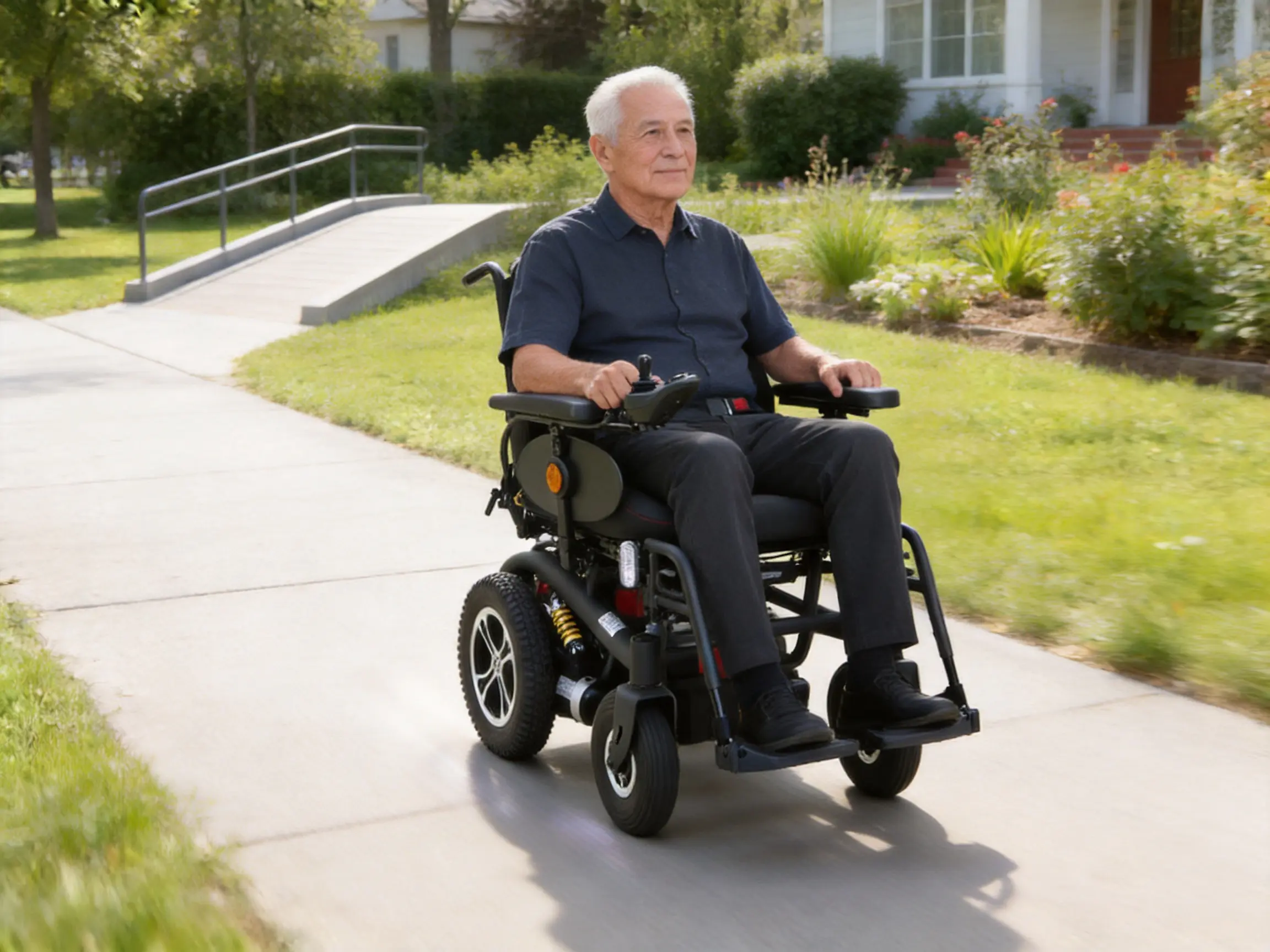
Mobility needs are not limited to smooth indoor floors or short trips across a shopping center. Many older adults and people with reduced mobility want to travel through gardens, residential roads, parks, driveways, ramps, and other outdoor environments with greater confidence. A power wheelchair intended for this kind of use must combine stability, usable range, responsive control, comfortable seating, and enough motor performance to manage everyday gradients. It must also be practical for families, caregivers, dealers, and distributors who need a dependable product with clearly defined specifications.
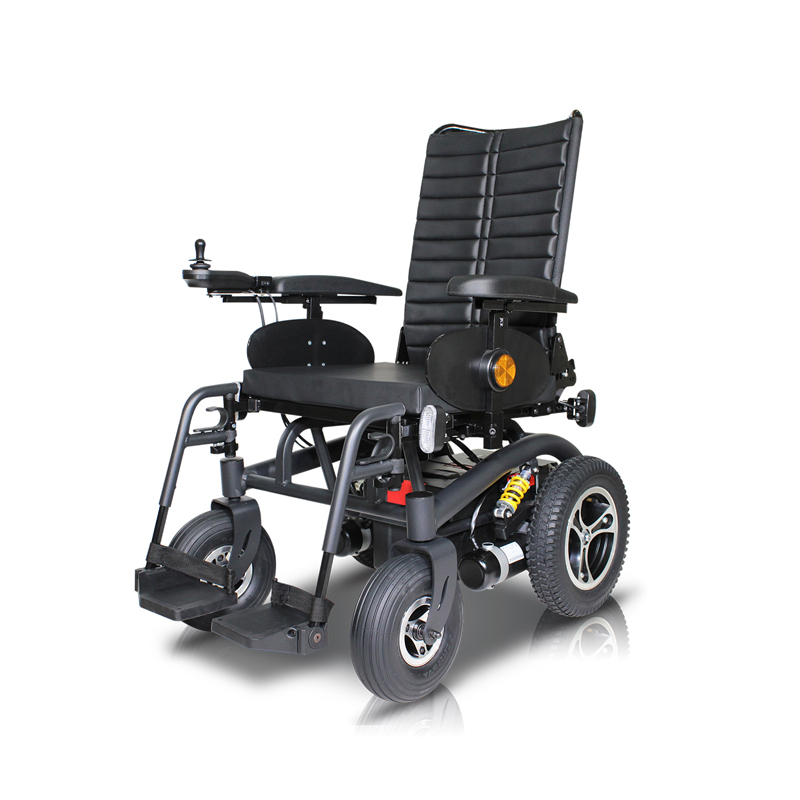
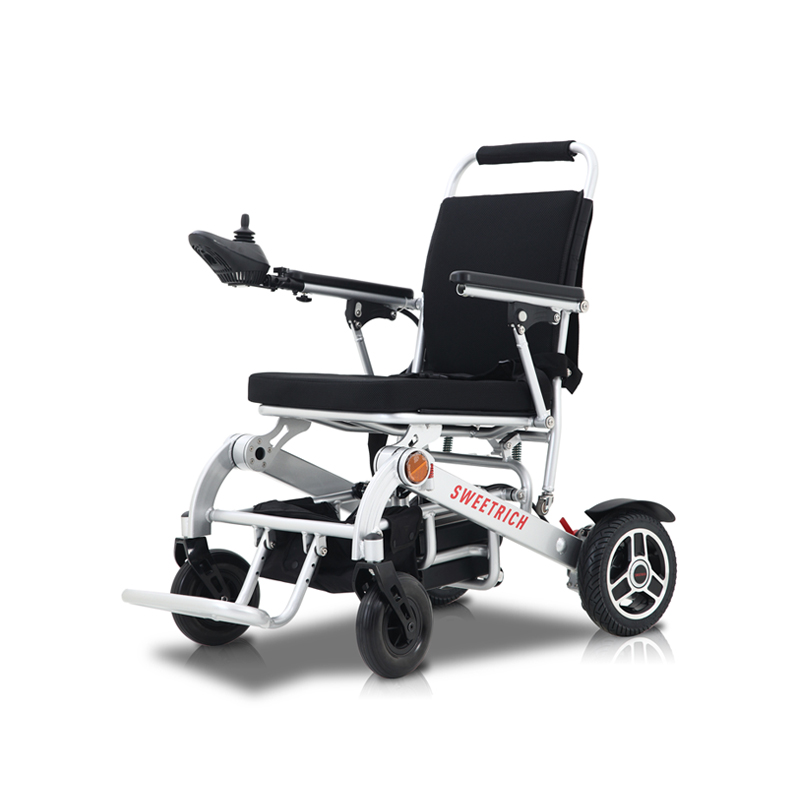
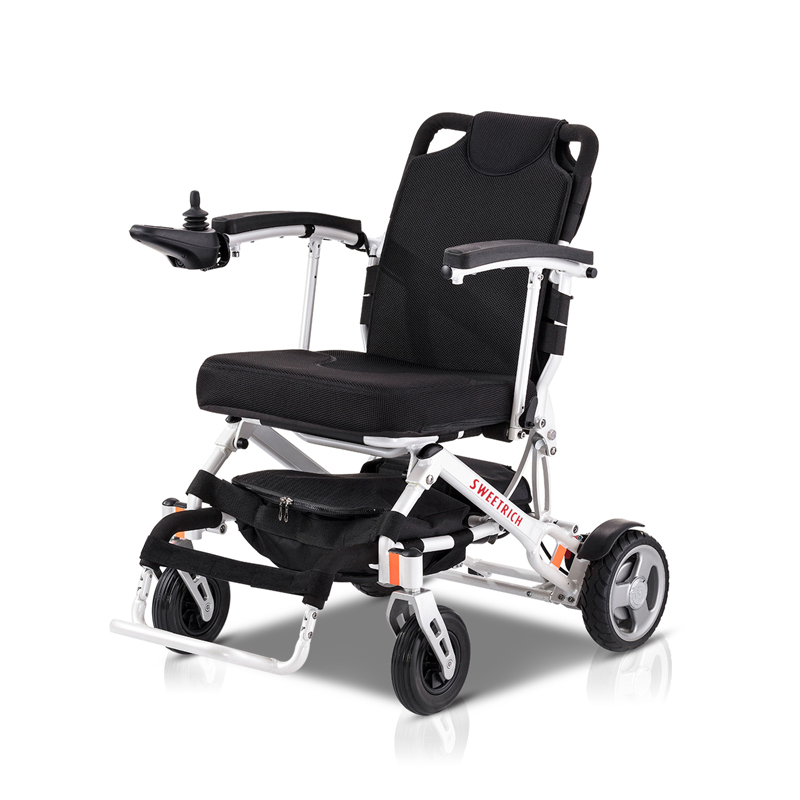
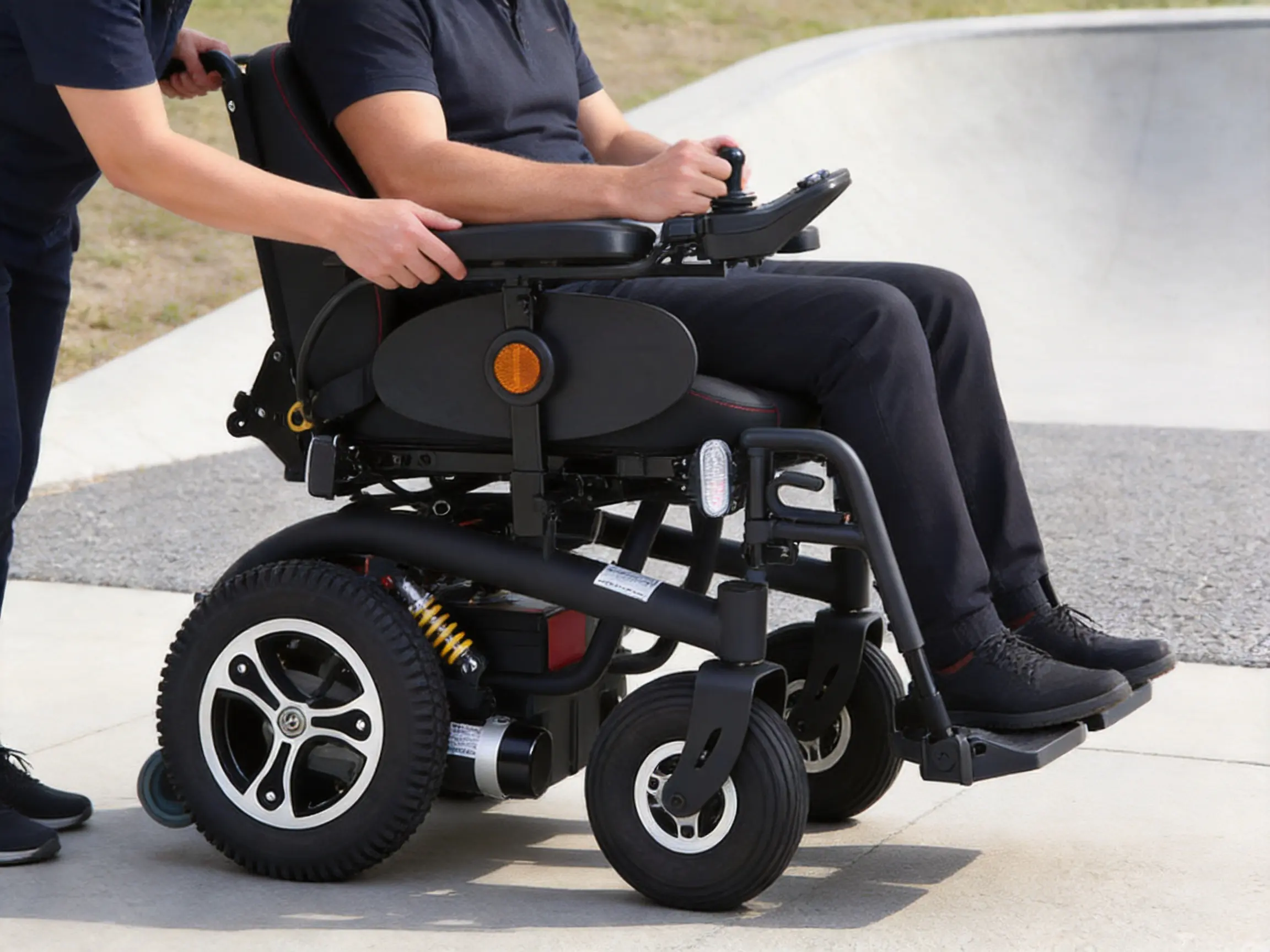
The iPower GTS Plus is designed as a heavy-duty, outdoor-oriented electric wheelchair for users who require more capability than a basic indoor power chair can provide. Its configuration includes two 350-watt motors, large front and rear pneumatic tires, rear suspension, electromagnetic braking, a 136-kilogram weight capacity, and a quoted travel range of 30 to 40 kilometers under appropriate conditions. Adjustable seating features and a joystick that can be installed for use on either side add flexibility for different users and transfer preferences.
This article examines the product’s construction, performance, user-focused features, technical specifications, application value, and manufacturing background. It also explains how the product compares with more limited mobility devices, why production discipline matters in the power mobility sector, and what buyers should consider before selecting an outdoor power wheelchair.
Designed for Outdoor Mobility Rather Than Indoor-Only Travel
Many entry-level electric wheelchairs are optimized for compact dimensions, tight indoor turning, and occasional use on level surfaces. Those characteristics can be useful, but they may become limitations when a user needs to cross uneven pavement, travel on outdoor paths, or move over longer distances. A wheelchair with small wheels, modest motor output, and minimal suspension may feel less stable or less comfortable when used beyond a flat indoor setting.
The iPower GTS Plus takes a different approach. It is configured around outdoor performance, with a 10-inch front wheel, 14-inch rear pneumatic tires, rear suspension, and a total motor package rated at 700 watts. These elements work together to provide improved support for outdoor travel. Larger wheels can help the chair roll over surface transitions more smoothly, while pneumatic tires can provide a degree of cushioning and traction that solid tires may not offer in comparable conditions.
The product is not presented as a medical device for the United States market. It should instead be understood as a mobility product intended to assist personal transportation. Buyers, distributors, caregivers, and end users should evaluate local regulations, operating conditions, user requirements, and applicable safety guidance before use.
Outdoor capability does not mean that every surface is suitable. The chair is designed for practical mobility, not for extreme terrain, deep mud, steep hills, or unsafe weather conditions. Responsible operation remains essential. Users should avoid obstacles beyond the chair’s capabilities, maintain appropriate tire pressure, use safe speeds, and follow the manufacturer’s operating instructions.
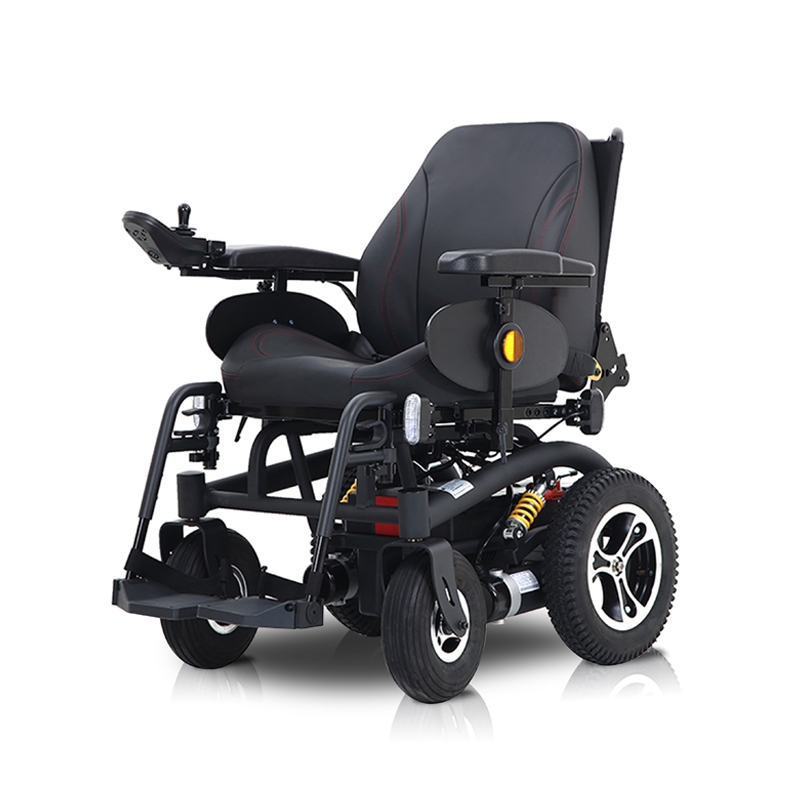
iPower GTS Plus More popular type second hand off road light power electric electronic wheelchair for the elderly
Motor Performance and Outdoor Handling
The power system is one of the most important differences between a basic mobility chair and a more capable outdoor model. The iPower GTS Plus uses two 24-volt, 350-watt motors, producing a total rated output of 700 watts. A dual-motor configuration can provide balanced drive performance because each drive wheel receives power through its own motor. This arrangement may also support smooth maneuvering and controlled movement across ordinary outdoor surfaces.
The quoted maximum forward speed is 8 kilometers per hour, or approximately 5 miles per hour. This speed is suitable for users who need to travel efficiently while still maintaining control. In practice, the appropriate speed will depend on the surface, visibility, slope, traffic, weather, user experience, and local rules. Maximum speed should not be treated as a target for every journey.
The stated maximum driving gradient is 10 degrees. A gradient rating is useful when comparing products, but it must be interpreted carefully. The actual climbing ability of a powered wheelchair depends on user weight, battery condition, tire pressure, surface texture, gradient length, direction of travel, temperature, and the presence of a load or accessory. A ramp or hill should always be approached according to safe operating guidance.
The motors are supported by a 24-volt, 50-amp controller supplied by PG or Dynamic. The controller manages the relationship between joystick input, motor output, acceleration, and braking behavior. A reliable control system is especially important for outdoor driving because users may need to make small corrections on paths, around corners, or near surface changes.
Compared with a lightweight chair intended mainly for indoor use, the 700-watt motor package gives the product a stronger performance orientation. The advantage is not simply higher power on paper. The broader benefit is that the chair is better matched to users who regularly need to travel outside the home, cross varied ground, or carry a higher body weight within the rated capacity.
Balanced Drive for Everyday Confidence
A dual-motor system can also contribute to a balanced driving experience. When the motors and controller are correctly matched, the chair can respond consistently to changes in joystick direction. This is valuable for users who may have limited hand strength or who need predictable control behavior.
The joystick is available for use on either side. This is a meaningful accessibility feature because users differ in arm strength, coordination, seating position, and transfer method. A user who transfers from one side may prefer the controller on the opposite side, while another user may need the joystick positioned according to their dominant hand or physical condition.
An optional swing-away controller mount can make transfers and close positioning easier. When the controller can move away from the seating area, the user may have more room to approach a bed, chair, table, or vehicle transfer point. The exact benefit depends on the final configuration and the user’s transfer technique, but the option demonstrates attention to practical daily use rather than only basic propulsion.
Wheel and Suspension Configuration
The front wheels measure 10 inches by 3 inches, while the rear tires measure 14 inches by 3 inches. This wheel arrangement gives the chair a visually and mechanically substantial stance. Larger rear tires can support traction and rolling performance, while the front wheel helps the chair manage changes in pavement and outdoor surfaces.
Pneumatic tires can offer a more compliant ride than rigid solid tires because air inside the tire absorbs some vibration. They can be particularly helpful on paved paths, compacted ground, and surfaces with small imperfections. However, pneumatic tires require regular inspection and inflation. A tire that is underinflated, overinflated, damaged, or worn can affect handling, range, and stability.
The chair includes rear suspension. Suspension does not eliminate every vibration, but it can reduce the effect of certain surface irregularities on the chassis and seating area. For outdoor users, this may contribute to a more comfortable ride over ordinary uneven ground. It can also help the chair maintain more consistent contact with the surface when traveling across minor changes in terrain.
Wheel size and suspension are important competitive advantages over many compact indoor power chairs. Small indoor wheels may be easier to package and store, but they can be less suitable for cracks, thresholds, outdoor paving, and longer journeys. The larger-wheel configuration of the iPower GTS Plus reflects its intended use as a more capable outdoor mobility platform.
Stability and Responsible Operation
A stable chassis is only one part of safe operation. Users should keep the center of gravity appropriate, avoid sudden direction changes on slopes, and keep the chair’s load within the stated capacity. Accessories, bags, and carried items should be secured so that they do not interfere with the wheels, controller, or seating position.
Although the product is built for outdoor performance, it should not be used on terrain that exceeds its design limits. Deep grass, loose gravel, standing water, steep cross-slopes, and soft ground can affect traction and steering. The best performance is achieved when the user selects suitable routes and maintains the chair properly.
Seating Adjustability and User Fit
Comfort is essential for a power wheelchair because users may remain seated for extended periods. Poor fit can create pressure, fatigue, reduced control, and difficulty with transfers. The iPower GTS Plus includes adjustable seat width, allowing the seating area to be adapted to different body sizes and clothing requirements.
Adjustable seat width can also help dealers and caregivers configure the same platform for a broader range of users. Rather than relying on a single fixed width, an adjustable design provides more flexibility during fitting. Correct adjustment is important: a seat that is too narrow can restrict movement, while one that is too wide may provide less lateral support and make joystick operation less comfortable.
The armrests are height adjustable as well. Armrest height affects shoulder position, elbow support, posture, and the user’s relationship with the joystick. An appropriate adjustment can reduce unnecessary shoulder elevation and help the user operate the controller with less strain.
These adjustable features provide a practical advantage over fixed-configuration chairs. They may also make the product more suitable for rental fleets, care facilities, family use, and dealers who need to serve users with different physical dimensions. Adjustability does not replace professional seating assessment when a user has complex posture or pressure-management needs, but it provides a useful foundation for everyday customization.
Control Placement and Transfer Convenience
The choice of joystick side may appear simple, yet it can strongly influence usability. A user with reduced function on one side of the body may depend on the stronger side for driving. Another user may need the controller positioned away from a transfer side. By supporting use on either side, the product can accommodate more individual circumstances than a fixed-side control arrangement.
The optional swing-away mount adds another layer of convenience. It may allow the controller to be moved away when the user approaches a desk, dining table, bed, or transfer surface. Dealers should confirm the available configuration, mounting position, and compatibility of accessories when preparing an individual product.
Weight Capacity and Practical Construction
The stated weight capacity is 136 kilograms, or 300 pounds. This enhanced capacity is one of the product’s central strengths. A higher rated capacity can make the wheelchair suitable for a wider range of users and may provide greater allowance for clothing, personal belongings, and everyday accessories, provided the total load remains within the manufacturer’s stated limit.
Weight capacity should never be considered in isolation. A chair must also be correctly adjusted for the user, and the user’s weight distribution should remain stable. Additional loads mounted high on the chair can affect handling even if the total weight is technically within the rating. Bags should be placed securely and should not obstruct moving components.
The listed overall dimensions are 1,045 millimeters in length, 625 millimeters in width, and 1,080 millimeters in height. These dimensions provide a useful starting point for checking doorways, storage areas, ramps, elevators, vehicle loading arrangements, and indoor turning spaces. Because the product is designed for outdoor performance and a higher capacity, it should not be assumed to fit every compact indoor environment.
The listed heaviest-part specification is 59 kilograms, with the source information also showing 37 pounds. These figures do not correspond mathematically, so buyers and logistics teams should confirm the correct shipping and lifting weight with the supplier before arranging transport. This verification is particularly important for caregivers, distributors, vehicle conversion specialists, and users who need to load the wheelchair into a vehicle.
Battery System, Charging, and Travel Range
The chair uses two lead-acid batteries rated at 12 volts and 40 amp-hours each. Together, the batteries support the 24-volt electrical system. Lead-acid technology remains familiar to many mobility dealers because it is widely understood, serviceable, and available through established supply channels.
The specified charger is rated at DC 24 volts and 5 amps, with an AC input range of 115 to 230 volts. The quoted charging time is 6 to 8 hours. Users should charge the batteries with the appropriate charger and follow the supplier’s instructions regarding ventilation, charging location, storage, and battery care.
The stated maximum driving range is 30 to 40 kilometers, or approximately 19 to 25 miles. Range figures are generally measured under defined test conditions and should be treated as an estimate rather than a guarantee for every journey. Actual distance can vary according to user weight, terrain, gradient, tire pressure, speed, temperature, battery age, stop-and-start driving, and the use of accessories.
For everyday planning, users should leave a sensible reserve rather than attempting to use the entire quoted range. A route that includes hills, rough paving, frequent stops, or cold weather may consume more energy than a level route. Regular battery maintenance and correct tire inflation can help preserve practical range.
Battery Management for Reliable Use
Lead-acid batteries benefit from consistent charging practices. Users should avoid leaving the chair unused for extended periods with the batteries deeply discharged. If the wheelchair will be stored, the owner should follow the recommended storage and charging procedure and inspect the batteries before returning the chair to service.
Battery performance may decline over time. A reduction in travel distance, slower acceleration, or unusual charging behavior can indicate that inspection is needed. A qualified technician or authorized service provider should evaluate electrical components, connectors, charger operation, and battery condition.
Because the product can be configured for different markets, distributors should confirm the correct electrical plug, charging instructions, battery documentation, and local requirements before delivery. The charger’s broad AC input specification supports varied electrical environments, but the complete finished configuration should always be verified for the destination country.
Electromagnetic Braking and Driving Control
The iPower GTS Plus uses an electromagnetic brake system. This type of braking is commonly paired with powered mobility products because it can automatically engage when drive power is removed or the controller is released, depending on the control system’s programming and operating conditions.
A dependable braking system is particularly important for an outdoor wheelchair. Users may need to stop on paths, approach entrances, pause on a gentle slope, or maneuver near other people. Electromagnetic braking can support controlled stopping, but it does not remove the need for cautious driving. Users should avoid stopping on surfaces that are too steep, loose, wet, or unstable.
Before every journey, the user or caregiver should check that the controller responds correctly, the chair stops as expected, and the wheels and tires appear to be in good condition. Any unusual noise, delayed stopping, loss of power, or change in steering behavior should be investigated before continued use.
Optional Lighting and Future-Oriented Configuration
An optional light package is available. Lighting can improve visibility during low-light travel and help other people notice the wheelchair. The value of a light package depends on the intended route, local conditions, and applicable regulations. Users should still avoid unsafe night travel and should wear visible clothing when appropriate.
The product information also identifies an optional power tilt and lift system as an upcoming feature. Tilt and lift functions can be valuable in certain seating and positioning applications, but availability, specifications, compatibility, and timing should be confirmed directly with the supplier. Buyers should not assume that an upcoming option is included in the standard product.
Optional features allow the base platform to be adapted to different markets and user groups. A dealer may configure one unit for straightforward outdoor transport and another with additional control, lighting, or seating-related options. This modular approach can support more precise product matching and reduce the need to select an entirely different platform for every user requirement.
Comparison with Basic Mobility Products
The most meaningful comparison is not simply between brands. It is between product categories and intended uses. A compact indoor wheelchair may be easier to maneuver through narrow rooms, while a heavy-duty outdoor chair may offer better traction, range, and support on outdoor surfaces. The right choice depends on where and how the user expects to travel.
| Feature | iPower GTS Plus Configuration | Practical User Benefit |
|---|---|---|
| Motor system | 24V/350W dual motors, 700W total | Supports stronger outdoor-oriented propulsion and balanced drive performance |
| Maximum speed | 8 km/h or approximately 5 mi/h | Allows efficient travel while retaining controllable mobility |
| Driving gradient | Up to 10 degrees as specified | Provides a reference for use on suitable inclines |
| Travel range | 30–40 km or approximately 19–25 miles | Supports longer daily trips when conditions are favorable |
| Weight capacity | 136 kg or 300 lb | Accommodates a broader range of users and everyday loads |
| Front and rear tires | 10-inch front and 14-inch rear pneumatic tires | Improves outdoor rolling capability and ride compliance |
| Suspension | Rear suspension | Helps reduce the effect of selected surface irregularities |
| Control placement | Joystick available on either side | Supports left- or right-side operation and individual accessibility needs |
| Seating adjustment | Adjustable seat width and armrest height | Improves fitting flexibility and everyday comfort |
| Braking | Electromagnetic brake system | Supports controlled stopping when the drive control is released |
| Battery system | Two 12V 40Ah lead-acid batteries | Uses a familiar and widely serviced power source |
Compared with a lightweight indoor model, the product’s larger motors, tires, rear suspension, and higher capacity may offer a stronger solution for outdoor users. Compared with a very large specialty chair, its listed width of 625 millimeters may make it more manageable in ordinary residential and commercial environments, although users must still measure doorways, ramps, and storage spaces carefully.
The product’s combination of features is important. A high motor rating without suitable tires may not produce a comfortable outdoor experience. Large tires without adequate control may be difficult for a user to manage. Adjustable seating without sufficient weight capacity may not address the needs of every customer. The iPower GTS Plus is positioned as a complete mobility system in which propulsion, seating, braking, battery power, and chassis design support one another.
Manufacturing Strengths of the Supplier
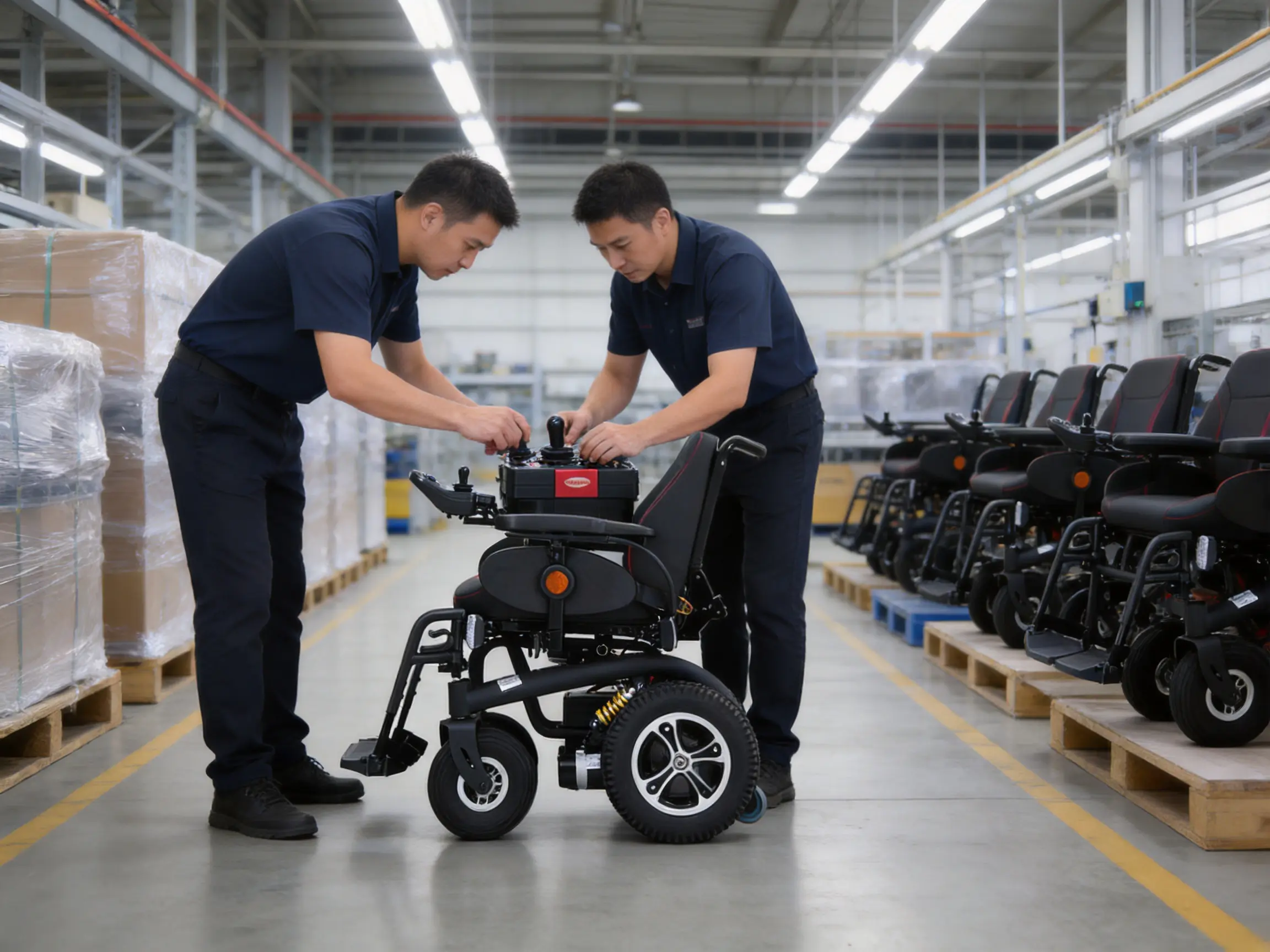
Suzhou Sweetrich Vehicle Industry Technology Co., Ltd. is described as a high-technology company based in Suzhou Industrial Zone, Jiangsu, China. Established in 2011, the company operates on a site covering approximately 60 acres and has a 30,000-square-meter factory. Its stated specialization is the research, development, and production of mobility scooters and power wheelchairs.
This industry focus is significant. A manufacturer dedicated to mobility products can build experience around the particular requirements of powered seating, drive controls, batteries, chassis construction, ergonomic adjustment, and user safety. Product knowledge accumulated over more than a decade can support more consistent design decisions and better understanding of dealer and end-user needs.
The company states that it owns intellectual property rights for its electric scooters and power wheelchairs. It also describes its products as incorporating control technology and driving systems intended to support smooth and safe operation. While buyers should request the specific technical and compliance documentation required for their market, product-focused intellectual property indicates an emphasis on internal development rather than simple dependence on generic platforms.
Research and Development Orientation
Research and development in the mobility sector involves more than increasing motor power. It includes seating geometry, controller response, wheel placement, suspension behavior, battery integration, service access, component durability, and user interaction. A well-designed wheelchair must balance capability with controllability and comfort.
The adjustable seat width, adjustable armrests, side-selectable joystick, optional swing-away controller, lighting package, and planned tilt and lift system suggest an approach based on configuration flexibility. These choices address common real-world requirements: users are not identical, and a single fixed arrangement cannot serve every body type, transfer method, or route.
Product development should also consider the relationship between components. The battery system must support the motors. The controller must match the motor package. The brakes must respond appropriately to the control system. The frame and wheels must carry the intended load. Manufacturing experience is valuable because these elements cannot be evaluated effectively as isolated parts.
Production Management and Quality Focus
The company describes its production approach as based on strict production management and scientific product design. In practical terms, disciplined production management may include controlled assembly procedures, inspection of incoming components, verification of electrical connections, functional testing, adjustment checks, packaging controls, and traceability practices. Specific procedures and certifications should be confirmed with the supplier for each destination market.
For a powered wheelchair, consistency is especially important. A small difference in wiring, connector security, tire pressure, brake adjustment, joystick calibration, or battery installation can affect the user’s experience. A structured manufacturing process helps reduce variation and makes it easier for service partners to diagnose issues.
Quality is also connected to after-sales support. Dealers need access to technical information, replacement parts, service guidance, and responsive communication. A manufacturer that serves international markets must be prepared to address differences in electrical systems, language, documentation, packaging, shipping, and regulatory expectations.
International Supply and Market Experience
Sweetrich reports that its products are exported to America, Europe, Japan, Australia, the Middle East, Russia, and other markets. International distribution requires more than shipping a product across borders. It involves coordinating packaging, destination requirements, product documentation, electrical compatibility, user manuals, warranty expectations, and local service arrangements.
Experience across different markets can strengthen a manufacturer’s understanding of varied customer expectations. Some markets may prioritize compact dimensions, others may focus on outdoor durability, and others may require specific accessories or documentation. A broad export footprint can encourage the development of adaptable product configurations and more organized dealer support.
For buyers, international experience should be followed by due diligence. Importers should confirm the exact model specification, available accessories, spare parts policy, warranty terms, shipping dimensions, battery transport requirements, and any relevant testing or compliance documents. The product description provides a strong technical starting point, but a purchase decision should be based on the complete commercial and regulatory package.
Applications for Older Adults and People with Reduced Mobility
The product is intended to help users move more independently in appropriate environments. Older adults may use it for visits to local stores, community spaces, parks, gardens, residential roads, and outdoor appointments. People with reduced mobility may appreciate the ability to travel beyond the immediate indoor environment without relying on a manual wheelchair or constant assistance.
The 8-kilometer-per-hour maximum speed and estimated 30-to-40-kilometer range can support practical daily mobility. The exact benefit depends on the user’s route and physical environment, but the specifications indicate a product designed for more than short indoor transfers.
The enhanced capacity of 136 kilograms also makes the chair relevant to users who need a sturdier platform. A higher capacity can contribute to confidence, provided that seating adjustments are correctly made and the complete load remains within the rating.
Comfort-related features can have a direct effect on willingness to use the chair. Adjustable seat width, adjustable armrest height, pneumatic tires, rear suspension, and side-selectable joystick placement allow the chair to be adapted more closely to the user. Greater comfort may encourage more frequent use, which can support independence in daily routines.
Dealer, Distributor, and Fleet Considerations
For mobility dealers, the product offers a combination of technical capability and configuration flexibility. It can be presented to customers who need outdoor performance but do not necessarily require an extremely large or specialized platform. The adjustable seat and armrests allow the dealer to conduct a more individualized fitting discussion.
Distributors should maintain a clear specification sheet that distinguishes standard equipment from optional equipment. The light package, swing-away controller mount, and future power tilt and lift system should be described accurately. Availability may vary by production batch, market, or purchase agreement.
Fleet operators and care organizations should consider maintenance access, battery replacement, tire servicing, charger support, operator training, and storage conditions. Pneumatic tires require inspection, while lead-acid batteries require appropriate charging and storage. A simple preventive maintenance schedule can help identify wear before it affects reliability.
Staff members should be trained in safe driving, loading, charging, emergency procedures, and basic pre-use checks. Users should understand the meaning of the capacity rating, gradient limit, speed setting, and battery range estimate. Training is especially important when the chair is shared by multiple people.
Maintenance and Long-Term Ownership
Regular maintenance is necessary for any powered mobility product. The tires should be inspected for cuts, abnormal wear, and correct inflation. Wheels should be checked for looseness or damage. The seating system should be inspected for secure adjustment. Armrests and joystick mounts should remain firmly positioned and should not obstruct transfers or steering.
The controller and wiring should be protected from impact, moisture, and unauthorized modification. Users should avoid pulling on cables or placing objects where they can interfere with the joystick. If the chair behaves unexpectedly, it should be stopped and inspected by a qualified service provider.
The electromagnetic brakes should be tested in a safe area. The chair should stop when expected, and it should not roll freely when the drive system is engaged in a stationary position. Any change in braking response deserves prompt attention.
Battery terminals and charging equipment should be kept clean and dry. The charger should be used in a suitable environment with appropriate ventilation. Charging should be performed according to the manufacturer’s instructions rather than based on guesswork or incompatible equipment.
A maintenance record can be useful for families, dealers, and facilities. Recording tire checks, battery replacement, service visits, and observed changes in performance helps identify patterns and supports better long-term ownership.
Safety and Appropriate Use
Users should read the operating instructions before driving and should practice in a clear, level area before moving into busier outdoor environments. Beginners should start at a low speed, learn the braking response, and understand how the chair turns before attempting slopes or uneven surfaces.
Seat width and armrest height should be adjusted before regular use. The user should be seated securely, with personal items stored safely. The joystick should be positioned so that it can be operated without excessive reaching or shoulder movement.
Gradients should be approached directly when possible, and users should avoid crossing steep slopes sideways. Sudden turns, abrupt acceleration, and high-speed travel near pedestrians should be avoided. Weather conditions such as rain, ice, strong wind, or poor visibility may make a route unsuitable.
The wheelchair should not be treated as a substitute for a vehicle in traffic. Users must follow local mobility rules and use appropriate crossings, paths, and visibility equipment. The optional light package may improve visibility, but it does not make every road or nighttime route safe.
The product is described as a non-medical device for the United States market. Users with complex medical, postural, pressure-management, or rehabilitation needs should seek advice from an appropriately qualified professional when selecting seating and positioning equipment.
How to Evaluate Whether This Product Is the Right Choice
A prospective buyer should begin by identifying the main travel environment. If the wheelchair will be used primarily indoors in very tight spaces, a smaller and more compact design may be preferable. If the user needs to travel outdoors over longer distances and varied paved surfaces, the iPower GTS Plus configuration may be more appropriate.
The next consideration is user fit. The 136-kilogram capacity, adjustable seat width, adjustable armrests, and side-selectable joystick provide flexibility, but the user should still confirm that the seat dimensions, back support, foot position, and controller placement are suitable.
Route planning is also important. Buyers should consider door widths, ramp slopes, surface types, storage space, vehicle transport, and access to charging. The stated dimensions and heaviest-part information should be verified before purchase, especially when the wheelchair must be loaded into a car or stored in a small building.
Finally, the buyer should review local service availability. Ask about spare tires, batteries, chargers, controllers, brake components, warranty support, and technical assistance. A capable wheelchair provides the greatest value when it can be maintained throughout its service life.
Frequently Asked Questions
Is the iPower GTS Plus intended mainly for indoor or outdoor use?
It is designed with outdoor performance in mind. The dual 350-watt motors, large pneumatic tires, rear suspension, 8-kilometer-per-hour maximum speed, and estimated 30-to-40-kilometer range make it more suitable for outdoor travel than many basic indoor power chairs. It can still be used indoors where space allows, but buyers should check doorways and turning areas.
What is the maximum user weight?
The stated weight capacity is 136 kilograms, or 300 pounds. The total load should include the user and any carried items or accessories. Users should remain within the specified limit and should ensure that the seating is correctly adjusted.
Can the joystick be placed on either side?
Yes. The product information states that the joystick is available for use on both sides. An optional swing-away controller mount is also available, subject to the selected configuration.
How far can it travel on one charge?
The quoted maximum driving range is 30 to 40 kilometers, or approximately 19 to 25 miles. Actual range varies with terrain, user weight, speed, battery condition, temperature, tire pressure, and driving behavior. Users should plan routes with a reserve of battery power.
How long does charging take?
The specified charging time is approximately 6 to 8 hours. The chair uses two 12-volt, 40-amp-hour lead-acid batteries and a 24-volt, 5-amp charger. Charging should follow the supplier’s instructions and use the correct equipment.
Can it climb hills?
The listed maximum driving gradient is 10 degrees. This is a reference specification, not a guarantee for every hill or user. Surface condition, battery charge, weight, tire pressure, and route length all influence climbing performance. Users should approach inclines cautiously and remain within safe operating conditions.
What type of tires does it use?
The front tires are listed as 10 inches by 3 inches, and the rear tires as 14 inches by 3 inches. The tires are pneumatic, so they should be inspected and inflated correctly. Proper tire maintenance supports handling, comfort, and range.
Does it have suspension?
Yes. The product is specified with rear suspension. Suspension can help reduce the effect of certain surface irregularities, although it does not make unsuitable terrain safe or eliminate every vibration.
What braking system is included?
The chair uses electromagnetic brakes. Users should test the braking response in a safe area and request service if stopping behavior changes or becomes unpredictable.
Is the light package standard?
The light package is listed as optional. Buyers should confirm whether lighting is included in their selected configuration and should follow local rules for mobility equipment used in low-light conditions.
Is the power tilt and lift system included?
The product information identifies the power tilt and lift system as an upcoming option. Availability, compatibility, and final specifications should be confirmed with the supplier before ordering.
Is the product a medical device in the United States?
The supplied information describes it as a non-medical device for the United States market. Buyers should review local requirements and obtain professional advice when medical seating, posture support, or pressure management is involved.
What should buyers confirm about the product weight?
The source information lists the heaviest part as 59 kilograms and also shows 37 pounds. These values conflict, because 59 kilograms is substantially heavier than 37 pounds. Buyers should request confirmation of the correct weight before arranging transportation, lifting equipment, or vehicle loading.
Conclusion
The iPower GTS Plus is a heavy-duty outdoor power wheelchair built around practical performance, user adjustability, and a higher-capacity chassis. Its 700-watt dual-motor system, 8-kilometer-per-hour maximum speed, 10-degree stated gradient capability, large pneumatic tires, rear suspension, electromagnetic braking, and estimated 30-to-40-kilometer range distinguish it from many basic indoor mobility products.
Its adjustable seat width, adjustable armrests, side-selectable joystick, and optional swing-away controller provide useful flexibility for different users. The optional lighting package and planned tilt and lift system further support a configurable product strategy, although optional equipment must be confirmed before purchase.
The manufacturing background of Suzhou Sweetrich Vehicle Industry Technology Co., Ltd. adds another important dimension. The company reports more than ten years of experience in mobility scooters and power wheelchairs, a 30,000-square-meter factory, research and development capabilities, intellectual property ownership, strict production management, and export experience across multiple international markets.
As with any powered wheelchair, the best results depend on correct fitting, responsible driving, regular maintenance, proper charging, and suitable route selection. When those requirements are addressed, this product can provide a strong mobility solution for older adults and people with reduced mobility who want greater independence beyond the indoor environment.
References
1. Product specification sheet for the iPower GTS Plus heavy-duty power wheelchair, including dimensions, motor system, battery information, tire sizes, speed, range, gradient, capacity, braking, and suspension data.
2. Manufacturer-provided company profile for Suzhou Sweetrich Vehicle Industry Technology Co., Ltd., including company history, factory information, research and development activities, production focus, and international market coverage.
3. General principles of powered wheelchair operation, battery care, tire maintenance, safe driving, and user fitting.
4. General mobility equipment evaluation practices concerning weight capacity, travel range, seating adjustment, controller placement, outdoor terrain, and preventive maintenance.