
 +86-(0)512-82283871
Content
- 1 Product Overview: A Travel-Smart Electric Wheelchair
- 2 Key Specifications
- 3 Lightweight Design as a Core Advantage
- 4 One-Second Folding for Practical Travel
- 5 Compact Dimensions for Everyday Use
- 6 Battery Options and Driving Range
- 7 Dual Motor System and Controlled Performance
- 8 Electromagnetic Braking for Safety Confidence
- 9 Solid Tires for Low-Maintenance Mobility
- 10 Under-Seat Storage for Daily Convenience
- 11 User Comfort and Independence
- 12 Advantages Over Conventional Competitors
- 13 Company Manufacturing Strength and Industrial Background
- 14 Advanced Manufacturing Processes Behind the Product
- 15 Design Philosophy: Mobility That Fits Real Life
- 16 Travel Applications and Daily Scenarios
- 17 Safety and Responsible Use
- 18 Why Manufacturing Quality Matters in Folding Electric Wheelchairs
- 19 Global Market Suitability
- 20 Maintenance and Ownership Experience
- 21 Purchasing Considerations
- 22 Q&A Section
- 22.1 What type of user is this folding electric wheelchair designed for?
- 22.2 Is this product a medical device?
- 22.3 How heavy is the chair?
- 22.4 How quickly does it fold?
- 22.5 What is the maximum weight capacity?
- 22.6 What battery options are available?
- 22.7 How long does charging take?
- 22.8 What kind of brake system does it use?
- 22.9 What are the main advantages over heavier electric wheelchairs?
- 22.10 Can it be used outdoors?
- 22.11 What is the maximum driving gradient?
- 22.12 Why are solid tires useful?
- 22.13 Who manufactures the product?
- 22.14 What manufacturing strengths support the product?
- 23 Conclusion: A Practical Balance of Portability, Power, and Manufacturing Confidence
- 24 References
- 25 Product: iFold Light 2021 New Lightweight Portable Folding Electroplating Electric Bariatric Wheelchair Attachment
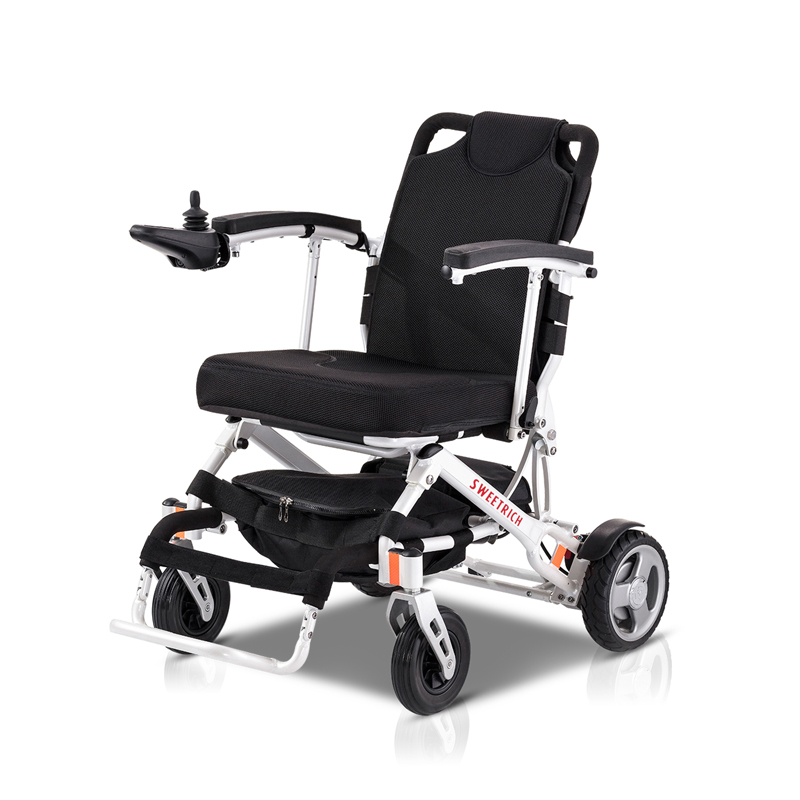
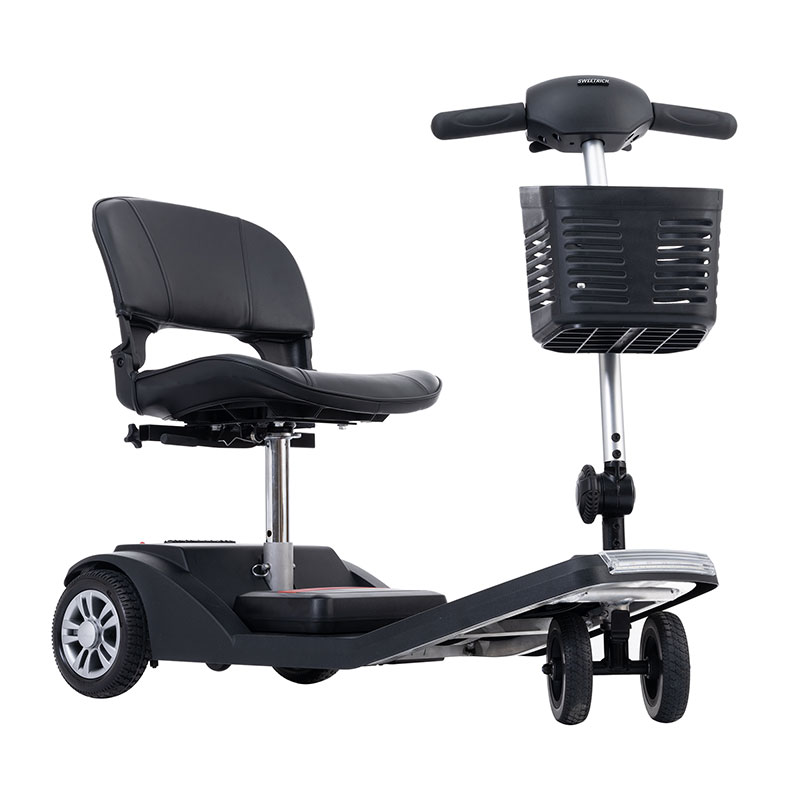
Modern personal mobility is no longer defined only by strength, size, or maximum power. For many users and families, the ideal travel power wheelchair must combine portability, stability, comfort, simple operation, compact storage, and dependable manufacturing quality. The iFold Light is designed around exactly these priorities. It is a lightweight, portable, folding electric wheelchair intended for travel-smart users who need a practical mobility solution for daily movement, family outings, shopping, short commutes, vacations, and compact indoor or outdoor use.
As a non-medical device for the U.S. market, this product is positioned as a convenient mobility aid rather than a clinical treatment product. Its value comes from the way it helps users move more independently while reducing the burden on caregivers and family members. With a folding structure, a lightweight frame, under-seat storage, solid tires, an electromagnetic brake system, lithium battery options, and dual 250W motors, the chair is engineered to make mobility easier, simpler, and more manageable.
Unlike many bulky electric wheelchairs that require complicated handling, large storage spaces, or heavy lifting, this model emphasizes rapid folding and travel readiness. It folds in just a second, weighs only 19 kg without the battery, and offers a compact size that can be more easily stored in a vehicle trunk, apartment, elevator corner, or travel accommodation. These features make it especially attractive for users who want a power wheelchair that fits naturally into real life rather than forcing daily routines to change around the equipment.
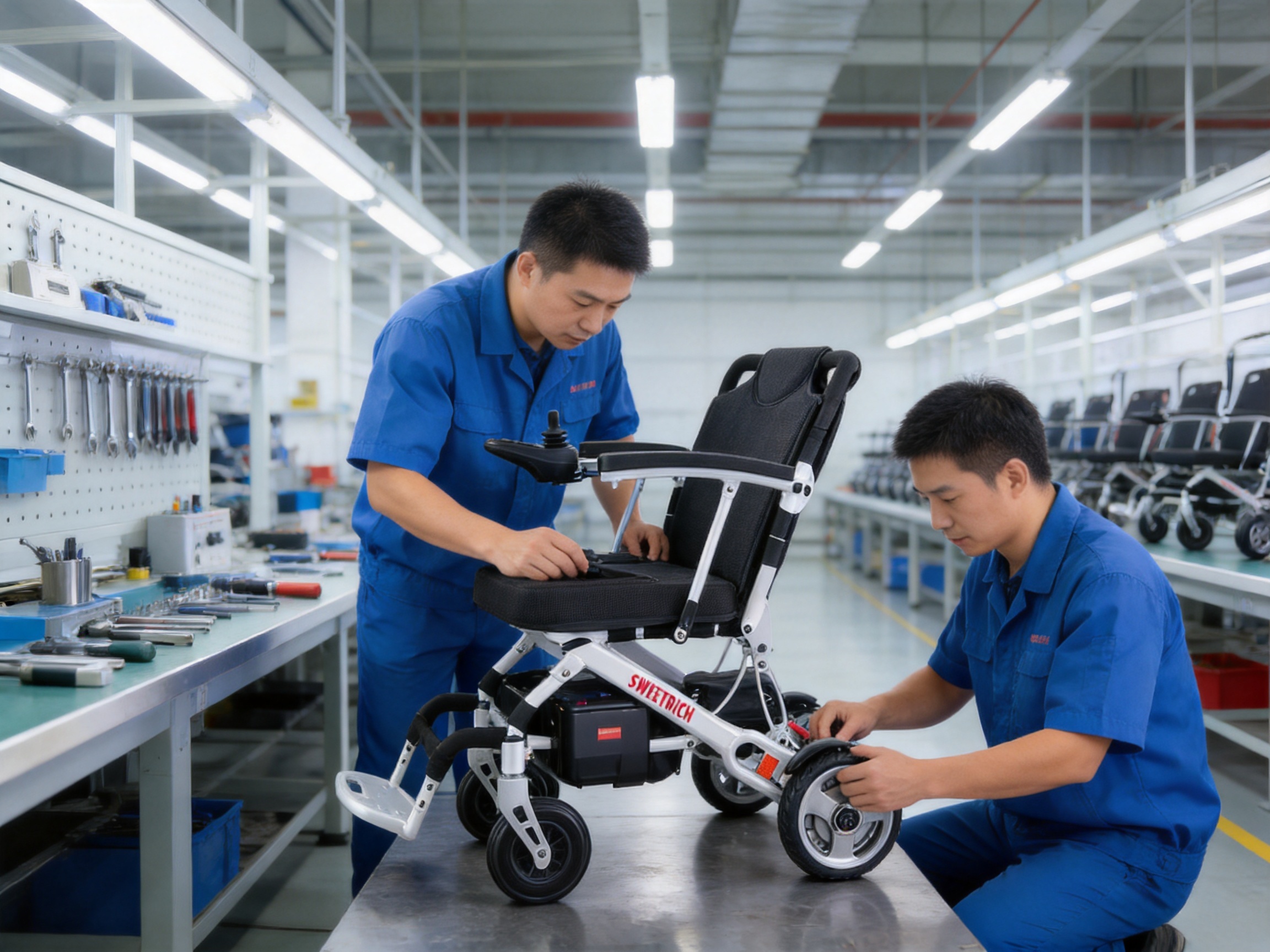
Behind the product is Suzhou Sweetrich Vehicle Industry Technology Co., Ltd., a high-tech mobility product manufacturer located in Suzhou Industrial Zone, Jiangsu, China. Established in 2011, the company has built more than ten years of experience in the research, development, and production of mobility scooters and power wheelchairs. With a 60-acre site and a 30,000-square-meter factory, the company combines product design, production management, control system development, and quality-focused manufacturing to support reliable mobility products for global markets.
This article explores the iFold Light in detail, including its design philosophy, performance specifications, practical advantages, competitive strengths, manufacturing background, quality considerations, user scenarios, and common questions. The purpose is to present a complete, product-centered view of why this lightweight folding electric wheelchair is a strong choice in the travel-smart mobility category.
Product Overview: A Travel-Smart Electric Wheelchair
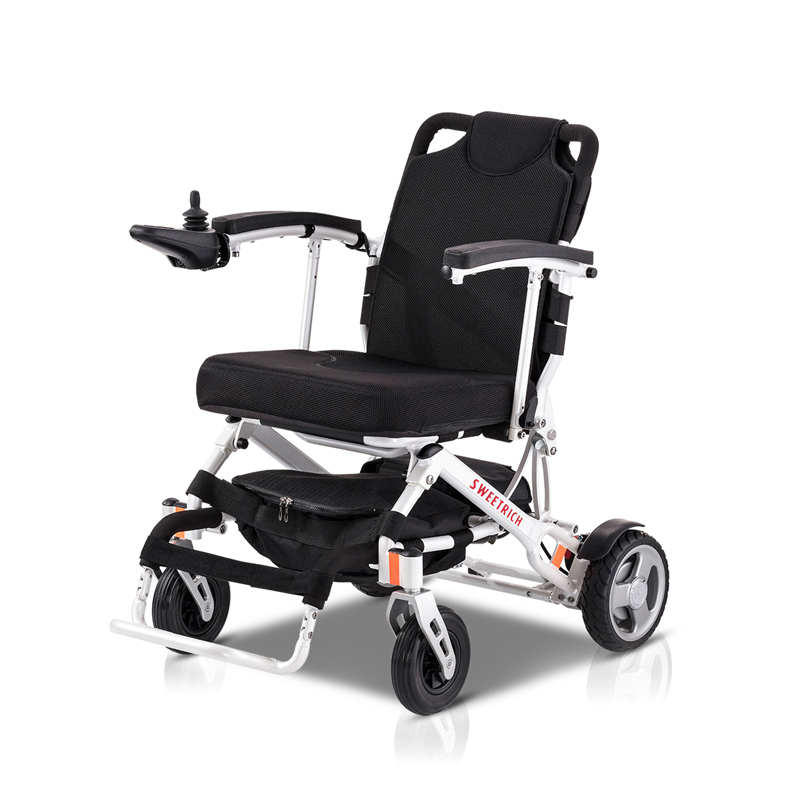
The iFold Light belongs to the Travel Smart Wheelchairs category, a category focused on mobility products that are easy to transport, quick to fold, compact to store, and convenient for users who do not want a large, heavy power chair. This product is designed for people who value independence and mobility but also need equipment that can accompany them to different places without excessive effort.
The overall dimensions are 970 mm in length, 560 mm in width, and 870 mm in height. These proportions create a practical balance between sitting comfort and maneuverability. The chair is narrow enough for many daily indoor spaces while maintaining a stable structure suitable for ordinary travel and short-distance mobility needs. Its compact design makes it convenient for home use, shopping centers, community environments, tourist locations, and family activities.
One of the product’s most important features is its folding speed. A chair that folds in just a second can save time and reduce frustration. For users who travel with family members, this matters significantly. A folding wheelchair that requires multiple steps, tools, or difficult handling can become a burden. A fast-folding design allows the user or caregiver to prepare the chair for transport with less effort, especially when moving between a car, a hotel, a restaurant, or a public location.
The product weighs 19 kg without the battery. In the electric wheelchair market, lower weight is a meaningful advantage because power chairs often become difficult to lift, store, or transport when their frames and components are too heavy. A lighter wheelchair can be more manageable for caregivers and family members, while also making travel planning easier. Although safe lifting practices are always important, a 19 kg body weight helps position this model as a practical portable option among powered mobility products.
The chair uses lithium battery technology with 24V/6AH and 24V/12AH options. The maximum driving range is listed as 12±2 km or 20±4 km depending on the battery configuration and operating conditions. This range supports many common daily activities, including indoor mobility, neighborhood movement, shopping trips, and travel-site use. Charging time is 3 to 6 hours with a 24V/2A charger, making overnight or scheduled charging convenient for regular use.
The dual motor system uses two 24V/250W motors, supported by a 24V/45A motor controller. Dual motors provide balanced drive capability and help support steady movement. The chair has a maximum forward speed of 6 km/h according to the specification table, while the feature summary also references speeds up to 10 km/h or 6 mph. Because product configurations and market settings can vary, practical operation should follow the supplied user manual and local safety requirements. The listed technical data shows that the chair is intended for controlled personal mobility rather than high-speed transport.
The braking system is electromagnetic, an important feature for electric wheelchairs because braking reliability directly affects user confidence. Electromagnetic brakes can help provide controlled stopping and parking support when the joystick is released or when the system is operating normally. Combined with solid tires, compact dimensions, and a stable driving design, the brake system contributes to safe and predictable movement in everyday situations.
Key Specifications
The following table summarizes the main technical information for the iFold Light. These specifications help users, distributors, and purchasing teams understand the product’s capabilities and compare it with other lightweight folding electric wheelchairs.
Item |
Specification |
Product Type |
Lightweight portable folding electric wheelchair |
Dimensions |
970 mm L × 560 mm W × 870 mm H |
Maximum Forward Speed |
6 km/h |
Maximum Driving Gradient |
6 degrees |
Maximum Driving Range |
12±2 km / 20±4 km |
Weight Capacity |
120 kg / 265 lbs |
Tire Sizes |
7 inch front tires / 8 inch rear tires |
Brake System |
Electromagnetic brake |
Battery Options |
Lithium 24V/6AH or 24V/12AH |
Charger |
24V/2A |
Charging Time |
3 to 6 hours |
Motor |
24V/250W × 2 pcs |
Motor Controller |
24V/45A |
Weight Without Battery |
19 kg |
Storage Feature |
Under-seat storage |
Tire Type |
Solid tires |
Lightweight Design as a Core Advantage
Weight is one of the strongest competitive factors in the portable electric wheelchair market. A chair may have many advanced functions, but if it is too heavy to lift, too large to store, or too difficult to fold, it can quickly become impractical for travel. The iFold Light directly addresses this issue by keeping the weight without battery at 19 kg.
This lightweight approach provides several practical advantages. First, it improves transport convenience. Families often need to place a wheelchair into a car trunk, move it through building entrances, or carry it over short distances when ramps or elevators are not available. A lighter frame makes these tasks easier than with many conventional powered wheelchairs. Second, it supports greater flexibility. Users can plan trips with less concern about whether the chair will be too difficult to handle. Third, it reduces the feeling that mobility equipment is a barrier. Instead of requiring special arrangements for every outing, the chair is more likely to fit into ordinary routines.
Many traditional electric wheelchairs focus mainly on heavy-duty structure and long-range power, but that often comes with considerable weight. Heavy chairs may be suitable for certain environments, but they are less convenient for travel-smart users. The iFold Light is built for a different purpose: it provides powered mobility in a compact, portable form. This focus gives it a competitive advantage for elderly users, disabled users, family caregivers, and distributors looking for a practical folding model.
The lightweight body also improves storage options. In apartments, small homes, retirement residences, and travel accommodations, storage space may be limited. A chair that can fold quickly and occupy less room is easier to live with. It can be stored near an entrance, beside a wardrobe, in a vehicle, or in another compact area without dominating the space. This is an important lifestyle advantage because mobility equipment should support independence without creating unnecessary household inconvenience.
Another advantage of a lightweight design is easier repositioning. Even when the user is not riding, caregivers may need to move the chair around the home, reposition it near a bed or chair, or prepare it for charging. A lighter electric wheelchair is generally easier to guide, park, and manage. This benefit is sometimes overlooked, but it can significantly improve the daily experience for families.
One-Second Folding for Practical Travel
The folding mechanism is one of the most important highlights of the iFold Light. A folding electric wheelchair must do more than collapse into a smaller shape; it must fold in a way that is intuitive, repeatable, and suitable for frequent use. The one-second folding concept reflects a design philosophy centered on convenience.
For travel users, time and simplicity matter. When arriving at a shopping center, airport drop-off area, family home, or public attraction, people do not want to spend several minutes assembling or adjusting mobility equipment. A fast-folding chair improves the rhythm of travel. It allows users and caregivers to transition quickly between walking areas, driving routes, and seated powered mobility.
Compared with competitors that require complicated frame locks, removable parts, or multi-step folding procedures, a chair that folds rapidly offers a clear advantage. Each additional step in the folding process creates an opportunity for confusion, user error, or physical strain. By reducing complexity, the iFold Light helps make the product more accessible to a wider range of users and caregivers.
The folding design also supports frequent use. Some products are described as foldable but are not convenient enough to fold every day. If the process is slow or physically difficult, users may avoid folding the chair unless absolutely necessary. A quick-folding design encourages practical daily transport. It means the chair can be folded after a short trip, stored after an outing, or prepared for a vehicle more naturally.
This advantage is especially valuable for families. Elderly users may travel with adult children, spouses, or caregivers who must manage luggage, shopping bags, doors, traffic, and other responsibilities at the same time. A mobility chair that folds quickly reduces pressure in these moments. It allows the group to focus more on the activity and less on equipment handling.

Compact Dimensions for Everyday Use
The iFold Light measures 970 mm in length, 560 mm in width, and 870 mm in height. These dimensions contribute to a compact mobility profile. A width of 560 mm is especially useful for moving through many indoor spaces, where wider powered chairs may feel difficult to maneuver. Compact dimensions are valuable in homes, elevators, corridors, hotel rooms, offices, shops, and community centers.
Compact design does not only mean smaller measurements. It also means smarter use of space. A travel-smart wheelchair must provide enough seating support and driving stability while minimizing unnecessary bulk. The iFold Light achieves this by focusing on the essentials: powered movement, foldability, storage, braking, solid tires, and a lightweight frame. This makes the product suitable for users who want simplicity rather than excessive size.
Compared with larger electric wheelchairs, compact folding models are easier to integrate into daily life. A large chair may require a specially adapted vehicle or dedicated storage area. In contrast, a compact folding wheelchair can often be used in more varied environments. This flexibility gives users greater freedom when choosing where to go and how to travel.
The compact body also supports indoor maneuverability. Many homes and public spaces were not designed around large mobility equipment. Doorways, hallways, dining areas, and furniture layouts can create obstacles. A narrower and shorter chair helps reduce these challenges. Although users should always confirm that a chair fits their own environment, the iFold Light’s dimensions make it a practical candidate for many everyday spaces.
For distributors and mobility product retailers, compact size is also a selling advantage. Products that are easy to demonstrate, store, ship, and display are more efficient in business operations. The chair’s folding structure and reduced weight can help simplify showroom handling and customer demonstrations. This supports both end-user satisfaction and commercial practicality.
Battery Options and Driving Range
The iFold Light offers lithium battery options of 24V/6AH and 24V/12AH, with a maximum driving range of 12±2 km or 20±4 km depending on configuration and use conditions. This flexibility allows different users to select a battery option that matches their expected travel needs.
Lithium batteries are widely used in modern mobility products because they offer good energy density and manageable weight compared with older battery technologies. For a lightweight folding wheelchair, battery selection is especially important. A heavy battery can reduce the benefit of a lightweight frame, while a weak battery can limit practical use. By offering two battery capacities, the product provides a balance between portability and range.
The 12±2 km range option may be sufficient for users who mainly need mobility support inside homes, residential communities, shopping centers, or short outings. The 20±4 km range option provides greater flexibility for longer daily activities, travel locations, and extended family trips. Actual range can vary depending on user weight, driving surface, slope, battery condition, speed, temperature, and driving habits. However, the available range options make the chair adaptable for different lifestyles.
Charging time is 3 to 6 hours with a 24V/2A charger. This practical charging window allows users to recharge the battery during downtime, overnight, or between outings. A clear charging routine is important for electric wheelchair users because reliable battery availability directly affects confidence. Users should always charge according to the product manual and avoid leaving the chair uncharged for extended periods.
Compared with some competing chairs that use heavier or less convenient battery configurations, the lithium system supports the iFold Light’s travel-focused identity. It helps maintain portability while delivering useful range. This is a key reason why lithium-powered folding wheelchairs are increasingly preferred by users who value independence and ease of movement.
Dual Motor System and Controlled Performance
The chair is equipped with two 24V/250W motors and a 24V/45A motor controller. This dual motor setup supports powered movement and helps provide balanced driving performance. In an electric wheelchair, the motor system must do more than move the chair forward. It must respond smoothly, support turning, manage different surfaces, and work with the braking and control systems to create a predictable ride.
A maximum driving gradient of 6 degrees indicates that the chair can handle moderate inclines within its intended operating conditions. This is useful for ramps, gently sloped sidewalks, and everyday environments. Users should always approach slopes cautiously and follow safety instructions, but the gradient rating provides helpful guidance about suitable terrain.
The maximum forward speed is specified as 6 km/h. This speed is appropriate for personal mobility in many indoor and pedestrian environments. It allows users to move efficiently without pushing the chair into a category that feels too fast for safe, comfortable operation. The feature summary also references speeds up to 10 km/h or 6 mph, so final performance may depend on configuration, market settings, or model version. In all cases, safe operation and local regulations should guide use.
The motor controller is a crucial part of the system. A responsive controller helps translate user input into smooth motion. This is especially important for elderly users or those who prefer gentle acceleration and controlled stopping. Poorly tuned controllers can make a chair feel jerky, difficult to manage, or uncomfortable. A well-designed controller contributes to confidence and usability.
Compared with basic low-cost competitors, a balanced dual motor and controller configuration can improve user experience. It can support better turning control, steadier movement, and more predictable response. These performance qualities may not be as visually obvious as frame design, but they are essential to daily satisfaction.
Electromagnetic Braking for Safety Confidence
The iFold Light uses an electromagnetic brake system. Braking is one of the most important safety-related features in any electric wheelchair. Users need to feel confident that the chair will stop when expected and remain controlled during ordinary use. Electromagnetic braking helps provide this confidence by supporting automatic and controlled braking behavior through the drive system.
In everyday use, users often stop and start frequently. They may pause at a doorway, wait for an elevator, slow down near pedestrians, or position the chair beside a table. A reliable braking system supports these small but important actions. It also helps reduce stress for caregivers, who need confidence that the chair is controllable in different environments.
Compared with products that depend on less advanced or less integrated braking methods, electromagnetic brakes can provide a more refined user experience. They are commonly valued in powered mobility because they help coordinate stopping with joystick release and motor control. This makes operation more intuitive, especially for users who want simple control.
Braking performance should always be considered together with driving habits and terrain. Users should avoid unsafe slopes, wet surfaces, high curbs, and sudden maneuvers. However, a strong braking design gives the product a valuable foundation for stable operation. This is one of the features that helps distinguish a quality folding electric wheelchair from a simple motorized chair.
Solid Tires for Low-Maintenance Mobility
The chair is equipped with solid tires, with 7-inch front tires and 8-inch rear tires. Solid tires offer a major practical advantage: they do not require inflation and are not vulnerable to ordinary punctures in the same way pneumatic tires are. For many users, this reduces maintenance concerns and improves confidence during daily outings.
Flat tires can be a serious inconvenience for wheelchair users. A puncture during a trip can interrupt plans, create safety concerns, and require immediate assistance. Solid tires reduce this risk. They are especially suitable for users who want simple, dependable operation without regular tire pressure checks.
Compared with air-filled tires, solid tires may provide a firmer ride, but they are often preferred for travel-smart wheelchairs because of their reliability and low maintenance. The iFold Light uses this practical tire solution to support its overall identity as a convenient, easy-to-own mobility product.
The front and rear tire sizes also reflect the product’s compact design. The 7-inch front tires support maneuverability, while the 8-inch rear tires contribute to drive stability. This configuration is appropriate for many ordinary indoor and smooth outdoor environments. Users should still avoid rough terrain that exceeds the chair’s intended use, but the solid tires help deliver dependable everyday performance.
Under-Seat Storage for Daily Convenience
Under-seat storage is a small feature with large practical value. Mobility users often need to carry personal items such as a phone, wallet, light shopping, documents, keys, medication containers, or travel accessories. A built-in storage area reduces the need to hang items from the armrest or carry a separate bag in an awkward position.
Convenient storage supports independence. If a user can keep essential items close and accessible, they may feel more comfortable going out alone or participating in activities without constantly asking for assistance. For family outings, under-seat storage also helps organize small items and reduce clutter.
Compared with competitors that focus only on frame and motor specifications, the inclusion of storage shows attention to real user needs. A mobility product is not only a machine; it is part of a person’s daily routine. Practical details such as storage, folding speed, compact size, and low maintenance tires can strongly influence satisfaction.
User Comfort and Independence
The central purpose of a lightweight folding electric wheelchair is to help users move with greater ease. Comfort and independence are therefore not secondary benefits; they are core design goals. The iFold Light is intended to support elderly and disabled users who want to participate more actively in daily life, family activities, and travel.
Independence can mean many things. For one user, it may mean moving from room to room without assistance. For another, it may mean joining family members at a park, shopping center, or tourist destination. For a caregiver, it may mean less physical pushing and lifting. For a distributor, it may mean offering a product that solves common mobility challenges in a practical way. The iFold Light addresses these needs through powered movement, folding portability, compact dimensions, and manageable weight.
Comfort also includes psychological comfort. Users are more likely to enjoy a product when it feels approachable rather than intimidating. A very large power wheelchair may feel excessive for travel or occasional mobility support. A compact folding model can feel more personal, flexible, and modern. It allows users to maintain mobility while preserving a sense of normal lifestyle.
The chair’s speed, braking, solid tires, and controlled motor system contribute to predictable operation. Predictability is essential for comfort because users must trust how the chair responds. When a product moves smoothly, stops reliably, and folds easily, it reduces anxiety and encourages more frequent use.
Advantages Over Conventional Competitors
The portable electric wheelchair market includes many product types, from heavy-duty chairs to ultra-light travel models. The iFold Light competes strongly by combining several practical advantages in one design. Its competitive strengths are especially clear when compared with heavier, less compact, or more complicated electric wheelchairs.
First, the 19 kg weight without battery gives it a portability advantage. Many conventional powered wheelchairs are too heavy for ordinary travel handling. They may require vehicle lifts, ramps, or strong caregivers. The iFold Light’s lighter construction makes it more suitable for users and families who want practical transport.
Second, the rapid folding mechanism improves usability. Some competing products are technically foldable but inconvenient in practice. If folding requires several steps, detachable components, or difficult lifting angles, the feature becomes less useful. A one-second folding concept makes the chair more aligned with real travel needs.
Third, the compact dimensions make it easier to use in daily environments. Large wheelchairs can be difficult in apartments, restaurants, elevators, hotel rooms, and narrow paths. The iFold Light’s width of 560 mm supports better maneuverability in many situations.
Fourth, the lithium battery options provide practical range flexibility. Users can choose between a lighter, shorter-range option and a higher-capacity option for longer outings. This flexibility helps the product serve different customer segments without changing the entire chair design.
Fifth, the electromagnetic brake system and dual motors support controlled operation. Low-cost competitors may focus on price while neglecting refined drive performance. A better-integrated motor, controller, and braking system can make the chair feel more stable and reliable.
Sixth, solid tires reduce maintenance. For users who do not want to worry about punctures or tire pressure, solid tires are a strong advantage. This is particularly useful for elderly users and families seeking a dependable, low-maintenance product.
Seventh, under-seat storage adds everyday convenience. Many technical comparisons overlook storage, but users quickly notice whether they have a practical place for personal items. This feature improves the chair’s usefulness in real outings.
Finally, the product is backed by an experienced manufacturer with a substantial production facility, long-term export experience, and a focus on mobility scooters and power wheelchairs. This manufacturing background helps separate the product from generic low-quality alternatives that may lack consistent production control, engineering depth, or after-sales cooperation experience.
Company Manufacturing Strength and Industrial Background
Suzhou Sweetrich Vehicle Industry Technology Co., Ltd. was established in 2011 and is located in Suzhou Industrial Zone, Jiangsu, China. The company covers an area of 60 acres and operates a 30,000-square-meter factory. This manufacturing scale supports research, development, production, assembly, quality management, and export operations for mobility scooters and power wheelchairs.
More than ten years of industry experience is a meaningful advantage in the mobility product sector. Electric wheelchairs and scooters require integration of mechanical structure, electrical systems, batteries, motors, controllers, brakes, ergonomics, and safety-related design. Experience helps a manufacturer understand how these systems work together in real use. It also helps improve production consistency and product reliability over time.
The company focuses on improving the well-being and convenience of elderly and disabled people. This mission is reflected in products that emphasize comfort, safety, independence, and daily usability. For the iFold Light, that means a design centered on portability, easy folding, dependable movement, and compact storage.
The company owns intellectual property rights for its electric scooters and power wheelchairs. Intellectual property ownership indicates investment in product development rather than simple copying. In a competitive market, this is important because original design capability can lead to better structural solutions, improved user experience, and stronger long-term product development.
Strict production management and scientific product design are also part of the company’s stated approach. In practical terms, these strengths support consistent component selection, assembly control, inspection routines, and product testing. For electric wheelchairs, manufacturing precision matters because small problems in frame alignment, wiring, controller setup, braking response, or battery installation can affect user satisfaction.
The company’s products are exported to America, Europe, Japan, Australia, the Middle East, Russia, and other markets. Export experience matters because different markets have different user expectations, regulatory environments, packaging needs, and after-sales requirements. A manufacturer serving multiple regions must develop stronger systems for product documentation, quality consistency, logistics, and customer communication.
Advanced Manufacturing Processes Behind the Product
A reliable folding electric wheelchair depends on more than attractive design. It requires coordinated manufacturing processes that bring together frame production, surface treatment, motor installation, battery integration, controller setup, braking assembly, tire fitting, folding mechanism alignment, and final inspection. The iFold Light benefits from the company’s production experience and factory capacity.
Frame manufacturing is a critical stage. A lightweight wheelchair must be strong enough to support the user while remaining portable. This requires careful material selection, accurate cutting, controlled forming, and precise assembly. Poorly made frames can create instability, uneven folding, or premature wear. A quality-focused production environment helps maintain structural consistency.
The product title references electroplating, indicating attention to surface finish and appearance. Surface treatment is important for both aesthetics and durability. A well-finished frame looks cleaner, feels more premium, and can offer better resistance to ordinary wear when properly processed. For travel products, appearance matters because users often bring the chair into public places, family events, and travel environments.
The folding mechanism must be manufactured with precision. Any folding chair depends on joints, locks, hinges, and alignment points. If these are poorly made, folding can become stiff, loose, noisy, or unsafe. A one-second folding design requires especially careful engineering because the mechanism must operate quickly while maintaining stability during use. Manufacturing control helps ensure that the folding action remains smooth and reliable over repeated operation.
Electrical assembly is another essential process. The motors, controller, battery, charger interface, joystick system, and electromagnetic brake must work together. Wiring should be properly routed and secured to avoid damage during folding, transport, or regular use. Connectors must be reliable. Battery installation must support safe handling and charging. A manufacturer with experience in powered mobility products is better prepared to manage these details.
Motor and controller integration affects driving quality. Even when two chairs use similar motor wattage, the user experience can differ greatly depending on controller tuning, assembly quality, and system matching. Smooth acceleration, predictable turning, and reliable stopping require coordinated engineering. This is one of the areas where an experienced manufacturer can create competitive advantage.
Final inspection is also vital. A folding electric wheelchair should be checked for frame stability, folding performance, brake response, motor operation, battery function, charger compatibility, tire installation, surface condition, and overall appearance. Quality management reduces the risk of defects reaching customers and supports long-term brand trust.
Design Philosophy: Mobility That Fits Real Life
The iFold Light is designed around a practical idea: mobility equipment should fit into the user’s life rather than forcing the user to adapt to the equipment. This philosophy is visible in the chair’s lightweight body, compact dimensions, quick folding, under-seat storage, lithium battery options, and low-maintenance solid tires.
Real life includes many transitions. A user may move from the bedroom to the kitchen, from the home to the car, from the car to a shopping center, from a sidewalk to an elevator, and from a hotel room to a tourist attraction. Each transition can be difficult if the wheelchair is too large or complicated. A travel-smart model reduces these friction points.
The chair is also suitable for family-centered mobility. Many elderly or disabled users travel with relatives who provide support but also need convenience. A portable folding power wheelchair can reduce pushing effort and make family outings more enjoyable. Instead of limiting activities to places with rental wheelchairs or short walking distances, families can plan more freely.
For users who value dignity, a compact powered wheelchair can provide emotional benefits. Being able to move independently, control direction, and participate in daily routines can improve confidence. While the product is not presented as a medical device for the U.S. market, it can still support a more active and comfortable lifestyle by providing convenient personal mobility.
Travel Applications and Daily Scenarios
The iFold Light is especially useful in travel and daily outing scenarios. Its folding structure and lightweight design make it suitable for transportation by car, storage in compact spaces, and movement through pedestrian environments. Users should always check transport rules and battery policies when traveling by air, train, bus, or cruise, but the product’s portable design supports travel planning.
In a family car scenario, the chair can be folded quickly and placed into the vehicle more easily than many large power chairs. This helps users attend family dinners, medical appointments, community activities, religious services, shopping trips, and social events. The faster the chair can be loaded and unloaded, the more likely it is to be used regularly.
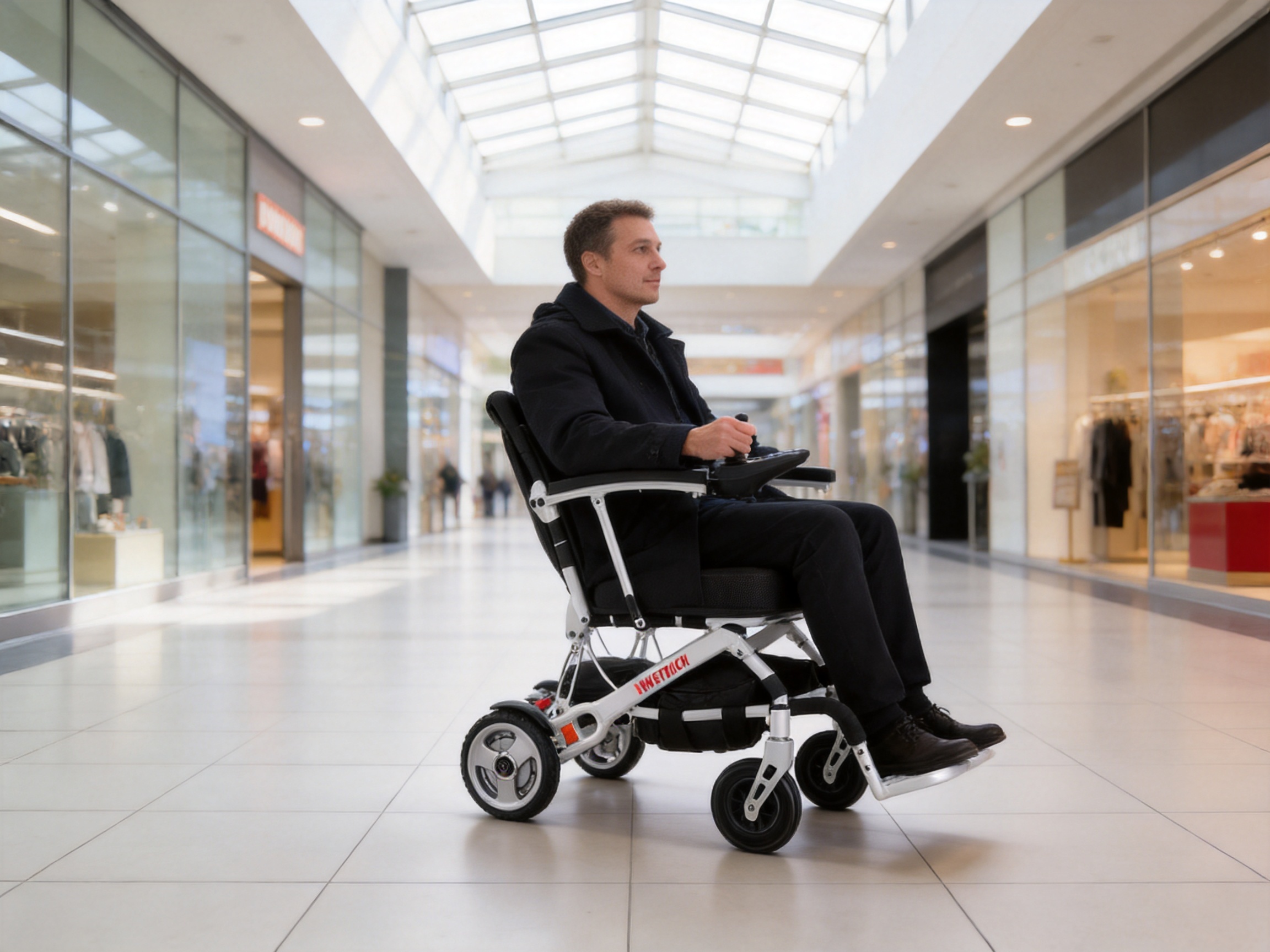
In shopping centers, the compact size and powered movement help users conserve energy while moving between stores. Under-seat storage provides a place for small personal belongings. Solid tires reduce maintenance concerns while navigating smooth indoor floors.
In hotels and travel accommodations, storage space can be limited. A folding chair can be stored more conveniently in a room, near a charging outlet, or in a vehicle. The 3 to 6 hour charging time allows users to recharge during rest periods.
In residential communities, the chair can support short outdoor movement on suitable surfaces. The driving range options allow users to select a configuration that matches daily distance needs. The electromagnetic brake system and controlled speed support predictable operation in shared pedestrian areas.
In indoor home use, the 560 mm width helps with maneuverability in many spaces. Users should measure their own doors and hallways before purchase, but the chair’s compact dimensions make it a practical choice for many homes where larger power chairs may feel inconvenient.
Safety and Responsible Use
Safe operation is essential for any powered mobility product. The iFold Light includes features such as electromagnetic braking, solid tires, controlled speed, and dual motors, but users must still follow proper operating practices. Safety depends on both product design and user behavior.
Users should read the product manual before operation. They should understand how to power the chair on and off, control speed, fold and unfold the frame, charge the battery, use the brake system, and inspect the chair before travel. Caregivers should also learn these procedures if they assist with transport or daily use.
The maximum weight capacity is 120 kg or 265 lbs. This limit should not be exceeded. Overloading a wheelchair can affect performance, braking, frame durability, battery range, and overall safety. Users should also consider carried items when assessing load.
The maximum driving gradient is 6 degrees. Users should avoid slopes beyond the recommended limit and approach inclines slowly. Wet, uneven, loose, or slippery surfaces can reduce traction and increase risk. The chair is best suited for ordinary daily environments rather than rough off-road terrain.
Battery care is also important. The lithium battery should be charged with the supplied or approved charger. Charging should occur in a suitable environment according to instructions. Users should avoid damaging the battery, exposing it to improper conditions, or using incompatible charging equipment.
Before each outing, users or caregivers should check that the battery has sufficient charge, tires are in good condition, the chair unfolds and locks properly, the joystick responds correctly, and brakes function as expected. These simple checks support dependable use.
Why Manufacturing Quality Matters in Folding Electric Wheelchairs
In the mobility market, product appearance alone is not enough. A folding electric wheelchair must perform reliably over repeated use. Manufacturing quality affects safety, comfort, durability, and user trust. The iFold Light benefits from a company background that emphasizes production management, scientific design, and mobility product specialization.
Folding structures are particularly sensitive to manufacturing quality. Hinges, joints, fasteners, and frame geometry must remain accurate. A poorly manufactured folding chair may develop looseness, uneven folding, or structural noise. In contrast, a well-produced folding mechanism can maintain a more stable feel and smoother operation.
Electrical quality is equally important. Mobility products depend on consistent communication between controller, motor, battery, and brake. Loose wiring, low-quality connectors, or poor assembly can cause performance issues. A professional production environment helps reduce these risks through standard processes and inspection.
Surface finishing also matters. A clean, durable finish improves product appearance and can help protect components from ordinary wear. For a travel wheelchair that may be frequently folded, loaded, unloaded, and stored, finish quality contributes to long-term satisfaction.
Quality management supports distributors as well as end users. Retailers and importers need products that arrive consistently, perform as specified, and generate fewer service issues. A manufacturer with export experience and established production capability can offer stronger cooperation than small suppliers with limited quality systems.
Global Market Suitability
The iFold Light is suitable for markets where users value compact powered mobility, simple transport, and reliable manufacturing. The company exports products to regions including America, Europe, Japan, Australia, the Middle East, Russia, and other markets. This global orientation influences product expectations and production practices.
Different regions have different mobility habits. In dense urban areas, compact width and folding storage are highly valuable. In suburban areas, car transport may be a major priority. In travel markets, lightweight construction and battery range are key purchasing factors. The iFold Light addresses all of these needs through its core design.
For the U.S. market, the product is identified as a non-medical device. This positioning is important for communication and compliance. Buyers should understand the product category and intended use clearly. It is a mobility aid for convenience and independent movement, not a medical treatment device.
For distributors, the chair offers a marketable combination of features: lightweight frame, fast folding, lithium battery, dual motors, electromagnetic brake, solid tires, compact body, and under-seat storage. These are easy-to-explain advantages that address real customer concerns.
Maintenance and Ownership Experience
Ownership experience is a major factor in customer satisfaction. A good folding electric wheelchair should not require complicated daily maintenance. The iFold Light’s solid tires, lithium battery, compact frame, and folding structure support a relatively convenient ownership routine.
Users should keep the chair clean and dry, especially around electrical components and folding joints. After outdoor use, dust or debris should be removed. The folding mechanism should be checked regularly for smooth operation. Fasteners should be inspected according to the user manual or service guidance.
The battery should be charged regularly and stored properly. Lithium batteries generally perform best when cared for according to manufacturer instructions. Users should avoid complete neglect, improper chargers, or harsh storage conditions. If the chair will not be used for a long period, battery storage recommendations should be followed.
Solid tires reduce the need for inflation, but they should still be inspected for wear, cracks, or embedded debris. The joystick and controller area should be protected from impact and moisture. The electromagnetic brake system should be tested in a safe area before important outings.
Compared with more complex power chairs, the iFold Light is designed to be easier to manage. This is an important competitive advantage because many users and caregivers prefer products that are practical rather than overly complicated. A chair that is easy to charge, fold, store, and inspect is more likely to become part of daily life.
Purchasing Considerations
Before purchasing a lightweight folding electric wheelchair, users should consider personal needs, home environment, travel habits, body weight, expected range, vehicle storage space, and caregiver support. The iFold Light offers strong portability and travel convenience, but the best product choice always depends on individual circumstances.
Users should measure doorways, hallways, elevators, vehicle trunks, and storage spaces. The chair’s 970 mm × 560 mm × 870 mm dimensions provide a useful reference. If the chair will be transported frequently, users should confirm that the folded size and weight are manageable for the person who will lift or load it.
Battery range should be selected based on typical daily use. A shorter-range battery may be lighter and sufficient for indoor or short outings, while the larger capacity option supports longer trips. Users should remember that range varies with terrain, slope, user weight, speed, and battery condition.
Users should also consider surface conditions. The chair is designed for ordinary mobility environments, not rugged off-road use. Smooth floors, sidewalks, ramps within rating, shopping centers, homes, and travel locations are more appropriate than rough terrain, steep slopes, or muddy paths.
For buyers comparing multiple products, it is important to look beyond price. A lower-cost chair may seem attractive, but if it is heavy, difficult to fold, poorly finished, or unreliable, the long-term value may be lower. The iFold Light’s combination of lightweight construction, folding convenience, electromagnetic braking, lithium battery options, and experienced manufacturing support offers a balanced value proposition.
Q&A Section
What type of user is this folding electric wheelchair designed for?
It is designed for users who need a lightweight, portable, powered mobility solution for travel, daily outings, indoor movement, shopping, family activities, and compact storage. It is especially suitable for elderly and disabled users who want greater independence and for families who need a chair that is easier to transport than many conventional electric wheelchairs.
Is this product a medical device?
For the U.S. market, it is identified as a non-medical device. It is intended as a personal mobility aid for convenience and independent travel, not as a medical treatment product.
How heavy is the chair?
The chair weighs 19 kg without the battery. This lightweight design is one of its main advantages, especially for users and caregivers who need to fold, store, move, or transport the chair frequently.
How quickly does it fold?
The product is designed to fold in just a second. This fast-folding capability makes it highly practical for travel, car loading, storage, and daily transitions between different environments.
What is the maximum weight capacity?
The maximum weight capacity is 120 kg or 265 lbs. Users should not exceed this limit because overloading may affect safety, performance, braking, range, and durability.
What battery options are available?
The chair uses lithium battery options of 24V/6AH and 24V/12AH. The corresponding maximum driving range is listed as 12±2 km or 20±4 km, depending on battery configuration and operating conditions.
How long does charging take?
Charging time is approximately 3 to 6 hours with a 24V/2A charger. Users should follow the manufacturer’s charging instructions for best performance and battery care.
What kind of brake system does it use?
The chair uses an electromagnetic brake system. This supports controlled stopping and helps improve user confidence during ordinary operation.
What are the main advantages over heavier electric wheelchairs?
The main advantages include lighter weight, faster folding, easier transport, compact storage, better suitability for travel, under-seat storage, solid low-maintenance tires, and practical lithium battery range options. These benefits make it more convenient for users who do not want a bulky or difficult-to-handle power chair.
Can it be used outdoors?
It can be used in suitable outdoor environments such as smooth sidewalks, community paths, and gentle ramps within the rated gradient. It is not intended for rough off-road terrain, steep slopes, mud, or unsafe surfaces.
What is the maximum driving gradient?
The maximum driving gradient is 6 degrees. Users should approach slopes carefully and avoid inclines beyond the recommended rating.
Why are solid tires useful?
Solid tires reduce maintenance because they do not require inflation and are less vulnerable to ordinary punctures. This is useful for users who want a dependable chair with fewer tire-related concerns.
Who manufactures the product?
The product is manufactured by Suzhou Sweetrich Vehicle Industry Technology Co., Ltd., a high-tech mobility product company established in 2011 in Suzhou Industrial Zone, Jiangsu, China. The company has more than ten years of experience in mobility scooters and power wheelchairs.
What manufacturing strengths support the product?
The company operates a 30,000-square-meter factory on a 60-acre site, has accumulated long-term research and production experience, owns intellectual property rights for electric scooters and power wheelchairs, and exports to multiple global markets. These strengths support product development, manufacturing consistency, and quality management.
Conclusion: A Practical Balance of Portability, Power, and Manufacturing Confidence
The iFold Light lightweight folding electric wheelchair is designed for users who want mobility without unnecessary complexity. Its key strengths include a 19 kg body weight without battery, one-second folding, compact dimensions, lithium battery options, electromagnetic braking, dual 250W motors, solid tires, under-seat storage, and a practical travel-smart design. These features make it highly competitive in the portable electric wheelchair category.
Its advantages are especially clear when compared with heavier or less convenient electric wheelchairs. Many competitors may offer powered movement, but not all combine portability, compact storage, fast folding, controlled braking, low-maintenance tires, and experienced manufacturing support. The iFold Light brings these qualities together in a product intended for real daily use.
The manufacturing background further strengthens the product’s value. Suzhou Sweetrich Vehicle Industry Technology Co., Ltd. has more than a decade of experience, a large production facility, global export reach, intellectual property ownership, and a focus on quality-first production management. These company strengths help support the chair’s reliability, consistency, and market suitability.
For users, families, retailers, and distributors seeking a lightweight travel electric wheelchair, this model offers a balanced solution. It is not simply a smaller power chair; it is a mobility product designed around convenience, independence, and practical transport. By combining thoughtful engineering with manufacturing experience, it provides a strong option for modern personal mobility needs.
References
Product technical specification sheet for iFold Light lightweight portable folding electric wheelchair.
Company profile of Suzhou Sweetrich Vehicle Industry Technology Co., Ltd.
General principles of powered wheelchair design, portability, battery care, and user safety.
Industry knowledge on lithium battery mobility products, electromagnetic braking systems, and folding wheelchair structures.
International mobility product market observations relating to travel power wheelchairs, elderly mobility aids, and compact electric wheelchairs.