
 +86-(0)512-82283871
Content
- 1 Product Positioning: A Travel Smart Scooter for Daily Independence
- 2 Core Specifications
- 3 Four-Wheel Stability for Everyday Confidence
- 4 Compact Size Without Losing Practical Capacity
- 5 Lithium Battery Power for Modern Mobility
- 6 Controlled Speed for Safer Daily Travel
- 7 Electromagnetic Braking as a Key Advantage
- 8 Motor and Controller Selection for Reliable Operation
- 9 Ready-to-Ship Value for Distributors and Buyers
- 10 Designed for the U.S. Non-Medical Device Market
- 11 Comfort and User Experience
- 12 How the Scooter Compares with Common Competitors
- 13 Manufacturing Strength Behind the Product
- 14 Advanced Production Management and Quality Control
- 15 Research and Development as a Competitive Advantage
- 16 International Market Experience
- 17 Practical Use Scenarios
- 18 Buyer Considerations Before Purchase
- 19 Maintenance and Long-Term Ownership
- 20 Why This Scooter Stands Out
- 21 Q&A Section
- 21.1 What type of user is this scooter designed for?
- 21.2 Is this product a medical device?
- 21.3 What is the maximum speed?
- 21.4 What is the driving range?
- 21.5 What is the weight capacity?
- 21.6 What kind of battery does it use?
- 21.7 How long does charging take?
- 21.8 What braking system does the scooter use?
- 21.9 Why is the four-wheel design important?
- 21.10 How does it compare with heavier scooters?
- 21.11 How does it compare with very lightweight scooters?
- 21.12 What makes the manufacturer reliable?
- 22 Conclusion
- 23 References
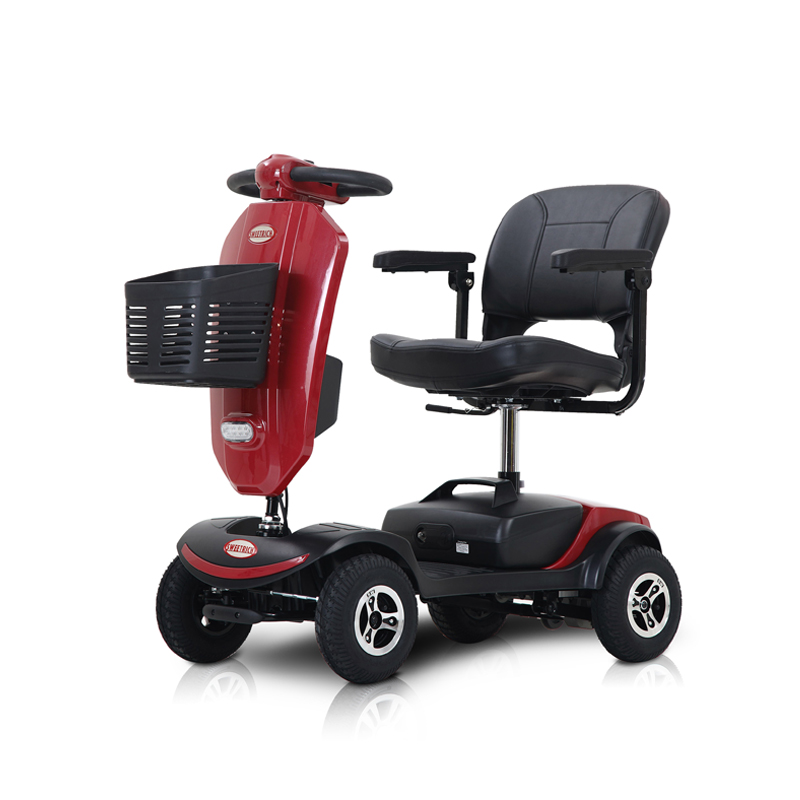
- 24 Product: SW 1000F Ready to ship mobility scooter 9 inch 4 wheels scooters
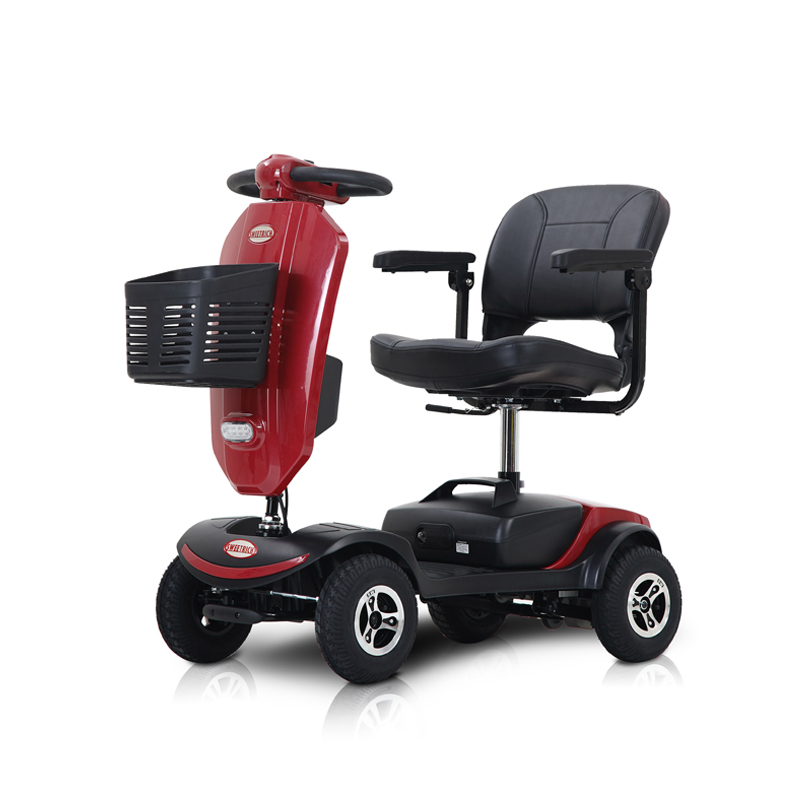
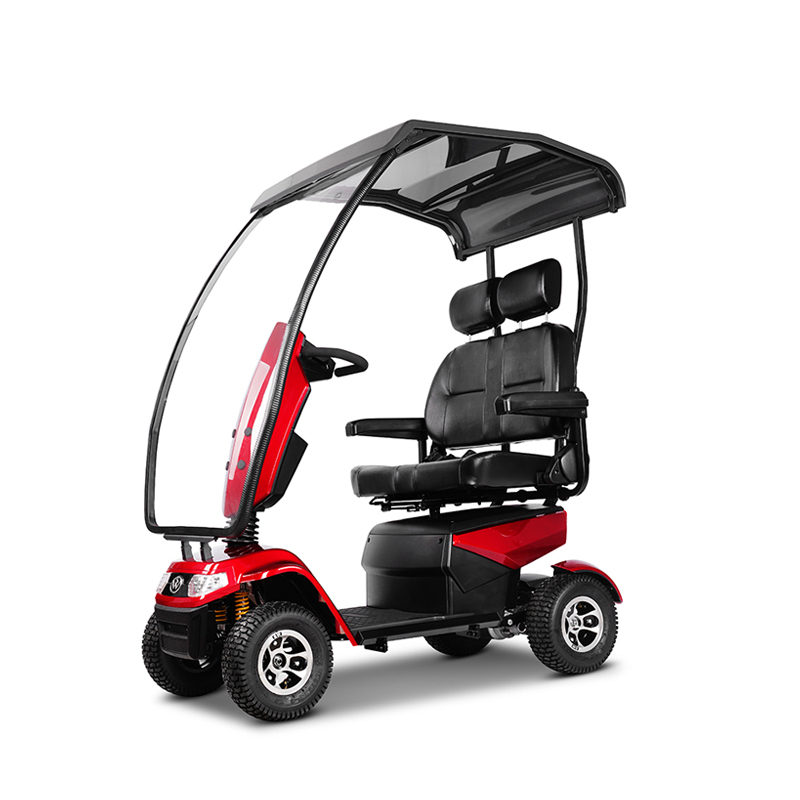
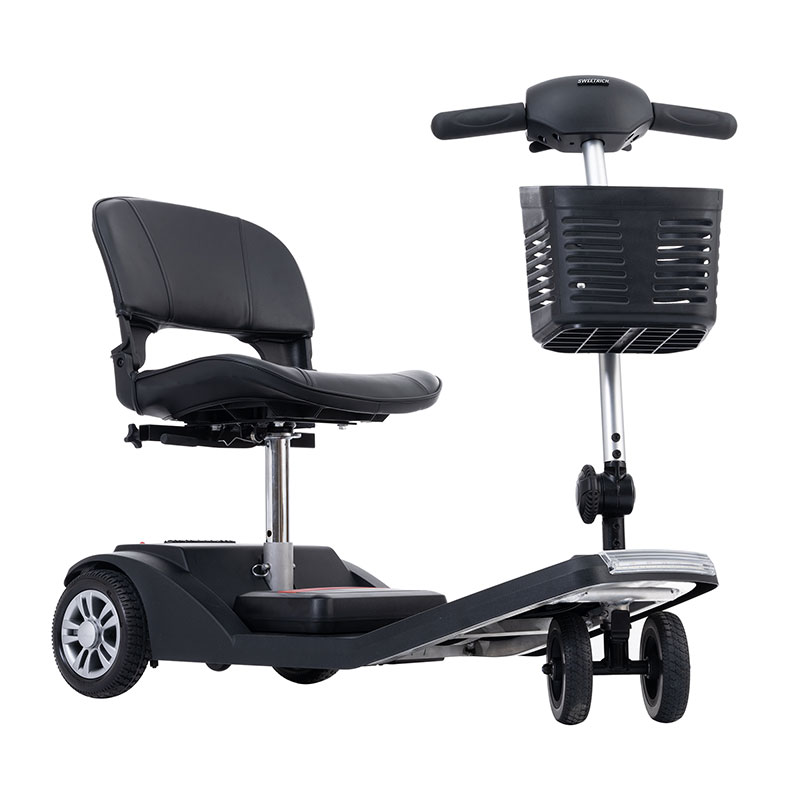
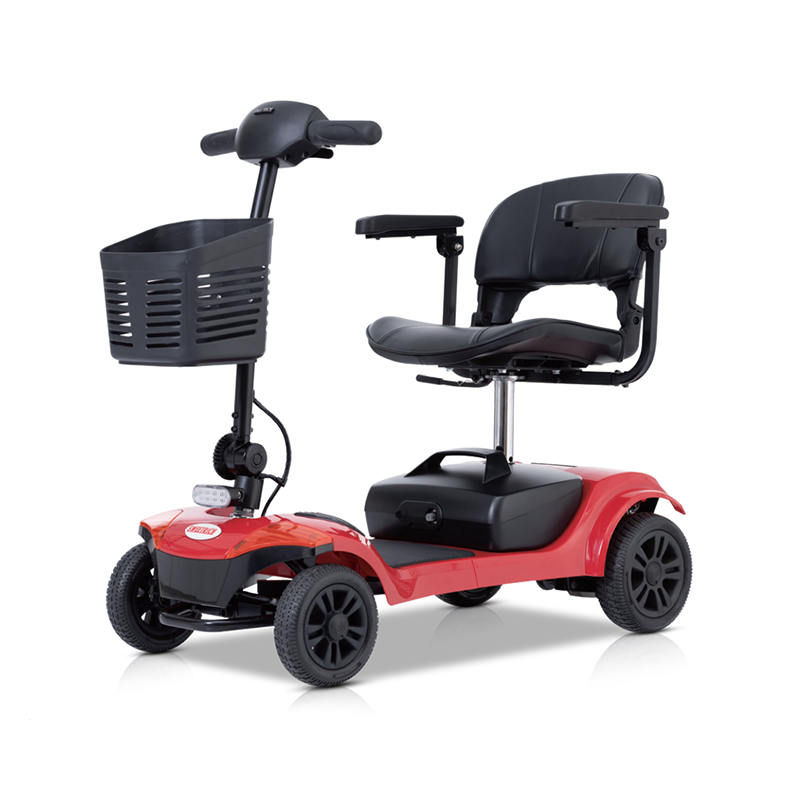
Modern personal mobility is not only about moving from one place to another; it is about confidence, independence, practicality, and comfort in daily life. The SW 1000F ready-to-ship mobility scooter is designed for users who want a compact four-wheel scooter that is easy to understand, convenient to operate, and suitable for everyday travel needs. Positioned within the Travel Smart Scooters category, this model combines a practical frame size, a lithium battery system, electromagnetic braking, and a reliable drive configuration to support stable personal transportation.
This scooter is especially relevant for customers, distributors, and mobility product buyers seeking a non-medical device for the U.S. market. It is built to serve personal transportation and lifestyle mobility needs rather than to be presented as a medical treatment device. That distinction is important because many modern users are looking for accessible, travel-friendly products that help them handle shopping, neighborhood travel, family visits, outdoor paths, exhibitions, campuses, resorts, and large indoor environments with greater ease.
The product’s strongest appeal lies in its balanced design. It is compact enough for convenient handling, yet strong enough to support a weight capacity of 136 kg, or 300 lbs. Its maximum forward speed of 8 km/h, or 5 mph, gives users a controlled pace suitable for many common environments. Its lithium 24V/20AH battery supports a maximum driving range of approximately 15 to 25 km, or 9.5 to 15.5 miles, depending on real-world conditions such as rider weight, terrain, surface type, temperature, and driving style.
Beyond the specifications, the value of this scooter is also connected to the manufacturer’s long-term focus on mobility scooters and electric wheelchairs. With more than a decade of industry experience, a large production base, dedicated research and development capability, and international export experience, the company behind this model demonstrates the kind of manufacturing foundation that buyers often look for when selecting a reliable supplier.
SW 1000F Ready to ship mobility scooter 9 inch 4 wheels scooters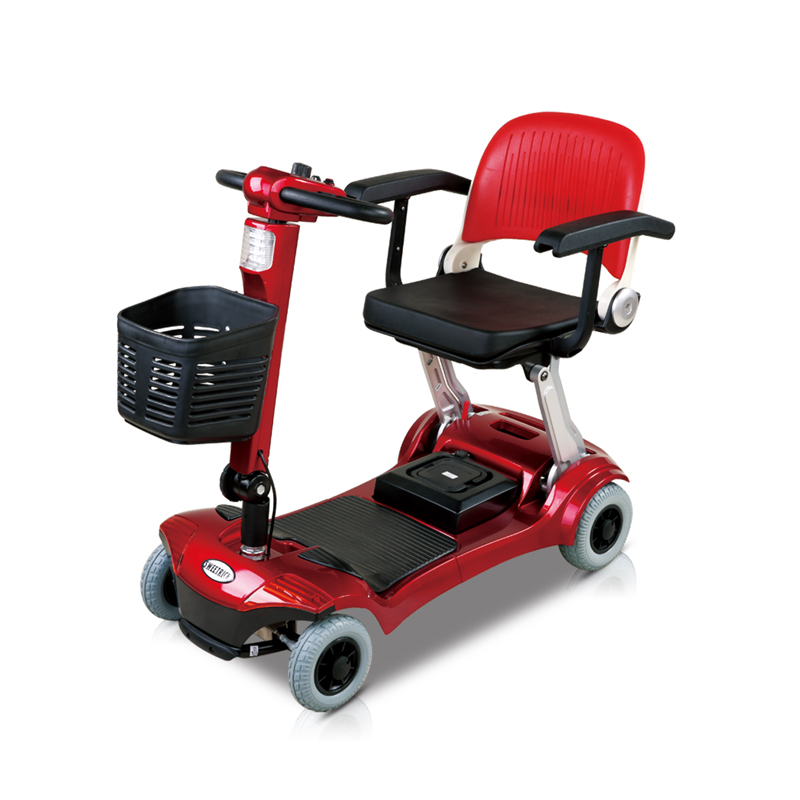
Product Positioning: A Travel Smart Scooter for Daily Independence
The SW 1000F is built for practical daily use. It is not designed as an oversized road vehicle, nor is it intended to replace all-terrain equipment. Instead, it occupies a valuable middle ground: a four-wheel mobility scooter that offers stability, manageable speed, compact dimensions, and a user-friendly operating experience. For many users, this middle ground is exactly where the most practical benefits are found.
Many competing scooters focus heavily on one feature while compromising others. Some are very compact but sacrifice stability or capacity. Others are powerful but too large and heavy for convenient travel. Some models have acceptable performance but use lower-grade control systems or braking designs that may reduce the overall feeling of confidence. The SW 1000F addresses these concerns by offering a sensible mix of size, range, braking, motor control, and load capacity.
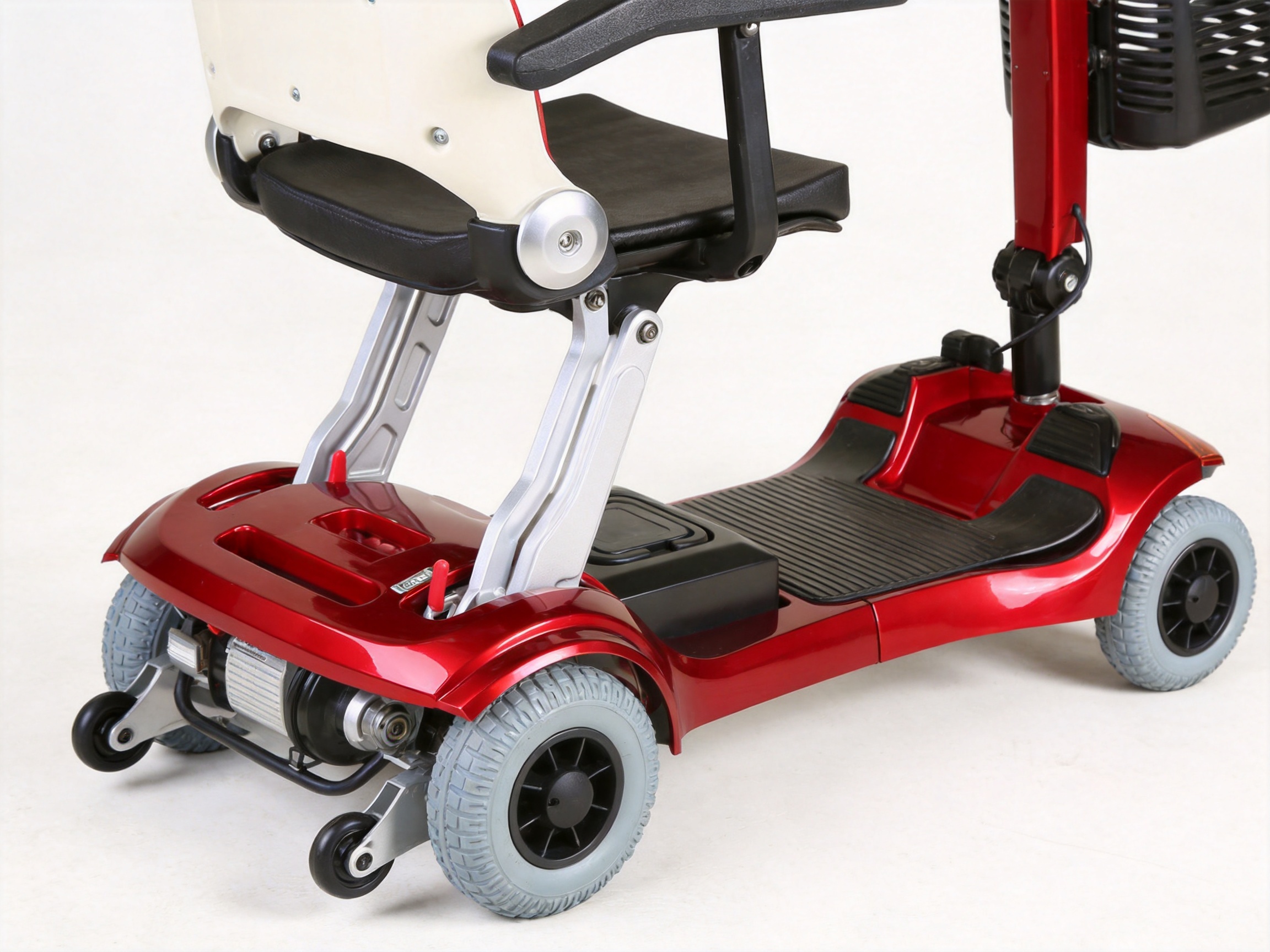
Its dimensions of 1000 x 525 x 920 mm make it easy to place in residential, commercial, and leisure environments where space matters. The scooter’s width helps it remain manageable in tighter areas, while the four-wheel structure improves balance compared with many three-wheel alternatives. Four-wheel scooters are generally favored by users who prefer a more planted riding feeling, especially during straight-line movement and when navigating common outdoor surfaces.
The scooter’s maximum driving gradient of 10 degrees adds usefulness in areas where users may encounter moderate slopes, ramps, driveways, and inclined paths. While users should always follow safe operating practices and avoid challenging terrain beyond the product’s intended capability, this gradeability makes the model more versatile than scooters designed only for perfectly flat surfaces.
Core Specifications
The following table summarizes the main technical information for the SW 1000F model.
Item |
Specification |
Dimensions |
1000 x 525 x 920 mm |
Maximum Forward Speed |
8 km/h, or 5 mph |
Maximum Driving Gradient |
10 degrees |
Maximum Driving Range |
15 to 25 km, or 9.5 to 15.5 miles |
Weight Capacity |
136 kg, or 300 lbs |
Tire Sizes |
7 x 2.5 inches front, 8 x 3 inches rear |
Brake System |
Electromagnetic brake |
Battery |
Lithium 24V/20AH |
Charger |
DC24V2A, AC100-240V input |
Charging Time |
8 to 10 hours |
Motor |
24V/270W, Taiwan |
Motor Controller |
24V/50A, PG |
Heaviest Part |
36.3 kg, or 80 lbs |
Four-Wheel Stability for Everyday Confidence
One of the most important advantages of the SW 1000F is its four-wheel platform. In the mobility scooter market, users often compare three-wheel and four-wheel options. Three-wheel models can offer a tighter turning experience, but four-wheel scooters are often preferred for their more stable base. For users who value reassurance, especially when riding outdoors, the four-wheel structure can be a major advantage.
The tire arrangement, with 7 x 2.5 inch front tires and 8 x 3 inch rear tires, is designed to support a balanced driving profile. The rear tires provide a broader contact area than the front tires, supporting traction and load distribution. This setup helps the scooter feel steady in daily situations such as moving through parking areas, traveling along sidewalks, entering community facilities, or riding through large indoor spaces.
Compared with competitors that use smaller tires or less robust rear tire profiles, this configuration gives the SW 1000F a more practical contact footprint. While it is not presented as a heavy-duty off-road scooter, it is better suited to everyday mixed-use environments than ultra-light scooters that prioritize low weight above all other considerations.
Users choosing a mobility scooter often want to feel that the machine supports them rather than requiring constant adjustment and attention. A stable four-wheel design helps reduce the mental effort involved in operation. This is particularly important for elderly users and individuals who want to focus on their destination rather than the mechanics of movement.
Compact Size Without Losing Practical Capacity
The SW 1000F has a compact footprint, but it still supports a 136 kg, or 300 lb, weight capacity. This balance is one of its most attractive market advantages. In many competing compact scooters, portability can come at the cost of reduced capacity. Buyers may find small models that are easy to handle but cannot support a wider range of users. On the other hand, high-capacity scooters can become too large for convenient storage, transport, or indoor maneuverability.
This model sits in a practical zone between those extremes. Its dimensions allow it to serve as a daily companion in real-life spaces, while the 300 lb capacity helps meet the needs of a broader user group. For distributors and dealers, this broader appeal is important because it can simplify inventory planning. One model that fits many common needs is often easier to promote, demonstrate, and support.
The heaviest part is listed as 36.3 kg, or 80 lbs. This specification is particularly important for customers who need to understand handling requirements before purchase. Honest weight information helps users and caregivers make realistic decisions. Some competitors promote portability without clearly communicating the heaviest component, which can lead to disappointment. By presenting this figure directly, the product allows buyers to evaluate whether it suits their transportation and storage plans.
Compact design also matters for homes, apartments, senior living communities, hotels, and public facilities. A scooter that is too wide or long may become inconvenient in elevators, corridors, entryways, and storage rooms. The SW 1000F’s manageable proportions help make it a more flexible choice for everyday environments.

Lithium Battery Power for Modern Mobility
The scooter uses a lithium 24V/20AH battery system. Lithium batteries are widely preferred in modern mobility applications because they can offer good energy density, practical weight characteristics, and reliable power delivery when properly designed and managed. Compared with many traditional lead-acid battery systems, lithium systems can help reduce overall battery burden while supporting usable travel range.
The specified driving range of 15 to 25 km, or 9.5 to 15.5 miles, gives users enough flexibility for many ordinary routines. A user may travel from home to a nearby store, move around a community center, enjoy a park pathway, or attend a large event without feeling restricted to very short distances. Actual range will always vary, but the published range places the SW 1000F in a competitive position for travel smart use.
Charging time is listed as 8 to 10 hours with a DC24V2A charger and AC100-240V input. The wide AC input range is beneficial for international distribution and for users in different electrical environments. Overnight charging is a familiar routine for many personal electric mobility products. Users can charge the scooter after daily activity and prepare it for the next day.
Compared with scooters that still rely on heavier traditional battery systems, the SW 1000F’s lithium configuration supports a more modern product profile. For dealers and procurement teams, lithium power can also be an appealing selling point because many consumers now recognize lithium technology from electric bicycles, power tools, consumer electronics, and electric vehicles.
Controlled Speed for Safer Daily Travel
The maximum forward speed of 8 km/h, or 5 mph, reflects a practical design philosophy. A mobility scooter does not need excessive speed to be useful. In many daily environments, too much speed can reduce comfort and increase risk. A controlled maximum speed helps the scooter remain suitable for common pedestrian-oriented areas.
This speed level allows users to move faster than walking pace while maintaining a sense of control. It is appropriate for shopping centers, sidewalks, residential communities, campuses, exhibitions, parks, and similar environments where smooth and predictable movement matters. For elderly users, family members, and caregivers, a moderate top speed can be reassuring.
Some competitor products use higher speed as a headline feature, but speed alone does not create a better scooter. In real mobility use, the quality of acceleration, braking, steering response, and stability often matters more than maximum speed. The SW 1000F focuses on a comfortable and responsible travel speed that supports independence without encouraging unsafe operation.
The use of a PG 24V/50A motor controller is another advantage. A well-selected controller helps manage power delivery, acceleration response, and overall driving smoothness. In mobility products, a quality controller can significantly affect user confidence. Sudden starts, jerky motion, or inconsistent power delivery can make a scooter feel difficult to operate. A stable control system supports a more refined experience.
Electromagnetic Braking as a Key Advantage
The electromagnetic brake system is one of the product’s most important features. Braking is central to mobility scooter safety and user confidence. An electromagnetic brake is designed to provide automatic holding and stopping support according to the scooter’s control logic. This helps create a more controlled operating experience, especially when the user releases the throttle or needs to stop in ordinary driving situations.
Compared with basic mechanical braking systems, electromagnetic brakes can offer a more integrated approach to mobility scooter control. Mechanical systems may require greater user strength or more frequent adjustment. Electromagnetic braking can reduce user effort and help maintain consistent stopping behavior when properly engineered and maintained.
For elderly users and people who want a simple operating experience, this matters greatly. The less the user needs to think about braking mechanics, the more they can focus on direction, surroundings, and destination. Smooth braking also helps reduce sudden body movement, which is important for comfort.
In a competitive market, braking technology is not always highlighted as much as battery range or appearance. However, experienced buyers understand that a scooter’s braking system is one of the features that determines long-term satisfaction. The SW 1000F’s electromagnetic brake gives it a meaningful advantage over scooters that rely on more basic stopping arrangements.
Motor and Controller Selection for Reliable Operation
The scooter uses a 24V/270W motor from Taiwan and a 24V/50A PG motor controller. These specifications show attention to core drive components. A mobility scooter’s appearance may attract initial attention, but the motor and controller determine how the product behaves in real use. They influence starting power, hill performance, consistency, responsiveness, and long-term dependability.
The 270W motor supports the scooter’s intended travel smart role. It is not excessive for the category, which helps keep the machine practical, controlled, and efficient. The motor rating is aligned with a product intended for daily personal transport rather than aggressive high-speed riding. This balance supports the scooter’s maximum speed, gradient capability, and range profile.
The PG controller is an important detail because controllers are often a hidden differentiator in mobility products. Lower-cost competitors may use less proven control systems, creating a less refined riding experience. Users may notice hesitation, rough starts, uneven acceleration, or reduced confidence on inclines. By using a recognized controller configuration, the SW 1000F strengthens its position as a product designed for consistent performance.
For importers, dealers, and service teams, component selection also affects after-sales confidence. A scooter built with dependable major components can be easier to position in a professional product lineup. Buyers are not only purchasing a scooter; they are purchasing the expectation of repeatable operation and manageable support over time.
Ready-to-Ship Value for Distributors and Buyers
The phrase ready to ship is not just a marketing phrase. In mobility product purchasing, availability is a major advantage. Customers who need mobility support often do not want to wait through long and uncertain delivery schedules. Distributors and retailers also benefit from models that can be supplied efficiently, especially when demand changes quickly.
Ready-to-ship availability can help reduce sales friction. A dealer can present the scooter with greater confidence when stock planning is stable. Customers can make purchasing decisions based on practical delivery expectations rather than vague production timelines. In seasonal markets, trade shows, healthcare-adjacent retail environments, and senior lifestyle channels, availability often influences purchasing as much as technical specification.
Compared with competitors that depend heavily on long custom production cycles, a ready-to-ship model is easier to move through the supply chain. It supports faster inventory turnover and can help businesses respond to urgent customer needs. For users, this means quicker access to improved mobility and independence.
The ready-to-ship concept is especially useful when paired with a well-rounded specification. A scooter that is available quickly but weak in performance is not enough. The SW 1000F combines availability with lithium power, electromagnetic braking, four-wheel stability, and a 300 lb capacity, making it commercially attractive as well as user-focused.
Designed for the U.S. Non-Medical Device Market
The product content notes that this scooter is a non-medical device for the U.S. market. This positioning should be clearly understood. The scooter is intended as a personal mobility and convenience product, not as a medical treatment, diagnostic device, or therapeutic claim-based product. This distinction helps align communication with appropriate market expectations.
Many users who purchase mobility scooters are not looking for a clinical device. They want a practical way to remain active, participate in community life, visit family, go shopping, attend events, and reduce fatigue during longer outings. The SW 1000F supports these lifestyle needs while avoiding unnecessary complexity.
For sellers in the U.S. market, clear non-medical positioning can simplify product education. Sales communication can focus on features, specifications, comfort, travel convenience, and daily independence. It can avoid unsupported medical claims and instead emphasize responsible personal transportation.
This approach also reflects a broader market trend. Mobility products increasingly serve both traditional support needs and general lifestyle convenience. Older adults, people recovering from fatigue, individuals with limited walking endurance, and users who simply need assistance over longer distances may all benefit from a product that is easy to operate and clearly positioned.
Comfort and User Experience
Comfort in a mobility scooter is created by more than the seat alone. It comes from the way the entire product works together: frame size, tire selection, speed control, braking response, steering feel, battery reliability, and the user’s ability to enter, exit, and operate the scooter with confidence. The SW 1000F is designed around these practical factors.
The compact body supports easier handling. The moderate speed helps reduce anxiety. The four-wheel layout provides stability. The electromagnetic brake supports controlled stopping. The lithium battery gives practical travel distance. Together, these elements create a user experience that is straightforward and reassuring.
Compared with scooters that emphasize flashy styling or excessive speed, this model focuses on real-life usability. Many users do not need an oversized scooter with complicated controls. They need a machine that starts smoothly, stops predictably, fits into their environment, and carries them through daily routines without unnecessary difficulty.
The scooter’s travel smart identity is also important. Travel smart means thinking about the complete journey. Can the scooter fit into storage spaces? Can it support a useful range? Is the heaviest part clearly stated? Is the battery modern? Is the braking system confidence-inspiring? The SW 1000F answers these questions with a practical set of features.
How the Scooter Compares with Common Competitors
In the crowded mobility scooter market, products often compete on price, weight, range, power, appearance, and portability. However, the best value is rarely found in a single specification. It is found in the overall balance between performance, reliability, usability, and supplier capability.
Against ultra-light competitors, the SW 1000F offers stronger practical capacity and a more stable four-wheel layout. Ultra-light scooters may be easier to lift, but they can feel less substantial and may not suit users who want a grounded ride. The SW 1000F’s 300 lb capacity and stable tire configuration make it a more versatile choice for many buyers.
Against bulky heavy-duty competitors, the SW 1000F is more compact and travel-friendly. Heavy-duty scooters can be powerful, but they may be difficult to store, transport, or use in tighter environments. Many users do not need a large machine for extreme conditions. They need a practical scooter that fits their daily world.
Against lower-cost scooters with basic components, the SW 1000F benefits from its lithium battery, electromagnetic brake, Taiwan motor, and PG controller. These features help separate it from products that may appear similar from a distance but feel different in real operation. Component quality is one of the most important factors in long-term satisfaction.
Against scooters with unclear supplier backgrounds, this model is supported by a manufacturer with more than ten years of experience, a large factory, research and development capability, intellectual property ownership, and export history to multiple regions. For professional buyers, supplier strength can be just as important as product specification.
Manufacturing Strength Behind the Product
A mobility scooter is only as reliable as the organization that designs and produces it. The manufacturer of the SW 1000F is a high-tech company located in Suzhou Industrial Zone, Jiangsu, China. Established in 2011, the company has developed more than ten years of experience in the research, development, and production of mobility scooters and power wheelchairs.
The company operates on a production base covering 60 acres, with a 30,000-square-meter factory. This scale supports organized manufacturing, storage, assembly, quality control, and shipment processes. A large and dedicated facility is an important advantage because mobility products require consistent assembly standards, reliable parts management, and structured inspection procedures.
Experience matters in this industry. Mobility scooters and electric wheelchairs must combine mechanical design, electrical systems, battery integration, user ergonomics, controller tuning, braking technology, and packaging logistics. A company with long-term specialization can refine these areas through repeated production, customer feedback, and product improvement.
The manufacturer focuses on improving the well-being and convenience of elderly and disabled users, helping them live more independently and with greater dignity. This mission is reflected in product choices that prioritize practical operation, comfort, and safety-oriented design. The company also owns intellectual property rights for its electric scooters and power wheelchairs, showing commitment to product development rather than simple imitation.
Advanced Production Management and Quality Control
The company’s production philosophy emphasizes strict production management and scientific product design. In practice, this means that product reliability is not left to chance. A mobility scooter must pass through many stages before reaching the customer: component sourcing, incoming inspection, frame preparation, electrical assembly, battery integration, controller installation, brake verification, functional testing, packaging, and shipment checks.
Advanced manufacturing is not defined only by machines. It is defined by process discipline. A well-managed factory creates repeatable results. Assemblers must follow clear procedures. Inspectors must understand acceptance standards. Engineers must respond to product feedback. Procurement teams must maintain component consistency. Packaging teams must protect the scooter during transport.
For the SW 1000F, this production strength supports the reliability of key systems such as the electromagnetic brake, lithium battery, motor, and controller. These components must be integrated correctly to deliver the intended user experience. A poor assembly process can weaken even good components, while a strong process helps maximize their value.
Scientific product design also helps create a better balance between compactness and capacity. The scooter’s dimensions, tire sizes, drive system, and weight capacity must work as a complete system. Manufacturing knowledge gained over years of scooter and power wheelchair production helps refine that system for real users.
Research and Development as a Competitive Advantage
The manufacturer’s research and development capability is a major strength. In mobility products, R&D is essential because user expectations continue to evolve. Customers want lighter materials, longer range, safer braking, smoother controls, better comfort, easier charging, and more attractive designs. Regulations and market positioning also change from country to country.
R&D helps the company respond to these needs by improving frame design, electrical layout, component selection, control logic, and production efficiency. The SW 1000F benefits from this broader technical environment. It is not an isolated product assembled without expertise; it is part of a product family developed by a company focused on scooters and power wheelchairs.
Compared with trading companies that mainly resell generic products, a manufacturer with R&D capability can offer better product understanding and more stable long-term support. It can adjust designs, improve components, respond to quality trends, and communicate technical information more effectively. This is especially valuable for international partners who need reliable documentation and consistent product supply.
R&D also supports user-centered innovation. A mobility scooter must be understandable to ordinary users, many of whom may not be technically inclined. Good design reduces complexity. It makes charging easier, driving smoother, stopping more predictable, and daily use less stressful. These improvements may seem simple, but they require thoughtful engineering.
International Market Experience
The company exports products to America, Europe, Japan, Australia, the Middle East, Russia, and other markets. This international reach demonstrates the ability to work with different customer expectations, market preferences, and distribution channels. Global experience is a meaningful advantage for mobility product buyers because it suggests that the manufacturer understands export packaging, shipping requirements, documentation needs, and after-sales communication.
Different markets value different features. Some emphasize compact travel design. Others prioritize durability. Some buyers focus on battery technology, while others focus on price competitiveness or certification planning. A manufacturer with broad market exposure can better understand these varied needs and develop products that are commercially adaptable.
For the SW 1000F, international market experience supports its ready-to-ship appeal. A product intended for broad distribution must be practical, understandable, and well-balanced. It should not be so specialized that it fits only one small group of users. The specifications of this scooter show that it is designed for broad daily mobility demand.
Global export experience also contributes to customer confidence. Dealers and distributors often prefer suppliers that have already worked with international partners because communication, packaging, consistency, and shipment coordination are critical parts of the business relationship.

Practical Use Scenarios
The SW 1000F is suitable for many common mobility situations. In residential communities, it can help users travel between home, parking areas, gardens, clubhouses, and mailrooms. In shopping environments, it can reduce fatigue and help users complete errands with less physical strain. In parks and leisure areas, it can support participation in outdoor activities when surfaces are appropriate for scooter use.
It can also be valuable for travel-related settings such as hotels, resorts, exhibitions, and large venues. Users who may be comfortable walking short distances but become tired over longer routes can benefit from a scooter that extends their practical range. The controlled speed and compact size make it more appropriate for shared spaces than overly large or fast mobility devices.
For family use, the scooter can help older relatives join outings more comfortably. Rather than avoiding events due to distance or fatigue, users may feel more willing to participate. Independence is not only physical; it is emotional and social. A practical scooter can help users maintain connection with family, friends, and community life.
For business buyers, these varied scenarios make the product easier to market. It can be presented not only as a mobility aid but also as a lifestyle mobility solution for daily convenience. Its non-medical positioning supports this broader communication approach.
Buyer Considerations Before Purchase
Although the SW 1000F offers strong advantages, responsible buyers should always evaluate whether it matches the intended user and environment. The user’s weight, storage space, transport method, typical travel distance, terrain, and ability to operate the scooter should all be considered. The listed weight capacity is 136 kg, or 300 lbs, and this should not be exceeded.
Users should also consider charging habits. The 8 to 10 hour charging time works well for overnight charging, but users who need multiple long trips per day should plan accordingly. Range can vary based on conditions, so buyers should not assume the maximum range will occur in every situation.
The heaviest part of 36.3 kg, or 80 lbs, is important for transport planning. If the scooter needs to be lifted into a vehicle, users should confirm that they have the necessary assistance or equipment. Practical expectations create better satisfaction.
Terrain should also be evaluated. The scooter supports a maximum driving gradient of 10 degrees, but users should avoid unsafe slopes, uneven ground, slippery surfaces, and obstacles beyond the scooter’s intended use. Safe operation always depends on both product design and user judgment.
Maintenance and Long-Term Ownership
Long-term satisfaction with a mobility scooter depends partly on routine care. Users should charge the lithium battery according to instructions, keep the scooter clean and dry, inspect tires regularly, avoid overloading, and store the product in a suitable environment. Dealers should provide clear guidance to customers so that the scooter remains in good working condition.
The electromagnetic brake, motor, controller, battery, charger, tires, and frame should be treated as important system components. If unusual sounds, reduced range, irregular movement, or braking issues occur, users should stop operation and consult qualified service support. Preventive attention is always better than waiting for a small issue to become a larger problem.
For distributors, after-sales service planning is essential. A product supported by a manufacturer with structured production and export experience can make after-sales management easier. Clear specifications, stable components, and professional communication help service teams address customer questions more efficiently.
Compared with low-cost products from suppliers without long-term manufacturing focus, the SW 1000F benefits from the backing of a company that understands mobility equipment as a specialized category. This can support more dependable ownership experiences over time.
Why This Scooter Stands Out
The SW 1000F stands out because it combines several meaningful advantages in one product. It has a stable four-wheel structure, a compact body, a 300 lb capacity, lithium battery power, electromagnetic braking, a practical 5 mph top speed, a useful driving range, and quality drive control components. It is also ready to ship, which increases its commercial value.
Its advantages over competitors are not based on one exaggerated claim. Instead, they come from balance. It is more stable than many ultra-compact three-wheel models. It is easier to manage than many large heavy-duty scooters. It offers more modern battery technology than many traditional lead-acid options. It provides more confidence-inspiring braking than basic mechanical systems. It is backed by a manufacturer with stronger production depth than ordinary trading suppliers.
This balanced value is important because mobility scooter users usually want reliability more than novelty. They want a product that helps them live more easily. They want independence without unnecessary complication. They want a scooter that feels appropriate for daily routines. The SW 1000F is designed to answer these needs.
For dealers and distributors, the scooter offers a product story that is easy to explain: compact, stable, lithium powered, electromagnetic braking, ready to ship, and produced by an experienced mobility manufacturer. Those points create a strong foundation for sales communication.
Q&A Section
What type of user is this scooter designed for?
The scooter is designed for users who want practical personal mobility for daily travel, shopping, community movement, leisure outings, and similar activities. It is especially suitable for people who value four-wheel stability, controlled speed, and compact dimensions.
Is this product a medical device?
No. The product information identifies it as a non-medical device for the U.S. market. It should be presented as a personal mobility and convenience product rather than as a medical treatment or diagnostic device.
What is the maximum speed?
The maximum forward speed is 8 km/h, or 5 mph. This speed supports controlled daily movement in many pedestrian-oriented environments.
What is the driving range?
The maximum driving range is approximately 15 to 25 km, or 9.5 to 15.5 miles. Actual range depends on rider weight, terrain, temperature, battery condition, surface type, and driving habits.
What is the weight capacity?
The scooter supports up to 136 kg, or 300 lbs. Users should not exceed the stated capacity.
What kind of battery does it use?
It uses a lithium 24V/20AH battery. Lithium battery technology supports a modern mobility product profile and helps provide practical driving range.
How long does charging take?
Charging time is approximately 8 to 10 hours using the specified charger. Overnight charging is a practical routine for many users.
What braking system does the scooter use?
The scooter uses an electromagnetic brake system. This supports controlled stopping and improves user confidence compared with more basic braking arrangements.
Why is the four-wheel design important?
A four-wheel design provides a stable base and a more planted riding feel. This can be especially valuable for users who prioritize confidence and balance in daily travel.
How does it compare with heavier scooters?
Compared with many heavier models, this scooter is more compact and easier to use in everyday spaces. It is intended for practical daily travel rather than oversized heavy-duty applications.
How does it compare with very lightweight scooters?
Very lightweight scooters may be easier to lift, but they may sacrifice stability, capacity, or driving confidence. The SW 1000F offers a stronger balance of compactness, four-wheel stability, and 300 lb capacity.
What makes the manufacturer reliable?
The manufacturer has more than ten years of experience, a 30,000-square-meter factory, a 60-acre production base, research and development capability, intellectual property ownership, strict production management, and international export experience.
Conclusion
The SW 1000F ready-to-ship four-wheel mobility scooter is a strong option for users and professional buyers seeking a practical travel smart scooter with balanced performance. It does not rely on exaggerated speed or oversized construction. Instead, it focuses on the features that matter most in daily mobility: stability, controlled operation, lithium power, reliable braking, useful range, compact dimensions, and dependable manufacturing support.
Its four-wheel platform supports confidence. Its electromagnetic brake improves the stopping experience. Its lithium battery gives practical modern power. Its 300 lb capacity expands user suitability. Its compact size makes it easier to fit into real environments. Its ready-to-ship availability makes it attractive for distributors and users who value timely access.
Equally important, the scooter is backed by an experienced manufacturer with advanced production capability, research and development strength, and global market experience. In a competitive field where many products may look similar, this manufacturing foundation helps distinguish the scooter as a more trustworthy choice.
For users, the result is greater freedom in ordinary life. For dealers, the result is a product with clear selling points and reliable supplier support. For the mobility market, the SW 1000F represents a practical, well-balanced approach to personal transportation.
References
Product specification sheet for SW 1000F ready-to-ship four-wheel mobility scooter.
Manufacturer company profile and production capability statement.
General principles of electric mobility scooter design, battery integration, braking systems, and user-centered mobility product development.
International mobility scooter market observations regarding compact scooters, lithium battery systems, electromagnetic braking, and travel-oriented personal mobility products.