
 +86-(0)512-82283871
Content
- 1 Product Overview: Built for Outdoor Mobility and Daily Confidence
- 2 Key Technical Specifications
- 3 Front-Wheel Drive: Why It Matters
- 4 Large Pneumatic Tires for Comfort and Traction
- 5 Suspension and Anti-Tip Design for Safer Daily Travel
- 6 Comfort-Focused Seating and Adjustable Back Support
- 7 Power System: Dual Motors, Lead-Acid Batteries, and Long Range
- 8 Foldable Design for Storage and Transportation
- 9 Competitive Advantages Over Standard Electric Wheelchairs
- 10 Manufacturing Strength: Experience, Scale, and Product Development
- 11 Production Management and Quality Philosophy
- 12 Designing for Elderly and Disabled Users
- 13 Outdoor Use Scenarios
- 14 Maintenance Considerations for Long-Term Reliability
- 15 Why This Product Is Valuable for Dealers and Distributors
- 16 Balancing Strength, Comfort, and Practicality
- 17 Q&A Section
- 17.1 What type of user is this power wheelchair designed for?
- 17.2 Is this product a medical device?
- 17.3 What makes the front-wheel-drive design useful?
- 17.4 How far can the wheelchair travel on one charge?
- 17.5 How fast can it travel?
- 17.6 What type of batteries does it use?
- 17.7 How long does charging take?
- 17.8 What is the weight capacity?
- 17.9 Does it have suspension?
- 17.10 What are the tire sizes?
- 17.11 Is the wheelchair foldable?
- 17.12 What are the main advantages over basic electric wheelchairs?
- 17.13 Why is the manufacturer’s background important?
- 18 Conclusion: A Practical Heavy-Duty Mobility Solution for Everyday Outdoor Freedom
- 19 References
- 20 Product: iPower Sport FWD Certificated power suppier used battery electric wheelchair foldable for out door use
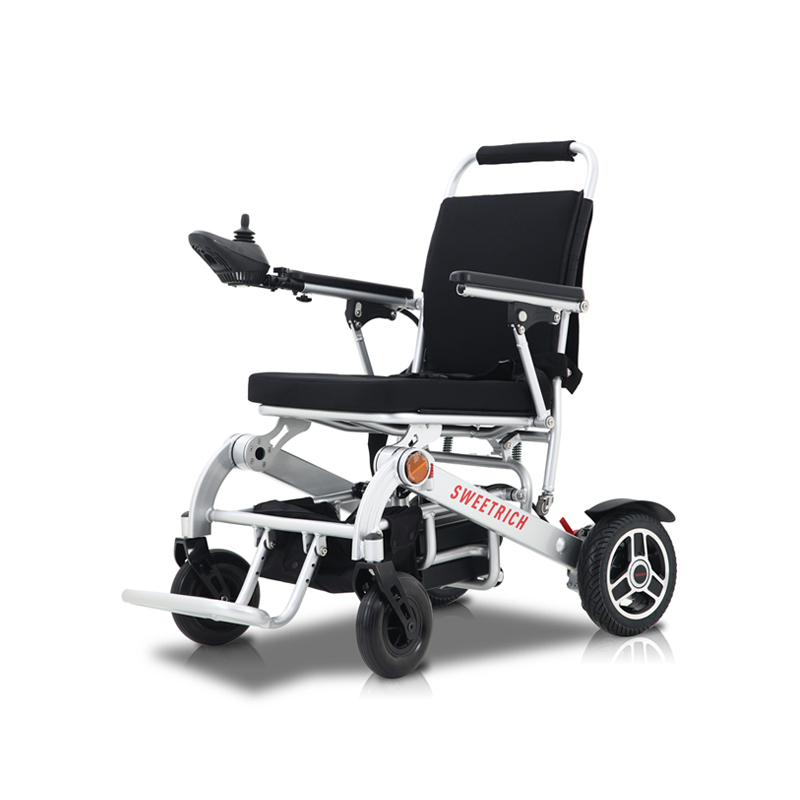
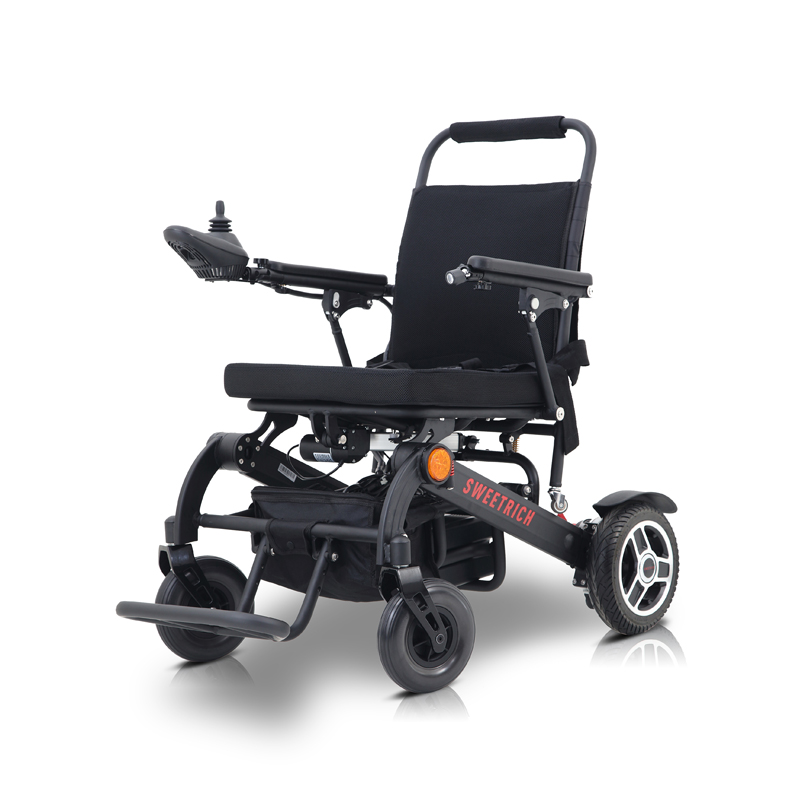
For users who need reliable powered mobility beyond smooth indoor floors, a heavy-duty foldable front-wheel-drive electric wheelchair can make daily movement more practical, comfortable, and confident. The product discussed here is a robust outdoor-oriented power wheelchair designed with pneumatic front tires, suspension support, electromagnetic braking, a supportive leather-like cushion seat, and a long-range lead-acid battery system. It is positioned for users who want more than a compact indoor chair: they need traction, stability, range, comfort, and dependable control for everyday travel.
This wheelchair belongs to the heavy-duty wheelchair category and is suitable for mobility support in non-medical consumer applications in the U.S. market. Its design emphasizes daily independence, outdoor travel, and steady performance across common surfaces such as sidewalks, paved paths, residential communities, shopping areas, parks, and other everyday environments. With a maximum forward speed of 8 km/h, a stated driving range of 30 to 40 km, and a weight capacity of 120 kg, it offers a practical balance of strength, endurance, and user-friendly operation.
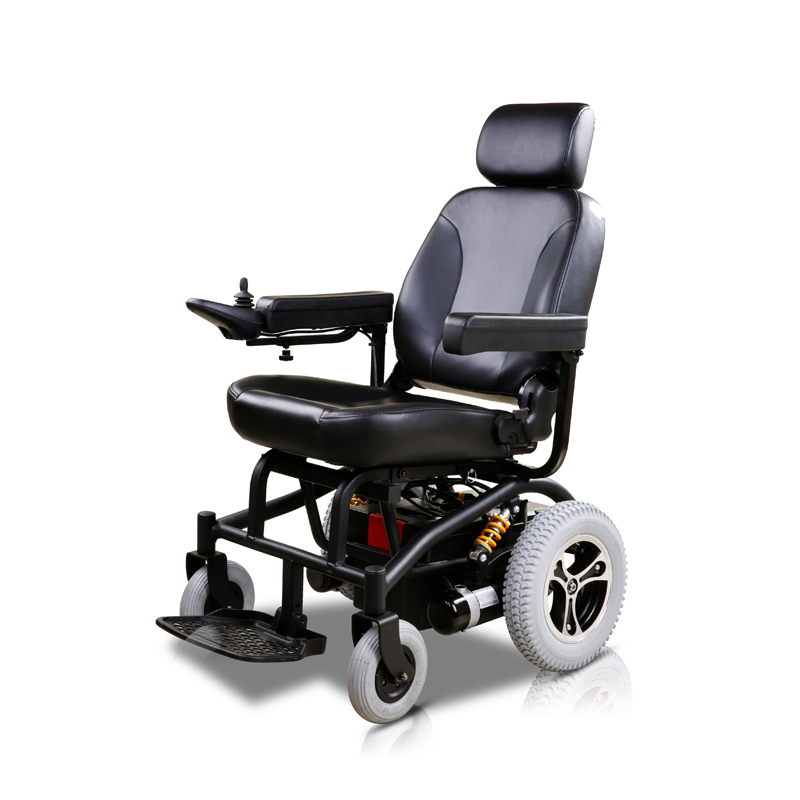
Unlike many basic electric wheelchairs that are primarily designed for flat indoor use, this model is equipped with large 14-inch front pneumatic tires, rear tires, front suspension, anti-tip wheels, dual 24V motors, and a 24V 50A controller. These features create a powerchair that feels stable, responsive, and better prepared for outdoor travel. The foldable structure also supports transport and storage needs, making it useful for users and families who require mobility equipment that can adapt to changing daily routines.
Behind the product is a manufacturer with more than a decade of experience in mobility scooters and power wheelchairs. The company operates from a large industrial base in Suzhou, China, with a factory area of approximately 30,000 square meters. Its experience in research, development, production management, and international market supply contributes to the product’s overall reliability. The manufacturer’s focus on advanced control technology, driving systems, intellectual property, and strict quality management gives the wheelchair a stronger foundation than products assembled only for short-term price competition.
This article explores the product’s main design features, technical specifications, user advantages, competitive strengths, manufacturing background, quality philosophy, suitable applications, and frequently asked questions. It is intended to help buyers, distributors, care providers, and mobility product professionals understand why a heavy-duty foldable front-wheel-drive wheelchair can be a practical choice for outdoor mobility and daily independence.
Product Overview: Built for Outdoor Mobility and Daily Confidence
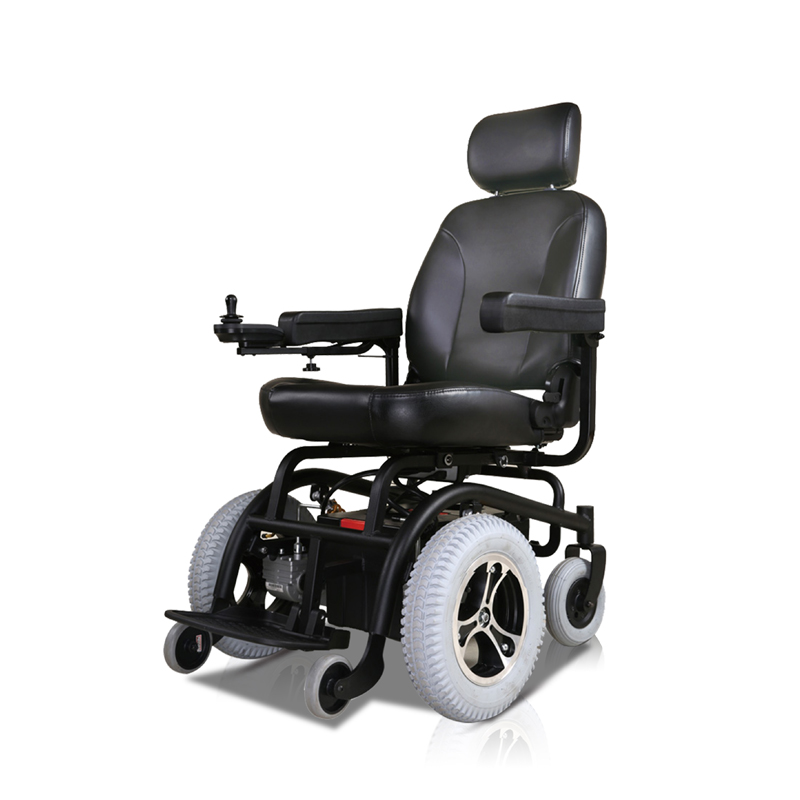
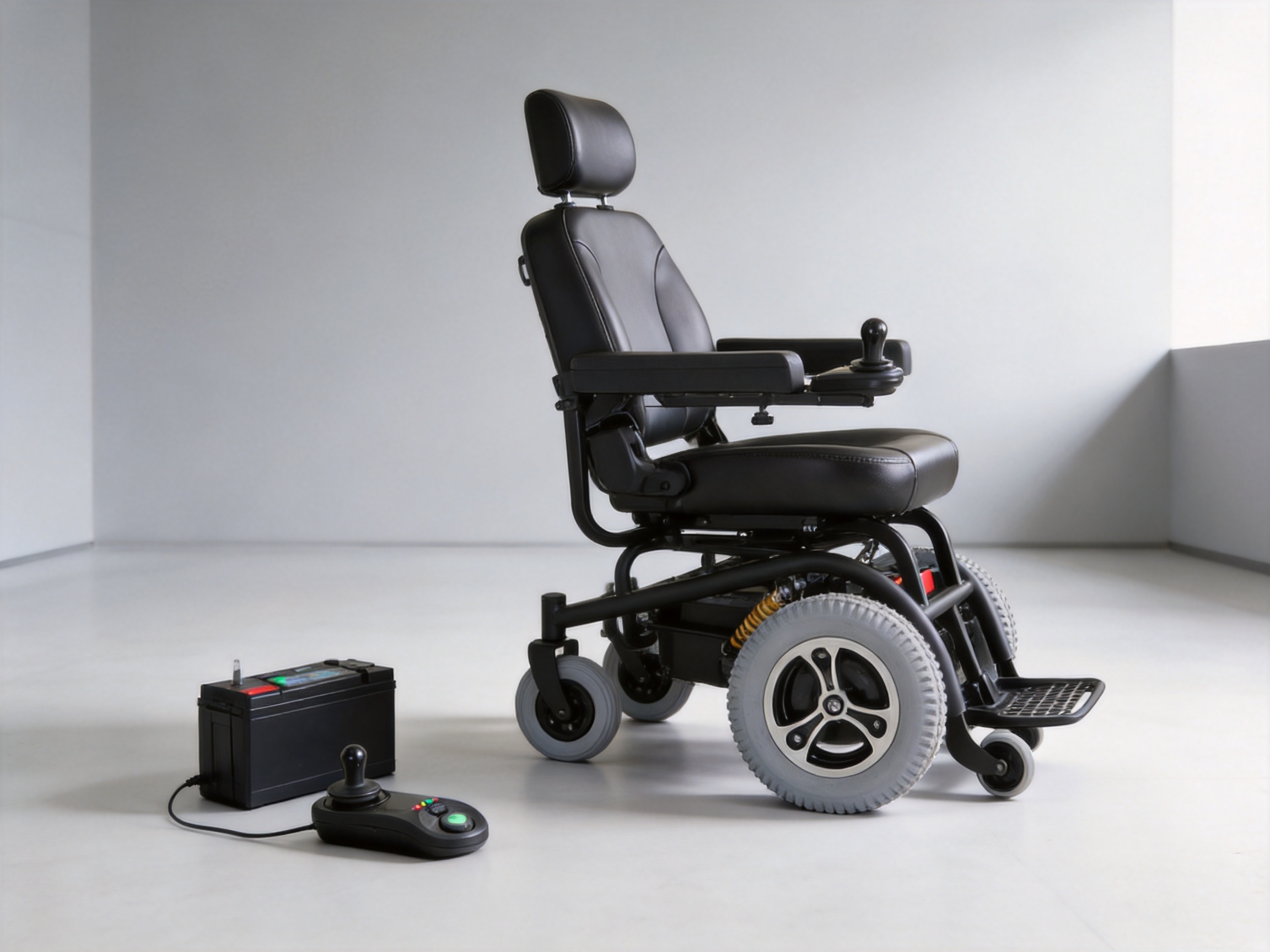
The heavy-duty foldable front-wheel-drive power wheelchair is designed for users who want dependable electric mobility with stronger outdoor capability than a standard compact chair. Its overall dimensions are 980 mm in length, 600 mm in width, and 1180 mm in height. This footprint gives the chair a stable road presence while keeping the width narrow enough for many daily environments. The proportions also support a seated posture that feels secure and comfortable during outdoor travel.
The chair uses a front-wheel-drive layout, meaning the larger powered wheels are positioned at the front. Front-wheel drive can be advantageous for outdoor movement because the powered tires encounter surface changes first and help pull the chair forward. When combined with large pneumatic tires, this configuration can improve traction and ride comfort compared with smaller solid-tire indoor chairs. It also supports maneuverability in mixed-use environments where the user may move from indoor areas to pavement, courtyards, and community spaces.
A key feature is the use of 14-inch by 3-inch front pneumatic tires and 8-inch by 2.5-inch rear tires. Pneumatic tires provide a cushioned feel because air inside the tire absorbs some road vibration. This is especially important for users who travel on uneven sidewalks or outdoor paths where small bumps, cracks, and surface transitions are common. Many low-cost power chairs rely on small solid tires that can transmit more vibration to the user. In contrast, this wheelchair’s larger air-filled tires contribute to a smoother ride and better comfort.
The wheelchair also includes suspension support and anti-tip wheels. Suspension helps reduce shock from road irregularities, while anti-tip wheels improve safety by helping limit backward tipping risk during common movement conditions. These features are important in a heavy-duty outdoor-oriented wheelchair because users may encounter slopes, ramps, curb cuts, and small transitions during travel. Stability is not only a comfort issue; it is a confidence issue. When the chair feels more controlled, users can focus more on where they are going and less on the equipment beneath them.
The seating system includes a leather-like cushion seat and an adjustable seat back. Comfort is a major differentiator in powered mobility products. Users may remain seated for extended periods while shopping, visiting family, attending appointments, or enjoying outdoor activities. A supportive cushion helps reduce discomfort during longer use, while an adjustable back allows a more personalized seating angle. This makes the chair more adaptable than fixed-back designs that may not suit different body types or postural preferences.
Power comes from two lead-acid 12V 40Ah batteries, creating a 24V system. The stated maximum driving range is 30 to 40 km, or approximately 19 to 25 miles, depending on conditions such as user weight, terrain, temperature, battery condition, tire pressure, and driving habits. This range is a strong advantage for users who want to travel beyond short indoor distances. For many daily routines, a 30 to 40 km range means the chair can support errands, community movement, and leisure travel without constant recharging.
The dual motors are rated at 24V and 320W each. Dual-motor systems are common in quality power wheelchairs because they allow independent control of left and right drive wheels, enabling turning and responsive maneuvering. The chair is also equipped with an electromagnetic brake system, which supports controlled stopping and holding when the joystick is released. A dependable braking system is especially important for outdoor use, ramps, and moderate gradients.
Key Technical Specifications
The following table summarizes the main technical data of the heavy-duty foldable front-wheel-drive electric wheelchair.
Specification |
Value |
Overall Dimensions |
980 mm L × 600 mm W × 1180 mm H |
Maximum Forward Speed |
8 km/h, approximately 5 mph |
Maximum Driving Gradient |
10 degrees |
Maximum Driving Range |
30 to 40 km, approximately 19 to 25 miles |
Weight Capacity |
120 kg, approximately 265 lb |
Suspension |
Front suspension |
Tire Sizes |
14 in × 3 in front, 8 in × 2.5 in rear |
Brake System |
Electromagnetic brake |
Battery System |
Lead-acid 12V 40Ah × 2 pieces |
Charger |
DC 24V 5A, AC 115V to 230V input |
Charging Time |
6 to 8 hours |
Motor |
24V 320W × 2 pieces |
Motor Controller |
24V 50A controller |
Product Category |
Heavy-duty electric wheelchair |
These specifications show a product engineered for strength and range rather than extreme lightness. Many travel wheelchairs are built to be as light as possible, but they may compromise tire size, suspension, battery capacity, seat comfort, or driving strength. This model takes a different approach. It prioritizes stable travel, larger tires, stronger motors, longer range, and daily durability. For users who need outdoor independence, those advantages can matter more than minimal product weight.
Front-Wheel Drive: Why It Matters
Front-wheel drive is one of the defining characteristics of this wheelchair. In a front-wheel-drive powerchair, the main drive wheels are positioned toward the front of the chair. This arrangement can provide a stable pulling sensation when moving forward and can improve the chair’s ability to handle common outdoor surface changes. Because the powered wheels reach surface irregularities first, they can help draw the chair across small transitions more effectively than some rear-wheel-drive systems.
For users who travel outdoors, front-wheel drive can be especially useful on sloped sidewalks, ramps, pavement seams, and community paths. The front tires provide traction at the leading point of travel, while the rear wheels help support balance and directional stability. When paired with anti-tip wheels and front suspension, the drive layout creates a more secure mobility experience.
Compared with mid-wheel-drive chairs, front-wheel-drive models may feel more natural for outdoor cruising because they offer a strong forward pull and can handle open spaces confidently. Mid-wheel-drive chairs often have excellent indoor turning ability, but some users prefer front-wheel drive for outdoor conditions and directional confidence. Compared with rear-wheel-drive chairs, front-wheel drive can provide better obstacle approach performance in certain daily environments. The right choice depends on user preference and terrain, but for outdoor-focused everyday travel, this product’s front-wheel-drive system is a strong competitive feature.
The product’s dual 320W motors also reinforce the benefits of the drive layout. Each powered wheel receives dedicated motor output, enabling controlled turning and movement. This type of dual-motor configuration improves maneuverability compared with single-drive systems and supports practical power distribution during daily use. The 24V 50A controller adds responsive management of the motors, helping convert joystick input into smooth acceleration, turning, and stopping behavior.
Large Pneumatic Tires for Comfort and Traction
Tire design can greatly influence the real-world performance of a power wheelchair. Small solid tires may be acceptable for indoor flooring, but outdoor travel demands more. Pavement cracks, textured surfaces, small stones, ramps, threshold strips, and driveway transitions can all create discomfort or instability if the wheels are too small or too rigid. This wheelchair addresses those issues with large front pneumatic tires measuring 14 inches by 3 inches.
Pneumatic tires are filled with air, allowing them to absorb impact more effectively than solid tires. This gives the user a smoother ride and can reduce vibration transferred through the frame and seat. For users who spend significant time in the wheelchair, ride comfort is not a luxury; it affects fatigue, confidence, and overall satisfaction. A smoother chair encourages more frequent use and longer outings, which supports independence and social participation.
The 14-inch front tire size also improves the chair’s ability to roll over minor surface changes. Larger tire diameter helps the wheel approach small obstacles at a better angle, reducing the harshness of impact. The 3-inch tire width contributes to contact area and grip, helping the chair feel more planted on outdoor surfaces. This is an important distinction from lightweight powerchairs that may use narrow, small wheels mainly intended for smooth indoor paths.
The rear tires, measuring 8 inches by 2.5 inches, support the chair’s balance and movement. Together, the front and rear tire setup creates a practical outdoor mobility platform. Users benefit from improved ride comfort without moving into the size and complexity of a full mobility scooter. For people who need joystick-controlled operation, compact seating, and a wheelchair-style format, this tire configuration provides a strong combination of comfort and control.
Suspension and Anti-Tip Design for Safer Daily Travel
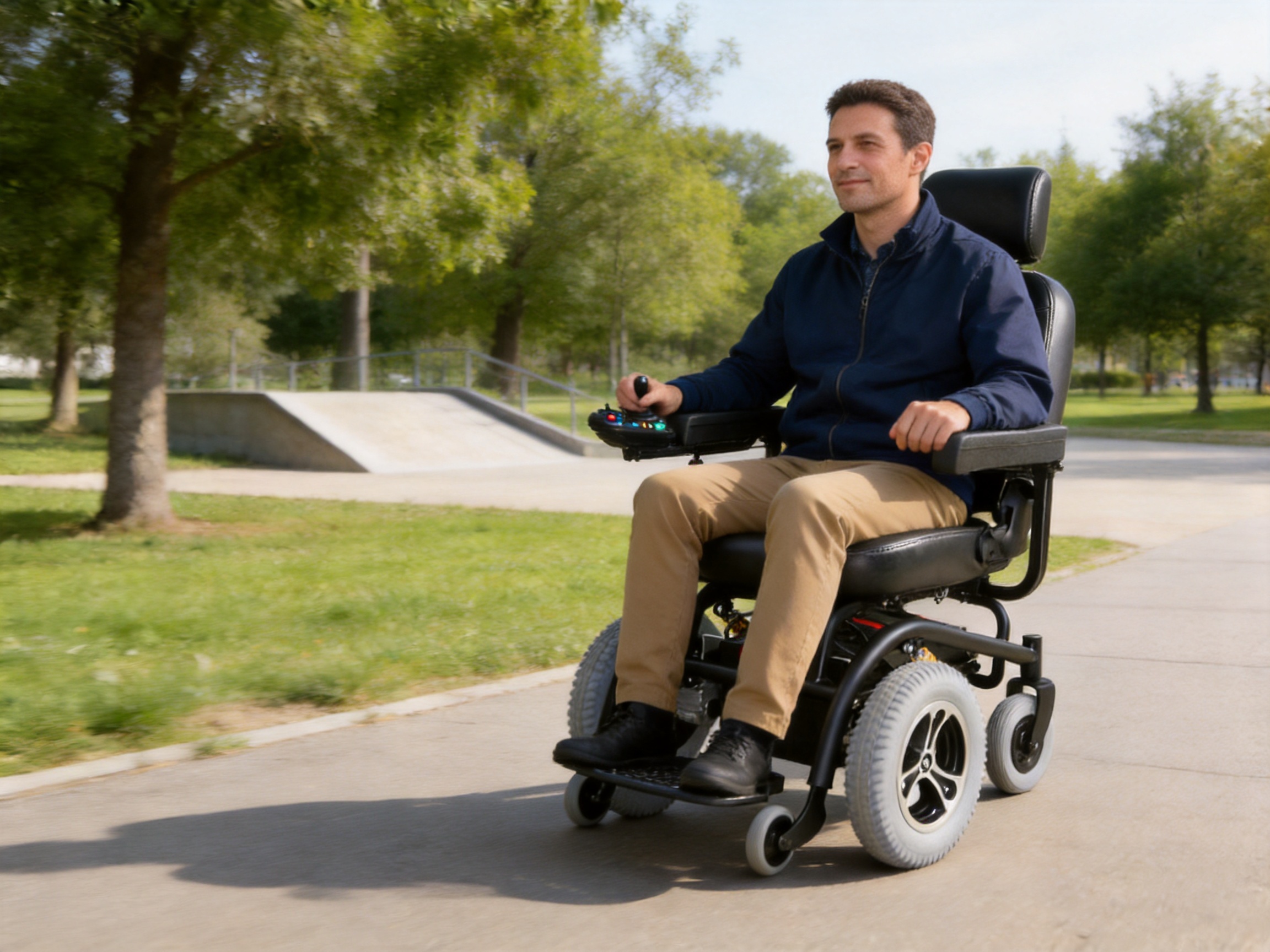
Outdoor mobility requires more than motor power. It also requires a frame and support system that can manage changes in surface height, weight transfer, and user movement. This wheelchair includes front suspension and anti-tip wheels, both of which contribute to comfort and safety.
Front suspension helps absorb shocks when the chair encounters uneven pavement, ramps, or small bumps. Without suspension, much of the impact travels directly through the wheels and frame into the seat. This can create discomfort and reduce user confidence. Suspension gives the chair a more refined feel and helps protect components from repeated vibration stress. In a heavy-duty outdoor-focused wheelchair, suspension is a meaningful advantage over basic models that rely only on tire material for shock absorption.
Anti-tip wheels provide additional security. They are designed to help reduce the risk of tipping during certain movement conditions. While users should always follow operating guidance and avoid unsafe slopes or obstacles, anti-tip support is an important safety feature for everyday mobility. It is especially valuable when traveling on gradients, approaching ramps, or moving across uneven surfaces. In combination with the electromagnetic brake and stable tire layout, anti-tip wheels contribute to a more controlled driving experience.
The stated maximum driving gradient is 10 degrees. This gives the chair capability for moderate slopes commonly found in residential and public environments. However, gradient performance depends on user weight, surface condition, battery charge, and operating technique. Users should approach slopes carefully, avoid sudden turns on inclines, and follow the manufacturer’s safety instructions. The product’s suspension, tire design, motor system, and braking technology all work together to make slope travel more manageable within rated conditions.
Comfort-Focused Seating and Adjustable Back Support
A power wheelchair must be evaluated not only as a machine but also as a seat used for daily living. The quality of the seating system affects posture, fatigue, and user satisfaction. This model includes a leather-like cushion seat and an adjustable seat back, providing a more comfortable experience than hard or minimally padded seats.
The leather-like cushion is practical for daily use because it combines comfort with a surface that is typically easier to maintain than fabric. Users may encounter dust, moisture, food spills, or outdoor debris during everyday travel. A cleanable cushion surface helps preserve appearance and hygiene. The cushioning also supports longer use, reducing discomfort when the user spends extended time in the chair.
The adjustable back is another valuable feature. People have different posture needs, and a fixed seat back may not provide proper comfort for everyone. Adjustability allows the seating position to be better matched to user preference. This can improve comfort during long trips and help users feel more secure while driving. While this wheelchair is not presented as a medical device, good seating comfort remains essential for everyday mobility.
Compared with many low-cost electric wheelchairs that use simple sling-style seats or thin padding, this chair offers a more supportive and refined experience. For buyers comparing products, seating should not be overlooked. A chair with strong motors and long range can still disappoint if the seat becomes uncomfortable after a short time. This model’s cushion and adjustable back help ensure that performance is matched by day-to-day usability.
Power System: Dual Motors, Lead-Acid Batteries, and Long Range
The wheelchair is powered by two 24V 320W motors, supported by a 24V electrical architecture and two 12V 40Ah lead-acid batteries. This configuration is designed to provide the torque, endurance, and reliability needed for daily outdoor movement. The use of dual motors enables independent wheel control, allowing the chair to turn and maneuver effectively while maintaining stable forward motion.
Battery capacity is one of the product’s most important advantages. With two 40Ah lead-acid batteries, the wheelchair offers a stated maximum driving range of 30 to 40 km. This range exceeds what many smaller travel chairs can provide, especially those designed primarily for quick indoor use or short trips. For users who want to travel through neighborhoods, attend events, visit shopping centers, or complete errands, longer range reduces the anxiety of running out of power.
Lead-acid batteries are heavier than lithium batteries, but they remain widely used in mobility products because they are cost-effective, familiar, and dependable when properly maintained. In a heavy-duty wheelchair, the additional battery weight may also contribute to a lower center of gravity, supporting stable travel. For users who prioritize long range and affordability over ultra-light lifting weight, lead-acid battery systems remain practical.
The charger supports DC 24V 5A output with AC 115V to 230V input, making it suitable for different electrical supply environments. Charging time is listed as 6 to 8 hours. This allows the chair to be charged overnight and prepared for the next day’s travel. Users should charge according to the instruction manual, avoid deep discharge when possible, and store batteries appropriately to preserve battery life.
The electromagnetic brake is an essential part of the power and control system. When the user releases the control input, the brake helps stop and hold the chair. This is especially useful on slopes and during stop-and-go movement in public spaces. Compared with manual braking systems or less responsive designs, electromagnetic braking offers greater convenience and safety for powered mobility users.
Foldable Design for Storage and Transportation
Although this is a heavy-duty model, foldability adds practical value. A foldable wheelchair can be stored more easily in a home, garage, care facility, or vehicle storage area, depending on available space and lifting capability. For families and caregivers, storage flexibility can be an important purchasing factor. A product that performs well outdoors but is difficult to store may become inconvenient over time.
Foldability also supports travel planning. Users may need to transport the chair to community events, vacations, medical appointments, or family visits. While the product is not positioned as an ultra-light travel chair, its folding structure makes it more adaptable than rigid-frame heavy-duty chairs. This balance between strength and folding convenience is one of the product’s major competitive advantages.
Many competing chairs fall into two extremes. Some are lightweight and foldable but lack large tires, suspension, long range, or outdoor strength. Others are powerful and comfortable but too bulky for convenient storage. This product is designed to bridge those categories. It provides outdoor-oriented specifications while still offering a foldable format for practical handling. Buyers who need both durability and storage flexibility may find this combination especially attractive.
It is important to consider lifting weight and handling procedures before transport. Heavy-duty power wheelchairs with lead-acid batteries are not as light as compact manual chairs. Users and caregivers should follow safe lifting practices and consult product documentation for correct folding and transport methods. The foldable design improves convenience, but appropriate handling remains essential.
Competitive Advantages Over Standard Electric Wheelchairs
The electric wheelchair market includes many product types, from ultra-light indoor chairs to high-end rehab power bases and scooter-style mobility devices. This heavy-duty foldable front-wheel-drive wheelchair stands out because it combines features that are not always found together: outdoor tire size, suspension, long range, electromagnetic braking, adjustable comfort seating, dual motors, and a foldable frame.
Compared with standard indoor electric wheelchairs, the first major advantage is outdoor confidence. Indoor models often use smaller wheels and minimal suspension. They may handle smooth floors well but feel harsh or unstable on outdoor surfaces. This product’s large pneumatic front tires, front suspension, and anti-tip wheels make it better suited to daily outdoor travel.
The second advantage is range. Many compact chairs are designed for short outings and may have smaller batteries. A 30 to 40 km stated range allows users to plan longer activities with fewer charging concerns. For distributors and retailers, range is a strong selling point because it directly addresses user anxiety. Customers often ask, “How far can it go?” This model provides an answer that fits many real daily needs.
The third advantage is ride comfort. The leather-like cushion seat, adjustable back, pneumatic tires, and suspension system all contribute to comfort. Competing low-cost products may focus on price while sacrificing comfort. However, comfort affects whether the user actually enjoys the chair and continues using it. A comfortable product can improve customer satisfaction and reduce complaints.
The fourth advantage is braking and control. The electromagnetic brake system and quality controller help create a more controlled experience. Smooth acceleration, turning, and stopping are vital for user trust. A wheelchair that feels jerky or uncertain can quickly reduce confidence. By using a capable control system and dual motors, this product supports predictable movement.
The fifth advantage is the manufacturer’s industrial background. Products from experienced mobility equipment manufacturers often benefit from better component selection, production consistency, and quality management. The company behind this wheelchair has long-term experience in mobility scooters and power wheelchairs, a substantial factory base, and established export experience. That manufacturing foundation gives the product credibility beyond its specification sheet.
Manufacturing Strength: Experience, Scale, and Product Development
The product is produced by a company specializing in mobility scooters and power wheelchairs. Founded in 2011, the manufacturer has accumulated more than ten years of experience in research, development, and production. This experience is important because mobility products require more than basic assembly. They must integrate mechanical structure, electrical systems, motors, controllers, batteries, seating, braking, and user safety features into one reliable platform.
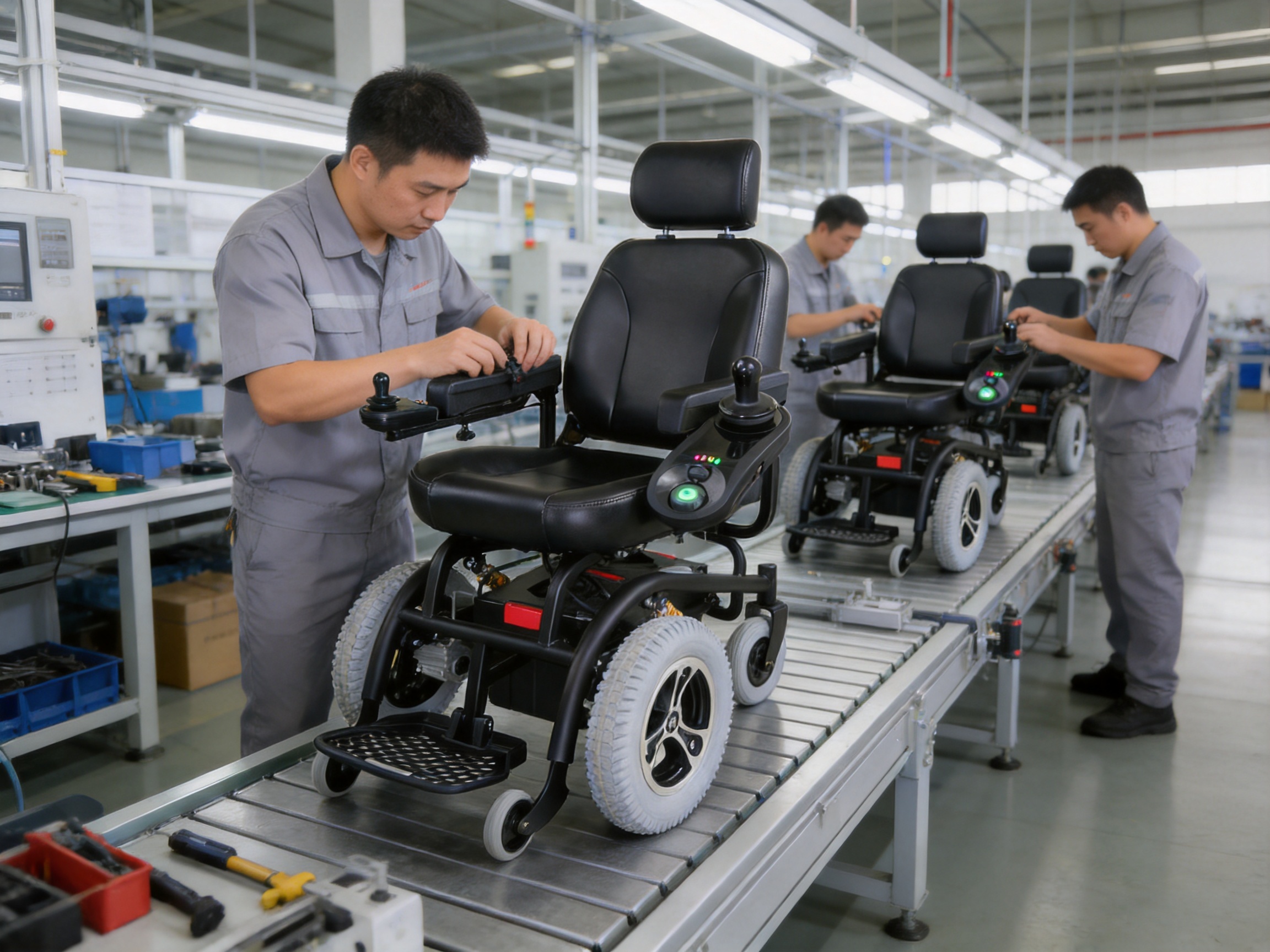
The company operates in Suzhou Industrial Park in Jiangsu, China, an area known for advanced manufacturing and supply chain resources. Its facility covers approximately 60 acres and includes a factory area of about 30,000 square meters. Manufacturing scale matters because it supports organized production flow, component storage, assembly lines, testing areas, and quality control systems. A larger, specialized factory can provide greater consistency than small workshops with limited process control.
The company’s focus on mobility equipment gives it a clear product direction. Instead of producing unrelated consumer goods, it concentrates on products that support elderly and disabled users in daily life. This focus helps the engineering team understand user needs such as comfort, stability, easy operation, safety, and durability. Over time, repeated product development in the same field leads to better design judgment and stronger manufacturing know-how.
The manufacturer also emphasizes intellectual property rights for its electric scooters and power wheelchairs. This indicates a commitment to original product development rather than simple imitation. In a competitive market, intellectual property and internal design capability help a company improve products continuously. For buyers, this matters because products developed by experienced engineering teams are more likely to have thoughtful component integration and long-term support.
Advanced control technology and driving systems are another stated strength. In electric mobility products, the controller is the bridge between user intention and machine response. A user moves the joystick, and the controller must translate that input into safe motor behavior. Good control technology supports smooth starting, precise turning, controlled deceleration, and stable braking. For outdoor chairs with dual motors and higher torque, controller quality is especially important.
Production Management and Quality Philosophy
Strict production management is central to the company’s approach. In powered mobility equipment, small inconsistencies can affect user experience. Tire alignment, brake adjustment, wiring security, battery installation, frame welding, seat mounting, and controller configuration all need careful attention. A factory with structured production management can reduce variation and produce more reliable units.
The company’s quality principle emphasizes quality first, credit, and customer priority. This philosophy is reflected in the way a product like this wheelchair is positioned: durable, comfortable, practical, and suitable for export markets. Long-term partnerships with international customers require consistent product performance, responsive communication, and dependable after-sales support. A manufacturer cannot succeed in global mobility markets by focusing only on low price; it must also deliver trust.
Scientific product design is another stated focus. Scientific design means that product decisions should be based on function, user needs, safety, and production feasibility. In this wheelchair, that approach can be seen in the combination of large pneumatic tires, suspension, anti-tip wheels, dual motors, electromagnetic brakes, and adjustable seating. Each feature addresses a real mobility challenge. Together, they form a coherent outdoor-use product rather than a random collection of parts.
The company’s export experience is also important. Its products are supplied to markets including America, Europe, Japan, Australia, the Middle East, Russia, and other regions. Export experience exposes a manufacturer to different user expectations, regulatory environments, climate conditions, and distribution requirements. This can strengthen product development because feedback from diverse markets helps identify opportunities for improvement.
For distributors, retailers, and procurement teams, manufacturing strength is a key evaluation factor. A product may look attractive in photos, but long-term business success depends on repeatable quality, spare parts availability, technical communication, and consistent supply. A manufacturer with established production capacity and international experience is better positioned to support long-term cooperation.
Designing for Elderly and Disabled Users
The wheelchair is designed around the goal of helping people move more independently and with greater dignity. Mobility limitations can affect daily life in many ways. A person may struggle to walk long distances, avoid outdoor activities, or depend heavily on others for transportation within communities. Powered mobility equipment can reduce those barriers by giving users a practical way to move from place to place with less physical effort.
This product supports independence through several design choices. The joystick-controlled power system reduces the need for upper-body pushing strength. The long driving range supports extended outings. The comfortable seat supports longer sitting periods. The suspension and pneumatic tires improve ride quality outdoors. The foldable frame supports storage and travel planning. These features work together to make daily mobility more realistic.
Dignity is also connected to design. Users often prefer equipment that looks sturdy, modern, and purposeful rather than fragile or overly clinical. A heavy-duty outdoor power wheelchair gives the impression of capability. It can help users participate more actively in community life, family gatherings, and personal routines. While it is not marketed as a medical device for the U.S. market, it can still support everyday living and personal freedom.
For elderly users, ease of operation is particularly important. Controls should feel predictable, braking should be reliable, and the chair should not require complicated procedures for normal use. The electromagnetic brake system and controller-based operation help simplify driving. The adjustable back and cushioned seat support comfort for users who may be sensitive to vibration or posture strain.
For disabled users, adaptability and stability matter. The chair’s weight capacity of 120 kg accommodates a wide range of adults. The outdoor tire configuration helps reduce the limitations imposed by uneven surfaces. The front-wheel-drive layout gives a confident driving feel for many daily travel situations. These product qualities can make the difference between occasional use and true daily reliance.
Outdoor Use Scenarios
This wheelchair is well suited for users who need powered mobility across everyday outdoor environments. Common use scenarios include residential communities, sidewalks, parks, paved public areas, shopping centers, campuses, senior living communities, and transport between home and local destinations. Its speed of up to 8 km/h allows efficient movement while remaining appropriate for typical pedestrian environments when operated responsibly.
In residential settings, the chair can help users move from room to room and from indoors to outdoor spaces such as courtyards, driveways, and gardens. The 600 mm width may be practical for many indoor passages, though users should always measure doorways and home layouts before purchase. The product’s outdoor strengths become especially useful once the user leaves the home and encounters sidewalks or pavement.
For shopping and errands, range and comfort are valuable. A trip to a shopping center may involve long corridors, parking areas, ramps, and extended sitting time. The chair’s cushioned seat, adjustable back, and reliable braking system support this type of use. The foldable structure may also be useful when transporting the chair to larger retail areas or community centers.
For leisure activities, the pneumatic tires and suspension improve enjoyment. Visiting parks, walking with family members, attending outdoor events, or moving through public spaces becomes more comfortable when the chair can handle surface texture without excessive vibration. A product that supports leisure use can improve quality of life because mobility is not only about necessity; it is also about participation.
Users should still operate within safe limits. The chair is designed for common outdoor use, not extreme off-road conditions. Deep mud, loose sand, steep slopes, large obstacles, and unsafe traffic environments should be avoided. Responsible operation, regular maintenance, and awareness of surroundings are essential for safe mobility.
Maintenance Considerations for Long-Term Reliability
Like all powered mobility equipment, this wheelchair performs best when maintained properly. Basic maintenance helps protect the investment and ensures the chair remains safe and comfortable. Users should regularly check tire condition, tire pressure, battery charge, wiring connections, brake function, seat attachment, and frame condition. Any unusual sound, vibration, braking delay, or control issue should be addressed promptly.
Pneumatic tires provide comfort but require attention. Tire pressure should be kept within the recommended range provided in the user manual. Underinflated tires can reduce range, increase motor strain, and affect handling. Overinflated tires may reduce ride comfort. Users should inspect tires for wear, punctures, and embedded debris, especially after outdoor travel.
Battery care is essential. Lead-acid batteries should be charged regularly and not left deeply discharged for long periods. Charging after daily use and avoiding unnecessary battery depletion can extend battery life. The 6 to 8 hour charging time makes overnight charging convenient. Users should use the correct charger and avoid unauthorized electrical modifications.
The electromagnetic brake system should be kept in good working condition. Users should confirm that the chair stops correctly when control input is released. If braking behavior changes, the chair should be inspected by qualified service personnel. Brake reliability is critical for safe use on ramps, slopes, and public pathways.
Cleaning is also important. The leather-like cushion surface can typically be wiped clean, helping maintain appearance and comfort. The frame and wheels should be kept free from excessive dirt, moisture, and debris. After travel in wet conditions, the chair should be dried and stored appropriately. Proper care supports long service life and user satisfaction.
Why This Product Is Valuable for Dealers and Distributors
For mobility product dealers and distributors, a successful wheelchair must satisfy users while also supporting business needs. This product offers several advantages for commercial partners. It has clear market positioning, strong specifications, outdoor appeal, comfort features, and manufacturing support from an experienced company.
The market positioning is easy to communicate. It is a heavy-duty foldable front-wheel-drive electric wheelchair designed for outdoor use and daily independence. Customers looking for stronger performance than compact indoor chairs can quickly understand its purpose. The combination of large tires, suspension, range, and foldability creates a distinctive selling message.
The specifications also support sales conversations. A maximum range of 30 to 40 km, 120 kg capacity, 8 km/h speed, dual 320W motors, and electromagnetic braking are concrete features that customers can compare. Dealers benefit from products with clear technical advantages because they can explain value beyond appearance.
Comfort features help reduce dissatisfaction. Many users complain when mobility products feel too harsh, cramped, or unstable. The leather-like cushion, adjustable back, suspension, and pneumatic tires address common comfort concerns. A satisfied user is more likely to recommend the product and return to the dealer for future needs.
Manufacturing background also matters for B2B confidence. The producer’s factory scale, long-term experience, export markets, and focus on quality management help dealers feel more secure about product supply and support. In mobility equipment, reliable manufacturer relationships are essential because customers may need spare parts, service guidance, and technical communication over time.
Balancing Strength, Comfort, and Practicality
The main value of this wheelchair lies in its balance. It is not simply a fast chair, a lightweight chair, or a basic budget chair. Instead, it combines strength, comfort, range, and practical foldability. This makes it suitable for users who need daily mobility equipment that can handle real-world environments.
Strength comes from the heavy-duty frame concept, dual motors, large tires, and 120 kg capacity. Comfort comes from pneumatic tires, front suspension, the cushioned seat, and the adjustable back. Practicality comes from electromagnetic braking, a long driving range, a reasonable 600 mm width, and the foldable structure. These qualities address the core concerns of many mobility users: Can it carry me safely? Can it go far enough? Will it feel comfortable? Can I store or transport it when needed?
Compared with competitor products that focus on only one area, this wheelchair offers a more rounded solution. An ultra-light folding chair may be easier to lift but may not provide outdoor confidence. A large scooter may offer range but may not suit users who prefer wheelchair-style joystick control. A high-end rehab chair may provide advanced clinical seating but may be more expensive and complex than needed for consumer daily mobility. This product occupies a practical middle ground: capable, comfortable, and accessible for everyday outdoor use.
Q&A Section
What type of user is this power wheelchair designed for?
It is designed for users who need powered mobility for daily movement, especially those who want stronger outdoor capability than a basic indoor electric wheelchair. It can support elderly users, disabled users, and individuals who need assistance traveling through homes, communities, paved outdoor spaces, shopping areas, and similar environments.
Is this product a medical device?
The provided product information states that it is a non-medical device for the U.S. market. It should be understood as a consumer mobility product rather than a medical device. Buyers should review local regulations and consult appropriate professionals if they require medical-grade equipment.
What makes the front-wheel-drive design useful?
Front-wheel drive places the powered wheels at the front, helping the chair pull forward across common outdoor surfaces. This can provide confident traction and stable movement, especially when combined with large pneumatic tires, suspension, and anti-tip wheels.
How far can the wheelchair travel on one charge?
The stated maximum driving range is 30 to 40 km, or approximately 19 to 25 miles. Actual range depends on user weight, terrain, battery condition, temperature, tire pressure, slope, and driving habits.
How fast can it travel?
The maximum forward speed is listed as 8 km/h, approximately 5 mph. Users should always drive at a safe speed for the environment, especially around pedestrians, slopes, turns, and doorways.
What type of batteries does it use?
It uses two 12V 40Ah lead-acid batteries, forming a 24V battery system. Lead-acid batteries are widely used in mobility equipment because they are dependable and cost-effective when properly maintained.
How long does charging take?
Charging time is listed as 6 to 8 hours using the appropriate DC 24V 5A charger. Overnight charging is often practical for daily use.
What is the weight capacity?
The stated weight capacity is 120 kg, approximately 265 lb. Users should not exceed the rated capacity, as overloading can affect performance, safety, range, and component life.
Does it have suspension?
Yes. The product includes front suspension, which helps absorb impact from uneven surfaces and improves ride comfort during outdoor travel.
What are the tire sizes?
The front tires are 14 inches by 3 inches, and the rear tires are 8 inches by 2.5 inches. The large pneumatic front tires are a major advantage for outdoor comfort and traction.
Is the wheelchair foldable?
Yes. The product is described as foldable, which supports storage and transportation. Because it is a heavy-duty model with lead-acid batteries, users should still follow safe handling procedures when folding or moving it.
What are the main advantages over basic electric wheelchairs?
The main advantages include larger pneumatic tires, front-wheel drive, front suspension, anti-tip wheels, long driving range, dual motors, electromagnetic braking, a comfortable cushion seat, an adjustable back, and foldable practicality. These features make it better suited to outdoor daily use than many basic indoor models.
Why is the manufacturer’s background important?
A manufacturer with long experience, a large production facility, research and development capability, and export experience is more likely to provide consistent product quality and reliable support. Mobility products require careful integration of mechanical, electrical, and comfort systems, so manufacturing expertise matters.
Conclusion: A Practical Heavy-Duty Mobility Solution for Everyday Outdoor Freedom
This heavy-duty foldable front-wheel-drive electric wheelchair is designed for users who need dependable powered mobility with outdoor confidence. Its large pneumatic front tires, front suspension, anti-tip wheels, electromagnetic brake system, dual 320W motors, and long-range lead-acid battery setup create a product that is stronger and more comfortable than many basic electric wheelchairs. The adjustable seat back and leather-like cushion further improve daily usability, while the foldable structure adds practical storage and transport value.
Its greatest strength is balance. It offers the performance needed for outdoor travel without abandoning the convenience expected from a foldable wheelchair format. It provides range without becoming overly complex, comfort without losing practicality, and strength without sacrificing user-friendly control. For many users, that balance is exactly what daily mobility requires.
The manufacturer’s experience in mobility scooters and power wheelchairs adds another layer of value. With more than ten years of development experience, a substantial factory base, advanced control and driving system focus, intellectual property awareness, strict production management, and international market supply, the company has the industrial foundation needed to support reliable mobility products. For users, dealers, and distributors, this background strengthens confidence in the product’s design and long-term value.
In a market filled with lightweight indoor chairs, bulky scooters, and highly specialized medical equipment, this wheelchair occupies a useful and practical position. It is built for people who want everyday independence, outdoor capability, comfort, and storage flexibility. For non-medical consumer mobility applications, it offers a compelling combination of features that can help users move with greater confidence, convenience, and dignity.
References
Manufacturer product specification sheet for heavy-duty foldable front-wheel-drive electric wheelchair.
Company profile and manufacturing background information for Suzhou-based mobility equipment production.
General industry guidance on powered wheelchair drive systems, tire types, braking systems, and battery maintenance.
Mobility product design principles related to user comfort, outdoor stability, powered control systems, and daily assistive mobility.