
 +86-(0)512-82283871
Content
- 1 Product Overview: A Travel-Smart Powered Wheelchair
- 2 Key Technical Specifications
- 3 Automatic Folding: The Core Convenience Advantage
- 4 Driving Performance for Daily Mobility
- 5 Comfort Features Designed for Real Users
- 6 Joystick Controller for Flexible Operation
- 7 Safety-Oriented Design Elements
- 8 Battery Options and Travel Distance
- 9 Portability Without Sacrificing Practical Strength
- 10 Advantages Over Conventional and Competing Models
- 11 Manufacturing Strength Behind the Product
- 12 Advanced Production Management and Quality Awareness
- 13 Research and Development Focused on Independence
- 14 Practical Applications in Everyday Life
- 15 Why Travel-Smart Design Matters
- 16 Company Reliability and Global Market Experience
- 17 Design Details That Improve User Experience
- 18 Responsible Use and Maintenance Considerations
- 19 Who Can Benefit Most from This Wheelchair
- 20 Market Position and Competitive Value
- 21 Q&A Section
- 21.1 Q1: What is the main advantage of this automatic folding electric wheelchair?
- 21.2 Q2: Is this product intended as a medical device?
- 21.3 Q3: What is the maximum driving range?
- 21.4 Q4: Can the joystick be used on either side?
- 21.5 Q5: What braking system does the wheelchair use?
- 21.6 Q6: How much weight can the chair support?
- 21.7 Q7: What type of battery does it use?
- 21.8 Q8: How long does charging take?
- 21.9 Q9: Does the wheelchair have suspension?
- 21.10 Q10: Why is the manufacturer’s experience important?
- 22 Conclusion
- 23 References
- 24 Product: iFold PLUS Automatic folding electric wheelchair with joystick controller hot sale
Modern personal mobility is no longer defined only by getting from one room to another. For many seniors, travelers, and people with limited mobility, the ideal powered wheelchair must combine compact folding, stable driving, intuitive control, comfortable daily use, and dependable manufacturing quality. The automatic folding electric wheelchair introduced in this article is designed for that exact purpose: a travel-smart powered chair that helps users move more independently while reducing the effort required from caregivers and family members.
This model belongs to the travel-smart wheelchair category and is intended as a non-medical mobility device for the U.S. market. It is built around a practical idea: a powered wheelchair should be easy to operate, easy to store, easy to transport, and strong enough for everyday movement. With automatic folding, dual motors, electromagnetic braking, front and rear suspension, an under-seat storage bag, joystick flexibility, and lithium battery options, it offers a balanced solution for users who want both convenience and confidence.
Unlike many traditional powered wheelchairs that are heavy, complicated to fold, or difficult to lift into a vehicle, this model emphasizes compact travel readiness. After folding, it becomes easier to move, store, and transport. This is especially useful for users who frequently visit shopping centers, parks, airports, hotels, community facilities, or family homes. The design supports the lifestyle needs of modern mobility users who do not want their chair to limit where they can go.
iFold PLUS Automatic folding electric wheelchair with joystick controller hot sale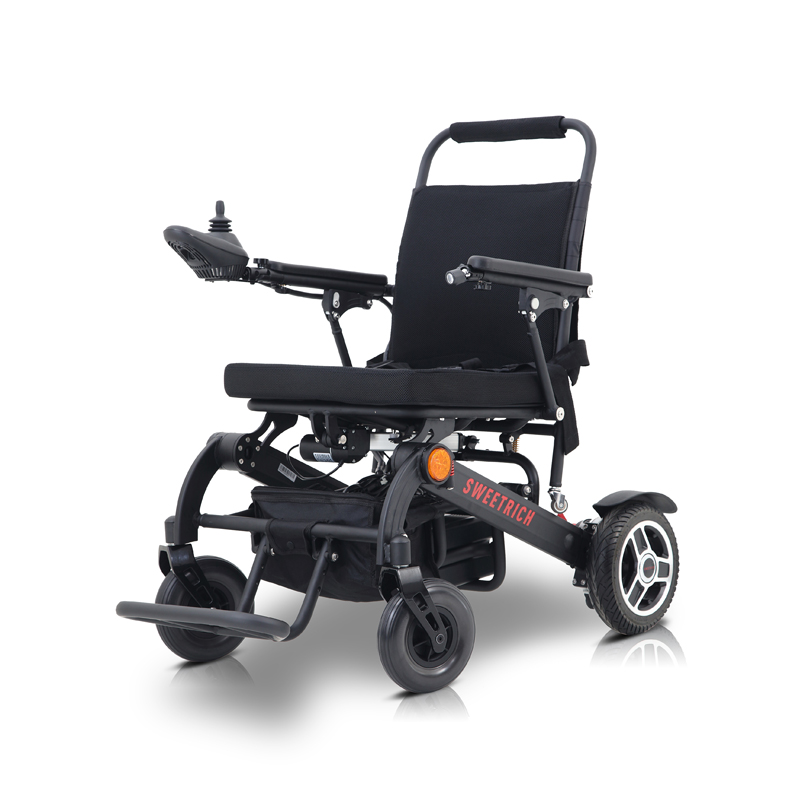
Product Overview: A Travel-Smart Powered Wheelchair
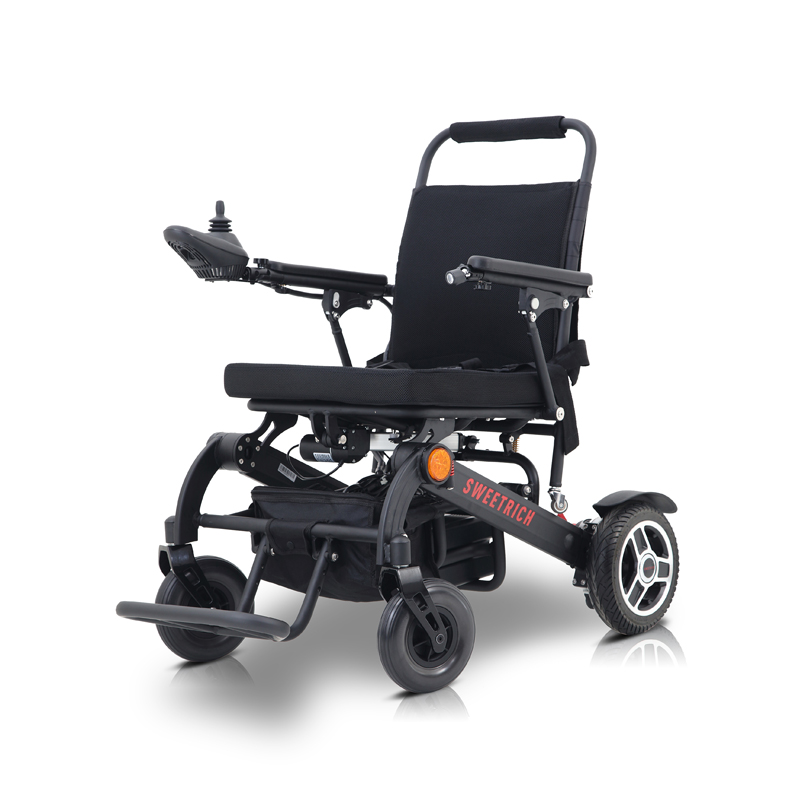
The automatic folding electric wheelchair is engineered for users who need powered assistance but do not want to deal with the bulk and complexity often associated with conventional electric wheelchairs. Its automatic folding function is one of its central advantages. Instead of requiring time-consuming manual disassembly or difficult folding steps, the chair is designed to fold automatically, helping reduce physical strain and making daily handling easier.
The product is equipped with a joystick controller, which can be used on either side. This is an important detail because mobility needs are personal. Some users prefer right-hand operation, while others need left-hand control due to comfort, habit, strength, or physical condition. A joystick that can be positioned for both-side use gives the chair more adaptability than many fixed-control alternatives.
The chair also features a large foot platform, allowing the user to sit with improved comfort and foot support. A stable foot area is especially valuable during longer rides or when maneuvering in places where frequent stopping and starting occurs. Combined with the suspension system and dependable braking, the platform contributes to a more secure and comfortable user experience.
The model includes a front light option, supporting better visibility in low-light environments. For users who may return home in the evening, travel through dim hallways, or move around shaded outdoor paths, a front light can improve awareness and help others notice the wheelchair. While the chair is not intended for unsafe road use, lighting is still a valuable feature for everyday visibility.
Key Technical Specifications
The following table summarizes the main technical details of the automatic folding electric wheelchair. Specifications may vary depending on configuration, battery option, market requirements, and production updates, but the listed data provides a clear reference for evaluating the chair’s performance and structure.
Item |
Specification |
Overall Dimensions |
1090 mm L × 605 mm W × 998 mm H |
Maximum Forward Speed |
6 km/h for the listed configuration; platform versions may support higher speed settings up to approximately 8.5 km/h depending on configuration and market rules |
Maximum Driving Gradient |
10 degrees |
Maximum Driving Range |
30 ± 5 km depending on battery, load, terrain, temperature, and driving habits |
Weight Capacity |
120 kg, approximately 265 lb |
Suspension |
Front and rear suspension |
Tire Size |
8-inch front tires and 10-inch rear tires |
Brake System |
Electromagnetic brake |
Battery |
Lithium 24 V / 10.2 Ah or 20 Ah, with optional larger battery capacity up to 30 Ah for extended distance |
Charger |
DC 24 V 2 A, AC 115–230 V |
Charging Time |
Approximately 5 hours |
Motor |
24 V / 250 W × 2 pieces |
Motor Controller |
24 V / 50 A |
Weight Without Battery |
24 kg |
Automatic Folding: The Core Convenience Advantage
The automatic folding feature is the most visible difference between this powered wheelchair and many conventional mobility products. Traditional electric wheelchairs may require manual folding, removal of components, or caregiver assistance. Some models are technically foldable but still difficult to handle because the folding action is heavy, stiff, or awkward. An automatic folding structure solves a major pain point by making the transition between riding, storing, and transporting more convenient.
For travel users, folding convenience can determine whether a wheelchair is used confidently or left behind. A chair that folds quickly is easier to place in a car trunk, store in a hotel room, move through elevators, or keep at home without occupying too much space. In urban apartments or family houses where storage space is limited, a compact folding design can make daily life simpler.
This automatic folding function is particularly valuable for seniors who may not have the strength to lift or fold a large manual frame. It can also help caregivers who already manage bags, doors, car seats, and other tasks. Reducing the number of manual steps helps reduce frustration and supports a more dignified mobility experience.
Compared with many competing travel wheelchairs that depend heavily on manual folding, this product provides a more user-centered handling method. It recognizes that mobility equipment should not only perform while in motion; it should also be convenient before and after use. This is one of the reasons automatic folding is becoming an important feature in premium travel-smart wheelchair design.

Driving Performance for Daily Mobility
The chair is powered by two 24 V / 250 W motors. Dual-motor power helps deliver balanced movement and responsive control. Instead of relying on a single drive source, the two-motor configuration supports smoother steering and stronger traction management, especially when turning or moving across slightly uneven surfaces. For users, this means better confidence during common daily routes.
The listed maximum forward speed is 6 km/h, a practical pace for controlled personal mobility in indoor and outdoor pedestrian environments. The product information also notes that platform versions can reach speeds up to 8.5 km per hour, or about 5.2 mph, depending on configuration. This distinction is important because speed limits may vary by market, safety requirements, and product setup. In most daily scenarios, controlled acceleration and predictable braking are more important than maximum speed.
The maximum driving gradient of 10 degrees gives the chair useful climbing ability for common ramps, gentle slopes, and access paths. Users should always follow safe driving practices, avoid steep or unstable terrain, and consider battery level, weight, surface condition, and weather. However, a 10-degree rating reflects a practical capability for many real-world mobility needs.
Range is another important factor. The chair offers a maximum driving range of 30 ± 5 km under suitable conditions, with optional battery choices available for users who need longer distances. A lithium battery system with 24 V / 10.2 Ah or 20 Ah options is listed, and optional battery capacity up to 30 Ah can extend travel distance. This flexibility helps match the product to different lifestyles, from short indoor and neighborhood use to longer day trips.
Comfort Features Designed for Real Users
Comfort is not a luxury in a powered wheelchair; it is essential to regular use. If a chair feels unstable, cramped, or tiring, users may avoid using it even when they need mobility support. This model addresses comfort through several practical design choices, including a large foot platform, front and rear suspension, stable tire sizing, and controlled driving performance.
The large foot platform provides supportive space for the user’s feet. This may seem like a small feature, but it can make a major difference during longer rides. A cramped or poorly positioned footrest can cause discomfort and reduce confidence. A larger platform improves the feeling of stability and gives users a more relaxed seated position.
Front and rear suspension help absorb minor bumps and surface changes. In daily life, users may encounter sidewalks, door thresholds, parking lots, tiled floors, garden paths, or small transitions between surfaces. Suspension does not turn a travel wheelchair into an off-road vehicle, but it can make normal movement smoother and more comfortable.
The 8-inch front tires and 10-inch rear tires provide a suitable combination for maneuverability and support. Smaller front tires help turning responsiveness, while larger rear tires contribute to traction and stability. This tire arrangement is common in compact powered mobility design because it balances indoor control with outdoor usability.
Joystick Controller for Flexible Operation
The joystick controller is the primary interface between user and machine. A good controller must be intuitive, responsive, and easy to position. This wheelchair’s joystick can be made available for both-side use, allowing it to suit different user preferences. For left-handed users, users with limited movement on one side, or people who simply prefer a specific control hand, this flexibility is a significant advantage.
Many competing powered wheelchairs have fixed joystick placement or require complicated modifications to switch sides. A more adaptable joystick design reduces barriers to use and makes the chair suitable for a wider range of users. It also helps distributors, care facilities, and families manage different needs with fewer product variations.
Joystick control also supports smooth direction changes in tight spaces. In homes, restaurants, offices, clinics, elevators, and public buildings, maneuverability is critical. The user needs to move carefully without sudden jerks or confusing controls. When combined with the motor controller and electromagnetic braking system, the joystick contributes to predictable operation.
The product’s 24 V / 50 A motor controller supports the coordination between joystick commands and motor response. While users may never think about the controller hidden inside the chair, it is essential for safe and comfortable driving. A well-matched controller helps translate hand movement into controlled acceleration, deceleration, and turning.
Safety-Oriented Design Elements
Safety in mobility products comes from the combination of structure, braking, power control, user posture, visibility, and manufacturing consistency. This automatic folding electric wheelchair includes several features that support safer daily use. One of the most important is the electromagnetic brake system, which helps provide reliable stopping control.
Electromagnetic braking is widely valued in powered mobility because it can help hold the chair when the user stops driving. This is especially important on slight slopes or during frequent start-and-stop movement. While users must still operate responsibly and avoid unsafe inclines, a dependable braking system increases confidence in daily environments.
The front light option improves visibility. In low-light corridors, garages, early evening paths, or shaded outdoor areas, being visible to others matters. Visibility does not replace careful driving, but it adds another layer of practical safety. For users who value independence, being able to move in more lighting conditions can make daily schedules less restrictive.
The chair’s weight capacity of 120 kg, approximately 265 lb, supports a broad user range. Weight capacity should always be respected because overloading can affect performance, braking, range, and structural durability. Clear specifications help users and buyers select the right product responsibly.
Another safety-related advantage is controlled speed. While faster products may appear attractive, mobility equipment must prioritize safe maneuvering in real spaces. A practical forward speed supports user confidence and allows safer interaction with pedestrians, furniture, doorways, and public access areas.
Battery Options and Travel Distance
The lithium battery system is a key part of the chair’s travel-smart identity. Lithium batteries are favored in modern mobility products because they are generally lighter and more energy-dense than older battery technologies. A lighter battery contributes to easier handling, especially when a wheelchair is designed for folding and transport.
The standard battery options include 24 V / 10.2 Ah and 20 Ah configurations. For users who require longer trips, optional capacity up to 30 Ah can provide extended travel distance. Battery selection should be based on actual lifestyle needs. A user who mainly moves indoors or around a residence may prefer a lighter setup, while a user who spends full days outside may value a larger battery.
The listed charging time is approximately 5 hours using a DC 24 V 2 A charger with AC 115–230 V input. This broad input range is convenient for international use and varied electrical environments, subject to the correct plug, local requirements, and charger configuration. Overnight charging or planned charging during rest periods can help keep the chair ready for daily use.
Actual range depends on many factors: user weight, battery capacity, terrain, temperature, tire condition, slope frequency, start-stop behavior, and speed habits. The specified maximum range of 30 ± 5 km gives users a useful planning reference, but responsible mobility use includes monitoring battery level and planning routes realistically.
Portability Without Sacrificing Practical Strength
A travel wheelchair must be compact, but it must also be strong enough to handle real use. This model weighs 24 kg without battery, which places it in a practical range for a powered folding wheelchair with dual motors and structural support. While not as light as a purely manual chair, it offers powered mobility, automatic folding, suspension, braking, and battery-driven range.
Many competing portable wheelchairs make trade-offs that can affect usability. Some are very light but have limited range, weak climbing ability, small footrests, reduced comfort, or less stable driving. Others are powerful but too heavy and bulky for travel. The strength of this automatic folding model is its balanced design: it does not focus on one specification while ignoring the rest of the user experience.
After folding, the chair is easier to move. This matters during loading, storage, and travel transitions. For example, a caregiver may need to move the folded chair from a doorway to a vehicle. A user may need to store it beside a bed or in a closet. A family may need to bring it on weekend outings. Ease of movement after folding turns the product from a stationary mobility aid into a practical travel companion.
Portability also benefits distributors and service providers. Compact folding designs are easier to demonstrate, store, and deliver. This creates value beyond the end user and supports efficient distribution in the mobility equipment market.

Advantages Over Conventional and Competing Models
The automatic folding electric wheelchair offers several advantages compared with conventional powered wheelchairs, manual wheelchairs, and lower-feature travel chairs. Its first advantage is automatic folding. Manual folding can be difficult for seniors and caregivers, while non-folding powered wheelchairs require larger storage spaces and more complicated transportation planning.
The second advantage is user-control flexibility. A joystick that can be configured for either side helps meet different physical needs. This improves accessibility and makes the product more practical for households, care providers, and dealers who may serve users with varied conditions.
The third advantage is the combination of dual motors and electromagnetic braking. Some lightweight travel mobility products focus heavily on portability but may compromise power or braking confidence. This model provides a stronger driving foundation through two 250 W motors and a dedicated braking system, helping users feel more secure in common daily conditions.
The fourth advantage is suspension on both front and rear. Not every compact folding wheelchair includes suspension support. Front and rear suspension improves ride comfort over minor irregularities, making the chair more pleasant for routine use. Comfort directly affects whether users are willing to rely on a mobility product every day.
The fifth advantage is practical battery flexibility. Users can choose from different lithium battery capacities, with optional larger capacity to support longer distance. Instead of forcing every user into the same range and weight profile, battery flexibility allows the product to better match personal routines.
The sixth advantage is thoughtful convenience. An under-seat storage bag provides space for small personal items. A front light option supports visibility. The foot platform supports comfort. The folded mobility design supports transport. These features may seem simple individually, but together they create a product that is easier to live with.
Manufacturing Strength Behind the Product
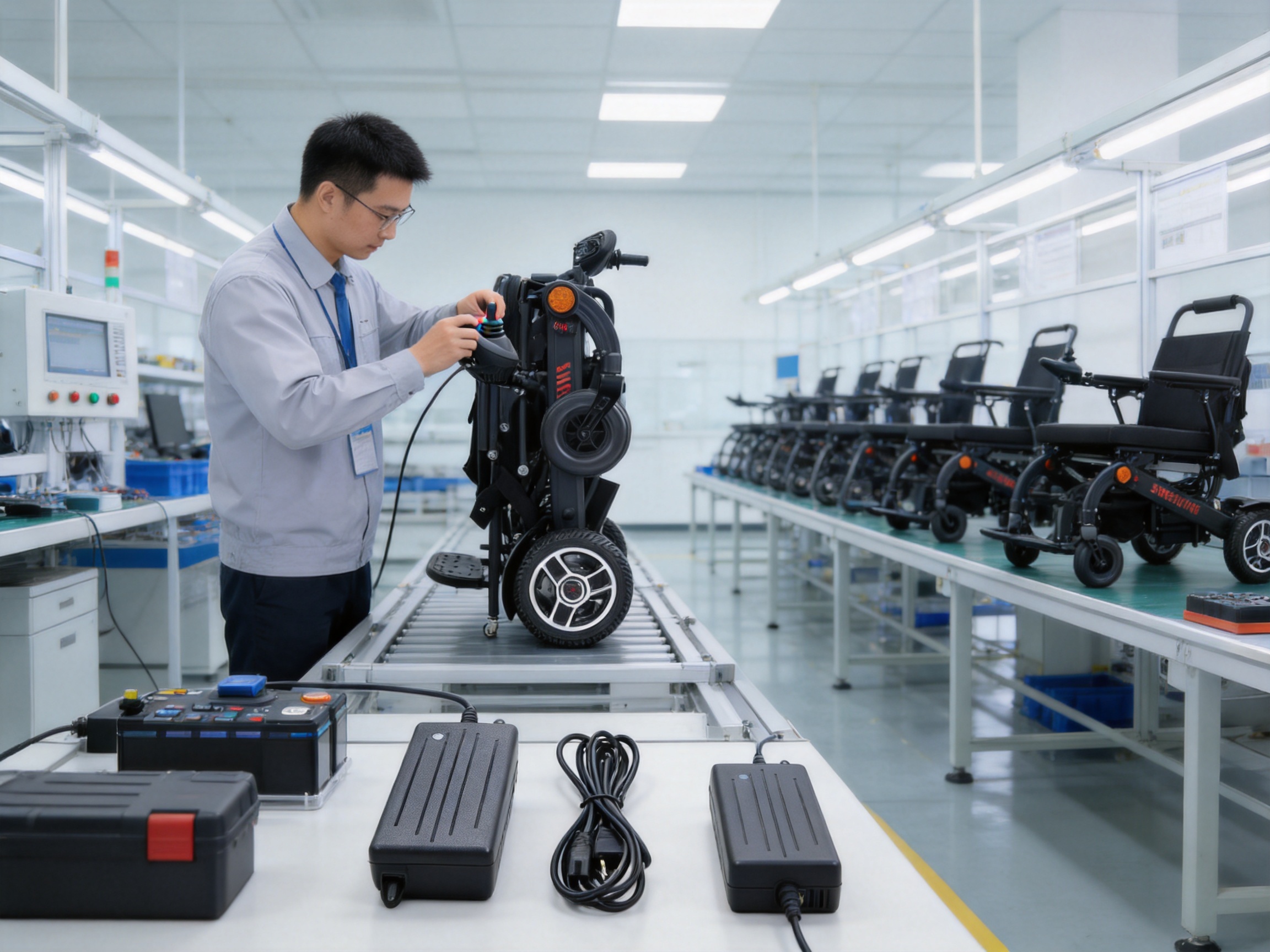
A powered wheelchair is only as reliable as the company and production system behind it. The manufacturer of this product is located in Suzhou Industrial Park, China, and has more than ten years of experience in the research, development, and production of mobility scooters and power wheelchairs. Established in 2011, the company operates a large manufacturing base covering 60 acres with a 30,000-square-meter factory.
This manufacturing scale matters because mobility products require stable production management, consistent component assembly, and structured quality control. A factory designed for mobility scooters and power wheelchairs can support specialized processes for frames, electrical systems, controllers, batteries, motors, braking systems, and final inspection.
The company is described as a high-tech enterprise focused on improving the well-being and convenience of elderly and disabled people. This focus is important because mobility products are not ordinary consumer goods. They must serve users who depend on them for independence, access, and daily dignity. Product development must therefore consider comfort, safety, reliability, and ease of use from the beginning.
The manufacturer also owns intellectual property rights for electric scooters and power wheelchairs. Intellectual property ownership indicates active product development rather than simple imitation. In a competitive market where many products may look similar from a distance, genuine design capability helps create better folding structures, more refined control systems, and improved user-focused details.
Advanced Production Management and Quality Awareness
The company emphasizes strict production management and scientific product design. In practical terms, this means that product quality is supported not only by individual components but also by organized production procedures. For powered wheelchairs, quality management must address mechanical structure, electrical reliability, motor performance, braking consistency, battery installation, charger compatibility, and final operating checks.
Advanced manufacturing in the mobility industry often includes structured incoming material inspection, frame assembly control, wiring layout standards, torque control for fasteners, controller matching, battery safety checks, motor testing, braking verification, folding mechanism inspection, and final product testing. These processes help ensure that every chair leaving the production line meets consistent expectations.
Scientific product design is also important for long-term reliability. A folding wheelchair experiences repeated movement at hinges, joints, locking points, and frame connections. If the folding design is not engineered carefully, it may become loose, difficult to operate, or less stable over time. A company with deep experience in powered mobility design can better understand these stress points.
The product’s automatic folding function requires especially careful manufacturing control. Folding systems must operate smoothly, align correctly, and maintain structural integrity in both folded and unfolded positions. This is more demanding than a simple fixed-frame chair. The manufacturing team must ensure that electrical and mechanical elements work together without interference.
Research and Development Focused on Independence
The development philosophy behind this wheelchair is centered on helping users live more independently and with greater dignity. Independence is not only about driving forward; it is about reducing dependence during everyday moments. Automatic folding reduces dependence during storage and transport. Joystick flexibility reduces dependence by adapting to user ability. Battery range reduces dependence by supporting longer outings. Comfortable design reduces dependence by encouraging regular use.
The company’s research and development experience in mobility scooters and power wheelchairs supports this user-centered approach. Products in this category must balance many competing goals. They must be compact but strong, powerful but controllable, comfortable but portable, feature-rich but easy to use, and cost-effective but reliable. Achieving this balance requires accumulated engineering knowledge.
Advanced control technology and driving systems are part of the company’s product direction. In this wheelchair, the control system links the joystick, motor controller, dual motors, and braking system. A smooth control experience helps users feel comfortable in tight spaces and during turns. Poor control can make even a powerful chair feel unsafe, while refined control makes mobility more natural.
For elderly users, predictable response is especially important. Sudden acceleration or delayed braking can cause anxiety. A well-designed drive system allows the user to build confidence through repeated use. The more natural the chair feels, the more likely it is to become part of the user’s normal life rather than a product used only when absolutely necessary.
Practical Applications in Everyday Life
This automatic folding electric wheelchair is suitable for a wide range of everyday environments. At home, it can help users move between rooms, access living areas, and reduce fatigue. Its compact width of 605 mm supports navigation through many interior spaces, though users should always check their own doorway and hallway dimensions before purchase.
In community environments, the chair can assist with shopping, visiting friends, attending events, or moving around public buildings. The controlled speed and joystick operation are suitable for pedestrian surroundings where careful navigation is necessary. The under-seat storage bag gives users a convenient place for small belongings such as a wallet, phone, keys, light shopping items, or personal accessories.
For travel, the automatic folding feature becomes especially useful. The chair can be folded for transport and stored more conveniently than many non-folding powered models. Families who enjoy outings may appreciate that the chair supports both mobility and easier logistics. A mobility device that is too difficult to transport may discourage travel, while a folding design supports a more active lifestyle.
The chair may also be useful in assisted living communities, senior centers, large residential areas, retirement communities, and similar environments. Because the joystick can be adjusted for either side, the chair can serve different users more flexibly. For organizations that assist multiple mobility users, adaptable controls and manageable folding are practical advantages.
Why Travel-Smart Design Matters
Travel-smart design means more than being foldable. It means the entire product is planned around movement, transition, storage, and independence. A travel-smart wheelchair must be ready for daily life outside a single location. It must handle the repeated pattern of driving, stopping, folding, moving, storing, charging, and driving again.
This chair reflects that thinking through its combination of automatic folding, lithium battery power, compact dimensions, dual motors, and comfort features. Every major component contributes to a more complete mobility experience. The user can drive with joystick control, stop with electromagnetic braking, ride with suspension support, fold the chair automatically, and rely on practical battery capacity for daily distance.
Compared with heavy traditional powered chairs, this model is more suitable for users who prioritize transport and storage. Compared with basic portable chairs, it offers stronger convenience through automatic folding and a more complete feature set. Compared with manual wheelchairs, it reduces physical effort and can help users conserve energy during outings.
Travel-smart design is especially important as populations age and more people seek active senior lifestyles. Many older adults want to continue visiting family, shopping independently, traveling locally, and participating in community life. Mobility equipment that supports these goals can improve quality of life in meaningful ways.
Company Reliability and Global Market Experience
The manufacturer has built long-term partnerships with customers around the world, exporting products to America, Europe, Japan, Australia, the Middle East, Russia, and other markets. International market experience is valuable because different regions have different user expectations, environmental conditions, distribution channels, and compliance considerations. Serving global customers requires flexibility and consistency.
The company follows the principle of quality first, credit above, and customer supreme. In the mobility industry, these principles are more than marketing phrases. Users need products they can trust, dealers need stable supply, and partners need responsive service. A product may have strong specifications, but long-term value also depends on support, production reliability, and manufacturer responsibility.
The company’s commitment to qualified products, considerate service, and reasonable prices supports its competitiveness. The market for mobility scooters and electric wheelchairs includes many choices, from low-cost basic products to premium high-end devices. A manufacturer that combines production scale, research experience, and practical pricing can offer strong value to distributors and users.
For buyers evaluating suppliers, factory size, industry experience, product range, and export history are important. A company with a 30,000-square-meter factory and more than a decade of specialized experience is better positioned to support consistent supply than a small or inexperienced assembler. This matters for dealers, care organizations, and international buyers who need dependable cooperation.
Design Details That Improve User Experience
The under-seat storage bag is a simple but useful detail. Mobility users often need to carry personal items, and placing them in the lap is inconvenient or unsafe. A storage bag keeps small items accessible without interfering with steering. It supports independence by allowing the user to carry essentials without needing another person to hold them.
The front light option also adds practical daily value. Even indoors, lighting conditions can vary. A front light helps the user see nearby obstacles and helps others recognize the chair’s presence. For travel, hotels, parking areas, building entrances, and evening environments may all benefit from additional visibility.
The large foot platform improves seated comfort and contributes to a secure feeling. Users often spend extended time in their mobility equipment, so posture support matters. The platform also makes entry and exit feel more organized, especially when combined with careful user transfer practices.
Easy movement after folding is another important design detail. Some folding chairs become awkward shapes when folded, making them difficult to pull, lift, or reposition. A travel-smart wheelchair should fold in a way that supports practical handling. This feature improves the experience for caregivers, family members, and users who need to manage the chair in compact spaces.
Responsible Use and Maintenance Considerations
Like any powered mobility device, this wheelchair should be used responsibly. Users should read the instruction manual, understand joystick operation, learn braking behavior, and practice in a safe open area before using the chair in busy environments. New users should become familiar with turning radius, stopping distance, slope limits, and battery indicators.
The maximum driving gradient of 10 degrees should not be exceeded. Wet, loose, icy, sandy, or uneven surfaces can affect traction and braking. Users should avoid sudden turns at high speed, unsafe slopes, stairs, escalators, and road traffic. The product is designed for personal mobility support, not for hazardous terrain or high-speed travel.
Battery care is also important. The lithium battery should be charged with the correct charger and stored according to the manufacturer’s instructions. Users should avoid using damaged chargers, exposing electrical components to excessive moisture, or modifying battery wiring. Proper charging habits can help maintain battery performance and service life.
Routine inspection should include tires, brakes, folding mechanism, joystick function, battery connection, charger condition, and frame stability. Any unusual sound, reduced braking performance, unstable folding behavior, or electrical problem should be addressed before continued use. Preventive attention helps preserve safety and reliability.
Who Can Benefit Most from This Wheelchair
This automatic folding electric wheelchair is especially suitable for users who want powered mobility with reduced transport difficulty. Seniors who tire easily during walking, people with limited endurance, and users who need help moving around large indoor or pedestrian areas may benefit from its powered operation and compact design.
It is also suitable for families and caregivers who frequently transport a mobility device. Automatic folding can reduce physical strain and save time. If a family enjoys weekend travel, medical appointments, shopping trips, or community activities, a chair that folds easily can make outings less complicated.
Users who need left-side joystick operation may find the flexible controller especially valuable. Instead of adapting themselves to a fixed product, they can adapt the product to their natural control side. This improves comfort and can make the learning process easier.
The chair is also a good fit for users who value a balance between portability and feature completeness. It is not merely a minimal travel chair; it includes suspension, dual motors, electromagnetic braking, battery options, storage convenience, and lighting availability. This balanced feature set makes it practical for regular use rather than occasional use only.
Market Position and Competitive Value
In the current mobility market, buyers often compare products based on weight, folding method, battery range, motor power, comfort, price, and supplier credibility. This automatic folding wheelchair performs strongly because it addresses multiple priorities at once. It does not rely on a single selling point; instead, it creates value through a complete mobility system.
Against standard non-folding powered wheelchairs, it offers superior storage and transport convenience. Against basic manual wheelchairs, it offers powered independence and reduces physical effort. Against lightweight folding competitors, it provides automatic folding, front and rear suspension, dual-motor drive, and electromagnetic braking. Against products from less experienced suppliers, it benefits from the manufacturer’s long-term specialization in mobility equipment.
For distributors, the product has strong presentation value. Automatic folding is easy to demonstrate and simple for customers to understand. Buyers can immediately see the convenience. Technical specifications such as 120 kg capacity, 30 ± 5 km range, lithium battery options, and dual 250 W motors reinforce confidence after the first demonstration.
For end users, the value is emotional as well as technical. A mobility chair can influence whether someone feels free to leave home, join family activities, or manage personal errands. A product that folds easily, drives smoothly, and feels comfortable can restore confidence and reduce hesitation.
Q&A Section
Q1: What is the main advantage of this automatic folding electric wheelchair?
The main advantage is its automatic folding design. It reduces the physical effort required to fold and store the chair, making it more convenient for travel, car transport, home storage, and caregiver handling.
Q2: Is this product intended as a medical device?
For the U.S. market, it is described as a non-medical mobility device. It is intended to support personal mobility and travel convenience, but users should consult appropriate professionals when selecting equipment for medical or clinical needs.
Q3: What is the maximum driving range?
The listed maximum driving range is 30 ± 5 km under suitable conditions. Actual range depends on battery capacity, user weight, terrain, temperature, slope frequency, and driving habits. Optional battery capacity up to 30 Ah can support longer distance needs.
Q4: Can the joystick be used on either side?
Yes. The joystick controller is available for both-side use, making it suitable for users who prefer either right-hand or left-hand operation.
Q5: What braking system does the wheelchair use?
The wheelchair uses an electromagnetic brake system. This supports controlled stopping and helps improve user confidence during daily mobility.
Q6: How much weight can the chair support?
The listed weight capacity is 120 kg, approximately 265 lb. Users should not exceed the recommended capacity because overloading can affect safety, performance, range, and product life.
Q7: What type of battery does it use?
The wheelchair uses lithium battery options, including 24 V / 10.2 Ah and 20 Ah configurations, with optional larger capacity up to 30 Ah for extended range.
Q8: How long does charging take?
The listed charging time is approximately 5 hours using the specified DC 24 V 2 A charger with AC 115–230 V input.
Q9: Does the wheelchair have suspension?
Yes. It includes front and rear suspension, which helps improve ride comfort over minor bumps, thresholds, and everyday surface changes.
Q10: Why is the manufacturer’s experience important?
Powered wheelchairs require reliable engineering, consistent assembly, quality control, and long-term product knowledge. A manufacturer with more than ten years of experience, a large production facility, and specialized research and development capability can better support stable product quality and supply.
Conclusion
The automatic folding electric wheelchair is a strong example of travel-smart mobility design. It combines automatic folding convenience, joystick flexibility, dual-motor driving, electromagnetic braking, front and rear suspension, practical battery options, and user-focused comfort features. These strengths make it a compelling choice for seniors, travelers, caregivers, and mobility users who want independence without unnecessary complexity.
Its advantages over many competing products are clear. It is easier to fold than manual folding chairs, more portable than conventional powered wheelchairs, more comfortable than many basic travel models, and more adaptable through both-side joystick operation. The availability of lithium battery configurations and optional extended capacity further improves its suitability for different lifestyles.
Behind the product is a specialized manufacturer with significant experience in mobility scooters and power wheelchairs, a large factory, research and development capability, intellectual property ownership, and a quality-focused production philosophy. In a market where reliability and trust are essential, manufacturing strength is as important as product design.
For users seeking a powered wheelchair that supports daily movement, travel convenience, and greater personal freedom, this automatic folding model offers a practical and competitive solution. It is designed not only to move people forward but also to make the entire mobility experience easier, safer, and more dignified.
References
1. Product specification data for automatic folding electric wheelchair, travel-smart wheelchair category.
2. Manufacturer company profile and production capability information for mobility scooters and power wheelchairs.
3. General mobility equipment design principles regarding powered wheelchair control systems, braking systems, battery selection, and user comfort.
4. Industry knowledge on lithium battery powered mobility devices, folding wheelchair structures, and travel mobility product evaluation.