
 +86-(0)512-82283871
Content
- 1 Product Overview: A Compact Scooter Built for Real-World Mobility
- 2 Core Technical Specifications
- 3 Key Advantage One: Four-Wheel Stability in a Travel-Friendly Format
- 4 Key Advantage Two: Folding Convenience for Storage and Transport
- 5 Key Advantage Three: Practical Range for Daily Activities
- 6 Key Advantage Four: Controlled Speed for Safe Everyday Use
- 7 Key Advantage Five: Electromagnetic Braking for Dependable Stopping
- 8 Key Advantage Six: Rear Suspension for Comfort on Common Surfaces
- 9 Key Advantage Seven: Strong Weight Capacity in a Compact Class
- 10 Design Philosophy: Independence, Dignity, and Everyday Practicality
- 11 Manufacturing Strength Behind the Product
- 12 Advanced Production Management and Process Control
- 13 Quality First as a Commercial Advantage
- 14 Why Distributors Should Consider This Scooter
- 15 Advantages Over Common Competitor Types
- 16 Comfort and Ergonomics for Everyday Use
- 17 Battery, Charging, and Maintenance Considerations
- 18 Safety-Oriented Operation
- 19 Applications and Ideal Use Scenarios
- 20 Wholesale Value: More Than a Product
- 21 Product Positioning for Retail and Online Channels
- 22 Engineering Balance: Why the Specifications Work Together
- 23 Durability and Long-Term Ownership
- 24 Responsible Marketing and Compliance Awareness
- 25 Frequently Asked Questions
- 25.1 What type of scooter is the S1 PLUS?
- 25.2 Is this product considered a medical device in the U.S. market?
- 25.3 What is the maximum speed?
- 25.4 What is the driving range?
- 25.5 What is the weight capacity?
- 25.6 Does the scooter have suspension?
- 25.7 What kind of brake system does it use?
- 25.8 What battery system does the scooter use?
- 25.9 How long does charging take?
- 25.10 Why is the four-wheel design important?
- 25.11 Who is the ideal wholesale buyer for this scooter?
- 26 Conclusion: A Balanced Travel Scooter for Serious Wholesale Programs
- 27 References
- 28 Product: S1 PLUS All Weather Wholesale Four Wheels Electric Folding Mobility Scooter in Walmart
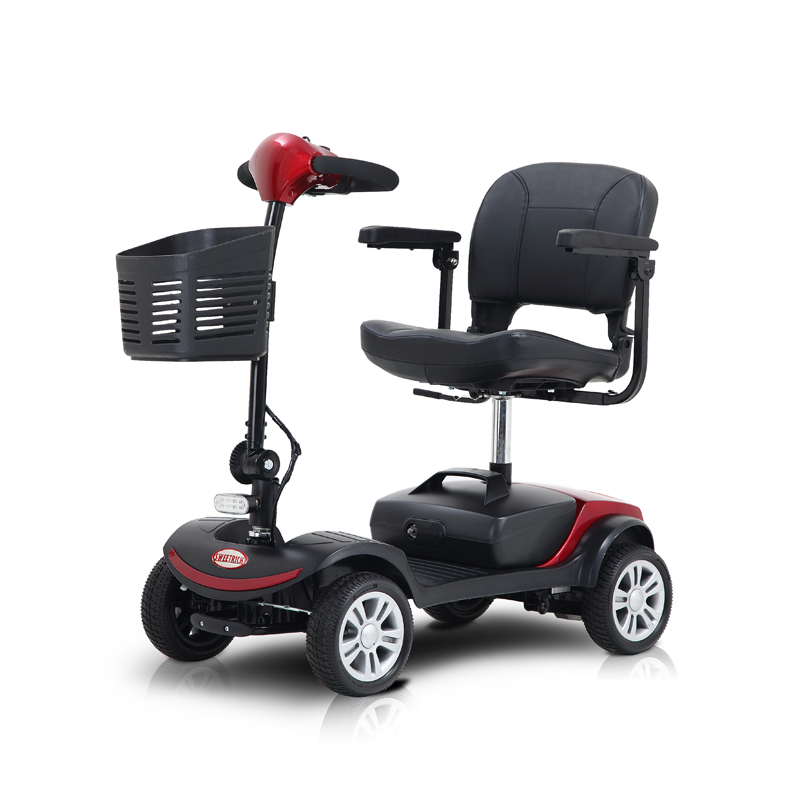
For distributors, retailers, rehabilitation product suppliers, senior living purchasing teams, and mobility equipment buyers, a successful travel scooter must do more than move from one place to another. It must be compact enough for transport, strong enough for repeated use, safe enough for daily confidence, and practical enough for a wide range of users. The S1 PLUS four-wheel electric folding mobility scooter is designed around these priorities, combining a stable four-wheel structure, a foldable travel-friendly layout, an electromagnetic braking system, rear suspension, and a durable 24V drive platform.
This article introduces the product’s practical value, technical specifications, competitive advantages, and manufacturing background. It also explains why a professional production partner with experience in mobility scooters and power wheelchairs can help wholesale buyers reduce risk, improve product consistency, and serve end users more effectively. The scooter discussed here is intended as a non-medical mobility device for the U.S. market, and its value lies in convenience, independence, and everyday personal transportation support.
S1 PLUS All Weather Wholesale Four Wheels Electric Folding Mobility Scooter in Walmart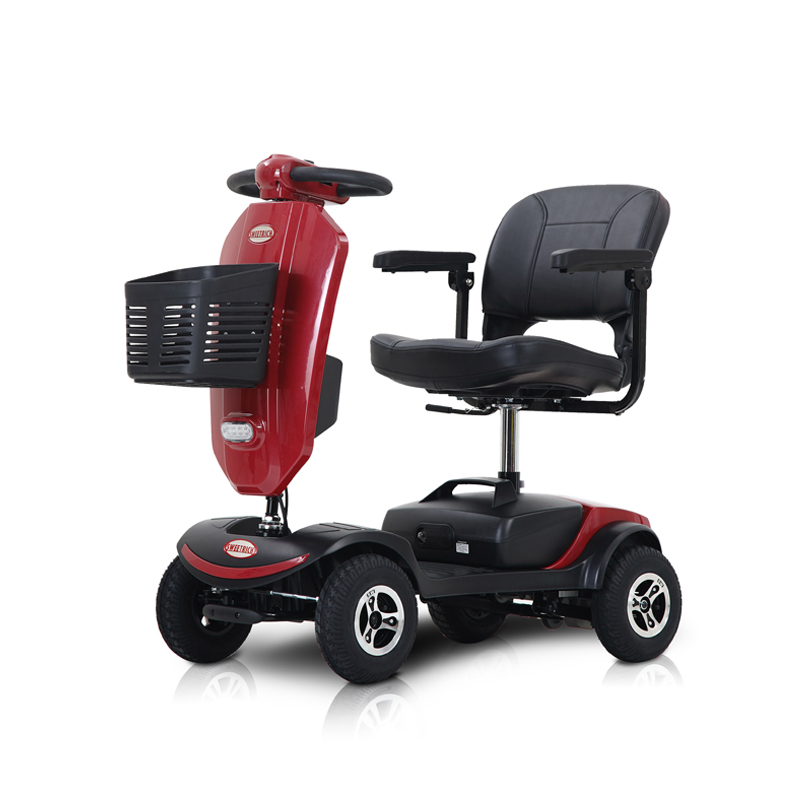
Product Overview: A Compact Scooter Built for Real-World Mobility
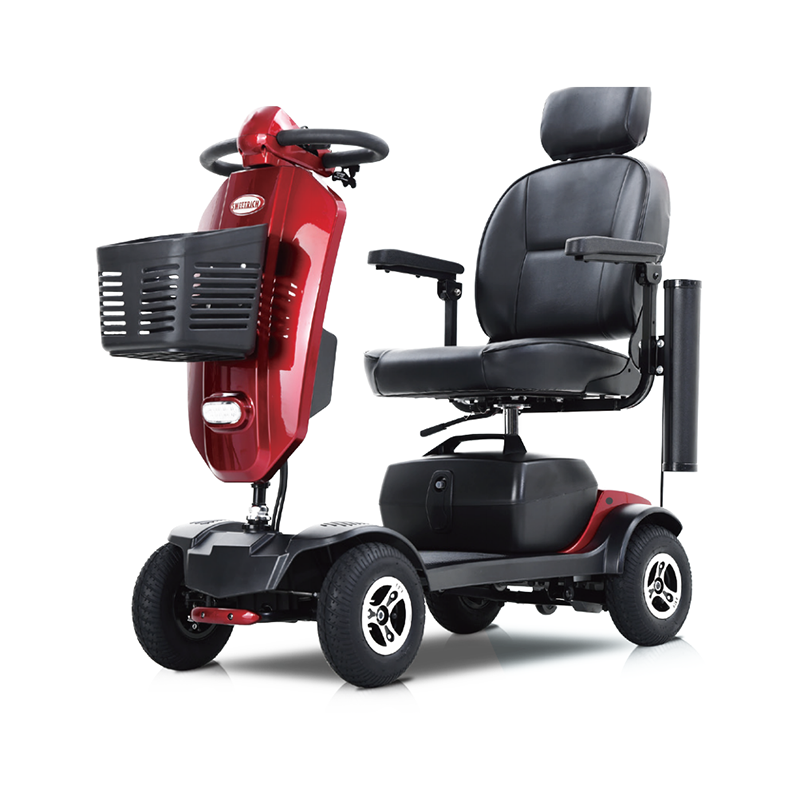
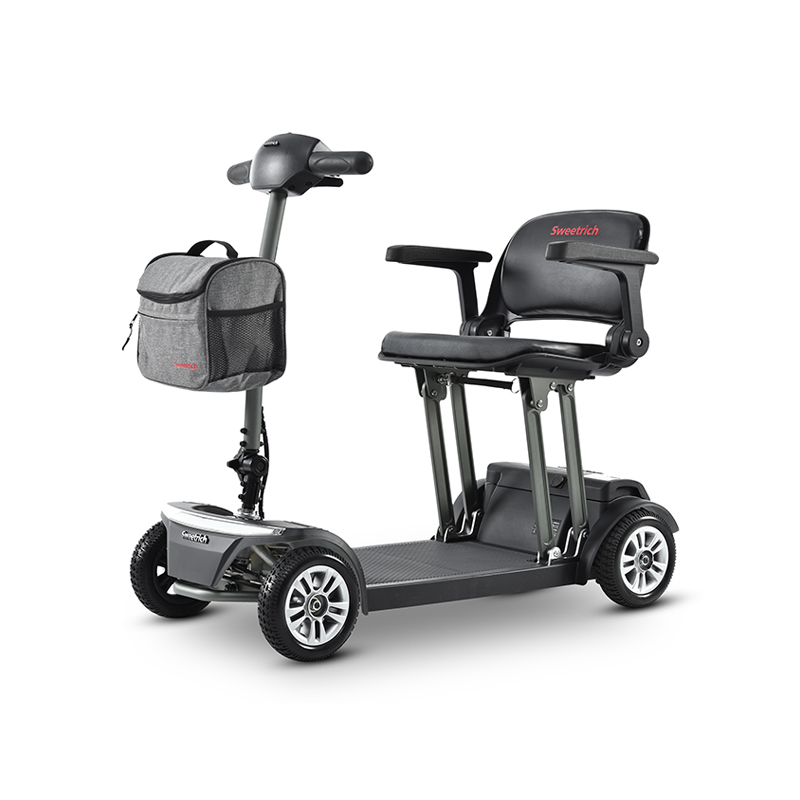
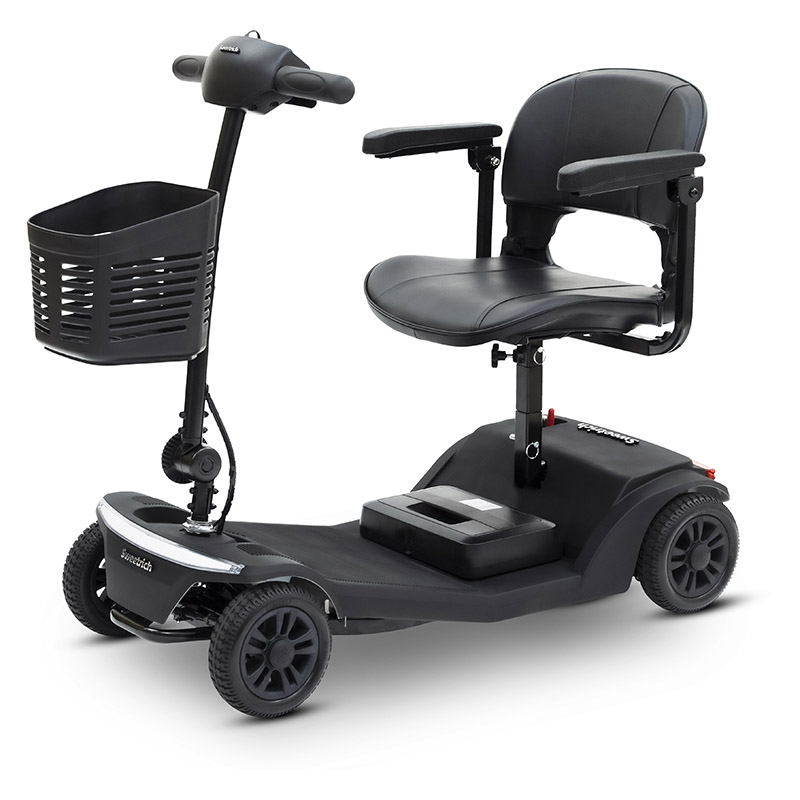
The S1 PLUS is positioned as a travel smart scooter for users who need a reliable electric mobility option that can handle routine outdoor and indoor movement. Its four-wheel structure is especially important because many buyers in this category look for a balance between portability and stability. While three-wheel scooters can offer a tight turning experience, a four-wheel design often provides a more reassuring ride for users who prefer a planted feel, especially when traveling over common outdoor surfaces such as paved community paths, parking areas, residential sidewalks, and shopping center entrances.
The scooter is built with dimensions of 1110 mm in length, 525 mm in width, and 920 mm in height. This compact footprint is large enough to provide comfortable riding geometry while remaining suitable for travel and storage. The listed maximum forward speed is 8 km/h, or approximately 5 mph, which suits many everyday mobility scenarios. This speed range is not intended for aggressive road use; instead, it supports controlled personal travel in practical environments where comfort and predictability matter.
The maximum driving gradient is listed at 12 degrees. For users and distributors, gradient capability is a key specification because it reflects how the scooter handles gentle slopes, ramps, and slightly inclined pathways. While actual performance depends on user weight, battery condition, surface quality, and operating environment, a 12-degree listed gradient gives the scooter a practical advantage in everyday settings where perfectly flat ground is not always available.
The maximum driving range is listed at 15 to 25 km, or approximately 9.5 to 15.5 miles. This range makes the scooter suitable for daily errands, community travel, and extended use in large facilities, shopping centers, residential complexes, tourism areas, and local neighborhoods. For wholesale buyers, the flexible range also helps position the scooter toward users who want more than a short-distance device but do not require a large heavy-duty vehicle.
Core Technical Specifications
The product’s specifications provide a clear picture of its target use case: compact yet capable, travel-oriented yet sturdy, simple to operate yet supported by proven electric mobility components. The following table summarizes the main technical details.
Specification |
Details |
Product Type |
Four-wheel electric folding mobility scooter |
Dimensions |
1110 mm length × 525 mm width × 920 mm height |
Maximum Forward Speed |
8 km/h, approximately 5 mph |
Maximum Driving Gradient |
12 degrees |
Maximum Driving Range |
15–25 km, approximately 9.5–15.5 miles |
Weight Capacity |
136 kg, approximately 300 lb |
Suspension |
Rear suspension |
Tire Size |
9 inch × 3 inch front and rear tires |
Brake System |
Electromagnetic brake |
Battery Options |
Lead-acid 12V 12Ah × 2 pcs, with 20Ah option |
Charger |
DC 24V 2A, AC 100–240V input |
Charging Time |
Approximately 6 hours |
Motor |
24V / 300W |
Motor Controller |
24V / 50A Dynamic controller |
Heaviest Part |
28.5 kg, approximately 63 lb |
Key Advantage One: Four-Wheel Stability in a Travel-Friendly Format
One of the strongest advantages of this scooter is its four-wheel configuration. In the travel scooter category, buyers frequently need to choose between compactness and stability. Some very small scooters may be easy to store but can feel less planted. Larger scooters may offer a stronger ride but can become difficult to transport. The S1 PLUS aims to sit between these extremes by providing a four-wheel platform in a manageable size.
The 525 mm width contributes to compact handling, while the four-wheel base helps distribute weight and improve user confidence. The 9 inch × 3 inch front and rear tires also support the scooter’s practical ride character. Tires in this size range are suitable for common indoor and outdoor surfaces while keeping the overall vehicle relatively compact. For distributors, this balance is commercially important because it allows the product to appeal to a wider audience, including people who value maneuverability but are not comfortable with very narrow or unstable-looking scooters.
Compared with competitors that focus only on low weight, this scooter offers a more complete daily mobility package. A lightweight product can be attractive in marketing, but if the frame, tires, braking, battery configuration, and controller are not properly matched, the user experience may suffer. The S1 PLUS combines portability with a 300 lb weight capacity, rear suspension, and an electromagnetic brake, giving it a more robust identity than many minimal travel scooters.
Key Advantage Two: Folding Convenience for Storage and Transport
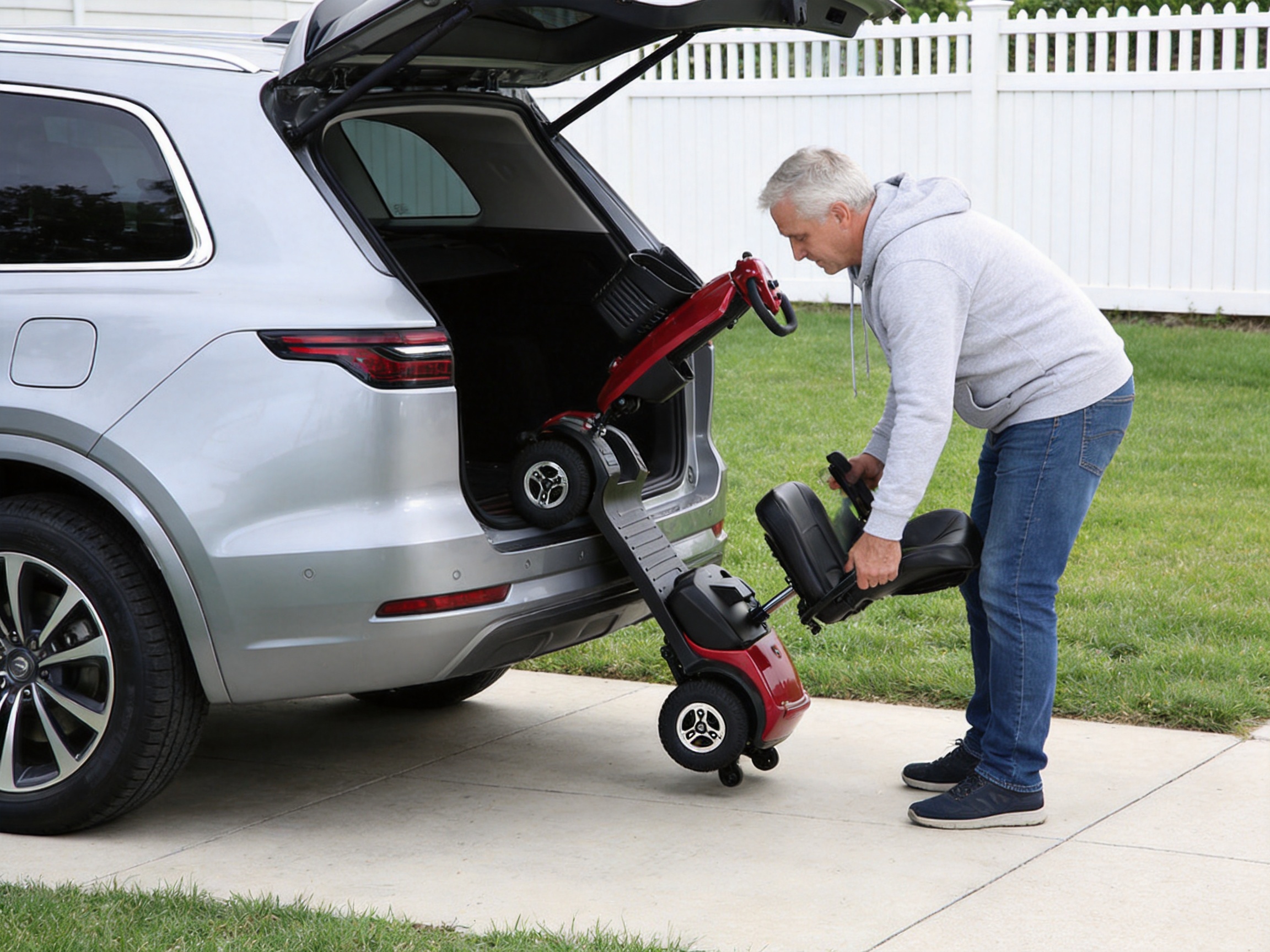
Folding design is central to the scooter’s appeal. Many users want an electric scooter that can be stored in a vehicle, kept in an apartment, placed in a garage, or moved through limited storage spaces. A folding scooter addresses these needs by reducing the inconvenience associated with larger mobility equipment. For families and caregivers, folding also makes everyday support easier because the device can be moved, stored, and prepared for travel with less effort.
The listed heaviest part is 28.5 kg, or approximately 63 lb. This figure is important because many buyers compare scooters based on lifting and handling requirements. While any lifting should be done carefully and based on the physical ability of the person handling the product, a clearly stated heaviest-part weight helps distributors provide accurate expectations to customers. It also helps retail teams explain whether the scooter is suitable for vehicle transport, home storage, or regular travel use.
Against competing models that are either non-folding or require complex disassembly, the folding approach provides a simpler ownership experience. A scooter that is difficult to prepare for travel may be used less often, even if its specifications look good on paper. The S1 PLUS supports the idea that mobility equipment should encourage daily life, not create extra obstacles. Its folding convenience is especially valuable for users who visit shopping areas, parks, community centers, and family homes.
Key Advantage Three: Practical Range for Daily Activities
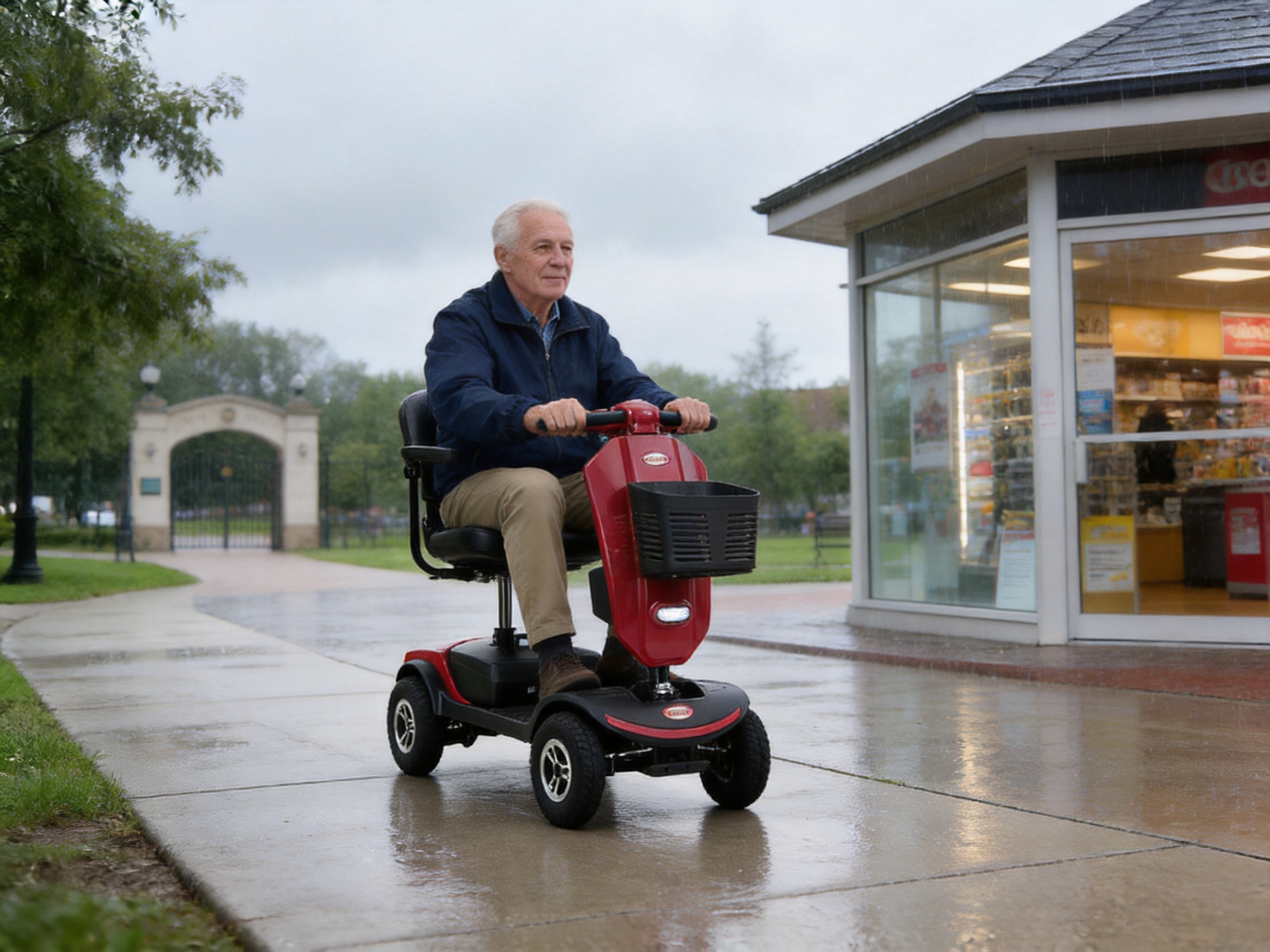
A listed maximum driving range of 15 to 25 km makes this scooter useful for a broad range of daily tasks. Range is one of the most important purchase considerations because users want confidence that the scooter can complete planned activities without frequent recharging. For example, a user may need to travel from home to a nearby store, move through aisles, return home, and still have enough remaining power for additional movement. In senior living communities or large facilities, the distance traveled across a full day can be surprisingly high.
The S1 PLUS offers a practical middle-range capability. It is not positioned as a large long-distance road scooter, but it also goes beyond ultra-short-range compact models. This makes it attractive to wholesale buyers who want a product that covers common usage patterns without becoming too large, heavy, or expensive. The optional 20Ah battery configuration further helps distributors serve customers who want extended range potential.
The scooter uses lead-acid batteries in a 12V configuration with two pieces, supporting the 24V system. Lead-acid battery platforms remain widely understood in mobility products because they are cost-effective, familiar to service teams, and suitable for many standard applications. For wholesale operations, serviceability and predictable replacement pathways matter. A product that uses a known battery system can simplify after-sales support and reduce training burdens.
Key Advantage Four: Controlled Speed for Safe Everyday Use
The maximum forward speed of 8 km/h, approximately 5 mph, is appropriate for a travel mobility scooter intended for personal movement in controlled environments. Speed should not be considered only as a measure of power. In mobility scooter design, speed must be balanced with braking, stability, turning, user comfort, and likely operating environments. A very fast scooter may be unsuitable for many users if it becomes difficult to manage in crowded or narrow spaces.
The S1 PLUS is designed for steady and manageable movement. Its speed profile supports use in residential areas, community facilities, shopping spaces, and leisure travel environments. For distributors, a moderate maximum speed can help reduce mismatch between product capability and user needs. Many users in this category value confidence and ease of control more than speed. The combination of a 24V / 300W motor and 24V / 50A Dynamic controller supports smooth power delivery for ordinary travel requirements.
Compared with lower-quality scooters that may have inconsistent acceleration, the use of a recognized controller specification helps improve ride predictability. Controller quality can influence acceleration response, braking feel, battery efficiency, and reliability. A well-matched controller and motor system is essential because even a strong frame cannot compensate for poor drive behavior. The S1 PLUS is built around a sensible electrical platform that supports the needs of everyday mobility users.
Key Advantage Five: Electromagnetic Braking for Dependable Stopping
The electromagnetic brake is a major safety-related feature. In personal electric mobility equipment, braking performance must be consistent and intuitive. Electromagnetic braking systems are commonly used in mobility scooters because they can provide reliable stopping support and help prevent unintended rolling when the scooter is not being driven. This is especially important on mild slopes, ramps, and surfaces where manual braking alone would be less convenient.
For users, an electromagnetic brake contributes to peace of mind. For distributors, it is a strong selling point because it shows that the product is not merely a basic electric vehicle but a scooter designed with the expectations of mobility users in mind. The brake system works with the overall vehicle structure to support predictable operation. When paired with the 12-degree gradient specification, it gives buyers a clearer sense of how the scooter is intended to behave in real-world environments.
Many low-cost competitor scooters may appear similar visually but can differ significantly in braking quality, controller tuning, and component integration. The real value of a scooter is often found in these hidden systems. A good brake system protects the product’s reputation after sale because users quickly notice whether a scooter feels secure. For wholesale buyers, fewer complaints and better satisfaction can translate into stronger long-term business performance.
Key Advantage Six: Rear Suspension for Comfort on Common Surfaces
Rear suspension helps improve ride comfort, especially when traveling over minor surface irregularities. Travel scooters are often used in environments that are not perfectly smooth. Sidewalk transitions, expansion joints, small bumps, paved outdoor paths, and entry ramps can create vibration. Without suspension, these vibrations may reduce comfort and make users feel less confident. Rear suspension helps absorb some of the impact and contributes to a smoother ride.
In the compact travel scooter category, not every product offers meaningful suspension. Some competitors rely heavily on seat padding or tire thickness alone. While those features can help, suspension adds another layer of comfort. The S1 PLUS uses rear suspension to support the rider in common travel conditions. This is particularly useful because the scooter’s four-wheel layout and moderate tire size already create a stable platform; suspension then improves the feel of that platform.
For retailers, comfort features are important during demonstrations. A user may compare several scooters and immediately notice differences in ride smoothness. A scooter that feels more comfortable during a short test is more likely to earn buyer confidence. For distributors selling through dealers, showrooms, or online channels, the rear suspension becomes a practical feature that can be highlighted in product training, sales literature, and customer consultations.
Key Advantage Seven: Strong Weight Capacity in a Compact Class
The listed weight capacity is 136 kg, or approximately 300 lb. This is a strong figure for a folding travel scooter and increases the range of potential users. A higher weight capacity does not only matter for heavier riders; it also reflects the strength of the frame, drive system, and overall design margin. Users may carry personal items, shopping bags, or small accessories, and a robust capacity helps the scooter remain practical in daily life.
Compared with lightweight competitors that offer lower capacity, the S1 PLUS provides a more inclusive product profile. Wholesale buyers often prefer products that can serve a wider customer base because inventory selection becomes easier. Instead of carrying too many narrow-use models, distributors can choose a scooter that balances portability, stability, and strength. This reduces complexity and can improve sales efficiency.
Weight capacity also influences consumer confidence. Buyers want to know that a scooter is not operating at the edge of its ability. A 300 lb capacity provides reassuring information for many users and families. It supports the image of a durable travel scooter rather than a fragile lightweight device. In mobility equipment purchasing, confidence is often as important as specifications, because users depend on the product for meaningful daily movement.
Design Philosophy: Independence, Dignity, and Everyday Practicality
The product is part of a broader mobility category focused on helping elderly people, disabled people, and individuals with reduced walking endurance maintain more independent daily routines. However, it is important to describe the product accurately: for the U.S. market, it is presented as a non-medical device. Its purpose is personal mobility support, convenience, and transportation assistance, not diagnosis, treatment, or medical intervention.
The design philosophy is based on practical independence. A good scooter should allow users to participate more easily in ordinary activities, such as visiting friends, moving through a residential community, shopping, attending events, or enjoying outdoor spaces. It should be easy to understand, reliable in operation, and comfortable enough for repeated use. The S1 PLUS supports these goals through its combination of compact folding form, stable four-wheel ride, reasonable range, and dependable braking.
Dignity is another important design consideration. Mobility products should not feel intimidating or overly clinical. A well-designed travel scooter can give users a sense of personal control rather than dependence. This is why smooth operation, manageable speed, and convenient storage matter. The user experience begins before the scooter moves and continues after the ride ends. If storage, charging, transport, and handling are all practical, the product becomes a natural part of daily life.
Manufacturing Strength Behind the Product
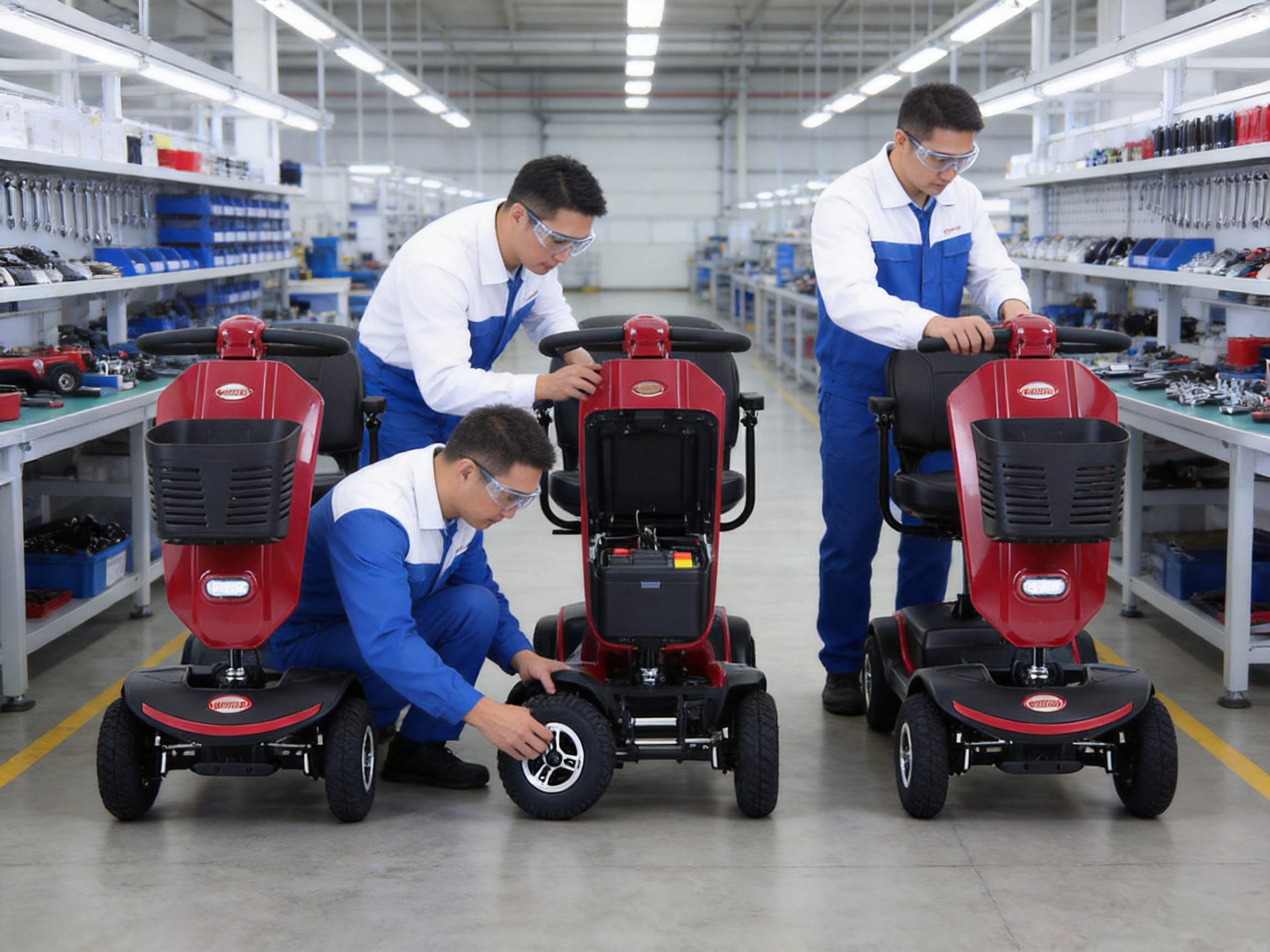
The S1 PLUS is produced by Sweetrich Mobility, a manufacturer with more than ten years of experience in the research, development, and production of mobility scooters and power wheelchairs. The company is located in Suzhou Industrial Park in Jiangsu, China, and operates a large production base covering approximately 60 acres with a 30,000-square-meter factory. This scale supports organized production, quality control, component management, and product development.
Manufacturing experience is especially important in the mobility scooter industry because product quality depends on integration. A scooter is not only a frame, motor, battery, and seat. It is a system in which mechanical structure, electrical components, braking, controller programming, ergonomics, and assembly quality must work together. A small weakness in one area can affect the entire ownership experience. Experienced manufacturers understand how to balance cost, durability, comfort, and production consistency.
The company’s background in both electric scooters and power wheelchairs gives it broader technical knowledge in mobility drive systems. Power wheelchairs often require precise control and user-focused engineering, while scooters require stability, range, and transport practicality. Experience across these categories can help inform better component selection and product testing. For wholesale buyers, this manufacturing foundation reduces the risk associated with unknown suppliers or short-term assemblers.
Advanced Production Management and Process Control
Reliable mobility products require strict production management. This includes incoming material inspection, frame processing, component assembly, electrical system installation, functional testing, packaging inspection, and final quality verification. A manufacturer with a structured production system can maintain more consistent quality across large orders, which is essential for distributors and retailers who must protect their reputation in local markets.
Frame quality is one of the first concerns. A folding scooter must be strong enough to support daily riding while also allowing movement at the folding points. This requires careful design and manufacturing control. Welds, joints, fasteners, alignment, and load-bearing areas must be produced consistently. If a folding frame is not properly controlled, it may develop looseness, noise, or premature wear. A professional manufacturer uses established processes to reduce these risks.
Electrical assembly is equally important. The 24V system, 300W motor, 50A controller, battery connections, charger compatibility, and electromagnetic brake must be assembled with attention to safety and reliability. Wire routing, connector quality, insulation, fastening, and protection from vibration all influence long-term performance. Good electrical process control helps prevent intermittent faults, charging issues, or controller problems.
Testing is another essential part of manufacturing. A scooter should be checked for drive function, braking response, battery interface, steering, throttle behavior, and overall assembly condition before shipment. For wholesale buyers, consistent factory testing can reduce after-sales service pressure. It also supports smoother product launches in retail channels because fewer units require corrective action after arrival.
Quality First as a Commercial Advantage
The company emphasizes a principle of quality first, credit above, and customer supreme. In the wholesale mobility market, this philosophy has practical business meaning. Distributors are not only buying units; they are buying reliability, brand reputation, service stability, and long-term cooperation. A low purchase price can quickly become expensive if products generate frequent complaints, returns, warranty claims, or customer dissatisfaction.
Quality-first manufacturing helps wholesalers compete in a crowded market. Many scooters may look similar in photographs, but long-term performance separates strong products from weak ones. A scooter that performs consistently creates trust with dealers and end users. Dealers are more likely to reorder products that are easy to sell and easy to support. End users are more likely to recommend products that feel safe, comfortable, and dependable.
The S1 PLUS supports this commercial advantage because it is built around proven features: a four-wheel layout, electromagnetic braking, rear suspension, a practical battery system, and a controlled 8 km/h speed profile. These are not decorative features; they are functional elements that affect user satisfaction. By combining them in a foldable travel scooter, the product provides a strong value proposition for wholesale programs.
Why Distributors Should Consider This Scooter
Distributors need products that are easy to position in the market. The S1 PLUS can be presented as a compact, foldable, four-wheel travel scooter with practical range and strong capacity. This clear positioning helps sales teams communicate value quickly. It can serve customers who want a travel-oriented scooter but do not want to sacrifice stability or comfort.
The scooter’s specifications also support flexible market placement. With a weight capacity of 300 lb, it can serve many users. With a range of 9.5 to 15.5 miles, it can support daily errands and community movement. With rear suspension and 9 inch tires, it can offer comfort beyond basic compact scooters. With electromagnetic braking, it provides a reassuring safety-related feature. With folding capability, it appeals to people who need storage and transport convenience.
For distributors selling to retailers, the product offers several demonstration points. Sales staff can show folding convenience, explain the four-wheel stability, discuss the braking system, and highlight the daily range. These features are easy for customers to understand. A product that can be explained clearly is easier to sell, especially in a category where buyers may be comparing multiple models and may not be technical experts.
Advantages Over Common Competitor Types
In the mobility scooter market, competitors often fall into several categories: ultra-light compact scooters, low-cost basic scooters, large non-folding scooters, and premium heavy-duty models. The S1 PLUS competes by offering a balanced package rather than focusing on only one extreme.
Compared with ultra-light compact scooters, it offers stronger stability through its four-wheel design and a meaningful 300 lb capacity. Some ultra-light models may be easier to lift, but they can compromise comfort, range, or user confidence. The S1 PLUS is better suited for buyers who want portability without feeling that the product is too minimal.
Compared with low-cost basic scooters, it offers a more complete feature set. Rear suspension, electromagnetic braking, and a 24V / 50A Dynamic controller are meaningful advantages. Low-cost products can attract attention at first, but if they lack comfort or consistent control, user satisfaction may decline. The S1 PLUS provides a stronger foundation for long-term value.
Compared with large non-folding scooters, it offers better storage and travel convenience. Large scooters may provide high power or longer range, but they can be difficult to transport, store, or maneuver in compact spaces. The S1 PLUS gives users a more flexible option for everyday life, especially when vehicle transport or home storage is important.
Compared with premium heavy-duty scooters, it offers a more accessible and practical travel profile. Not every user needs a large vehicle. Many customers simply need a dependable scooter for errands, community activity, and travel-friendly storage. The S1 PLUS can meet these needs without unnecessary bulk.
Comfort and Ergonomics for Everyday Use
Comfort is one of the strongest influences on repeated product use. A scooter may have good specifications, but if users feel uncomfortable, they may avoid using it. Comfort is created by several factors: riding posture, seat support, suspension, tire size, acceleration smoothness, braking predictability, and overall stability. The S1 PLUS addresses comfort through a balanced mechanical and electrical design.
The rear suspension plays a direct role in reducing vibration. The four-wheel base supports stable movement. The moderate speed helps users feel in control. The electromagnetic brake supports predictable stopping. The 300W motor provides sufficient drive capability for common use. Together, these features create a scooter that is not only transportable but also pleasant to operate.
Ergonomics also matter during storage and transport. A folding scooter must be manageable when not in use. The heaviest part weight provides important handling information. For many users, the ability to store the scooter without complex tools or excessive effort is part of comfort. A scooter that folds into a more compact form can reduce household inconvenience and make travel more realistic.
Battery, Charging, and Maintenance Considerations
The scooter uses a 24V battery system based on two 12V lead-acid batteries, with 12Ah standard capacity and an optional 20Ah configuration. Charging is supported by a DC 24V 2A charger with AC 100–240V input. The charging time is listed at approximately 6 hours. These specifications are practical for daily routines because many users can charge the scooter overnight or during periods of non-use.
Lead-acid batteries are familiar in the mobility equipment industry. They are generally cost-effective and widely serviceable. For distributors, this familiarity can make after-sales maintenance easier, especially in markets where replacement battery supply chains are already established. The optional 20Ah battery configuration can be positioned for customers who prioritize range.
Battery care remains important. Users should follow charging instructions, avoid improper storage, and charge the scooter regularly according to the user manual. Actual range can vary depending on rider weight, terrain, temperature, battery age, tire condition, and driving style. Distributors should communicate these factors clearly to set realistic expectations. Transparent range education reduces customer confusion and improves satisfaction.
Safety-Oriented Operation
Safety-oriented design is not limited to one component. It comes from the interaction of speed control, braking, stability, visibility, user instruction, and maintenance. The S1 PLUS uses an electromagnetic brake and a controlled maximum speed to support safe operation in everyday environments. The four-wheel base also helps users feel stable while moving at moderate speeds.
Users should operate the scooter according to local rules and the product manual. They should avoid unsafe slopes, wet or slippery surfaces beyond product guidance, overloaded conditions, and careless driving in crowded areas. Although the scooter is described as all-weather in its product title, responsible operation remains essential. No mobility scooter should be treated as immune to all environmental risks. Rain, standing water, ice, mud, steep inclines, and uneven terrain can affect performance.
For wholesale and retail teams, user education should be part of product delivery. Buyers should understand charging, braking, speed adjustment, folding procedures, weight capacity, and safe riding conditions. A well-informed user is more likely to have a positive experience and less likely to misuse the product. This improves safety and protects the distributor’s reputation.
Applications and Ideal Use Scenarios
The S1 PLUS is suitable for many everyday scenarios. It can be used in residential communities, senior living environments, shopping centers, parks, travel destinations, family visits, indoor-outdoor mixed spaces, and local errands. Its compact footprint helps in areas where a large scooter would be inconvenient, while its four-wheel layout and rear suspension make it more reassuring than very small minimal scooters.
For families, the scooter can provide a practical way to include a loved one in outings. For users, it can reduce fatigue during longer distances. For senior living organizations, it can support resident mobility within large campuses. For retailers, it can serve as a versatile showroom model that appeals to a broad audience. For distributors, it can become a dependable product line in the travel scooter segment.
The scooter is especially relevant for customers who ask for a balance of portability and stability. These customers may not want a very heavy scooter, but they also may not feel confident on ultra-compact models. The S1 PLUS gives them a middle path: folding convenience, four-wheel support, practical range, and dependable braking.
Wholesale Value: More Than a Product
Wholesale buyers must evaluate not only the scooter itself but also the manufacturer behind it. A strong manufacturing partner can provide product consistency, communication, technical support, and long-term supply. Sweetrich Mobility has developed long-term partnerships with customers around the world and exports products to America, Europe, Japan, Australia, the Middle East, Russia, and other markets. This international experience is valuable because different markets have different expectations for quality, documentation, packaging, and service.
A manufacturer with export experience is more likely to understand distributor needs. These needs may include stable production schedules, consistent product specifications, clear communication, spare parts planning, packaging durability, and responsive after-sales support. In the mobility industry, these factors are essential because the product directly affects users’ daily independence and confidence.
The company’s commitment to qualified products, considerate service, and reasonable prices aligns with wholesale market demands. Distributors need quality, but they also need competitive pricing. Retailers need attractive features, but they also need reliability. End users need comfort, but they also need practical maintenance. The S1 PLUS and its manufacturing support structure are designed to meet these connected requirements.
Product Positioning for Retail and Online Channels
The scooter’s retail positioning can focus on several core messages: foldable convenience, stable four-wheel design, all-weather practical confidence, daily travel range, rear suspension comfort, electromagnetic braking, and 300 lb capacity. These messages are easy to communicate in product listings, showroom conversations, brochures, and distributor catalogs.
For online channels, clear specifications are especially important. Customers comparing products online often look at speed, range, battery type, weight capacity, brake system, scooter dimensions, and transport weight. The S1 PLUS provides detailed values that can be presented transparently. This reduces uncertainty and helps customers compare it fairly against other scooters.
For showroom channels, the scooter’s physical design can be demonstrated directly. Sales staff can show how the scooter folds, how it feels while riding, and how stable the four-wheel platform appears. Demonstrations can be powerful because mobility buyers often make decisions based on confidence and comfort. The product’s practical features support this type of hands-on selling.
Engineering Balance: Why the Specifications Work Together
A good scooter is not defined by a single impressive number. It is defined by balance. The S1 PLUS uses a 24V / 300W motor, which is appropriate for a compact scooter with a moderate maximum speed. The 24V / 50A controller supports power management. The electromagnetic brake supports stopping performance. The 9 inch × 3 inch tires support practical surface handling. The rear suspension improves comfort. The folding structure supports storage and transport.
If one specification were increased without considering the others, the scooter might become less balanced. For example, a much higher speed would require different braking, stability, and safety considerations. A much larger battery could increase range but also increase weight. A larger frame could improve spaciousness but reduce portability. The S1 PLUS reflects a practical engineering compromise intended for everyday travel rather than extreme performance.
This balance is one of its strongest competitive advantages. Many customers do not need the biggest, fastest, or lightest scooter. They need a scooter that works well in ordinary life. The product’s specifications show an effort to deliver exactly that: enough range, enough capacity, enough comfort, enough stability, and enough portability.
Durability and Long-Term Ownership
Durability matters for both users and wholesale buyers. A scooter may look attractive when new, but long-term value depends on how it performs after repeated folding, charging, riding, braking, and storage cycles. The company’s manufacturing experience and quality-focused production system help support durability by controlling materials, assembly processes, and testing procedures.
The 300 lb capacity indicates a frame and drive system designed for meaningful daily use. The electromagnetic brake reduces reliance on manual stopping mechanisms and supports controlled operation. The lead-acid battery platform offers familiar service pathways. The 24V electrical system is straightforward and widely understood. These factors contribute to maintainability and long-term ownership practicality.
For distributors, durable products create repeat business. Dealers are more willing to recommend models that do not create service headaches. Customers are more likely to trust brands and retailers that provide reliable mobility solutions. Long-term durability is therefore not only a user benefit; it is a business benefit across the supply chain.
Responsible Marketing and Compliance Awareness
The product is identified as a non-medical device for the U.S. market. This distinction should be respected in marketing materials. Distributors and retailers should avoid presenting the scooter as a medical treatment or clinical device unless applicable regulatory requirements are met. Instead, the product can be accurately described as a personal electric mobility scooter designed for travel convenience, independence, and everyday movement.
Responsible marketing builds trust. Customers appreciate clear and honest information about what a product can and cannot do. Range should be described as dependent on conditions. Slope ability should be described within safe operating guidance. All-weather language should be supported by practical warnings about slippery surfaces, water exposure, and proper maintenance. Weight capacity should be stated clearly and not exceeded.
By using accurate language, distributors can reduce complaints and improve user safety. This approach also reflects professionalism. In mobility products, trust is essential because customers often depend on the equipment for important daily activities.
Frequently Asked Questions
What type of scooter is the S1 PLUS?
It is a four-wheel electric folding mobility scooter designed for travel-friendly personal mobility. It is suitable for users who want a compact scooter with stable handling, practical range, and convenient storage.
Is this product considered a medical device in the U.S. market?
No. It is presented as a non-medical device for the U.S. market. It is intended for personal mobility support and convenience, not for medical diagnosis, treatment, or clinical use.
What is the maximum speed?
The listed maximum forward speed is 8 km/h, approximately 5 mph. This moderate speed supports controlled everyday use in suitable environments.
What is the driving range?
The listed maximum driving range is 15 to 25 km, approximately 9.5 to 15.5 miles. Actual range may vary depending on rider weight, terrain, battery condition, temperature, and driving habits.
What is the weight capacity?
The scooter has a listed weight capacity of 136 kg, approximately 300 lb. Users should not exceed the rated capacity, and distributors should communicate this specification clearly.
Does the scooter have suspension?
Yes. The scooter includes rear suspension, which helps improve comfort on common paved surfaces, minor bumps, and everyday travel routes.
What kind of brake system does it use?
It uses an electromagnetic brake system. This type of braking supports predictable stopping and helps improve user confidence during daily operation.
What battery system does the scooter use?
The scooter uses two 12V lead-acid batteries in a 24V system. The standard configuration is 12Ah, with a 20Ah option available for buyers who need greater range potential.
How long does charging take?
The listed charging time is approximately 6 hours. Users should follow the charging instructions provided with the product to support battery life and safe operation.
Why is the four-wheel design important?
The four-wheel design provides a stable riding platform. It is especially useful for users who want more confidence than some ultra-compact or three-wheel travel scooters may provide.
Who is the ideal wholesale buyer for this scooter?
Ideal buyers include mobility equipment distributors, retail chains, senior product suppliers, travel scooter dealers, and organizations seeking a foldable electric scooter with practical range, strong capacity, and stable four-wheel performance.
Conclusion: A Balanced Travel Scooter for Serious Wholesale Programs
The S1 PLUS four-wheel electric folding mobility scooter stands out because it combines the features that matter most in everyday mobility: stability, portability, comfort, controlled speed, dependable braking, practical range, and strong weight capacity. It is not built around one exaggerated claim. Instead, it offers a balanced package that supports real-world users and gives distributors a clear product story.
Its four-wheel platform and 300 lb capacity give it a stable and robust identity. Its folding format supports transport and storage. Its 15 to 25 km range makes it useful for daily movement. Its rear suspension improves comfort. Its electromagnetic brake supports confidence. Its 24V / 300W motor and Dynamic controller provide a practical drive system for ordinary travel needs.
The manufacturing strength behind the scooter further increases its value. Sweetrich Mobility brings more than ten years of industry experience, a large production facility, product development knowledge, export experience, and a quality-first philosophy. For wholesale buyers, this means the scooter is supported not only by specifications but also by an established production organization capable of long-term cooperation.
In a market full of similar-looking products, true competitiveness comes from balanced engineering, consistent manufacturing, user-focused design, and responsible support. The S1 PLUS is a strong option for buyers seeking a portable, durable, and practical travel scooter for modern mobility needs.
References
Product technical specification materials for the S1 PLUS four-wheel electric folding mobility scooter.
Company profile materials for Suzhou Sweetrich Vehicle Industry Technology Co., Ltd.
General mobility scooter safety and operation principles from personal electric mobility equipment industry guidance.
Battery maintenance and charging best practices for lead-acid powered mobility products.
Ergonomic and user-centered design principles for senior mobility and personal transportation equipment.