
 +86-(0)512-82283871
Content
- 1 Product Positioning: Practical Mobility for Daily Independence
- 2 Core Technical Specifications
- 3 Four-Wheel Stability in a Compact Travel Format
- 4 Balanced Speed for Everyday Control
- 5 Practical Range for Errands, Leisure, and Travel
- 6 Electromagnetic Braking for Confidence and Safety-Oriented Operation
- 7 Motor and Controller Integration
- 8 Weight Capacity and Structural Confidence
- 9 Travel Smart Design Advantages
- 10 Competitive Advantages Over Common Alternatives
- 11 Manufacturing Strength Behind the Product
- 12 Research and Development as a Product Advantage
- 13 Production Management and Process Control
- 14 Quality Assurance for International Markets
- 15 Comfort and User-Friendly Operation
- 16 Designed for Seniors and Everyday Users
- 17 Non-Medical Personal Mobility Use
- 18 Battery and Charging Convenience
- 19 Climbing Ability and Real-World Terrain
- 20 Maintenance Simplicity
- 21 Commercial Value for Dealers and Distributors
- 22 Why Manufacturing Experience Matters
- 23 Safety-Oriented Usage Recommendations
- 24 Environmental and Lifestyle Benefits
- 25 Detailed Product Advantages Summary
- 26 Q&A Section
- 26.1 What type of user is the SW 1000F designed for?
- 26.2 Is this scooter considered a medical device in the U.S. market?
- 26.3 What is the maximum speed?
- 26.4 How far can it travel on one charge?
- 26.5 What is the weight capacity?
- 26.6 What kind of battery does it use?
- 26.7 How long does charging take?
- 26.8 What kind of brake system does it have?
- 26.9 Can it climb ramps?
- 26.10 Why choose a four-wheel scooter instead of a three-wheel scooter?
- 26.11 Who manufactures the scooter?
- 26.12 What makes the manufacturer strong?
- 27 Conclusion
- 28 References
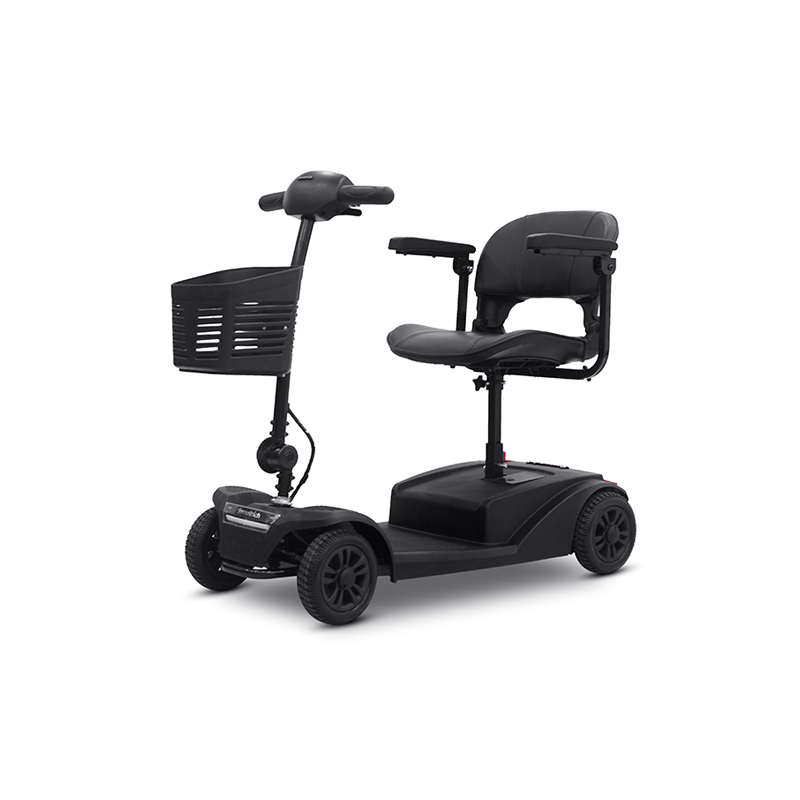
Modern personal mobility is no longer defined only by power, size, or basic transportation. For many older adults, caregivers, travelers, and users who need convenient short-distance movement, the ideal scooter must combine portability, reliable control, practical range, safety-oriented braking, comfortable operation, and dependable manufacturing quality. The SW 1000F ready-to-ship mobility scooter is designed around those practical expectations. It is a four-wheel travel smart scooter with compact dimensions, lithium battery power, electromagnetic braking, and a user-friendly structure suited for everyday mobility support in non-medical use markets such as the United States.
This article presents a detailed product-focused overview of the SW 1000F, including its technical advantages, travel-friendly design, competitive strengths, manufacturing background, quality control philosophy, and frequently asked questions. It also explains how the product fits into the broader market for compact personal electric mobility solutions, especially for users who want a balance between stability, transportability, and straightforward daily operation.
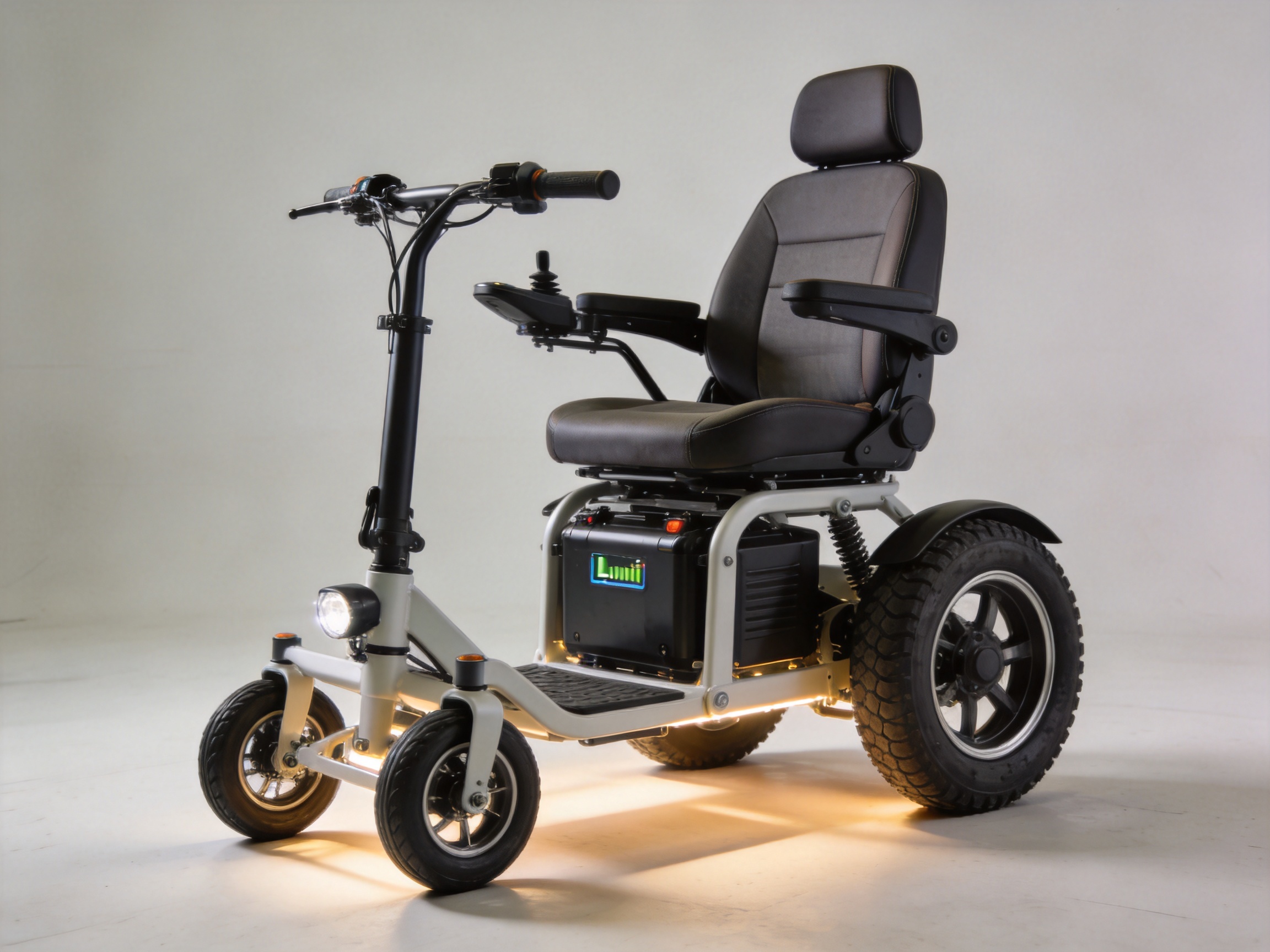
Product Positioning: Practical Mobility for Daily Independence
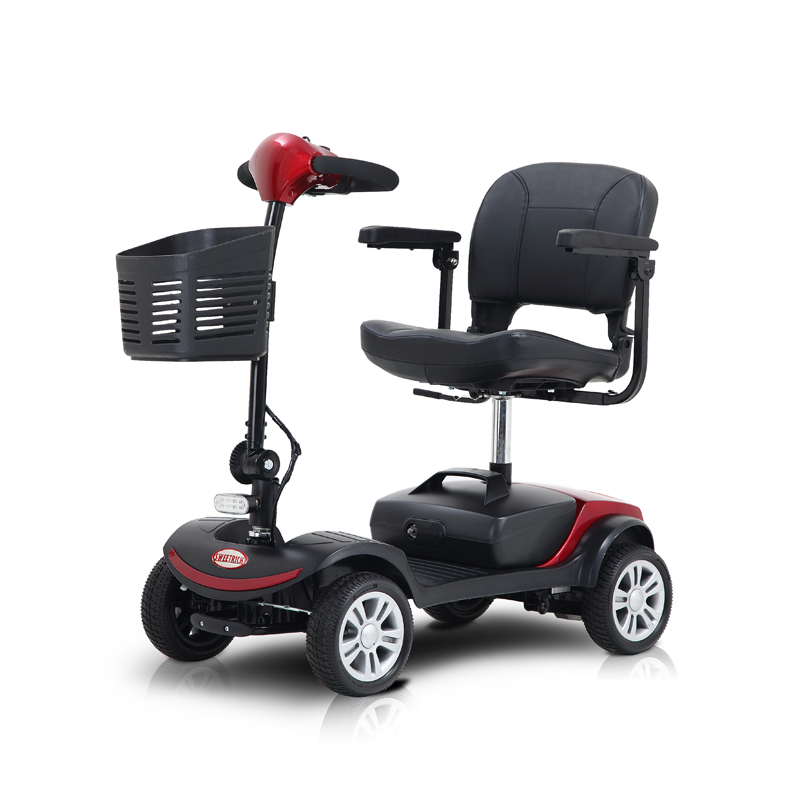
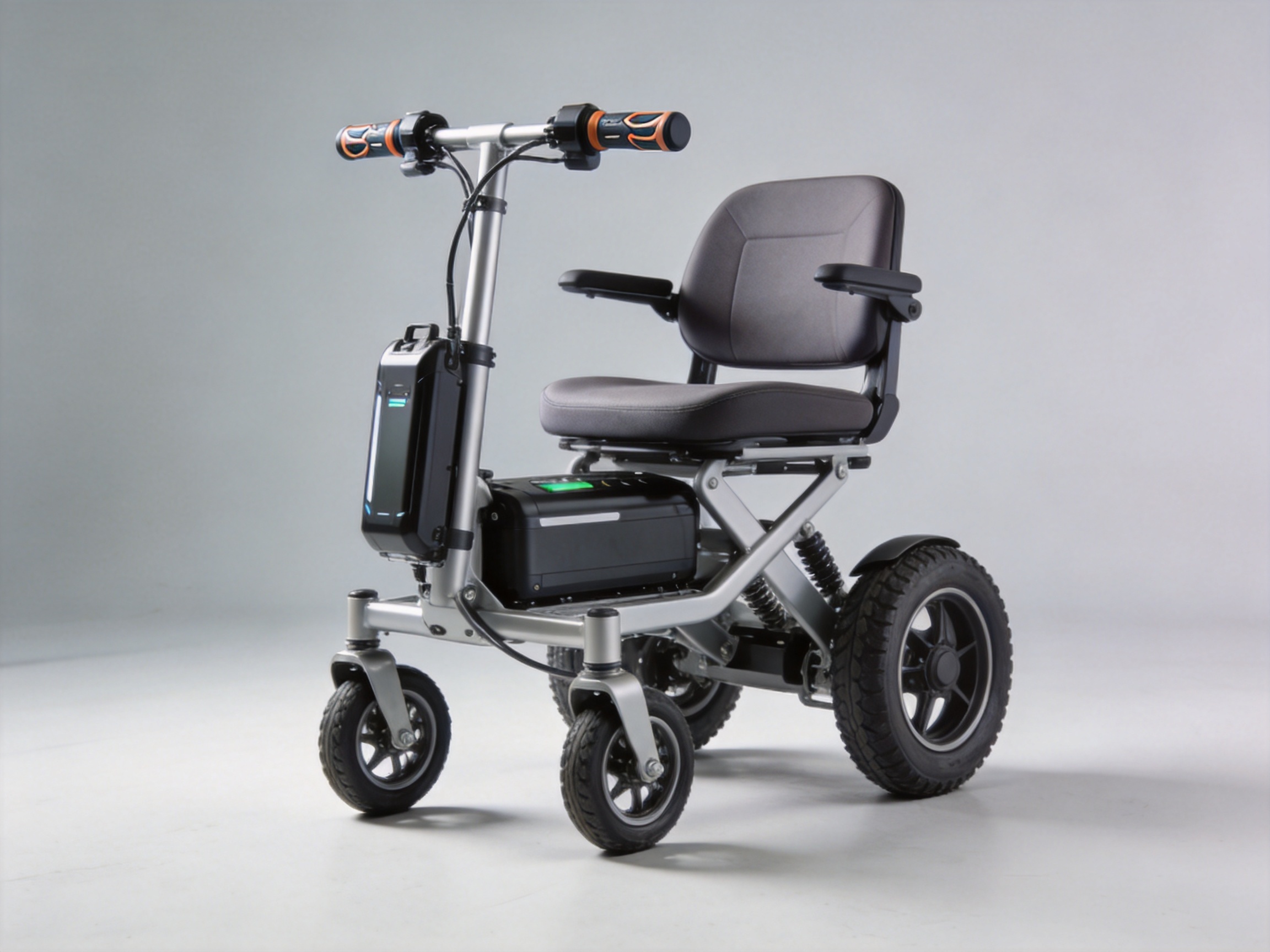
The SW 1000F belongs to the Travel Smart Scooters category, which means it is intended for users who prioritize convenience, compact storage, and easy transportation. Unlike large outdoor scooters that may be difficult to lift, store, or maneuver in tight areas, this model is built around a more practical footprint. Its dimensions are 1000 mm in length, 525 mm in width, and 920 mm in height, allowing it to remain compact while still offering the four-wheel stability that many users prefer.
The scooter is suitable for non-medical personal mobility use in the U.S. market. This distinction is important because many customers are not seeking a clinical or hospital-style device. Instead, they want a dependable personal transport solution that helps them move through residential areas, shopping centers, travel facilities, community spaces, and other everyday environments with greater confidence and convenience.
For users who compare travel scooters, several questions usually matter most: Is it stable? Is it easy to handle? Does it have enough range? Is the battery modern? Can it support the user’s weight? Is the braking system reliable? Can it fit into daily life without becoming a burden? The SW 1000F answers these questions with a specification package focused on real-world usability rather than unnecessary complexity.
Core Technical Specifications
The following table summarizes the main specifications of the SW 1000F travel smart scooter.
Specification |
SW 1000F Details |
User Benefit |
Dimensions |
1000 x 525 x 920 mm |
Compact size for storage, indoor handling, and daily travel |
Maximum Forward Speed |
8 km/h, approximately 5 mph |
Balanced speed for controlled personal mobility |
Maximum Driving Gradient |
10 degrees |
Capable of handling common ramps and moderate inclines |
Maximum Driving Range |
15 to 25 km, approximately 9.5 to 15.5 miles |
Suitable for errands, leisure use, and everyday short-distance travel |
Weight Capacity |
136 kg, approximately 300 lbs |
Supports a broad range of users |
Tire Sizes |
7 x 2.5 inches front, 8 x 3 inches rear |
Stable ground contact and practical traction for regular surfaces |
Brake System |
Electromagnetic brake |
Automatic, responsive stopping support for safer operation |
Battery |
Lithium 24 V / 20 Ah |
Lighter and more efficient than many traditional lead-acid systems |
Charger |
DC 24 V 2 A, AC 100-240 V |
Compatible with a wide voltage range for convenient charging |
Charging Time |
8 to 10 hours |
Convenient overnight charging cycle |
Motor |
24 V / 270 W Taiwan motor |
Reliable drive performance for compact scooter applications |
Motor Controller |
24 V / 50 A PG controller |
Smooth control and dependable power management |
Heaviest Part |
36.3 kg, approximately 80 lbs |
Designed with travel handling and separable transport considerations |
Four-Wheel Stability in a Compact Travel Format
One of the strongest advantages of the SW 1000F is its four-wheel design. In the compact scooter category, customers often compare three-wheel and four-wheel models. Three-wheel scooters may offer a slightly smaller turning radius, but many users prefer four-wheel scooters because they feel more grounded, especially when moving across varied everyday surfaces. A four-wheel platform distributes contact points more evenly and can create a stronger sense of balance for users who want confidence during regular movement.
The SW 1000F combines this four-wheel stability with a compact body width of 525 mm. That width is important because a scooter that is too wide may feel awkward in tighter spaces, while a scooter that is too narrow may not provide the same confidence for some users. The model seeks a practical middle ground. It remains slim enough for maneuvering through common indoor or semi-indoor environments, while its wheel layout supports steady operation.
The front tire size of 7 x 2.5 inches and rear tire size of 8 x 3 inches reflect a design approach that places more drive stability at the rear. The slightly larger rear tires contribute to better contact and drive performance, while the front tires support steering control. This configuration is especially useful for a travel scooter because it helps preserve maneuverability without sacrificing basic stability.
Balanced Speed for Everyday Control
The scooter’s maximum forward speed is 8 km/h, or approximately 5 mph. This speed is well aligned with practical personal mobility use. Faster speeds may look attractive in marketing materials, but they are not always better for users who need controlled, predictable movement in shared environments. A moderate speed supports confidence in pedestrian zones, shopping areas, residential paths, and community spaces.
Compared with some larger scooters that are designed mainly for outdoor road-like paths, the SW 1000F focuses on a safer and more manageable pace. Users can move efficiently without feeling that the machine is too aggressive. For many seniors and caregivers, this balance is more valuable than maximum speed because a scooter should support independence without creating unnecessary stress.
The PG 24 V / 50 A controller contributes to smooth acceleration and power delivery. Controller quality matters greatly in electric mobility products because it influences how naturally the scooter responds when starting, stopping, turning, or climbing. A well-matched controller reduces jerky motion and supports a smoother driving experience, which can be especially important for users who are new to motorized scooters.
Practical Range for Errands, Leisure, and Travel
The SW 1000F offers a maximum driving range of 15 to 25 km, or approximately 9.5 to 15.5 miles. In real-world use, range may vary depending on user weight, surface type, slope, temperature, battery condition, speed, and driving habits. Even with those normal variations, the rated range is suitable for many daily activities, including visiting nearby shops, moving around senior communities, attending local events, navigating travel hubs, or enjoying outdoor paths under appropriate conditions.
Range is one of the most important factors in user satisfaction. A scooter with insufficient range may create anxiety, while an oversized battery can increase weight and cost. The 24 V / 20 Ah lithium battery package represents a practical balance. It supports meaningful travel distance while keeping the product within a compact travel scooter format.
Compared with many older lead-acid scooter systems, lithium battery technology offers advantages in weight efficiency, energy density, and charging convenience. Lithium batteries can help reduce unnecessary bulk, which is valuable in a scooter that may need to be transported, stored, or handled by caregivers. The 8 to 10 hour charging time also suits overnight charging habits. Users can charge the scooter in the evening and prepare it for the following day’s activities.
Electromagnetic Braking for Confidence and Safety-Oriented Operation
The SW 1000F uses an electromagnetic brake system. This is a major advantage over simpler mechanical-only braking methods in personal mobility scooters. Electromagnetic braking is designed to engage automatically when the user releases the throttle or when the scooter needs to stop under normal operating control. This kind of braking support is valuable for users who may not want to manage a complex manual brake lever during every stop.
In daily use, predictable braking is one of the features that contributes most to user confidence. When a scooter responds consistently, users can focus on their surroundings rather than worrying about whether the machine will stop smoothly. Electromagnetic braking also helps caregivers feel more comfortable because the scooter is not dependent only on manual braking strength.
Compared with low-cost scooters that may use less refined braking arrangements, the SW 1000F is positioned as a more reliable travel mobility solution. Its braking system works together with the controller and motor system to support smoother stopping. For users who may be operating the scooter in public places, this contributes to a safer and more pleasant mobility experience.
Motor and Controller Integration
The scooter is equipped with a 24 V / 270 W motor from Taiwan and a 24 V / 50 A PG motor controller. This combination reflects a deliberate focus on reliable performance rather than simply increasing nominal power. For compact mobility scooters, the best design is not always the highest wattage. Instead, the motor must be properly matched with the battery, controller, frame, wheel system, and intended usage conditions.
A 270 W motor is suitable for a travel smart scooter that must balance compactness, energy efficiency, and climbing capability. With a maximum driving gradient of 10 degrees, the SW 1000F can handle common ramps and moderate inclines when used within rated conditions. Users should still operate carefully on slopes, avoid excessive side-slopes, and follow safety instructions, but the specified gradient capability provides useful versatility for everyday environments.
The PG controller is another important point of differentiation. Motor controllers act as the electronic brain of the drive system. They regulate current, acceleration, speed response, and power delivery. A dependable controller helps protect the system, improve handling, and reduce inconsistent motion. In competitive comparisons, scooters with weaker or poorly calibrated controllers may feel abrupt, noisy, or unpredictable. The SW 1000F’s control system is intended to create a smoother and more dependable user experience.
Weight Capacity and Structural Confidence
The rated weight capacity is 136 kg, or approximately 300 lbs. This capacity makes the scooter suitable for a wide range of users while preserving the compact travel profile. Weight capacity is not only about how much a scooter can carry; it is also about frame design, load distribution, drive performance, braking capability, and long-term durability. A scooter must be engineered as a complete system so that all major parts work together within the rated load.
Compared with lightweight scooters that may offer lower capacity, the SW 1000F provides a stronger usability range. This can be important for dealers and distributors because a higher capacity product can serve more customers with fewer model restrictions. It is also useful for families because the same scooter may meet the needs of different users.
The heaviest part is listed at 36.3 kg, or about 80 lbs. This indicates that the scooter is designed with transport handling in mind while still maintaining a robust structure. Users and caregivers should assess lifting ability carefully and use proper handling methods, but the product’s compact design supports storage and transportation better than many full-size scooters.
Travel Smart Design Advantages
A travel smart scooter must do more than move forward and backward. It must fit into everyday routines. The SW 1000F addresses this through its compact size, lithium power, four-wheel layout, and ready-to-ship positioning. For distributors, the ready-to-ship status can reduce procurement delays and improve response time for customer demand. For end users, it means the product is built around a standardized, proven configuration rather than an overly customized design that may be harder to support.
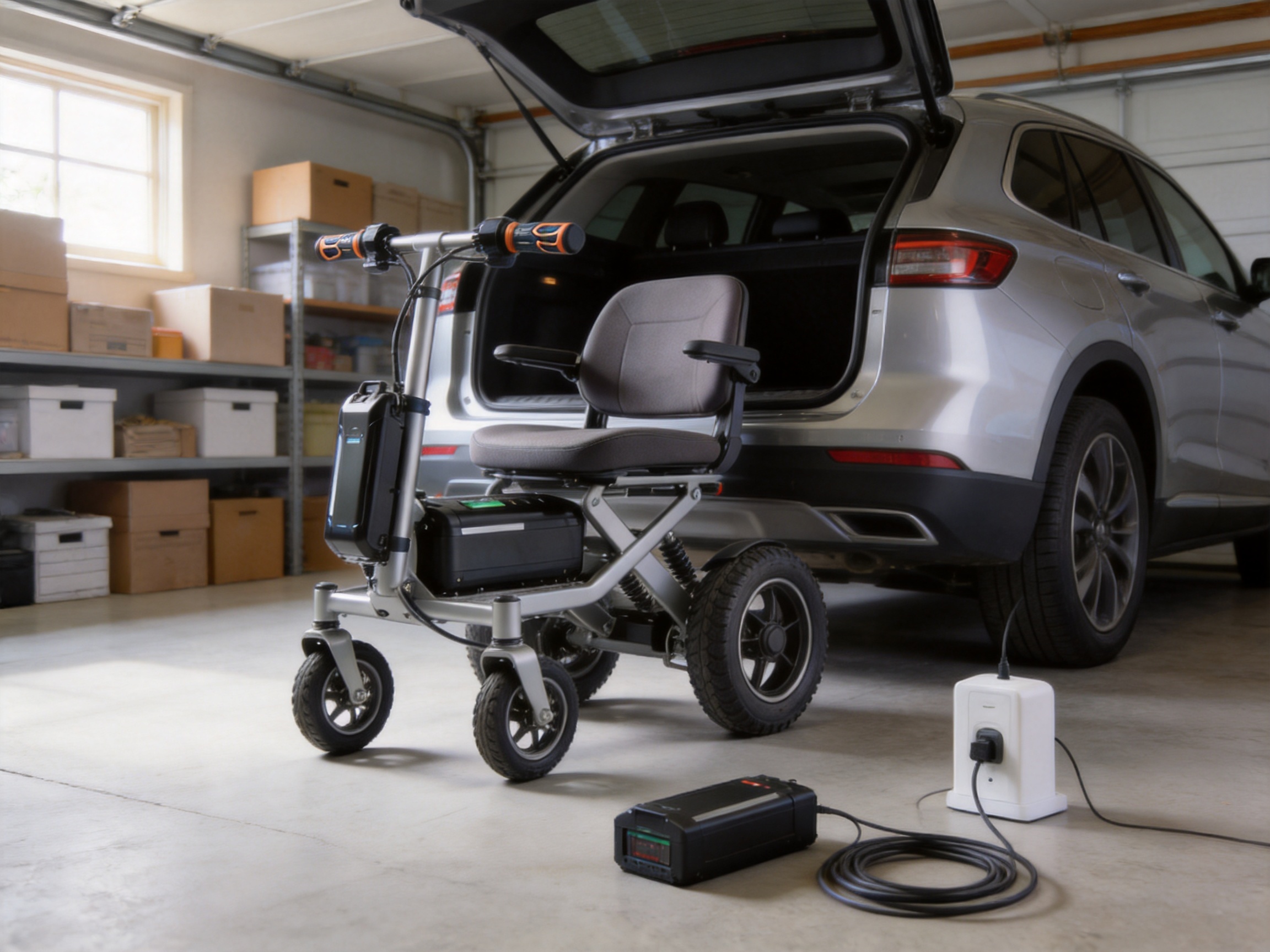
Travel-focused users often need a scooter that can be stored in limited spaces. The compact length of 1000 mm makes the SW 1000F more manageable than many larger mobility scooters. Its height of 920 mm also keeps the overall profile practical. These dimensions help the scooter fit into home storage areas, garages, entryways, transport spaces, or retail display environments more easily than oversized models.
The 24 V / 20 Ah lithium battery also supports travel practicality. Since battery rules may vary depending on transportation method and location, users should always confirm current travel regulations before flying or using public transportation. However, from a design standpoint, lithium power is generally preferred in travel products because it reduces unnecessary weight and improves energy efficiency compared with many traditional battery systems.
Competitive Advantages Over Common Alternatives
When compared with heavier full-size scooters, the SW 1000F offers a more compact and manageable structure. Full-size scooters may provide larger seats, longer range, or stronger outdoor performance, but they can be difficult to transport and store. For many users, those larger models are excessive for daily short-distance tasks. The SW 1000F provides a more balanced solution for users who value convenience.
When compared with three-wheel travel scooters, the four-wheel configuration offers an added sense of stability. This can be especially important for seniors who may feel uncertain on narrower designs. While three-wheel scooters can be maneuverable, four-wheel scooters often provide greater confidence during straight travel and turning at reasonable speeds.
When compared with low-cost scooters using lead-acid batteries, the SW 1000F’s lithium battery offers a more modern energy solution. Lead-acid batteries are often heavier and may reduce transport convenience. Lithium batteries can provide improved energy density and help support a more travel-friendly design.
When compared with scooters that use basic braking systems, the electromagnetic brake provides an important operational advantage. Automatic braking support can make the scooter easier to use and more reassuring for users who prefer simple controls.
When compared with products from manufacturers that lack mature production systems, the SW 1000F benefits from the background of a specialized mobility manufacturer with more than ten years of experience, a large production base, and a strong focus on research, development, and quality management. This manufacturing foundation matters because personal mobility products must be consistent, safe, and dependable over time.
Manufacturing Strength Behind the Product
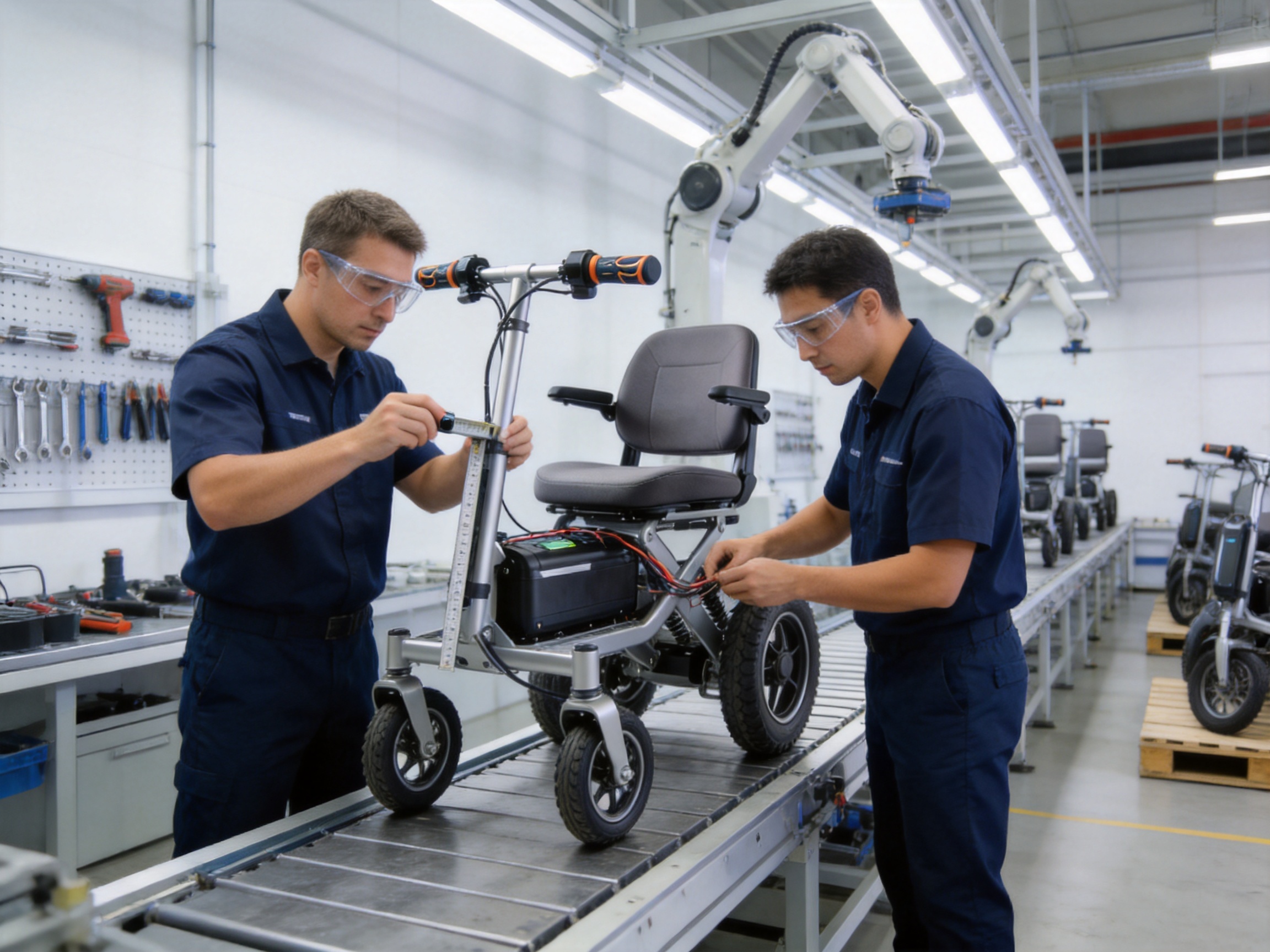
The SW 1000F is produced by Sweetrich Mobility, part of Suzhou Sweetrich Vehicle Industry Technology Co., Ltd., a high-tech company located in Suzhou Industrial Zone, Jiangsu, China. Established in 2011, the company has accumulated more than ten years of experience in the research, development, and production of mobility scooters and power wheelchairs. Its production base covers 60 acres and includes a 30,000-square-meter factory, giving the company substantial manufacturing capacity for domestic and international demand.
Manufacturing strength is a central part of product value. A mobility scooter may appear simple from the outside, but it requires coordination among mechanical engineering, electrical systems, battery integration, controller programming, frame production, assembly procedures, inspection standards, and packaging reliability. A manufacturer with specialized experience can manage these factors more effectively than a general supplier.
Sweetrich focuses on improving convenience and independence for elderly and disabled users. The company owns intellectual property rights for its electric scooters and power wheelchairs, which reflects a long-term commitment to product development rather than simple imitation. This is important in a competitive market where many products may look similar externally but differ significantly in engineering maturity, quality control, and user experience.
Research and Development as a Product Advantage
Advanced research and development allow a manufacturer to refine the scooter as a complete system. The SW 1000F is not merely a collection of purchased parts; it is an integrated mobility product in which the frame, motor, controller, battery, braking system, tires, dimensions, and user controls must work together. Effective R&D helps identify the proper balance among safety, comfort, cost, durability, and transportability.
For a travel smart scooter, R&D teams must answer many practical questions. How compact can the frame be while still supporting a 300 lb rated load? How should the battery be placed to preserve balance? What speed range is appropriate for everyday environments? How can the braking response feel secure without being harsh? How can the scooter be packaged for export without damage? How can assembly be standardized so that each production unit performs consistently?
By focusing on these questions, the manufacturer can produce a scooter that is more refined than generic alternatives. The 8 km/h maximum speed, 10-degree gradient capability, and 15 to 25 km range all reflect practical engineering choices. Rather than chasing extreme specifications, the design prioritizes balanced daily mobility.

Production Management and Process Control
Strict production management is one of the company’s stated strengths. In mobility scooter manufacturing, production management includes raw material selection, supplier qualification, component inspection, welding or frame processing, surface treatment, electrical assembly, battery installation, controller testing, brake verification, final inspection, and packaging. Each step affects the final product.
A structured production process reduces variation between units. This is critical for international customers, distributors, and service teams because consistent products are easier to support. When every scooter is built according to controlled procedures, spare parts compatibility, maintenance training, and after-sales service become more efficient.
Advanced manufacturing also includes process documentation. Workers must follow clear assembly instructions, torque standards, wiring routes, connector checks, and inspection points. Electrical systems must be protected against loose connections, incorrect polarity, or poor cable management. Mechanical parts must be assembled securely so that the scooter remains stable under normal use.
The company’s 30,000-square-meter factory provides space for organized production areas, component storage, assembly lines, inspection stations, and finished goods preparation. This scale supports both quality and delivery efficiency. For ready-to-ship models such as the SW 1000F, organized production capacity helps ensure that orders can be fulfilled with shorter lead times.
Quality Assurance for International Markets
The SW 1000F is designed for export markets, including America, Europe, Japan, Australia, the Middle East, Russia, and other regions. Serving international markets requires attention to product reliability, documentation, packaging, and compliance expectations. Although requirements differ by market and product classification, export-focused manufacturers must maintain higher consistency than suppliers serving only small local channels.
Quality assurance begins before assembly. Incoming parts such as motors, controllers, batteries, chargers, tires, frames, fasteners, and electrical components should be checked against specifications. A scooter’s final reliability depends heavily on component quality. For example, a high-quality controller can improve handling, while a properly specified charger supports battery performance.
During assembly, quality checks help confirm that each system is installed correctly. After assembly, functional testing can verify acceleration, braking, steering, charging, electrical response, and general operation. For scooters with electromagnetic brakes, brake engagement should be checked carefully because it is a core safety-related function. The battery and charger should also be inspected to ensure normal charging behavior.
Final inspection helps confirm cosmetic quality, labeling, packaging completeness, and accessory inclusion. Export packaging must protect the scooter during transportation, warehousing, and delivery. Good packaging is often overlooked, but it is essential for dealers and end users. A product that arrives damaged creates unnecessary service costs and customer dissatisfaction.
Comfort and User-Friendly Operation
Comfort in a compact scooter is created through more than seat design alone. It also depends on smooth acceleration, stable braking, manageable speed, easy steering, and predictable handling. The SW 1000F’s moderate speed and controller system help create a calmer driving experience. For users who may be transitioning from walking aids or manual mobility equipment, this predictability can make the learning process easier.
The four-wheel design supports a stable feeling, while the compact dimensions reduce intimidation. Some large scooters can feel difficult for new users because of their size and turning requirements. A compact travel scooter encourages users to practice and gain confidence more quickly.
The electromagnetic brake also simplifies operation. Users do not need to rely solely on manual braking habits. When the throttle is released under normal conditions, the braking system assists in stopping. This supports a user-friendly experience and helps make the scooter appropriate for everyday short-distance travel.
Designed for Seniors and Everyday Users
The product’s SEO positioning includes seniors mobility scooter and elderly motorized scooter themes, and the SW 1000F is well aligned with that audience. Seniors often need equipment that is straightforward, dependable, and not overly technical. They may also need a scooter that caregivers can understand quickly. Complicated control panels, excessive speed, or heavy frames can reduce usability.
The SW 1000F offers a sensible combination of features for older users: a moderate 5 mph top speed, stable four-wheel layout, electromagnetic braking, compact dimensions, and a lithium battery system. These characteristics support independence while keeping operation manageable.
It is also suitable for users who want a convenient mobility aid for recreational or daily use without adopting a large medical-style device. Because the product is positioned as a non-medical device for the U.S. market, it can appeal to customers who want personal mobility support for lifestyle and convenience rather than clinical treatment.
Non-Medical Personal Mobility Use
The SW 1000F is identified as a non-medical device for the U.S. market. This means it should be understood as a personal mobility product rather than a device intended to diagnose, treat, cure, or prevent any disease or medical condition. Users should consult professionals when medical mobility advice is needed, and they should follow local rules and safety instructions when operating the scooter.
This positioning is beneficial for many consumer and distributor channels because it clarifies the product’s purpose. It is designed to help users move more conveniently in everyday environments. It should be used responsibly, within its rated capacity, and in suitable conditions.
Non-medical personal mobility products still require high manufacturing standards. Even when not classified as medical devices, scooters must be stable, well controlled, and reliable. The SW 1000F’s electromagnetic brake, lithium battery, and established production background contribute to dependable everyday performance.
Battery and Charging Convenience
The lithium 24 V / 20 Ah battery is one of the model’s most important features. Battery performance affects range, weight, convenience, and long-term satisfaction. Lithium systems are widely used in modern electric mobility because they offer strong energy density. This makes them well suited for compact scooter designs.
The charger specification is DC 24 V 2 A with AC 100-240 V input. The wide AC input range is useful because it allows the charger to operate with different standard power supplies when the correct plug and local requirements are met. For users, the 8 to 10 hour charging time supports an easy routine: charge overnight and use the scooter the next day.
Users should follow battery care instructions carefully. Charging should be done in a suitable indoor environment, away from excessive heat, moisture, or physical damage. The charger supplied or approved for the scooter should be used. Proper charging habits help preserve performance and reduce avoidable battery issues.
Climbing Ability and Real-World Terrain
The maximum driving gradient is 10 degrees. This gives the scooter useful capability for common ramps and moderate slopes. However, as with all scooters, slope performance depends on user weight, battery charge, surface condition, approach angle, and environmental factors. Users should approach slopes slowly and avoid steep, wet, uneven, or unstable surfaces.
Compared with very small compact scooters that may struggle on inclines, the SW 1000F provides more practical climbing confidence. Its motor, controller, and rear tire configuration are designed to support common daily travel conditions. The four-wheel design also helps users feel more stable when moving across ordinary outdoor paths or transitional surfaces.
Because the scooter does not list a suspension system, it is best used on relatively smooth surfaces rather than rough terrain. This is not a weakness in its intended category; rather, it reflects its travel smart design. By avoiding unnecessary heavy suspension components, the product can remain simpler, lighter, and more compact. Users seeking rugged outdoor performance may prefer a larger scooter, but users seeking daily convenience may benefit from the SW 1000F’s practical design.
Maintenance Simplicity
A practical travel scooter should be easy to maintain. The SW 1000F uses a straightforward configuration with a modern electric drive system, electromagnetic braking, and lithium battery. Routine care should include checking tire condition, keeping the scooter clean, charging the battery properly, inspecting visible cables, confirming brake response, and storing the scooter in a dry environment.
Compared with more complex scooters that include heavy suspension systems, multiple adjustment mechanisms, or oversized drivetrains, this model can be easier for users and service providers to understand. Simplicity is valuable in mobility products because it reduces downtime and supports long-term dependability.
Distributors also benefit from simpler maintenance. A product with standardized components and controlled manufacturing is easier to service, stock, and support. This creates commercial value beyond the initial sale price.
Commercial Value for Dealers and Distributors
The SW 1000F is not only attractive for end users; it also offers strong value for dealers, wholesalers, and mobility product distributors. Its ready-to-ship positioning can help businesses respond quickly to customer demand. Its compact dimensions make warehousing and display more efficient. Its broad weight capacity and practical range make it suitable for a wide customer base.
The manufacturer’s export experience is also valuable. Companies that sell internationally understand the importance of packaging, documentation, order consistency, and communication. Sweetrich’s long-term partnerships around the world demonstrate its ability to support global mobility product channels.
For dealers, a good scooter must generate customer satisfaction while keeping service demands manageable. The SW 1000F’s use of known core technologies, such as lithium battery power, electromagnetic braking, and a PG controller, supports confidence. The scooter’s practical specifications also reduce the risk of customers purchasing a product that is too large, too fast, or too complicated for everyday use.
Why Manufacturing Experience Matters
In the mobility scooter industry, price competition can be intense. Some products may look similar in photos, but manufacturing experience often determines the difference between a dependable scooter and a disappointing one. Frame alignment, wiring quality, controller calibration, brake reliability, battery matching, and packaging protection are not always visible at first glance. They become evident after repeated use.
Sweetrich has operated since 2011 and has accumulated more than a decade of experience in mobility scooters and power wheelchairs. This experience allows the company to understand user needs, distributor concerns, and export-market expectations. The company’s stated principles of quality first, credit above, and customer supreme reflect a business philosophy focused on reliability and long-term cooperation.
For the SW 1000F, this background means the product is supported by a manufacturer that understands the mobility category rather than a short-term assembler. The company’s intellectual property ownership and product development history further strengthen its position as a professional manufacturer.
Safety-Oriented Usage Recommendations
Users should operate the SW 1000F responsibly and within the rated specifications. The scooter should not be overloaded beyond 136 kg, and users should avoid unsafe slopes, deep water, loose gravel, stairs, escalators, or unstable surfaces. Before each use, the user should confirm that the battery has sufficient charge, the tires appear normal, and the brake response feels proper.
When driving in public spaces, users should maintain awareness of pedestrians, pets, obstacles, curbs, and doorways. The scooter’s maximum speed of 8 km/h is moderate, but even moderate speed requires attention. Users should slow down when turning, entering elevators, crossing thresholds, or moving through crowded areas.
Charging should be done with the correct charger and according to the manufacturer’s instructions. The scooter should be stored away from rain, excessive moisture, extreme heat, and corrosive environments. Proper storage helps protect the battery, electronics, frame, and seating components.
Environmental and Lifestyle Benefits
Electric mobility scooters provide a quiet and emission-free point-of-use transportation option for short-distance personal travel. The SW 1000F can help reduce reliance on cars for very short trips within appropriate environments. It can also support more active participation in daily life by making errands, social visits, and community movement easier.
For many users, the greatest benefit is psychological as well as practical. A dependable scooter can restore confidence. It can make a shopping trip less exhausting, a visit to a park more enjoyable, or a community event more accessible. While the scooter is not a medical device, it can still contribute meaningfully to lifestyle convenience and personal independence.
The compact design also supports family caregivers. When a mobility product is too large or difficult to manage, caregivers may hesitate to bring it along. A travel smart scooter is more likely to be included in daily plans, increasing the user’s opportunities for participation.
Detailed Product Advantages Summary
The SW 1000F stands out because it combines several practical strengths in one compact scooter. Its four-wheel design supports user confidence. Its lithium battery provides modern energy efficiency. Its electromagnetic brake supports safer stopping behavior. Its 300 lb rated capacity broadens usability. Its 15 to 25 km range is suitable for common daily mobility needs. Its moderate speed encourages controlled operation. Its compact dimensions support storage and transport. Its established manufacturing background improves trust.
These advantages make it especially competitive against basic entry-level scooters. Some low-cost alternatives may reduce component quality, use heavier batteries, offer weaker braking, or lack mature production control. The SW 1000F offers a more complete package for users and distributors who want practical reliability rather than only a low purchase price.
It is also competitive against larger scooters because it avoids unnecessary bulk. Not every user needs a large outdoor scooter. Many people need a smaller machine that can help them move through everyday environments without becoming difficult to store or manage. The SW 1000F meets that need with a balanced technical profile.
Q&A Section
What type of user is the SW 1000F designed for?
The SW 1000F is designed for users who need a compact, stable, and convenient personal mobility scooter for everyday non-medical use. It is especially suitable for seniors, travelers, caregivers, and users who want a manageable four-wheel scooter for errands, community movement, and short-distance daily transportation.
Is this scooter considered a medical device in the U.S. market?
No. The product information identifies it as a non-medical device for the U.S. market. It should be understood as a personal mobility product for convenience and independent movement, not as a device intended to diagnose, treat, cure, or prevent medical conditions.
What is the maximum speed?
The maximum forward speed is 8 km/h, or approximately 5 mph. This speed is suitable for controlled operation in many everyday environments.
How far can it travel on one charge?
The rated maximum driving range is 15 to 25 km, or approximately 9.5 to 15.5 miles. Actual range can vary depending on user weight, terrain, slope, temperature, battery condition, speed, and driving habits.
What is the weight capacity?
The rated weight capacity is 136 kg, or approximately 300 lbs. Users should not exceed this rating because overloading can affect safety, performance, braking, and product life.
What kind of battery does it use?
It uses a lithium 24 V / 20 Ah battery. Lithium battery technology supports a more efficient and travel-friendly design than many traditional lead-acid systems.
How long does charging take?
The charging time is approximately 8 to 10 hours. This makes overnight charging a practical routine for many users.
What kind of brake system does it have?
The scooter uses an electromagnetic brake system. This helps provide automatic stopping support when the throttle is released under normal operating conditions.
Can it climb ramps?
The maximum driving gradient is 10 degrees. It can handle many common ramps and moderate inclines when used properly and within rated conditions. Users should always approach slopes carefully and avoid unsafe surfaces.
Why choose a four-wheel scooter instead of a three-wheel scooter?
A four-wheel scooter often provides a stronger feeling of stability, especially for users who prefer balanced support. Three-wheel scooters may turn more tightly, but four-wheel models are commonly preferred by users who prioritize confidence and steadiness.
Who manufactures the scooter?
The scooter is manufactured by Sweetrich Mobility, associated with Suzhou Sweetrich Vehicle Industry Technology Co., Ltd., a company established in 2011 with more than ten years of experience in mobility scooters and power wheelchairs.
What makes the manufacturer strong?
The manufacturer operates a 60-acre production base with a 30,000-square-meter factory and focuses on research, development, production management, product design, and international export. It owns intellectual property rights for electric scooters and power wheelchairs and serves customers in many global markets.
Conclusion
The SW 1000F ready-to-ship mobility scooter is a strong example of a modern travel smart scooter built around real user needs. It does not rely on exaggerated specifications or unnecessary complexity. Instead, it offers a practical combination of compact dimensions, four-wheel stability, lithium battery power, electromagnetic braking, controlled speed, useful range, and dependable manufacturing support.
For seniors and everyday users, it offers independence, confidence, and convenience. For caregivers, it provides a manageable solution that supports daily routines. For distributors and dealers, it represents a commercially attractive product backed by an experienced manufacturer with mature production capacity and export knowledge.
In a crowded market, the SW 1000F stands out because it balances portability with stability, simplicity with technology, and affordability with manufacturing reliability. It is suitable for users who want a compact personal mobility scooter that can support everyday movement while remaining easy to understand, store, and maintain.
References
Product specification sheet for SW 1000F travel smart mobility scooter.
Company profile of Suzhou Sweetrich Vehicle Industry Technology Co., Ltd.
General industry literature on lithium battery applications in compact electric mobility products.
General mobility scooter safety and user operation guidance from personal electric mobility industry manuals.
Technical reference materials on electromagnetic braking systems and electric scooter motor controllers.