
 +86-(0)512-82283871
Content
- 1 Product Positioning: A Heavy Duty Power Wheelchair Built for Real-World Mobility
- 2 Core Advantages Over Many Competing Models
- 3 Technical Specifications
- 4 Outdoor Performance for Daily Confidence
- 5 Comfort-Oriented Design for Longer Use
- 6 Safety and Control Features
- 7 Battery System and Charging Practicality
- 8 Built for Users Who Need Strength Without Complicated Operation
- 9 Manufacturing Strength Behind the Product
- 10 Research, Development, and Product Engineering
- 11 Quality Management and Production Discipline
- 12 International Market Suitability
- 13 Comparison With Lightweight Electric Wheelchairs
- 14 Comparison With Basic Mobility Scooters
- 15 Practical Use Scenarios
- 16 User Experience: Independence, Dignity, and Control
- 17 Why Distributors and Buyers Should Consider This Product
- 18 Advanced Manufacturing Processes and Product Reliability
- 19 Serviceability and Long-Term Value
- 20 Responsible Operation and User Guidance
- 21 Q&A Section
- 21.1 What type of user is this heavy duty electric wheelchair designed for?
- 21.2 What makes this model stronger than many basic electric wheelchairs?
- 21.3 Can the joystick be installed on either side?
- 21.4 How far can the wheelchair travel on a full charge?
- 21.5 What is the maximum speed?
- 21.6 Is the product suitable for outdoor surfaces?
- 21.7 What kind of braking system does it use?
- 21.8 How long does charging take?
- 21.9 What battery type is used?
- 21.10 Why is rear suspension important?
- 21.11 What optional features are available?
- 21.12 Why should distributors consider this product?
- 22 Conclusion
- 23 References
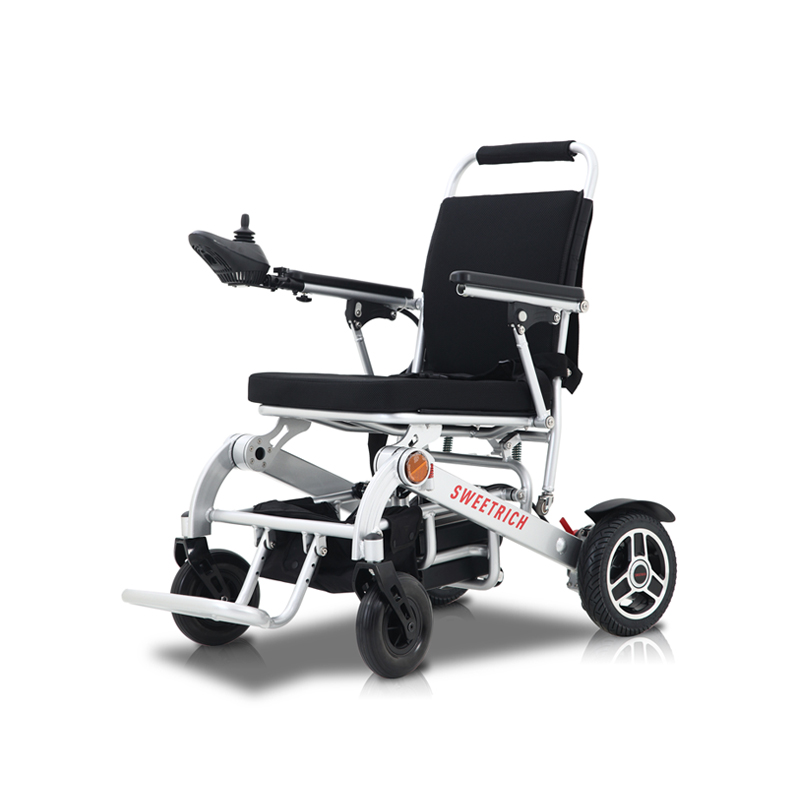
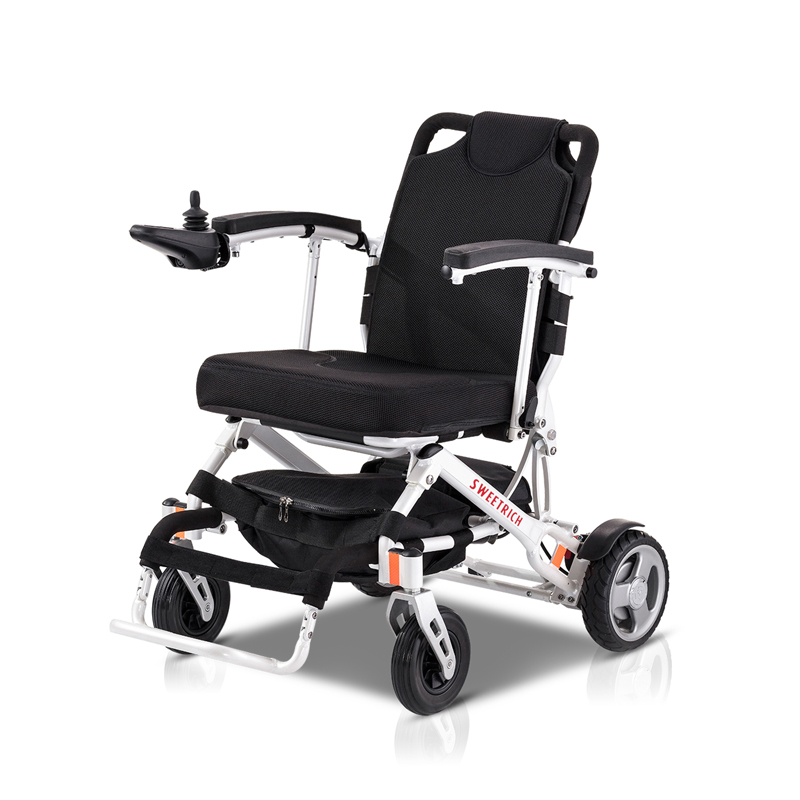
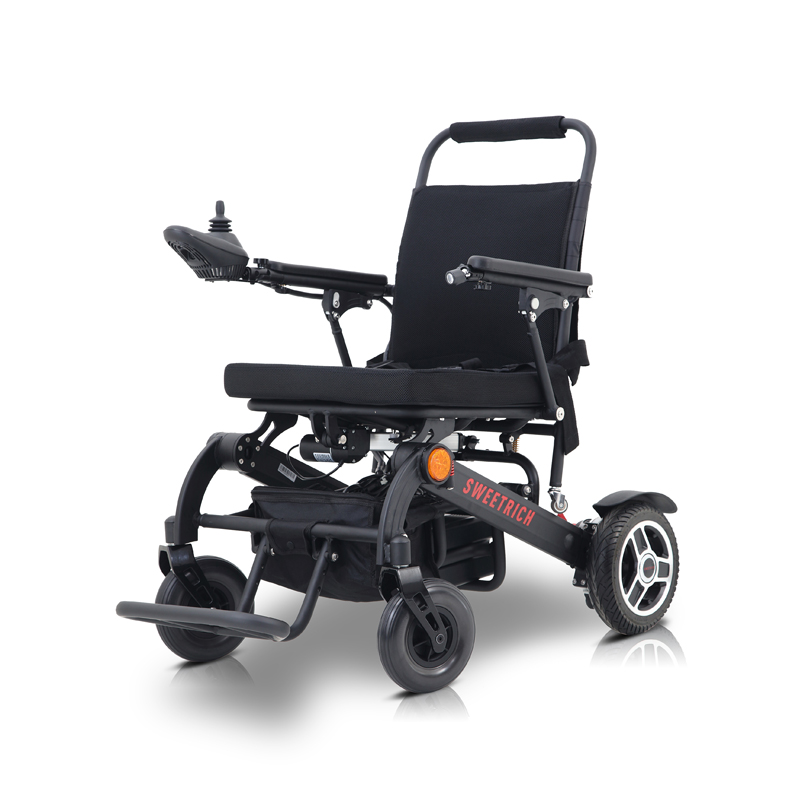
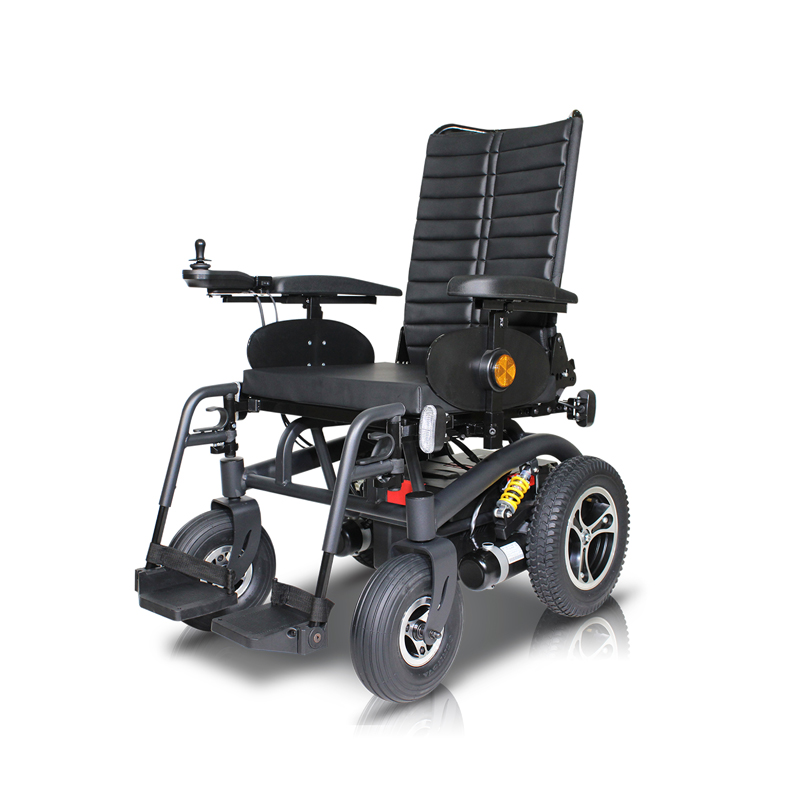
Modern mobility is not only about moving from one place to another; it is about confidence, safety, autonomy, and quality of life. For users who need a reliable powered chair for daily travel, outdoor surfaces, longer distances, and stable operation, a heavy duty electric wheelchair must combine strength with comfort and intelligent control. The iPower GT from Sweetrich Mobility is designed around this practical need: a robust power wheelchair with outdoor performance, a 136 kg weight capacity, large pneumatic tires, rear suspension, dual 350 W motors, electromagnetic braking, and an adaptable joystick system for left- or right-side operation.
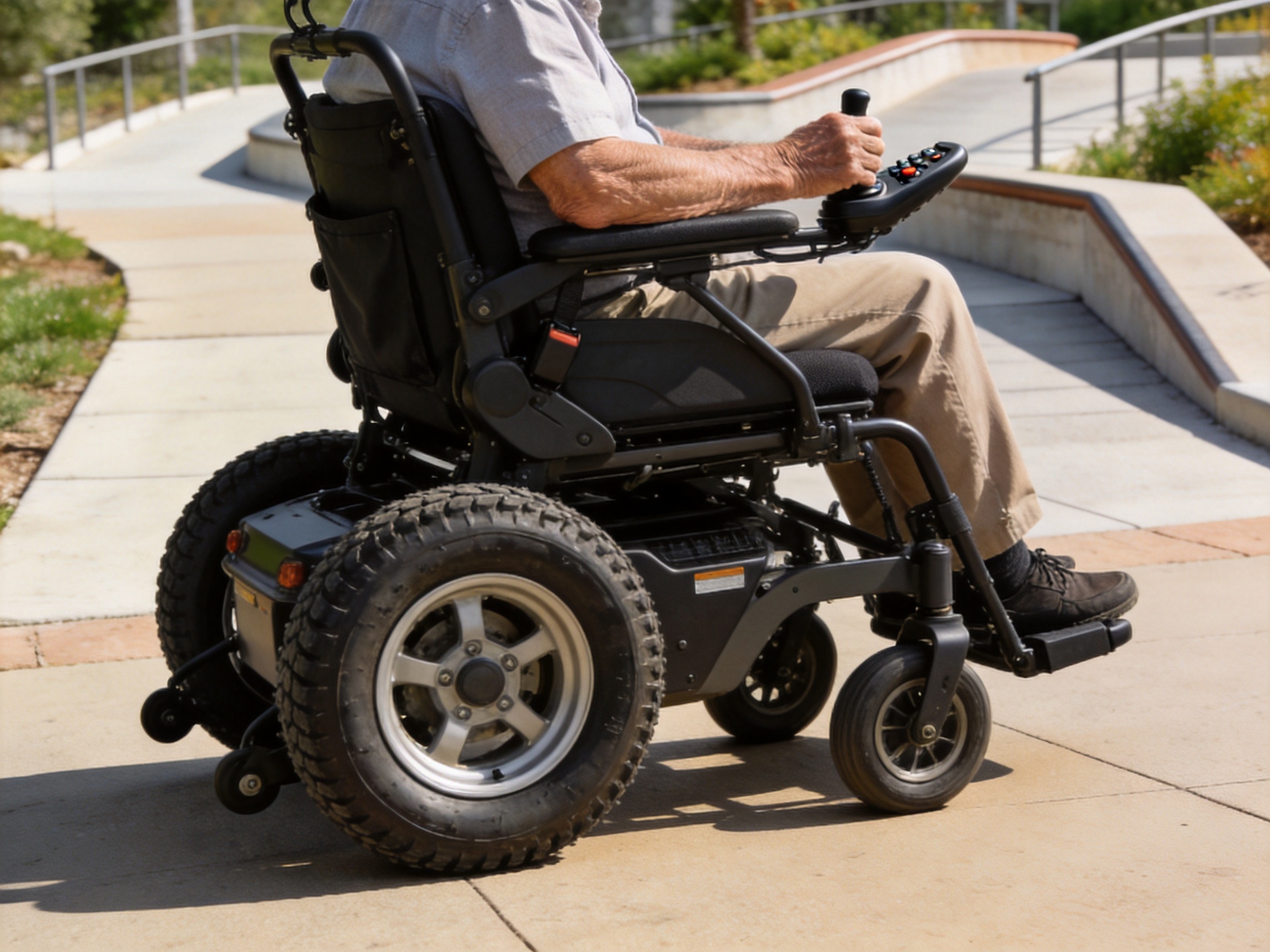
This article presents a detailed overview of the product, its competitive advantages, its technical configuration, and the manufacturing strengths behind it. It also explains how the design supports elderly users, disabled users, caregivers, distributors, and mobility equipment buyers who seek dependable power wheelchairs for international markets. While the product is described as a non-medical device for the U.S. market, its structure and performance features are clearly developed for daily mobility support, outdoor independence, and convenient operation.
Product Positioning: A Heavy Duty Power Wheelchair Built for Real-World Mobility
The iPower GT is positioned as a heavy duty electric wheelchair for users who require more than basic indoor movement. Many entry-level powered chairs are compact and convenient, but they may struggle on uneven pavement, longer routes, slopes, or outdoor surfaces. This product addresses those limitations with a stronger motor package, larger wheels, a stable frame, and a practical driving range suitable for everyday travel.
Its design philosophy is direct: provide a dependable powered mobility solution that can support outdoor use while remaining comfortable and controllable for daily life. With an overall dimension of 1045 mm in length, 625 mm in width, and 1080 mm in height, it offers a balanced footprint. It is not excessively wide for common pathways, yet it has enough structural presence to support stability, user comfort, and outdoor-oriented mobility.
The product is especially relevant for seniors, disabled users, rehabilitation-related mobility users, and anyone who needs powered assistance for independent travel. Its maximum forward speed of 8 km/h, equivalent to approximately 5 mph, places it in a practical range for controlled mobility. It is fast enough for efficient travel in open areas but still appropriate for careful operation in daily environments.
One of the strongest points of the wheelchair is its combination of load capacity and range. With a weight capacity of 136 kg, or 300 lb, it serves a wider group of users than many lighter models. Its 30–40 km driving range, approximately 19–25 miles, gives users the freedom to complete shopping trips, community visits, outdoor activities, and longer daily routines without constant charging concerns.
Core Advantages Over Many Competing Models
In the mobility market, products often compete on price, range, comfort, motor power, frame durability, and after-sales reliability. The iPower GT stands out because it does not rely on a single selling point. Instead, it combines multiple functional advantages that work together to create a more capable mobility experience.
First, the product uses a high-performance motor package with two 24 V / 350 W motors, creating a total motor output of 700 W. Many basic powered wheelchairs are designed mainly for indoor or flat-surface travel and may use weaker motor systems. The dual-motor configuration supports stronger traction, more responsive control, and better climbing capability, especially when paired with the specified maximum driving gradient of 10 degrees.
Second, the wheelchair features 10-inch front wheels and 14-inch rear pneumatic tires. Large pneumatic tires help absorb road vibration, improve comfort, and provide better contact with outdoor surfaces. Compared with small solid wheels found on many compact chairs, pneumatic tires are better suited to sidewalks, ramps, outdoor paths, and mildly uneven surfaces. The larger rear tires also strengthen the product’s outdoor identity.
Third, the rear suspension system adds another layer of comfort and stability. Outdoor mobility often includes curb cuts, paving transitions, tiled surfaces, garden paths, and ramps. Suspension helps reduce shock transfer to the user, making rides smoother and less tiring. This is a meaningful advantage for users who spend long periods in the chair or who are sensitive to vibration.
Fourth, the joystick can be installed for use on either side. This feature is simple but important. Users have different dominant hands, different physical abilities, and different comfort preferences. A wheelchair that supports both left- and right-side joystick operation can serve a broader range of users and reduce the need for complicated modification.
Fifth, the optional swing-away controller mount adds convenience for transfers, dining tables, desks, and close access to furniture. In real daily life, wheelchair usability depends not only on driving performance but also on how easily a user can approach a table, transfer to a bed, or position the chair near household objects. A swing-away mount helps remove the controller from the immediate transfer area and improves practical accessibility.
Finally, the optional light package increases visibility for outdoor travel. While the product’s core configuration already focuses on dependable movement, lighting can improve user confidence in dim environments, evening use, parking areas, and shared pedestrian spaces. For distributors and buyers, such optional configurations also make the product more adaptable to different regional preferences.
Technical Specifications
The following table summarizes key specifications of the heavy duty electric wheelchair. These data points show how the product balances size, performance, range, capacity, and safety features.
Item |
Specification |
Dimensions |
1045 mm L × 625 mm W × 1080 mm H |
Maximum Forward Speed |
8 km/h, approximately 5 mph |
Maximum Driving Gradient |
10 degrees |
Maximum Driving Range |
30–40 km, approximately 19–25 miles |
Weight Capacity |
136 kg, approximately 300 lb |
Suspension |
Rear suspension |
Tire Sizes |
10 in × 3 in front, 14 in × 3 in rear |
Brake System |
Electromagnetic brake |
Batteries |
Lead-acid 12 V 40 Ah × 2 pcs |
Charger |
DC 24 V 5 A, AC 115–230 V |
Charging Time |
6–8 hours |
Motor |
24 V / 350 W × 2 pcs |
Motor Controller |
24 V / 50 A controller, PG or Dynamic type |
Heaviest Part |
59 kg according to product specification |
Outdoor Performance for Daily Confidence
Outdoor performance is one of the key features of this electric wheelchair. For many users, the ability to move beyond indoor spaces is essential. A powered chair should not become a limitation when the user faces a sidewalk, a gentle slope, a ramp, or a longer route through a community area. The product’s configuration supports this need through motor strength, tire size, braking, suspension, and battery range.
The total 700 W motor package contributes to stronger forward drive. When a user travels on flat indoor flooring, motor power may not seem critical. However, on outdoor surfaces, stronger motors can make the difference between smooth movement and hesitation. The wheelchair must handle changes in surface resistance, slight inclines, user weight, and turning requirements. Dual motors provide balanced drive to both sides, helping the chair respond to joystick inputs with predictable movement.
The 10-degree maximum driving gradient provides practical slope capability. This is especially useful for ramps, driveway entrances, community pathways, and public access points. While users should always follow safety guidance and operate carefully on slopes, this gradient rating indicates that the product is engineered for more than perfectly flat terrain.
The 30–40 km driving range is another meaningful outdoor advantage. Users who rely on powered mobility often plan their day around battery life. A chair with limited range can create anxiety, especially when traveling away from home. The specified range allows many users to complete daily tasks with greater peace of mind. It is suitable for local errands, visits to parks, shopping centers, residential communities, and extended indoor-outdoor transitions.
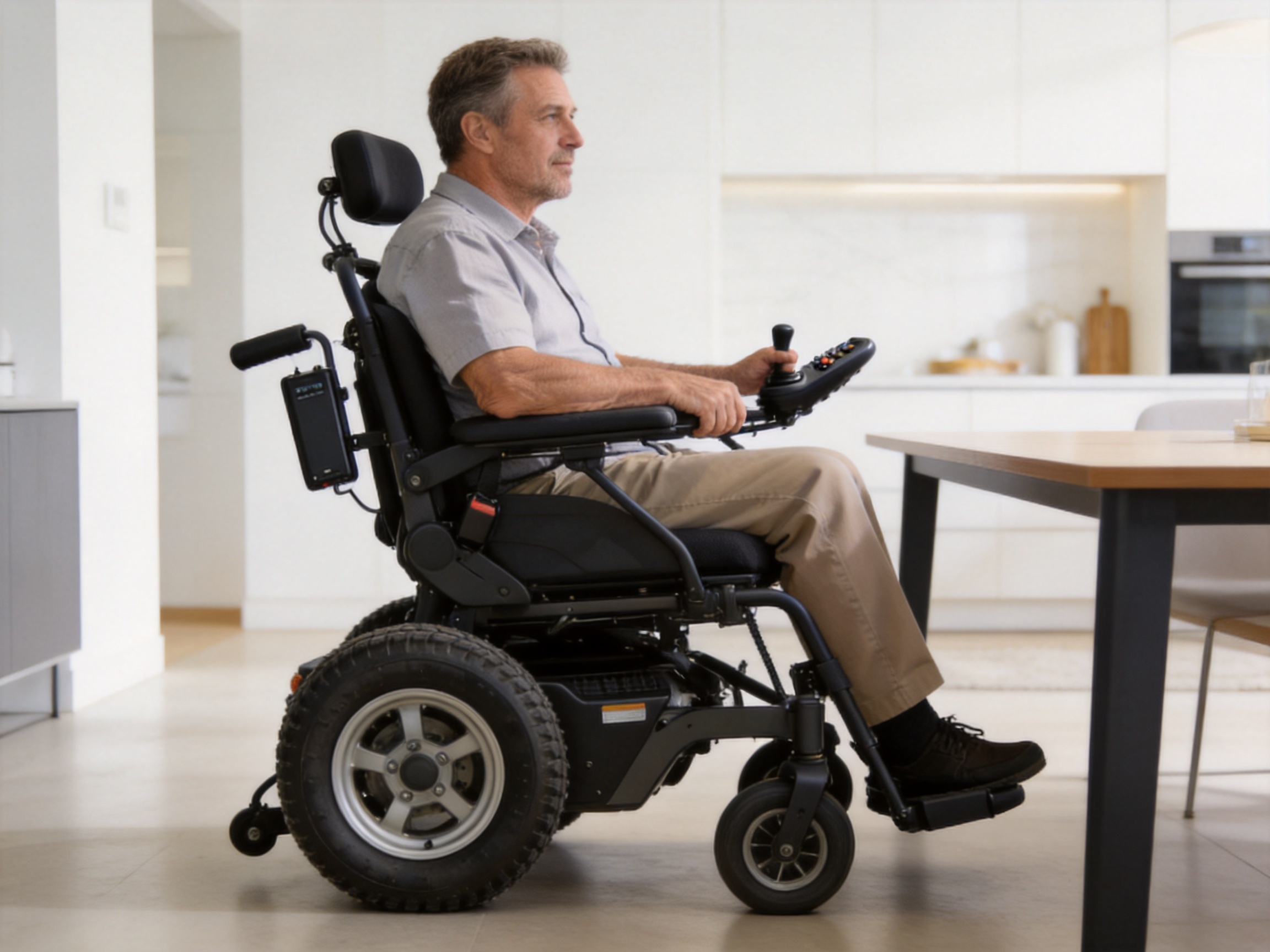
Pneumatic tires also improve outdoor usability. Compared with small solid tires, pneumatic tires offer better cushioning and improved surface contact. This helps the chair move more comfortably over typical outdoor irregularities. The 14-inch rear tires are particularly important because they help the chair deal with surface transitions and provide a more stable driving feel.
Comfort-Oriented Design for Longer Use
A heavy duty electric wheelchair must be strong, but strength alone is not enough. Comfort matters because users may remain seated for long periods. The iPower GT includes several comfort-related features, including adjustable seat width, adjustable armrest height, rear suspension, and a frame size that supports stable seating.
Adjustable seat width allows the chair to better match different body types. A seat that is too narrow can create discomfort and pressure, while a seat that is too wide may reduce postural stability. The ability to adjust seat width gives users, caregivers, and distributors more flexibility in fitting the chair to actual needs.
Adjustable armrest height is another valuable feature. Proper armrest positioning supports upper body comfort, helps reduce shoulder tension, and improves joystick access. For users who operate the chair frequently, the relationship between arm height and controller position affects driving comfort throughout the day.
The optional swing-away controller mount also contributes to comfort and convenience. It enables users to move closer to tables and desks and simplifies side transfers. In many competing models, the controller remains fixed in a position that can interfere with daily activities. A swing-away design makes the chair more user-friendly in home, dining, office, and care environments.
Rear suspension supports comfort by reducing the effect of surface bumps. For elderly users and people with limited physical resilience, ride vibration can quickly become tiring. Suspension helps create a more pleasant experience and reduces the roughness often associated with outdoor movement.
Safety and Control Features
Safety is central to power wheelchair design. The iPower GT uses an electromagnetic brake system, a well-established solution for powered mobility equipment. Electromagnetic braking helps the chair stop reliably when the user releases the joystick or when braking is required by the control system. This is especially valuable on slopes, during indoor maneuvering, and when stopping near obstacles.
The joystick control system is designed for practical operation. Because it can be used on either side, it supports users with different physical conditions. A left-handed user, a user with stronger movement on one side, or a user recovering from an injury may benefit from the ability to choose controller placement.
The controller specification of 24 V / 50 A, with PG or Dynamic type options, indicates compatibility with recognized control technology used in powered mobility products. Reliable controller performance affects acceleration, deceleration, turning smoothness, and system protection. A quality control system helps make the wheelchair feel predictable rather than abrupt.
The maximum speed of 8 km/h is also part of the safety balance. It allows efficient travel without turning the product into an overly aggressive vehicle. For mobility users, controllable speed is more important than maximum speed alone. The chair must be easy to manage in real spaces such as hallways, sidewalks, shops, elevators, and ramps.
The optional light package can further improve safety by enhancing visibility. In shared pedestrian environments, visibility is not only about seeing but also about being seen by others. Lighting can help other pedestrians, cyclists, drivers in parking areas, and caregivers notice the chair more easily.
Battery System and Charging Practicality
The wheelchair uses two 12 V 40 Ah lead-acid batteries. This configuration provides the 24 V system power needed for the motors and controller. Lead-acid batteries are widely used in mobility equipment because they are familiar, serviceable, cost-effective, and available in many markets.
Charging time is specified at 6–8 hours with a DC 24 V 5 A charger compatible with AC 115–230 V input. This wide input range is important for international distribution because it supports use in many regions with different electrical standards. For users, overnight charging is generally practical. A user can charge the chair after daily use and be ready for the next day.
Compared with smaller battery systems used in lightweight chairs, the 40 Ah battery capacity contributes to the extended 30–40 km driving range. This range is one of the strongest selling points for users who need reliable mobility across a full day. Actual range can vary based on user weight, terrain, slope, temperature, battery age, and driving habits, but the specification clearly positions the product for longer travel than many compact models.
For distributors, the lead-acid battery configuration can also simplify service planning. Replacement batteries and maintenance knowledge are widely available, making after-sales support easier in many countries. This is especially relevant for markets where users value predictable service and reasonable operating cost.
Built for Users Who Need Strength Without Complicated Operation
A strong mobility product must still be simple to operate. The iPower GT follows the familiar joystick-based control structure used in many powered wheelchairs. This minimizes the learning curve for users who have experience with electric wheelchairs and makes training easier for new users.
The product’s heavy duty nature does not mean it is overly complicated. Users can focus on basic driving: moving forward, turning, reversing carefully, stopping, and positioning. The electromagnetic brake system and controller help manage key motion functions, while the physical design supports stability and comfort.
This combination is important because many users of mobility equipment do not want complex machinery. They want a chair that feels dependable every day. They want to move to the dining room, go outdoors, visit a neighbor, enter a shop, and return home without worrying about whether the chair can handle the route. The iPower GT is designed around this everyday expectation.
For caregivers, ease of use also matters. A product that is difficult to understand can increase caregiver workload. A familiar joystick system, adjustable features, and accessible charging process help caregivers assist users more efficiently.
Manufacturing Strength Behind the Product
Sweetrich Mobility, officially Suzhou Sweetrich Vehicle Industry Technology Co., Ltd., is located in Suzhou Industrial Park, Jiangsu, China. Established in 2011, the company has accumulated more than ten years of experience in the research, development, and production of mobility scooters and power wheelchairs. Its factory covers approximately 30,000 square meters within a larger 60-acre site, providing the production scale needed for stable manufacturing and international supply.
The company’s strength begins with specialization. Rather than treating mobility equipment as a secondary product line, it focuses on mobility scooters and power wheelchairs for elderly and disabled users. This dedicated focus allows the company to improve product structure, control systems, driving systems, ergonomics, and manufacturing management over time.
Advanced manufacturing in mobility products depends on more than assembly. It requires design validation, component selection, frame production, electrical system integration, controller matching, battery installation, inspection, and finished product testing. A reliable powered wheelchair must perform safely as a complete system. The motor, controller, brake, frame, seat, battery, charger, wiring, tires, and user controls must work together.
The company emphasizes strict production management and scientific product design. In practical terms, this means repeatability and quality control. For international buyers, consistent production is essential. A distributor cannot build a market if every batch differs significantly from the last. Stable manufacturing processes help ensure that the product received by users matches the performance promised in specifications.
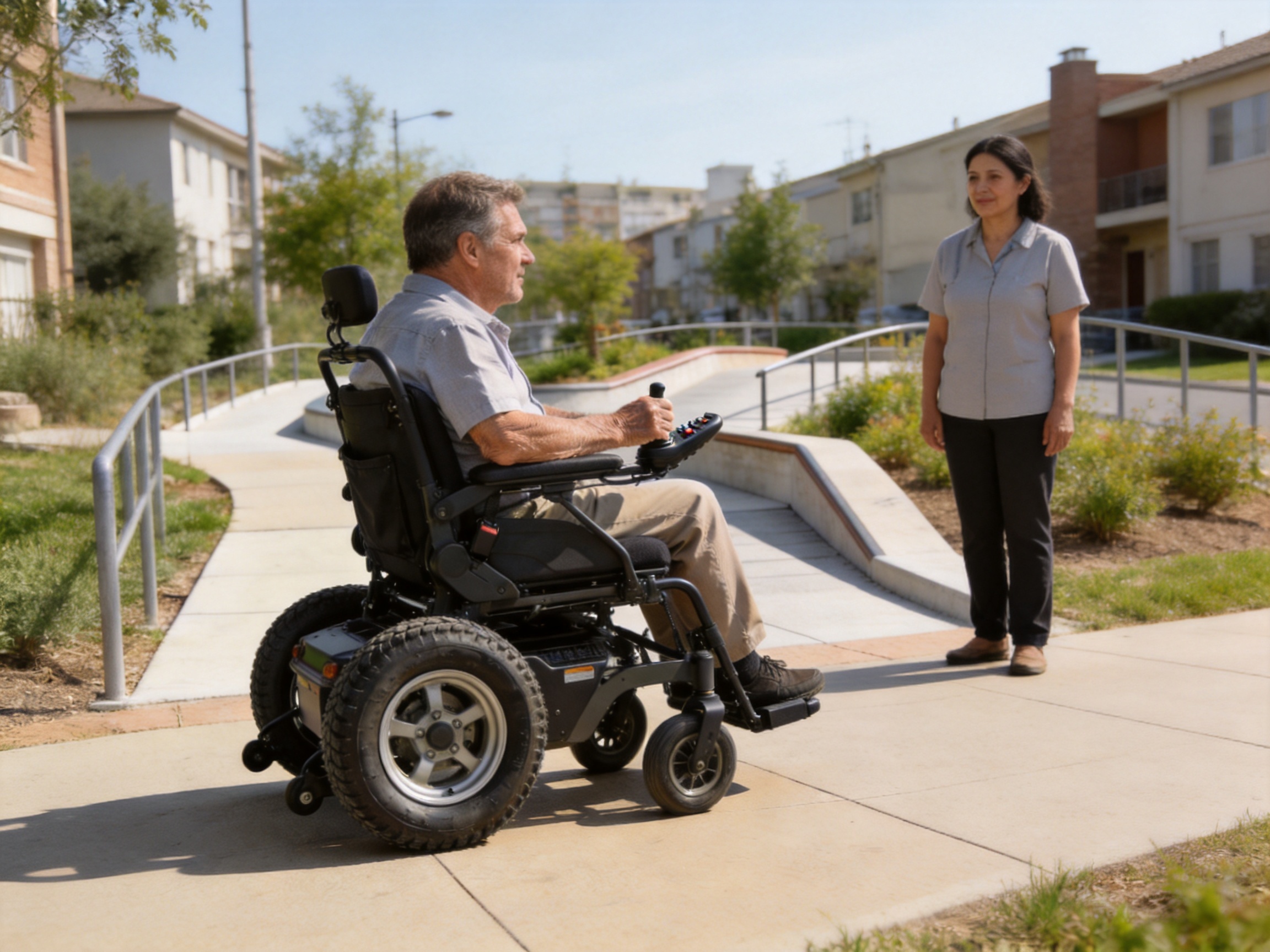
The company also owns intellectual property rights related to its electric scooters and power wheelchairs. This indicates a commitment to independent development rather than simple imitation. In a competitive market, original design capability allows a manufacturer to refine products according to user feedback, regulatory expectations, and distributor needs.
Research, Development, and Product Engineering
Research and development are especially important in powered mobility because users depend on the equipment for safety and independence. A wheelchair must be stable, durable, comfortable, and predictable. It must also be suitable for production at scale. The iPower GT reflects engineering decisions that support these goals.
The frame dimensions show attention to balance. A chair that is too small may lack outdoor stability, while a chair that is too large may become difficult to maneuver. The 625 mm width offers practical access while supporting a heavy duty structure. The 1045 mm length helps accommodate larger wheels and stable seating geometry.
The use of rear suspension shows that the engineering team considered real riding conditions. Without suspension, outdoor use can feel harsh, especially when combined with solid tires or small wheels. By selecting large pneumatic tires and rear suspension, the design improves the relationship between strength and comfort.
The dual 350 W motor design indicates an emphasis on torque and responsive drive. A single weak motor would be unsuitable for a heavy duty chair with outdoor expectations. The dual-motor approach improves steering performance and enables differential drive control, which is standard for many powered wheelchairs because it allows turning by varying motor speeds.
Controller selection also reflects engineering priorities. PG and Dynamic are known controller types in the mobility industry. A capable controller helps smooth out acceleration and braking, allowing the product to feel less jerky and more natural. Smooth control is not just a comfort issue; it can affect user confidence, safety, and precision in tight spaces.
Quality Management and Production Discipline
In mobility equipment, quality is not optional. Users may depend on a powered wheelchair every day, and a failure can affect independence, safety, and caregiver workload. Sweetrich Mobility’s production management approach is therefore a major part of the product’s value.
A disciplined manufacturing process typically includes incoming material inspection, frame and mechanical checks, electrical assembly control, battery and charger verification, motor testing, brake testing, controller calibration, final inspection, and packaging review. Each stage helps reduce the possibility of defects reaching the user.
Frame manufacturing is a critical area. The chair must support the rated weight capacity while handling daily stress from turns, slopes, and surface transitions. Strong welding, accurate alignment, and protective finishing all contribute to durability. Poor frame consistency can cause vibration, misalignment, tire wear, or reduced comfort. A manufacturer with experience and scale is better positioned to control these details.
Electrical integration is equally important. Wiring must be organized, protected, and connected securely. The battery system must deliver power safely to the controller and motors. The electromagnetic brake must engage and release correctly. The charger must match the battery system. In a powered wheelchair, electrical quality directly affects driving reliability.
Finished product testing helps confirm that the chair operates as intended before shipment. This may include forward and reverse movement, turning, braking, controller response, charging verification, visual inspection, tire condition, accessory operation, and packaging stability. These checks are essential for products exported to multiple regions.
International Market Suitability
The product is suitable for global distribution because it combines universal mobility needs with practical specifications. Sweetrich Mobility exports products to America, Europe, Japan, Australia, the Middle East, Russia, and other markets. This international experience helps the company understand different user expectations, distributor requirements, and service conditions.
Different markets often emphasize different priorities. Some buyers focus on durability and outdoor capability. Others focus on comfort, compactness, price, or after-sales service. The iPower GT offers a balanced package that can appeal to many of these needs. It is strong enough for heavy duty positioning, yet not excessively specialized for only one scenario.
For markets such as Turkey and surrounding regions, the product’s outdoor performance and slope capability can be particularly relevant. Urban environments often include ramps, varied pavement, and mixed indoor-outdoor routes. The 10-degree climbing ability, 14-inch rear pneumatic tires, and dual motors help make the chair a practical option for such conditions.
The charger’s AC 115–230 V compatibility also supports international use. Distributors can more easily adapt the product to local plug and labeling requirements, while the core electrical system remains consistent. This flexibility helps reduce complexity in international supply chains.
The company’s contact channels and export experience further support buyers who need communication, product information, and order coordination. For distributors, a good product must be supported by a manufacturer capable of stable delivery, technical communication, and long-term cooperation.
Comparison With Lightweight Electric Wheelchairs
Lightweight electric wheelchairs have a clear role in the mobility market. They are often easier to transport, may fold compactly, and can be useful for occasional travel. However, they often make compromises in motor power, battery capacity, wheel size, seating comfort, and outdoor performance. The iPower GT is built for a different user priority: dependable heavy duty mobility.
Compared with many lightweight models, this chair offers a stronger 700 W motor package, larger pneumatic tires, and a longer driving range. These features are valuable for users who rely on their chair as a primary mobility solution rather than a temporary travel aid. A lightweight chair may be convenient for loading into a vehicle, but it may not provide the same outdoor confidence or daily comfort.
The 136 kg capacity is also important. Some lightweight chairs have lower weight limits, limiting their suitability. A higher capacity does not only serve heavier users; it can also indicate a stronger frame and a more durable design philosophy. Users who carry personal items, shopping bags, or accessories may appreciate the additional margin.
Rear suspension is another differentiator. Many compact models lack meaningful suspension, which can make outdoor travel uncomfortable. The combination of suspension and pneumatic tires makes the heavy duty chair more appropriate for frequent outdoor use.
For buyers, the choice depends on user needs. If portability is the main concern, a smaller chair may be appropriate. If outdoor range, comfort, capacity, and stability are priorities, the iPower GT offers advantages that many lightweight competitors cannot match.
Comparison With Basic Mobility Scooters
Mobility scooters are popular for many seniors and users who can sit upright and use handlebars comfortably. However, scooters are not ideal for everyone. Some users prefer or require joystick control, a smaller turning behavior, or a seating and control layout closer to a wheelchair. The iPower GT provides powered mobility in a wheelchair format while still offering outdoor capability often associated with scooters.
Compared with many scooters, a power wheelchair can provide more precise maneuvering in tighter areas. Joystick control allows differential steering, which can help with indoor positioning and controlled turns. For users with limited upper body range or difficulty operating tiller-style scooter controls, a joystick wheelchair may be easier to manage.
The iPower GT also includes adjustable seating and armrest features more typical of wheelchair designs. This makes it more adaptable to users who need postural support and comfortable arm positioning. Scooters are often excellent for outdoor distance, but they may be less suitable for users who require the seating style and control access of a power wheelchair.
The product therefore fills an important middle space. It offers outdoor strength and driving range while retaining the user interface and seating advantages of a power wheelchair. This combination can be attractive for users who want scooter-like independence but wheelchair-style control.
Practical Use Scenarios
The iPower GT is suitable for many daily mobility scenarios. In residential communities, it can support movement between home, garden, parking area, and nearby facilities. Its outdoor tires and rear suspension help users handle common surface changes without excessive discomfort.
In shopping environments, the chair’s joystick control allows careful movement through aisles, entrances, and checkout areas. The 625 mm width helps maintain practical access, while the adjustable armrests and swing-away controller option support interaction with counters and tables.
For community activities, the driving range gives users freedom to participate without constant battery anxiety. Visiting a friend, going to a park, attending a local event, or traveling through a large facility becomes more realistic when the chair can cover longer distances.
In care facilities or senior living communities, the product can support users who need a dependable powered chair for both indoor and outdoor use. Staff may appreciate the familiar charging process, durable construction, and adjustable features. Users may appreciate the smoother ride and confidence on ramps or pathways.
For travel within larger campuses, factories, resort areas, or residential estates, the chair’s outdoor performance can reduce dependence on caregivers. A product that allows users to move independently across greater distances contributes directly to dignity and daily satisfaction.
User Experience: Independence, Dignity, and Control
The most important value of a power wheelchair is not found only in specifications. It is found in the user’s daily experience. A reliable chair can change how a person plans the day. Instead of asking whether the route is too long or the surface too difficult, the user can focus on where they want to go.
Independence is closely linked to dignity. When users can move by themselves, they often feel more involved in family life, community activities, and personal routines. The iPower GT supports this independence through range, stability, motor power, and simple joystick operation.
The product’s comfort features also contribute to dignity. A chair that fits poorly or rides roughly can make users feel limited and fatigued. Adjustable seat width, adjustable armrests, suspension, and pneumatic tires all help create a more respectful mobility experience. Comfort is not a luxury; for daily users, it is a core requirement.
Control is another essential part of user confidence. A predictable joystick response, stable braking, and smooth motor performance help users trust the chair. When users trust their mobility equipment, they are more likely to remain active and engaged.
Why Distributors and Buyers Should Consider This Product
For distributors, a successful mobility product must satisfy users while also supporting business reliability. The iPower GT offers several commercial advantages: clear heavy duty positioning, practical specifications, international market relevance, optional configurations, and manufacturing support from an experienced company.
The product’s 136 kg capacity, 700 W motor package, 30–40 km range, and large pneumatic tires provide strong selling points. These features are easy to explain to customers because they relate directly to real needs: strength, distance, comfort, and outdoor capability.
The optional features also help distributors meet different customer preferences. Some buyers may choose the basic configuration, while others may request a swing-away controller mount or lighting package. Optional equipment allows a product line to serve multiple price and feature levels.
Manufacturing scale is another important consideration. A company with a 30,000-square-meter factory and more than a decade of experience is better positioned to support consistent supply than a small workshop. For distributors building a long-term market, consistency matters as much as the first order.
The company’s international export history also reduces uncertainty. Products shipped to diverse regions must meet varied expectations for packaging, communication, documentation, and after-sales coordination. Experience in America, Europe, Japan, Australia, the Middle East, Russia, and other markets indicates familiarity with global business requirements.
Advanced Manufacturing Processes and Product Reliability
Although the user sees the finished chair, product reliability begins much earlier in the manufacturing process. A high-quality electric wheelchair depends on controlled production from concept to shipment. Sweetrich Mobility’s production advantages are based on its specialized factory, experienced engineering teams, and structured quality management.
Frame preparation is one of the first reliability foundations. The frame must be designed for strength, weight distribution, and component placement. During production, parts must be cut, formed, welded, treated, and finished with accuracy. Dimensional control helps ensure that the seat, wheels, motor assemblies, and suspension align correctly.
Motor installation requires precision because drive performance depends on proper mechanical connection. Motors must be mounted securely and aligned to the drive wheels. Poor installation can cause noise, vibration, uneven wear, or power loss. A disciplined assembly process reduces these risks.
Controller integration requires electrical knowledge and repeatable procedures. The controller must match system voltage, motor requirements, braking functions, and joystick input. Wiring must be routed to avoid abrasion, interference, and accidental disconnection. A stable electrical system improves both performance and service life.
Battery installation is also critical. Lead-acid batteries are heavy components, and their placement affects balance and safety. Secure battery mounting prevents movement during travel and helps maintain predictable weight distribution. Proper connector quality supports efficient power delivery.
Final testing brings these systems together. A power wheelchair should be checked as a complete vehicle, not merely as a collection of parts. Driving, braking, steering, charging, seating adjustment, accessory function, and visual finish should all be reviewed before packaging. This comprehensive approach helps protect the user and the distributor.
Serviceability and Long-Term Value
Long-term value is created when a product remains useful, serviceable, and dependable over time. The iPower GT supports this value through widely understood components such as lead-acid batteries, electromagnetic braking, pneumatic tires, and recognized controller options.
Lead-acid batteries are common in mobility equipment, which can simplify replacement in many markets. Pneumatic tires require normal care, including pressure checks and occasional replacement, but they provide ride comfort that many users prefer. Electromagnetic brakes are standard in powered mobility applications and contribute to safe stopping.
For service providers, familiar technology can reduce training complexity. A product that uses known system architecture is often easier to inspect and maintain than one with unusual or proprietary components. This supports long-term customer satisfaction and helps distributors manage after-sales service.
Durability also affects value. A low-priced product with weak motors, poor frame quality, or limited range may cost less initially but disappoint users over time. The iPower GT’s stronger configuration helps justify its position as a dependable heavy duty option.
Responsible Operation and User Guidance
Like any powered mobility product, this wheelchair should be operated responsibly. Users should read the instruction manual, understand charging procedures, practice in safe areas, and avoid exceeding recommended operating conditions. Safe operation is a partnership between product design and user behavior.
Users should approach slopes carefully and avoid sudden turns on inclines. Even though the chair is rated for a maximum driving gradient of 10 degrees, actual safety depends on surface condition, user weight, speed, and battery condition. Wet, loose, or uneven surfaces require extra caution.
Pneumatic tires should be maintained at appropriate pressure. Underinflated tires can reduce range, affect steering, and increase wear. Regular tire inspection helps maintain performance and comfort.
Battery care is also important. Users should charge the chair according to instructions and avoid leaving batteries deeply discharged for extended periods. Proper charging habits help preserve battery performance and reduce unexpected range loss.
Caregivers and distributors should help users understand joystick sensitivity, braking behavior, safe transfer methods, and charging routines. A well-trained user is more confident and less likely to misuse the product.
Q&A Section
What type of user is this heavy duty electric wheelchair designed for?
It is designed for users who need dependable powered mobility for daily use, especially those who require outdoor performance, higher weight capacity, longer driving range, and joystick control. It is suitable for many elderly users, disabled users, and mobility users who want more capability than a basic indoor chair.
What makes this model stronger than many basic electric wheelchairs?
The product uses two 24 V / 350 W motors for a total motor package of 700 W. It also has a 136 kg weight capacity, large 10-inch front and 14-inch rear pneumatic tires, rear suspension, and a 30–40 km driving range. These features make it more suitable for outdoor use and longer daily travel than many entry-level models.
Can the joystick be installed on either side?
Yes. The joystick is available for both-side use, meaning it can be arranged for left-side or right-side operation depending on user needs. This is helpful for users with different dominant hands or different physical abilities.
How far can the wheelchair travel on a full charge?
The specified maximum driving range is 30–40 km, or approximately 19–25 miles. Actual range may vary depending on user weight, terrain, slopes, tire condition, battery age, temperature, and driving style.
What is the maximum speed?
The maximum forward speed is 8 km/h, approximately 5 mph. This speed provides practical mobility while maintaining controllability for daily environments.
Is the product suitable for outdoor surfaces?
Yes. The product is designed with outdoor performance in mind. It includes large pneumatic tires, rear suspension, dual motors, electromagnetic braking, and a 10-degree maximum driving gradient. Users should still operate carefully and follow safety guidance on uneven, wet, or sloped surfaces.
What kind of braking system does it use?
It uses an electromagnetic brake system. This type of braking is commonly used in powered mobility equipment and supports reliable stopping when the joystick is released or when the control system requires braking.
How long does charging take?
Charging time is approximately 6–8 hours using the specified DC 24 V 5 A charger with AC 115–230 V input compatibility.
What battery type is used?
The chair uses two 12 V 40 Ah lead-acid batteries. This configuration supports the 24 V power system and contributes to the product’s long driving range.
Why is rear suspension important?
Rear suspension helps reduce vibration and shock from outdoor surfaces. It improves ride comfort, especially when traveling over sidewalks, ramps, paving transitions, and mildly uneven ground.
What optional features are available?
Optional features include a swing-away controller mount and a light package. A power tilt and lift system is also indicated as a future option. These features can improve convenience, accessibility, and visibility.
Why should distributors consider this product?
Distributors can benefit from its clear heavy duty positioning, strong technical specifications, international market suitability, optional configurations, and support from an experienced manufacturer with a large factory and more than ten years of mobility product development experience.
Conclusion
The iPower GT heavy duty electric wheelchair combines practical outdoor capability, user comfort, strong drive performance, and thoughtful adjustability. Its total 700 W motor package, 136 kg weight capacity, 30–40 km range, 10-degree climbing capability, large pneumatic tires, rear suspension, electromagnetic braking, and flexible joystick placement make it a competitive choice in the powered mobility market.
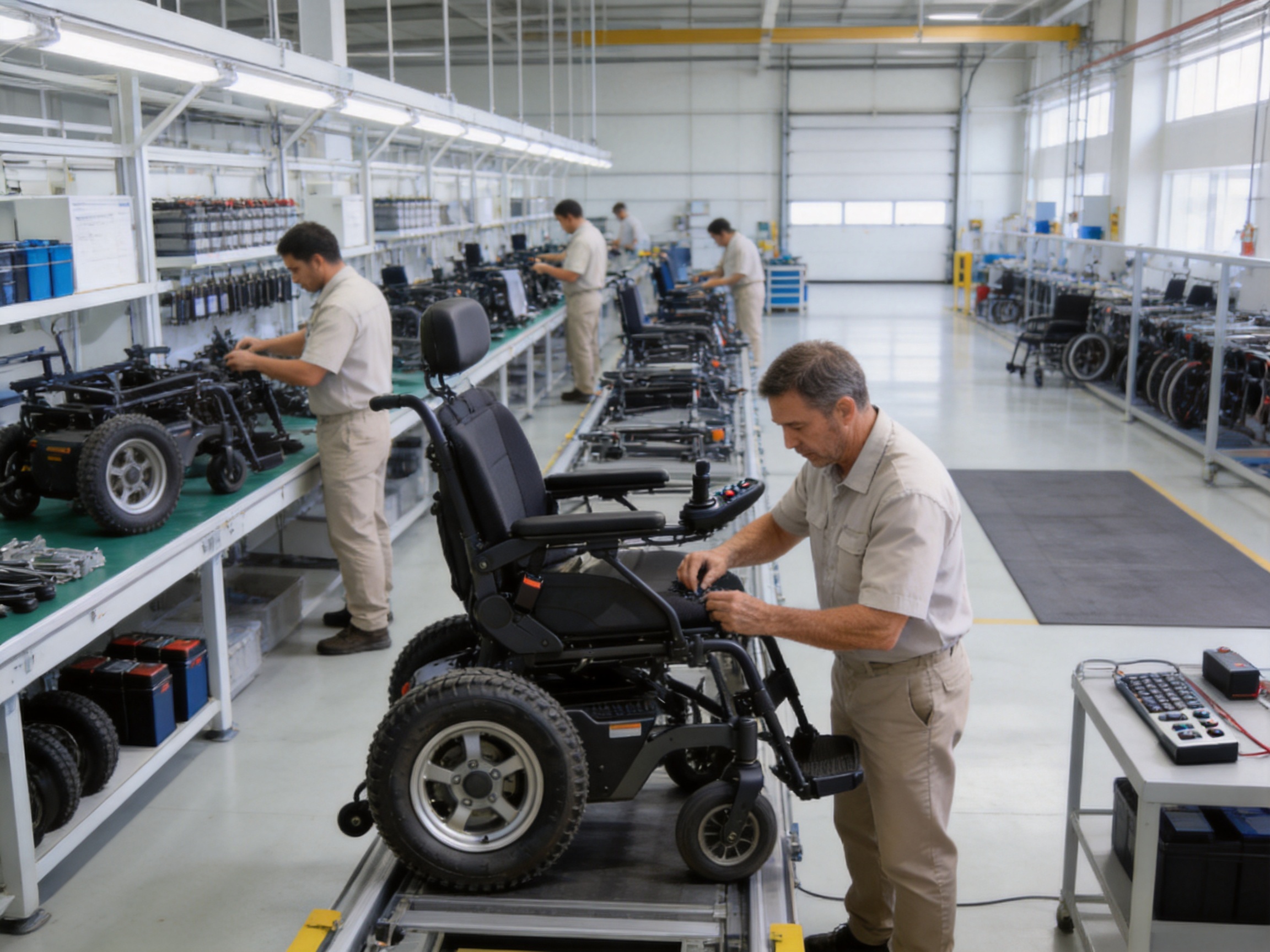
Compared with many lightweight electric wheelchairs, it offers stronger outdoor performance, greater range, and a more durable configuration. Compared with many mobility scooters, it provides wheelchair-style seating and joystick control while still supporting outdoor travel. This balanced design makes it especially useful for users who need a dependable powered chair for everyday independence.
The manufacturing strength behind the product further increases its value. Sweetrich Mobility’s specialized production base, years of industry experience, focus on research and development, intellectual property ownership, and international export record all contribute to product reliability and market confidence. For users, caregivers, distributors, and mobility equipment buyers, the product represents a practical combination of performance, comfort, safety, and long-term value.
In a market where mobility products can vary greatly in quality and capability, a well-engineered heavy duty wheelchair offers more than transportation. It offers freedom, dignity, and daily confidence. This is the true purpose of a strong electric wheelchair: helping people move through life with greater independence and comfort.
References
Product specification materials for iPower GT heavy duty electric wheelchair, Sweetrich Mobility.
Company profile materials for Suzhou Sweetrich Vehicle Industry Technology Co., Ltd.
International mobility equipment design principles and powered wheelchair user guidance.
General electric wheelchair safety, battery care, and controller operation references from mobility equipment industry practice.