
 +86-(0)512-82283871

Content
- 1 Designed for Practical Travel and Everyday Independence
- 2 Automatic Folding as a Core Product Advantage
- 3 Control Flexibility for Different Users
- 4 Drive System, Speed, and Outdoor Capability
- 5 Range, Battery Options, and Charging
- 6 Comfort and User-Oriented Features
- 7 How the Product Compares with Common Alternatives
- 8 Manufacturing Experience and Company Strengths
- 9 Production and Quality Considerations
- 10 Safety and Responsible Operation
- 11 Who May Benefit from the iFold PLUS?
- 12 Purchasing and Configuration Checklist
- 13 Frequently Asked Questions
- 13.1 What is the main purpose of the iFold PLUS?
- 13.2 How does the automatic folding feature help?
- 13.3 What is the wheelchair’s maximum speed?
- 13.4 What driving range can users expect?
- 13.5 What battery options are available?
- 13.6 Can the joystick be installed on either side?
- 13.7 Is the iFold PLUS suitable for outdoor use?
- 13.8 How much weight can it support?
- 13.9 How heavy is the wheelchair?
- 13.10 How long does charging take?
- 13.11 Does it include lighting?
- 13.12 Is this a medical device?
- 13.13 What makes the manufacturer suitable for mobility products?
- 14 Conclusion
- 15 References
- 16 Product: iFold PLUS Automatic folding electric wheelchair with joystick controller hot sale
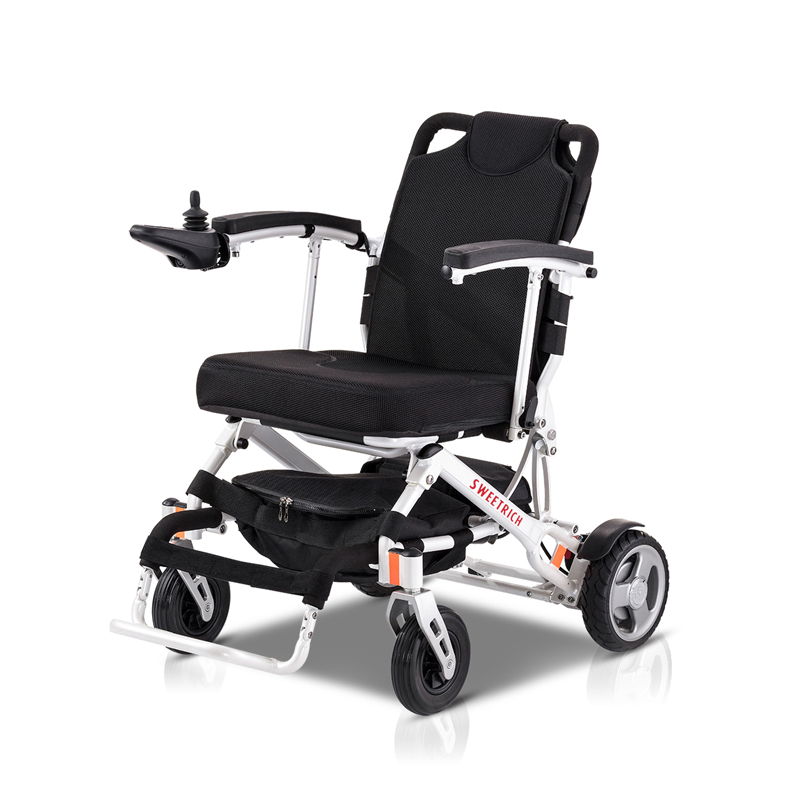
Mobility needs can change from one day to the next. A user may need dependable support inside the home, convenient transportation for a family outing, or a compact power wheelchair that can be stored without occupying an entire vehicle. The iFold PLUS automatic folding electric wheelchair is designed around this practical reality. It combines powered mobility, automatic folding, a side-switchable joystick controller, suspension, lighting options, and a relatively lightweight structure in one travel-oriented package.
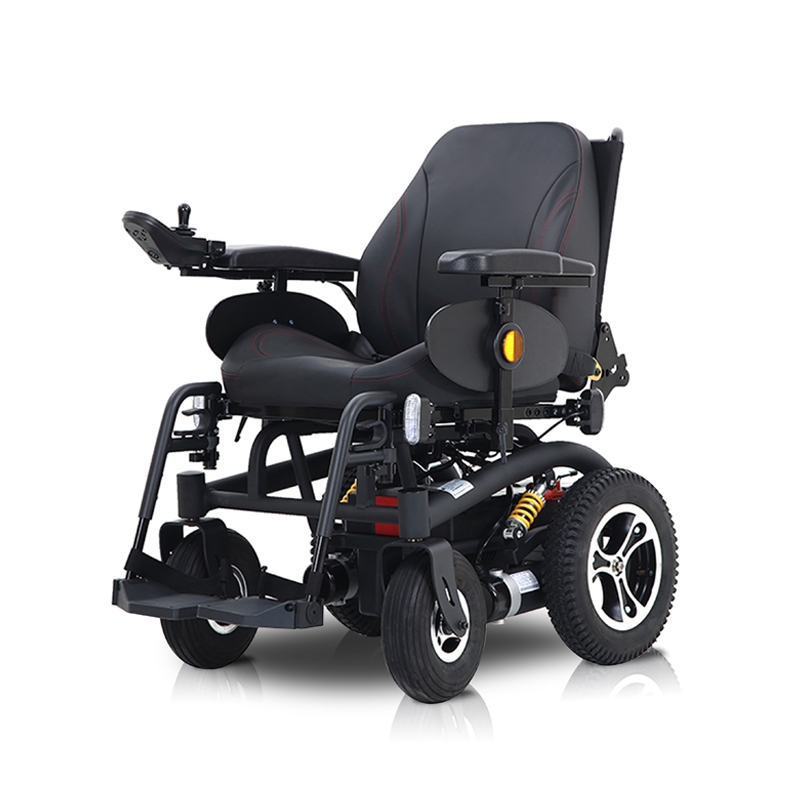
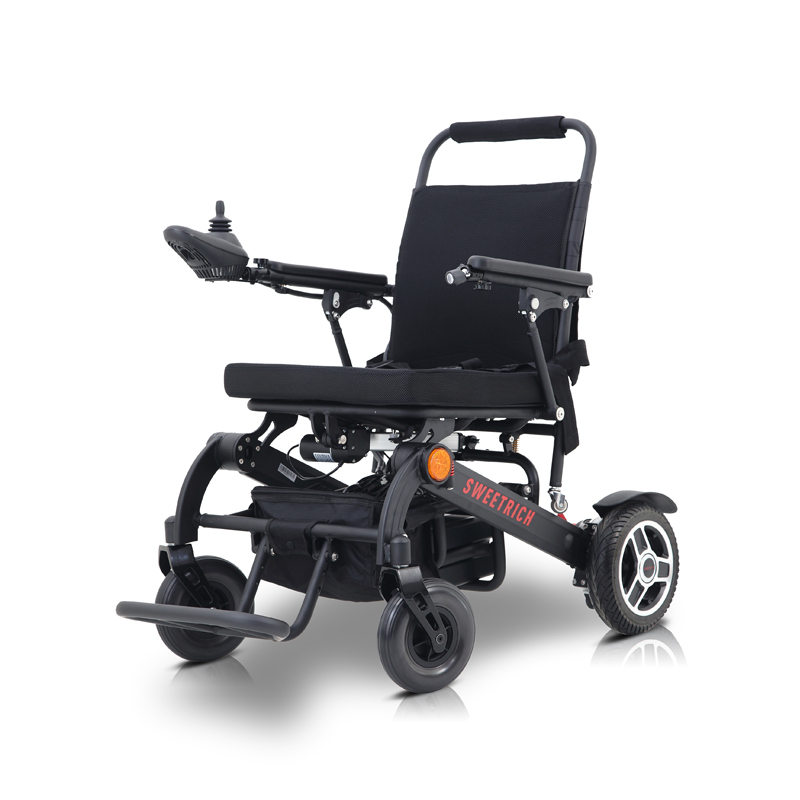
This product belongs to the Travel Smart Wheelchairs category and is intended to make powered mobility easier to manage during daily activities and trips. Its automatic folding function reduces the physical effort associated with preparing the wheelchair for storage or transport. Once folded, the chair is easier to move and place in a vehicle than many larger, conventional power wheelchairs. The design also includes an under-seat storage bag, a large foot platform, front and rear suspension, and an electromagnetic braking system.
For buyers comparing compact electric wheelchairs, the key question is not simply whether a product has a motor. The more important question is how well the complete system supports real-world use. A convenient chair should be easy to operate, comfortable enough for routine travel, manageable during transport, and supported by a manufacturer with experience in mobility products. The iFold PLUS addresses these considerations through its folding mechanism, dual-motor configuration, adaptable controls, battery choices, and production background.
This article examines the product’s principal features, technical specifications, practical advantages, manufacturing strengths, safety considerations, and suitability for different users. It also explains the limits of the available information so that buyers, distributors, caregivers, and mobility professionals can assess the product responsibly.
iFold PLUS Automatic folding electric wheelchair with joystick controller hot sale
Designed for Practical Travel and Everyday Independence
The central concept behind the iFold PLUS is convenient powered mobility. Traditional manual wheelchairs require the user or caregiver to provide propulsion. Larger powered wheelchairs may offer strong performance but can be difficult to transport, store, or lift. A folding electric wheelchair attempts to balance these needs by providing motorized movement in a structure that can be made more compact when it is not in use.
The automatic folding feature is particularly important. Manual folding systems may require the user to reach under the seat, release locking points, or coordinate several steps. An automatic system is intended to simplify this process and reduce handling effort. For a user with limited strength, reduced hand dexterity, or a caregiver assisting after a long day, this can make a meaningful difference.
The chair has an unfolded dimension of 1,090 millimeters in length, 605 millimeters in width, and 998 millimeters in height. Its weight without the battery is listed as 24 kilograms. The battery adds to the total transport weight, but the base weight remains comparatively manageable for a powered wheelchair. Buyers should still use safe lifting practices and should confirm the final weight for the selected battery configuration before purchasing.
After folding, the product is intended to be easier to move and store. This is useful in homes with limited storage, apartments, hotels, recreational vehicles, and family cars. It may also help caregivers keep the chair available without dedicating a large permanent space to it.
The product is described as a non-medical device for the United States market. It should therefore be understood as a mobility aid rather than a medical treatment or a substitute for professional clinical advice. Users should assess posture, seating needs, transfer ability, balance, and control capability with an appropriate professional where necessary.
Automatic Folding as a Core Product Advantage
Automatic folding is more than a convenience feature. It can influence whether a power wheelchair is used regularly or left at home because it is considered too difficult to transport. A chair that can be folded with less manual effort may encourage more frequent participation in shopping, social visits, travel, and outdoor activities.
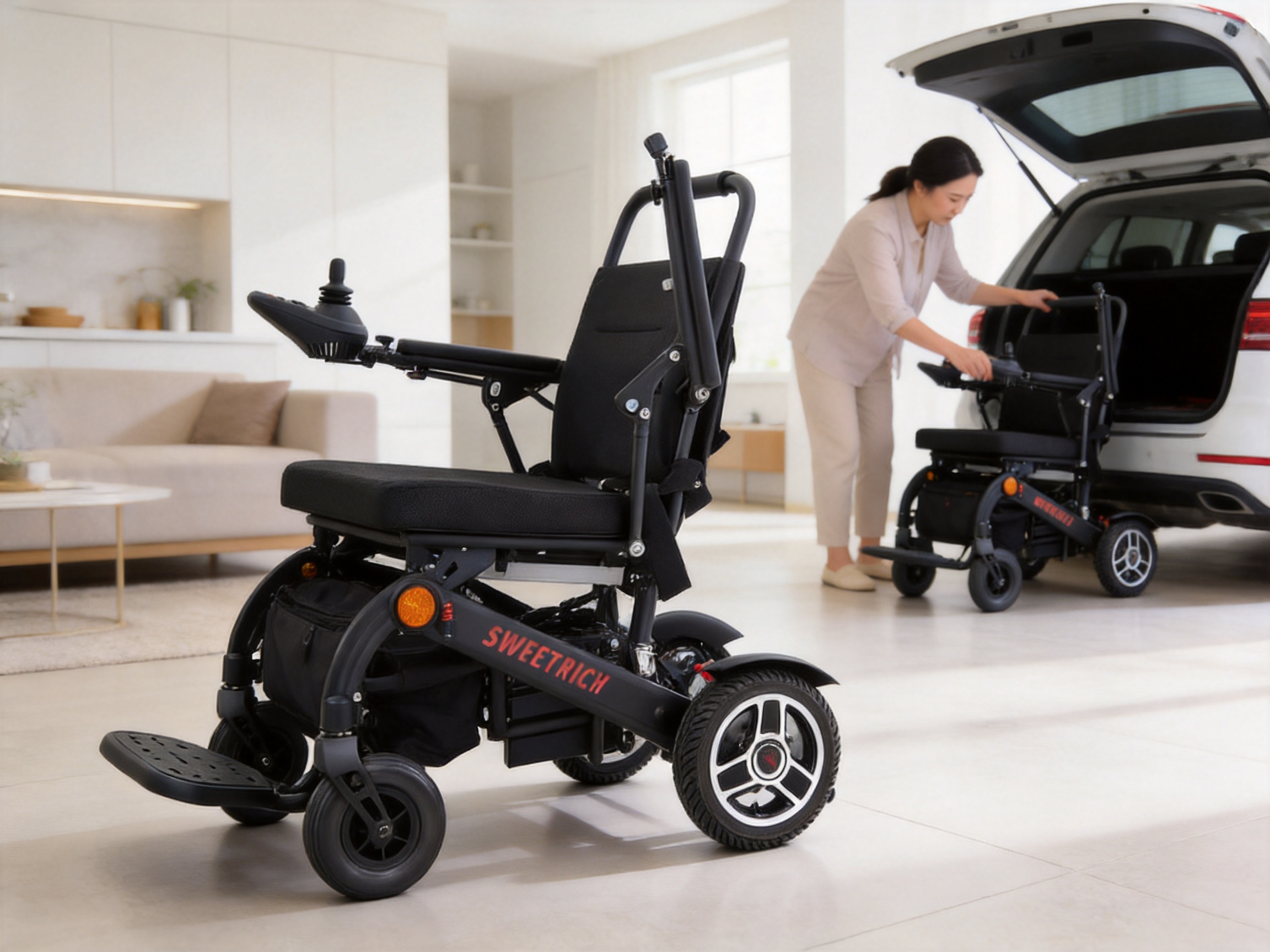
The folding system also supports a more organized travel routine. Before entering a vehicle, the user or caregiver can prepare the chair for storage rather than attempting to disassemble several heavy components. At the destination, the chair can be unfolded and made ready for use. This reduces the number of loose parts that can be misplaced and avoids the need to reconstruct the chair after every journey.
Compared with some non-folding power wheelchairs, a compact automatic folding model can offer greater flexibility for people who do not have access to a wheelchair van or a permanently installed vehicle lift. It may fit more easily into a trunk or rear storage area, depending on the vehicle and the folded dimensions. Users should always measure the actual vehicle opening and cargo area because compatibility varies significantly from one vehicle to another.
The folding function should be used on a stable surface and according to the manufacturer’s instructions. The chair should not be occupied while it is being folded or unfolded unless the official instructions expressly permit that operation. Batteries, electrical connections, and moving joints should be kept free from obstruction. Proper use helps preserve the mechanism and supports safe operation over time.
Control Flexibility for Different Users
The iFold PLUS includes a joystick controller that is available for use on either side. This is a valuable design option because not every user has the same dominant hand, reach pattern, or upper-limb capability. A right-side control position may be comfortable for one user, while another may need the joystick on the left because of strength, coordination, or seating preferences.
A joystick controller allows the user to manage forward, reverse, turning, and speed-related movement through a compact interface. The control system is intended to provide direct command of the two-motor drive system. Users should practice in an open, level area before operating near traffic, crowded spaces, ramps, or uneven ground.
Side-switchable controls can also benefit caregivers and rehabilitation professionals who need to configure a chair for a particular user. However, changing the control position should be performed correctly so that the wiring, mounting, and controller placement remain secure. A poorly fitted controller can interfere with transfers or create a risk of accidental activation.
Control comfort is affected by more than joystick location. Seat height, arm support, controller angle, hand position, visibility, and the user’s ability to release the joystick all matter. Before regular use, the operator should confirm that the joystick can be reached without leaning dangerously and that the chair stops promptly when the control is released.
The motor controller is listed as 24 volts and 50 amperes. This specification indicates that the chair is built around an electrical control system sized for its dual 24-volt motors. Actual operating behavior will also depend on battery condition, user weight, terrain, temperature, tire pressure, and programming.
Drive System, Speed, and Outdoor Capability
The iFold PLUS uses two 24-volt, 250-watt motors. A dual-motor layout can provide balanced drive power to the left and right wheels and can support controlled turning in confined spaces. It also distributes propulsion across two drive units rather than relying on a single motor.
The supplied product information presents two speed figures. The feature description states speeds of up to 8.5 kilometers per hour, or approximately 5.2 miles per hour, while the technical specification table lists a maximum forward speed of 6 kilometers per hour. Because these figures differ, buyers and distributors should confirm the applicable rated speed for the exact configuration and market before making a purchasing decision. The formal specification supplied for the product lists 6 kilometers per hour and should be treated as the principal technical reference unless the manufacturer confirms otherwise.
A maximum driving gradient of 10 degrees is listed. This does not mean that every ramp or slope is equally suitable. A slope’s surface, wetness, length, transitions, side angle, and obstacles can significantly affect stability and traction. Users should approach inclines directly, avoid sudden turns, and follow local accessibility guidance.
Front and rear suspension are included. Suspension can help reduce the effect of small surface irregularities and may improve comfort when the wheelchair moves across ordinary outdoor paths. It does not eliminate the need for caution on broken pavement, deep cracks, loose gravel, steep transitions, or uneven terrain.
The tire sizes are listed as 8 inches at the front and 10 inches at the rear. Larger rear wheels can support stable forward movement and help the chair manage ordinary outdoor surfaces more effectively than very small all-around wheels. Nevertheless, the chair is still a compact travel wheelchair, not an off-road vehicle. Users should select surfaces appropriate to the product’s design and avoid terrain that could exceed its stability or ground-clearance capabilities.
The electromagnetic brake system is designed to provide controlled stopping when the drive command is released or power is interrupted in the normal operating configuration. Electromagnetic braking is widely used in powered mobility products because it can engage automatically rather than requiring the user to operate a separate hand brake. The user should verify braking performance before each journey, especially after transport, maintenance, or battery replacement.
Range, Battery Options, and Charging
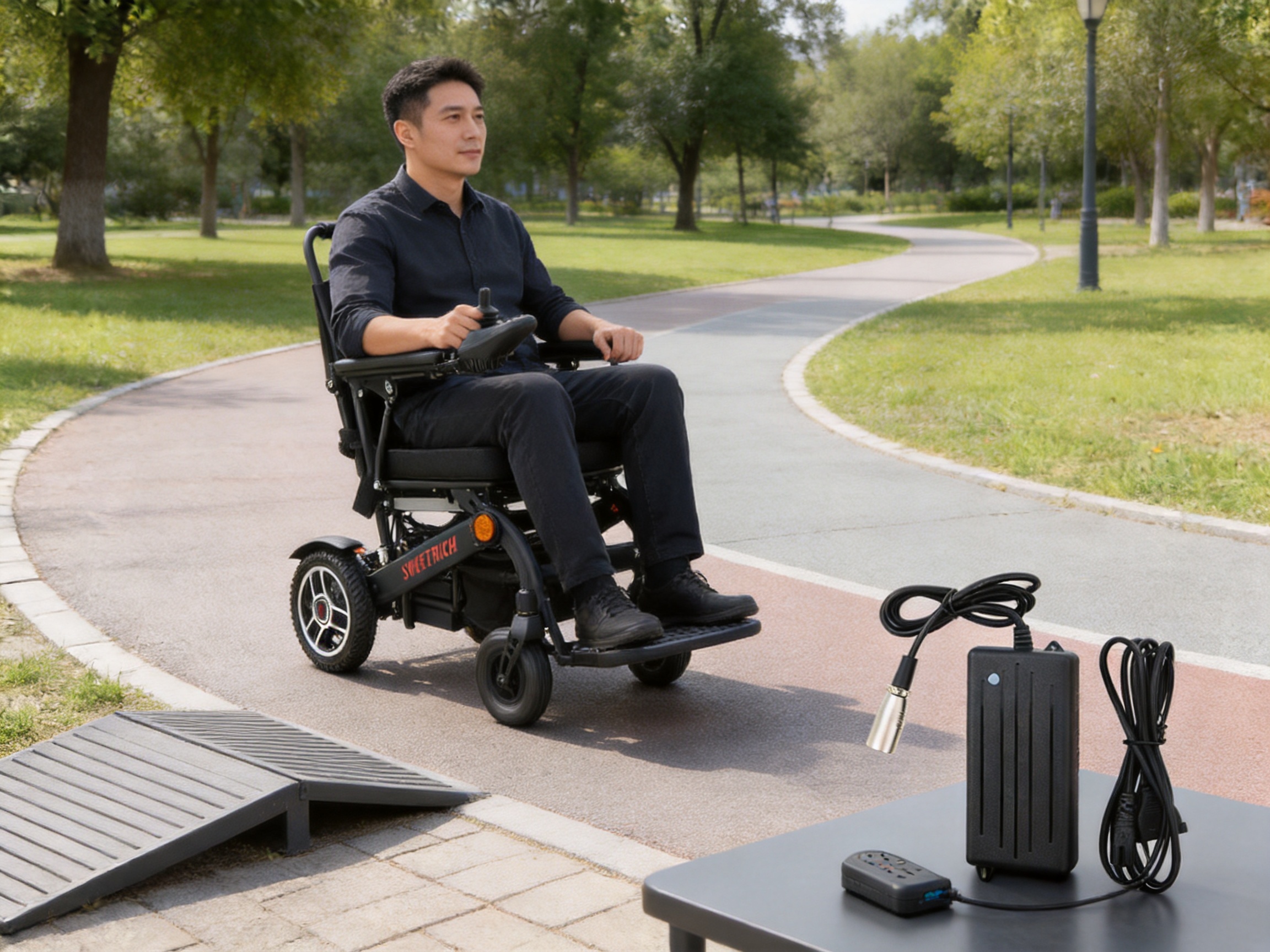
The listed maximum driving range is 30 plus or minus 5 kilometers. Actual range can vary substantially. Battery capacity, rider weight, gradient, surface quality, temperature, speed, stopping frequency, tire condition, and driving style all affect energy consumption. A route with repeated hills and frequent acceleration will normally use more energy than a smooth indoor route.
The listed battery options are lithium batteries rated at 24 volts and either 10.2 ampere-hours or 20 ampere-hours. The feature information also mentions an optional battery of up to 30 ampere-hours to reach a greater distance. Because battery availability may depend on market, configuration, and transportation rules, buyers should confirm the exact battery supplied with the chair and the expected range associated with it.
Battery capacity should not be considered the only measure of travel convenience. A larger battery may extend range, but it can also affect total weight, charging requirements, transport handling, and regulatory considerations. The best selection depends on the user’s normal daily distance and whether the chair will often be lifted into a vehicle.
The charger is specified as DC 24 volts and 2 amperes, with an AC input range of 115 to 230 volts. The stated charging time is approximately five hours. Charging should take place in a dry, ventilated location using the appropriate charger. The battery should not be exposed to extreme heat, water, flames, or unauthorized modifications.
For routine reliability, users should charge the battery according to the operating instructions rather than waiting until it is completely depleted every time. If the wheelchair will be stored for an extended period, the battery should be maintained in accordance with the manufacturer’s storage guidance. Lithium batteries require responsible handling, and damaged, swollen, leaking, or unusually hot batteries should not be used.
Travelers should also review airline, rail, and local transportation requirements before taking the wheelchair on a journey. Lithium battery rules can vary according to capacity and whether the battery is removable. The battery rating and transport documentation should be kept available when required.
Comfort and User-Oriented Features
The product includes a large foot platform. Foot support affects comfort, posture, and confidence during movement. A broad platform can provide a more stable place for the feet than a narrow support, particularly during routine indoor use and outdoor travel. Users should position their feet correctly and avoid allowing them to extend into the path of the front wheels.
The under-seat storage bag adds practical value. It provides a place for personal items such as a wallet, keys, small shopping articles, charging accessories, or travel documents. Keeping frequently used items under the seat may reduce the need for a separate bag and help the user remain more independent during short trips.
A front light is available as an option. Lighting can improve visibility during low-light conditions and help other people notice the wheelchair. It should not be viewed as a replacement for safe route selection or reflective equipment. Users should follow local rules for mobility devices and avoid operating in conditions where visibility is inadequate.
The combination of front and rear suspension, a large foot platform, a joystick that can be placed on either side, and optional lighting shows that the product is designed around daily usability rather than motor performance alone. These features can make the chair more adaptable to different routines, although individual comfort still depends on body size, posture, seat geometry, and personal preference.
The weight capacity is listed as 120 kilograms, or 265 pounds. This limit includes the user and should not be exceeded. Clothing, bags, and objects carried on the chair contribute to the total load. Staying within the rated capacity helps preserve handling, braking, structural performance, and battery range.
How the Product Compares with Common Alternatives
Consumers commonly compare a folding electric wheelchair with a manual wheelchair, a non-folding power wheelchair, a mobility scooter, or a very small travel chair. Each category has different strengths. The iFold PLUS is most attractive to users who prioritize powered operation and transport convenience in a compact format.
Compared with a manual wheelchair, the iFold PLUS reduces the need for continuous pushing by the user or caregiver. This can be especially useful on longer routes or for people with limited upper-body strength. The powered system also supports independent steering through the joystick, although the user must have adequate control ability and awareness.
Compared with a larger non-folding power wheelchair, the automatic folding structure may make the iFold PLUS easier to store and transport. A larger chair may provide more extensive seating adjustments, higher capacity, or specialized positioning options, but it can require a van, ramp, lift, or larger storage area. The folding model is therefore suited to a different priority: mobility with greater transport flexibility.
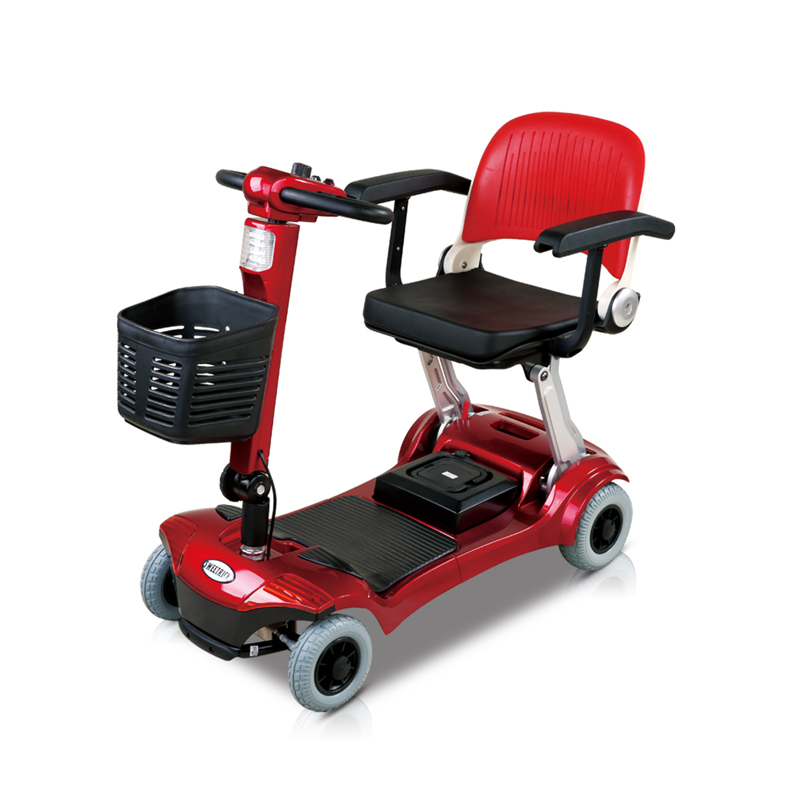
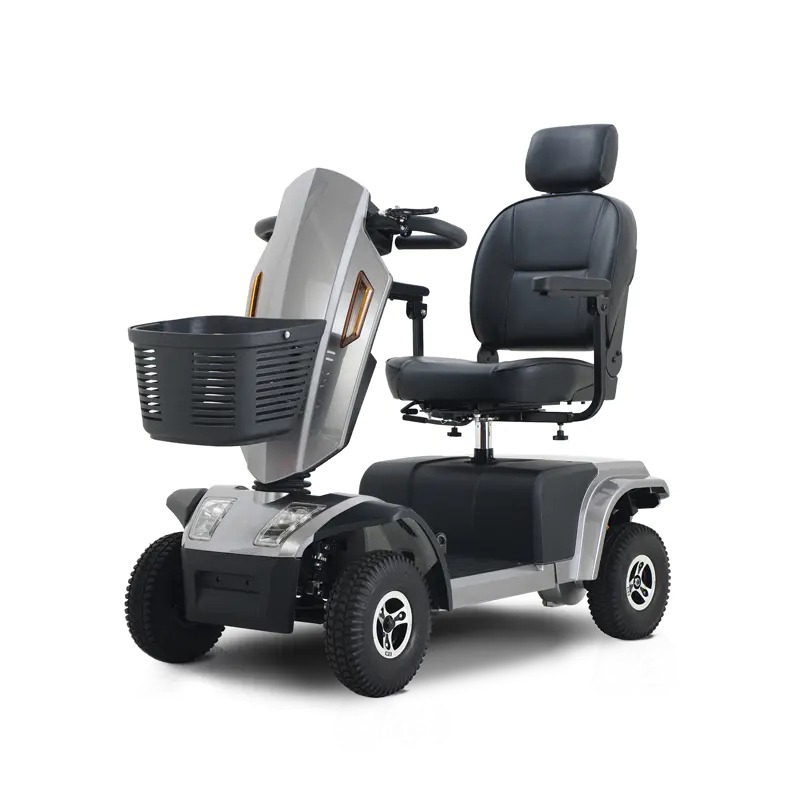
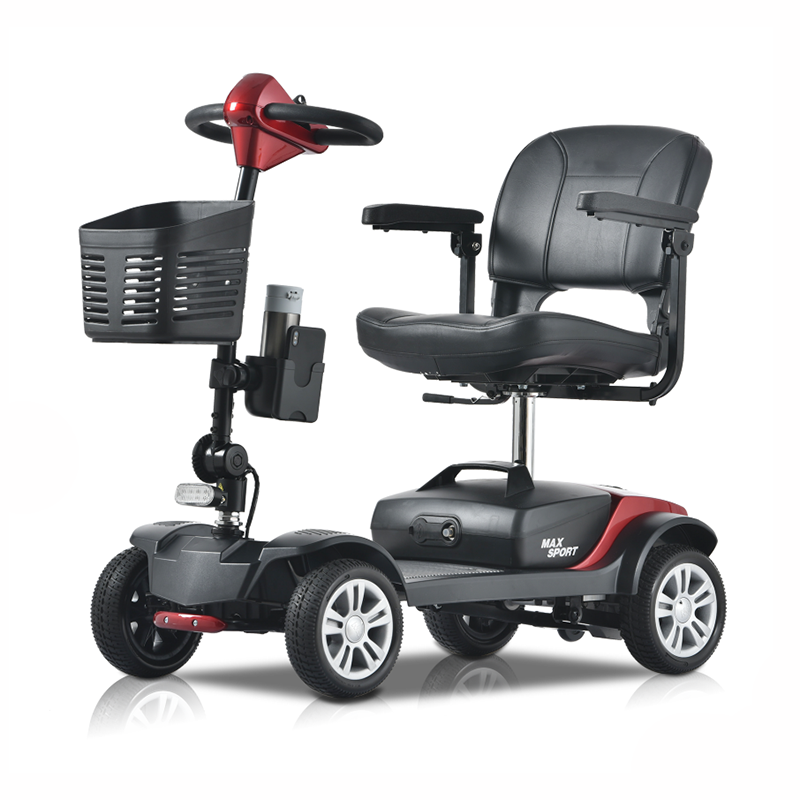
Compared with many mobility scooters, the wheelchair format may be more suitable for users who require a seated control arrangement with a joystick rather than handlebars or a tiller. The side-switchable controller is also useful for users whose hand position or reach makes a traditional scooter tiller less appropriate. On the other hand, a scooter may be preferred by users who want a more open leg position or a different seating style.
Compared with basic travel wheelchairs, the iFold PLUS offers a more complete powered package, including dual motors, electromagnetic braking, suspension, automatic folding, and optional lighting. These features can justify selecting it over a simpler manual or low-powered alternative when the user needs more assistance for regular travel.
It is important not to interpret these differences as a universal ranking. The most suitable product depends on the user’s medical, physical, environmental, and transportation needs. A product that is convenient for one traveler may not provide the seating support or control adaptations required by another.
Manufacturing Experience and Company Strengths
The product is manufactured by Suzhou Sweetrich Vehicle Industry Technology Co., Ltd., a high-tech mobility company established in 2011 in Suzhou Industrial Zone, Jiangsu, China. The company reports a 60-acre site and a 30,000-square-meter factory. These resources provide a substantial foundation for the research, development, production, and coordination required for mobility scooters and power wheelchairs.
More than a decade of experience in mobility products can support the refinement of practical details. Folding mechanisms, drive systems, controllers, braking, battery integration, and frame construction all need to work together. Experience with multiple product types can help a manufacturer identify recurring user needs and develop designs that are more appropriate for everyday use.
The company states that it owns intellectual property rights for its electric scooters and power wheelchairs. Intellectual property can reflect investment in original product development, engineering solutions, and product differentiation. For distributors and original equipment partners, a manufacturer’s design capability can be important when discussing configuration changes, market requirements, and future model development.
Sweetrich describes its products as incorporating advanced control technology and driving systems intended to support smooth and safe operation. In the iFold PLUS, this product philosophy can be seen in the use of a dual-motor drive arrangement, a dedicated motor controller, electromagnetic braking, and a joystick that can be used on either side.
The company also emphasizes strict production management and scientific product design. These principles are relevant to mobility equipment because reliability depends on consistent assembly, electrical connections, battery handling, frame alignment, wheel installation, brake function, and folding-mechanism performance. A well-designed product still requires disciplined production and inspection to perform consistently.
The company reports serving customers in America, Europe, Japan, Australia, the Middle East, Russia, and other markets. International experience can help a manufacturer understand different expectations concerning packaging, electrical systems, user documentation, distributor support, and market compliance. Buyers should nevertheless verify the specific certifications, labeling, warranty terms, and regulatory documentation applicable to their country and exact product configuration.
Manufacturing strength should be evaluated as a complete system rather than by factory size alone. Product development, component sourcing, assembly control, testing, quality records, after-sales support, spare-parts availability, and communication with distributors all contribute to the customer experience. Sweetrich’s stated focus on qualified products, considerate service, and long-term cooperation is consistent with the needs of mobility equipment buyers who require more than a one-time transaction.
Production and Quality Considerations
A folding electric wheelchair requires careful attention to mechanical and electrical integration. The frame must support the user while also allowing repeated folding cycles. Hinges, locks, moving brackets, and control connections should be assembled accurately so that the chair remains stable in its operating position and folds correctly when required.
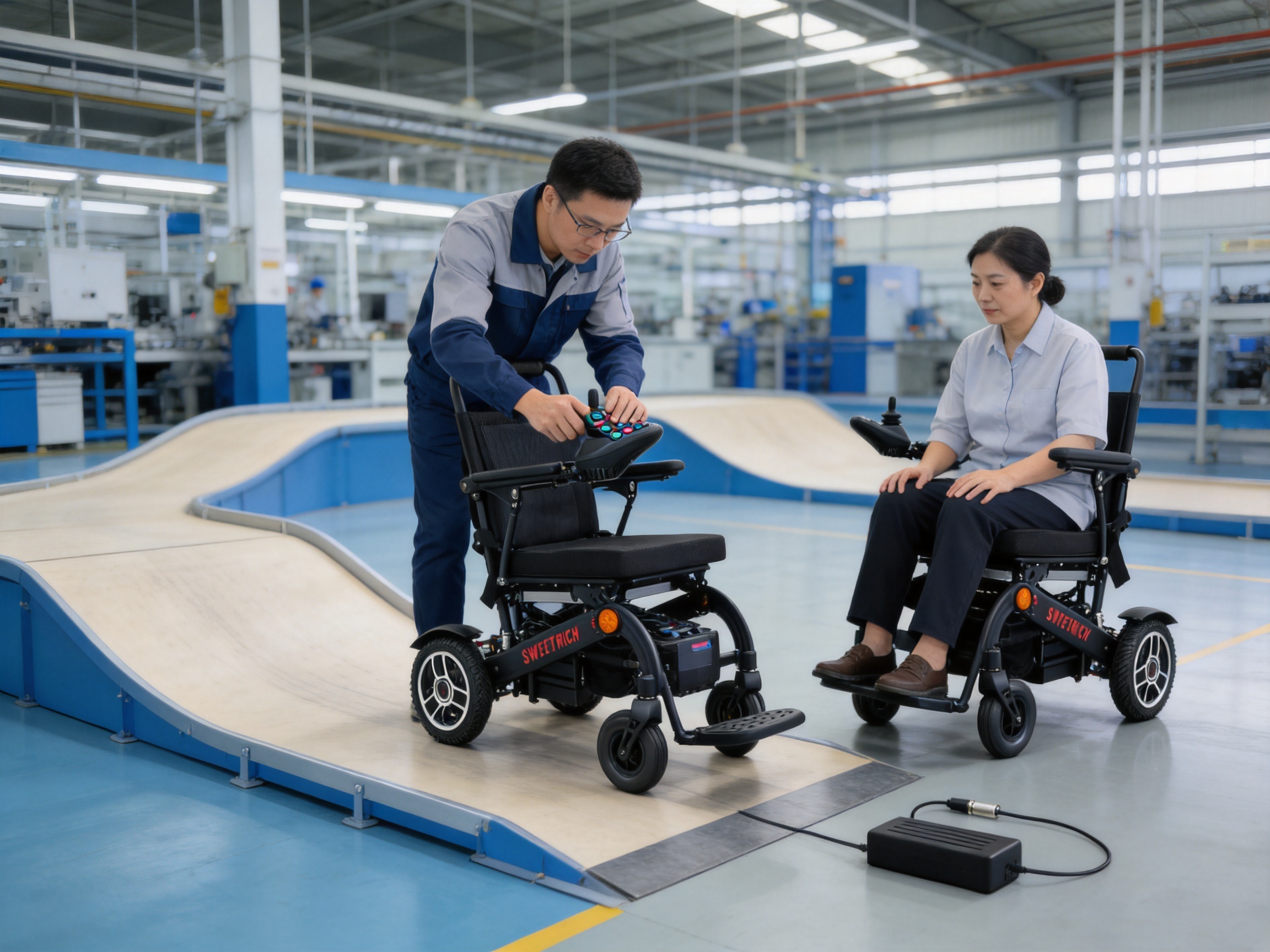
The drive system requires reliable alignment between the motors, wheels, controller, battery, and braking function. During production, correct wiring polarity, connector security, insulation, and controller installation are essential. A mobility product should also be checked for abnormal noise, uneven movement, delayed braking, and unintended motion before it leaves the factory.
Battery integration is another important quality area. Lithium battery packs require appropriate protection, compatible charging, secure mounting, and careful handling during storage and shipping. The charger must match the battery system. Product documentation should clearly state charging procedures, warnings, storage recommendations, and approved replacement components.
Quality control should include visual inspection and functional checks. Useful checks may include folding and unfolding, joystick response, forward and reverse movement, turning, braking, lighting where fitted, battery charging, wheel attachment, suspension movement, and fastener security. The exact testing program belongs to the manufacturer, but buyers and distributors should request available quality documentation when placing commercial orders.
Packaging also affects product quality. A wheelchair can be damaged during shipping if the frame, joystick, wheels, battery, or folding components are not protected against impact and movement. Strong packaging, clear identification, and a documented inspection process at delivery help reduce avoidable transport problems.
Safety and Responsible Operation
Before first use, the operator should read the product instructions, inspect the tires and frame, confirm that the battery is installed correctly, and test the joystick and brakes in a clear area. The operator should begin at low speed and become familiar with turning radius, stopping distance, and reverse movement.
The wheelchair should be used within its rated weight capacity and on surfaces appropriate for a compact travel power chair. Users should avoid steep side slopes, deep water, loose ground, unprotected roadways, and obstacles that could catch the front wheels. Curbs and raised thresholds should be approached only when they are within the chair’s capability and when the user has received suitable instruction.
Seat belts, if supplied or recommended for the configuration, should be used correctly. The user should keep hands, feet, clothing, and bags clear of wheels, moving joints, and the folding mechanism. The chair should be turned off before transfers, battery handling, or adjustment of the controller.
Automatic folding should take place only when the chair is unoccupied and clear of people or objects. Children and bystanders should be kept away from moving parts. The chair should not be modified with unauthorized motors, batteries, wiring, seats, or accessories because changes can affect stability, braking, range, and warranty coverage.
Routine maintenance should include checking tire condition, cleaning the frame, inspecting the joystick, confirming charger operation, and looking for loose fasteners or unusual sounds. Any significant change in braking, steering, folding, battery temperature, or motor performance should be investigated before continued use.
Who May Benefit from the iFold PLUS?
The iFold PLUS may suit adults who need powered mobility for daily activities but also want a chair that can be transported and stored more easily than a full-size power wheelchair. It may be useful for shopping centers, hotels, family visits, paved parks, cruises where permitted, and other travel situations with suitable access.
It may also benefit caregivers who regularly load a wheelchair into a vehicle. Automatic folding can reduce the number of manual steps involved in preparing the chair. The 24-kilogram base weight without the battery is still significant, so caregivers should evaluate their own lifting ability and consider a loading aid when appropriate.
Users with limited hand strength may appreciate the powered drive and side-selectable joystick, but they must still be able to operate and release the controller safely. Individuals with severe postural needs, complex seating requirements, or substantial cognitive or visual limitations may require a more specialized assessment and a different wheelchair configuration.
The product is also relevant to distributors seeking a travel-oriented model with a clear feature set. Automatic folding, dual motors, lithium battery options, suspension, storage, and optional lighting provide several points for product positioning. Distributors should present the specifications accurately, especially the difference between the advertised speed statement and the technical table, and should provide local compliance information.
Purchasing and Configuration Checklist
Before ordering, buyers should confirm the exact model, battery capacity, charger, controller side, lighting option, warranty, and included accessories. They should ask whether the quoted range applies to the selected battery and under what test conditions it was measured.
Vehicle compatibility should be checked using the actual folded dimensions and total transport weight. The buyer should measure the trunk opening, cargo floor, rear-seat space, and lifting height. A chair that fits inside the vehicle may still be difficult to load if the opening is narrow or the lifting angle is inconvenient.
The user’s normal environment should also be considered. Indoor corridors, elevators, shopping areas, paved paths, ramps, and uneven outdoor surfaces place different demands on the wheelchair. The listed 10-degree maximum gradient should not be treated as a guarantee that every ramp at that angle will be safe.
Buyers should request documentation concerning battery transport, charging, maintenance, spare parts, service contacts, and warranty coverage. Commercial customers may also need product images, packaging information, manuals, serial-number procedures, and replacement-component availability.
Finally, buyers should confirm whether the product is classified as a non-medical device in their intended market and whether additional local requirements apply. The product description supplied for this model identifies it as a non-medical device for the United States market, but regulations and purchasing requirements can differ by jurisdiction.
Frequently Asked Questions
What is the main purpose of the iFold PLUS?
The iFold PLUS is a travel-oriented automatic folding electric wheelchair. It is designed to provide powered mobility while making storage and vehicle transport more convenient than with many larger, non-folding power wheelchairs.
How does the automatic folding feature help?
It reduces the manual effort needed to prepare the wheelchair for storage or transport. The chair should be folded and unfolded according to the manufacturer’s instructions, on a stable surface, and without a user seated in it unless official instructions state otherwise.
What is the wheelchair’s maximum speed?
The technical information lists a maximum forward speed of 6 kilometers per hour. The feature description also mentions speeds up to 8.5 kilometers per hour, so the applicable speed should be confirmed for the exact configuration and market before purchase or operation.
What driving range can users expect?
The listed maximum driving range is 30 plus or minus 5 kilometers. Real-world range depends on battery capacity, terrain, user weight, temperature, speed, tire condition, gradients, and driving style.
What battery options are available?
The specifications list 24-volt lithium batteries with capacities of 10.2 ampere-hours and 20 ampere-hours. The feature information also refers to an optional battery of up to 30 ampere-hours. Availability should be confirmed with the supplier for the selected market and configuration.
Can the joystick be installed on either side?
Yes. The product information states that the joystick is available for use on both sides. The control should be installed and secured correctly, and the user should be able to reach and release it safely.
Is the iFold PLUS suitable for outdoor use?
It is designed for travel-oriented mobility and includes front and rear suspension, 8-inch front tires, 10-inch rear tires, and a listed maximum gradient of 10 degrees. It should be used on suitable surfaces and is not intended to function as an unrestricted off-road vehicle.
How much weight can it support?
The listed weight capacity is 120 kilograms, or 265 pounds. This total includes the user and any items carried on the wheelchair.
How heavy is the wheelchair?
The listed weight without the battery is 24 kilograms. The final transport weight will be higher once the selected battery and accessories are included.
How long does charging take?
The stated charging time is approximately five hours. Charging should be performed with the correct charger in a dry and ventilated location, following the manufacturer’s instructions.
Does it include lighting?
A front light is listed as an available option. Buyers should confirm whether lighting is included in the quoted configuration or must be ordered separately.
Is this a medical device?
The supplied product information identifies it as a non-medical device for the United States market. It is a mobility aid and should not be presented as a treatment or as a substitute for professional clinical assessment.
What makes the manufacturer suitable for mobility products?
The manufacturer reports experience dating from 2011, a 60-acre site, a 30,000-square-meter factory, intellectual property related to electric scooters and power wheelchairs, and international market experience. It also describes a focus on research, development, production, quality management, and customer service.
Conclusion
The iFold PLUS automatic folding electric wheelchair is designed for people who want powered mobility without giving up transport convenience. Its automatic folding system, side-switchable joystick, dual 250-watt motors, electromagnetic braking, suspension, large foot platform, under-seat storage, and optional front light create a practical package for everyday travel.
Its listed 24-kilogram weight without the battery can make handling more manageable than many full-size powered chairs, while the lithium battery options and stated range support a variety of daily routines. The 120-kilogram capacity, 10-degree listed gradient, and compact wheel configuration make it suitable for appropriate indoor and outdoor environments, provided users remain within the product’s operating limits.
The manufacturer’s reported factory resources, mobility-product experience, intellectual property, international market exposure, and focus on production management add important value for distributors and buyers. A mobility product must combine design, assembly consistency, electrical reliability, documentation, and after-sales support, and these are central considerations when evaluating the complete offering.
Prospective buyers should confirm the final speed, battery, folded dimensions, accessories, compliance documents, warranty, and local transport rules before ordering. With correct configuration and responsible operation, the iFold PLUS can provide a useful balance between powered independence, everyday comfort, and travel-oriented convenience.
References
1. Product specification sheet for the iFold PLUS automatic folding electric wheelchair, including dimensions, speed, gradient, range, capacity, suspension, tires, brakes, battery, charger, motor, controller, and weight information.
2. Product feature summary for the iFold PLUS, including automatic folding, joystick placement, front-light availability, storage bag, motor system, and optional battery capacity.
3. Manufacturer company information supplied for Suzhou Sweetrich Vehicle Industry Technology Co., Ltd., including company history, factory resources, research and development activities, intellectual property, production focus, and international markets.
4. General principles for safe operation, charging, storage, transport, and maintenance of lithium-battery-powered mobility equipment.
5. General guidance for assessing powered wheelchair fit, user control, terrain suitability, transport compatibility, and responsible mobility-aid selection.