
 +86-(0)512-82283871

Content
- 1 Designed for Outdoor Mobility and Everyday Independence
- 2 Powertrain Performance: Two 350-Watt Motors
- 3 Large Pneumatic Tires and Rear Suspension
- 4 Adjustable Seating for Different Users
- 5 Battery System and Driving Range
- 6 Electromagnetic Braking and User Safety
- 7 Weight Capacity and Structural Use
- 8 Comparison with Other Power Wheelchair Categories
- 9 Manufacturing Strengths and Product Development
- 10 Customization and Optional Equipment
- 11 Inspection Checklist Before Delivery
- 12 Routine Maintenance for Long-Term Performance
- 13 Who May Benefit from This Wheelchair?
- 14 Frequently Asked Questions
- 14.1 Is the iPower GTS Plus a medical device?
- 14.2 What is the maximum user weight?
- 14.3 How fast can it travel?
- 14.4 What range can users expect?
- 14.5 Can it climb hills?
- 14.6 Does it have suspension?
- 14.7 What type of tires does it use?
- 14.8 Can the joystick be used on either side?
- 14.9 Is a swing-away controller included?
- 14.10 Does it include lights?
- 14.11 What batteries does it use?
- 14.12 How long does charging take?
- 14.13 Is the wheelchair easy to transport?
- 14.14 Is it suitable for indoor use?
- 14.15 What does “second hand” mean in the product title?
- 14.16 Is a power tilt and lift system included?
- 14.17 Where is the product manufactured?
- 15 Purchasing Guidance for Individuals, Dealers, and Care Providers
- 16 Conclusion
- 17 References
- 18 Product: iPower GTS Plus More popular type second hand off road light power electric electronic wheelchair for the elderly
For older adults and people with mobility limitations, choosing a power wheelchair is an important decision that affects independence, comfort, safety, and daily convenience. A suitable chair must do more than move across a smooth indoor floor. It should provide dependable propulsion, stable handling, sufficient range, comfortable seating, practical controls, and a frame capable of supporting the user over a wide range of everyday environments.
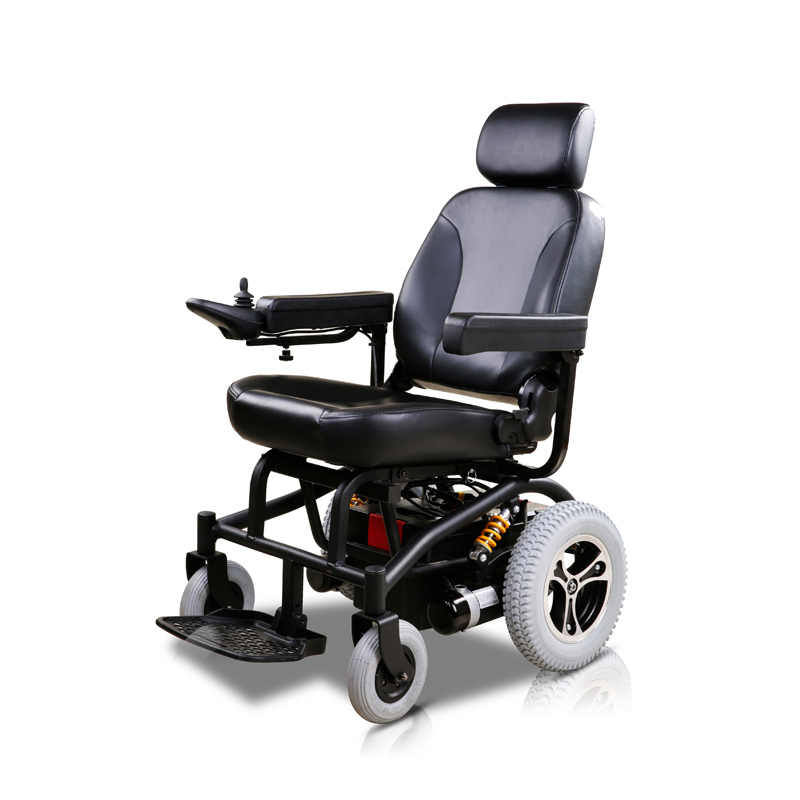
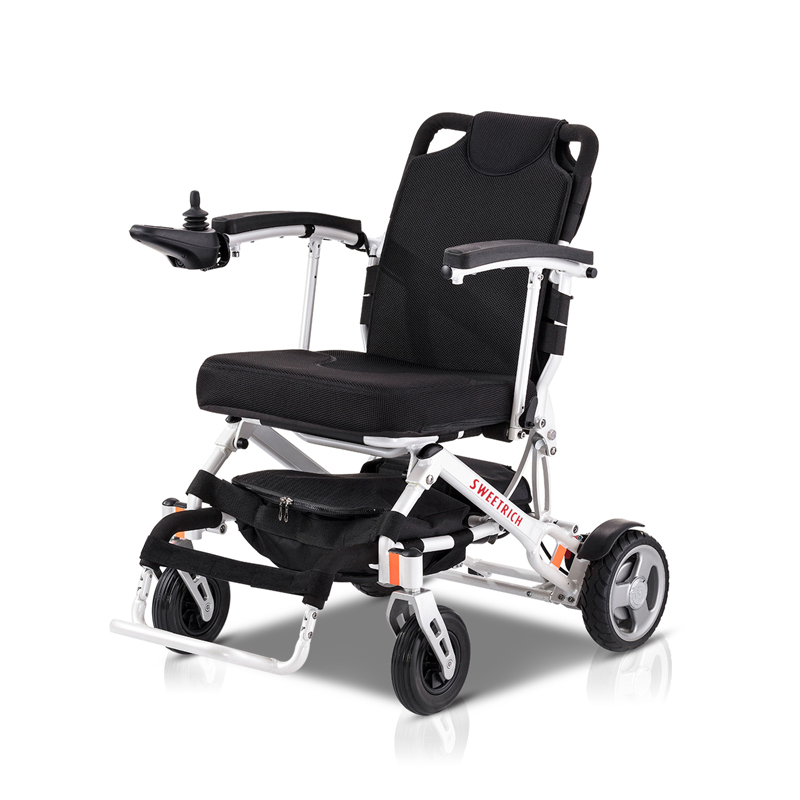
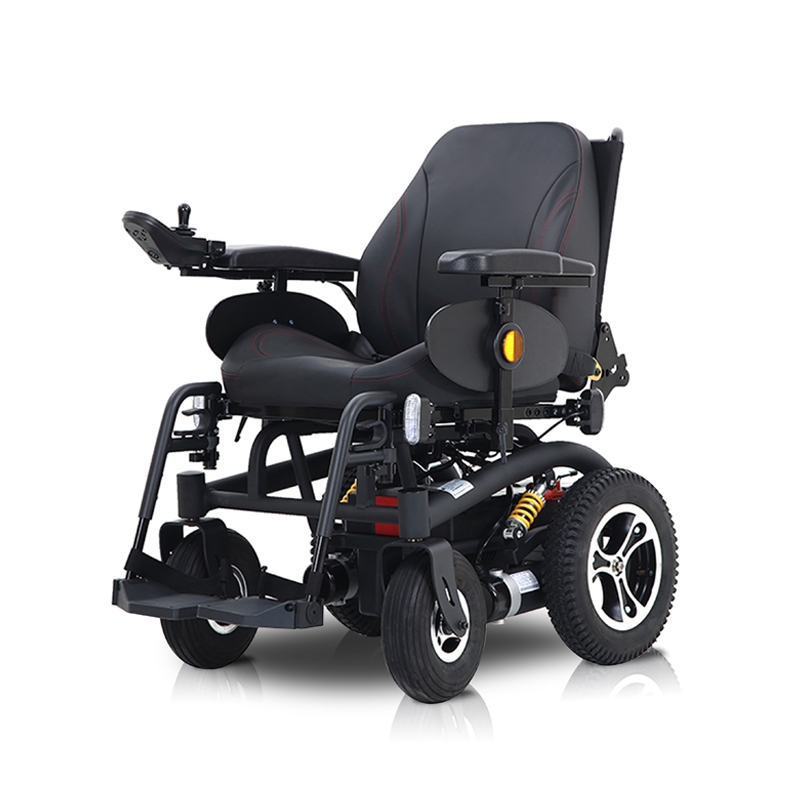
The iPower GTS Plus is an outdoor-oriented heavy-duty power wheelchair developed for users who need more performance than a basic indoor chair can provide. Its design combines two 350-watt motors, large front and rear pneumatic tires, rear suspension, electromagnetic braking, adjustable seating features, and a driving range of approximately 30 to 40 kilometers under suitable conditions. It is intended to provide a balance between maneuverability, power, stability, and user control.
This article examines the wheelchair’s main features, technical specifications, practical advantages, manufacturing background, operating considerations, and suitability for different users. Because the product information identifies the device as a non-medical product for the United States market, it should be understood as a mobility device rather than a medical treatment or diagnostic product. Users should also follow applicable local regulations and consult qualified professionals when they need advice about posture, seating, pressure management, or safe operation.
Designed for Outdoor Mobility and Everyday Independence
A major difference between an indoor power wheelchair and an outdoor-capable model is the way the vehicle handles changing surfaces. Indoor chairs often prioritize compact dimensions and very tight turning spaces. Outdoor models generally need stronger motors, larger tires, better ground clearance, and more stable weight distribution. The iPower GTS Plus places particular emphasis on outdoor performance while retaining a footprint that can be practical for residential environments.
The wheelchair measures approximately 1,045 millimeters in length, 625 millimeters in width, and 1,080 millimeters in height. The listed width is relatively controlled for a heavy-duty outdoor chair, which may help users approach doorways, paths, ramps, and other everyday access points. Actual clearance should always be checked against the user’s home, vehicle, building entrances, elevators, and local accessibility requirements.
With a maximum forward speed of 8 kilometers per hour, or approximately 5 miles per hour, the chair offers a useful pace for outdoor travel. This speed can be appropriate for moving along private paths, sidewalks where permitted, residential areas, shopping centers, and other controlled environments. Speed should be adjusted to the terrain, weather, visibility, traffic conditions, and the user’s experience level.
The listed maximum driving gradient is 10 degrees. This specification indicates the design’s ability to approach slopes within a defined limit, but it should not be interpreted as a recommendation to climb every slope of that angle. Surface texture, moisture, loose gravel, tire pressure, rider weight, battery condition, and the direction of travel can all affect performance. A gradual, dry, well-maintained slope is very different from a steep, wet, uneven, or angled surface.
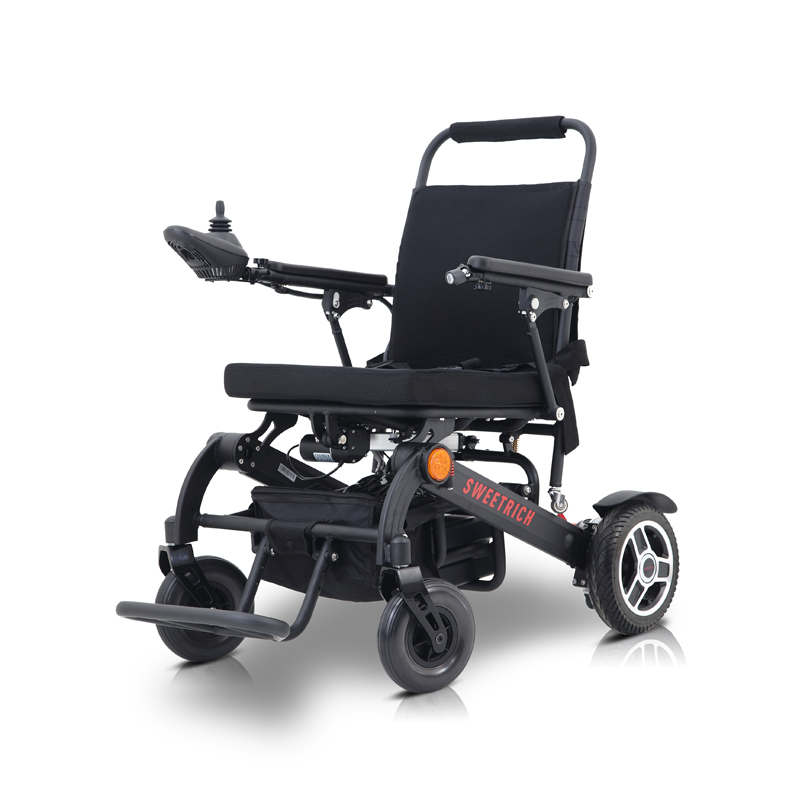
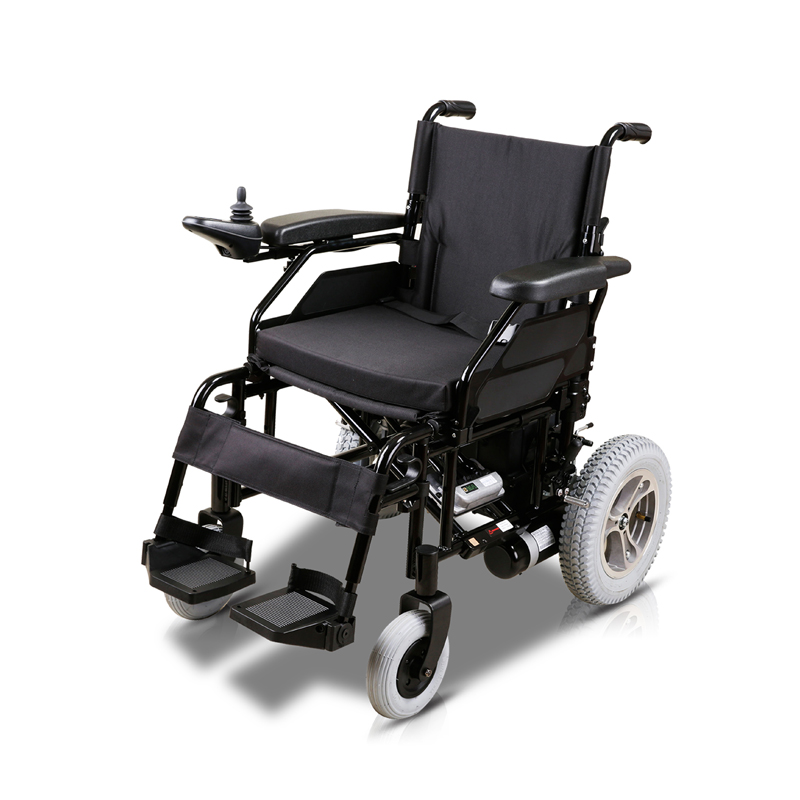
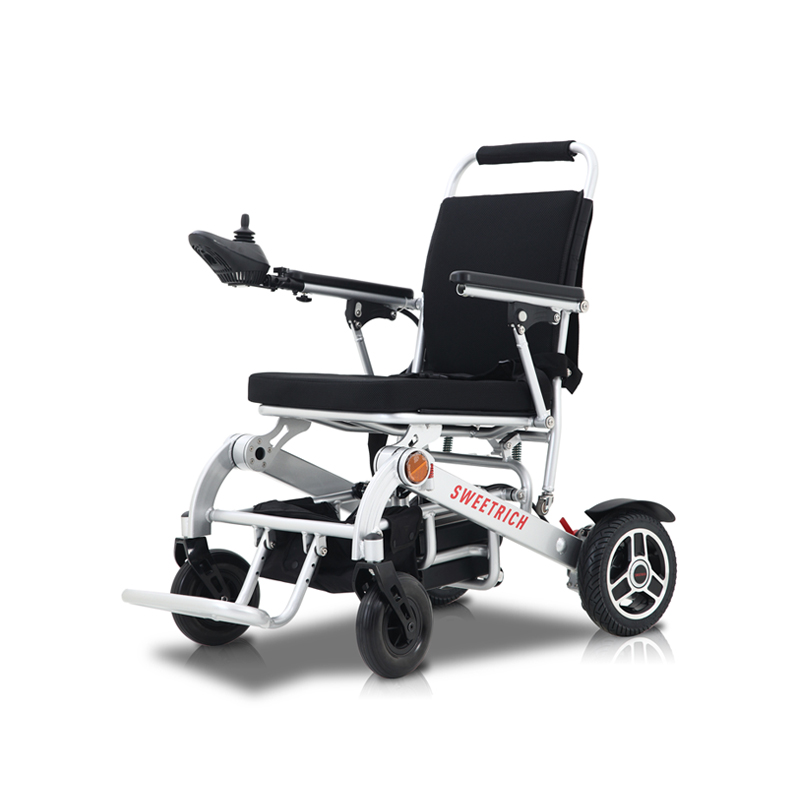
Outdoor mobility is also influenced by the wheelchair’s control system. The iPower GTS Plus uses a joystick controller and allows the joystick to be installed for use on either side. This flexibility can help accommodate users who have better control or greater strength in one hand. An optional swing-away controller mount can make transfers and table approach more convenient by moving the controller away from the seating area when required.
iPower GTS Plus More popular type second hand off road light power electric electronic wheelchair for the elderly
Powertrain Performance: Two 350-Watt Motors
The wheelchair is equipped with two 24-volt, 350-watt motors, creating a total motor package of 700 watts. Dual motors provide independent power to the drive wheels and are commonly used in power wheelchairs that need controlled movement, reliable traction, and the ability to handle moderate outdoor gradients.
A 700-watt total motor rating gives the iPower GTS Plus a performance advantage over many lightweight indoor chairs that use smaller motors and are primarily designed for smooth flooring. More motor capacity can be valuable when starting from rest, carrying a heavier user, traveling over slightly uneven ground, or navigating gentle outdoor slopes. However, motor wattage is only one part of real-world performance. Battery condition, controller programming, tire inflation, total load, terrain, and maintenance also influence the result.
The motors are paired with a 24-volt, 50-amp motor controller supplied by PG or Dynamic. The controller regulates the delivery of electrical power to the motors and translates joystick movements into acceleration, deceleration, and directional changes. A properly adjusted controller can help provide predictable handling, which is especially important for users who may have limited hand movement or slower reaction times.
Compared with a manual wheelchair, the powered drive system reduces the physical effort required from the user or caregiver. Compared with a smaller travel chair, the stronger motor package may offer more confidence on outdoor surfaces and moderate inclines. Compared with a large high-end outdoor chair, the iPower GTS Plus may provide a more balanced approach for users who want useful power without moving into an extremely large platform.
Users should remember that the stated motor performance does not mean the wheelchair is intended for hazardous off-road use. Rough trails, deep mud, soft sand, standing water, sharp side slopes, and obstacles beyond the chair’s ground clearance can create serious risks. The term “off-road” in a product description should be evaluated in relation to the actual surface and operating environment.
Control and Maneuverability
The joystick is the primary interface between the user and the drive system. Small movements can regulate direction and speed, while releasing the joystick generally initiates controlled stopping through the electromagnetic braking system. Users should practice in an open, level area before traveling near traffic, ramps, crowded spaces, or drop-offs.
The ability to position the joystick on either side is a practical advantage over fixed-control designs. This feature can support left-handed or right-handed operation and may make the wheelchair easier to configure for different users. It can also help when one side of the body has reduced strength or movement.
The optional swing-away controller mount adds another layer of usability. When the controller is moved aside, the user may have a clearer path for transfers, closer access to a desk or dining table, or easier assistance from a caregiver. The exact usefulness depends on the seating position, transfer method, and final configuration.
Large Pneumatic Tires and Rear Suspension
The tire configuration is one of the most noticeable ways in which the iPower GTS Plus is oriented toward outdoor operation. It uses a 10-inch by 3-inch front tire and 14-inch by 3-inch rear tires. Larger tires can roll over small surface irregularities more effectively than small caster wheels, helping the chair maintain momentum on pavement transitions, compact ground, and uneven outdoor paths.
The 14-inch rear pneumatic tires provide a substantial contact area and contribute to traction and ride comfort. Pneumatic tires can absorb some vibration from the ground, which may create a smoother ride than narrow solid wheels on certain surfaces. The 10-inch front wheel supports the front of the chair and helps it approach minor changes in surface height with greater stability than a very small front caster.
Pneumatic tires also require regular attention. Tire pressure should be checked according to the supplier’s instructions, because underinflation can increase rolling resistance and make steering feel less precise, while overinflation can reduce comfort and traction. Tires should be inspected for cuts, excessive wear, embedded objects, and valve damage.
The rear suspension is designed to help the wheelchair respond to uneven surfaces. Suspension cannot remove every bump, and it does not make dangerous terrain safe, but it can reduce the transmission of some shocks to the frame and occupant. For users who travel outdoors regularly, rear suspension can be a meaningful advantage over a rigid chair designed mainly for indoor floors.
In comparison with small travel power chairs, the tire and suspension package gives the iPower GTS Plus a more substantial outdoor character. In comparison with very large all-terrain mobility platforms, its dimensions may be easier to manage in ordinary residential and commercial environments. This middle-ground design can appeal to users who need more than a lightweight travel chair but do not require a highly specialized trail vehicle.
Terrain Considerations
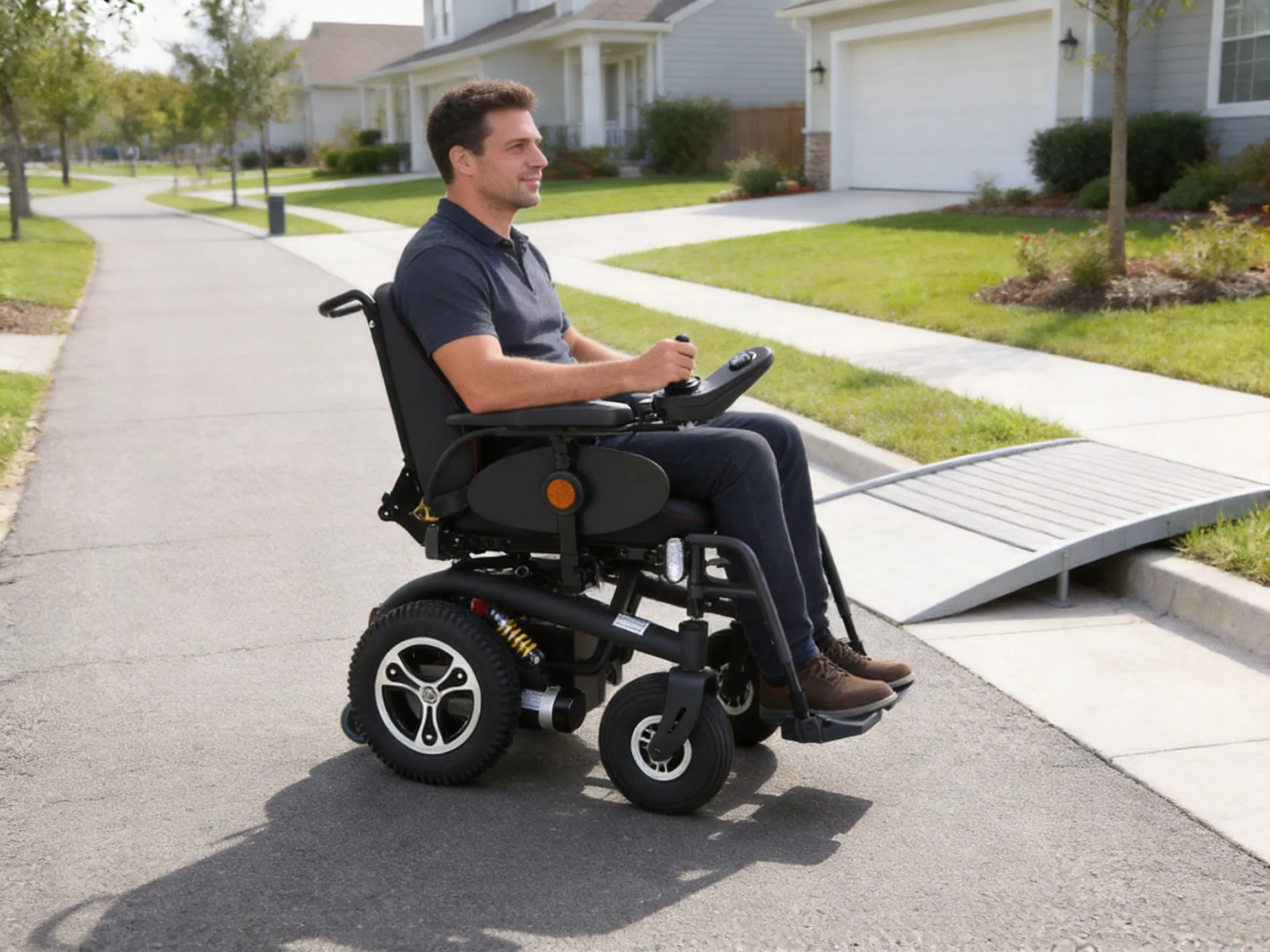
The wheelchair may be suitable for paved sidewalks, residential roads where permitted, firm park paths, compact outdoor surfaces, driveways, and moderate transitions when operated carefully. It should not be driven through deep water, flooded areas, loose sand, deep snow, or unstable ground unless the manufacturer specifically confirms that the configuration is suitable.
Crossing a small threshold or surface transition should be done slowly and as close to a perpendicular angle as practical. Approaching an obstacle diagonally can increase the risk of a wheel losing contact or the chair becoming unstable. The user should keep the body centered, avoid sudden steering inputs, and maintain an appropriate speed.
Side slopes deserve special caution. A chair may climb a forward slope within its stated gradient rating but behave very differently on a sideways incline. The risk of sliding or tipping can increase when the surface is wet, loose, or uneven. The stated 10-degree gradient should therefore be treated as a technical reference, not as a guarantee of safe operation under all conditions.
Adjustable Seating for Different Users
Comfort is not simply a matter of padding. A suitable seating position can affect posture, visibility, joystick control, stability, and the user’s ability to transfer. The iPower GTS Plus includes an adjustable seat width and adjustable armrest height, allowing the configuration to be adapted to different body sizes and preferences.
Adjustable seat width can help create a more supportive and comfortable sitting position. A seat that is too narrow may create pressure at the hips, while a seat that is too wide may reduce lateral support and make the user work harder to maintain position. The correct adjustment should provide enough room for comfort without allowing excessive side-to-side movement.
Adjustable armrest height can support better positioning of the forearms and shoulders. Proper arm support may reduce unnecessary shoulder elevation and make joystick operation more comfortable. The final position should permit the user to reach the controller without leaning excessively or rotating the trunk.
Seating adjustments should be carried out carefully and checked before operation. Fasteners must be properly secured, and the chair should not be used if a seat, armrest, or mounting point is loose. Users with complex postural needs may require assessment by a seating specialist or occupational therapist.
The product information also identifies an optional power tilt and lift system as an upcoming feature. Because the supplied material does not provide a final specification, availability, operating range, weight effect, and compatibility should be confirmed before purchase. Tilt or lift functions can be valuable for certain users, but they should be treated as configuration options rather than assumed standard equipment.
Battery System and Driving Range
The wheelchair uses two 12-volt, 40 ampere-hour lead-acid batteries connected for a 24-volt system. Lead-acid batteries remain widely used in mobility equipment because they are familiar, readily serviceable, and capable of supplying the current required by powered wheelchair motors.
The listed maximum driving range is approximately 30 to 40 kilometers, or about 19 to 25 miles. Range figures are estimates rather than guarantees. They are affected by rider weight, tire pressure, temperature, terrain, slope, speed, frequency of stopping and starting, battery age, surface quality, and the use of optional electrical equipment.
Repeatedly driving up slopes, traveling at maximum speed, carrying a load near the weight limit, or operating in cold weather can reduce the distance available from a full charge. A new battery may also require proper charging cycles before it reaches its normal performance. Users should plan a reserve rather than treating the maximum stated range as the distance that can always be completed safely.
The supplied charger is rated at DC 24 volts and 5 amperes, with an AC input range of 115 to 230 volts. The listed charging time is approximately 6 to 8 hours. Charging should take place in a dry, ventilated area using the correct charger and electrical connection. The charger should not be covered during operation, and damaged cables or connectors should be replaced before use.
Lead-acid batteries are relatively heavy compared with some modern lithium battery systems. That weight contributes to the wheelchair’s overall mass, but it can also help lower the center of gravity. The trade-off is that transportation, lifting, and storage may require more planning. Battery replacement should use compatible units and should be performed according to the manufacturer’s instructions.
Battery Care Practices
Users should charge the batteries consistently after use or according to the supplier’s recommended charging schedule. Leaving lead-acid batteries in a deeply discharged state for extended periods may reduce their service life. If the wheelchair will not be used for an extended time, the batteries should be stored and maintained in accordance with the battery and charger instructions.
Battery terminals and cables should be inspected for corrosion, looseness, heat damage, or fraying. Any unusual smell, swelling, leakage, excessive heating, or charging irregularity should be treated as a reason to stop using the equipment and seek qualified service.
Because battery performance changes with temperature, users operating in cold climates should expect a possible reduction in range. Similarly, very hot environments can accelerate battery aging. Storing the wheelchair and batteries in a suitable, protected location can help preserve performance.
Electromagnetic Braking and User Safety
The iPower GTS Plus uses an electromagnetic brake system. This type of brake is designed to engage when the drive system is not actively propelling the chair, helping the wheelchair stop and remain stationary under normal operating conditions. The braking system works together with the controller and motors, so any warning, unusual noise, delayed stopping, or unexpected movement requires immediate inspection.
Users should avoid parking on steep slopes whenever possible. Even when a parking brake is present, the safest practice is to choose level ground, switch off the system when appropriate, and ensure the chair is stable before transferring. The chair should not be used as a substitute for a vehicle restraint system during transportation.
Before each trip, the user or caregiver should check the battery charge, tire condition, joystick response, seat and armrest security, and general frame condition. The route should be evaluated for curb cuts, potholes, steep ramps, loose debris, narrow passages, and traffic risks.
Visibility is also important for outdoor travel. The product information lists an optional light package. If lights are installed, they may improve visibility in low-light conditions, but they do not remove the need for reflective clothing, attention to traffic, and compliance with local rules for powered mobility devices.
Users should keep hands, feet, clothing, and bags away from moving parts. Caregivers should not push or pull the chair by the joystick, armrests, or removable components unless the manufacturer specifically identifies those parts as suitable handling points.
Weight Capacity and Structural Use
The listed weight capacity is 136 kilograms, or 300 pounds. This capacity should include the user and any carried items or accessories. Exceeding the limit can affect braking, stability, range, motor temperature, tire loading, and the structural life of the wheelchair.
A 136-kilogram capacity places the chair in a more supportive category than many compact travel power chairs. For larger users, this can provide a greater margin for practical daily use. Nevertheless, weight capacity should not be considered separately from body shape, seating width, posture, center of gravity, and the type of terrain expected.
Load distribution matters. Heavy bags mounted high or toward the rear may change handling, while unevenly placed items can affect turning and stability. Accessories should be installed only where approved, and the combined weight of the user, batteries, luggage, and optional equipment should remain within the permitted limit.
The heaviest listed part is approximately 59 kilograms. This figure is important for transport planning. Although some components may be removable, a 59-kilogram part still requires appropriate lifting equipment or multiple trained people. Buyers should determine whether the chair can be loaded into their vehicle, stored safely, or transported by a suitable mobility-accessible service.
Transport and Storage
The iPower GTS Plus is not a lightweight folding travel chair. Its outdoor-oriented frame, large tires, motors, batteries, and heavy-duty capacity naturally create a more substantial product. Before purchase, users should assess the vehicle’s ramp, lift, loading height, interior dimensions, and tie-down points.
During vehicle transportation, the wheelchair should be secured using equipment designed for mobility devices. The user should not remain seated in the chair during vehicle travel unless the entire transportation system is specifically approved for that use. Batteries may also be subject to transportation rules, particularly when traveling by air or using specialized carriers.
For home storage, the chair should be kept in a dry place protected from extreme temperatures, rain, and unauthorized use. It should not block emergency exits or create a trip hazard. If stored outdoors temporarily, it should be protected with an appropriate cover while allowing moisture to escape and preventing condensation buildup.

Comparison with Other Power Wheelchair Categories
Product comparisons are most useful when they focus on intended use rather than simply labeling one model as universally better. Different power wheelchairs are designed for different environments. The iPower GTS Plus stands out because it combines outdoor-oriented components with adjustable seating and a relatively controlled overall width.
Compared with Lightweight Travel Chairs
Lightweight travel chairs are often easier to lift, transport, and store. They may be preferable for occasional indoor use, short trips, or users whose primary requirement is portability. However, they commonly use smaller motors, smaller tires, lower weight capacities, and shorter ranges.
The iPower GTS Plus offers a stronger 700-watt total motor package, larger pneumatic tires, rear suspension, a 136-kilogram capacity, and a longer listed range. These features can make it more appropriate for regular outdoor use and longer journeys. The trade-off is greater weight and more demanding transportation requirements.
Compared with Basic Indoor Power Chairs
Basic indoor power chairs typically prioritize compact maneuvering, smooth-floor operation, and low energy consumption. They may be ideal for homes, clinics, and other controlled environments. However, small front casters and lower-powered motors may be less comfortable or less capable on outdoor pavement transitions and moderate slopes.
The iPower GTS Plus is more suitable when outdoor travel is a regular part of the user’s lifestyle. Large tires, rear suspension, and higher motor output provide useful benefits beyond the capabilities of many entry-level indoor models. Users who spend almost all of their time indoors may not need these features and may prefer a smaller chair.
Compared with Large All-Terrain Platforms
Highly specialized all-terrain chairs can include very large tires, advanced suspension systems, powerful drive units, and extensive customization. They may be better for demanding trails or specialized outdoor activities, but they can be expensive, wide, difficult to transport, and unsuitable for ordinary indoor spaces.
The iPower GTS Plus can be viewed as a practical middle option. It provides meaningful outdoor capability without being described as an extreme recreational off-road vehicle. Its 625-millimeter listed width and standard residential dimensions may offer a more manageable balance for users who need sidewalks, paths, shopping areas, and neighborhood travel rather than rugged wilderness access.
Manufacturing Strengths and Product Development
The product is supplied by Suzhou Sweetrich Vehicle Industry Technology Co., Ltd., a mobility equipment manufacturer based in Suzhou Industrial Zone, Jiangsu, China. According to the supplied company information, the business was established in 2011 and operates a 30,000-square-meter factory on a site of approximately 60 acres.
The company focuses on the research, development, and production of mobility scooters and power wheelchairs. Its stated experience of more than ten years provides a foundation for developing products that must combine mechanical structures, electrical controls, batteries, seating systems, and user-centered ergonomics.
Power mobility equipment requires coordination across several manufacturing disciplines. The frame must support the user and maintain alignment under load. The drive system must work with the controller and batteries. The seating system must remain adjustable while maintaining security. Tires, suspension components, brakes, wiring, and fasteners must operate together as a complete mobility platform.
A dedicated factory environment can support repeatable assembly, process control, component inspection, and final testing. The supplied company profile describes strict production management and scientific product design as part of its approach to reliability and quality. Buyers should request specific inspection records, test reports, and quality documentation when those details are necessary for procurement or regulatory review.
Research and Development Orientation
The company states that it owns intellectual property related to electric scooters and power wheelchairs. Intellectual property can support the development of product-specific frame structures, control arrangements, seating mechanisms, drive systems, or other design elements. It can also help a manufacturer refine products over successive generations.
The iPower GTS Plus reflects a development approach that combines practical requirements rather than focusing on a single specification. Its design includes adjustable seat width, adjustable armrest height, dual motors, pneumatic tires, rear suspension, side-selectable joystick placement, and optional accessories. This combination suggests attention to different user sizes, varied environments, and everyday operating needs.
Advanced manufacturing is not limited to automated machinery or complex electronics. It also includes accurate assembly, controlled fastening, correct cable routing, proper alignment, reliable quality checks, and consistent documentation. For mobility products, these fundamentals are essential because small assembly errors can affect comfort, steering, braking, or durability.
Global Market Experience
The company information states that its products are exported to America, Europe, Japan, Australia, the Middle East, Russia, and other markets. Experience across international markets can expose a manufacturer to different customer expectations, climate conditions, accessibility environments, packaging requirements, and after-sales considerations.
International distribution also means that buyers should clarify local compliance obligations before ordering. Electrical requirements, labeling, user manuals, warranty terms, battery shipping rules, and mobility-device regulations can vary by country or region. A manufacturer’s export experience is valuable, but the purchaser remains responsible for confirming that the selected configuration meets local requirements.
For dealers and institutional buyers, manufacturing capability may be as important as the product specification. Consistent production, replacement-part availability, technical communication, packaging quality, and support procedures can influence the long-term value of a power wheelchair. These points should be discussed before placing a large order.
Customization and Optional Equipment
The product information identifies several options that can expand the wheelchair’s usefulness. A swing-away controller mount may assist transfers and close approach to tables. A light package may improve visibility. A future power tilt and lift system may provide additional positioning flexibility if it becomes available for the selected configuration.
Options should be evaluated according to the user’s actual needs. Adding equipment can affect total weight, battery consumption, seat balance, maintenance requirements, and final price. Buyers should request a complete configuration sheet showing which features are standard, which are optional, and which require factory installation.
Joystick placement is one of the most straightforward forms of customization. Selecting the side that best matches the user’s functional ability can improve access and reduce strain. The controller should be mounted at a position that allows precise operation without excessive leaning.
Seat width and armrest height adjustments are also important when a chair is shared, fitted by a dealer, or expected to accommodate changes in clothing and seating preference. Adjustments should not be used to compensate for a fundamentally unsuitable seat size. The correct base configuration remains essential.
Lighting may be helpful for users who regularly travel during low-light periods, but lighting should be part of a wider visibility strategy. Reflective materials, safe route selection, appropriate speed, and awareness of other road users remain necessary.
Inspection Checklist Before Delivery
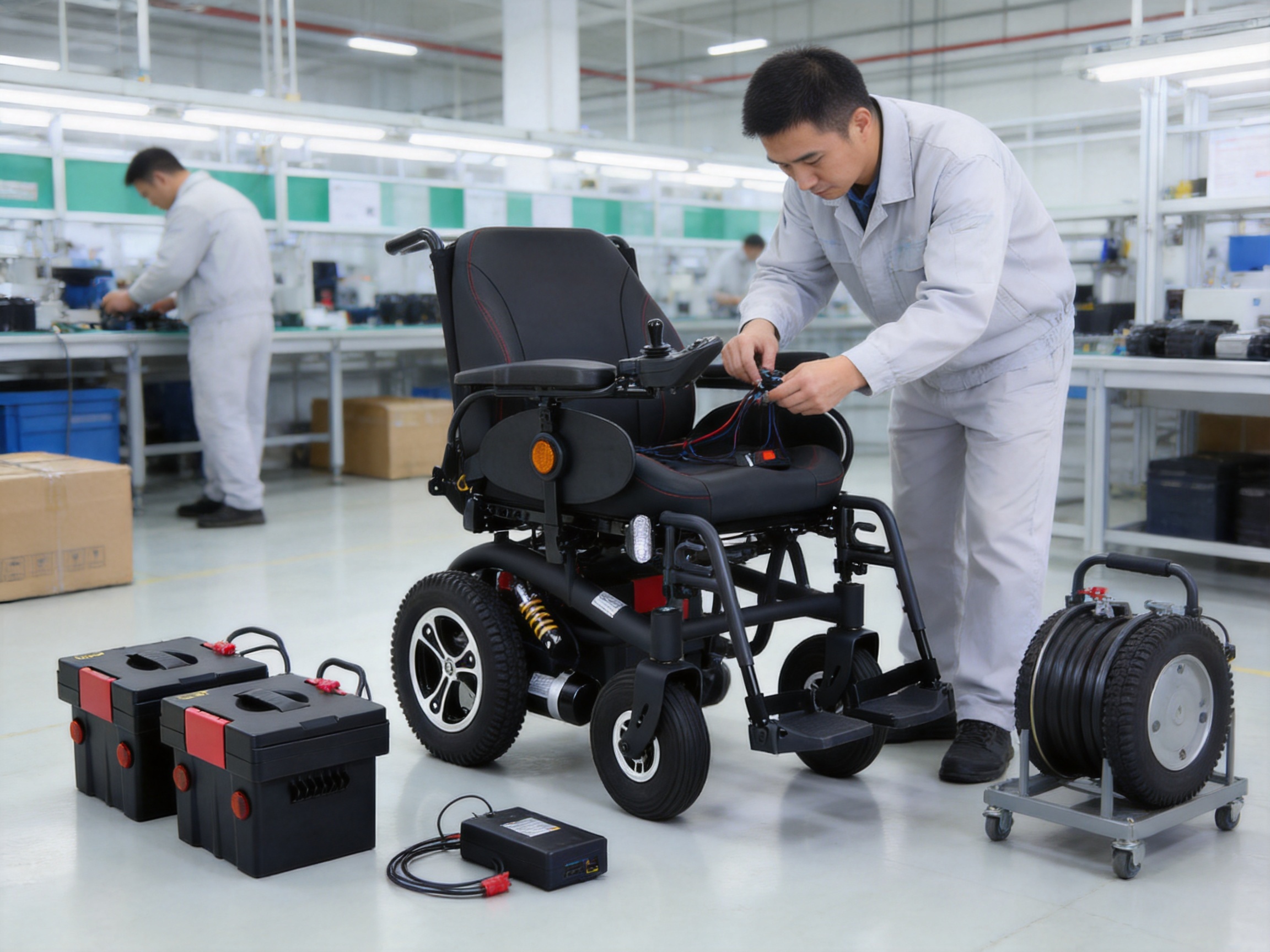
Before accepting a new or pre-owned unit, the purchaser should inspect the frame, seat, armrests, joystick, wheels, tires, batteries, charger, brake response, and optional equipment. The phrase “second hand” appears in the supplied product title, so buyers should clarify whether they are purchasing a new product, a refurbished unit, a used demonstration model, or a previously owned wheelchair.
For a pre-owned or refurbished unit, the buyer should ask for the manufacturing date, battery age, service history, repair records, total usage information if available, and details of any replaced components. Battery condition is especially important because lead-acid batteries can lose capacity over time even when the chair appears visually sound.
The frame should be checked for cracks, deformation, corrosion, loose fasteners, or signs of impact. The seat and armrests should be tested for secure adjustment. The joystick should return smoothly, and the chair should respond proportionately without unexpected surging, hesitation, or drift.
The tires should show adequate tread and should hold pressure. The wheels should rotate without excessive wobble or unusual noise. The electromagnetic brake should bring the chair to a controlled stop when the joystick is released, subject to the manufacturer’s operating design.
The charger should match the battery system and should not show damaged insulation, exposed wires, or overheating. Buyers should confirm that the correct charger is included rather than assuming that any 24-volt charger is suitable.
Documentation should include operating instructions, charging guidance, warranty terms, parts information, and contact details for service. For commercial or institutional purchases, the buyer may also need packaging specifications, inspection records, spare-parts lists, and declarations relevant to the destination market.
Routine Maintenance for Long-Term Performance
Regular maintenance can help preserve the performance and safety of the wheelchair. The frequency of service depends on use, terrain, climate, storage conditions, and manufacturer guidance. A chair used outdoors every day generally requires more frequent inspection than one used occasionally indoors.
Tire pressure should be checked regularly. Pneumatic tires that are too soft may reduce range and make the motors work harder. Tires that are too hard may produce a harsher ride and less effective contact on some surfaces. The correct pressure should be taken from the manufacturer or tire specification rather than estimated.
Wheel nuts, seat mounts, armrest hardware, controller brackets, and other accessible fasteners should be inspected for looseness. Fasteners should be tightened using appropriate tools and procedures. Over-tightening can damage components, while under-tightening can create movement and premature wear.
The joystick and controller should be kept clean and dry. Liquids, dirt, and impact can damage electronic controls. The user should avoid placing heavy objects on the controller and should protect it when the chair is stored or transported.
Battery terminals should remain clean and properly connected. Charging behavior should be monitored, especially if the chair begins to show a sharp reduction in range, takes much longer to charge, or stops unexpectedly. These symptoms may indicate aging batteries, charger problems, wiring issues, or another fault that requires professional diagnosis.
The frame and seating surfaces should be cleaned with suitable materials. Harsh chemicals, excessive water, and high-pressure spraying may damage finishes, bearings, electrical parts, or upholstery. After outdoor use in dusty or damp conditions, the chair should be inspected and dried as appropriate.
Any work involving the motor controller, braking circuit, battery wiring, or structural frame should be performed by qualified service personnel. Improvised modifications can create electrical, mechanical, or stability risks and may invalidate warranty coverage.
Who May Benefit from This Wheelchair?
The iPower GTS Plus may be a good fit for an adult user who requires powered mobility, regularly travels outdoors, wants more capacity than a compact travel chair, and values adjustable seating. It may also suit users who need a 5-mile-per-hour maximum speed, moderate slope capability, larger tires, and a longer stated range for community travel.
It may be particularly useful for people who travel between home, shopping areas, community facilities, outdoor paths, and other locations with a mixture of smooth and moderately uneven surfaces. The left- or right-side joystick arrangement may help users with different hand preferences or asymmetric upper-limb ability.
The chair may be less suitable for someone whose main priority is lifting the complete unit into a car without a ramp or vehicle lift. It may also be unsuitable for users who need a highly compact indoor turning platform, a fully portable folding frame, or advanced clinical seating that is not included in the standard specification.
Suitability depends on more than technical numbers. The user should be able to operate the joystick safely, understand braking and slope behavior, fit comfortably within the seat, and receive assistance when loading, transferring, or maintaining the chair. A professional seating and mobility assessment may be appropriate for users with complex physical needs.
Frequently Asked Questions
Is the iPower GTS Plus a medical device?
The supplied product information describes it as a non-medical device for the United States market. It is intended as a mobility product and should not be presented as a device for diagnosing, treating, or curing a medical condition. Users who require clinical positioning or pressure-care advice should consult an appropriately qualified professional.
What is the maximum user weight?
The listed weight capacity is 136 kilograms, or 300 pounds. This figure should include the user and carried items or accessories. Staying within the stated limit is important for stability, braking, battery range, and structural performance.
How fast can it travel?
The listed maximum forward speed is 8 kilometers per hour, or approximately 5 miles per hour. Actual speed should be adjusted to the environment, surface, visibility, user experience, and applicable local regulations.
What range can users expect?
The listed maximum driving range is approximately 30 to 40 kilometers, or 19 to 25 miles. Actual range varies with load, terrain, temperature, tire pressure, battery age, speed, slopes, and stop-start driving. Users should plan a safety reserve rather than relying on the maximum figure.
Can it climb hills?
The stated maximum driving gradient is 10 degrees. This is a technical specification and should not be treated as a guarantee that every 10-degree slope is safe. Wet surfaces, loose ground, side slopes, uneven terrain, and low battery charge can significantly reduce control and traction.
Does it have suspension?
Yes. The specification lists rear suspension. Suspension can improve comfort and help the chair respond to uneven surfaces, but it does not eliminate the risks associated with deep holes, obstacles, steep side slopes, or unstable terrain.
What type of tires does it use?
It uses 10-inch by 3-inch front tires and 14-inch by 3-inch rear pneumatic tires. These larger tires support outdoor performance and can provide a smoother response on some uneven surfaces. They require regular pressure and condition checks.
Can the joystick be used on either side?
Yes. The product information states that the joystick is available for use on both sides. A qualified dealer or technician should install and position the controller securely for the user’s preferred side.
Is a swing-away controller included?
The swing-away controller mount is listed as an optional feature. Buyers should confirm whether it is included in the selected configuration or must be ordered separately.
Does it include lights?
A light package is listed as optional. Availability and installation details should be confirmed with the supplier. Lights can improve visibility but do not replace safe route selection and compliance with local rules.
What batteries does it use?
The chair uses two 12-volt, 40 ampere-hour lead-acid batteries for a 24-volt system. Battery condition, charging habits, temperature, and usage patterns have a significant effect on range and service life.
How long does charging take?
The listed charging time is approximately 6 to 8 hours. Charging should be performed with the specified charger in a dry and ventilated location. The actual duration may vary according to battery condition and the level of discharge.
Is the wheelchair easy to transport?
It is a substantial outdoor wheelchair, and the listed heaviest part weighs approximately 59 kilograms. It may require a ramp, hoist, vehicle lift, or several trained people for transport. Buyers should assess their vehicle and storage arrangements before purchase.
Is it suitable for indoor use?
It may be used indoors where the available space, doorway width, flooring, and turning area are suitable. However, its larger tires and outdoor-oriented frame may be less convenient in very small rooms than a compact indoor power chair.
What does “second hand” mean in the product title?
The supplied title includes the phrase “second hand,” but the provided specifications do not establish whether a particular unit is used, refurbished, or new. Buyers should ask the seller to confirm the product condition, battery age, service history, warranty, and included accessories.
Is a power tilt and lift system included?
The product information lists an optional power tilt and lift system as coming soon. Buyers should not assume that this feature is standard or currently available. Its compatibility, controls, seating effect, and weight should be confirmed before ordering.
Where is the product manufactured?
The product is associated with Suzhou Sweetrich Vehicle Industry Technology Co., Ltd., located in Suzhou Industrial Park, Jiangsu, China. The company profile states that it operates a large factory and develops mobility scooters and power wheelchairs for international markets.
Purchasing Guidance for Individuals, Dealers, and Care Providers
Individual buyers should begin by identifying their normal travel environment. Important questions include whether the chair will be used primarily indoors or outdoors, how far the user expects to travel, whether slopes are present, how the chair will be transported, and whether the user needs left- or right-side joystick placement.
Dealers should confirm the exact product configuration, including seat width, armrest adjustment, controller type, battery specification, charger input, tires, lights, swing-away hardware, and any tilt or lift option. A written configuration sheet can prevent misunderstandings between the buyer, distributor, and factory.
Care providers and institutional purchasers should consider training, maintenance, storage, charging facilities, spare parts, cleaning procedures, user documentation, and staff responsibilities. A product that performs well technically still requires an organized support process when used by multiple people.
Buyers should also distinguish between the base product and marketing language. Specifications such as motor rating, range, weight capacity, and gradient are useful, but they should be evaluated alongside actual user needs, service availability, local conditions, and total ownership cost.
Conclusion
The iPower GTS Plus is designed as a heavy-duty power wheelchair with a clear emphasis on outdoor performance. Its strongest attributes include a dual 350-watt motor system, 8-kilometer-per-hour maximum speed, 10-degree listed gradient capability, 30-to-40-kilometer stated range, 136-kilogram weight capacity, large pneumatic tires, rear suspension, electromagnetic braking, adjustable seat width, adjustable armrests, and flexible joystick placement.
These characteristics give it meaningful advantages over many lightweight travel chairs and basic indoor power wheelchairs. It can offer more traction, more support, greater outdoor confidence, and a longer potential travel distance. At the same time, its stronger construction and lead-acid battery system make it heavier and more demanding to transport than compact alternatives.
The manufacturing background is also relevant. Suzhou Sweetrich Vehicle Industry Technology Co., Ltd. reports experience in mobility product development, a substantial production facility, intellectual property related to electric mobility equipment, and export activity across multiple international markets. These capabilities provide a foundation for controlled production and continued product development, although buyers should request the specific quality, compliance, and service documents required for their market.
The best results will come from matching the wheelchair to the user rather than choosing solely by specification. Correct seating adjustment, safe joystick positioning, battery care, tire maintenance, route planning, and regular inspection are all essential. When those factors are addressed, the iPower GTS Plus can serve as a practical mobility platform for users seeking a stronger outdoor-oriented power wheelchair with adjustable features and dependable everyday functionality.
References
1. Product specification sheet for the iPower GTS Plus heavy-duty power wheelchair, including dimensions, motor, battery, tire, braking, range, and capacity data.
2. Manufacturer-provided product feature information concerning outdoor performance, adjustable seating, joystick placement, optional controller mount, lighting, and power positioning options.
3. Company profile for Suzhou Sweetrich Vehicle Industry Technology Co., Ltd., including company history, factory information, product development activities, and international market experience.
4. General principles of power wheelchair operation, battery charging, pneumatic tire maintenance, slope safety, and mobility-device transportation.
5. User-centered seating and mobility assessment principles for powered wheelchair selection, positioning, control access, and safe everyday use.