
 +86-(0)512-82283871

Content
- 1 Understanding the Product Concept
- 2 Key Product Advantages
- 3 Technical Specifications
- 4 Range, Battery Selection, and Charging
- 5 Driving Performance and Terrain Considerations
- 6 Portability and Travel Use
- 7 Comparison with Conventional Mobility Products
- 8 Manufacturing Capabilities and Company Strengths
- 9 Quality and Production Considerations
- 10 Daily Operation and User Safety
- 11 Maintenance Requirements
- 12 Who May Benefit from This Wheelchair?
- 13 Purchasing Checklist
- 14 Frequently Asked Questions
- 14.1 Is this a manual or electric wheelchair?
- 14.2 How quickly can it be folded?
- 14.3 What is the maximum user weight?
- 14.4 What is the maximum speed?
- 14.5 What range can the wheelchair achieve?
- 14.6 How long does charging take?
- 14.7 Can the joystick be installed on either side?
- 14.8 Is the wheelchair suitable for steep slopes?
- 14.9 Can it be used outdoors?
- 14.10 Is the battery included in the 24-kilogram weight?
- 14.11 What type of braking system does it use?
- 14.12 Who manufactures the product?
- 14.13 What should be checked before placing a bulk order?
- 15 Overall Assessment
- 16 References
- 17 Product: iFold Medical foldable aluminum rollator wheelchair with footrest light weight Wheelchair

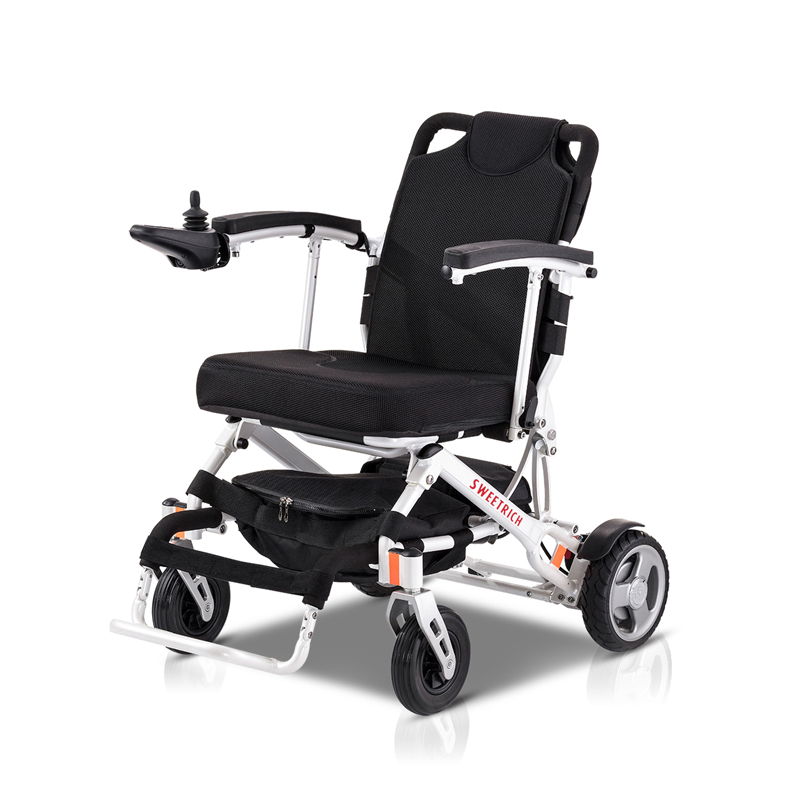
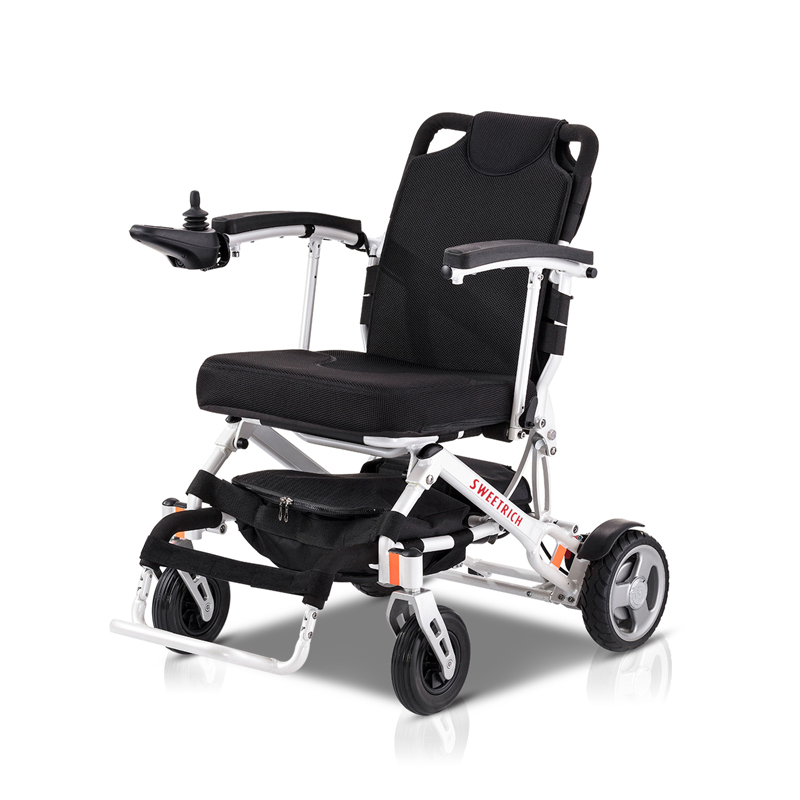
For people who need dependable personal mobility but do not want to rely on a large, permanently assembled wheelchair, a compact folding power wheelchair can offer a useful balance between independence, portability, and everyday comfort. The iFold medical foldable aluminum rollator wheelchair with footrest is designed for users who want powered movement, a practical folding system, and a frame that can be transported more easily than many conventional mobility products.
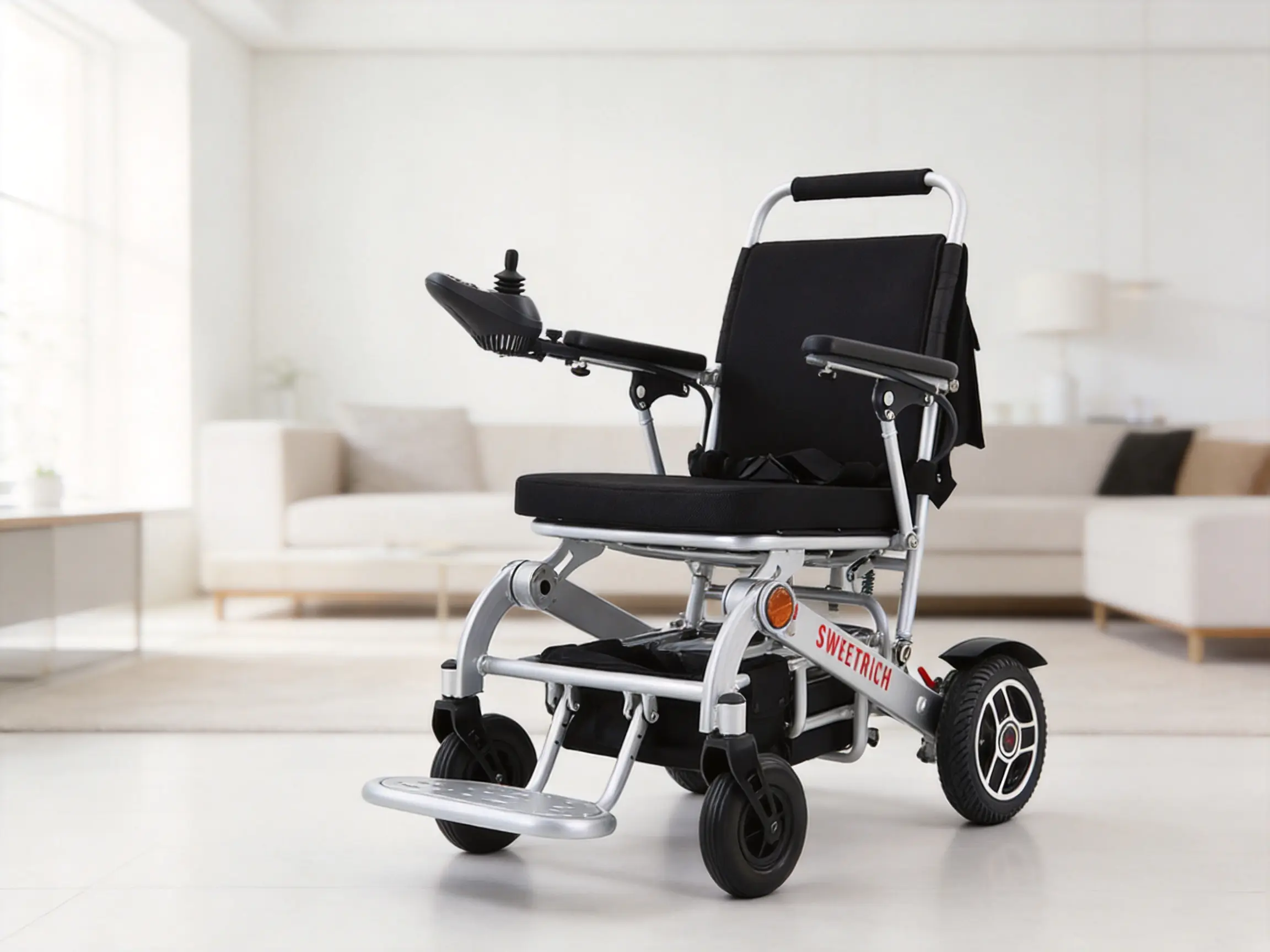
This product belongs to the travel-smart wheelchair category and combines several functions in one design. It provides powered driving through two 250-watt motors, electromagnetic braking, front and rear suspension, a large foot platform, and a joystick that can be configured for use on either side. Its aluminum construction helps keep the wheelchair relatively light, while its folding mechanism is intended to make preparation for transport quick and straightforward.
The wheelchair is suited to users who value convenience during travel, shopping, family visits, indoor movement, and outdoor trips on suitable paved surfaces. It can also be relevant for caregivers who need a product that is easier to fold, lift, store, or place in a vehicle than a heavier full-size power wheelchair.
At the same time, a mobility product should be evaluated carefully rather than selected only because it is advertised as lightweight or foldable. Dimensions, battery configuration, rated range, user weight, terrain, charging requirements, braking, and storage all affect the ownership experience. This article examines the product’s design, technical specifications, practical advantages, manufacturing background, and appropriate use considerations in detail.
Understanding the Product Concept
The product is a foldable aluminum rollator wheelchair with a powered drive system and footrest. Its design addresses a common challenge in personal mobility: traditional manual wheelchairs can require substantial upper-body effort, while many powered wheelchairs are heavy, bulky, and difficult to transport. A folding electric wheelchair attempts to bridge this gap by offering powered assistance in a more compact format.
The wheelchair uses a motorized rear-wheel drive arrangement with two 24-volt, 250-watt motors. The dual-motor system helps provide propulsion while maintaining a relatively simple mechanical layout. A joystick controls direction and speed, allowing the user to move forward, reverse, and turn without manually pushing the large wheels.
The aluminum frame is an important part of the product’s portability profile. The stated weight without the battery is 24 kilograms, or approximately 52.9 pounds. The final transport weight will depend on the chosen battery, accessories, and removable components. Although 24 kilograms is not weightless, it is comparatively manageable for a foldable powered wheelchair, especially when two people are available to load it into a vehicle.
The folding function is described as taking approximately one second to fold or unfold. In practical use, the exact time will depend on the user, the surface, whether the footrest or joystick requires adjustment, and whether the battery has been removed. Nevertheless, the central advantage is clear: the product is designed for fast preparation rather than a lengthy disassembly process.
Key Product Advantages
Fast Folding for Everyday Convenience
The folding mechanism is one of the product’s most important selling points. A wheelchair that can be folded quickly may reduce the effort associated with leaving home, entering a car, or storing the product in a closet. Users and caregivers do not need to spend as much time removing multiple structural parts before transportation.
Fast folding is especially helpful during short trips. A user may want to place the wheelchair in a vehicle before visiting a shopping center, medical facility, hotel, airport, or family home. If the folding process is simple and repeatable, it can make powered mobility feel less complicated and more accessible.
A rapid folding system may also reduce the likelihood that the wheelchair is left unused because transportation is inconvenient. Many people select a mobility device for occasional use but later find that its size makes it difficult to carry. A compact folding design encourages more frequent use and can support greater independence.
Aluminum Construction and Lower Transport Weight
The aluminum frame contributes to a favorable balance between strength and portability. Aluminum is widely used in mobility equipment because it can provide structural support without the same mass associated with heavier steel construction. The stated product weight without the battery is 24 kilograms, making it suitable for vehicle transport when handled with appropriate lifting technique.
Compared with many large indoor-outdoor power wheelchairs, a 24-kilogram base is easier to move. It may fit more conveniently into a trunk, rear cargo area, or storage compartment, subject to the dimensions of the specific vehicle. The ability to remove or separately handle the battery can further improve loading convenience.
Lightweight construction can also benefit caregivers. A family member or attendant may need to lift the wheelchair over a small threshold, position it in a storage area, or maneuver it around a home. The product should still be lifted carefully, with attention to posture and the manufacturer’s handling guidance, but its design is intended to reduce unnecessary bulk.
Powered Mobility Without Manual Propulsion
The two 250-watt motors provide powered movement for users who may not have enough arm strength or endurance to propel a manual wheelchair. Electric drive can be particularly helpful over longer indoor corridors, shopping areas, paved paths, and other appropriate surfaces.
The motors are supplied by a 24-volt battery system. Available battery specifications include lithium batteries rated at 24 volts and either 10.2 ampere-hours or 20 ampere-hours. A higher-capacity battery can generally support greater travel distance, although actual range depends on user weight, terrain, temperature, tire pressure, driving style, stops, and battery condition.
Powered mobility also allows a user to maintain a more consistent pace. Instead of depending on repeated pushing strokes, the user can operate the joystick with one hand. This may help reduce fatigue during ordinary travel and provide a more controlled experience on suitable level surfaces.
Joystick Positioning for Different Users
The joystick is available for use on either side. This is a meaningful ergonomic feature because users do not all have the same hand strength, coordination, or range of motion. Some users may prefer right-hand control, while others may have better control with the left hand.
Side configurability can also help accommodate changing needs. A user recovering from an injury, managing weakness on one side, or sharing the wheelchair with a caregiver may benefit from a control arrangement that can be adjusted. The joystick should be positioned securely, and users should receive appropriate instruction before operating the wheelchair in public or around obstacles.
As with any powered mobility device, the joystick is more than a simple directional control. It influences acceleration, turning, stopping, and maneuvering in confined areas. New users should practice in an open, flat, low-traffic space before attempting ramps, crowded walkways, or unfamiliar environments.
Large Foot Platform and Footrest Support
The product includes a large foot platform and a footrest. This arrangement is intended to give the user a stable location for the feet during travel. Proper foot support can improve comfort and help prevent the feet from contacting the ground or nearby obstacles while the wheelchair is moving.
A generous foot platform may be especially useful for users who need to reposition their feet during longer periods of sitting. It can also help caregivers place and secure the user’s lower limbs before operation. The footrest should be checked before each trip to ensure that it is properly positioned and not obstructing folding or unfolding.
Comfort depends on more than the foot platform alone. Users should also consider seating posture, back support, arm positioning, cushion requirements, and the amount of time they expect to spend in the wheelchair. A qualified healthcare professional or seating specialist can provide individualized guidance when postural support is a significant concern.
Front and Rear Suspension
Front and rear suspension are included to help the wheelchair manage minor surface irregularities. Suspension can reduce the direct transmission of small bumps and vibrations to the user and may contribute to a smoother ride on suitable paved surfaces.
Suspension does not mean that the wheelchair is designed for severe off-road terrain. Large holes, steep uneven paths, loose gravel, wet slopes, and obstacles can still create safety risks. The user should select surfaces appropriate to the product’s wheel size, ground clearance, drive system, and stability characteristics.
The combination of suspension and 8-inch front and 10-inch rear tires gives the wheelchair a practical configuration for everyday travel. The larger rear tires support propulsion and may assist with crossing minor changes in surface level, while the front tires contribute to steering and maneuverability.
Electromagnetic Braking
The wheelchair uses an electromagnetic brake system. This type of braking is commonly used in powered mobility equipment because it can engage when the control input is released or the system is switched off. It is intended to help prevent unintended rolling when the wheelchair is stopped.
Users should still operate the wheelchair responsibly. Electromagnetic braking does not eliminate the need to approach slopes carefully, maintain appropriate speed, and avoid unstable surfaces. Before every trip, the operator should confirm that the brakes engage correctly and that the wheelchair does not move unexpectedly when the joystick is released.
Technical Specifications
The following table summarizes the principal specifications supplied for the foldable wheelchair. Buyers should confirm the final configuration with the seller because battery capacity, accessories, and regional product settings may affect the delivered product.
| Specification | Stated Value |
|---|---|
| Product type | Foldable powered rollator wheelchair with footrest |
| Dimensions | 1090 × 605 × 998 millimeters |
| Maximum forward speed | 6 kilometers per hour |
| Maximum driving gradient | 10 degrees |
| Maximum driving range | 30 ± 5 kilometers |
| Weight capacity | 120 kilograms or 265 pounds |
| Suspension | Front and rear |
| Front tire size | 8 inches |
| Rear tire size | 10 inches |
| Brake system | Electromagnetic brake |
| Battery options | Lithium, 24 volts, 10.2 ampere-hours or 20 ampere-hours |
| Charger | DC 24 volts, 2 amperes; AC 115–230 volts input |
| Charging time | Approximately 5 hours |
| Motors | 24 volts, 250 watts, two units |
| Motor controller | 24 volts, 50 amperes |
| Weight without battery | 24 kilograms |
The product information also mentions speeds of up to 8.5 kilometers per hour in the feature description, while the technical specification lists a maximum forward speed of 6 kilometers per hour. This difference should be clarified before purchase. The rated technical specification should generally be treated as the primary reference unless the manufacturer confirms that the higher figure applies to a specific configuration or market version.
Range, Battery Selection, and Charging
Choosing Between Battery Capacities
The available battery options are listed as 24 volts and either 10.2 ampere-hours or 20 ampere-hours. The 20 ampere-hour battery stores approximately twice the nominal electrical capacity of the 10.2 ampere-hour battery, although real-world range is not always exactly double. Battery performance is affected by load, temperature, terrain, tire condition, stop-and-go operation, and the age of the battery.
A lower-capacity battery may be suitable for short local trips, indoor use, and users who prioritize the lowest possible transport weight. A higher-capacity battery may be preferable for longer outings or users who want more reserve capacity between charges. The product information also refers to optional battery capacity of up to 30 ampere-hours for longer-distance use. The availability and compatibility of that option should be confirmed for the exact product configuration.
Understanding the Published Range
The stated maximum driving range is 30 plus or minus 5 kilometers. This should be understood as an estimated operating range rather than a guaranteed distance for every user. Laboratory-style range testing may take place on a level surface with a particular user weight, battery condition, speed, temperature, and driving pattern.
In everyday use, users should plan conservatively. Hills, frequent acceleration, soft surfaces, heavy loads, cold weather, and repeated starts can reduce range. It is sensible to begin the return journey with adequate battery reserve rather than relying on the maximum published figure.
Users who regularly travel near the upper end of the expected range should consider a higher-capacity battery, access to charging, and a backup plan. A range estimate should not be treated as a promise that the wheelchair will complete a particular route under all conditions.
Charging Practices
The supplied charger is listed as DC 24 volts and 2 amperes, with AC input from 115 to 230 volts. The approximate charging time is five hours. Charging should be performed in a dry, ventilated location using the correct charger and a suitable power supply.
The battery should be inspected for damage, unusual heat, swelling, odor, or other signs of malfunction. Users should follow the supplied charging instructions and avoid using an incompatible charger. Lithium batteries require responsible handling, especially during storage and transportation.
For routine ownership, it is helpful to establish a consistent charging schedule. The battery should not be allowed to become unexpectedly depleted during an outing. Users who travel infrequently should check the battery condition periodically rather than assuming that a long period of storage will preserve a full charge.
Driving Performance and Terrain Considerations
The wheelchair is designed for travel-smart mobility rather than extreme terrain. Its 6-kilometer-per-hour listed speed is appropriate for controlled personal mobility in many ordinary environments. A moderate speed can provide a practical compromise between efficient travel and the time needed to react to pedestrians, doorways, furniture, and surface changes.
The stated maximum driving gradient is 10 degrees. This figure should not be interpreted as a recommendation to approach every 10-degree slope at full speed. Slope performance depends on the user’s weight, battery charge, surface traction, direction of travel, tire condition, and whether the slope is wet or uneven.
Whenever possible, users should approach ramps directly rather than crossing steep slopes at an angle. Sudden turns on inclines can affect stability. Descending should be performed at a controlled speed, with hands and feet positioned safely and with enough distance to stop.
The 8-inch front and 10-inch rear tires are suited to many indoor and paved outdoor surfaces. They may handle small surface transitions, but users should avoid deep cracks, potholes, loose stones, soft ground, standing water, and obstacles that could catch the front wheels. The wheelchair should not be submerged or exposed unnecessarily to heavy rain.
Portability and Travel Use
Vehicle Transportation
One of the strongest reasons to choose a folding electric wheelchair is the ability to transport it in a vehicle. Before purchasing, users should measure the vehicle’s cargo opening, interior height, and available floor length. The wheelchair’s stated unfolded dimensions are 1090 millimeters long, 605 millimeters wide, and 998 millimeters high. The folded dimensions should be confirmed with the supplier because they are not included in the provided specifications.
Loading should be carried out carefully. The wheelchair should be switched off, secured against movement, and lifted using safe technique. If the battery is removable, taking it out before lifting may reduce the load. The product should be protected from contact with sharp objects, excessive heat, and moisture during transport.
When carried inside a vehicle, the wheelchair should be secured so it cannot slide or become a hazard during sudden braking. The battery should be transported according to applicable carrier, vehicle, and local safety requirements. Airlines, rail operators, and other transport providers may have separate rules for lithium batteries and powered mobility equipment.
Storage in the Home
A folding frame can make home storage more practical. The wheelchair may be kept in a hallway, utility area, vehicle, or storage room when folded, provided that it does not obstruct emergency exits or create a trip hazard. The storage location should be dry and protected from extreme temperatures.
Before folding, the user should check that the footrest, joystick, and other components are in the correct position. Folding should never be forced. If the frame does not move smoothly, the cause should be identified rather than applying excessive pressure.
Comparison with Conventional Mobility Products
Compared with Manual Wheelchairs
A manual wheelchair is often lighter and may be less expensive, but it requires the user or a caregiver to provide propulsion. This can be difficult for people with limited shoulder strength, reduced endurance, or conditions that make repetitive pushing uncomfortable.
The foldable powered wheelchair adds motorized travel, a joystick, and electromagnetic braking. These features can reduce physical effort and support longer journeys. The trade-off is additional weight, battery maintenance, charging requirements, and a higher level of technical complexity.
Compared with Full-Size Power Wheelchairs
Full-size power wheelchairs can provide advanced seating support, larger batteries, higher weight capacities, and more specialized adjustments. However, they are often heavier and less convenient to transport. They may require a vehicle lift, ramp, or specially adapted vehicle.
The foldable design is advantageous for users who prioritize portability and ordinary travel over extensive seating customization or heavy-duty outdoor performance. Its 120-kilogram weight capacity and compact structure make it appropriate for many users, but buyers should ensure that the capacity and seating arrangement meet individual needs.
Compared with Mobility Scooters
Mobility scooters can offer comfortable seats, tiller controls, and useful outdoor range. Some models, however, have a relatively large turning footprint and may be difficult to transport. Scooters also typically require the user to transfer into a separate seat.
A powered wheelchair can be more appropriate for users who need to remain seated in a wheelchair-style position or who prefer joystick operation. The foldable frame also supports transport in situations where a larger scooter would be impractical. The most suitable choice depends on posture, transfer ability, terrain, storage, and the user’s personal mobility goals.
Manufacturing Capabilities and Company Strengths
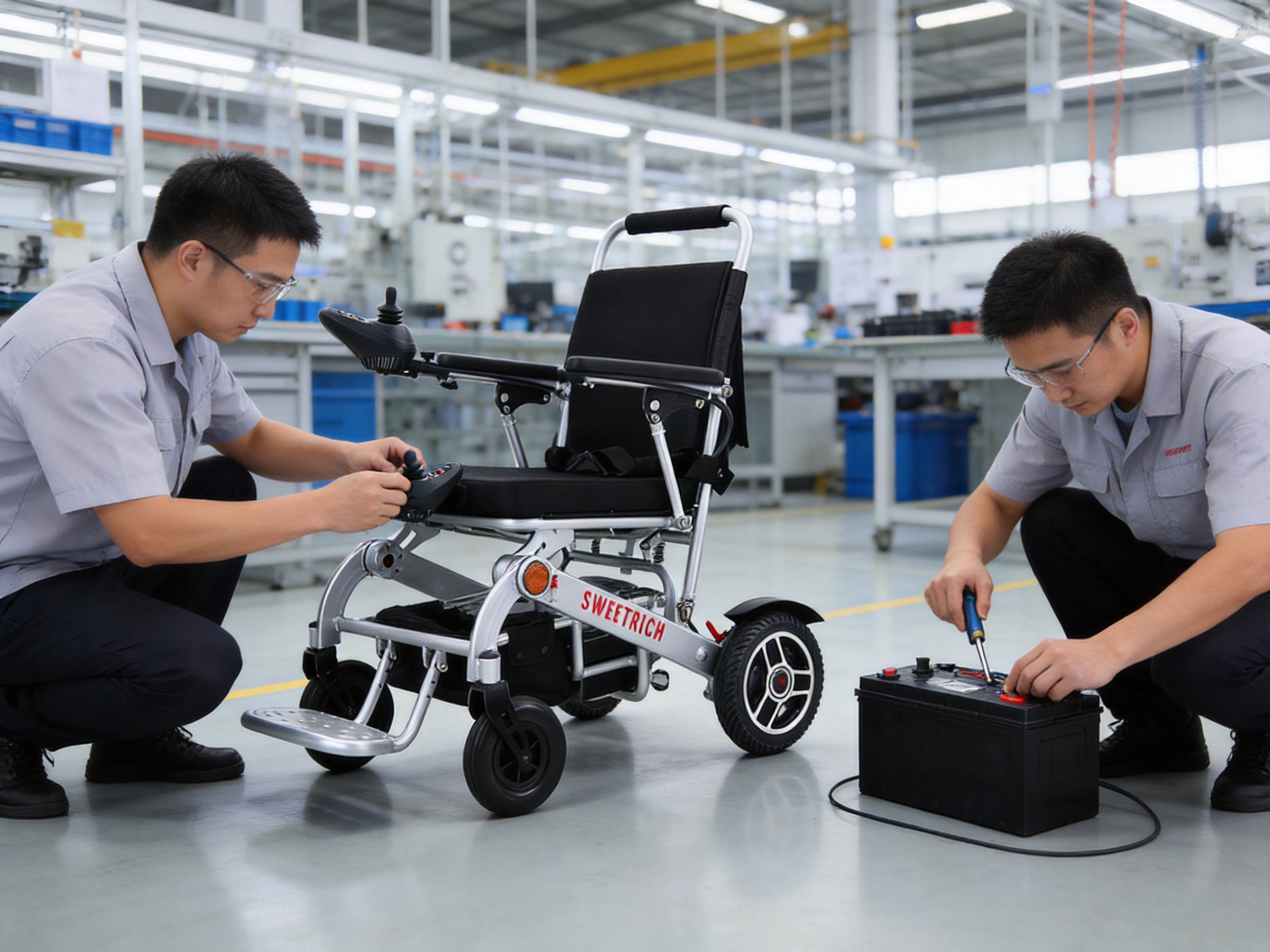
The manufacturer, Suzhou Sweetrich Vehicle Industry Technology Co., Ltd., is described as a high-tech company based in Suzhou Industrial Zone, Jiangsu, China. Established in 2011, the company has accumulated more than ten years of experience in the research, development, and production of mobility scooters and power wheelchairs.
The company’s stated facilities cover approximately 60 acres, including a 30,000-square-meter factory. A facility of this scale can support coordinated activities such as engineering, component management, assembly, testing, quality control, warehousing, and order fulfillment. For international customers, manufacturing capacity is important because consistent production and organized logistics can influence product availability and delivery reliability.
The company reports that it owns intellectual property rights related to its electric scooters and power wheelchairs. This indicates an emphasis on product development rather than relying only on generic market designs. In a competitive mobility industry, internal engineering capability can support improvements in folding systems, control technology, battery integration, suspension, frame structure, and user ergonomics.
The company also emphasizes advanced control technology and driving systems designed for smooth and safe operation. For a powered wheelchair, the interaction between joystick input, motor controller, braking, and dual-motor output is central to the user experience. A well-coordinated control system can help make starts, turns, and stops more predictable.
Strict production management and scientific product design are identified as company priorities. These strengths are relevant to the foldable wheelchair because a folding product must balance portability with structural stability. The frame needs to fold efficiently while maintaining alignment, secure locking, and dependable performance during normal operation.
International experience is another stated company strength. The products are reported to be exported to America, Europe, Japan, Australia, the Middle East, Russia, and other markets. Exposure to multiple markets can help a manufacturer understand varied customer expectations, packaging requirements, electrical standards, documentation needs, and distribution practices.
The company’s stated business principles include quality first, credit above, and customer supreme. While values alone do not replace independent product evaluation, a long-term mobility supplier benefits from dependable after-sales communication, spare-parts support, warranty administration, and technical documentation. These services can be particularly important for powered products that contain batteries, controllers, motors, chargers, and folding mechanisms.
Quality and Production Considerations
A high-quality folding wheelchair requires attention at several stages. Frame materials must be selected and assembled accurately. Folding joints must operate consistently. Fasteners should be correctly tightened. Electrical connections should be protected. Motor and brake functions should be tested. Battery and charger compatibility must be verified. Final inspection should confirm that the wheelchair operates as intended before shipment.
Quality control is particularly important for a lightweight powered product because reducing mass should not compromise essential structural performance. The frame must support the stated 120-kilogram user capacity under normal operating conditions. The folding system must resist unwanted movement when unfolded and correctly support the user during travel.
Electrical testing should include the charger, battery connection, motor controller, joystick response, electromagnetic brake, and wiring. A reliable control system should respond smoothly without unexpected acceleration or delayed braking. Protective packaging is also important because impacts during international transportation can affect wheels, controls, frame alignment, or battery compartments.
For distributors and professional buyers, useful documentation may include assembly instructions, operating instructions, battery information, service procedures, spare-parts details, warranty conditions, and conformity information relevant to the destination market. These documents help users operate the product correctly and assist service personnel in maintaining it over time.
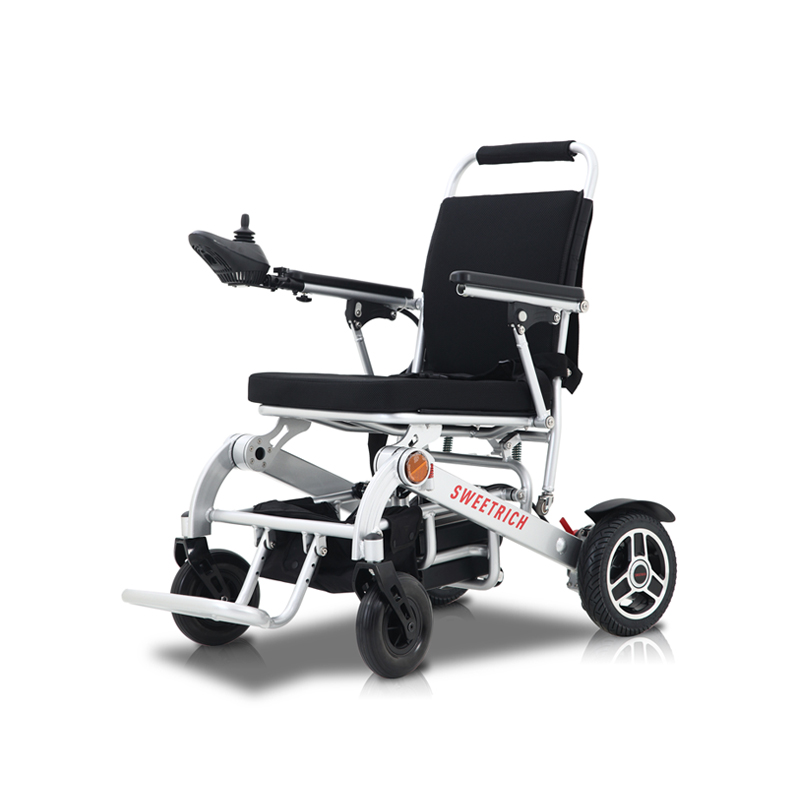
iFold Medical foldable aluminum rollator wheelchair with footrest light weight Wheelchair
Daily Operation and User Safety
Before using the wheelchair, the user should inspect the frame, wheels, footrest, joystick, battery, and brakes. The wheelchair should be fully unfolded and locked according to the instructions. The user should confirm that the joystick is in a neutral position before switching on the power.
Initial practice should take place on a level, open surface away from traffic. The user should learn how much joystick movement is required for starting, stopping, reversing, and turning. Low-speed practice is recommended until the operator becomes familiar with the response of the wheelchair.
Users should avoid carrying loads that exceed the stated capacity. Heavy bags should not be hung from the joystick or placed where they can interfere with wheels, folding parts, or the user’s feet. Any accessories should be approved or confirmed as compatible with the wheelchair.
Seat belts, cushions, posture supports, and other safety equipment should be used when supplied or recommended. A user with limited trunk stability should seek professional advice about seating support. Children and untrained individuals should not operate the wheelchair without appropriate supervision.
Visibility is important when operating outdoors. Reflective materials, lights, or other visibility accessories may be useful where permitted and compatible. Users should follow local pedestrian and mobility-device regulations and should exercise additional caution in low-light conditions.
Maintenance Requirements
Routine maintenance can help preserve performance and safety. Tires should be checked for wear, damage, and correct inflation if they are pneumatic. Solid tires should be inspected for cuts, deformation, or excessive wear. Worn tires can affect traction, steering, braking distance, and range.
The frame and folding joints should be kept clean. Dirt or debris should not be allowed to accumulate around moving parts. Users should inspect hinges, latches, footrest connections, joystick mounts, and visible fasteners. If unusual looseness, noise, vibration, or resistance develops, the wheelchair should be removed from service until it has been inspected.
The battery should be charged according to the instructions. Users should avoid modifying the wiring or installing an unapproved battery. If the wheelchair will be stored for an extended period, the owner should follow the recommended storage charge and periodically check battery condition.
The electromagnetic brake should be tested in a safe location. If the wheelchair rolls when the control is released or the power is off, it should not be used until the problem is corrected. Electrical faults, unusual odors, smoke, overheating, or charger damage require immediate attention.
Professional servicing may be required for motor controllers, wiring, battery systems, drive motors, and folding-frame adjustments. The supplier or an authorized service provider should be contacted when a repair involves safety-critical components.
Who May Benefit from This Wheelchair?
This product may benefit adults who require powered mobility but want a lighter and more transportable alternative to a full-size power wheelchair. It may be useful for people who can sit safely in the wheelchair, operate a joystick, and travel primarily on suitable indoor or paved outdoor surfaces.
It can also help caregivers who need a foldable powered device for occasional outings. The ability to fold rapidly may reduce preparation time and make it easier to accommodate mobility equipment in a family vehicle.
Travelers may appreciate the aluminum construction, front and rear suspension, dual motors, and optional battery capacities. However, travelers should confirm the folded dimensions, battery transport rules, airline policies, and destination charging requirements before making arrangements.
The wheelchair may be less suitable for users who require highly specialized seating, extensive trunk positioning, heavy-duty off-road performance, or a weight capacity above 120 kilograms. In these cases, a larger or clinically configured power wheelchair may be more appropriate.
Purchasing Checklist
Before ordering, buyers should confirm whether the standard configuration includes the battery, charger, footrest, joystick, cushion, safety belt, and any desired accessories. They should also clarify the exact battery capacity and the resulting transport weight.
The difference between the advertised 8.5-kilometer-per-hour feature statement and the 6-kilometer-per-hour technical specification should be resolved in writing. Buyers should ask which figure applies to the intended market and configuration.
It is also important to request folded dimensions. Unfolded dimensions alone do not show whether the wheelchair will fit inside a particular vehicle or storage space. The buyer should measure the cargo opening as well as the interior compartment.
Other useful questions concern warranty duration, spare-parts availability, service locations, replacement batteries, controller support, packaging, delivery terms, and user manuals. Commercial distributors may also need information about minimum order quantities, private labeling, technical files, and market-specific compliance requirements.
Users should consider whether the maximum gradient, ground clearance, tire design, battery range, and weight capacity match their regular environment. A product that is ideal for indoor corridors and paved shopping areas may not be suitable for steep rural paths or rough outdoor terrain.
Frequently Asked Questions
Is this a manual or electric wheelchair?
It is a powered electric wheelchair. The wheelchair uses two 24-volt, 250-watt motors and is controlled by a joystick. It can be folded for storage and transport, but its primary movement system is electric rather than manual propulsion.
How quickly can it be folded?
The product information states that it can fold and unfold in one second. Actual operation time may vary according to the user, the position of the footrest and joystick, and the specific folding procedure. Users should follow the operating instructions and never force the frame.
What is the maximum user weight?
The stated weight capacity is 120 kilograms, or 265 pounds. The user, clothing, accessories, and carried items should be considered when evaluating the total load.
What is the maximum speed?
The technical specification lists a maximum forward speed of 6 kilometers per hour. A separate feature statement mentions speeds up to 8.5 kilometers per hour. Because these figures differ, buyers should confirm the applicable speed for their exact model and market before purchase.
What range can the wheelchair achieve?
The stated maximum driving range is 30 plus or minus 5 kilometers. Actual range varies with battery capacity, user weight, terrain, temperature, speed, tire condition, and driving style. The 20-ampere-hour battery generally provides more capacity than the 10.2-ampere-hour version, while an optional higher-capacity battery may be available for selected configurations.
How long does charging take?
The supplied information gives an approximate charging time of five hours. Charging time can vary according to battery condition, remaining charge, charger output, and battery capacity. The correct charger should always be used.
Can the joystick be installed on either side?
Yes. The product information states that the joystick is available for use on both sides. This can help accommodate different user preferences and physical abilities. The control should be installed securely and tested before regular operation.
Is the wheelchair suitable for steep slopes?
The stated maximum driving gradient is 10 degrees, but users should approach slopes cautiously. Surface condition, battery charge, load, direction of travel, and tire traction all affect performance. A maximum figure should not be treated as a guarantee for every situation.
Can it be used outdoors?
It is intended for travel-smart mobility and can be used on suitable paved outdoor surfaces. Its front and rear suspension, 8-inch front tires, and 10-inch rear tires help with ordinary surface irregularities. It should not be treated as an extreme-terrain wheelchair, and users should avoid deep potholes, loose surfaces, standing water, and unstable slopes.
Is the battery included in the 24-kilogram weight?
No. The stated 24-kilogram weight is listed as weight without the battery. The final transport weight depends on the selected battery and any additional equipment.
What type of braking system does it use?
The wheelchair uses an electromagnetic brake system. The brake should engage appropriately when the control is released or the system is switched off. Users should test the braking function regularly and stop using the wheelchair if unexpected rolling occurs.
Who manufactures the product?
The product is manufactured by Suzhou Sweetrich Vehicle Industry Technology Co., Ltd., a mobility equipment company established in 2011 in Suzhou, Jiangsu, China. The company reports experience in developing and producing mobility scooters and power wheelchairs for international markets.
What should be checked before placing a bulk order?
Commercial buyers should confirm the exact model configuration, battery options, folded dimensions, packaging, warranty, spare-parts support, production lead time, quality documentation, electrical requirements, and destination-market compliance. They should also request product samples or inspection arrangements where appropriate.
Overall Assessment
The foldable aluminum rollator wheelchair presents a practical combination of powered mobility and transport convenience. Its most notable advantages are the fast folding concept, 24-kilogram base weight without the battery, dual 250-watt motors, side-configurable joystick, large foot platform, front and rear suspension, electromagnetic braking, and multiple lithium battery options.
Compared with a conventional manual wheelchair, it reduces the physical effort required for propulsion. Compared with many full-size power wheelchairs and mobility scooters, it emphasizes portability and storage efficiency. These advantages make it particularly relevant for users who need powered mobility for daily activities, travel, and occasional outdoor use but do not want a permanently bulky device.
The company’s reported research and development experience, factory scale, intellectual property, international market exposure, and focus on production management support the product’s positioning as a purpose-designed mobility solution. Reliable manufacturing is especially important for a foldable powered wheelchair, where frame structure, electrical control, battery integration, and braking must work together.
Prospective users should still verify the exact speed, battery configuration, folded dimensions, range expectations, warranty, and local service arrangements. With those details confirmed, the product can offer a useful balance of independence, portability, and powered performance for suitable users and environments.
References
1. Product specification sheet for the foldable aluminum rollator wheelchair with footrest, including dimensions, motor, battery, braking, tire, range, and weight information.
2. Manufacturer-provided product feature summary covering folding operation, joystick positioning, foot platform, optional battery capacity, and stated travel speed.
3. Manufacturer company profile describing research and development, factory facilities, production experience, intellectual property, and international distribution.
4. General principles of powered wheelchair operation, battery care, mobility-device safety, and preventive maintenance.
5. General guidance for evaluating user capacity, terrain suitability, transport requirements, charging practices, and accessible mobility equipment.