
 +86-(0)512-82283871
Content
- 1 1. Understanding the Travel Mobility Requirement
- 2 2. Product Overview
- 3 3. Folding Performance and Transport Convenience
- 4 4. Aluminum Construction and Weight Management
- 5 5. Motor System and Driving Performance
- 6 6. Joystick Flexibility and User Control
- 7 7. Battery Options, Charging, and Travel Range
- 8 8. Braking and Safety-Oriented Design
- 9 9. Comfort and Daily Usability
- 10 10. Comparison with Alternative Mobility Products
- 11 11. Manufacturing Capabilities and Company Strengths
- 12 12. Export Experience and International Supply
- 13 13. Recommended Applications
- 14 14. Maintenance and Ownership Considerations
- 15 15. Purchasing Checklist
- 16 16. Who May Benefit Most from This Design?
- 17 17. Frequently Asked Questions
- 17.1 Q1: Is this wheelchair manual or powered?
- 17.2 Q2: How quickly can it be folded?
- 17.3 Q3: What is the wheelchair’s weight?
- 17.4 Q4: What is the maximum user weight?
- 17.5 Q5: What is the maximum speed?
- 17.6 Q6: How far can it travel on one charge?
- 17.7 Q7: What battery options are available?
- 17.8 Q8: How long does charging take?
- 17.9 Q9: Can the joystick be used on either side?
- 17.10 Q10: Does the wheelchair have suspension?
- 17.11 Q11: What type of brakes does it use?
- 17.12 Q12: Is it suitable for air travel?
- 17.13 Q13: Is it a medical device?
- 17.14 Q14: Is it suitable for steep outdoor terrain?
- 17.15 Q15: What makes it different from a manual folding wheelchair?
- 17.16 Q16: What makes it different from a large electric wheelchair?
- 18 18. Overall Assessment
- 19 References
- 20 Product: iFold Medical foldable aluminum rollator wheelchair with footrest light weight Wheelchair
Choosing a powered wheelchair for travel involves more than comparing motor wattage or battery capacity. Users and caregivers must consider portability, folding speed, driving stability, seating comfort, control flexibility, range, braking performance, and the practical demands of everyday transportation. A wheelchair that performs well outdoors but is difficult to lift may not be suitable for frequent travel. Similarly, a very light model may be easy to store but lack the stability, driving range, or foot support required for regular use.
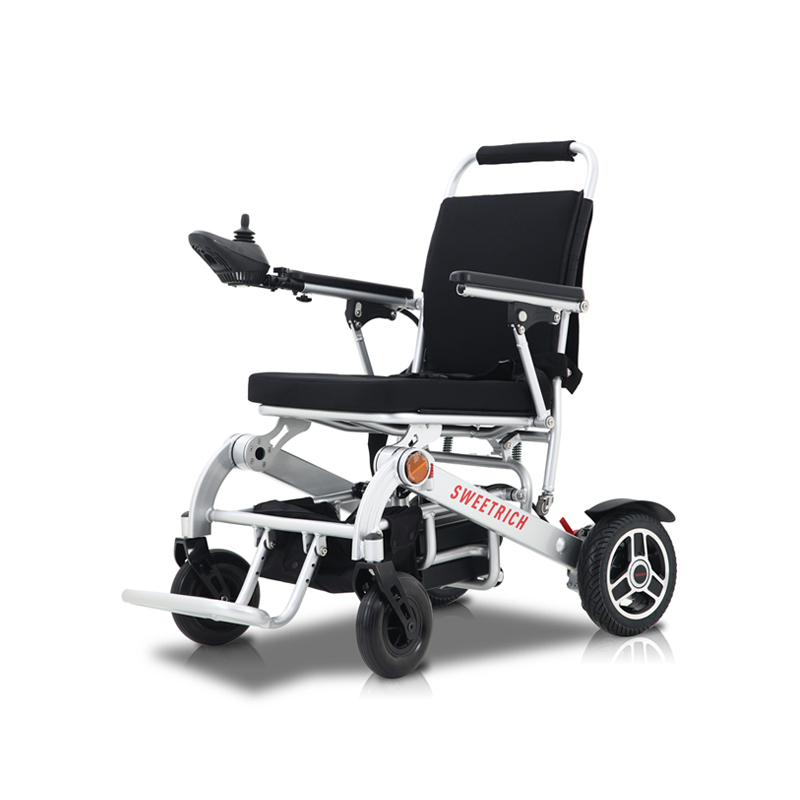
The iFold medical foldable aluminum rollator wheelchair with footrest is designed around this balance. It combines a lightweight aluminum structure with powered mobility, a folding mechanism, front and rear suspension, electromagnetic braking, dual motors, and a large foot platform. Its overall concept is aimed at users who need a wheelchair that can be driven independently while also being convenient to transport and store.
This article examines the wheelchair’s design, performance, portability, electrical system, comfort features, manufacturing background, and potential applications. It also explains how the product compares with common alternatives, including manual wheelchairs, traditional power wheelchairs, and compact travel mobility devices.
1. Understanding the Travel Mobility Requirement
Travel mobility products are often used in circumstances that demand flexibility. A user may need to move through a home, enter a vehicle, pass through a hotel, navigate a shopping center, or travel across a paved outdoor area. These situations require a device that is not limited to a single environment.
Traditional power wheelchairs can provide excellent support and driving performance, but they are frequently heavy and difficult to disassemble. Full-size models may require a vehicle lift, ramp, or specially adapted transportation. Manual wheelchairs can be easier to transport, but they depend on a caregiver or the user’s upper-body strength. Small mobility scooters may offer a comfortable ride but can be less convenient in narrow indoor spaces and may not provide the seating arrangement or control flexibility expected from a wheelchair.
A foldable powered wheelchair addresses part of this gap. It can be driven under its own power, folded when necessary, and placed in a storage area or transportation vehicle with less preparation. The iFold design is particularly oriented toward users who value a simple transition between driving and carrying or storing.
The product is categorized as a travel-smart wheelchair, making portability a central design goal rather than an afterthought. Its aluminum construction, folding structure, removable or configurable battery options, and relatively low weight without the battery all contribute to that objective.
2. Product Overview
The wheelchair uses a powered chassis with two 24-volt, 250-watt motors. The motors drive the rear wheels, while the front and rear suspension systems help absorb vibration on ordinary paved surfaces. An electromagnetic brake system provides automatic braking when the drive control is released or power is interrupted under normal operating conditions.
The wheelchair has an approximate overall size of 1,090 millimeters in length, 605 millimeters in width, and 998 millimeters in height. A width of 605 millimeters can be useful in residential and commercial environments where passage through doorways and aisles is important. However, users should always compare the actual product dimensions with their home doorways, elevator entrances, vehicle openings, and storage spaces before purchase.
The stated weight without the battery is 24 kilograms. The complete transport weight will be higher once the selected battery and any accessories are included. Even so, the battery-free specification provides a useful reference for caregivers and travelers who need to lift, load, or store the wheelchair.
The structure includes a large foot platform rather than leaving the feet unsupported. This can help users maintain a more stable lower-limb position during travel and can make transfers or seated positioning more comfortable. Depending on the user’s physical condition, professional advice may still be necessary to determine whether the standard foot arrangement provides adequate support.
Key Design Characteristics
The principal design features include:
• A folding and unfolding mechanism intended to operate in approximately one second.
• An aluminum frame designed to reduce transport weight.
• Powered travel through two 250-watt motors.
• A joystick that can be used on either side.
• Front and rear suspension.
• A large foot platform.
• Electromagnetic braking.
• Lithium battery options listed as 24 volts and 10.2 amp-hours or 20 amp-hours.
• A maximum stated load capacity of 120 kilograms, or 265 pounds.
• An advertised travel range of approximately 30 kilometers, subject to battery selection, user weight, terrain, temperature, driving style, and other conditions.
• A charger rated at DC 24 volts and 2 amperes, with an AC input range of 115 to 230 volts.
These features position the wheelchair between a basic manual transport chair and a larger full-size electric wheelchair.
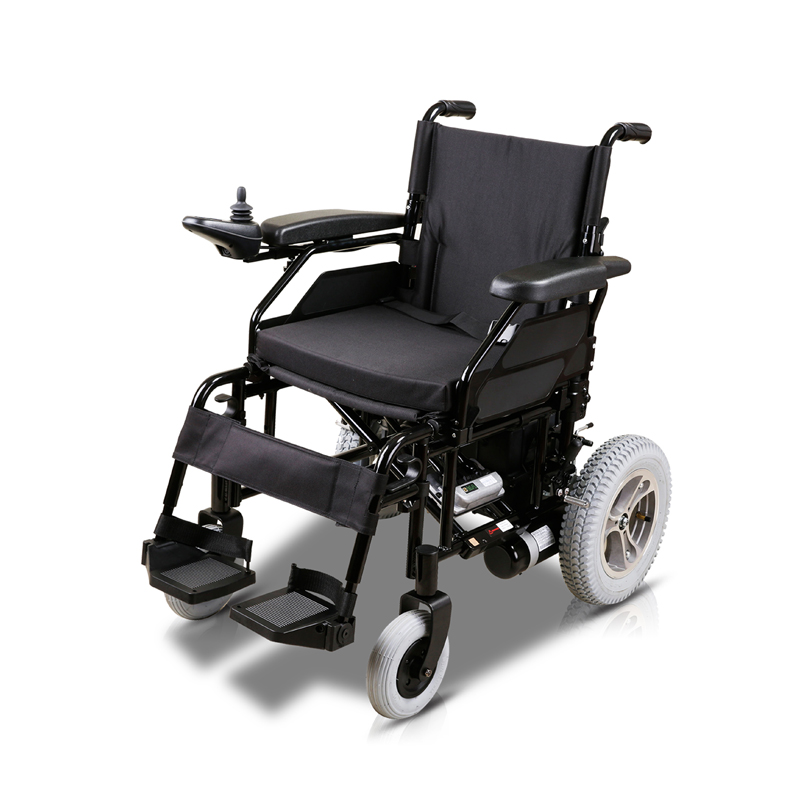
iFold Medical foldable aluminum rollator wheelchair with footrest light weight Wheelchair
3. Folding Performance and Transport Convenience
The most visible advantage of the iFold design is its folding capability. A wheelchair intended for travel must be convenient not only while moving but also before and after the journey. If folding requires several complicated steps, users may avoid using the product or depend on assistance. A one-second folding and unfolding claim, when achieved under the recommended operating procedure, can significantly simplify daily routines.
Fast folding can be especially useful when entering a vehicle, storing the wheelchair in a hotel room, preparing for air or rail travel, or moving between indoor and outdoor environments. It may also reduce the amount of time a caregiver spends handling the product. The folded structure is described as easy to move, which suggests that the frame can be repositioned more conveniently than a rigid, full-size powered wheelchair.
Portability is not defined by weight alone. A product can be relatively light but awkward to carry if its folded shape is unstable or difficult to grip. A practical folding wheelchair should therefore be evaluated according to several factors:
• How many actions are required to fold it?
• Does the folded chassis remain stable during movement?
• Can the battery be removed or separated when necessary?
• Is the folded unit compatible with the intended vehicle?
• Can a caregiver load it without excessive bending or lifting?
• Does folding require the joystick or foot platform to be removed?
• Can it be stored in a home closet or other restricted space?
The iFold’s aluminum frame and folding design are intended to answer these questions favorably. Nevertheless, the total weight with the battery should be checked before purchase, especially for users who expect to lift the wheelchair independently. A loading ramp, hoist, or assistance from another person may still be appropriate for some users.
Folding Compared with Conventional Wheelchairs
Compared with a rigid manual wheelchair, a folding powered model provides self-propelled operation while maintaining a more compact storage profile. Compared with a traditional powered wheelchair, it can reduce transportation demands because it does not necessarily require a dedicated lift or a large accessible vehicle.
Some travel wheelchairs are designed primarily for occasional use and may provide limited range, basic seating, or low ground clearance. The iFold attempts to provide more than simple transport by adding dual motors, suspension, electromagnetic braking, and a 30-kilometer nominal range. This combination can make it more suitable for regular local travel than a manually pushed transport chair.
The product’s strongest competitive advantage is therefore its combination of powered driving and folding convenience. Many products offer one of these characteristics, but fewer attempt to combine both with a 120-kilogram capacity and front and rear suspension.
4. Aluminum Construction and Weight Management
Aluminum is widely used in mobility equipment because it offers a useful relationship between strength, weight, corrosion resistance, and manufacturability. A well-designed aluminum frame can be easier to lift and transport than a comparable steel frame. This is valuable for travel wheelchairs, which are frequently handled by caregivers or placed into cars.
The stated weight without the battery is 24 kilograms. This specification is important because the battery is often one of the heaviest removable components in a powered mobility device. If the battery can be removed for transportation, the user or caregiver may be able to handle the chassis and battery separately, reducing the lifting burden for each individual component.
Weight reduction must not come at the expense of structural stability. The frame needs to support the user, motors, battery, wheels, foot platform, and dynamic forces generated during braking or movement over uneven surfaces. It must also tolerate repeated folding and unfolding. For this reason, the quality of joints, fasteners, hinge points, welds, surface treatment, and final assembly is as important as the choice of aluminum itself.
The product’s stated weight capacity is 120 kilograms. Users should interpret this as the maximum supported user weight under the manufacturer’s specified conditions. Personal belongings, bags, and accessories may contribute to the total load. Operating close to the maximum capacity can also influence range, acceleration, braking distance, and performance on gradients.
Practical Benefits of a Lightweight Frame
A lighter frame can provide several practical benefits:
• Easier loading into a car or transportation compartment.
• Reduced physical effort during storage and positioning.
• Better suitability for apartments, hotels, and compact homes.
• Greater convenience when traveling with a caregiver.
• Lower handling demands when batteries and accessories are removed.
• More manageable movement when the chair is folded and not being driven.
These benefits are particularly relevant to older adults and people with limited strength. However, users should not assume that a lightweight wheelchair is automatically suitable for every surface. The intended environment, user posture, terrain, and driving ability must all be considered.
5. Motor System and Driving Performance
The wheelchair is powered by two 24-volt, 250-watt motors. Dual motors allow the left and right drive wheels to be controlled independently, supporting powered movement and directional control. This arrangement is common in compact electric wheelchairs because it can provide a relatively tight turning response and straightforward drivetrain packaging.
The published technical information lists a maximum forward speed of 6 kilometers per hour. The product feature description also refers to speeds up to 8.5 kilometers per hour, or approximately 5.2 miles per hour. Because these figures differ, buyers should confirm the exact maximum speed for the intended configuration, market, controller setting, and battery package before ordering. The 6-kilometer-per-hour figure should be treated as the formal specification unless the supplier confirms otherwise in writing.
A speed of 6 kilometers per hour is suitable for controlled travel in many pedestrian environments, subject to local laws and site rules. It allows a user to move at a practical walking pace without making the device unnecessarily difficult to control. Lower speeds may be preferable indoors, near other people, on ramps, or in congested spaces.
The maximum driving gradient is listed as 10 degrees. Gradient performance depends on several factors, including user weight, battery charge, tire condition, surface texture, ramp length, direction of travel, weather, and the presence of loose material. A rated gradient should not be interpreted as a recommendation to approach every slope at maximum capacity. Users should follow safe operating practices and avoid slopes that exceed local accessibility guidance.
Front and Rear Suspension
Suspension is an important feature for a compact wheelchair because small wheels can transmit shocks from cracks, joints, thresholds, and uneven pavement. The iFold includes front and rear suspension. This can reduce the transfer of vibration to the frame and seating area compared with an unsuspended design.
Suspension does not turn a compact travel wheelchair into an all-terrain vehicle. It is intended to improve comfort and control on suitable surfaces, not to authorize operation on deep gravel, mud, steep side slopes, soft sand, or badly damaged ground. Users should maintain a moderate speed over uneven areas and approach thresholds as directly as possible.
The tire sizes are listed as 8 inches at the front and 10 inches at the rear. Larger rear wheels can assist with rolling over minor surface imperfections, while the smaller front wheels help maintain a compact turning arrangement. The tire dimensions also contribute to the wheelchair’s ground clearance and overall stance.
6. Joystick Flexibility and User Control
The joystick can be used on either side. This is a significant accessibility advantage because users do not have identical strength, dexterity, or range of motion in both arms. Some users may have weakness on one side, while others may need to keep one hand available for support, communication, or another task.
A reversible joystick arrangement also allows caregivers and therapists to configure the wheelchair more appropriately for the user. Left- or right-side placement may improve posture, reduce shoulder strain, and make the control interface easier to reach.
Joystick operation should be practiced in an open, safe area before regular use. The user should learn how small joystick movements affect acceleration, turning, and stopping. Particular attention should be given to reversing, narrow passages, ramps, and crowded spaces.
The controller is listed as 24 volts and 50 amperes. The controller coordinates motor output, speed response, and braking functions. Its performance depends on correct configuration, wiring, battery condition, and routine maintenance. Unauthorized modifications to the controller, battery, or wiring can create safety risks and may affect product warranty coverage.
Control Accessibility
For users with limited hand function, the ability to position the joystick on the stronger or more capable side can make independent operation more realistic. However, joystick suitability is individual. A clinical or rehabilitation professional may be able to recommend alternative controls or positioning if the standard joystick is difficult to operate.
The control system should be kept dry and protected from impact. Before each journey, the user should confirm that the joystick returns to its neutral position, the battery has adequate charge, and the wheelchair responds correctly at low speed.

7. Battery Options, Charging, and Travel Range
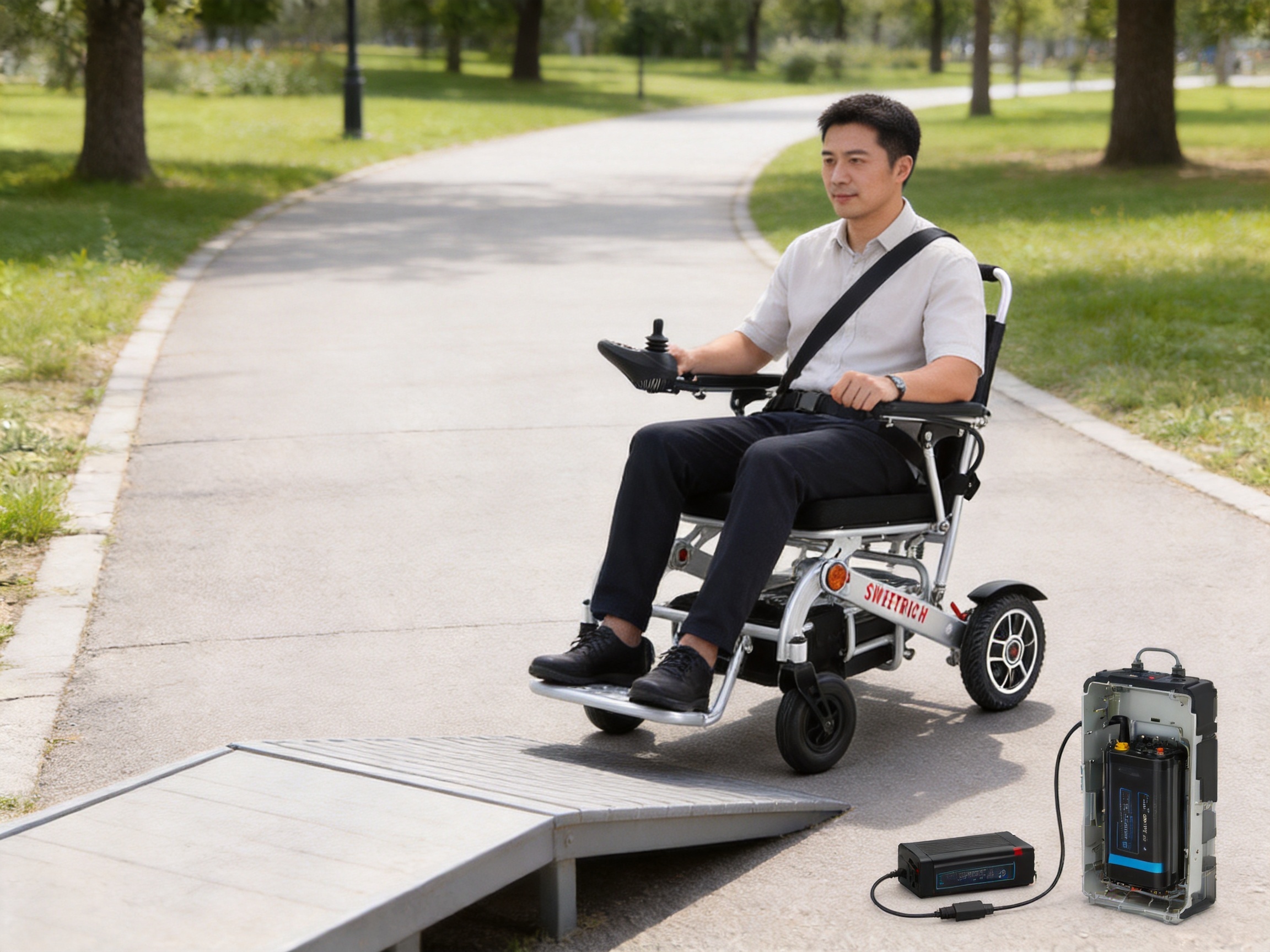
The wheelchair uses a 24-volt lithium battery system. The listed battery options include 10.2 amp-hours and 20 amp-hours. The product information also mentions an optional battery capacity of up to 30 amp-hours for reaching a greater distance. Buyers should confirm which capacity is included in the quoted configuration and whether a larger battery changes the product’s weight, charging time, airline eligibility, or regulatory classification.
The published maximum driving range is 30 plus or minus 5 kilometers. A nominal range should always be treated as an estimate rather than a guarantee. Range tests are normally performed under specific conditions, such as a particular user weight, smooth terrain, moderate temperature, full battery charge, and steady driving speed. Real-world range may be lower when the wheelchair is used on slopes, rough pavement, in cold weather, or with frequent starts and stops.
Battery capacity affects range, but it is not the only factor. Other influences include:
• Total user and cargo weight.
• Tire inflation and rolling resistance.
• Temperature and weather conditions.
• Terrain and gradient.
• Driving speed and acceleration frequency.
• Battery age and charging history.
• Use of lights or additional electrical accessories, if fitted.
• Time spent maneuvering at low speed.
A 20-amp-hour battery may provide a different practical range from a 10.2-amp-hour battery, while a 30-amp-hour option may extend travel further. The correct choice depends on the user’s normal daily distance and transportation needs. A smaller battery can reduce carrying weight, while a larger battery may be more suitable for long outings.
Charging System
The charger is rated at DC 24 volts and 2 amperes, with an AC input range of 115 to 230 volts. The listed charging time is approximately five hours. Charging should be performed in a dry, ventilated location using the approved charger. The charger should be connected and disconnected according to the manufacturer’s instructions.
Lithium batteries should not be exposed to excessive heat, water, crushing forces, or unauthorized repair. The battery compartment and connectors should be inspected periodically for damage, looseness, contamination, or abnormal heating. If unusual odor, swelling, smoke, or excessive heat occurs, charging should stop and qualified service personnel should be contacted.
For air travel, lithium battery requirements can be strict. Battery watt-hours, removability, documentation, packaging, and airline approval may all be relevant. A traveler should contact the airline well before departure and obtain the battery specifications and transport documentation from the supplier.
8. Braking and Safety-Oriented Design
The wheelchair uses an electromagnetic brake system. Electromagnetic braking is commonly used in powered mobility equipment because it can engage when the drive control is released. This helps the wheelchair stop and remain stationary under normal operating conditions.
Braking performance can be affected by slope, surface condition, user weight, speed, tire condition, battery status, and mechanical condition. Users should never rely solely on the brake system while parked on a steep incline. When transferring, the power should be switched off and the wheelchair should be positioned on a stable, level surface whenever possible.
Safety depends on both design and behavior. Recommended operating habits include:
• Begin at a low speed until the controls become familiar.
• Keep the feet positioned securely on the foot platform.
• Avoid sudden turns at high speed.
• Approach ramps and slopes cautiously.
• Avoid driving across steep side slopes.
• Keep clear of stairs, escalators, open drainage channels, and deep gaps.
• Check that the folding structure is fully locked before driving.
• Do not exceed the stated weight capacity.
• Inspect the tires, joystick, battery, and brakes before use.
• Keep children and pets away from the wheels and folding joints.
The wheelchair is described in the product material as a non-medical device for the United States market. It should therefore not be treated as a substitute for a clinically prescribed medical device without appropriate professional evaluation. Users with postural, pressure-relief, respiratory, or advanced mobility needs may require a different wheelchair category and a specialist assessment.
9. Comfort and Daily Usability
Comfort affects whether a mobility device is used consistently. The large foot platform supports the lower legs and can reduce the feeling that the feet are suspended without a stable base. Front and rear suspension may help reduce vibration during ordinary travel.
Comfort also depends on seat width, seat depth, back support, armrest arrangement, cushion type, posture, and the user’s ability to reposition. The available product information does not provide every seating measurement, so prospective buyers should request detailed seat dimensions and adjustability information. A wheelchair that is technically portable may still be unsuitable if the seating configuration does not match the user’s body size or posture.
For longer outings, users should consider pressure management, clothing, temperature, and opportunities to rest. A compact travel wheelchair is usually intended for mobility and convenience, not necessarily for continuous all-day seating without additional clinical support.
The joystick’s ability to operate on both sides can improve comfort by allowing a more natural arm position. It may also help prevent overuse of one shoulder. If the joystick position causes the user to lean, reach excessively, or twist the trunk, professional adjustment should be considered.
10. Comparison with Alternative Mobility Products
| Product Type | Main Strength | Common Limitation | How the Foldable Powered Wheelchair Differs |
|---|---|---|---|
| Manual folding wheelchair | Simple construction and relatively easy storage | Requires self-propulsion or caregiver assistance | Adds powered driving, joystick control, dual motors, and electromagnetic braking |
| Rigid full-size power wheelchair | Strong seating support and robust everyday performance | Often heavy and difficult to transport | Emphasizes folding convenience and lower transport weight |
| Compact mobility scooter | Independent powered travel and familiar tiller controls | May be less suitable for users who require wheelchair-style seating or tighter indoor maneuvering | Uses a wheelchair format with a joystick and foot platform |
| Basic transport chair | Lightweight short-distance movement with caregiver assistance | Usually has no powered drive or independent control | Offers powered mobility and a longer stated travel range |
| Heavy-duty outdoor wheelchair | Greater stability and equipment capacity | Bulkier and less convenient for travel | Prioritizes portability for suitable indoor and paved outdoor environments |
No mobility product is ideal for every user or environment. The iFold’s competitive position comes from the way it combines several moderate-to-strong characteristics: folding speed, aluminum construction, powered operation, dual motors, suspension, a reasonable load capacity, and battery options. A larger wheelchair may offer more extensive seating adjustment or more powerful outdoor performance, while a basic travel chair may be easier to lift. The appropriate choice depends on the user’s priorities.
Advantages over a Manual Wheelchair
The most important advantage over a manual wheelchair is independence from continuous pushing assistance. A user with adequate hand and cognitive control can operate the wheelchair through the joystick. This can reduce the physical effort required from a caregiver and allow the user to choose direction and speed more directly.
The powered system can also make longer distances more practical. A manual wheelchair user may become fatigued on extended journeys, particularly on inclines or uneven surfaces. The iFold’s motors and battery support can reduce that burden, although the user must remain within safe operating conditions.
Advantages over a Large Powered Wheelchair
Compared with many large powered wheelchairs, the foldable design can simplify vehicle transportation and storage. The 24-kilogram chassis weight without the battery is particularly relevant for users who cannot accommodate a heavy, rigid power base.
The narrow overall width may also help in homes, stores, corridors, and elevators. Users should still verify the dimensions of their intended routes because accessibility varies considerably between buildings.
11. Manufacturing Capabilities and Company Strengths
The product is manufactured by Suzhou Sweetrich Vehicle Industry Technology Co., Ltd., a high-tech mobility equipment company based in Suzhou Industrial Zone, Jiangsu, China. According to the supplied company information, the company was established in 2011 and operates a facility covering approximately 60 acres, including a factory of about 30,000 square meters.
The company has accumulated more than ten years of experience in the research, development, and production of mobility scooters and power wheelchairs. This specialization is relevant because mobility equipment requires knowledge across mechanical design, electrical systems, battery integration, controller programming, seating ergonomics, folding mechanisms, and production quality management.
A dedicated mobility manufacturer can develop product families and manufacturing methods around recurring user requirements. These requirements include easy transport, stable driving, safe braking, efficient battery use, durable frames, reliable controls, and manageable service needs. Experience across multiple models can also help a manufacturer identify common field issues and improve future designs.
Research and Development
The company states that it owns intellectual property rights related to electric scooters and power wheelchairs. Intellectual property ownership may include design developments, structural arrangements, control systems, or other technical features. It indicates that the manufacturer invests in product development rather than merely distributing equipment designed by unrelated parties.
For a foldable wheelchair, research and development are especially important. The folding system must balance speed and security. The frame must remain rigid during driving but move through a controlled folding path. Electrical cables must be routed so that repeated folding does not create unnecessary stress. The battery must be positioned to support balance while remaining accessible for charging or removal. These are integrated design challenges rather than isolated component decisions.
The dual-motor system, controller, joystick, brake, battery, and suspension must operate as one coordinated platform. A manufacturer with experience in powered mobility can evaluate these interactions during product development and production testing.
Production Management
The company describes its production approach as based on strict production management and scientific product design. Although the supplied material does not list specific certifications, testing standards, or individual process-control documents, a structured production system is important for mobility equipment.
Typical manufacturing controls for a product of this kind may include incoming inspection of aluminum components, motor assemblies, batteries, chargers, wiring, controllers, tires, and fasteners. Assembly processes may include frame construction, drivetrain installation, electrical connection, brake setup, folding mechanism adjustment, joystick installation, and final functional inspection.
Quality control should also examine whether the finished wheelchair folds and unfolds correctly, whether the frame locks securely, whether both motors respond consistently, whether the electromagnetic brakes engage properly, and whether the charger and battery communicate as intended. Dimensional checks are useful for confirming width, length, height, wheel alignment, and the fit of accessory components.
Because the wheelchair is repeatedly folded, durability evaluation should pay particular attention to hinge points, locking mechanisms, cable routing, and areas exposed to repeated loading. The company’s long-term focus on mobility scooters and power wheelchairs provides a relevant foundation for managing these production demands.
12. Export Experience and International Supply
The company reports that its products are exported to America, Europe, Japan, Australia, the Middle East, Russia, and other markets. International distribution requires more than manufacturing capacity. It also involves packaging, documentation, electrical compatibility, battery logistics, customer communication, spare parts, and after-sales coordination.
The charger’s 115-to-230-volt AC input range is useful for international markets, although the correct plug, certification, and regional configuration must be confirmed for each destination. Battery transport regulations may differ by country and carrier. Importers and distributors should verify the applicable requirements before placing commercial orders.
International experience can help a manufacturer understand different customer expectations. Users in dense urban areas may prioritize compact dimensions and turning ability. Travelers may prioritize removable batteries and fast folding. Caregivers may focus on total handling weight. Outdoor users may give greater importance to range, suspension, and gradient performance.
The company’s stated principle of quality first, credit above, and customer service reflects the importance of long-term relationships in the mobility industry. Dealers and importers generally need consistent product supply, technical information, replacement components, and responsive communication. These business strengths can be as important as the initial product specification.
13. Recommended Applications
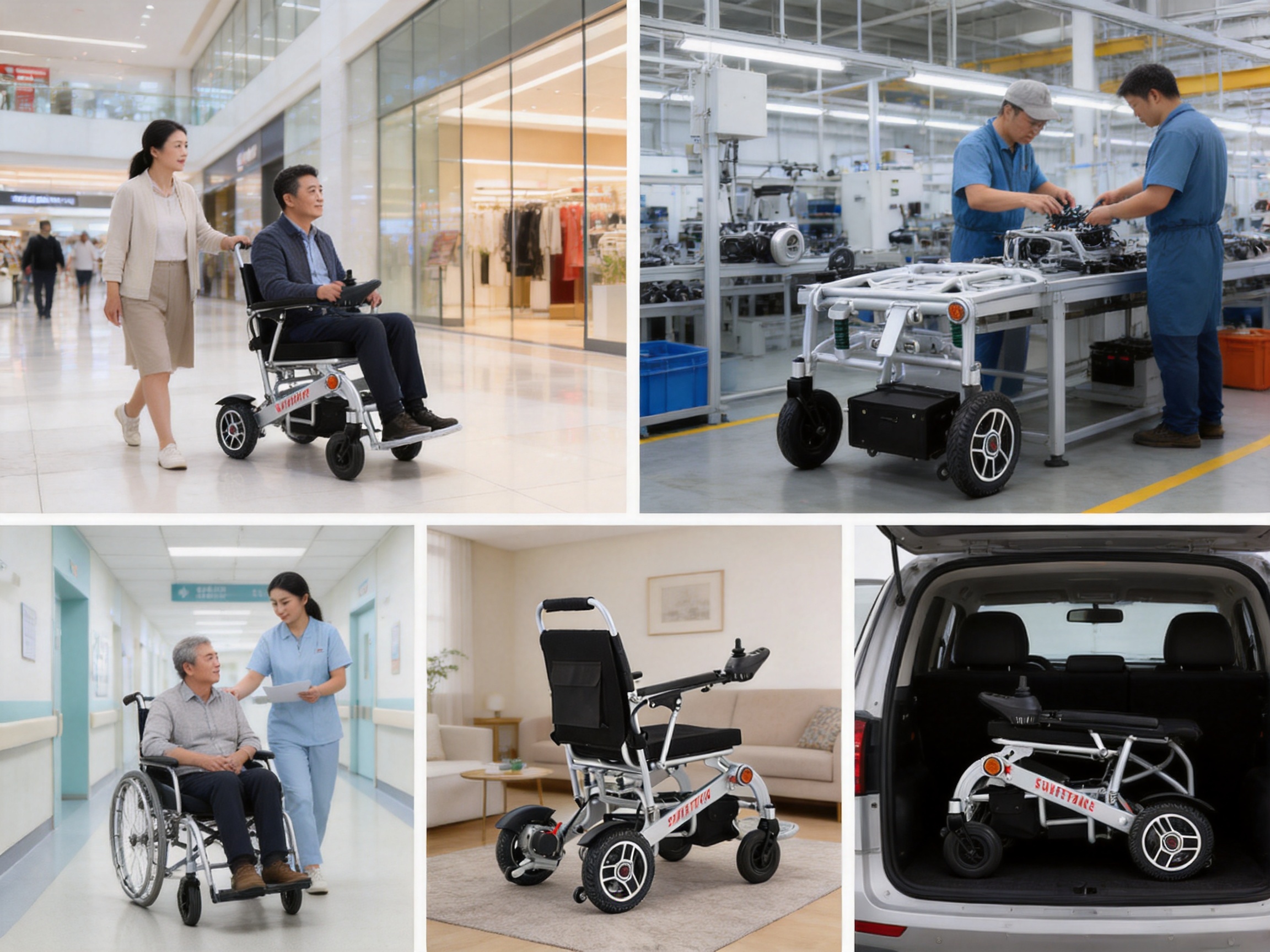
The wheelchair may be suitable for users who need powered mobility in homes, shopping centers, hotels, paved parks, sidewalks, travel terminals, and other appropriate environments. It can be especially useful for individuals who have difficulty walking long distances but retain the ability to operate a joystick safely.
Potential use cases include:
• Local shopping and errands.
• Indoor movement in large buildings.
• Visits to public venues.
• Hotel and resort travel.
• Transportation in a suitable car or van.
• Everyday mobility in compact homes.
• Caregiver-supported outings.
• Short trips where folding and storage are important.
The wheelchair should be used only on surfaces and slopes appropriate to its design. It is not automatically suitable for beach sand, deep grass, mud, snow, rocky trails, or severe outdoor terrain. Users who need extensive off-road travel may require a larger device with different tires, ground clearance, suspension, and seating support.
14. Maintenance and Ownership Considerations
Regular maintenance helps preserve performance and safety. Before use, the owner should inspect the tire condition, joystick operation, battery charge, charger connector, foot platform, folding lock, and visible frame components. Any unusual noise, looseness, vibration, or change in braking should be investigated promptly.
The tires should be kept in good condition and inflated according to the manufacturer’s instructions if they are pneumatic. Worn tires can affect traction, braking, range, and steering. Solid or semi-solid tire configurations, if used, may require less inflation maintenance but still need inspection for wear and damage.
The folding mechanism should be kept free from dirt and obstructions. Users should never force the frame to fold. If the mechanism does not move smoothly, the wheelchair should be inspected by an authorized technician. Lubricants should be used only when recommended because unsuitable products may collect dust or damage nearby components.
Battery care should include proper charging, avoiding prolonged exposure to extreme temperatures, and using the approved charger. When the wheelchair will not be used for an extended period, the battery should be stored according to the manufacturer’s instructions. Lithium batteries should never be opened or modified by unqualified personnel.
Owners should also retain the user manual, charger information, serial number, purchase records, and service contacts. These documents can simplify troubleshooting, warranty claims, replacement battery orders, and airline or transport inquiries.
15. Purchasing Checklist
Before ordering, buyers should request confirmation of the exact configuration. The supplied material lists several battery capacities and two different maximum-speed statements. A written quotation should identify the battery, speed setting, charger, joystick side, warranty, accessories, packaging dimensions, and included components.
Important questions include:
• What is the complete weight with the selected battery?
• Can the battery be removed without tools?
• What are the folded dimensions?
• What seat width, seat depth, and seat height are available?
• Is the joystick supplied on the left or right, and can the position be changed?
• What is the expected range with the selected battery under typical user conditions?
• Is the wheelchair suitable for the intended vehicle?
• What replacement batteries, tires, chargers, and controllers are available?
• What service support is available in the buyer’s country?
• What transport documentation is provided for the lithium battery?
• Are there regional restrictions on speed, battery type, or use on public paths?
• Is the product classified as a non-medical mobility device in the destination market?
These questions help prevent a mismatch between the advertised product and the user’s actual needs.
16. Who May Benefit Most from This Design?
The wheelchair may appeal to older adults, people with mobility limitations, caregivers, frequent travelers, and users who need a powered alternative to manual propulsion without the bulk of a full-size power chair.
It may be particularly beneficial for someone who:
• Needs independent powered movement over moderate distances.
• Has limited stamina for walking or manual propulsion.
• Travels regularly by car or other suitable transportation.
• Has restricted storage space at home.
• Benefits from a joystick positioned on either side.
• Wants suspension for improved comfort on ordinary paved surfaces.
• Requires a wheelchair supporting up to 120 kilograms.
• Values quick folding and straightforward transport.
It may be less appropriate for a user who needs advanced postural positioning, tilt or recline functions, extensive pressure management, heavy outdoor use, or a highly customized seating system. In those situations, a rehabilitation specialist should help identify the correct product category.
17. Frequently Asked Questions
Q1: Is this wheelchair manual or powered?
It is a powered wheelchair operated through a joystick. It uses two 24-volt, 250-watt motors and a 24-volt lithium battery system. It can also be moved after folding, making it practical for transport and storage.
Q2: How quickly can it be folded?
The product description states that it can fold and unfold in approximately one second. Users should follow the official operating procedure and verify that the frame is fully locked before driving.
Q3: What is the wheelchair’s weight?
The stated weight without the battery is 24 kilograms. The complete weight depends on the battery capacity and any accessories installed.
Q4: What is the maximum user weight?
The listed weight capacity is 120 kilograms, equivalent to 265 pounds. The total load should include the user and carried items, and operation near the maximum capacity may affect range and performance.
Q5: What is the maximum speed?
The technical table lists a maximum forward speed of 6 kilometers per hour. The feature description mentions up to 8.5 kilometers per hour. Because the published figures are different, the buyer should confirm the exact speed for the selected configuration and market.
Q6: How far can it travel on one charge?
The listed maximum driving range is approximately 30 kilometers, with a tolerance of plus or minus 5 kilometers. Actual range varies according to battery capacity, user weight, terrain, temperature, speed, tire condition, and driving style.
Q7: What battery options are available?
The information lists 24-volt lithium batteries rated at 10.2 amp-hours and 20 amp-hours. It also mentions an optional battery of up to 30 amp-hours. Availability and transport suitability should be confirmed with the supplier.
Q8: How long does charging take?
The listed charging time is approximately five hours. Charging time can vary depending on battery capacity, battery condition, charger output, and the remaining charge when charging begins.
Q9: Can the joystick be used on either side?
Yes. The product description states that the joystick is available for use on both sides. This can help users with one-sided weakness or a preference for a particular control position.
Q10: Does the wheelchair have suspension?
Yes. The specifications list front and rear suspension. This feature is intended to improve comfort and control on suitable paved surfaces and ordinary minor imperfections.
Q11: What type of brakes does it use?
It uses electromagnetic brakes. Users should still drive cautiously, avoid unsafe slopes, and position the wheelchair on level ground during transfers and parking whenever possible.
Q12: Is it suitable for air travel?
Air travel depends on the lithium battery’s watt-hour rating, removability, packaging, airline policies, and local regulations. The user should contact the airline in advance and obtain the required product and battery documentation.
Q13: Is it a medical device?
The product material describes it as a non-medical device for the United States market. Users with complex medical, postural, or pressure-management needs should consult a qualified healthcare or rehabilitation professional.
Q14: Is it suitable for steep outdoor terrain?
The stated maximum driving gradient is 10 degrees, but real performance depends on many conditions. The wheelchair is best used on appropriate indoor and paved outdoor surfaces. Deep sand, mud, severe slopes, and rough trails should be avoided unless the manufacturer specifically approves them.
Q15: What makes it different from a manual folding wheelchair?
It adds powered driving, joystick control, dual motors, battery range, suspension, and electromagnetic braking. These features can reduce dependence on caregiver pushing and make longer journeys more manageable.
Q16: What makes it different from a large electric wheelchair?
Its main distinction is portability. The aluminum frame, folding structure, compact width, and 24-kilogram weight without the battery are intended to simplify storage and transportation.
18. Overall Assessment
The iFold foldable aluminum wheelchair is designed for users who want powered mobility without the transportation burden associated with many full-size electric wheelchairs. Its fast folding concept, aluminum frame, dual motors, two-sided joystick option, suspension, electromagnetic brakes, and lithium battery choices create a well-rounded travel-oriented package.
Its strongest advantage over simpler alternatives is the combination of independence and portability. A manual chair may be easier to lift but requires pushing. A larger power wheelchair may offer more extensive support but can be difficult to transport. A compact scooter may provide powered travel but may not offer the same wheelchair-style layout or joystick arrangement. This product attempts to provide a middle option for suitable users and environments.
The manufacturer’s more than ten years of experience, dedicated mobility product focus, research and development activity, intellectual property ownership, large factory site, international export experience, and stated production-management principles provide a strong foundation for manufacturing this type of equipment. The company’s specialization in mobility scooters and power wheelchairs is relevant to the mechanical, electrical, and user-focused requirements of a foldable powered wheelchair.
Buyers should verify the final configuration carefully, particularly because the supplied information lists different speed figures and several battery capacities. They should also assess seat dimensions, folded size, complete weight, service availability, and transportation requirements. With appropriate selection, training, maintenance, and safe operation, the wheelchair can be a practical mobility solution for daily travel, compact storage, and caregiver-supported transportation.
References
1. Product technical information supplied for the iFold foldable aluminum rollator wheelchair with footrest.
2. Manufacturer-provided specifications for dimensions, motor system, battery, charger, braking, suspension, tires, range, gradient, and weight capacity.
3. Manufacturer company information regarding research and development, factory facilities, production experience, intellectual property, export markets, and quality principles.
4. General principles of powered wheelchair selection, battery care, safe operation, transportation planning, and mobility-device maintenance.
5. General accessibility and rehabilitation considerations for users selecting powered mobility equipment.