
 +86-(0)512-82283871

Content
- 1 Designed for Outdoor Independence
- 2 Key Product Advantages
- 3 Battery System, Range, and Charging
- 4 Braking and Driving Safety
- 5 Practical Specifications
- 6 Comparison with Basic Mobility Alternatives
- 7 Manufacturing Capabilities and Company Strengths
- 8 Quality Control Considerations
- 9 Maintenance Requirements
- 10 Who May Benefit from This Model?
- 11 Optional Equipment and Future Configuration
- 12 Purchasing a Second-Hand or Refurbished Unit
- 13 Responsible Use in the United States
- 14 How the Product Supports User Comfort
- 15 Value for Distributors and Institutional Buyers
- 16 Frequently Asked Questions
- 16.1 What type of product is the iPower GTS Plus?
- 16.2 How powerful are the motors?
- 16.3 What is the maximum user weight?
- 16.4 How fast can it travel?
- 16.5 What distance can it travel on one charge?
- 16.6 Does it have suspension?
- 16.7 What tire sizes does it use?
- 16.8 Can the joystick be placed on either side?
- 16.9 Does it include a power tilt and lift system?
- 16.10 How long does charging take?
- 16.11 What type of batteries does it use?
- 16.12 Is the wheelchair suitable for steep hills?
- 16.13 Is it easy to transport?
- 16.14 Is it a medical device in the United States?
- 16.15 Who manufactures the product?
- 16.16 What should be checked when buying a second-hand unit?
- 17 Final Assessment
- 18 References
- 19 Product: iPower GTS Plus More popular type second hand off road light power electric electronic wheelchair for the elderly
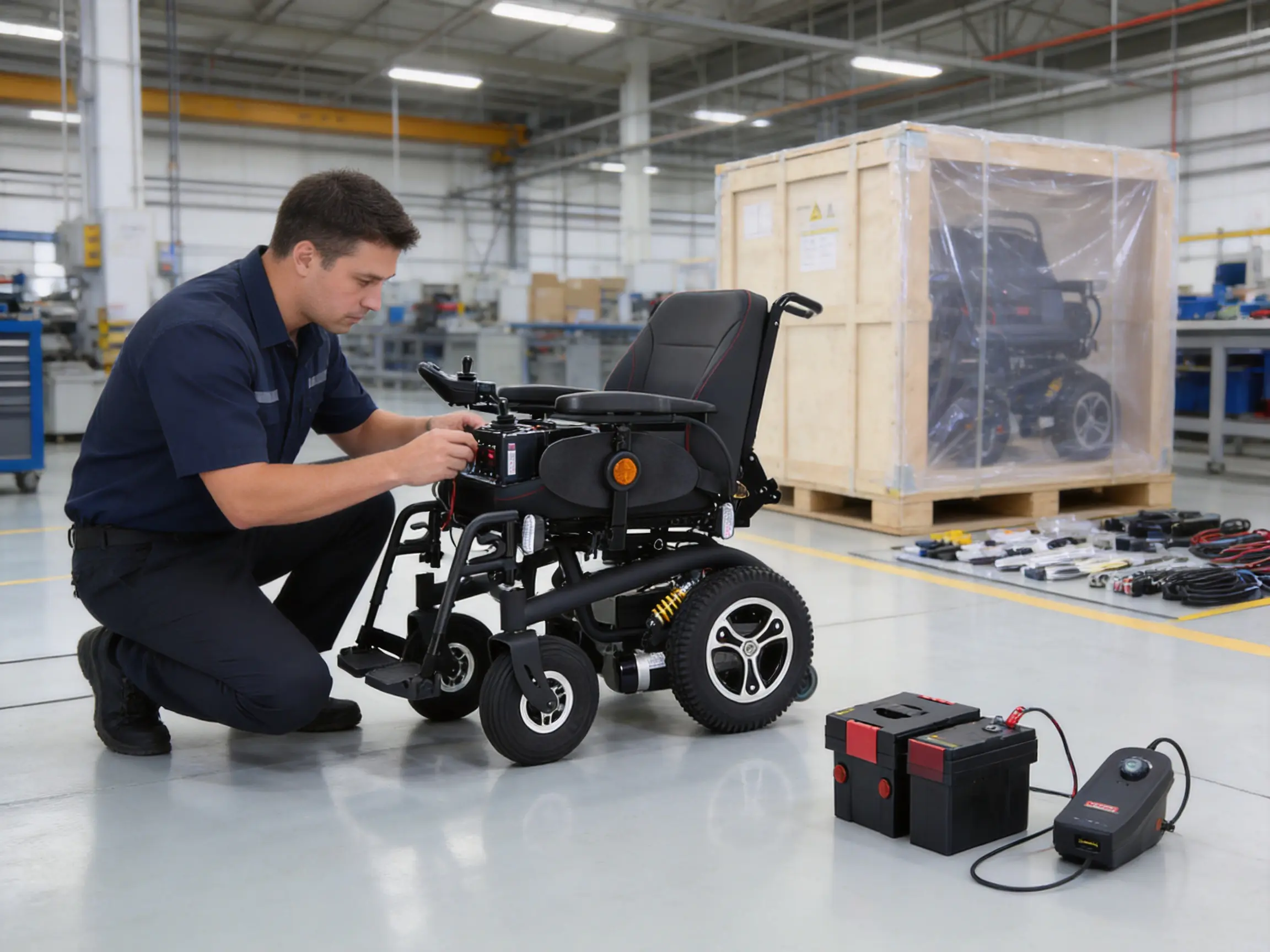
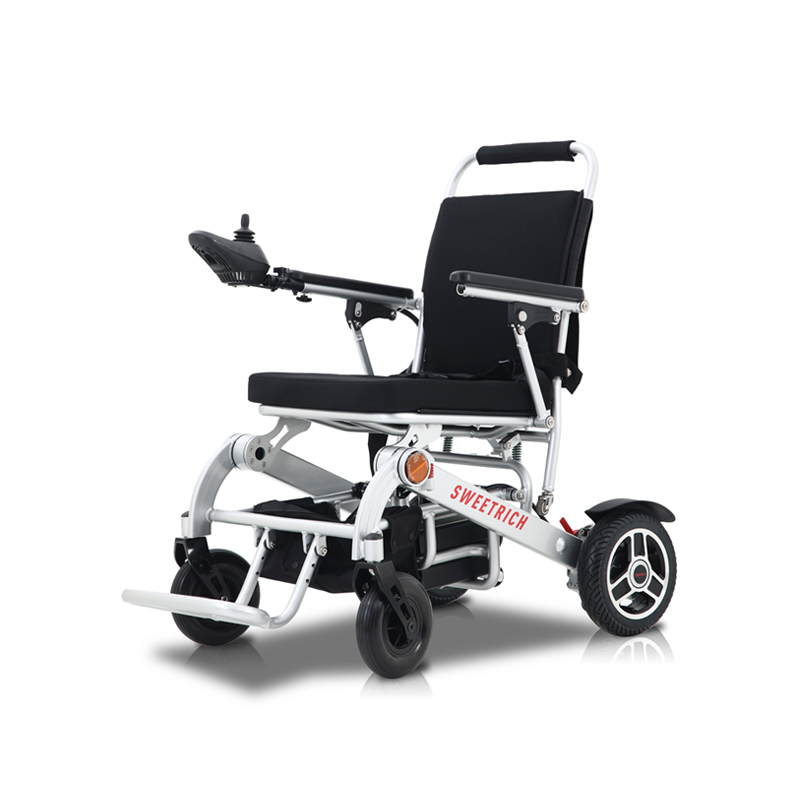
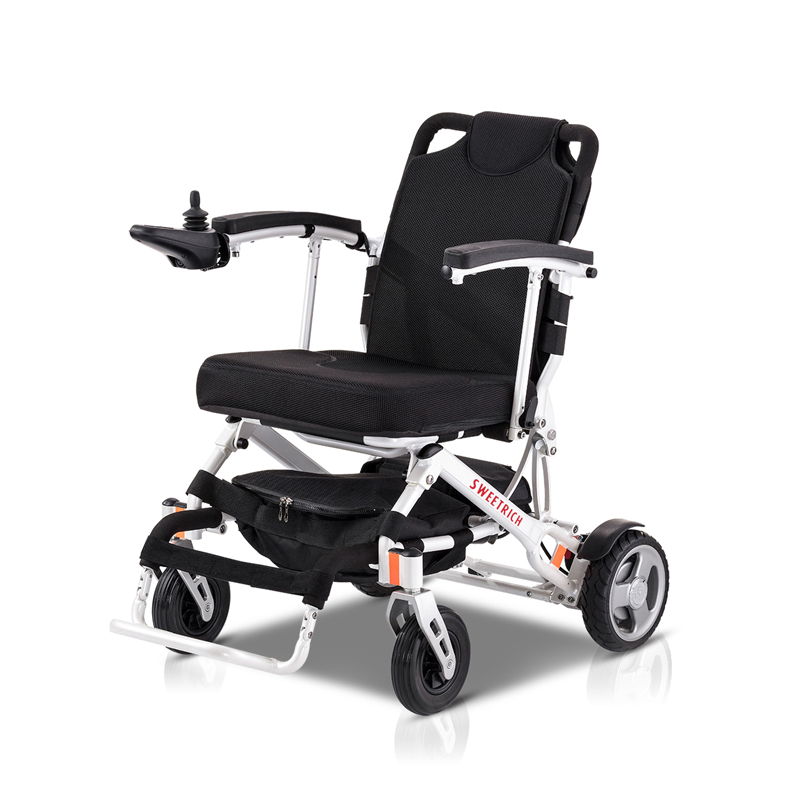
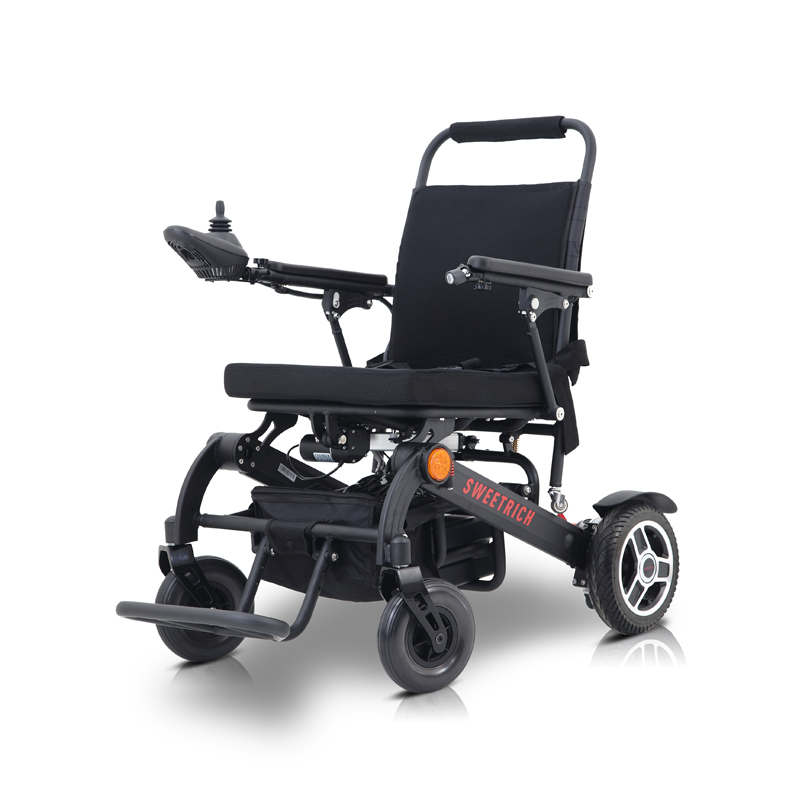
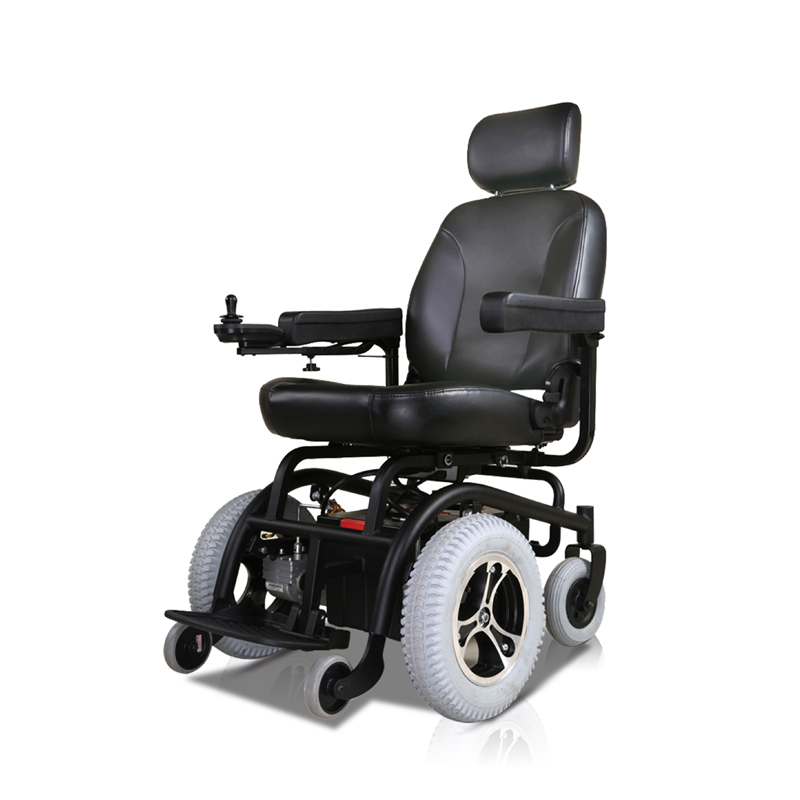
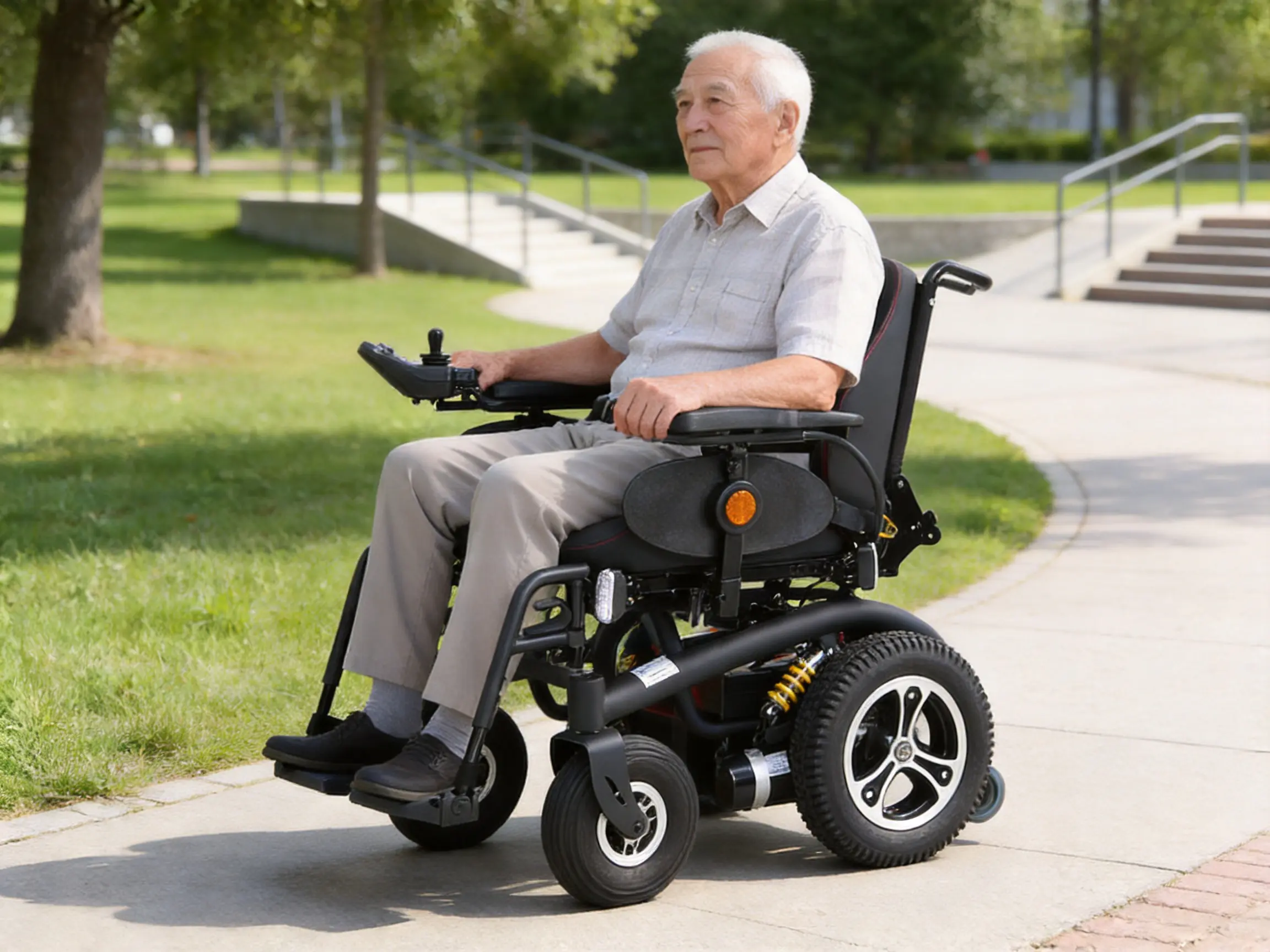
For users who want greater independence beyond the home, a capable power wheelchair must offer more than simple electric movement. It should provide dependable outdoor performance, a stable driving platform, comfortable seating, practical controls, sufficient battery range, and a design that can handle everyday changes in terrain. The iPower GTS Plus is a heavy-duty power wheelchair developed around these needs. It combines two 350-watt motors, large pneumatic tires, rear suspension, adjustable seating features, electromagnetic braking, and a maximum rated capacity of 136 kilograms (300 pounds).
This model is positioned as an off-road and outdoor-oriented electric wheelchair for elderly users and people with mobility limitations. It is also described as a second-hand or more popular type, so purchasers should confirm whether a specific unit is new, used, refurbished, or previously demonstrated. Condition, battery age, service history, tire wear, charger compatibility, and warranty coverage should always be checked before purchase.
The wheelchair is manufactured by Suzhou Sweetrich Vehicle Industry Technology Co., Ltd., a Chinese mobility equipment company established in 2011. The company specializes in mobility scooters and power wheelchairs and operates a substantial production facility in Suzhou Industrial Park. Its stated focus is on research, development, production quality, user comfort, and control technology. These capabilities provide an important foundation for evaluating the product beyond its list of specifications.
Designed for Outdoor Independence
Many standard indoor power wheelchairs are optimized for compact dimensions and smooth floors. Although this can make them convenient inside homes, shops, and offices, their smaller wheels and limited suspension may be less suitable for uneven paths, outdoor paving, grass, ramps, or rougher ground. The iPower GTS Plus takes a different approach by emphasizing stability and outdoor capability.
Its 10-inch front wheel and 14-inch rear pneumatic tires provide a larger contact profile than the small solid wheels commonly found on basic indoor chairs. Large tires can help the wheelchair roll over minor surface irregularities with less interruption to the user. Pneumatic construction can also contribute to a more compliant ride when tire pressure is maintained correctly. The rear suspension further supports outdoor comfort by helping absorb some vibration transmitted through the rear wheels.
These features do not make the chair suitable for every type of terrain. Users should still avoid unsafe slopes, deep mud, standing water, loose gravel, and obstacles beyond the wheelchair’s capability. Outdoor performance depends on the surface, rider weight, battery condition, tire pressure, temperature, and driving technique. Nevertheless, the combination of large wheels and rear suspension gives the model a stronger outdoor orientation than a basic compact power chair.
The maximum driving gradient is listed as 10 degrees. A gradient rating is not a guarantee that every user can safely climb or descend a slope at that angle. The actual safe limit may be lower depending on the surface, moisture, load distribution, turning direction, and whether the slope is traversed diagonally. Users should follow local safety guidance, operate slowly on inclines, and avoid turning sharply on steep surfaces.
The maximum forward speed is 8 kilometers per hour, equivalent to approximately 5 miles per hour. This speed is appropriate for a power wheelchair intended to provide practical outdoor mobility while remaining controllable in pedestrian environments. Speed should always be adjusted to surroundings. Narrow paths, crowds, doorways, ramps, and uneven surfaces require slower operation than open, level ground.
Key Product Advantages
Dual-Motor Power System
The iPower GTS Plus uses two 24-volt, 350-watt motors, producing a combined motor rating of 700 watts. A dual-motor layout allows the left and right drive wheels to be powered independently, supporting maneuverability and traction. It also provides a useful balance between climbing ability, outdoor movement, and responsive control.
Compared with a lower-powered wheelchair designed mainly for indoor use, a 700-watt motor package can offer greater support when traveling over outdoor surfaces or carrying a heavier occupant. The enhanced weight capacity is listed at 136 kilograms or 300 pounds. A higher capacity can benefit larger users, but the total load should include any carried items, accessories, bags, and equipment. The rated capacity should never be exceeded.
The motors are specified as Taiwan-sourced components, while the motor controller is identified as a 24-volt, 50-amp unit from PG or Dynamic. These details indicate that the driving system is built around established mobility-control components rather than a simple low-output configuration. Controller quality is important because it influences acceleration, braking response, directional control, and the smoothness of power delivery.
Large Pneumatic Tires
The front tires measure 10 by 3 inches, and the rear tires measure 14 by 3 inches. The larger rear tires are particularly relevant to outdoor travel because they can help the wheelchair cross minor surface changes more smoothly. They may also improve the chair’s ability to maintain contact with the ground when moving over modest thresholds or uneven paving.
Pneumatic tires can provide a softer ride than rigid solid tires, but they require regular inspection. Correct inflation is essential for stability, range, steering, and tire life. Underinflation can increase rolling resistance and make steering less predictable, while overinflation can reduce comfort and traction. Before every extended outing, users should inspect the tires for cuts, embedded objects, and abnormal wear.
Rear Suspension
The specification lists rear suspension. This feature is valuable for outdoor use because it can reduce the harshness of vibration reaching the frame and seat. A suspension system can improve comfort on paths that are not perfectly smooth, particularly when combined with large pneumatic tires.
Suspension is also relevant to the chair’s feeling of stability. A well-maintained system can help the drive wheels maintain more consistent contact with the ground. However, suspension components must be inspected periodically. Loose hardware, worn bushings, or damaged parts can affect handling and should be repaired by a qualified technician.
Adjustable Seating and Armrests
The product features adjustable seat width and adjustable armrest height. These adjustments help accommodate different body sizes and seating preferences. A correctly fitted seat can improve posture, reduce pressure points, and make the joystick easier to operate. Adjustable armrests may also assist with transfers, upper-body support, and overall comfort during longer journeys.
Seat adjustment should be performed carefully. The user’s hips should be positioned securely, the feet should be supported, and the armrests should not interfere with transfers or joystick operation. A seat that is too wide may provide insufficient lateral support, while a seat that is too narrow may create pressure and restrict movement. Professional seating advice may be appropriate for users with significant postural or pressure-management needs.
The product is described as a heavy-duty wheelchair, but heavy-duty construction does not mean that every user will find the seating configuration suitable. Prospective buyers should request the available seat-width range, cushion details, backrest dimensions, footrest information, and adjustment procedures before committing to an order.
Dual-Side Joystick Availability
The joystick is available for use on both sides. This is a practical advantage for users who have limited strength, reduced coordination, or better control on one side of the body. A reversible or side-selectable joystick can also help accommodate transfers and individual driving preferences.
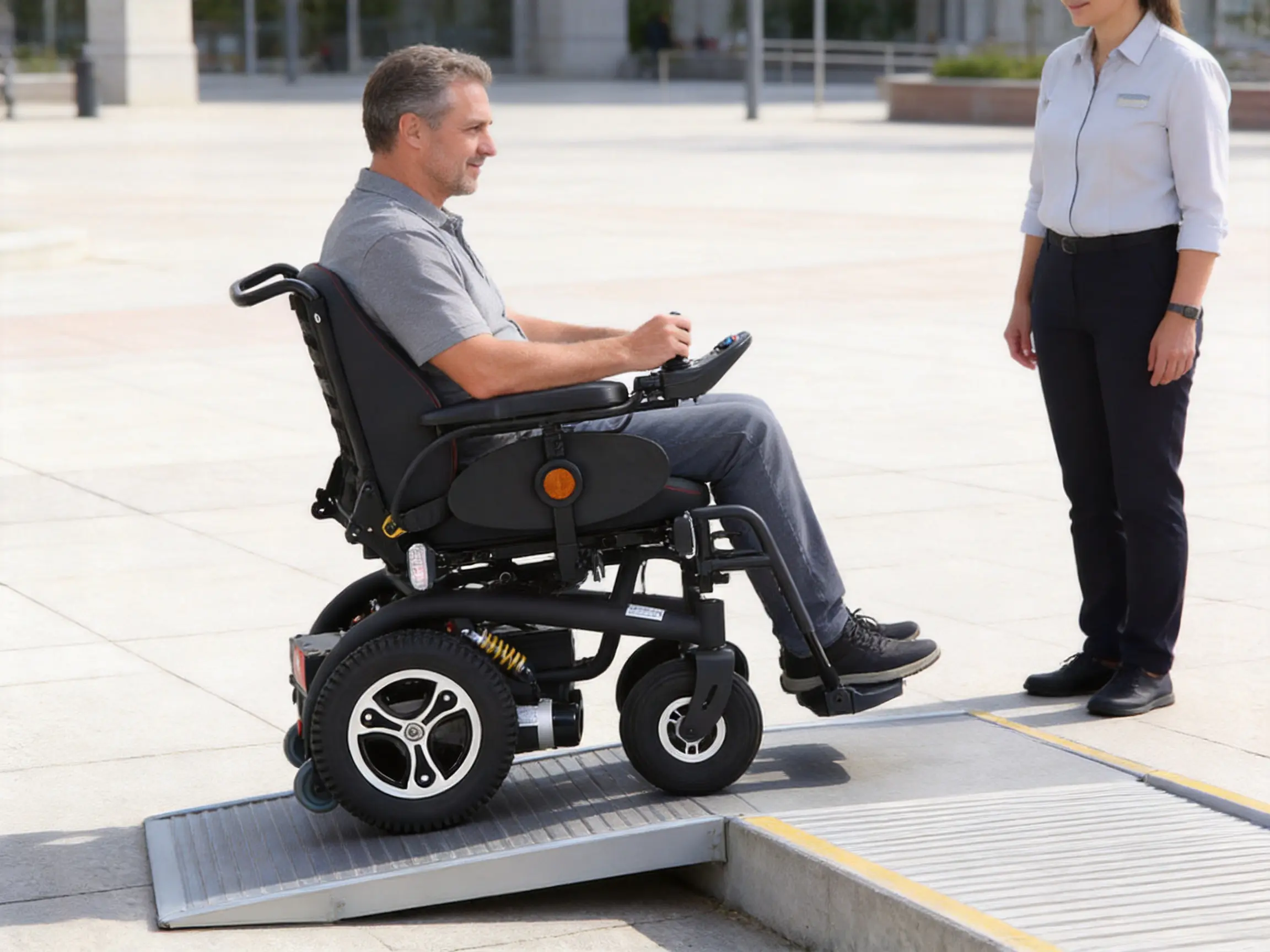
An optional swing-away controller mount is listed as available. This accessory can make transfers easier by moving the control unit away from the user’s path. It may also reduce the risk of striking the joystick against a desk, table, doorway, or vehicle during positioning. Buyers should verify whether the swing-away mount is included in the quoted configuration or must be purchased separately.
Joystick sensitivity and driving profiles should be adjusted to the user’s abilities. New operators should practice in a clear, level area before driving outdoors. Training should cover starting, stopping, reversing, turning, obstacle avoidance, emergency braking, and safe operation near pedestrians.
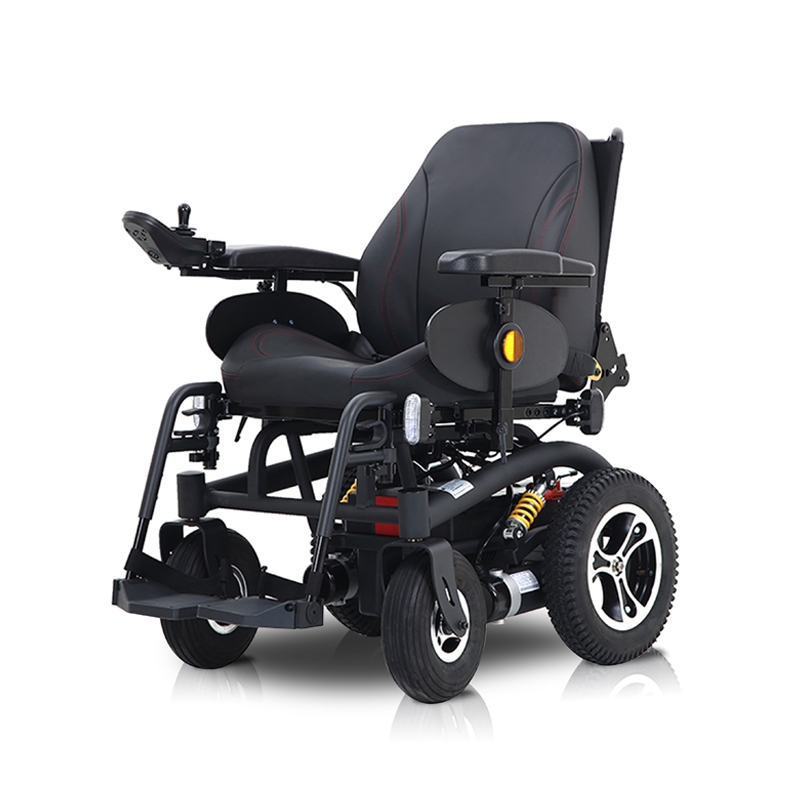
iPower GTS Plus More popular type second hand off road light power electric electronic wheelchair for the elderly
Battery System, Range, and Charging
The wheelchair uses two 12-volt, 40-ampere-hour lead-acid batteries. Together, these batteries form a 24-volt power system. Lead-acid batteries remain widely used in mobility products because they are familiar, serviceable, and generally more economical than some newer battery technologies. They also provide a practical solution for a heavy-duty chair requiring a substantial energy reserve.
The listed maximum driving range is 30 to 40 kilometers, or approximately 19 to 25 miles. This should be treated as an estimated range rather than a guaranteed distance. Range testing is usually performed under controlled conditions, while real-world performance can vary significantly. Rider weight, speed, gradients, tire pressure, terrain, temperature, battery age, stop-and-start driving, and accessory use all affect the distance available from one charge.
Lead-acid battery performance can decrease over time. A used wheelchair may have batteries that appear functional but provide substantially less range than new batteries. Prospective purchasers should ask for the battery installation date, recent load-test results, charging behavior, and estimated real-world range. If the unit has been stored for a long period, battery capacity may have been affected by improper maintenance or deep discharge.
The charger is specified as DC 24 volts and 5 amperes, with an AC input range of 115 to 230 volts. This broad input range can support use in multiple electrical markets, but the buyer should confirm the plug type, local electrical requirements, and charger condition. A charger intended for the correct battery chemistry and voltage must be used. An incompatible charger may damage the batteries or create a safety hazard.
Charging time is listed as 6 to 8 hours. Charging should take place in a dry, ventilated area using the manufacturer-approved charger. Users should inspect cables, connectors, and the charger housing for damage. The batteries should be secured properly, and the chair should not be charged near open flames or sources of excessive heat.
For regular use, charging after each substantial outing can help ensure readiness for the next trip. Users should follow the battery manufacturer’s instructions for storage and maintenance. If the wheelchair will not be used for an extended period, the battery system should be maintained according to approved procedures rather than simply left unattended.
Braking and Driving Safety
The wheelchair uses an electromagnetic brake system. Electromagnetic braking is commonly used in powered mobility equipment because it can automatically engage when the drive system is not commanding movement. This supports controlled stopping and helps prevent unintended rolling when the chair is stationary.
Even with electromagnetic brakes, users should not rely on the chair as a substitute for safe positioning. Avoid parking on steep slopes whenever possible. When stopping near a curb, ramp, road, or drop-off, maintain adequate clearance and confirm that the wheelchair is fully stopped before releasing the joystick. The chair should not be pushed manually unless the drive system has been properly placed in the approved freewheel mode.
Before operation, the user should check that the joystick returns to neutral, the batteries have sufficient charge, the tires are properly inflated, and the seating components are secure. On an outdoor route, the user should identify ramps, crossings, surface changes, narrow passages, and possible obstacles in advance.
Driving at the maximum speed is not appropriate in every situation. A lower speed is recommended when traveling downhill, moving across uneven ground, passing through confined spaces, approaching pedestrians, or making tight turns. Sudden steering inputs may reduce stability, especially on slopes or when one wheel encounters a raised surface.
The 10-degree gradient specification should be interpreted conservatively. Going straight up or down a slope is generally more stable than crossing it sideways, but the best practice depends on the terrain and the chair’s operating instructions. Users should not attempt slopes that exceed their confidence or the conditions recommended by the supplier.
Practical Specifications
The wheelchair’s listed dimensions are 1,045 millimeters in length, 625 millimeters in width, and 1,080 millimeters in height. The 625-millimeter width may be suitable for many outdoor paths and entrances, but buyers should measure all intended routes. Doorway clearances, elevator dimensions, vehicle ramps, storage areas, and turning spaces must be checked before purchase.
The chair’s overall size should also be considered when transporting it. The listed heaviest-part specification is 59 kilograms, although the source information includes a conflicting parenthetical value of 37 pounds. Since 59 kilograms is approximately 130 pounds and does not correspond to 37 pounds, this detail should be confirmed with the supplier before arranging transportation or lifting equipment.
A heavy power wheelchair may require a ramp, platform lift, accessible van, or suitable vehicle restraint system. It should not be lifted manually without appropriate equipment and sufficient personnel. Buyers should request the folded or disassembled dimensions, if applicable, because the available information does not confirm whether this particular configuration folds or separates into transportable sections.
Storage should protect the chair from excessive moisture, extreme temperatures, dust, and direct sunlight. The joystick, controller, battery connections, and upholstery deserve particular attention. Outdoor use increases exposure to rain, dirt, grass, and debris, so cleaning and inspection should be part of routine ownership.
| Specification | Listed Information | Practical Importance |
|---|---|---|
| Product type | Heavy-duty power wheelchair | Designed for powered mobility and outdoor-oriented use |
| Overall dimensions | 1,045 × 625 × 1,080 mm | Important for doorways, storage, elevators, and transport |
| Maximum speed | 8 km/h or approximately 5 mph | Supports practical outdoor travel when used responsibly |
| Maximum gradient | 10 degrees | Provides a reference for slope capability; actual safe use varies |
| Estimated range | 30–40 km or approximately 19–25 miles | Useful for planning trips; actual range depends on conditions |
| Weight capacity | 136 kg or 300 lb | Supports a broad range of users, including carried items |
| Front tire size | 10 × 3 inches | Large front contact area for outdoor surfaces |
| Rear tire size | 14 × 3 inches | Supports traction and smoother movement over minor irregularities |
| Suspension | Rear suspension | Helps reduce vibration during outdoor travel |
| Brake system | Electromagnetic brake | Supports controlled stopping and stationary security |
| Battery system | Two 12 V, 40 Ah lead-acid batteries | Provides energy for the 24-volt drive system |
| Charger | DC 24 V, 5 A; AC 115–230 V | Allows charging with the correct local connection and supply |
| Charging time | Approximately 6–8 hours | Suitable for overnight charging in many use patterns |
| Motor system | Two 24 V, 350 W motors | Combined 700-watt drive package for demanding mobility use |
| Controller | 24 V, 50 A; PG or Dynamic | Manages power delivery, direction, and driving response |
Comparison with Basic Mobility Alternatives
The main advantage of the iPower GTS Plus over a lightweight indoor power chair is its outdoor-oriented configuration. Smaller chairs may be easier to lift, store, or transport, but they often use smaller tires, lower-power motors, and limited suspension. The iPower GTS Plus gives priority to traction, capacity, range, and outdoor ride characteristics.
Compared with a compact mobility scooter, the power wheelchair offers a seating and control format that can be more appropriate for users who need a supportive chair rather than a scooter-style seat. The joystick can provide direct control for users who cannot comfortably operate a tiller. Side-selectable joystick placement can also be helpful for individual physical needs.
Compared with a basic rear-wheel-drive power wheelchair, the model’s dual 350-watt motors, large pneumatic tires, and rear suspension provide a more robust specification for outdoor use. Its adjustable seat width and armrest height may offer more fitting flexibility than a fixed configuration. Its 136-kilogram capacity also places it in a stronger category than many standard chairs.
These advantages involve trade-offs. A heavier, more powerful chair may be more difficult to transport than a folding travel model. Pneumatic tires require maintenance, and lead-acid batteries are heavier than some lithium alternatives. Buyers seeking maximum portability may prefer a lighter chair, while users seeking outdoor stability may accept the additional size and weight.
The model should therefore be compared according to the user’s actual priorities: daily range, outdoor surface quality, storage, vehicle access, seating fit, service availability, battery replacement cost, and local regulations. A specification advantage is useful only when it matches the intended application.
Manufacturing Capabilities and Company Strengths
Suzhou Sweetrich Vehicle Industry Technology Co., Ltd. states that it was established in 2011 and is located in Suzhou Industrial Zone in Jiangsu, China. The company reports a site covering approximately 60 acres and a factory area of about 30,000 square meters. It focuses on the research, development, and manufacture of mobility scooters and power wheelchairs.
A dedicated factory environment can support more consistent assembly, process organization, component control, and production scheduling than a small trading operation. For a powered wheelchair, manufacturing discipline is important because performance depends on the interaction of mechanical, electrical, and seating systems. Motors, controllers, braking hardware, wheels, suspension, batteries, wiring, and user controls must function together reliably.
The company describes itself as a high-technology enterprise with intellectual property related to electric scooters and power wheelchairs. Its stated development priorities include comfort, advanced control technology, and driving systems. These areas are directly relevant to the iPower GTS Plus, particularly its adjustable seating, dual-side joystick availability, motor-controller package, electromagnetic brakes, and outdoor chassis design.
Research and development can also help manufacturers adapt products for different markets. Mobility equipment may need to accommodate different electrical systems, user expectations, transportation requirements, and safety practices. The charger’s listed 115-to-230-volt AC input range reflects an intention to support multiple electrical environments, although buyers must still confirm the exact market configuration.
The company also states that it follows strict production management and scientific product design principles. In practical terms, strong production management should include documented assembly procedures, incoming component checks, electrical testing, brake verification, battery and charger inspection, dimensional checks, and final functional testing. Buyers and distributors should request information about the specific quality-control procedures applied to the purchased unit.
Export experience is another stated company strength. Sweetrich reports that its products are supplied to markets including America, Europe, Japan, Australia, the Middle East, Russia, and other regions. International experience may help a manufacturer understand packaging, documentation, regional power requirements, distributor support, and product adaptation. However, the buyer remains responsible for confirming that a particular wheelchair complies with the regulations and labeling requirements of the destination market.
For the United States, the product material specifically describes the device as non-medical. This wording is important. The wheelchair should not automatically be treated as a medical device, prescribed seating system, or insurance-approved product. American customers should confirm applicable federal, state, and local requirements, as well as whether the product can be serviced and used in their intended environment.
The manufacturer’s location and factory scale may be valuable to wholesale buyers, distributors, care facilities, and mobility retailers seeking a long-term supply relationship. Reliable cooperation depends not only on production capacity but also on spare-parts availability, technical documentation, warranty procedures, communication, lead times, and after-sales support.
Quality Control Considerations
Quality in a power wheelchair is not determined by a single component. A high-output motor is useful only when the frame, wiring, controller, brakes, tires, and battery system are correctly matched. A large tire is beneficial only when it is properly mounted and inflated. An adjustable seat is valuable only when its locking hardware is secure and its adjustment range suits the user.
Before shipment, a responsible production process should verify the following areas:
1. Mechanical assembly: fasteners, wheel attachment, suspension components, seat mounting, armrests, foot supports, and frame alignment should be checked.
2. Electrical connections: wiring should be routed safely and protected from abrasion, water exposure, heat, and accidental pulling.
3. Motor and controller operation: both motors should respond consistently, and acceleration should be smooth in forward and reverse directions.
4. Braking: electromagnetic braking should engage correctly when the joystick is released, while manual freewheel functions should operate only as intended.
5. Battery and charger compatibility: voltage, polarity, connectors, charging behavior, and indicator functions should be verified.
6. Seating adjustments: seat-width and armrest-height mechanisms should lock securely and remain stable during movement.
7. Final inspection: the complete unit should be tested under controlled conditions before packaging.
These quality-control principles are especially important for units sold as second-hand or refurbished products. A used chair should receive a documented inspection rather than being resold solely on the basis of appearance. Refurbishment may include battery replacement, tire replacement, cleaning, controller testing, brake adjustment, and upholstery repair, but the exact work should be disclosed to the purchaser.
Customers buying through a distributor should request serial-number records where available. They should also ask whether the product has been recalled, modified, exposed to water, or involved in an accident. A clear inspection report can reduce uncertainty and help establish a realistic maintenance plan.
Maintenance Requirements
Routine maintenance helps preserve safety, comfort, and range. Tire pressure should be checked regularly, particularly before longer outdoor journeys. The tires should be replaced if the tread is worn, the sidewalls are cracked, or the casing has been damaged. Uneven tire wear can indicate alignment, suspension, or driving issues that require further inspection.
The battery terminals and connectors should remain clean and secure. Corrosion, loose connections, or damaged cables can reduce power delivery and create overheating risks. Battery servicing should be performed according to the battery manufacturer’s instructions. Because lead-acid batteries are heavy, replacement should be carried out carefully and with appropriate lifting technique.
The joystick should be kept clean and protected from impact. If the chair moves unexpectedly, fails to stop, responds slowly, or gives an error indication, operation should stop until the problem is identified. Users should not bypass safety systems or attempt electrical modifications without qualified technical support.
Suspension and wheel fasteners should be checked periodically. Outdoor use can expose the chair to dust, sand, grass, moisture, and vibration. After traveling in dirty conditions, the chassis can be cleaned with suitable methods, but water should not be directed at the joystick, controller, charger connection, battery compartment, or other sensitive electrical areas.
The seat, armrests, and mounting hardware should also be inspected. A loose seat can affect balance and driving control. Damaged upholstery may create comfort or skin-integrity concerns, particularly for users who spend long periods in the chair. Accessories should be mounted only where approved and should not interfere with steering, braking, visibility, or transfers.
Who May Benefit from This Model?
The iPower GTS Plus may suit users who need a powered wheelchair for regular outdoor movement and who value a higher weight capacity, larger tires, suspension, and a relatively long stated range. It may be appropriate for travel around residential areas, paved pathways, accessible commercial spaces, parks with suitable surfaces, and other environments where local rules permit powered wheelchair use.
It may also be considered by rehabilitation providers, mobility retailers, senior-living communities, family caregivers, and organizations that need a durable electric wheelchair with adjustable seating. The dual-side joystick option can expand suitability for users with different upper-limb abilities.
The model may be less suitable for people who prioritize minimal weight, frequent vehicle lifting, narrow indoor maneuverability, or a folding travel format. Users who need highly customized clinical seating, tilt, recline, elevation, or pressure-relief functions should ask about compatible options and consult a qualified seating professional. The listed power tilt and lift system is described as optional and forthcoming, so it should not be assumed to be included.
Users should also consider whether the width, turning behavior, and heavy-duty construction fit their home. A product can perform very well outdoors but still be inconvenient if it cannot pass through interior doors or be stored safely. A pre-purchase measurement of the home and usual travel routes is strongly recommended.
Optional Equipment and Future Configuration
The available options include a swing-away controller mount and a light package. A swing-away mount may simplify transfers, while a light package may improve visibility in low-light conditions. Lighting does not replace reflective clothing, safe route selection, or compliance with local road and pedestrian rules.
The source information also refers to an optional power tilt and lift system as an upcoming feature. Availability, compatibility, user limits, installation requirements, and final specifications should be confirmed directly with the supplier. A future option should not be treated as part of the current standard product unless it appears on the purchase quotation.
When ordering accessories, buyers should confirm whether they are factory-installed, dealer-installed, or supplied separately. Installation can affect wiring, seating position, weight distribution, and transport dimensions. Accessories should be approved for the specific model and should not cause the total load to exceed the rated capacity.
Purchasing a Second-Hand or Refurbished Unit
The phrase “second hand” creates additional purchasing considerations. A used electric wheelchair can provide value, but its condition may vary widely. Age, previous operating environment, storage quality, maintenance, and battery replacement history all affect the actual value of the unit.
Before purchase, request clear photographs of the frame, tires, seat, joystick, charger, battery compartment, motor housings, and underside. Ask whether the chair starts, drives forward and backward, turns in both directions, brakes correctly, climbs a modest approved gradient, and reaches its expected speed. These checks should be performed in a safe, controlled location.
The battery system deserves particular attention because replacement batteries can represent a significant portion of the cost of a used wheelchair. A seller should provide the battery type, voltage, capacity, age, and charging history when available. A chair that travels only a short distance may still be mechanically sound but require immediate battery replacement.
Buyers should also confirm the availability of replacement tires, chargers, controllers, joystick modules, armrests, suspension parts, and upholstery. A used product is more practical when parts and technical support remain accessible. The original manual, wiring information, maintenance records, and service contacts can add substantial value.
Warranty terms should be stated in writing. Some sellers provide a limited warranty on refurbished components, while others sell used products as-is. The purchaser should understand who pays for transportation, diagnostic work, battery replacement, and return shipping if a fault appears after delivery.
Responsible Use in the United States
The supplied product material states that the device is non-medical for the United States market. This means buyers should not assume that the product has been prescribed for a specific medical condition or that it qualifies for reimbursement through insurance or public programs. Eligibility, coverage, and regulatory classification can vary by product configuration and jurisdiction.
Users should follow local rules governing powered wheelchairs on sidewalks, shared paths, crossings, public buildings, and roads. Visibility is particularly important during dawn, dusk, and nighttime travel. The optional light package may assist visibility, but users should still use caution and wear visible clothing when appropriate.
Caregivers should learn the controls before assisting a user. They should understand how to turn the chair off, engage or disengage freewheel mode, connect the charger, and respond if the chair stops unexpectedly. The joystick should not be operated by an untrained person while the user is positioned on a slope or near an obstacle.
Users should not carry passengers, tow loads, or attach unapproved trailers. Heavy bags should be positioned so that they do not obstruct the joystick, interfere with the wheels, or shift the center of gravity. Any modification that affects braking, steering, frame strength, or electrical protection should be reviewed by qualified personnel.
How the Product Supports User Comfort
Comfort is influenced by more than cushion softness. The combination of seat width adjustment, armrest-height adjustment, pneumatic tires, rear suspension, and controlled motor response can improve the overall driving experience. When the seating position is correct, the user can maintain a stable posture and operate the joystick with less unnecessary effort.
Outdoor vibration can cause fatigue, especially during long trips. Large tires and suspension may reduce the amount of shock transmitted through the chassis, although they cannot eliminate all vibration. Users should choose smoother routes when possible and take regular breaks during extended outings.
Armrest adjustment can support the forearms and shoulders. If the armrests are too high, the shoulders may remain elevated; if too low, the user may lean or lose support. Adjustments should be tested while the user is seated in the normal driving position. The joystick should remain easy to reach without forcing the wrist into an uncomfortable angle.
Seat width should provide enough room for clothing and natural posture without allowing excessive sideways movement. Because body shape and support needs vary, the listed adjustable feature is helpful, but a professional assessment may still be necessary for users with complex mobility requirements.
Value for Distributors and Institutional Buyers
For distributors, the iPower GTS Plus offers a specification profile that is easy to position within the outdoor heavy-duty wheelchair category. Its 700-watt motor package, 136-kilogram capacity, pneumatic tires, suspension, dual-side joystick availability, and estimated 19-to-25-mile range provide several clear selling points.
Institutional buyers may value the adjustable configuration because it can accommodate more than one user profile, although shared use requires thorough cleaning, inspection, and adjustment between users. Care facilities should establish procedures for charging, tire checks, brake checks, storage, and reporting faults.
Long-term purchasing decisions should include more than the initial unit price. Buyers should calculate battery replacement, charger replacement, service labor, spare parts, shipping, storage, training, and disposal costs. A well-supported product can be more economical over time than a lower-priced unit that is difficult to repair.
Sweetrich’s reported factory scale and international export experience may support distributor relationships, but each distributor should confirm minimum order quantities, production lead time, packaging, documentation, warranty handling, spare-parts policy, and regional exclusivity arrangements. Product claims should be matched to verified test data and the exact model configuration.
Frequently Asked Questions
What type of product is the iPower GTS Plus?
It is a heavy-duty electric power wheelchair designed with an emphasis on outdoor performance. It includes dual motors, large pneumatic tires, rear suspension, adjustable seating features, electromagnetic braking, and joystick control.
How powerful are the motors?
The specification lists two 24-volt, 350-watt motors. Together, they provide a total motor rating of 700 watts.
What is the maximum user weight?
The listed weight capacity is 136 kilograms, or 300 pounds. Users should include carried belongings and accessories when calculating total load.
How fast can it travel?
The maximum forward speed is listed as 8 kilometers per hour, or approximately 5 miles per hour. Operators should select a lower speed when conditions require additional control.
What distance can it travel on one charge?
The stated range is 30 to 40 kilometers, or approximately 19 to 25 miles. Actual range depends on rider weight, terrain, slope, speed, tire pressure, temperature, battery age, and driving style.
Does it have suspension?
Yes. The listed configuration includes rear suspension. Suspension performance depends on proper maintenance and the condition of its components.
What tire sizes does it use?
The front tires are listed as 10 by 3 inches, and the rear tires are listed as 14 by 3 inches. The tires are pneumatic, so inflation and damage checks are important.
Can the joystick be placed on either side?
The product information states that the joystick is available for use on both sides. A swing-away controller mount is also listed as an optional feature.
Does it include a power tilt and lift system?
No conclusion should be made that this system is included. The supplied information describes power tilt and lift as an optional feature that was planned or forthcoming. Availability must be confirmed before ordering.
How long does charging take?
The listed charging time is approximately 6 to 8 hours. The supplied charger specification is DC 24 volts and 5 amperes with an AC input range of 115 to 230 volts.
What type of batteries does it use?
It uses two 12-volt, 40-ampere-hour lead-acid batteries. Buyers of used units should verify battery age and condition because battery capacity declines over time.
Is the wheelchair suitable for steep hills?
The maximum driving gradient is listed as 10 degrees, but actual safe operation depends on surface conditions, rider weight, tire condition, direction of travel, and local safety guidance. Users should avoid slopes that feel unsafe.
Is it easy to transport?
The product is a substantial heavy-duty wheelchair. Its listed overall dimensions are 1,045 by 625 by 1,080 millimeters, and the heaviest-part information should be confirmed because the source contains an inconsistent kilogram-to-pound conversion. Buyers should plan for a ramp, lift, or accessible vehicle unless the supplier confirms a transportable configuration.
Is it a medical device in the United States?
The supplied material identifies it as a non-medical device for the United States market. Buyers should confirm local requirements and should not assume insurance coverage, medical prescription status, or reimbursement eligibility.
Who manufactures the product?
The product is manufactured by Suzhou Sweetrich Vehicle Industry Technology Co., Ltd., a mobility equipment company based in Suzhou Industrial Park, Jiangsu, China. The company reports experience in developing and producing mobility scooters and power wheelchairs since 2011.
What should be checked when buying a second-hand unit?
Check the battery age, charger, tire pressure, tire wear, joystick response, braking, motor operation, suspension, seat adjustments, frame condition, service history, parts availability, warranty terms, and the exact refurbishment work performed.
Final Assessment
The iPower GTS Plus is designed to serve users who need a stronger outdoor power wheelchair rather than a minimal indoor mobility device. Its principal advantages are the dual 350-watt motors, 700-watt total motor package, 136-kilogram weight capacity, large pneumatic tires, rear suspension, 8-kilometer-per-hour maximum speed, electromagnetic braking, and stated range of up to 40 kilometers under suitable conditions.
Its adjustable seat width, adjustable armrest height, and joystick availability on either side add practical flexibility. Optional equipment, including a swing-away controller mount and light package, can further adapt the chair to individual needs. The planned power tilt and lift option may broaden future functionality, but purchasers must verify its current availability.
The product’s value is strengthened by the manufacturer’s stated experience, dedicated factory resources, research and development focus, intellectual property, international market exposure, and emphasis on production management. These company strengths are relevant to buyers seeking a supplier capable of supporting a complete mobility product rather than simply providing a basic electric chassis.
At the same time, the chair’s heavy-duty design creates trade-offs in transportability, storage, and maintenance. Lead-acid batteries add weight, pneumatic tires require care, and a second-hand unit must be evaluated carefully. The range, gradient, and speed figures should be treated as product references rather than promises of identical real-world performance for every user.
For elderly users and people with mobility limitations who need dependable outdoor travel, the model can be a compelling option when properly fitted, maintained, and operated. The best purchasing decision will come from matching its capability to the user’s environment, confirming the exact configuration, checking the condition of any used unit, and obtaining clear after-sales support before delivery.
References
1. Product specification sheet for the iPower GTS Plus heavy-duty power wheelchair, including dimensions, speed, gradient, range, capacity, tires, batteries, charger, motors, controller, and braking system.
2. Manufacturer-provided company information for Suzhou Sweetrich Vehicle Industry Technology Co., Ltd., including company history, factory resources, research and development focus, and international market experience.
3. General electric wheelchair operation and maintenance principles relating to batteries, pneumatic tires, electromagnetic brakes, suspension, joystick controls, and outdoor driving.
4. General accessibility and powered mobility safety practices for slope negotiation, pedestrian environments, charging, transportation, and user training.
5. General buyer guidance for inspecting second-hand and refurbished power wheelchairs, including battery condition, service history, spare parts, warranty terms, and functional testing.